Dr. Gymbro
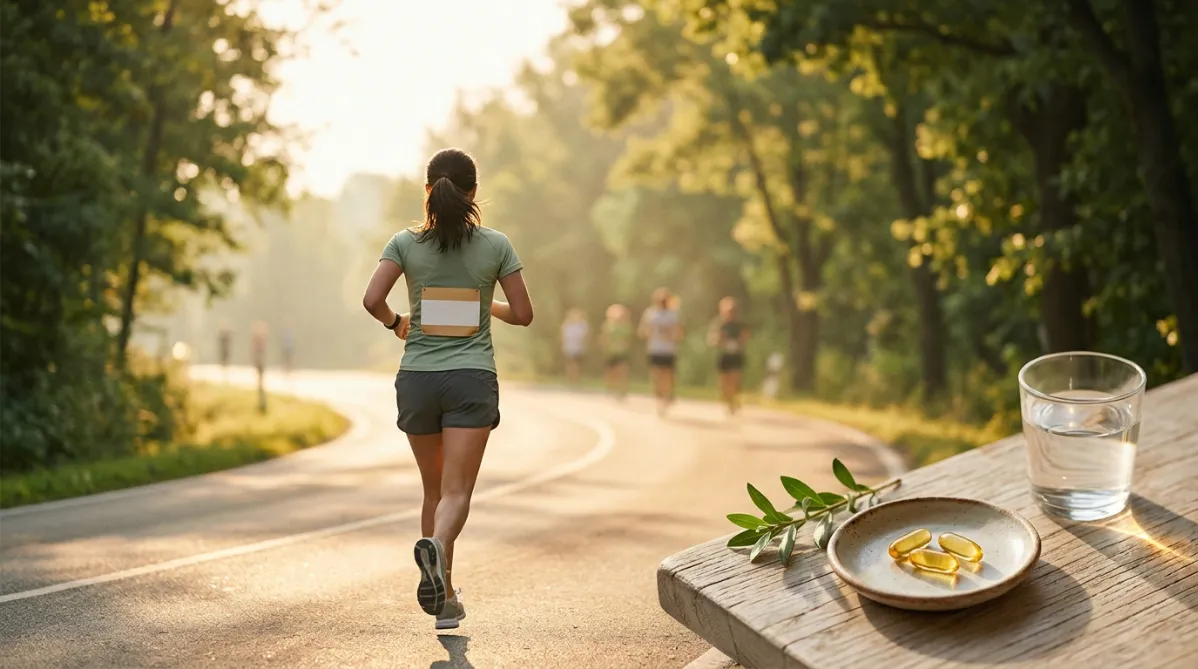
A wide, editorial-style photograph of a marathon runner seen from behind and slightly to the side, mid-stride on a quiet tree-lined road at early morning golden hour. The runner wears a fitted sage-green technical shirt and charcoal shorts, with a plain unnumbered bib pinned at the back. Soft sunlight filters through the leaves and creates long, gentle shadows and a warm amber glow on the asphalt. Behind the runner, other runners blur into a soft bokeh background of muted greens and warm light.

In the lower right foreground, slightly out of focus, a small ceramic dish on a weathered light-oak surface holds two golden, translucent softgel capsules. Beside it sits a simple glass of water with sunlight refracting through it, casting a tiny warm caustic on the wood. A sprig of green leaves adds a natural touch. The foreground and the runner are separated by a shallow depth of field, which suggests the link between supplementation and endurance without being literal.

The palette is warm and natural: soft yellows, sunlit gold, sage green, cream, and light wood tones. The mood is calm, health-focused, and contemporary, like a modern wellness or science journal feature. The composition uses generous negative space in the upper left sky area for title text overlay. The lighting is natural and soft with a subtle film-like grain, and the image is clean, minimal, and crisp. There are no text overlays, logos, or medical clichés such as hearts or graphs, and no futuristic elements.
Science & Research

Běžci užívající vitamin D3 měli po 42 km nižší markery srdečního stresu

Dr. Gymbro · · 3 min read

Osm týdnů levného a snadno dostupného vitamínu mohlo ovlivnit to, co se odehrálo v krvi maratonců po 42,195 km. Nová studie zjistila, že běžci, kteří užívali vitamin D3, měli 24 hodin po závodě nižší hodnoty kreatinkinázy (CK) a CK‑MB než běžci s placebem. Než ho však zařadíte do svého balíčku na závodní týden, musíte vědět, jak malý a omezený tento výzkum byl.

Hlavní nález

Studii provedli Weng a kolegové a byla publikována v Journal of the International Society of Sports Nutrition v roce 2026 (DOI: 10.1080/15502783.2026.2657316; PubMed 41966073). Dvacet‑jeden amatérských běžců bylo rozděleno buď do skupiny užívající vitamin D3 po dobu 8 týdnů, nebo do skupiny dostávající placebo. Všichni absolvovali oficiální celý maraton a krev byla odebrána od 24 hodin před závodem až po 24 hodin po něm.

Autoři uvádějí, že vitamin D3 byl spojen s nižšími hodnotami CK a CK‑MB 24 hodin po závodě. CK je standardní ukazatel rozkladu svalové tkáně. CK‑MB je forma tohoto enzymu, která se často používá jako ukazatel srdečního stresu. Vitamin D3 také potlačil růst proteinových karbonylů (PC) – indikátoru oxidačního poškození proteinů.

Proč jsou podrobnosti důležité

  • Byla malá. S 21 účastníky může studie naznačit trend, ale nedokáže otázku definitivně vyřešit.
  • Byla jednokulová, ne dvojkroková, což poskytuje větší prostor pro zkreslení než dvojkrokový (randomizovaný, dvojí zaslepený) design, považovaný za zlatý standard.
  • Jen některé ukazatele se lišily. Autoři popisují snížení v „vybraných biomarkerech“ s významnými interakcemi skupina × čas.
  • Výsledky oxidačního stresu byly úzké. PC byl jediný marker oxidačního stresu s významnou interakcí skupina × čas. TBARS a antioxidační enzymy neukázaly žádné významné interakční efekty.
  • CK‑MB je biomarker, ne důkaz poškození srdce. Maratony běžně zvyšují jak srdeční, tak svalové markery u zdravých běžců. Studie měřila jen tyto signály, ne poškození srdce ani klinické výsledky.
  • Výkon nebyl předmětem výzkumu. V abstraktu není uveden žádný rozdíl v čase dojezdu.

Co říká imunita?

Maratony silně zatěžují imunitní systém a data to potvrzují. Obě skupiny měly po závodě nárůst počtu bílých krvinek, zejména neutrofilů. Počty lymfocytů výrazně klesly v 0,5‑ a 2‑hodinovém intervalu po závodě. Některé podskupiny imunitních buněk se v čase posunuly.

Žádná z těchto imunitních změn neukázala významné interakční efekty mezi skupinami. Autoři uvádějí jen popisné rozdíly v modelech zotavení a explorativní korelace mezi imunitními buňkami a biochemickými markery. Jinými slovy, tato studie neukazuje, že vitamin D3 zlepšil post‑maratonovou imunitu nebo zabránil onemocnění po závodě, které někteří běžci zažívají.

Praktické poznatky

1. Nejdříve zjistěte svůj stav. Nejrozumnějším krokem je test 25‑hydroxyvitamínu D v krvi, ideálně s lékařem, než začnete suplementovat. Mnoho lidí nepotřebuje vyšší dávky.

2. Dávka: abstrakt to neuvádí. Abstrakt neuvádí použité množství, proto si před jakýmkoli kopírováním protokolu prostudujte celý text (PMC13072698). Pro kontext, mimo tuto studii, veřejné zdravotní směrnice v mnoha zemích doporučují denní příjem kolem 600–800 IU pro dospělé a tolerovatelná horní hranice je 4 000 IU/den. Vyšší dávky se obvykle používají jen pod lékařským dohledem po testování.

3. Načasování: myslete na týdny, ne na ráno před startem. Intervence trvala 8 týdnů před maratonem. Vitamin D se v těle hromadí pomalu, takže poslední dávka těsně před startem není to, co bylo testováno.

4. Užijte ho s jídlem obsahujícím tuk. To je obecná rada pro vstřebávání, protože vitamin D je rozpustný v tucích, a ne něco, co tato studie zkoušela.

Kdo by mohl mít prospěch

  • Vytrvalostní sportovci s nízkou nebo okrajovou hladinou vitaminu D podle krevního testu
  • Běžci, kteří trénují převážně v interiéru nebo při úsvitu a soumraku
  • Lidé žijící ve vyšších zeměpisných šířkách během zimních tréninkových bloků
  • Osoby s tmavší pokožkou nebo omezeným slunečním svitem, které přirozeně tvoří méně vitaminu D

Kdo by to měl vynechat nebo nejprve konzultovat s lékařem

  • Každý, kdo už má dostatečnou hladinu vitaminu D
  • Lidé užívající vysoké dávky doplňků bez testování, protože přebytek vitaminu D může zvýšit hladinu vápníku v krvi
  • Osoby s onemocněním ledvin, hyperkalciémií, sarkoidózou nebo užívající léky, které s vitaminem D interagují
  • Běžci s bolestí na hrudi, palpitacemi nebo neobvyklými příznaky po závodě – doplňky nenahrazují lékařské vyšetření a nižší číslo CK‑MB není „čistkou“.

Závěrečné shrnutí

Tato malá studie přidává zajímavý datový bod: vitamin D3 po dobu 8 týdnů byl spojen s nižšími reakcemi CK, CK‑MB a proteinových karbonylů po maratonu. Nedosahuje však úrovně důkazu, že suplementy chrání srdce nebo urychlují zotavení. Rozumný přístup je znát svou hladinu vitaminu D, případně napravit nedostatek a počkat na větší, dvojkrokové studie, než začnete vitamin D3 používat jako nástroj pro zotavení po maratonu.

Source: Weng PW, Nanda JD, Chien YH, Lin CF, Cheng SC, Yang MT. Effects of vitamin D3 supplementation on cardiac, muscle, and immune responses after a marathon race: a single-blind, placebo-controlled trial. J Int Soc Sports Nutr. 2026;23(1):2657316. doi:10.1080/15502783.2026.2657316
Original study

Read the original research on pubmed.ncbi.nlm.nih.gov →

This article summarizes published research for general information. It is not medical advice.

DG

Written by

Dr. Gymbro

Dr. Gymbro writes for Dr. Gymbro: science-backed fitness, nutrition & performance.

Related Articles

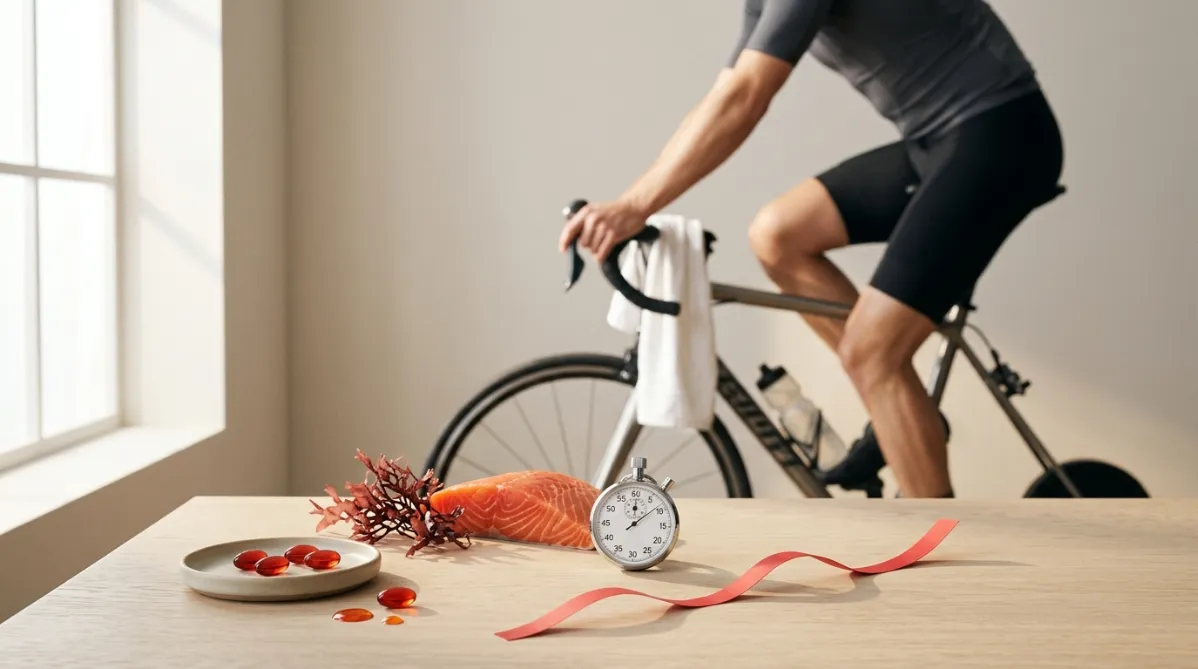
A cyclist's legs mid-pedal on a stationary road bike, shot in a bright, airy, minimalist studio with a soft warm-grey backdrop. In the foreground on a pale oak table sits a small ceramic dish holding four deep coral-red softgel capsules, with a few translucent droplets of red-orange oil glistening beside them. Beside the dish is a sprig of dried red microalgae-toned seaweed and a halved wild salmon fillet, its coral flesh echoing the capsule color. Behind the table, slightly out of focus, a cyclist in a fitted charcoal jersey and matte black shorts rides a bike on an indoor trainer. Only the torso and legs are visible, with no face. A white towel hangs over the handlebars and a clear water bottle catches the light.

Soft diffused morning light streams from a large window on the left, creating long gentle shadows and a subtle golden-hour glow on the skin and the glossy capsules. The palette is restrained and editorial: warm cream, sand, soft grey and charcoal, with vivid coral-red as the single accent color. A minimalist analog stopwatch with a clean white face sits on the table, its hands near the 85-minute mark. A thin, elegant line-graph shape is subtly suggested by a curved strip of red ribbon lying on the table, rising from left to right to hint at the performance gain without any text.

The composition follows the rule of thirds, with the capsules and stopwatch in the lower left and the cyclist's motion-blurred legs sweeping across the right. Shallow depth of field, crisp macro detail on the capsules, and a fine film-like grain. The overall feel is a modern health and science magazine cover: clean, calm, sophisticated, and natural, with negative space in the upper area for a headline. There are no futuristic elements, no glowing effects, no laboratory equipment, and no text or logos. Landscape 16:9 format.
nutrition

Astaxanthin po 4 dnech prodloužil čas do vyčerpání na kole z 72 na 85 minut v malé studii

BY DR. GYMBRO ·

Čtyři dny suplementace astaxanthinem (28 mg denně) prodloužily čas do vyčerpání na kole z přibližně 72 na 85 minut – nárůst o 18 %. Současně se po intenzivní jízdě při 75 % VO₂max snížily hladiny markerů poškození svalů (CK, LDH) a lipidové peroxidace (MDA). Nažalost nebyly pozorovány významné změny v zánětlivých markerech ani ve využívání paliva, takže přesný mechanismus zůstává nejasný. Navíc použité dávkování je vyšší než v běžně dostupných doplňcích a studie zahrnovala pouhých deset mladých mužů.

recovery

Kyselé třešně snížily zánět po maratonu o 37 %, ale nohy se necítily jinak

BY DR. GYMBRO ·

Nová studie maratonu zjistila, že prášek z kyselých třešní snížil klíčový zánětlivý marker hs‑CRP zhruba o 37 % oproti placebu. Síla, výkonnost ve skoku, bolest a poškození svalů (CK) se však nezotavily rychleji. Studie testovala méně zkoumaný kultivar Vistula u 35 běžců během 7‑denního protokolu, přičemž maraton proběhl pátý den. Financovala ho společnost dodávající surovinu a vzorek byl malý. Zde je, co to znamená pro vytrvalostní běžce, kteří se ptají, zda nižší zánět stojí za to, když se jejich nohy necítí lépe.

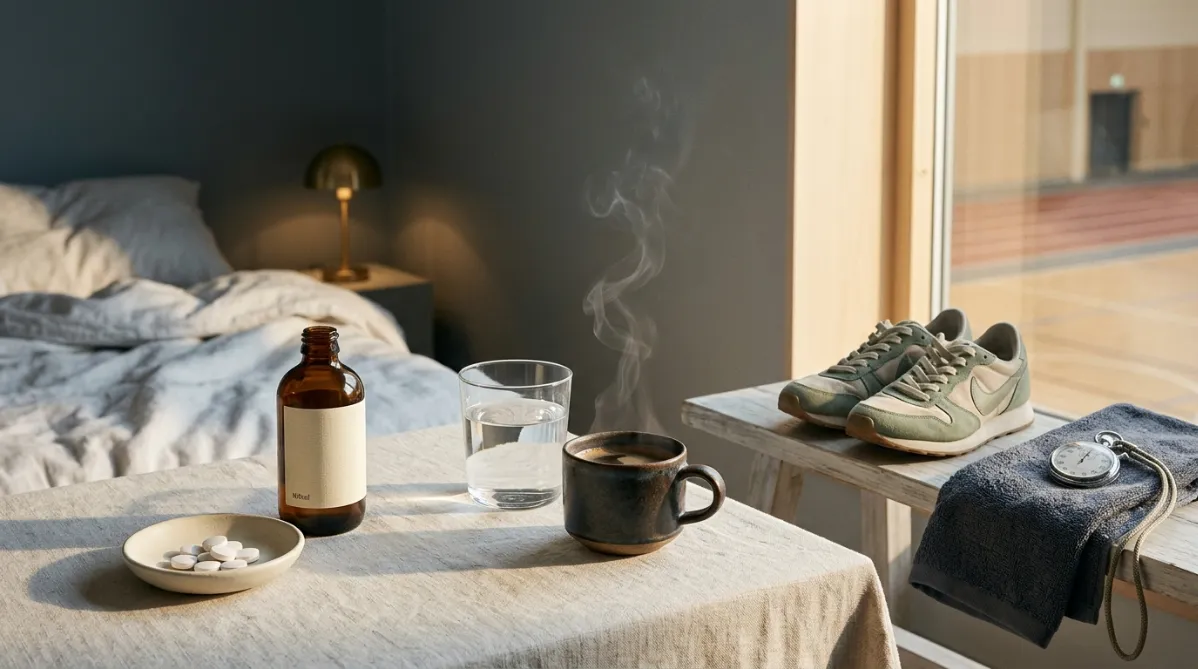
A quiet, sunlit editorial still life on a pale oatmeal linen surface, shot from a slightly elevated three-quarter angle with soft morning window light raking in from the left. On the left side, a small matte ceramic dish holds a few white round tablets, next to a minimalist amber glass bottle with a blank cream label. In the center, a slim glass of water sits beside a handmade stoneware espresso cup filled with dark coffee, with a thin ribbon of steam curling upward. On the right, a pair of worn but clean sage-green running shoes rests on a pale wooden bench, with a folded charcoal athletic towel and a stainless steel stopwatch beside them. The background is softly blurred: a calm bedroom-to-morning transition, with the left third of the frame in cool, dusky blue-gray tones suggesting night, with rumpled white bedding and a small bedside lamp glowing dimly. The tones then blend gradually across the frame into warm golden peach morning light on the right, where a blurred indoor court or track line is faintly visible through a tall window. The color palette is muted and modern: warm cream, soft sage, dusty blue, terracotta accents, and hints of amber. Delicate shadows, shallow depth of field, fine natural film grain, and generous negative space across the top of the frame for headline text. The mood is calm, precise, and thoughtful, in the style of a contemporary wellness and science journal photograph, clean and minimalist with tactile textures of linen, ceramic, glass, and wood.
nutrition

Melatonin a kofein: jen kombinace snižuje markery poškození svalů

BY DR. GYMBRO ·

Kofein prodloužil uběhnutou vzdálenost trénovaných mužů, ale jen kombinace melatoninu večer a kofeinu ráno snížila markery poškození svalů a zánětu. Protokol zahrnoval 6 mg melatoninu před spaním a 3 mg/kg kofeinu hodinu před výkonovým testem. Melatonin neovlivnil měřený spánek, což činí výsledek ještě zajímavějším. Studie byla malá crossoverová studie se 14 trénovanými muži a jedním výkonnostním testem, takže závěry jsou zatím předběžné.

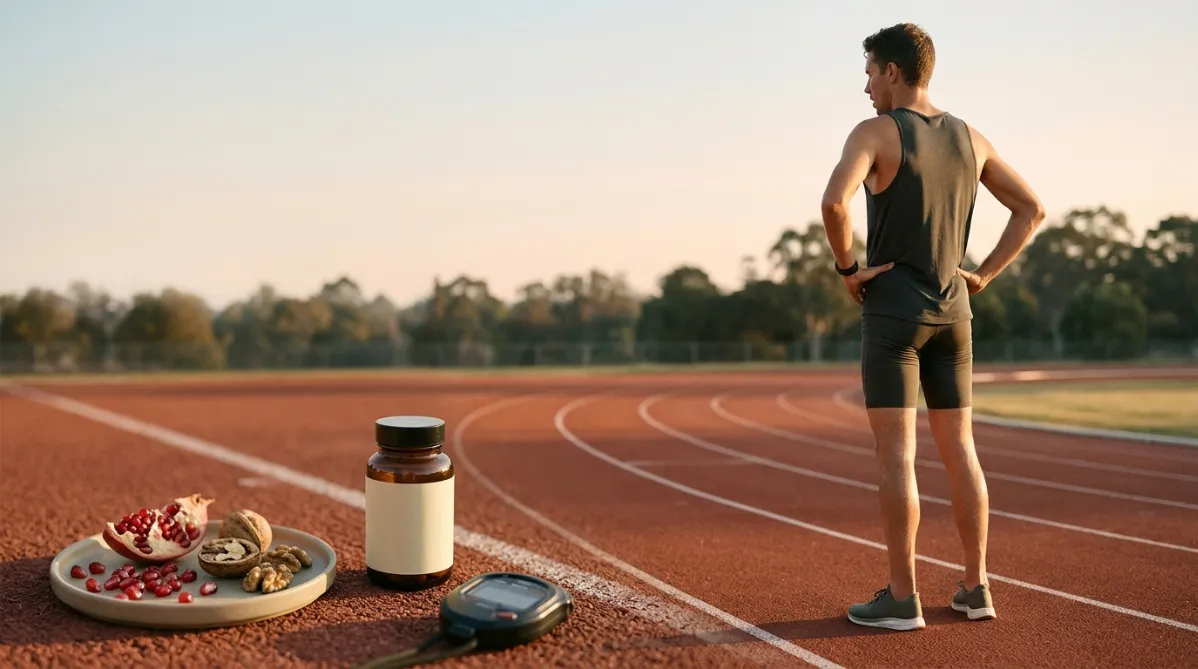
A wide landscape editorial photograph of a lone male distance runner, seen from behind in soft three-quarter profile, pausing on a red-clay outdoor running track at golden hour. He wears a minimalist charcoal singlet and fitted shorts, with a faint sheen of sweat on his calves and shoulders. His hands rest loosely on his hips as he catches his breath, and the white lane lines curve gracefully into the distance. Low amber sunlight rakes across the track and casts long, soft shadows. A hazy line of trees and a pale peach sky blur into creamy bokeh behind him.

In the lower foreground, slightly out of focus, a small matte ceramic dish holds a few pomegranate seeds and halved walnuts, a nod to the natural food sources of urolithin A. Beside it sits a minimalist amber glass supplement bottle with a plain cream label, and a stopwatch lies face-up on the track's edge. The stopwatch is blurred just enough to read as an object, not a number.

The palette is warm and earthy, with terracotta, burnt orange, soft cream, and muted sage green. The look is refined and contemporary, like a high-end wellness or sports-science magazine, with natural film-like grain, shallow depth of field, and gentle contrast. The composition follows the rule of thirds. The runner sits in the right third, the still life anchors the lower left, and open negative space in the upper left leaves room for a headline overlay. The mood is calm and thoughtful, suggesting recovery, measured results, and quiet scientific skepticism rather than hype. No text, no logos, no futuristic elements.
nutrition

Urolithin A nezrychlil elitní běžce — ale snížil poškození svalů

BY DR. GYMBRO ·

Urolithin A byl propagován jako „doplněk pro mitochondrie“, takže výzkumníci ho testovali na elitních mužských běžcích s VO₂max kolem 66 ml·kg⁻¹·min⁻¹. Nezrychlil je na 3000 m, ale snížil hladinu kreatinkinázy (CK) a vnímanou námahu po závodě. VO₂max vzrostlo o 5,4 % ve skupině UA a o 3,6 % u placeba, rozdíl však nebyl statisticky významný. Zde je, co 1000 mg denně po čtyři týdny udělalo a nedělalo, a na co si dát pozor při interpretaci malých vzorků a průmyslových vazeb.

This page is available in