Dr. Gymbro
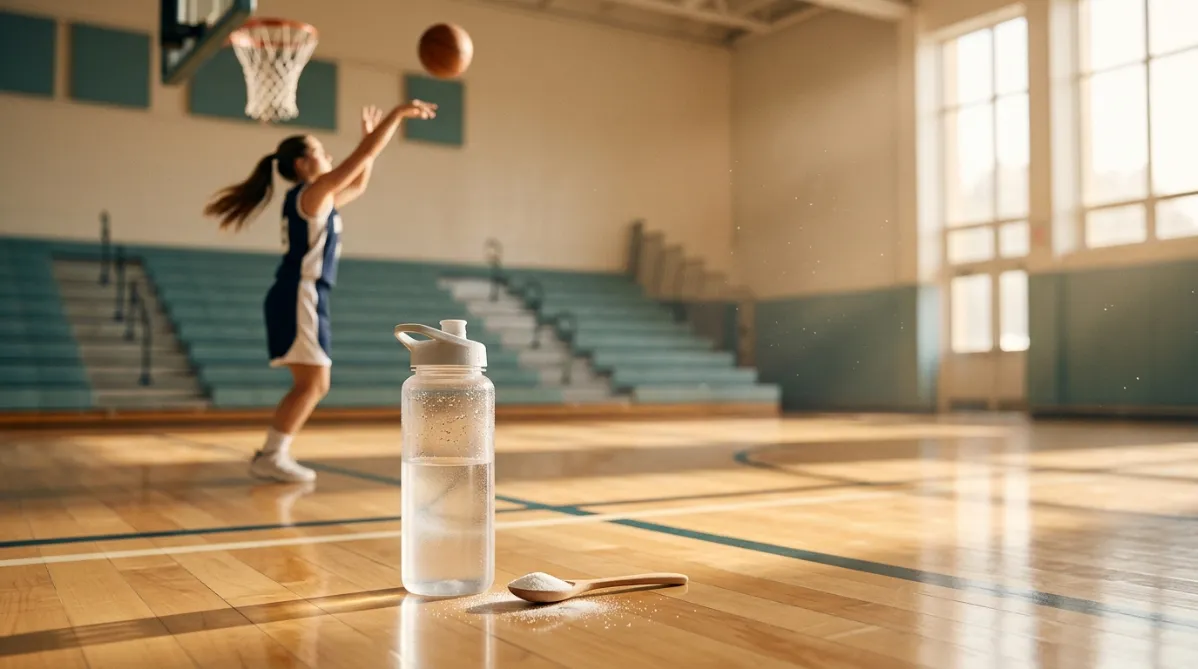
A wide, editorial-style photograph of a hardwood basketball court at golden hour, seen from a low angle near the baseline. In the foreground, slightly off-center to the left, sits a clear sports water bottle on a polished maple floor. It is half full, with tiny beads of condensation on the surface and a faint cloudy shimmer in the liquid. Beside it rests a small wooden spoon dusted with fine white powder, and a few loose grains are scattered on the wood. Warm amber light streams through tall gym windows on the right and casts long soft shadows across the court's painted lines.

In the mid-ground, slightly out of focus, a female basketball player in a navy and white uniform is caught mid-shot. Her arm is extended in a clean follow-through, her wrist relaxed, and the ball is just leaving her fingertips. Her ponytail swings behind her. Behind her, the net hangs crisp against a softly blurred bleacher background in muted teal and cream.

The palette is calm and modern: honey-toned wood, warm cream, deep navy, and soft teal accents. A shallow depth of field gives creamy bokeh in the background, with subtle dust motes floating in the light beams. The composition leaves generous negative space on the upper right for title text. The mood is fresh, athletic, and clean, like a contemporary health and performance journal. The photographic style is natural and film-like, with fine grain, soft contrast, and gentle highlights.
Nutrition

Glutamínový dipeptid, který udržel střelbu přesnou, když voda ne

Dr. Gymbro · · 4 min read

Všichni sportovci jsou vyzýváni k pití vody. V malé basketbalové studii se však ukázalo, že obyčejná voda nechrání přesnost střelby tak dobře jako voda s přídavkem L‑alanyl‑L‑glutaminu (AG). Překvapivě nižší dávka překonala vyšší.

Studie v kostce

  • Design: cross‑over (každá hráčka absolvovala všechna čtyři testování)
  • Účastnice: 10 žen, stipendijní hráčky basketbalu NCAA Division I (průměrný věk 21,2 ± 1,6 let, tělesná hmotnost 73,5 ± 8,0 kg)
  • Formát: čtyři 40‑minutové zápasy s řízenými přestávkami na rehydrataci
  • Podmínky:
    • DHY – žádná rehydratace
    • W – čistá voda
    • AG1 – nízká dávka AG (1 g na 500 ml)
    • AG2 – vysoká dávka AG (2 g na 500 ml)
  • Analýza: porovnání před a po pomocí jednofaktorové opakované měření ANOVA

Co je L‑alanyl‑L‑glutamin?

AG je dipeptid, tedy glutamin spojený s alaninem. Jedná se o formu glutaminu, která se ve vodě snadno rozpouští, a proto ji lze přidat do sportovních nápojů. Studie zkoušela, zda jeho přidání do rehydratačního média ovlivní dovednostní i fyzický výkon v pozdní fázi zápasu ve srovnání s čistou vodou.

Jak nastavili objem tekutin

První test byl „dehydratizační“ zápas – hráčky nesměly pít a ztráta tělesné hmotnosti určovala, kolik tekutiny dostanou v dalších třech testech. Ztratily 1,72 ± 0,42 kg, což představuje 2,3 % jejich tělesné hmotnosti. V následujících třech rehydratovaných zápasech byl průměrný příjem 1,55 ± 0,43 l, bez rozdílů mezi čistou vodou a AG. Tedy rozdíl ve výkonu nelze přičítat většímu objemu tekutin.

Hlavní výsledek: střelba

  • AG1 vs. žádná rehydratace: rozdíl 12,5 % ve střeleckém výkonu (p = 0,016)
  • AG1 vs. čistá voda: rozdíl 11,1 % (p = 0,029)

Čistá voda se v abstraktu významně neodlišila od dehydratizačního zápasu. Nízká dávka AG se oddělila od obou ostatních podmínek. Jinými slovy, nahrazení tekutiny samotnou vodou nestačilo udržet přesnost střelby – přidání dipeptidu mělo pozitivní vliv.

Reakční čas a únava

Vizuální reakční čas byl po AG1 podstatně rychlejší než po žádné rehydrataci (p = 0,014). Autoři usoudili, že AG‑rehydratace zachovává dovednostní výkon a vizuální reakci lépe než samotná voda.

Únava, měřená hráčským zatížením, byla méně jednoznačná. Statisticky významný rozdíl (p = 0,045) se objevil jen mezi vysokou dávkou AG2 a dehydratizačním testem. Vyšší dávka tedy ovlivnila únavu, zatímco nízká dávka se projevila pouze ve střelbě a reakčním čase.

Skoková výkonnost se nezměnila. Ani špičkový, ani průměrný vertikální skok nebyl v žádném testu odlišný. Studie tedy nenabízí impuls pro zlepšení výbušnosti, ale pro dovednosti a reakci.

Proč menší dávka překonala vyšší?

Abstrakt studie neuvádí konkrétní důvod, proč nižší dávka překonala vyšší ve střelbě, a s pouhými 10 hráčkami by bylo neodborné spekulovat. Jednoduchá interpretace je, že „více neznamená vždy lépe“ a že křivka dávka‑odpověď není lineární. Jakýkoli mechanizmus zůstává hypotézou, dokud jej nepotvrdí rozsáhlejší výzkum.

Co to pro vás znamená

Dávka: Efektivní dávka v této studii byla 1 g AG na 500 ml tekutiny. Hráčky během průměrného zápasu vypily asi 1,55 l, což při dané koncentraci představuje zhruba 3 g AG celkem. Dávka 2 g na 500 ml nezlepšila střelbu více než nižší dávka.

Časování: Hráčky pily během řízených přestávek 40‑minutového zápasu, přičemž celkový objem tekutiny byl nastaven podle jejich individuální ztráty hmotnosti. Prakticky to znamená míchat AG do tekutiny, kterou budete během dlouhých zápasů nebo tréninků konzumovat, spíše než užívat jednorázovou dávku před zahájením.

Kdo by mohl mít prospěch:

  • Basketbalisté a další sportovci, kde je přesnost rozhodujícím faktorem během dlouhých, přerušovaných zápasů
  • Hráči, kteří při intenzivním pocení ztratí několik procent tělesné hmotnosti
  • Trenéři a sportovní výživoví specialisté, kteří už mají hydratační plán a chtějí ho doplnit

Kdo by měl být opatrný nebo se vyhnout:

  • Ti, kteří očekávají zlepšení výkonnosti ve skoku nebo výbušnosti – studie žádný takový efekt nenašla
  • Rekreační sportovci na krátkých trénincích, protože tato skupina nebyla ve studii testována
  • Osoby s onemocněním ledvin či jater, nebo užívající léky – před užitím jakýchkoli aminokyselinových doplňků by se měly poradit s lékařem
  • Kdokoli, kdo hledá 100 % záruku výsledku – důkazy jsou zatím omezené

Omezení, která byste měli znát

  1. Malý vzorek. Pouze 10 hráček se zúčastnilo, takže výsledky jsou křehké.
  2. Pouze ženy, pouze špičkové sportovkyně. Všechny byly z Division I ženského basketbalu. Nálezy nemusí platit pro muže, rekreační hráče či jiné sporty.
  3. Dehydratizační zápas byl vždy první. Jeho ztráta hmotnosti určovala objem tekutiny pro další testy. Abstrakt nepopisuje randomizaci pořadí ostatních podmínek, takže vliv pořadí či adaptace nelze vyloučit.
  4. Financování a konflikty zájmů. Abstrakt neuvádí zdroje financování ani zapojení průmyslu. Před závěry si prostudujte celý text (PMC3316133) a sekci o financování.
  5. Jedna studie. Neměla by být považována za definitivní vědu; replikace je nutná.

Závěr

V tomto malém cross‑over testu přidání 1 g AG na 500 ml rehydratace udrželo střelecký výkon asi o 11 % výše než čistá voda a o 12,5 % výše než žádná rehydratace, a zlepšilo vizuální reakční čas oproti dehydrataci. Skoková výkonnost zůstala stejná a vyšší dávka nevyšplhala nad nižší ve střelbě. Jedná se o zajímavý podnět pro strategii hydratace při dlouhých zápasech, ale zatím jen vodítko, ne osvědčený protokol.
Original study

Read the original research on pubmed.ncbi.nlm.nih.gov →

This article summarizes published research for general information. It is not medical advice.

DG

Written by

Dr. Gymbro

Dr. Gymbro writes for Dr. Gymbro: science-backed fitness, nutrition & performance.

Related Articles

A wide, editorial-style flat lay photographed from above on a pale warm-gray linen surface in soft natural window light. At the center, a small open amber glass jar tips gently onto its side, spilling a few cream-colored capsules across the fabric. Next to the jar sits a loose arrangement of fresh mushrooms: a cluster of golden-tan reishi with glossy, lacquered caps, a few slender white enoki stems, a halved shiitake showing its pale gills, and a curl of turkey tail with concentric bands of rust, cream, and charcoal. A small wooden scoop holds a pile of fine beige mushroom powder.

On the left third of the frame, a matte black sports watch with a minimal face lies beside a folded sage-green running shirt and a pair of lightweight off-white running shoes, hinting at athletic training without showing a person. A slim white notebook with a single pencil rests nearby, open to a blank page with a faint hand-drawn line graph trending upward, in thin graphite strokes.

On the right side, a pair of clear glass beakers and a single small petri dish with a soft amber-tinted liquid add a subtle laboratory note, kept calm and organic. A single sprig of dried herbs and a few scattered oat-colored grains add texture.

The palette is earthy and refined: oatmeal, soft sage, terracotta, warm amber, and charcoal accents against the muted neutral background. Shadows are soft and diffused, with a gentle highlight on the glass and the glossy reishi cap. The composition leaves generous negative space in the upper right for a headline overlay. Shallow depth of field blurs the edges slightly, while the central mushrooms and capsules stay crisp. The overall feel is modern, clean, and trendy, like a wellness and science magazine cover, with tactile natural textures, minimal styling, and a quiet sense of curiosity and skepticism.
science research

Kapsle s houbami zvýšila VO2max o 14,8 % – ale je tu velký háček

BY DR. GYMBRO ·

Kapsle s houbami, 40 dnů a nárůst VO2max o 14,8 % zní téměř příliš dobře, aby to byla pravda. V novém článku v časopise *Antioxidants* 50 mladých sportovců užívalo 320 mg denně extraktu bohatého na beta‑glukany a zvýšilo si VO2max z 46,26 na 53,12 ml /kg /min. Velký háček spočívá v tom, že studie postrádala kontrolní skupinu, randomizaci ani zaslepení a sportovci během zkoušky pokračovali v tréninku. Buněčné experimenty na srdečních buňkách potkana naznačují souvislost s hypoxií, ale testovaly jednotlivé sloučeniny, nikoli celý doplněk. Níže shrnujeme, co studie ukázala, co nedokáže říci a komu je třeba být opatrný.

A wide, editorial-style still life shot from a slightly elevated angle on a pale, warm-gray concrete surface lit by soft natural window light from the left. In the center foreground, a clear glass of cloudy water sits beside a small white ceramic bowl heaping with fine white baking soda powder, a wooden measuring spoon resting beside it with a light dusting of powder spilling across the surface in a graceful arc. Next to them, a minimalist digital kitchen scale in matte white shows a small portion of powder in a shallow dish. Slightly behind, an orange basketball is partially in frame, its pebbled texture catching the light, resting beside a pair of clean white and coral athletic sneakers with the laces loosely undone. A folded charcoal gray towel and a stainless steel stopwatch lie to the right, the stopwatch face crisp and legible. Three small, neatly arranged piles of white powder on a slate tile in the midground, in ascending sizes, hint at different doses without any text or labels. In the soft-focus background, the faint outline of an indoor basketball court with warm honey-colored hardwood floor and blurred lane lines stretches across the frame, glowing with golden-hour light. The color palette is restrained and modern: warm off-white, soft gray, burnt orange, and touches of sage green from a single sprig of mint or eucalyptus laid near the glass. Shallow depth of field, crisp textures on powder grains and the ball's surface, gentle shadows, subtle film-like grain. Clean negative space in the upper right for headline overlay. The mood is calm, sleek, and contemporary, like a premium health and sports science magazine cover, with a fresh, minimalist composition and no people, no text, and no futuristic elements.
nutrition

Sodová soda a sprinty: dávka, která ve všech testech překonala placebo

BY DR. GYMBRO ·

Nová randomizovaná studie u basketbalistů ukázala, že doplnění sodného bikarbonátu (sodové sody) ke čtyřtýdennímu sprintovému intervalovému tréninku přináší lepší výkony ve skoku, sprintu, agilnosti, Yo‑Yo testu i Wingate testu než placebo. Vyšší dávka 0,45 g/kg převyšuje dávku 0,3 g/kg ve všech měřených parametrech. Jedná se o levnou a atraktivní možnost pro sportovce týmových sportů, ale je třeba dbát na žaludeční toleranci a uvědomit si, že studie je malá, krátkodobá a zahrnuje jen muže. Níže najdete výpočet dávky, tipy, jak zvládnout gastro‑nevolnost, a informace o tom, pro koho je suplementace relevantní.

A landscape editorial photograph with a modern, clean magazine feel, shot on a pale warm-gray concrete surface in soft natural window light from the left. In the foreground, two matte white ceramic espresso cups sit side by side. The left cup holds a small amount of dark espresso with golden crema. The right cup is filled twice as high. Beside them, two small stainless steel scoops hold fine coffee-colored powder, one half full and one heaped, suggesting a dose comparison without any text or labels. A pair of worn red leather boxing gloves rests slightly out of focus behind the cups, laces loosely draped, with a white hand wrap rolled neatly beside them. A minimalist digital kitchen scale in matte black sits at the edge of the frame, with a few roasted coffee beans scattered across the surface. In the soft-focus background, a boxing gym corner appears: a hanging heavy bag in muted charcoal, pale wood plank flooring, and a tall window with diffused morning light. The palette is warm cream, espresso brown, brick red, and soft slate gray, with gentle shadows and a shallow depth of field. The composition follows the rule of thirds, with the cups and scoops in the lower left third and open negative space on the right for headline overlay. The look is tactile and refined, like a high-end health and performance journal. It has natural grain, subtle contrast, and a calm, confident mood. There are no people, no text, no logos, and no futuristic elements.
nutrition

Zdvojení kofeinu málem nepomohlo boxerům – co bylo ve hře

BY DR. GYMBRO ·

Myslíte si, že dvojnásobná porce pre‑workoutu přinese dvojnásobný výkon? Studie na 15 soutěžních boxerů srovnala 3 mg/kg a 6 mg/kg kofeinu a vyšší dávka nebyla systematicky lepší. Obě dávky zvýšily výšku skoku i výkon po 60 minutách, přičemž 6 mg/kg vyniklo jen u několika ukazatelů, např. balistického kliku a momentu extenze kolene. Níže najdete převod mg na kg pro různé tělesné hmotnosti, doporučené načasování a praktická upozornění – včetně toho, že úderová síla nebyla testována.

A modern editorial still life photographed from a slightly elevated angle on a pale, matte stone surface in soft natural window light. On the left, a heaping mound of fine white creatine monohydrate powder spills from a matte ceramic scoop, with a few crisp grains scattered across the surface. In the center, a small, minimalist amber glass capsule bottle sits tipped on its side, with a handful of off-white capsules spilling out. The label is blank and clean. On the right, a neat row of three clear glass lab-style vials rests on a slim oak tray. The vials hold different amounts of white powder: the first nearly empty, the second slightly fuller, the third filled almost to the brim. This quietly suggests the difference in dose and result. Beside the tray lies a simple stainless steel measuring spoon and a folded sheet of cream paper with soft, abstract bar-chart lines in muted sage green and terracotta. The lines are hand-drawn and unlabeled.

Behind the objects, slightly out of focus, a lean athletic forearm in a gray linen sleeve rests on the edge of the surface, one hand loosely holding a matte shaker bottle. This hints at a training context without showing a face. A single sprig of eucalyptus in the corner adds a soft organic touch.

The palette is warm neutral: bone white, oatmeal, soft sage, muted terracotta, and touches of amber. Shadows are gentle and long, with a shallow depth of field that gives creamy bokeh in the background. The mood is calm, clean, and trustworthy, like a premium health and science journal's feature spread, with generous negative space at the top and right for headline overlay. The composition is wide, balanced, and uncluttered, with subtle film-like grain and a natural, true-to-life color grade. No text, no logos, no futuristic elements.
nutrition

Labelová dávka Kre‑Alkalynu nezvýšila svalovou kreatinu, ukazují biopsie

BY DR. GYMBRO ·

Vysoce ceněná „bufferovaná“ kreatinová forma Kre‑Alkalyn slibuje lepší vstřebávání, menší dávky a méně nadýmání. Studie provedená na Texas A&M s dvojkřížovým, náhodně rozděleným designem testovala tato tvrzení pomocí reálných svalových biopsií u 36 trénujících kulturistů po dobu 28 dní. Při doporučené dávce 1,5 g/den Kre‑Alkalyn prakticky nezvýšil svalovou kreatinu, zatímco kreatin monohydrát ji zvýšil výrazně. Síla, tělesná kompozice ani výskyt vedlejších účinků nedávaly na bufferovaný produkt žádnou výhodu.

This page is available in