Dr. Gymbro
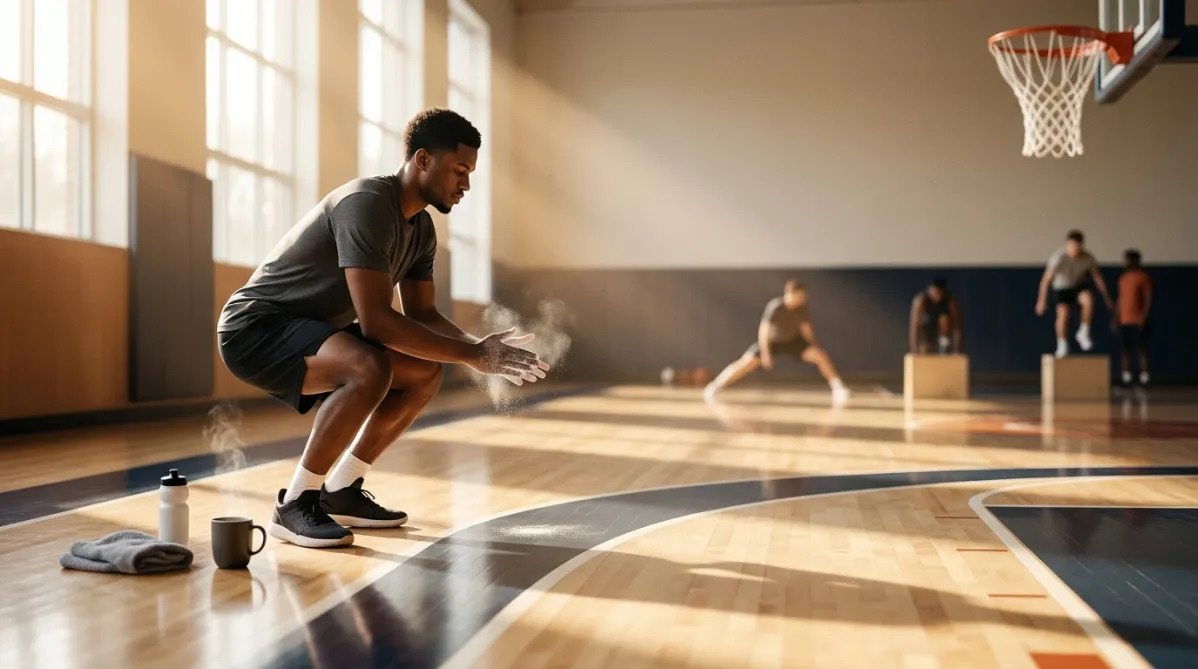
A wide, editorial-style photograph of an indoor basketball court at early morning, shot from a low angle near the baseline. In the foreground, a male collegiate basketball player in a charcoal athletic tee and black shorts is captured mid-crouch, just before a plyometric jump, with chalk dust lifting off his hands and fingers. His expression is focused and calm. Beside him on the polished maple floor sits a matte ceramic cup of black coffee with a thin curl of steam, next to a small white water bottle and a folded gray towel, placed slightly out of focus as a quiet visual hint at the caffeine theme.

Soft golden sunlight pours through tall high windows on the left, casting long, warm diagonal beams across the hardwood and creating subtle reflections on the glossy surface. The painted court lines in deep navy and cream curve gracefully through the frame, leading the eye toward the background, where a few teammates blur softly, stretching and doing box jumps over low plyometric boxes. A basketball hoop with a clean white net is visible in the upper right, gently out of focus.

The color palette is warm and refined: honey-toned wood, espresso brown, cream, muted navy, and touches of terracotta orange. Use shallow depth of field with a creamy bokeh, fine film-like grain, and gentle contrast, giving the image the feel of a modern lifestyle and science journal cover, like a contemporary wellness or sports magazine. Composition follows the rule of thirds, with the athlete on the left third and generous negative space on the right, filled with soft light and blurred court, which is ideal for overlaid headline text. No text, logos, or graphics appear in the image. The mood is energized, intentional, and quietly scientific, evoking preparation, rhythm, and peak performance, with natural realism and no futuristic elements.
Science & Research

Kofein a speciální zahřívací protokol zvyšují výkon ve Wingate testu u basketbalistů

Dr. Gymbro · · 3 min read

Většina sportovců považuje kofein a rozcvičku za dva oddělené kroky. Nedávná křížová studie naznačuje, že takto se může ztrácet část výkonu. Výzkumníci z Číny zkoumali, co se stane, když na 5 mg/kg kofeinu navážou PAPE‑zahřátí (post‑activation potentiation enhancement) a zjistili, že výsledky převyšovaly jak běžnou rozcvičku, tak samotné PAPE.

Pozor: Jedná se o malý výzkum na specifické populaci. Níže najdete hlavní zjištění, jejich význam a praktické tipy, jak to použít, aniž byste přeháněli.

Stručně: Co studie ukázala

Studie byla publikována v Journal of the International Society of Sports Nutrition (2026) a zapojila 24 mužských vysokoškolských basketbalistů (průměrný věk cca 20 let). Použili náhodný křížový design, takže každý sportovec absolvoval všechny tři podmínky:

  • CON: běžná rozcvička
  • PAPE+PLA: PAPE‑zahřátí + placebo
  • PAPE+CAF: PAPE‑zahřátí + 5 mg/kg kofeinu

Výkon byl měřen Wingate anaerobním testem – 30 sekundovým maximálním šlapáním na cyklistickém ergometru. Zaznamenali špičkový výkon, průměrný výkon, celkovou práci, index únavy a rating vnímané námahy (RPE).

PAPE + placebo významně překonalo standardní rozcvičku v špičkovém výkonu, průměrném výkonu i celkové práci (p < 0,001). Přidání kofeinu tyto hodnoty opět navýšilo (p < 0,001). Autoři hovoří o jasném synergickém efektu.

Co je PAPE a proč na tom záleží?

PAPE znamená, že krátká, intenzivní svalová aktivace může dočasně zlepšit výkon v následných úsilích. Liší se od klasické post‑activation potentiation, která se týká spíše změn na úrovni svalových vláken. PAPE sportovci vnímají jako „připravený“, „pružný“ a „nabité“ tělo.

V této studii byl aktivační set komplexní plyometrická sekvence: dřepové výskoky, střídavé skoky a 20 m sprint. Není to žádný exotický laboratorní protokol – každý basketbalista nebo sportovec v tělocvičně či na hřišti to zvládne bez speciálního vybavení.

Závěr: dobře navržená, výbušná rozcvička nezvedá jen tělesnou teplotu, ale i měřitelně zvyšuje anaerobní výkon oproti běžné rozcvičce.

Vrstva kofeinu

Kofein patří mezi nejvíce studované doplňky ke zlepšení výkonu a dávka 5 mg/kg spadá do středně‑vyššího rozmezí běžných výzkumných protokolů. Pro sportovce vážící 80 kg to znamená 400 mg, zhruba čtyři malé šálky filtrované kávy nebo dvě porce silného pre‑workoutu.

Zajímavý výsledek: kofein nepřidal jen drobný nárůst. Posunul špičkový výkon, průměrný výkon i celkovou práci nad úroveň, kterou již PAPE‑zahřátí poskytlo. Navíc snížil RPE (p < 0,001), tedy stejný maximální výdej se sportovcům zdál snazší.

Jediná veličina se nezměnila: index únavy zůstal statisticky nevýznamný (p = 0,06). Sportovci tedy vyprodukovali více síly, ale rychlost útlumu během 30 sekund se nezlepšila.

Praktické použití: dávka, načasování, protokol

Abstrakt uvádí dávku (5 mg/kg) i strukturu rozcvičky, ale konkrétní načasování není ve volně dostupném textu uvedeno – před aplikací si prostudujte celý článek. Většina studií s kofeinem doporučuje užití 45 – 60 min před výkonem, což však není výsledek této konkrétní studie.

Jednoduchý návod:

  1. Otestujte kofein během tréninku. Nepoužívejte 5 mg/kg poprvé v den zápasu.
  2. Vypočítejte dávku podle tělesné hmotnosti. Pokud jste na kofein citliví, začněte nižší – např. 3 mg/kg.
  3. Po běžné obecné rozcvičce přidejte krátký výbušný blok: dřepové výskoky, střídavé skoky a 20 m sprint.
  4. Nechte dostatečnou regeneraci mezi aktivací a hlavním úsilím. Abstrakt neuvádí odpočinkový interval, proto experimentujte opatrně.

Pro koho je to vhodné (a pro koho ne?)

Ideální kandidáti:

  • Sportovci z explozičních disciplín (basketbal, fotbal, ragby, sprint) tolerující kofein
  • Siloví sportovci nebo sprinteri hledající předzápasovou „priming“ rutinu
  • Athleti, kteří pociťují slabost během krátkých, intenzivních výkonů

Kdo by měl být opatrný nebo raději vynechat:

  • Lidé s úzkostmi, arytmiemi, vysokým krevním tlakem nebo zvýšenou citlivostí na kofein
  • Těhotné ženy nebo osoby, kterým lékař doporučil omezení kofeinu
  • Sportovci soutěžící večer a potřebující chránit spánek
  • Mladiství, jelikož studie se týkala dospělých kolem 20 let

Omezení, která je třeba znát

Než si přestanete rozcvičovat podle tohoto protokolu, mějte na paměti následující upozornění:

  • Malý vzorek: 24 účastníků, všichni muži z vysokoškolské basketbalové ligy. Výsledky se nemusí vztahovat na ženy, jiné sporty ani elitní profesionály.
  • Wingate není hřiště. Jedná se o cyklistický test. Skutečný basketbal zahrnuje skoky, změny směru a techniku, které nebyly měřeny.
  • Index únavy se nezměnil, takže zlepšení výdrže při opakovaných sprintů není prokázáno.
  • Účinky jsou akutní. Studie neposkytuje informace o dlouhodobých adaptacích.
  • Individuální reakce se liší. Tolerance, genetika a běžná konzumace kofeinu mohou výsledek ovlivnit.

Závěr

Výzkum podporuje jednoduchou myšlenku: výbušná PAPE rozcvička zvyšuje anaerobní sílu a středně vysoká dávka kofeinu může tento efekt ještě podpořit a současně snížit vnímanou námahu. Je to slibné, praktické a levné, ale jde jen o jeden malý výzkum. Přistupujte k němu jako k chytřému experimentu v tréninku, ne jako k zaručenému kouzlu pro výkon.
Original study

Read the original research on pubmed.ncbi.nlm.nih.gov →

This article summarizes published research for general information. It is not medical advice.

DG

Written by

Dr. Gymbro

Dr. Gymbro writes for Dr. Gymbro: science-backed fitness, nutrition & performance.

Related Articles

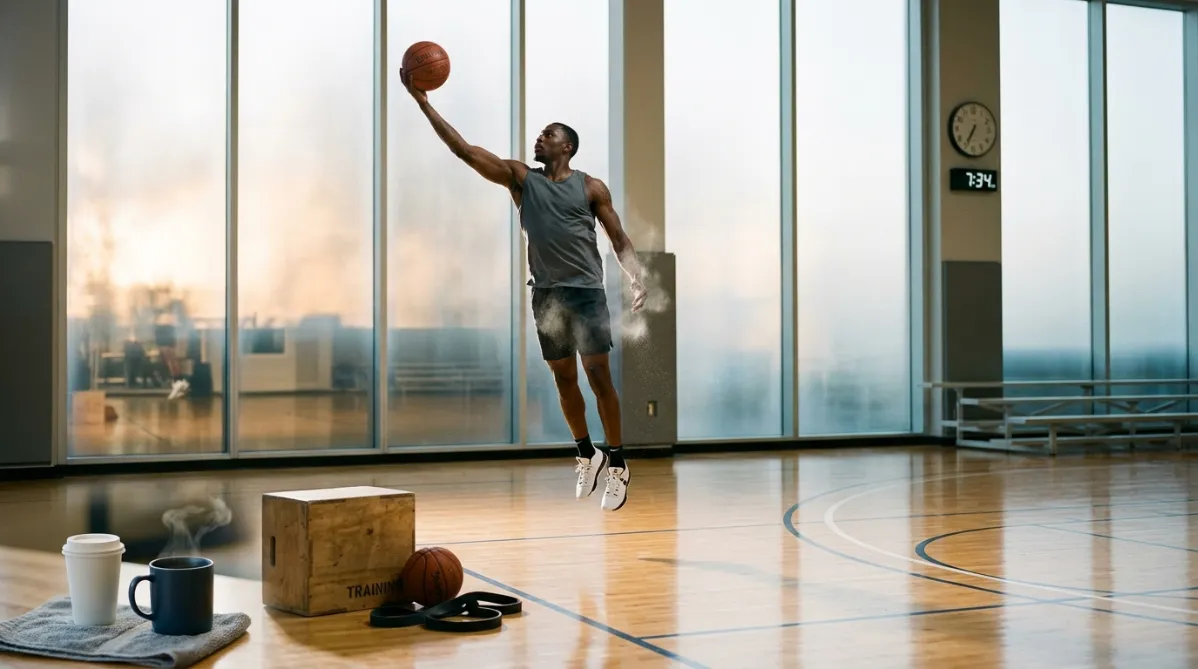
A wide, editorial-style photograph of a basketball player mid-air at the top of a vertical jump inside a sunlit indoor court, shot from a low angle so the athlete's silhouette rises against tall frosted windows glowing with soft morning light. The player wears a plain charcoal tank and white sneakers, with chalk dust drifting off their hands and catching the light. The polished honey-toned hardwood floor reflects the figure faintly, with crisp painted court lines leading the eye across the frame.

In the foreground at the lower left, slightly out of focus, a small wooden plyometric box sits on the floor beside a matte ceramic cup of black coffee and a plain white paper cup, placed neatly on a folded gray towel. Thin steam curls from the ceramic cup. They stand for the question of caffeine versus warm-up without any text or labels.

The color palette is calm and modern: warm amber wood, soft cream, muted slate blue shadows, and a touch of burnt orange from a basketball resting near the box. Light is natural and diffused, with gentle rim lighting on the athlete's shoulders and a shallow depth of field that blurs the background bleachers into creamy shapes. The composition has generous negative space on the right third, suited to a headline overlay, in a clean, contemporary magazine style with fine film grain, subtle contrast, and a quiet, focused mood. No text, no logos, no futuristic elements.
science research

Kofein před skoky nepřidal nic navíc. Rozcvička udělala práci

BY DR. GYMBRO ·

Kofein spolu s drop‑jump rozcvičkou zní jako recept na vyšší skoky, ale nová studie u elitních basketbalistů ukázala, že káva nic navíc nepřidala. Individualizovaný drop‑jump program sám přinesl krátkodobý nárůst výšky skoku. Dávka 3 mg/kg kofeinu neovlivnila špičkovou výšku, načasování ani celkový PAPE ve srovnání s placebem. Individuální reakce se však výrazně lišily, takže někteří sportovci mohou reagovat odlišně. Studie tak ukazuje, co funguje, co ne, a jak si můžete nastavit vlastní skokový primer.

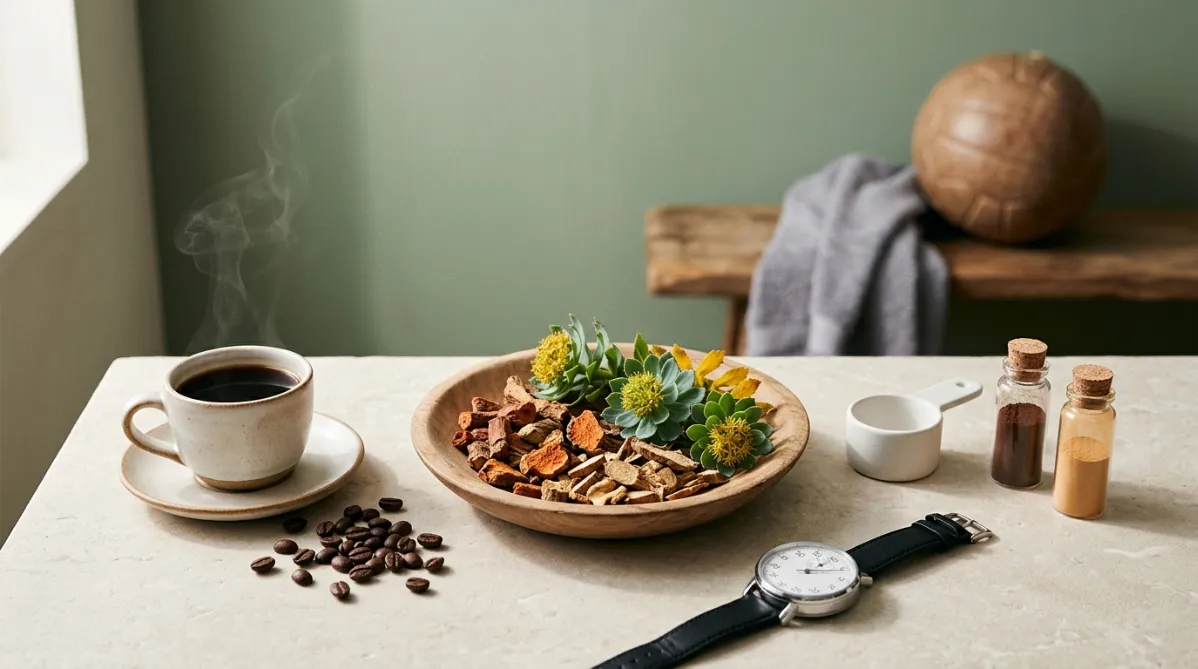
A wide, editorial-style still life photographed on a pale, matte stone countertop in soft morning window light. On the left, a small ceramic cup of black coffee sits beside a scattering of whole roasted coffee beans, with a thin wisp of steam rising. At the center, a shallow wooden bowl holds dried Rhodiola rosea root pieces, rust-orange and tan, with a few fresh succulent-like Rhodiola rosette stems with blue-green leaves and yellow-gold flowers laid across the surface. On the right, a minimalist matte white scoop and two small glass vials of fine powder, one dark brown and one soft amber, are lined up neatly like a measured dose. Behind them, softly out of focus, a blurred athletic setting suggests a training space: a muted sage-green wall, a folded gray towel, and a worn soccer ball resting on a low bench. A stopwatch with a clean white face lies in the foreground, slightly angled, hinting at timing and performance. The palette is warm and earthy: cream, terracotta, deep espresso brown, moss green, and a touch of marigold yellow. Shadows are long and gentle, with a shallow depth of field and fine natural texture in the stone, wood, and plant material. The composition is balanced and uncluttered, with generous negative space on the upper left for headline text. The overall look is modern, calm, and trendy, like a contemporary wellness and science journal cover, with crisp detail, subtle film grain, and a natural, tactile feel.
supplements

Rhodiola + Kofein: Kombinace, která překonala placebo ve výkonu na Wingate

BY DR. GYMBRO ·

Kofein je králem předtréninkových doplňků, ale nová křížová studie naznačuje, že kombinace s *Rhodiola rosea* může přinést něco navíc. U trénovaných fotbalistů (3 mg/kg každé látky, podaná 60 minut před testem) byla jedinou podmínkou, která překonala placebo v maximální síle na Wingate testu, právě tato kombinace. Salivární kortizol, α‑amyláza a IgA se mezi podmínkami různě měnily. Přestože šlo jen o 10 účastníků a jednorázovou dávku, jde spíše o náznak než o definitivní závěr. Přečtěte si, co studie skutečně ukázala, pro koho je relevantní a co si z ní nepřehánět.

A landscape editorial photograph in a bright, modern gym studio with soft natural light pouring through tall windows. In the foreground, a matte ceramic cup and a small glass jar of plain white powder sit on a light oak bench, with a wooden scoop resting beside them and a few loose grains dusted across the wood. The jar has no label, which hints at mystery without being heavy-handed. Slightly out of focus behind them, a female athlete in a sage green athletic set stands at a barbell, chalked hands gripping the bar, her expression calm and focused. A male cyclist on a stationary bike is blurred in the far background. The palette is warm neutrals: cream, soft sand, pale oak, muted sage, and a touch of terracotta, with gentle golden-hour highlights and soft shadows. The composition follows the rule of thirds, with the cup and jar in the lower left, the athlete on the right, and open negative space in the upper area for headline text. The depth of field is shallow, with a creamy bokeh background. The mood is contemplative, curious, and trendy, like a contemporary health and science magazine cover. Fine film grain, subtle matte finish, clean minimalist styling, and no text or logos.
science research

Falešný kofein stále zvyšuje výkonnost sportovců

BY DR. GYMBRO ·

Co když část vašeho předtréninkového boostu pochází jen z víry, ne ze skutečného kofeinu? Meta‑analýza z roku 2026 zahrnující 17 studií zjistila, že placebo, o kterém sportovci věřili, že je kofein, zlepšovalo výkon (d = 0,49) při bench‑pressu, cyklistických časových zkouškách i opakovaných sprintech. Efekt byl silnější v dvojích, kde byli výzkumníci zaslepení, a ve studiích s vyšším podílem žen, i když důkazy jsou nízké jistoty a riziko biasu je vysoké. Neznamená to, že byste měli vynechat skutečný kofein (3‑6 mg/kg), ale připomíná to, že očekávání je také výkonová proměnná.

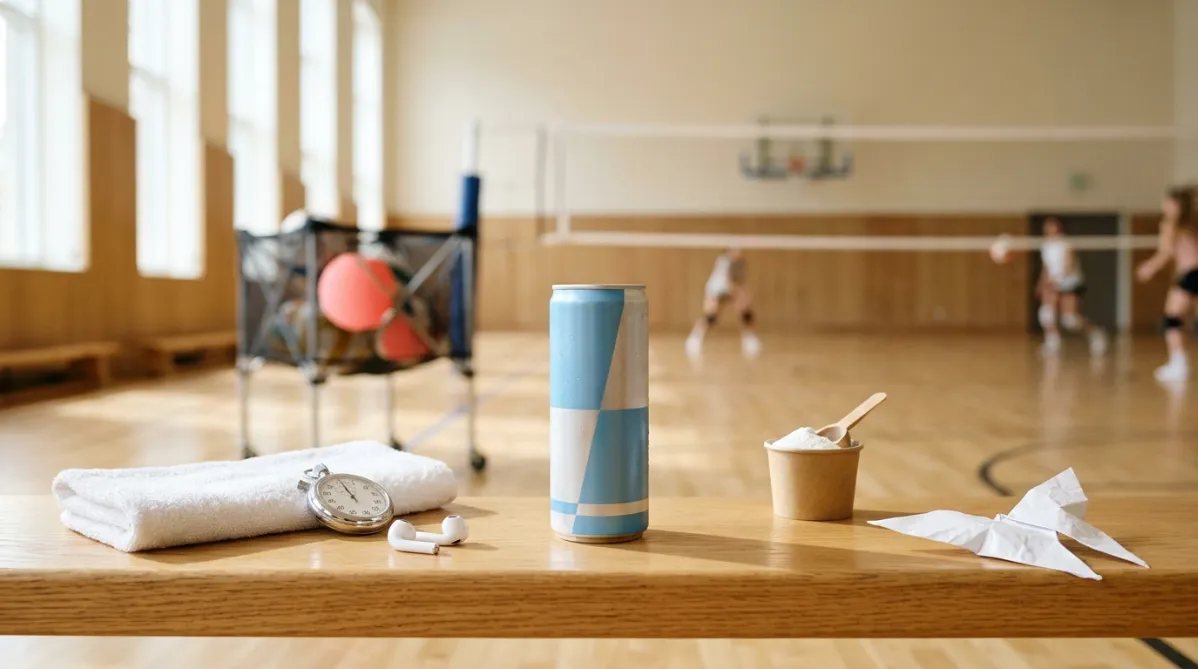
A wide, editorial-style photograph of a single slim silver and blue energy drink can standing upright at center on a polished light-oak gym bench, shot in soft natural window light. The can is unbranded, with a clean, minimal design and a few beads of condensation. Behind it, the softly blurred interior of a bright modern indoor volleyball court stretches into the background, with a pale hardwood floor, a net, and a few volleyballs resting in a mesh cart. Warm morning sunlight enters through tall windows on the left and casts long, gentle shadows across the bench. Beside the can sit a small white towel folded neatly, a simple stopwatch, and a pair of white wireless earbuds. On the right, a small paper cup of white powder and a wooden scoop hint at measured dosing. They are placed deliberately, like a styled still life.

At the very edge of the frame, a pair of delicate white paper wings, origami-like and slightly crumpled, lie flat and unused on the bench, a subtle visual joke about the "wings" slogan. The wings are understated and tactile, not magical or glowing.

The color palette is muted and fresh: warm honey wood, soft cream, pale sky blue, and touches of silver, with a single accent of coral red from a volleyball panel in the background. The depth of field is shallow, with crisp focus on the can and the paper wings and a creamy bokeh background. The composition follows the rule of thirds, with the can slightly left of center and generous negative space on the right for a headline overlay. The mood is calm, clean, and contemporary, like a lifestyle and science magazine cover, with fine film grain and natural contrast. The camera angle is slightly low, at bench level, with a 50mm lens look.
nutrition

Dává Red Bull skutečně křídla? 13 testů v posilovně nic neukázalo

BY DR. GYMBRO ·

Slogan Red Bullu slibuje křídla, ale nová křížová studie u ženských volejbalistek žádné nezjistila. Jedna standardní plechovka nepřinesla zlepšení v 13 měřeních (Wingate, skok, úchop) ve srovnání s placebem. Osm z 15 sportovkyň také hlásilo mírnou nevolnost – pravděpodobně kvůli dávce jen ≈ 1,1 mg kg⁻¹ kofeinu, což je pod běžně uváděnými 3‑6 mg kg⁻¹.

This page is available in