Dr. Gymbro
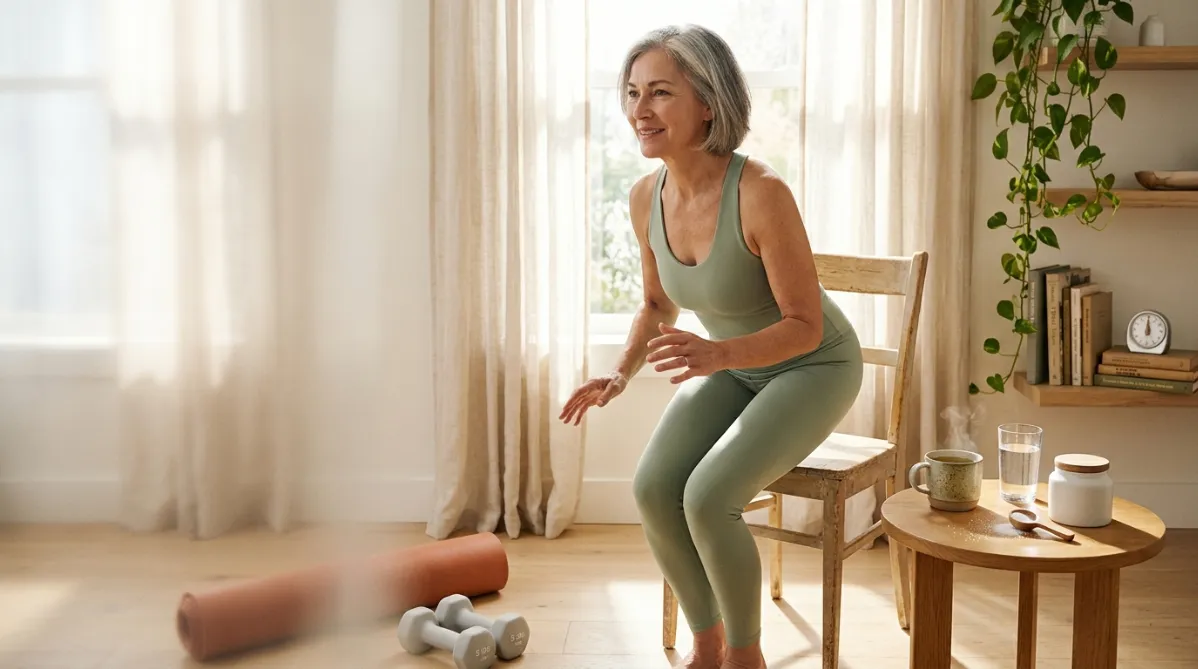
A wide landscape editorial photograph of a bright, airy sunlit living room with pale oak floors and a large window with sheer linen curtains. In the center, a woman in her late 50s with silver-streaked hair, wearing soft sage-green athletic wear, rises from a simple wooden chair, caught mid-motion with a calm, determined expression. Her hands are lightly extended forward for balance. Beside her on a small round oak side table sits a ceramic mug of tea, a glass of water, and a small matte white jar with a wooden scoop resting beside it, a few fine white crystalline grains scattered on the tabletop. In the soft-focus foreground, a pair of light-gray dumbbells and a rolled terracotta-colored yoga mat rest on the floor. A trailing green pothos plant spills from a shelf in the background, with a stack of books and a small analog kitchen timer nearby.

The color palette is warm and muted: cream, sage green, soft terracotta, natural wood, and gentle morning-gold light. Light streams diagonally across the scene, creating long soft shadows and a subtle glow on the woman's shoulders. Shallow depth of field blurs the background gently, while the woman and the table remain crisp. The composition follows the rule of thirds, with the woman on the right and generous negative space on the left, suited for headline overlay. The mood is hopeful, grounded, and modern, like a high-end wellness magazine or a trendy health journal. Natural film-like grain, soft contrast, and a slight matte finish give it a contemporary lifestyle photography feel. There are no futuristic elements, no digital overlays, and no text.
Science & Research

Kreatin pomohl ženám se špatnými koleny lépe vstávat – ne tak, jak si myslíte

Dr. Gymbro · · 4 min read

Překvapení skryté v testu osteoartrózy kolene

Kreatin má v očích veřejnosti reputaci doplňku pro 22‑leté kulturisty, kteří honí nové rekordy. Náhoda však přivedla výzkumníky k úplně jiné populaci – postmenopauzálním ženám s osteoartrózou kolenního kloubu (OA). Randomizovaná dvojitě zaslepená studie publikovaná v Medicine & Science in Sports & Exercise zkoušela, zda doplněk dokáže něco přidat k samotnému silovému tréninku.

Co studie opravdu zjistila a co neprokázala

Studie v kostce

  • Design: Randomizovaná, dvojitě zaslepená, placebem kontrolovaná studie (Neves et al., 2011, University of São Paulo)
  • Účastníci: Postmenopauzální ženy s OA kolene
  • Počet účastníků: V abstraktu není uveden – pokud se na výsledky spolehnete, podívejte se do plného textu a mějte na paměti, že takové studie bývají často malé.
  • Zásah: Kreatin (20 g/den po 1 týden, poté 5 g/den) nebo placebo
  • Trénink: Všichni podstoupili 12‑týdenní program odporového tréninku dolních končetin
  • Primární výsledek: Funkční schopnost měřená testem timed‑stands

Protože obě skupiny cvičily, otázka nebyla „zvládne kreatin něco vydělat, když nic nepřidáme?“, ale „přinese kreatin navíc k samotnému silovému tréninku?".

Hlavní výsledek: Rychlejší vstávání

Skóre v testu timed‑stands ve skupině užívající kreatin vzrostlo z 15,7 ± 1,4 na 18,1 ± 1,8 – nárůst o 2,4 bodu, což odpovídá přibližně 15 %. Ve skupině s placebem se hodnota změnila z 15,0 ± 1,8 na 15,2 ± 1,2, tedy prakticky nic. Zlepšení v kreatinové skupině bylo statisticky významné (p = 0,006) a rozdíl mezi skupinami také (p = 0,004).

Placebo skupina absolvovala stejný trénink, ale na tomto testu žádnou významnou změnu neukázala – právě to dělá výsledek zajímavým.

Další výhry, které přinesl jen kreatin

Benefity se neomezily pouze na primární test. Pouze skupina s kreatinem zaznamenala významná zlepšení v:

  • WOMAC – fyzická funkce (p = 0,005)
  • WOMAC – tuhost (p = 0,024)
  • Svalová hmota dolních končetin (p = 0,04)
  • Kvalita života (p = 0,01)

Placebo skupina v subškálách WOMAC (funkce a tuhost) žádné významné změny neukázala (p > 0,05). WOMAC je standardizovaný dotazník, ve kterém pacienti sami hodnotí bolest, tuhost a obtížnost běžných činností, takže se jedná o změny, které ženy skutečně pocítily.

Kde kreatin nevyhrál

Bolest – Obě skupiny zaznamenaly významné snížení bolesti (p < 0,05), ale kreatin nebyl lepší než placebo. Pravděpodobně šlo o účinek společného faktoru – dozorovaného odporového tréninku, i když studie tento faktor neodděluje. Kreatin není prokázaný jako analgetikum pro artritické kolena.

Maximální síla – Maximální jednorázová síla v leg‑pressu vzrostla u obou skupin (p = 0,005), ale rozdíl mezi nimi nebyl statisticky významný (p = 0,81). Kreatin tedy nezvýšil maximální sílu více než placebo.

Příběh tedy není „kreatin zvyšuje sílu“. Jeho přínos spočívá v lepším funkčním výkonu a vyšší svalové hmotě, aniž by se projevil jako vyšší 1 RM.

Proč se funkce může zlepšit bez nárůstu síly?

Abstrakt studie toto neobjasňuje, takže následující úvahy jsou spekulativní. Test timed‑stands odměňuje opakované úsilí, ne jednorázový maximální tah. Hlavní role kreatinu je podpora rychlé obnovy energie během krátkých, opakovaných výbuchů síly – přesně to, co test měří. Navíc vyšší svalová hmota v nohách mohla rovněž přispět. Test 1 RM a opakovaný test vstávání měří rozdílné fyziologické aspekty, a proto mohou reagovat odlišně.

Co to pro vás znamená

  • Dávka: Studie použila týdenní naložení 20 g/den, následované údržbovou dávkou 5 g/den. V praxi se obvykle doporučuje jen 5 g/den – naložení bylo součástí protokolu, ale nebylo testováno, zda jeho vynechání mění výsledek.
  • Časování: V článku není uvedeno, kdy během dne suplement užívali, takže nelze určit „optimální“ čas. Důležitější je pravidelnost než konkrétní hodina.
  • Trénink: Kreatin byl podáván společně s 12‑týdenním programem odporového tréninku dolních končetin. Výsledek tedy platí pro kreatin + trénink, ne pro samotný kreatin. Pokud necvičíte, neočekávejte stejný přínos.
  • Pro koho může být relevantní: Postmenopauzální ženy s OA kolene, které už pravidelně posilují nebo plánují zahájit dohledaný trénink nohou a chtějí zlepšit každodenní funkci (např. vstávání ze židle) a snížit tuhost.
  • Kdo by měl užívání vynechat nebo se nejprve poradit s lékařem:
    • Lidé s onemocněním nebo sníženou funkcí ledvin, nebo užívající léky ovlivňující ledviny.
    • Ti, kteří očekávají úlevu od bolesti jen díky kreatinu – studie neprokázala výhodu oproti placebu.
    • Muži, mladší dospělí a osoby s jinými typy artritidy, kteří nebyli ve studii zahrnuti.
    • Každý se závažnými zdravotními problémy nebo užívající více léků, kdo by měl jakýkoli doplněk konzultovat s lékařem.

Drobný tisk

Jedná se o jedinou 12‑týdenní studii na specifické populaci a v abstraktu není uvedena velikost vzorku. Výsledky je třeba replikovat, než budou sloučeny do klinických směrnic. Nálezy jsou povzbudivé, ale ne definitivní; sekundární výstupy by se měly považovat za podpůrné, ne za důkaz.

Přesto je hlavní ponaučení praktické: pro ženy s OA kolene, které posilují, přidání 5 g/den kreatinu přineslo významné zlepšení funkčních schopností, které trénink s placebem nezajistil. Bolest a maximální síla zůstaly na stejné úrovni. Kreatin tak může být užitečný i mimo demografii mladých kulturistů, ale funguje nejlépe v kombinaci se silovým tréninkem, nikoli místo něj.
Original study

Read the original research on pubmed.ncbi.nlm.nih.gov →

This article summarizes published research for general information. It is not medical advice.

DG

Written by

Dr. Gymbro

Dr. Gymbro writes for Dr. Gymbro: science-backed fitness, nutrition & performance.

Related Articles

A wide, landscape editorial photograph of a clean, sunlit kitchen counter or pale stone tabletop, styled like a modern wellness magazine spread. Two scoops sit side by side on a matte ceramic surface. The left one is a plain, humble wooden scoop heaped with fine white creatine powder. The right is a glossy, ornate brushed-gold scoop holding the same white powder, which hints at "premium" branding. Behind each scoop stands a tub. The left tub is minimal, matte, and cream-colored with simple sans-serif lettering and no readable words. The right tub is sleek black with metallic gold accents and an overly polished look. A few fine grains of powder are scattered across the surface, catching the light.

The composition uses a shallow depth of field. The foreground scoops are crisp, and the background softly blurs into a warm neutral palette of oatmeal, soft sage green, and muted terracotta. Soft morning window light comes in from the left, casting long, gentle shadows and a subtle highlight along the scoops' edges. A small price tag shape, blank and unmarked, sits near the gold scoop, with a slightly crumpled paper texture to suggest the "pricey" angle without any text. A glass of water with condensation and a folded linen napkin sit at the edge of the frame. A single green sprig or eucalyptus stem adds a natural accent.

The overall mood is calm, intelligent, and quietly skeptical, with the plain option feeling confident and the flashy one a bit overdressed. The color grading is soft and slightly desaturated with creamy highlights, and there is fine film grain. The layout leaves generous negative space on the right third for a headline overlay. It looks like a high-end lifestyle and science journal cover, with a minimalist, tactile, trendy feel and no futuristic or sci-fi elements.
science research

Kreatin ethyl ester vs monohydrát: drahá forma prohrála

BY DR. GYMBRO ·

Výrobci doplňků rádi prodávají „pokročilý“ kreatin jako lépe vstřebávaný oproti starému osvědčenému. V roce 2009 byl proveden dvojitě zaslepený výzkum, který testoval kreatin ethyl ester proti monohydrátu i placebu u 30 netrénovaných mužů během sedmidenního těžkého tréninku. CEE dosáhl nižší koncentrace kreatinu v séru a výrazně vyššího kreatininu, což naznačuje rozklad na odpad. Svalový kreatin vzrostl v obou kreatinových skupinách, ale síla, výbušnost ani tělesná kompozice se mezi skupinami nelišily. Závěr: vynechte prémiovou formu a držte se jednoduchého řešení.

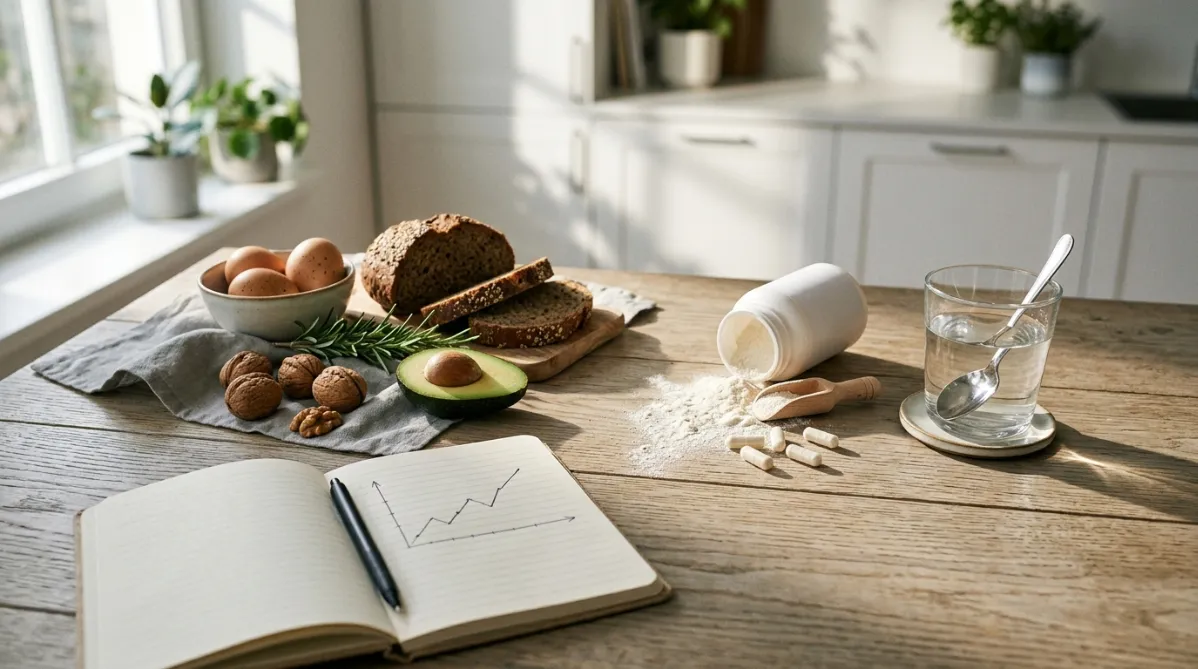
A wide, editorial-style still life photographed from slightly above on a pale oak surface in soft morning window light. At the center, a small matte white supplement tub with a plain, unlabeled front sits tipped on its side, spilling a modest pile of fine white powder across the wood. Beside it, a wooden scoop rests in the powder, and a few white capsules are scattered in a loose arc. To the left, a clean glass of water catches the light and throws a delicate caustic shadow. To the right, a neatly arranged group of whole foods sits in contrast: two brown eggs, a small wedge of salmon fillet on parchment, a handful of raw almonds, and a sprig of rosemary. A matte black steel dumbbell handle is partly visible at the top edge of the frame, grounding the fitness theme. In the lower foreground, a slim, open linen-bound notebook holds a hand-drawn line graph with a single line trending gently downward, a thin ink pen lying across the page. The palette is muted and warm: cream, soft sage green, pale oak, charcoal accents, and a touch of terracotta from a ceramic dish holding the almonds. Shallow depth of field blurs the background, a softly lit minimalist kitchen counter with a hint of a plant leaf. The mood is calm, thoughtful, and scientific without being clinical, like a cover image for a contemporary health and nutrition journal. Natural shadows, subtle film grain, and generous negative space on the upper left leave room for a headline overlay. Crisp focus on the powder and scoop, with refined, understated composition and no text or logos visible.
nutrition

D‑asparagová kyselina při dávce 6 g/den snížila testosteron u trénovaných kulturistů

BY DR. GYMBRO ·

D‑asparagová kyselina se prodává jako přírodní stimulant testosteronu, ale v kontrolovaném výzkumu na 24 mužích s pravidelným silovým tréninkem 6 g denně ve skutečnosti snížilo jak celkový, tak volný testosteron. Dávka 3 g, která se objevuje na mnoha štítcích, neměla žádný měřitelný účinek. Pozdější tříměsíční studie také neprokázala žádný přínos v síle či růstu svalů. V tomto článku shrnujeme, co výzkum ukázal, proč mohou trénovaní muži reagovat jinak než sedaví, a kde je lepší investovat peníze za suplementy.

A wide, editorial-style still life photographed from slightly above on a pale oat-colored linen surface, lit by soft morning window light from the left. In the center sits a small matte ceramic bowl holding a mound of fine white powder, with a minimalist wooden scoop resting beside it. Next to the bowl is an open amber glass supplement jar with a plain cream label, and a few white capsules spill across the linen in a loose arc.

To the right, a neatly arranged cluster of analog "study" objects suggests careful measurement: a vintage stopwatch with a clean white face, a slim notebook with a sage-green cover open to a hand-drawn bar chart (blurred, no legible text), and a mechanical pencil lying across the page. A small row of six identical ceramic dishes, each holding a pinch of powder, is lined up along the top edge of the frame to hint at the six-week trial. One dish is slightly out of alignment, a subtle visual cue for ambiguity.

A shallow glass of water and a single sprig of green eucalyptus add a calm, organic note in the foreground. Soft, long shadows fall across the textured linen, and the palette stays restrained: warm cream, soft sage, muted terracotta, pale gray, and touches of amber from the glass jar. A few translucent paper cutouts in two tones (sage and blush) overlap in the upper right corner as a modern graphic accent, evoking overlapping data points without showing any numbers.

Depth of field is shallow, with the bowl and stopwatch in crisp focus and the edges gently softened. The composition leaves generous negative space on the left third for title text overlay. The overall mood is thoughtful, balanced, and quietly skeptical, in the style of a contemporary wellness and science magazine: clean, tactile, minimal, with a subtle film-like grain and natural color grading. No people, no futuristic or sci-fi elements, no readable text or logos.
nutrition

GAA jako stimulant mozku? Výsledky šestiměsíčního testu jsou komplikované

BY DR. GYMBRO ·

GAA, prekurzor kreatinu prodávaný jako prostředek na podporu mozku, prošel svým prvním seriózním testem na lidech. Ve šestiměsíční, dvojitě zaslepené studii se 58 zdravými dospělými ukázalo mírné zrychlení reakčních časů a několik náznaků změn nálady a stresu. Většina kognitivních testů však nic neukázala a mnoho titulních výsledků bylo jen trendem. Bezpečnostní ukazatele vypadaly v pořádku, ale studie byla malá, průzkumná a chyběla srovnávací skupina s čistým kreatinem. Článek shrnuje, co výsledky skutečně znamenají, pro koho by mohly být zajímavé a proč je závěr smíšený.

A wide, softly lit editorial still life on a pale warm-gray concrete surface, shot from a slightly elevated three-quarter angle. In the center-left, two matte ceramic scoops sit side by side. One holds fine ivory whey powder, the other holds slightly coarser, pale golden collagen peptide powder. A small, elegant dusting of both powders spills between them and blends into a soft swirl. Behind them, three minimalist cream and sage-green supplement tubs with no legible text stand in a staggered row, with a frosted glass shaker bottle of creamy liquid beside them.

On the right, a brushed-steel barbell plate and a compact chalk-dusted kettlebell rest slightly out of focus, suggesting resistance training. Pale wisps of chalk hang in the air. A folded charcoal gym towel and a pair of worn leather lifting straps lie in the foreground. A single cross-section of a clean white bone model, a stylized vertebra, rests on a small oak block at the far right. It subtly signals the bone-density theme without looking clinical.

Natural window light enters from the left, casting long, gentle shadows and a warm highlight on the powders. The palette is muted and modern: oatmeal, bone white, sage green, soft charcoal, and touches of warm amber. Shallow depth of field keeps the scoops tack-sharp and melts the background into creamy blur. Leave generous negative space in the upper right for headline overlay. The overall feel is a premium health and science journal cover: clean, tactile, minimalist, with fine film-like grain and a calm, editorial mood.
nutrition

Whey + kolagen překonal samostatné whey i kolagen u silových sportovců – s jednou vadou

BY DR. GYMBRO ·

Kombinace 30 g syrovátkového proteinu a 10 g kolagenu překonala samotnou syrovátku, kolagen i placebo ve všech sledovaných ukazatelích v osmítýdenním výzkumu na mužích trénujících odporový trénink. Dalo se tak získat 2,66 kg svalové hmoty (podle BIA), zvýšit hustotu kostí v bederní oblasti a zlepšit výkon ve dřepu, tlaku a markery kostního metabolismu. Kolagen ovlivnil výhradně kostní parametry, whey výhradně svalové. Vzhledem k malému počtu účastníků, nerovnoměrnému příjmu bílkovin a neobvykle velkému nárůstu BMD je třeba výsledky brát s rezervou.

This page is available in