Dr. Gymbro
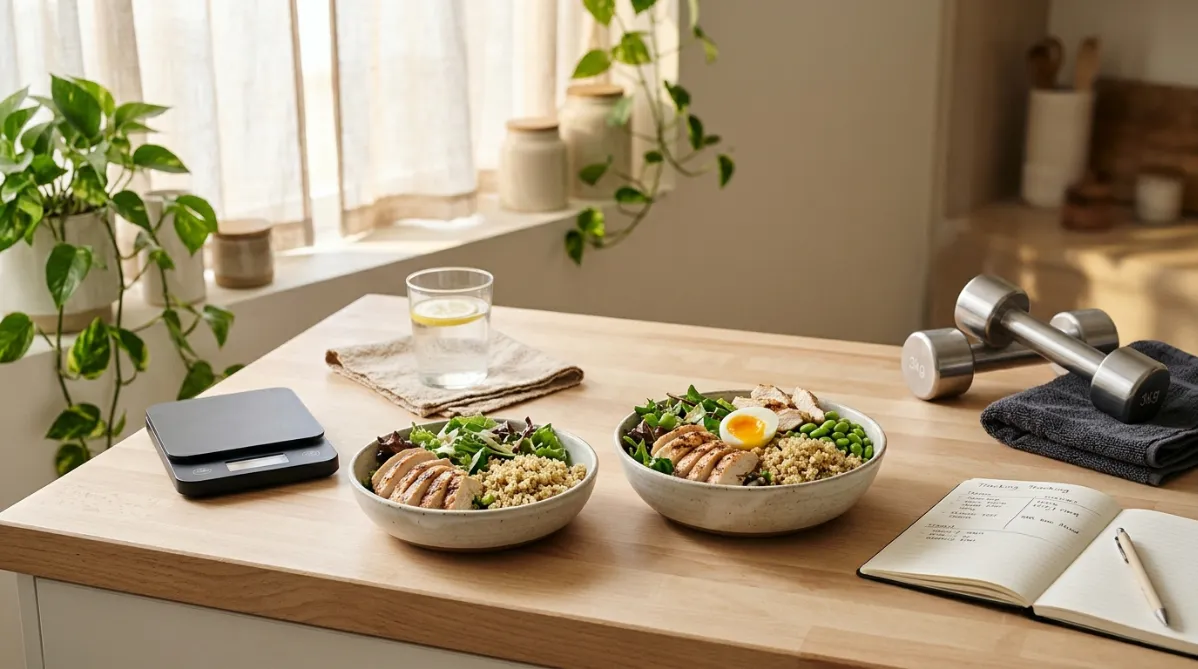
A wide landscape editorial photograph of a clean, sunlit kitchen counter in soft natural morning light, styled like a modern wellness journal cover. In the foreground, two matching ceramic bowls sit side by side on a pale oak butcher block. The left bowl holds a modest portion of sliced grilled chicken breast, quinoa, and greens. The right bowl holds a noticeably larger, double-sized portion of the same ingredients, with extra chicken, a soft-boiled egg, and edamame. The contrast in portion size is clear but elegant. Beside the bowls are a matte black digital kitchen scale, a tall glass of water with a lemon slice, and a small linen napkin in warm oatmeal tone. A pair of sleek brushed-steel dumbbells rests slightly out of focus on the counter's edge, and a folded charcoal gym towel sits next to them. In the soft-focus background, a large window with sheer curtains lets in diffused golden light, and a trailing green pothos plant adds an organic touch. A small, minimal notebook with a pen lies open to the side, suggesting careful tracking. The color palette is muted and cohesive: warm creams, sage green, soft terracotta, charcoal, and natural wood. Shallow depth of field, crisp focus on the bowls, gentle shadows, and subtle film-like grain. Composition follows the rule of thirds with generous negative space on the upper right for headline text. The mood is calm, thoughtful, and trustworthy, like a contemporary health and science magazine feature. There are no people, no text, and no futuristic elements.
Nutrition

16 हफ़्तों में 3.2 g/kg प्रोटीन: क्या इससे बॉडीबिल्डरों की किडनी को नुकसान हुआ?

Dr. Gymbro · · 4 min read

आपने जिम में हर जगह यह चेतावनी सुनी होगी: बहुत ज़्यादा प्रोटीन खाने से किडनी को नुकसान होगा। एक नया 16‑सप्ताह का यादृच्छिक परीक्षण, जिसमें प्रतिरोध‑प्रशिक्षित पुरुषों को शामिल किया गया, ने मानक लिफ़्टर डोज़ का दोगुना आज़माया और जवाब साधारण हाँ‑या‑ना से कहीं अधिक रोचक था। प्रोटीन ने मध्यम सेवन की तुलना में किडनी मार्करों में सांख्यिकीय रूप से कोई महत्त्वपूर्ण अंतर नहीं दिखाया। लेकिन उच्च‑प्रोटीन समूह ने कुछ परिवर्तन दिखाए जो नजरअंदाज़ नहीं किए जाने चाहिए।

शोधकर्ताओं ने वास्तव में क्या परीक्षण किया

यह अध्ययन, Journal of the International Society of Sports Nutrition में प्रकाशित, रेज़ा बघरी और सहयोगियों द्वारा संचालित किया गया, जिसमें खेल पोषण शोधकर्ता रिचर्ड क्रेडर भी लेखक थे। 48 प्रतिरोध‑प्रशिक्षित पुरुष (औसत आयु 26, BMI 25.6) को 2 × 2 फैक्टरियल डिज़ाइन में यादृच्छिक रूप से विभाजित किया गया। उन्होंने या तो केवल प्रतिरोध‑प्रशिक्षण (RT) या समवर्ती प्रशिक्षण (CT, वजन‑उठाना + सहनशक्ति) किया, सप्ताह में चार सत्र, 16 सप्ताह तक। साथ ही वे या तो 1.6 g/kg/दिन प्रोटीन या 3.2 g/kg/दिन प्रोटीन लेते रहे।

80 kg वजन वाले व्यक्ति के लिए इसका मतलब रोज़ लगभग 128 g बनाम 256 g प्रोटीन है। उच्च मात्रा RDA 0.8 g/kg से चार गुना और अधिकांश खेल पोषण दिशानिर्देशों के ऊपरी सीमा से दो गुना है। 44 प्रतिभागियों के पास पूरी‑पूर्व‑और‑बाद डेटा था, जिसपर विश्लेषण किया गया।

शोधकर्ताओं ने उपवास के बाद रक्त यूरिया नाइट्रोजन (BUN), BUN/क्रिएटिनिन अनुपात, सिस्टेटिन C, और अनुमानित ग्लोमेरुलर फ़िल्ट्रेशन रेट (eGFR) मापा। eGFR तीन तरीकों से गणना किया गया: क्रिएटिनिन‑आधारित (CKD‑EPI 2021), सिस्टेटिन C‑आधारित (2012), और संयुक्त समीकरण (2021)। तीनों समीकरण महत्वपूर्ण हैं क्योंकि क्रिएटिनिन को मांसपेशी द्रव्यमान और मांस सेवन से प्रभावित किया जा सकता है, जबकि सिस्टेटिन C पर उनका प्रभाव कम होता है।

प्रमुख निष्कर्ष: कोई महत्त्वपूर्ण इंटरैक्शन नहीं

मुख्य सांख्यिकीय परीक्षण यह देखना था कि समय के साथ परिवर्तन प्रोटीन स्तर (Time × Protein) या प्रोटीन + प्रशिक्षण प्रकार (Time × Training × Protein) के आधार पर अलग हैं या नहीं। किसी भी बायोमार्कर या eGFR अनुमान के लिए ये इंटरैक्शन नहीं मिले (सभी p ≥ 0.182)। सरल भाषा में: अध्ययन नहीं दिखा सका कि 3.2 g/kg प्रोटीन ने किडनी मार्करों को 1.6 g/kg से अलग तरीके से बदला, चाहे केवल लिफ्टिंग हो या लिफ्टिंग + कार्डियो।

1.6 g/kg समूहों में कोई भी महत्वपूर्ण भीतर‑समूह परिवर्तन नहीं देखा गया, जो अधिकांश गंभीर लिफ्टरों द्वारा अपनाए जाने वाले मध्यम‑उच्च सेवन के लिए आश्वस्त करने वाला बिंदु है।

वह विवरण जिसे क्लिकबैट छोड़ देगा

इसी पर ईमानदारी जरूरी है। दोनों 3.2 g/kg समूहों में BUN और सिस्टेटिन C बढ़े (p ≤ 0.017) और eGFR कम हुआ (p ≤ 0.009)। BUN/क्रिएटिनिन अनुपात नहीं बदला। लेखक इनको “हल्की बढ़ोतरी” और “छोटी गिरावट” बताते हैं और ज़ोर देते हैं कि ये भीतर‑समूह परिणाम केवल वर्णनात्मक हैं, क्योंकि आहारों के बीच वास्तविक अंतर सिद्ध करने वाले इंटरैक्शन टेस्ट महत्त्वपूर्ण नहीं थे।

इसलिए निष्कर्ष नहीं निकाला जा सकता कि “उच्च प्रोटीन सिद्ध‑साबित रूप से हानिरहित” है, न ही “उच्च प्रोटीन किडनी को नुकसान पहुंचाता है”। BUN का बढ़ना प्रोटीन सेवन बढ़ने पर अपेक्षित है, क्योंकि यूरिया प्रोटीन टूटने का उप‑उत्पाद है। सिस्टेटिन C और eGFR में बदलाव आसानी से खारिज नहीं किए जा सकते; ये उच्च फ़िल्ट्रेशन माँग या शुरुआती संकेत हो सकता है, जिसे आगे के बड़े‑अध्ययनों में देखना होगा।

सीमाएँ जिन्हें समझना ज़रूरी है

  • छोटी सैंपल: केवल 44 पुरुष विश्लेषित। लेखक स्पष्ट रूप से कहते हैं कि इससे क्लिनिकल महत्त्वपूर्ण अंतर को बाहर नहीं निकाला जा सकता।
  • सिर्फ स्वस्थ, युवा, प्रशिक्षित पुरुष: परिणाम महिलाओं, बुजुर्गों, या किडनी‑फ़ंक्शन घटे, डायबिटीज़ या हाईपरटेंशन वाले लोगों पर लागू नहीं होते।
  • सुरोगेट मार्कर: eGFR, BUN, सिस्टेटिन C अप्रत्यक्ष हैं; कोई ठोस किडनी रोग निदान नहीं मापा गया।
  • 16 सप्ताह: वर्षों के दीर्घकालिक प्रभाव अभी अज्ञात हैं।
  • एक्सप्लोरेटरी डिज़ाइन: पेपर स्वयं विश्लेषण को एक्सप्लोरेटरी बताता है, इसलिए परिणाम को परिकल्पना‑जनक माना जाना चाहिए।

व्यावहारिक निष्कर्ष

डोज़: मसल‑गेन के लिए साक्ष्य आमतौर पर 3.2 g/kg से काफी नीचे, अक्सर 1.6 g/kg के आसपास ही स्थिर होते हैं। इस अध्ययन ने मसल परिणाम नहीं मापे, परन्तु इससे उच्च मात्रा को अपनाने के लिए कोई ठोस कारण नहीं मिलता। प्रोटीन को दोगुना करने से लागत और भोजन की मात्रा बढ़ती है, बिना सिद्ध लाभ के।

टाइमिंग: परीक्षण ने टाइमिंग नहीं जांची। कई भोजन में प्रोटीन को बांटना एक समझदार डिफ़ॉल्ट रहता है, खासकर जब कुल मात्रा अधिक हो।

किसके लिये: स्वस्थ, प्रतिरोध‑प्रशिक्षित वयस्क जो 1.6 g/kg के आसपास उच्च‑प्रोटीन आहार चाहते हैं, वे इन डेटा के आधार पर किडनी मार्करों में कोई महत्त्वपूर्ण बदलाव नहीं देख कर भरोसा रख सकते हैं। समवर्ती प्रशिक्षण ने भी चित्र नहीं बदला।

कौन से लोग बहुत उच्च सेवन से बचें: जिनको पहले से किडनी रोग, कम eGFR, किडनी समस्याओं का पारिवारिक इतिहास, या डायबिटीज़/हाईपरटेंशन जैसी स्थितियाँ हों, उन्हें मानक अनुशंसा से अधिक प्रोटीन लेने से पहले डॉक्टर से सलाह लेनी चाहिए। साथ ही यदि आप अक्सर NSAIDs लेते हैं या बिना निगरानी के भारी मात्रा में क्रिएटिन लेते हैं, तो लेब परीक्षण की व्याख्या कठिन हो सकती है।

स्मार्ट कदम: यदि आप बहुत उच्च‑प्रोटीन फ़ेज़ अपनाने की योजना बनाते हैं, तो पहले बेसलाइन ब्लडवर्क (क्रिएटिनिन, सिस्टेटिन C, eGFR) कराएँ और बाद में दोहराएँ। पर्याप्त जल सेवन भी समझदारी है, हालांकि इस अध्ययन ने हाइड्रेशन को परीक्षण नहीं किया।

निष्कर्ष

16 सप्ताह में 3.2 g/kg सेवन ने 44 स्वस्थ लिफ्टरों में 1.6 g/kg की तुलना में कोई सांख्यिकीय रूप से पहचानने योग्य किडनी अंतर नहीं दिखाया। फिर भी उच्च‑प्रोटीन समूह में BUN, सिस्टेटिन C, और eGFR में छोटे बदलाव देखे गए, जिन्हें बड़े, लंबी अवधि के अध्ययनों में फॉलो‑अप करना चाहिए। अधिकांश लिफ्टरों के लिए प्रमाण‑आधारित “सही” सीमा अभी भी बहुत नीचे है, और यह सबसे सुरक्षित जगह है जब तक बेहतर डेटा नहीं मिलते।
Original study

Read the original research on pubmed.ncbi.nlm.nih.gov →

This article summarizes published research for general information. It is not medical advice.

DG

Written by

Dr. Gymbro

Dr. Gymbro writes for Dr. Gymbro: science-backed fitness, nutrition & performance.

Related Articles

A wide, editorial flat-lay photograph shot from directly above on a pale warm-gray stone countertop, lit by soft natural morning window light with gentle diagonal shadows. On the left, a neatly arranged cluster of whole-food protein sources: two seared chicken breast slices with a golden crust, a small ceramic bowl of creamy Greek yogurt topped with blueberries, three halved soft-boiled eggs with jammy orange yolks, a handful of raw almonds, and a small pile of dried lentils scattered on a linen napkin. At the center, a matte white shaker bottle and a wooden scoop resting in a pile of fine vanilla-colored protein powder, a few grains dusted artfully across the surface. On the right, a minimalist kitchen scale in matte black displaying a portion of food, next to an open notebook with a hand-drawn curve that rises steeply and then flattens into a plateau, drawn in a deep terracotta ink pen, with a small dot marking the bend. A brass pen lies beside the notebook. A single dumbbell with a brushed steel finish sits partially in frame at the upper right corner, grounding the fitness theme without feeling gym-like. Color palette: warm cream, sage green, terracotta, soft charcoal, and butter yellow accents, with generous negative space along the top edge for title overlay. Shallow depth of field, crisp textures, subtle film grain, modern lifestyle magazine aesthetic, clean and calm composition, 16:9 landscape.
nutrition

मांसपेशियों को अधिकतम करने के लिए वास्तव में कितना प्रोटीन चाहिए? 1.6 g/kg प्लैटो, समझाया गया

BY DR. GYMBRO ·

क्या आपको लगता है कि मांसपेशी बढ़ाने के लिए आपको पाउंड‑प्रति 2 ग्राम से अधिक प्रोटीन चाहिए? 49 अध्ययनों और 1,863 वयस्कों के एक मेटा‑विश्लेषण ने दिखाया कि मसल‑बिल्डिंग लाभ लगभग 1.6 g/kg प्रति दिन पर ही घटने लगते हैं। 95 % कॉन्फिडेंस इंटर्वल की ऊपरी सीमा लगभग 2.2 g/kg पर पहुँचती है, जिससे लिफ्टर्स के लिए एक व्यावहारिक रेंज मिलती है। प्रशिक्षित लिफ्टर्स को सप्लीमेंट से सबसे अधिक लाभ मिला, जबकि उम्र बढ़ने के साथ इस लाभ में कमी आई। इस लेख में हम बताते हैं कि ये आंकड़े आपके प्लेट, शेक‑बॉटल और बजट से कैसे जुड़े हैं।

nutrition

क्या वर्कआउट के दौरान 60 ग्राम कार्ब्स पीने से आप अधिक ताकतवर बनते हैं? बिल्कुल नहीं

BY DR. GYMBRO ·

इंट्रा‑वर्कआउट कार्ब ड्रिंक्स हर जगह दिखते हैं, लेकिन क्या वे सच‑मुच ताकत बढ़ाते हैं? 15 प्रतिरोध‑प्रशिक्षित वयस्कों पर किए गए एक यादृच्छिक, प्लेसेबो‑नियंत्रित क्रॉसओवर पायलट में 60 ग्राम माल्टोडेक्सट्रिन को वर्कलोड‑मैच्ड लिफ्टिंग सत्र में जांचा गया। रक्त शर्करा लगभग 19 mg/dL बढ़ी, लेकिन लैक्टेट, रिएक्टिव स्ट्रेंथ और ग्रिप स्ट्रेंथ में कोई स्पष्ट बदलाव नहीं दिखा। घुटने‑एक्सटेंशन रेप्स में हल्की बढ़ोतरी देखी गई, पर यह केवल 10 प्रतिभागियों में मिली और सांख्यिकीय रूप से महत्वपूर्ण नहीं थी। यह अध्ययन दर्शाता है कि कार्ब ड्रिंक रक्त शर्करा बढ़ाता है, पर शक्ति में सुधार अभी अनिश्चित है।

A bright, minimalist still life on a soft sage-green and warm cream backdrop, shot from a slightly elevated angle in natural morning window light. In the center sits a matte ceramic bowl of creamy vanilla protein shake with a wooden spoon resting beside it. Next to it, a small glass jar with a few off-white probiotic capsules spilling onto a pale linen napkin. Around them are fresh, gut-friendly foods arranged with editorial restraint: a halved ripe banana, a small bowl of plain yogurt with a swirl on top, a few stalks of leeks, a handful of oats scattered on the surface, and a sprig of fresh mint. A tall glass of water with a lemon slice catches the light and casts a delicate caustic shadow across the table.

In the background, slightly out of focus, a folded gray gym towel and a sleek stainless steel shaker bottle hint at an athletic lifestyle without dominating the scene. The surface is a pale oak tabletop with subtle grain. A soft diffused shadow falls to the left, giving gentle depth.

The palette is calm and modern: sage green, oatmeal, warm white, soft butter yellow, and touches of terracotta from a small clay dish holding a pinch of sea salt. The composition leaves generous negative space on the right third for headline overlay. The mood is clean, wellness-focused, and quietly editorial, like a feature in a contemporary health and science journal. Shallow depth of field, crisp focus on the capsules and bowl, subtle film grain, and natural color grading. No people, no text, no logos, no futuristic elements.
nutrition

प्रोटीन गैस? प्रोबायोटिक BB536 ने बदबू घटाई, पर केवल कुछ पेटों में

BY DR. GYMBRO ·

वेजी प्रोटीन शेक की वजह से पेट में गैस और बदबू से परेशान हैं? एक नई जांच ने हाई‑प्रोटीन आहार वाले एथलीटों में प्रोबायोटिक Bifidobacterium longum BB536 को मेथिल‑मर्कैप्टैन और अमोनिया जैसे बदबूदार यौगिकों के स्तर घटाते दिखाया। लेकिन समूह‑व्यापी तौर पर प्लेस्बो से कोई महत्वपूर्ण अंतर नहीं मिला, और यह प्रभाव केवल बाद में चुने गए उपसमूहों में देखा गया। अध्ययन छोटा, अन्वेषणात्मक और प्रोबायोटिक निर्माता के सहयोग से किया गया था। इस लेख में हम BB536 क्या है, आपका माइक्रोबायोम कैसे असर डाल सकता है, और पहले कौन‑से सस्ते उपाय अपनाए जा सकते हैं, इस पर चर्चा करेंगे।

A calm, modern editorial still life shot from a slightly elevated angle on a pale oak tabletop, bathed in soft natural window light from the left. At center sits a clear glass of water beside a small matte ceramic bowl holding a mound of fine white creatine powder, with a wooden scoop resting next to it and a few loose grains dusted across the surface. To the right, a neatly arranged printed lab report on cream paper, with blurred rows of numbers and a single line highlighted in soft coral pink marker, partially overlapped by a minimalist silver pen. A folded pair of thin-framed glasses sits at the edge of the paper. In the foreground, a small glass vial with a pale amber liquid sample and a second empty vial stand upright, suggesting blood and urine testing, with gentle refraction and soft caustic light on the wood. Behind them, a sprig of eucalyptus in a small stone vase adds a touch of green. The background is a softly blurred, warm off-white wall with a gentle gradient shadow and a hint of a window frame. The palette is muted and refined: warm creams, sage green, soft coral, pale amber, and light oak, with crisp whites in the powder. Shallow depth of field, with the powder bowl and highlighted lab line in sharp focus and the edges falling away into creamy blur. Generous negative space on the right third of the composition for text overlay. The overall feel is clean, trendy health-journal photography, tactile and editorial, with subtle film-like grain, natural shadows, and a quiet, reassuring mood. No people, no text legible, no futuristic elements.
supplements

क्रिएटिन ने 26 परीक्षणों में किडनी मार्कर बढ़ाए, लेकिन नुकसान नहीं दिखा

BY DR. GYMBRO ·

जब आप क्रिएटिन लेना शुरू करते हैं, रक्त‑परीक्षा में आपका क्रिएटिनिन बढ़ जाता है और eGFR घटा दिखता है। 2026 के एक मेटा‑विश्लेषण में 26 यादृच्छिक परीक्षण (1 036 प्रतिभागी) ने ठीक यही दिखाया: क्रिएटिनिन 0.14 mg/dL बढ़ा और क्रिएटिनिन‑आधारित GFR लगभग 10.75 mL/min गिरा। परन्तु जब किडनी फ़िल्ट्रेशन को Cr‑EDTA से मापा गया, तो कोई गिरावट नहीं देखी गई, और यूरिया, अल्ब्यूमिन्यूरिया व प्रोटीन्यूरिया में भी कोई बदलाव नहीं आया। इस लेख में हम समझेंगे कि लैब नंबर क्यों ग़लत दिखाते हैं, डॉक्टर को क्या बताना चाहिए, और किसे नेफ्रोलॉजिस्ट से पहले परामर्श लेना चाहिए।

This page is available in