Dr. Gymbro
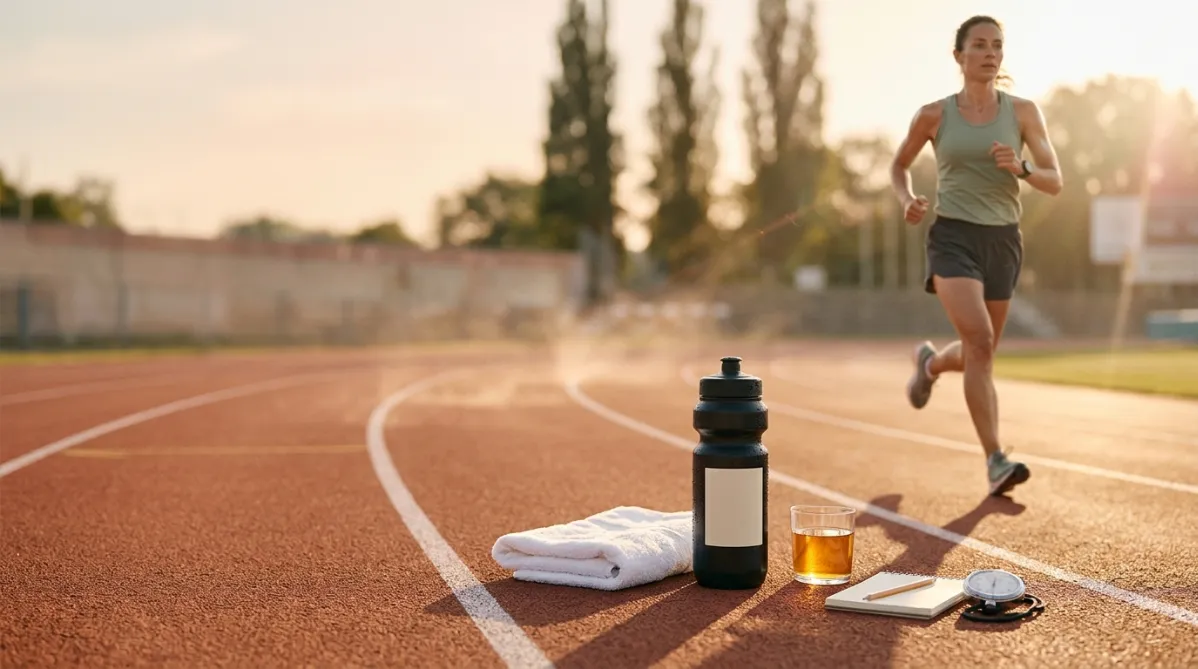
A sunlit outdoor running track in late afternoon, shot from a low angle with shallow depth of field. In the foreground, a matte black bottle with a minimal off-white label sits on the edge of a warm terracotta-colored track lane, beside a folded white towel and a small glass of amber liquid catching golden light. Condensation beads on the bottle. A faint heat shimmer rises from the track surface and softens the background.

In the midground, slightly out of focus, a lean athlete in a sage-green tank top and charcoal shorts runs on a treadmill-like stretch of track, a thin sheen of sweat on their shoulders, their expression focused and calm. Their motion is gently blurred, suggesting endurance and rhythm. Long soft shadows stretch across the lane lines.

The background fades into hazy peach, apricot, and pale yellow tones, with the suggestion of tall trees and a distant stadium wall. Warm sun flare enters from the upper right, creating a subtle glow and a few soft light streaks across the frame.

Subtle editorial touches: a small notebook with a pencil and a stopwatch rest beside the bottle, hinting at data and timing without any text legible. The color palette is warm and muted, with terracotta, cream, sage, and charcoal accents, and a fine film-like grain. The composition leaves open negative space on the left third for a headline overlay. The overall mood is clean, modern, and health-journal inspired, natural and aspirational, with a calm scientific curiosity rather than hype.
Nutrition

Minuman Keton di Cuaca Panas: Daya Tahan Lebih Lama dan Memori Lebih Tajam?

Dr. Gymbro · · 4 min read

Apa yang terjadi bila sesuatu yang membantu Anda melewati sesi latihan di cuaca panas yang ekstrem bukanlah minuman karbohidrat, melainkan minuman keton?

Sebuah percobaan crossover yang baru dipublikasikan di Journal of the International Society of Sports Nutrition menunjukkan bahwa keton monoester dapat memberikan manfaat dalam kondisi seperti itu. Studi ini kecil, dan judul utama disertai pengecualian penting yang perlu Anda ketahui sebelum memutuskan untuk mencobanya.

Apa yang dilakukan peneliti

Tim yang dipimpin oleh Lints dan Arent dari University of South Carolina menguji 17 pria terlatih endurance (rata‑rata usia 23,8 tahun, VO₂max 58,6 ml/kg/menit). Desainnya randomisasi, double‑blind, counterbalanced, dan crossover, sehingga setiap peserta menjalani kedua kondisi.

Pada setiap kunjungan, atlet mengonsumsi 4 mg/kg kafein yang dipadukan dengan salah satu dua perlakuan berikut:

  • KET: sebuah keton monoester, (R)-3‑hydroxybutyl-(R)-3‑hydroxybutyrate.
  • CHO: kontrol karbohidrat dengan energi setara (Cluster Dextrin).

Setelah itu mereka melakukan latihan treadmill selama 90 menit pada suhu 34 °C dan kelembapan relatif 45 %, diikuti dengan tes intensitas tinggi time‑to‑exhaustion (TTE). Motivasi riset ini bersifat militer: pasukan operasi khusus harus tetap tajam secara mental dan fisik dalam panas ekstrem, ketika aliran darah otak, ketersediaan bahan bakar, dan toleransi termal semuanya tertekan.

Headline: hampir dua menit ekstra sampai kelelahan

Waktu sampai kelelahan lebih lama dengan keton: 8,9 ± 4,6 menit vs 7,0 ± 2,1 menit (p = 0,04). Itu kira‑kira selisih 1,9 menit, atau sekitar seperempat lebih lama, pada akhir sesi keras dan panas. Untuk dorongan akhir atau sprint ke garis finish, selisih itu terasa signifikan.

Namun hasil ini bersifat modest. Nilai p berada tepat di bawah 0,05, dan kondisi keton menunjukkan sebaran yang lebar (deviasi standar 4,6 menit), menandakan respons individu sangat bervariasi. Anggap ini sebagai sinyal menjanjikan, bukan jaminan.

Temuan otak: memori 1‑back lebih baik, tapi tidak semuanya

Hasil kognitif bersifat selektif. Dibandingkan dengan karbohidrat, keton menghasilkan:

  • Akurasi total 1‑back lebih tinggi: +2,8 % (p = 0,001).
  • Akurasi target 1‑back lebih tinggi: +8,9 % (p < 0,001).
  • Diskriminasi target (d') lebih baik: +0,3 (p = 0,001).

Efek‑efek ini konsisten pada semua titik waktu. Namun manfaat tidak meluas ke tugas 2‑back yang lebih sulit, waktu reaksi Dynavision, atau tugas hit‑and‑avoid, di mana tidak ada perbedaan antar kondisi. Jadi keton tidak membuat semua peserta menjadi lebih tajam secara menyeluruh; hanya meningkatkan beberapa aspek memori kerja.

Jejak metabolik

Data darah menunjukkan bahwa keton melakukan apa yang seharusnya dilakukan keton. Beta‑hydroxybutyrate (BHB) naik sebesar 1,7 mmol/L pada pertengahan latihan dan 3,5 mmol/L setelah latihan (keduanya p < 0,001). Glukosa darah lebih rendah pada kondisi keton, yaitu 14,7 mg/dL pada pertengahan latihan dan 27,6 mg/dL setelah latihan.

Artinya keunggulan performa dan memori muncul meski glukosa sirkulasi lebih rendah, sebuah pengamatan penting mengingat karbohidrat biasanya dianggap bahan bakar utama untuk usaha keras.

Apa yang tidak berubah: denyut jantung dan suhu inti

Penulis menekankan hal yang tidak terjadi pada keton. Denyut jantung rata‑rata menurun seiring waktu (lebih rendah pada 45 menit pertama dibandingkan 45 menit berikutnya) tetapi tidak ada perbedaan antara kondisi (p = 0,453). Denyut jantung maksimal selama tes TTE juga tidak berbeda (p = 0,112). Suhu tubuh inti naik seiring waktu pada kedua kondisi dan tidak berbeda secara signifikan (p = 0,065).

Nilai p suhu inti cukup dekat dengan ambang batas sehingga studi dengan ukuran lebih besar dapat memperjelasnya. Untuk saat ini, kesimpulannya keton tidak secara jelas menambah beban kardiovaskular atau termal, dan peningkatan performa tidak disertai penalti panas yang terukur.

Keterbatasan yang perlu Anda ketahui

  • Sampel kecil: hanya 17 peserta.
  • Hanya pria: pria muda terlatih, sehingga hasilnya mungkin tidak dapat digeneralisasikan ke wanita, orang tua, atau orang yang kurang terlatih.
  • Sesi tunggal per kondisi: tidak ada paparan berulang, jadi konsistensi efek belum diketahui.
  • Kafein di kedua lengan: penelitian membandingkan keton + kafein vs karbohidrat + kafein. Tidak dapat ditarik kesimpulan tentang efek keton tanpa kafein.
  • Hasil kognitif campur‑aduk: manfaat hanya muncul pada 1‑back, bukan pada 2‑back, waktu reaksi, atau tugas hit‑and‑avoid.
  • Respons TTE variabel: sebaran luas pada grup keton menunjukkan respons individu yang tidak merata.

Penulis melaporkan tidak ada konflik kepentingan.

Pengambilan praktis

Dosis: Abstrak menyebutkan kafein 4 mg/kg di kedua kondisi, tetapi tidak mencantumkan dosis keton monoester. Untuk itu, lihat makalah lengkap (PMCID PMC13378723) dan ikuti takaran yang tertera pada produk.

Waktu konsumsi: Abstrak juga tidak merinci kapan tepatnya konsumsi diberikan. Intervensi diberikan bersamaan dengan kafein sebelum sesi panas 90 menit dan usaha akhir yang berat.

Siapa yang mungkin cocok: Atlet terlatih dan personel taktis yang bekerja keras dalam panas dan ingin mempertahankan memori kerja serta dorongan akhir. Anggap ini sebagai sesuatu yang dicoba dalam latihan, bukan pada hari perlombaan.

Siapa yang harus menghindari atau berhati‑hati:

  • Orang yang sensitif terhadap kafein, karena 4 mg/kg merupakan dosis yang cukup tinggi.
  • Siapa pun dengan kondisi medis, wanita hamil, atau yang mengonsumsi obat yang memengaruhi glukosa. Konsultasikan dulu dengan dokter, terutama karena keton menurunkan glukosa darah dalam studi ini.
  • Mereka yang mengharapkan peningkatan kognitif menyeluruh. Data tidak mendukung hal itu.
  • Atlet yang cenderung mengalami gangguan pencernaan. Efek samping gastrointestinal dari produk keton memang sering dilaporkan, meskipun abstrak ini tidak membahasnya.

Kesimpulan

Dalam percobaan kecil yang terkontrol dengan baik, keton monoester + kafein mengungguli karbohidrat + kafein dalam waktu kelelahan dan satu tugas memori kerja setelah latihan panjang di panas, tanpa perbedaan yang terukur pada denyut jantung atau suhu tubuh inti. Ini merupakan sinyal yang menarik, khususnya untuk performa di kondisi stres panas, namun masih perlu direplikasi pada kelompok yang lebih besar dan lebih beragam sebelum dapat diandalkan di luar lingkungan percobaan.
Original study

Read the original research on pubmed.ncbi.nlm.nih.gov →

This article summarizes published research for general information. It is not medical advice.

DG

Written by

Dr. Gymbro

Dr. Gymbro writes for Dr. Gymbro: science-backed fitness, nutrition & performance.

Related Articles

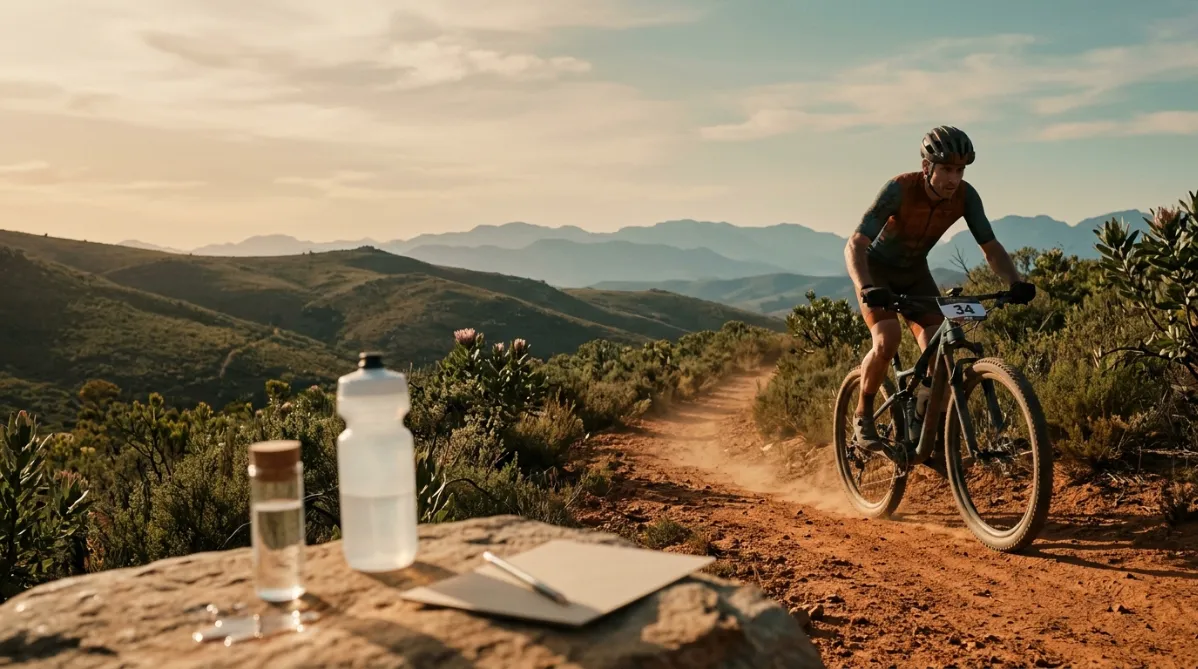
Wide landscape editorial photograph of a mountain biker mid-ride on a dusty red-orange singletrack trail in the South African Western Cape, golden hour light raking across the scene. The rider is in sharp focus on the right third of the frame, wearing a weathered cycling kit with a race number plate on the handlebars, dust kicking up from the rear tire. Behind them, rolling hills covered in fynbos shrubland and silhouetted protea plants fade into soft, hazy blue mountains. Warm amber sunlight creates long shadows and a soft rim light around the rider and bike.

In the lower left foreground, slightly out of focus, a small minimalist glass vial and a clear water bottle sit on a flat sun-bleached rock, with a few drops of liquid catching the light. Next to them, a simple matte paper notecard and a pencil suggest data collection, with no legible text. The vial and bottle are clean, understated, and modern, with no branding.

The color palette is earthy and refined: terracotta, ochre, sage green, dusty teal sky, and cream highlights. The composition uses shallow depth of field, a generous negative space in the upper left sky for headline overlay, and subtle film grain. The mood is contemplative, skeptical, and quietly sophisticated, like a feature photograph from a high-end outdoor sports and science magazine. Natural, candid, cinematic, shot on a 50mm lens with soft contrast and muted saturation. No futuristic elements, no glowing effects, no molecular graphics, no text.
science research

Ketone IQ Naikkan Keton di Cape Epic, Tapi Tidak Mengubah Apa‑apa

BY DR. GYMBRO ·

Selama delapan hari balapan Cape Epic, 18 pembalap mengonsumsi Ketone IQ dua kali sehari dan mencapai konsentrasi ~1 mM keton dalam darah. Namun kelelahan, detak jantung, waktu reaksi, dan pemulihan mereka tidak berbeda dengan kelompok plasebo. Studi double‑blind ini menguji R‑1,3‑butanediol dalam kondisi balapan nyata, bukan di laboratorium, dan menunjukkan bahwa ketosis moderat tidak memberi manfaat pada pemulihan.

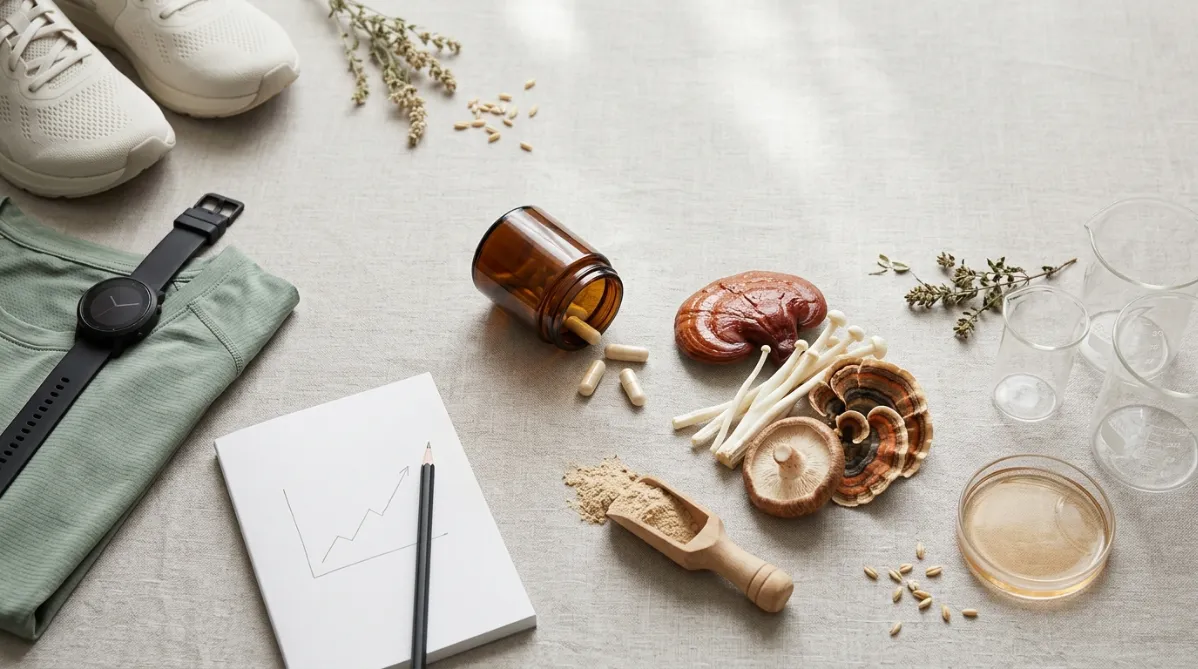
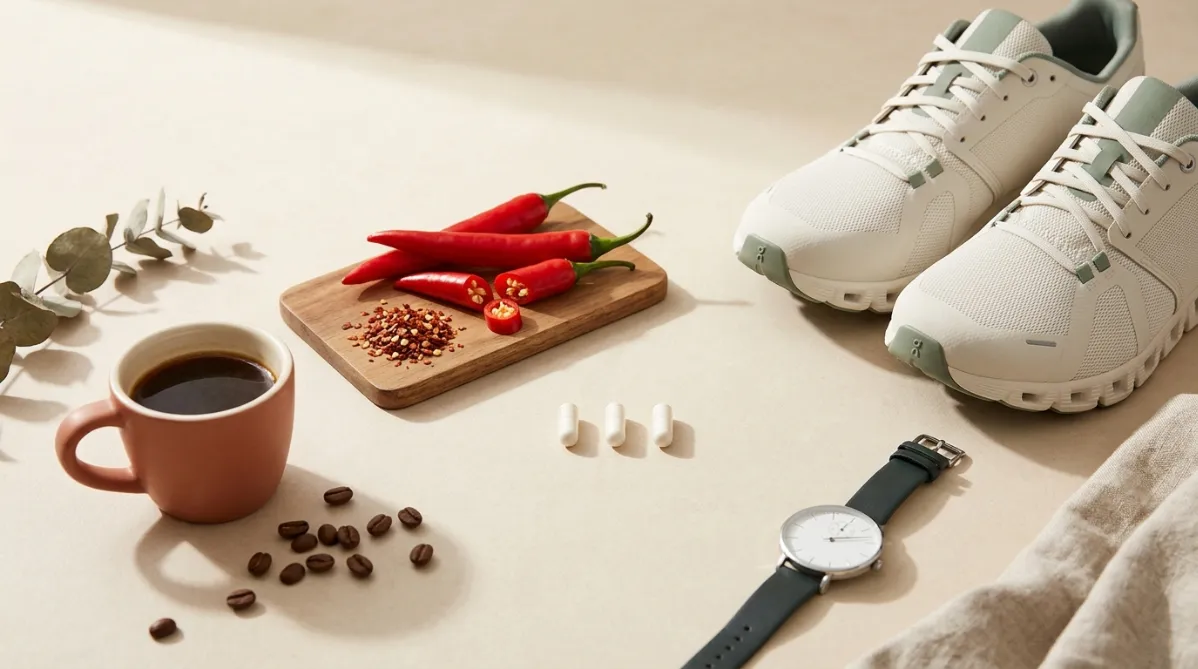
A wide, editorial-style flat lay on a warm, matte cream stone surface, shot from slightly above in soft natural morning light. On the left, a ceramic espresso cup in muted terracotta holds dark coffee, with a few roasted coffee beans scattered beside it. In the center, a small wooden board holds three bright red chili peppers, one sliced open to show pale seeds, next to a small pile of coarse red pepper flakes. On the right, a pair of minimalist off-white running shoes with sage green accents rests at an angle, and a slim stopwatch with a clean white face lies in front of them. Three small matte white capsules sit in a neat row at the center of the composition, a quiet nod to the placebo and the active doses. Soft shadows fall to the lower right. A sprig of dried eucalyptus and a folded linen cloth in oatmeal tones add texture at the edges. The palette is warm and restrained: terracotta, chili red, cream, sage, and charcoal brown, with a gentle pop of red as the focal accent. The depth of field is shallow, so the foreground beans are slightly soft and the chilies and capsules stay crisp. The mood is clean, modern, and magazine-like, in the style of a contemporary health and science journal. There is no text, no people, and no logos, and plenty of negative space on the upper left and right edges leaves room for a headline overlay.
nutrition

Kafein + Capsaicin Mengalahkan Plasebo di Lomba 10K; Capsaicin Sendirian Tidak Berpengaruh

BY COACH RYAN ·

Senyawa cabai ditambah kafein menjadi satu‑satunya kombinasi yang mengalahkan plasebo selama 10 km dalam percobaan crossover terbaru, sementara capsaisin saja tidak memberikan efek. Kafein merupakan faktor utama yang mendasari perbedaan statistik, dan tidak ada bukti sinergi di antara keduanya. Dosis 6 mg/kg setara dengan kira‑kira 450 mg untuk pelari seberat 75 kg, yang tergolong tinggi. Insomnia, kecemasan, sakit kepala, dan detak jantung cepat muncul lebih sering pada kondisi yang mengandung kafein. Berikut temuan utama dari studi yang melibatkan 20 pelari serta rekomendasi siapa yang sebaiknya menghindarinya.

A wide, editorial-style flat lay photographed from above on a pale warm-gray linen surface in soft natural window light. At the center, a small open amber glass jar tips gently onto its side, spilling a few cream-colored capsules across the fabric. Next to the jar sits a loose arrangement of fresh mushrooms: a cluster of golden-tan reishi with glossy, lacquered caps, a few slender white enoki stems, a halved shiitake showing its pale gills, and a curl of turkey tail with concentric bands of rust, cream, and charcoal. A small wooden scoop holds a pile of fine beige mushroom powder.

On the left third of the frame, a matte black sports watch with a minimal face lies beside a folded sage-green running shirt and a pair of lightweight off-white running shoes, hinting at athletic training without showing a person. A slim white notebook with a single pencil rests nearby, open to a blank page with a faint hand-drawn line graph trending upward, in thin graphite strokes.

On the right side, a pair of clear glass beakers and a single small petri dish with a soft amber-tinted liquid add a subtle laboratory note, kept calm and organic. A single sprig of dried herbs and a few scattered oat-colored grains add texture.

The palette is earthy and refined: oatmeal, soft sage, terracotta, warm amber, and charcoal accents against the muted neutral background. Shadows are soft and diffused, with a gentle highlight on the glass and the glossy reishi cap. The composition leaves generous negative space in the upper right for a headline overlay. Shallow depth of field blurs the edges slightly, while the central mushrooms and capsules stay crisp. The overall feel is modern, clean, and trendy, like a wellness and science magazine cover, with tactile natural textures, minimal styling, and a quiet sense of curiosity and skepticism.
science research

Kapsul Jamur Naikkan VO2max 14,8% — Tapi Ada Syarat Besar

BY DR. GYMBRO ·

Sebuah kapsul jamur, 40 hari, dan peningkatan VO2max sebesar 14,8 % terdengar hampir terlalu bagus untuk menjadi kenyataan. Studi pada 50 atlet pria muda yang mengonsumsi 320 mg ekstrak jamur kaya beta‑glukan menunjukkan kenaikan VO2max dari 46,26 menjadi 53,12 mL/kg/menit, namun tidak ada kelompok plasebo, randomisasi, atau pembutaan. Berikut ulasan temuan, keterbatasan, dan siapa yang sebaiknya berpikir dua kali sebelum mencoba.

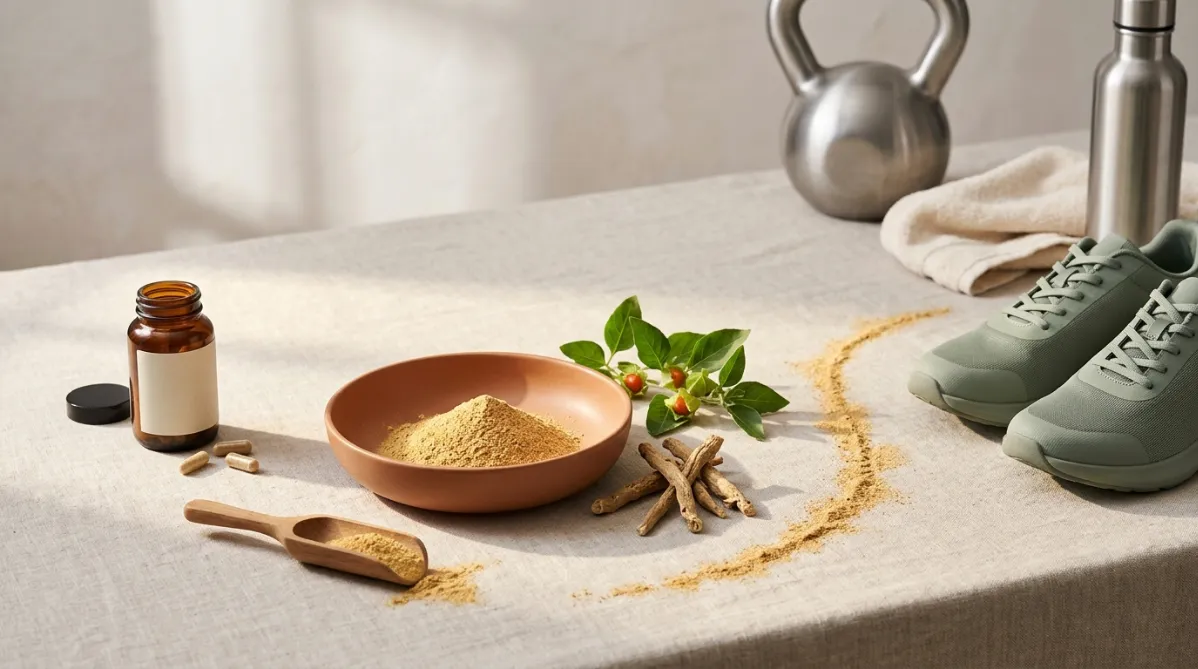
A wide, editorial-style still life shot from a slightly elevated angle on a pale oatmeal-colored linen surface in soft, diffused morning light. At the center, a shallow matte ceramic bowl in warm terracotta holds a small mound of fine, golden-tan ashwagandha root powder. Beside it lie a few gnarled, dried ashwagandha roots and a sprig of green leaves with tiny orange-red berries in their papery husks. To the left, a minimalist amber glass supplement bottle sits with a few capsules spilled beside it, label blank and clean. A wooden scoop rests on the surface, dusted with powder.

On the right side of the frame, a pair of sleek, muted sage-green running shoes sits slightly off-center. A folded cream towel and a stainless steel water bottle sit just behind them, with a single brushed-steel kettlebell partly out of focus in the background to hint at strength training without dominating the scene. The running shoes and the botanical elements share equal visual weight, suggesting the endurance theme.

A thin, curved line of scattered powder sweeps across the linen from the bowl toward the shoes, like a gentle path or track. Soft shadows fall to the left, and a warm sunbeam crosses the surface and picks out the texture of the powder and the roots.

The palette is restrained and modern: warm terracotta, sage green, cream, soft gold, and touches of charcoal. The background is a blurred pale plaster wall with a hint of a window shadow. Shallow depth of field, crisp focus on the bowl and roots, and generous negative space in the upper left for a headline. Contemporary wellness magazine aesthetic, calm, natural, tactile, high-end lifestyle photography, no text, no people, no futuristic elements.
science research

Kejutan Ashwagandha: Membantu Daya Tahan Lebih Baik daripada Kekuatan

BY DR. GYMBRO ·

Ashwagandha sering dipasarkan sebagai suplemen untuk meningkatkan kekuatan dan otot, namun meta‑analisis terbaru menunjukkan manfaat paling konsisten pada daya tahan aerobik. Dari 13 uji coba terkontrol secara acak dengan 599 partisipan, efek gabungan pada daya tahan aerobik tercatat g = 0,54. Dosis optimal tampaknya berada di kisaran 500‑600 mg ekstrak per hari, meski interval prediksi masih melintasi nol. Artikel ini meninjau bukti yang ada, siapa yang mungkin mendapat manfaat, dan siapa yang sebaiknya menunggu.

This page is available in