Dr. Gymbro
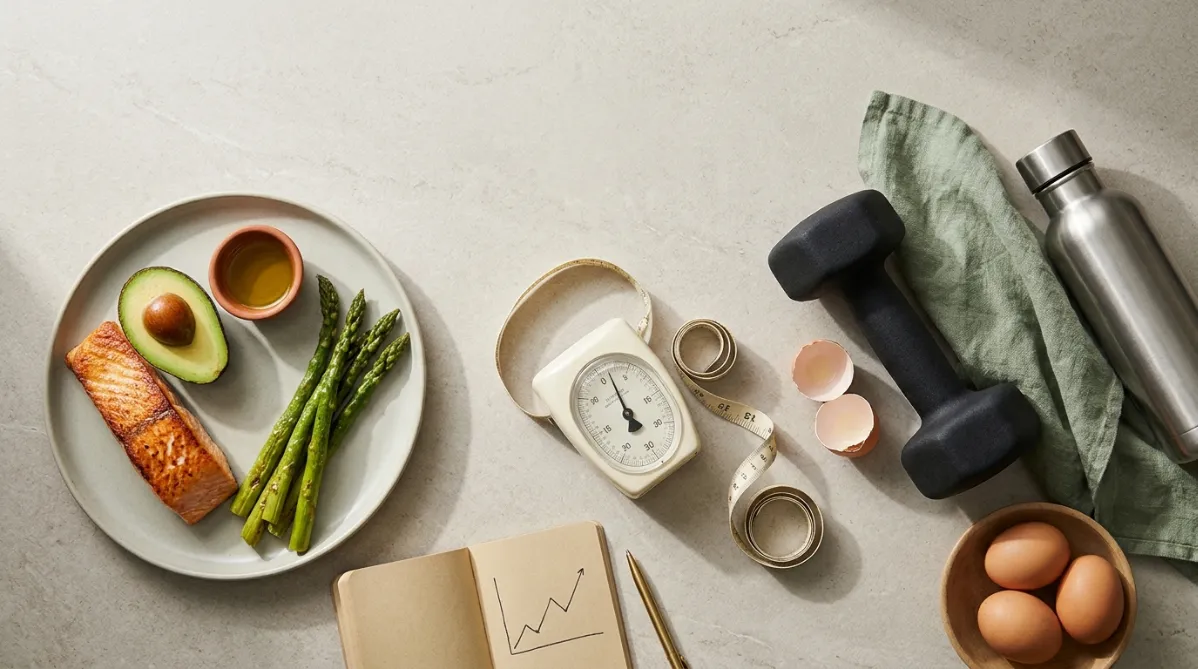
A bright, minimalist editorial flat-lay photographed from above on a pale warm-gray stone countertop in soft natural window light. On the left, a ceramic plate holds a keto-style meal: a seared salmon fillet with crisp skin, half an avocado with a glossy pit, a scattering of bright green asparagus spears, and a small dish of golden olive oil. On the right, a matte black dumbbell rests beside a folded sage-green linen towel and a slim stainless steel water bottle. A raw egg and a few whole eggs in a shallow wooden bowl add a protein cue. In the center, a clean analog kitchen scale and a flexible cream-colored measuring tape curl gracefully in a loose spiral, hinting at body composition tracking. A small open notebook with a minimal hand-drawn line graph, with no legible text, sits at the lower edge with a thin brass pen.

The palette is calm and modern: muted sage green, creamy ivory, warm terracotta accents from a small clay ramekin, and deep charcoal from the dumbbell. Shadows are soft and long, falling diagonally, giving gentle depth. The composition leaves generous negative space at the top and right for title placement. Shallow depth of field, crisp focus on the salmon and dumbbell, subtle film-like grain, and a refined, trendy health-journal look reminiscent of contemporary wellness magazines. Natural, airy, balanced, and slightly editorial, with no people, no text, and no futuristic elements.
Nutrition

ਕੀ ਕੀਟੋ ਕਟ ਦੌਰਾਨ ਮਾਸਪੇਸ਼ੀਆਂ ਨੂੰ ਬਚਾਇਆ ਜਾਂਦਾ ਹੈ? ਲੀਨ‑ਮਾਸ ਡਾਟਾ ਨੇ ਹੈਰਾਨ ਕੀਤਾ

Dr. Gymbro · · 4 min read

If you've been told that ketosis is a muscle-sparing cheat code, the research says otherwise. A new narrative review in Nutrients by Caturano, Mocini and colleagues asked whether the biology of ketone bodies translates into real muscle preservation during weight loss. The answer is less flattering to keto than the marketing suggests. It is also more nuanced than "keto burns muscle."

The Theory: Why Ketones Look Muscle‑Friendly

The appeal of keto for lifters rests on a plausible mechanism. Ketone bodies, especially beta‑hydroxybutyrate, have been linked in acute human studies to changes in muscle protein turnover and cell signalling. The argument is that if ketones dampen protein breakdown, or even nudge anabolic pathways, a ketogenic cut should hold on to more lean tissue than a standard deficit.

The review takes this seriously but draws a careful line. Short‑term studies show that ketones can influence muscle protein metabolism. Those findings do not establish that the effect persists over weeks or months of dieting, or that it leaves you with more contractile muscle at the end. A signalling change in a lab setting is not the same as extra muscle on your frame after a 12‑week cut.

What the Clinical Data Actually Show

The first finding favors keto. Supervised very‑low‑energy ketogenic diets (VLEKDs) generally produce weight loss made up predominantly of fat mass. That is why they are used in clinical obesity settings, and it is not a trivial result.

The surprise comes from the comparative meta‑analyses. When ketogenic regimens are stacked against non‑ketogenic diets, the pooled data report small but larger reductions in fat‑free mass (FFM) or lean body mass on the ketogenic side. The gap is modest, and it does not mean keto wastes muscle. But it directly contradicts the idea that ketosis gives you a built‑in muscle shield.

The Measurement Problem: Water, Glycogen and "Lean Mass"

Before concluding that keto eats muscle, consider what "lean mass" means in these studies. Most trials used methods such as DXA or bioelectrical impedance. These are hydration‑sensitive. They do not image skeletal muscle directly. They estimate a compartment that includes water, glycogen, organs and other non‑fat tissue.

This matters a great deal for keto. Cutting carbohydrates depletes glycogen, and each gram of stored glycogen is bound to water. A rapid drop in FFM in the first weeks of a low‑carb diet may therefore reflect fluid and glycogen rather than muscle fibers. The same logic applies in reverse when carbohydrates are reintroduced, so the timing of measurement relative to carb restriction can distort the result.

The authors flag this uncertainty explicitly. Because direct anatomical imaging of muscle, such as MRI or CT, was rarely used, the contributions of glycogen, water and non‑muscle lean tissue remain unresolved. The small FFM disadvantage in meta‑analyses might be real muscle loss, a hydration artifact, or a mix of both.

The Verdict: Insufficient Evidence Either Way

The review's conclusion is deliberately cautious. Current evidence is insufficient to say whether ketosis itself has a protective or harmful effect on contractile skeletal muscle during weight loss. This is a narrative review, not a systematic review or a new trial. It synthesizes the literature with expert judgment, so it is best read as a map of what is known and unknown rather than a definitive ruling.

The authors note that outcomes likely depend on several modifiers:

  • The size of the energy deficit
  • Protein intake
  • Resistance exercise
  • Baseline adiposity
  • Age and metabolic health
  • Training status

In other words, the diet label matters less than the conditions around it.

What Actually Protects Muscle

The review lands on the same unglamorous tools that sports nutrition has long supported: adequate protein, resistance training, and monitoring of strength and physical function. None of these require ketosis, and all of them work inside or outside it.

  • Protein: A commonly cited evidence‑based range for people dieting while training is roughly 1.6 g/kg of body weight per day or higher. This is general guidance, not a figure taken from this review, and individual needs vary with age, health status and kidney considerations.
  • Resistance training: Lifting provides the mechanical signal that tells your body to keep muscle while it is in a deficit.
  • A moderate deficit: Aggressive energy restriction raises the risk of lean‑tissue loss regardless of macronutrient split.
  • Tracking performance: Strength is a more useful proxy for muscle retention than scale weight or a single body‑composition scan.

Practical Takeaways: Who Keto Suits

The authors describe ketogenic diets as potentially effective short‑term options for selected adults with obesity, particularly under supervised protocols. For a lean lifter trying to shed the last few kilos while preserving size, the case is weaker. There is no strong evidence that ketosis adds muscle protection, and carbohydrate restriction may make hard training feel worse for some people.

If you enjoy keto and adhere to it well, there is no strong reason to abandon it. Adherence is a major driver of any diet's success. Just don't expect ketones to do the work that protein and training do.

  1. Set protein at roughly 1.6 g/kg/day or above, adjusted to your situation.
  2. Keep lifting with progressive overload.
  3. Aim for a moderate, sustainable deficit.
  4. Track strength in key lifts, not just weight.
  5. Interpret early "lean mass" drops cautiously, since water and glycogen shifts can mislead.

Bottom Line

Keto is a legitimate fat‑loss strategy, but the claim that it spares muscle is unproven. The best available data hint at slightly larger FFM losses, with a big asterisk about how that mass is measured. Until studies use direct muscle imaging, the safest approach is to treat ketosis as one dietary option and not a muscle‑protection strategy. The proven protection still comes from protein, resistance training and a deficit you can sustain.

Original study

Read the original research on pubmed.ncbi.nlm.nih.gov →

This article summarizes published research for general information. It is not medical advice.

DG

Written by

Dr. Gymbro

Dr. Gymbro writes for Dr. Gymbro: science-backed fitness, nutrition & performance.

Related Articles

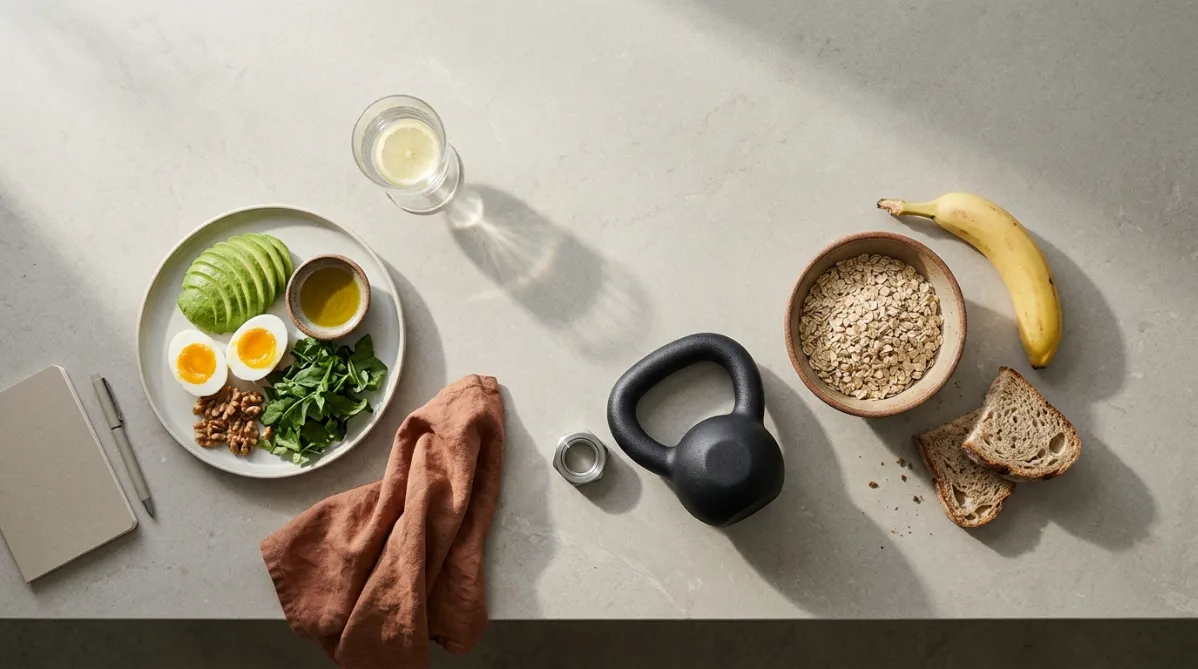
A wide, editorial-style flat lay photographed from above on a pale warm-gray stone countertop, bathed in soft natural window light with gentle long shadows. On the left half, a minimalist keto plate: sliced avocado fanned out in creamy green, two soft-boiled eggs halved to reveal golden yolks, a small pile of dark leafy greens, a few walnuts, and a glossy drizzle of olive oil in a small ceramic dish. On the right half, a contrasting arrangement of carbohydrates: a rustic bowl of oats, a ripe banana, and a few slices of sourdough, arranged with equal visual weight. Between the two sides, a matte black kettlebell sits at the center, and a slim brushed-steel barbell collar rests nearby, suggesting resistance training without a gym setting. A simple, elegant glass of water with a lemon slice catches the light and casts a delicate refracted glow, hinting at water weight and glycogen. A linen napkin and a small, neutral-toned notebook with a pen add a journal-like touch. The palette is muted and modern: sage green, cream, terracotta, charcoal, and soft butter yellow. The composition is clean and balanced with generous negative space across the top and bottom edges, suitable for headline overlay. The mood is calm, thoughtful, and science-informed, like a contemporary health and wellness magazine cover. Shallow depth of field, crisp textures on the food, subtle film-like grain, and high-end, trendy food photography styling.
nutrition

ਲਿਫ਼ਟਰਾਂ ਲਈ ਕੈਟੋ: ਚਰਬੀ ਘਟਦੀ ਹੈ, ਪਰ ਲੀਨ ਮਾਸ 1.4 ਕਿਲੋਗਰਾਮ ਘਟਿਆ

BY DR. GYMBRO ·

50 ਅਧਿਐਨਾਂ ਦੀ ਸਮੀਖਿਆ ਦਿਖਾਉਂਦੀ ਹੈ ਕਿ ਕੈਟੋਜੈਨਿਕ ਡਾਇਟ ਚਰਬੀ ਘਟਾਉਂਦੀ ਹੈ ਅਤੇ ਆਮ ਤੌਰ 'ਤੇ ਤਾਕਤ ਨੂੰ ਕਾਇਮ ਰੱਖਦੀ ਹੈ। ਰੈਜ਼ਿਸਟੈਂਸ‑ਟ੍ਰੇਨਡ ਵਿਅਸਕਾਂ ਵਿੱਚ ਲੀਨ ਮਾਸ ਲਗਭਗ 1.37 ਕਿਲੋਗਰਾਮ ਘੱਟ ਹੋਇਆ। ਲੇਖਕਾਂ ਨੇ ਇਸ ਨਤੀਜੇ ਨੂੰ ਘੱਟ ਯਕੀਨੀਤਾ ਵਾਲਾ ਦਰਜ ਕੀਤਾ ਅਤੇ ਕਿਹਾ ਕਿ ਇਹ ਮਾਸਪੇਸ਼ੀ ਦੇ ਘਟਣ ਦਾ ਸਬੂਤ ਨਹੀਂ, ਕਿਉਂਕਿ ਗਲਾਈਕੋਜਨ ਅਤੇ ਪਾਣੀ ਇਸਦਾ ਵੱਡਾ ਹਿੱਸਾ ਹੋ ਸਕਦੇ ਹਨ। ਉੱਚ‑ਤੀਵਰਤਾ ਵਾਲੀ ਪਰਫੌਰਮੈਂਸ ਵੀ ਜ਼ਿਆਦਾਤਰ ਅਣਬਦਲ ਜਾਂ ਘਟੀ ਰਹਿੰਦੀ ਹੈ।

A landscape editorial still life on a soft, warm cream linen surface in natural morning window light. In the center, a shallow ceramic bowl of matte white glaze holds a handful of translucent amber and coral-orange softgel capsules, a few spilling onto the surface in a gentle arc. Around the bowl, carotenoid-rich foods are arranged in an organic, balanced composition: halved ripe apricots, a sliced blood orange, a small pile of saffron threads with a few crimson stigmas on a wooden spoon, a bundle of fresh kale leaves, a cooked pink salmon fillet slice, and a few strands of wakame seaweed in deep olive green. A tape measure in soft pale yellow curls loosely through the foreground, crossing the frame diagonally, and its numbers are crisp but unobtrusive. On the left, a small glass dropper bottle and a brushed-brass spoon catch highlights. In the background, softly blurred, a sunlit kitchen counter with a pale sage-green wall and the shadow of a leafy plant falling across the scene.

The palette is warm and cohesive: saffron, terracotta, peach, coral, and sage green against creamy neutrals. The lighting is soft and directional, with gentle long shadows, shallow depth of field, and a subtle film-like grain. The styling feels like a modern wellness magazine or a trendy science-journal website, with a minimalist, airy, uncluttered look and generous negative space in the upper right for headline overlay. Photographic realism, high-end editorial food and product photography, 50mm lens, slightly elevated three-quarter angle, crisp focus on the capsules and tape measure, with the rest falling off softly.
science research

ਕੈਰੋਟਿਨੋਇਡ ਸਪਲੀਮੈਂਟਸ ਨਾਲ ਕਮਰ ਘਟੀ ਅਤੇ 2.3 ਕਿਲੋ ਲੀਨ ਮਾਸ ਵਧਿਆ — ਕੁਝ ਹੱਦ ਤੱਕ

BY DR. GYMBRO ·

27 ਰੈਂਡਮਾਈਜ਼ਡ ਟਰਾਇਲਾਂ ਦੀ ਮੈਟਾ‑ਐਨਾਲਿਸਿਸ ਦਿਖਾਉਂਦੀ ਹੈ ਕਿ ਐਸਟਾਕਸੈਂਥਿਨ, ਕ੍ਰੋਸਿਨ, ਲੂਟੀਨ ਅਤੇ ਫੁਕਸੋਐਂਥਿਨ ਵਰਗੀਆਂ ਕੈਰੋਟਿਨੋਇਡ ਸਪਲੀਮੈਂਟਸ 1.8 ਸੈ.ਮੀ. ਤੱਕ ਕਮਰ ਘਟਾਉਂਦੀਆਂ ਹਨ ਅਤੇ 2.3 ਕਿਲੋ ਤੱਕ ਲੀਨ ਮਾਸ ਵਧਾਉਂਦੀਆਂ ਹਨ। ਹਾਲਾਂਕਿ, ਬਾਡੀ ਫੈਟ ਪ੍ਰਤੀਸ਼ਤ ਵਿੱਚ ਕੋਈ ਮਹੱਤਵਪੂਰਨ ਬਦਲਾਅ ਨਹੀਂ, ਔਸਤ ਵਜ਼ਨ ਘਟਾਉ 1 ਕਿਲੋ ਰਹੀ ਅਤੇ ਲੀਨ ਮਾਸ ਦੀ ਵਾਧਾ ਸਿਰਫ਼ ਚਾਰ ਟਰਾਇਲਾਂ ‘ਤੇ ਆਧਾਰਿਤ ਹੈ। ਪ੍ਰਭਾਵ ਲੰਬੇ ਸਮੇਂ (8 ਹਫ਼ਤੇ ਤੋਂ ਵੱਧ) ਅਤੇ 50 ਸਾਲ ਤੋਂ ਘੱਟ ਉਮਰ ਦੇ ਲੋਕਾਂ ਵਿੱਚ ਵਧਿਆ ਹੋਇਆ ਦਿਖਾਈ ਦਿੰਦਾ ਹੈ। ਹੇਠਾਂ ਡੋਸ, ਸੰਭਾਵੀ ਲਾਭਪਾਤਰੀ ਅਤੇ ਚੇਤਾਵਨੀਆਂ ਦੀ ਵਿਸਥਾਰ ਦਿੱਤੀ ਗਈ ਹੈ।

supplements

ਫੈਟ ਘਟਾਉਣ ਲਈ ਏਕਡੀਸਟਰੋਨ? 30 mg ਨਾਲ ਬਾਂਹ ਦੀ ਚਰਬੀ ਪਲੇਸਿਬੋ ਨਾਲੋਂ ਵਧੀਆ

BY DR. GYMBRO ·

ਏਕਡੀਸਟਰੋਨ ਨੂੰ ਕੁਦਰਤੀ ਐਨਾਬੋਲਿਕ ਮੰਨਿਆ ਜਾਂਦਾ ਹੈ, ਪਰ 12‑ਹਫ਼ਤੇ ਦੀ ਛੋਟੀ ਟ੍ਰਾਇਲ ਨੇ ਇਸਦੇ ਚਰਬੀ ਅਤੇ ਖੂਨ‑ਸ਼ੁਗਰ ਉੱਤੇ ਪ੍ਰਭਾਵਾਂ ਉੱਤੇ ਧਿਆਨ ਕੇਂਦਰਿਤ ਕੀਤਾ। ਤਿੰਨ ਵਾਰੀ ਹਫ਼ਤੇ ਵਿੱਚ ਰੈਜ਼ਿਸਟੈਂਸ ਟਰੇਨਿੰਗ ਕਰਦੇ ਆਦਮੀਆਂ ਨੇ 30 mg/ਦਿਨ ਐਸਪੈਰਾਗਸ‑ਉਤਪੰਨ 20E ਲਿਆ, ਅਤੇ ਪਲੇਸਿਬੋ ਨਾਲੋਂ ਵੱਧ ਬਾਂਹ ਦੀ ਚਰਬੀ ਘਟਾਈ। ਫੈਟ ਆਕਸਿਡੇਸ਼ਨ, ਫਾਸਟਿੰਗ ਇਨਸੁਲਿਨ ਅਤੇ QUICKI ਵੀ ਸੁਧਰੇ। ਹਾਲਾਂਕਿ ਹਰ ਗਰੁੱਪ ਵਿੱਚ ਸਿਰਫ਼ 10 ਵਿਅਕਤੀ ਸਨ, ਇਸ ਲਈ ਨਤੀਜੇ ਬਹੁਤ ਸੀਮਿਤ ਹਨ। ਇੱਥੇ ਪਲੇਸਿਬੋ ਨਾਲ ਤੁਲਨਾ, ਕਿਹੜੇ ਨਤੀਜੇ ਮਜ਼ਬੂਤ ਹਨ ਅਤੇ ਘੱਟ ਡੋਜ਼ ਵਾਲੇ ਉਤਪਾਦਾਂ ਤੋਂ ਕਿਵੇਂ ਬਚਣਾ ਹੈ, ਵੇਖੋ।

A bright, airy overhead flat-lay on a pale oak table in soft morning light. On the left, a vibrant plant-based protein spread in ceramic bowls: roasted chickpeas, marinated tofu cubes, lentil salad with herbs, edamame, sliced avocado, and a small dish of pumpkin seeds. On the right, a few contrasting items: a simple plate with grilled chicken breast, a hard-boiled egg halved, and a small bowl of Greek yogurt. Between the two sides, a pair of compact, matte-black hexagonal dumbbells rests on a folded sage-green linen towel, with a simple stainless-steel kitchen scale and a small open notebook with a pencil, suggesting tracking protein intake. A pair of weathered, elegant older hands, silver-haired and mid-60s, reaches in gently to pick up a bowl, with a casual cream knit sleeve visible. Natural window light casts soft diagonal shadows across the table. The palette is warm and muted: sage green, cream, terracotta, soft charcoal, with pops of fresh green and orange from the vegetables. Shallow depth of field, crisp focus on the food and dumbbells, gentle blur at the edges. The composition follows a clean editorial style with generous negative space at the top and right for headline text. The overall feel is modern wellness-magazine photography: calm, clean, and inviting, with tactile textures of linen, ceramic, wood, and fresh produce. Landscape 16:9 framing.
nutrition

55 ਸਾਲ ਦੀ ਉਮਰ ਤੋਂ ਬਾਅਦ ਸ਼ਾਕਾਹਾਰੀ? 108 ਵਿਅਕਤੀਆਂ ਦੇ ਲਿਫਟਿੰਗ ਟਰਾਇਲ ਨੇ ਕੀ ਦੱਸਿਆ

BY DR. GYMBRO ·

ਕੀ ਤੁਸੀਂ 50‑60 ਦੀ ਉਮਰ ਵਿੱਚ ਜਾਂ ਇਸ ਤੋਂ ਬਾਅਦ ਲਿਫਟਿੰਗ ਕਰਦਿਆਂ ਮਾਸਪੇਸ਼ੀ ਬਣਾਉਣ ਲਈ ਸ਼ਾਕਾਹਾਰੀ ਡਾਇਟ ਬਾਰੇ ਸੋਚ ਰਹੇ ਹੋ? IMPACT ਨਾਮਕ ਰੈਂਡਮਾਈਜ਼ਡ ਟਰਾਇਲ, ਜਿਸ ਵਿੱਚ 108 ਬਜ਼ੁਰਗ ਸ਼ਾਮਲ ਸਨ, ਦਿਖਾਉਂਦੀ ਹੈ ਕਿ ਸ਼ਾਕਾਹਾਰੀ ਅਤੇ ਸਭਭੋਜੀ ਦੋਵੇਂ ਡਾਇਟਾਂ ਨਾਲ 12 ਹਫ਼ਤਿਆਂ ਦੀ ਰੈਜ਼ਿਸਟੈਂਸ ਟਰੇਨਿੰਗ ਵਿੱਚ ਮਾਸਪੇਸ਼ੀ ਅਤੇ ਤਾਕਤ ਵਧਦੀ ਹੈ, ਪਰ ਸ਼ਾਕਾਹਾਰੀ ਗਰੁੱਪ ਨੇ ਘੱਟ ਪ੍ਰੋਟੀਨ (1.24 v 1.58 g/kg/ਦਿਨ) ਅਤੇ ਥੋੜ੍ਹਾ ਘੱਟ ਐਪੈਂਡਿਕ੍ਯੂਲਰ ਮਾਸਪੇਸ਼ੀ (+0.38 v +0.66 kg) ਪ੍ਰਾਪਤ ਕੀਤਾ। ਖੋਜਕਾਰਾਂ ਨੇ ਇਹ ਸਾਬਤ ਨਹੀਂ ਕੀਤਾ ਕਿ ਸ਼ਾਕਾਹਾਰੀ ਡਾਇਟ ਗੈਰ‑ਅਸਮਾਨ (non‑inferior) ਹੈ, ਇਸ ਲਈ ਨਤੀਜਾ ਅਸਪਸ਼ਟ ਰਹਿੰਦਾ ਹੈ। ਹੇਠਾਂ ਟਰਾਇਲ ਦੇ ਮੁੱਖ ਨਤੀਜੇ, ਸੀਮਾਵਾਂ ਅਤੇ ਪੌਧਾ‑ਆਧਾਰਿਤ ਡਾਇਟ ‘ਤੇ ਲਿਫਟਿੰਗ ਕਰਦੇ ਹੋਏ ਪ੍ਰੋਟੀਨ ਟਾਰਗੇਟ ਕਿਵੇਂ ਰੱਖਣਾ ਚਾਹੀਦਾ ਹੈ, ਦਿੱਤੇ ਗਏ ਹਨ।

This page is available in