Dr. Gymbro
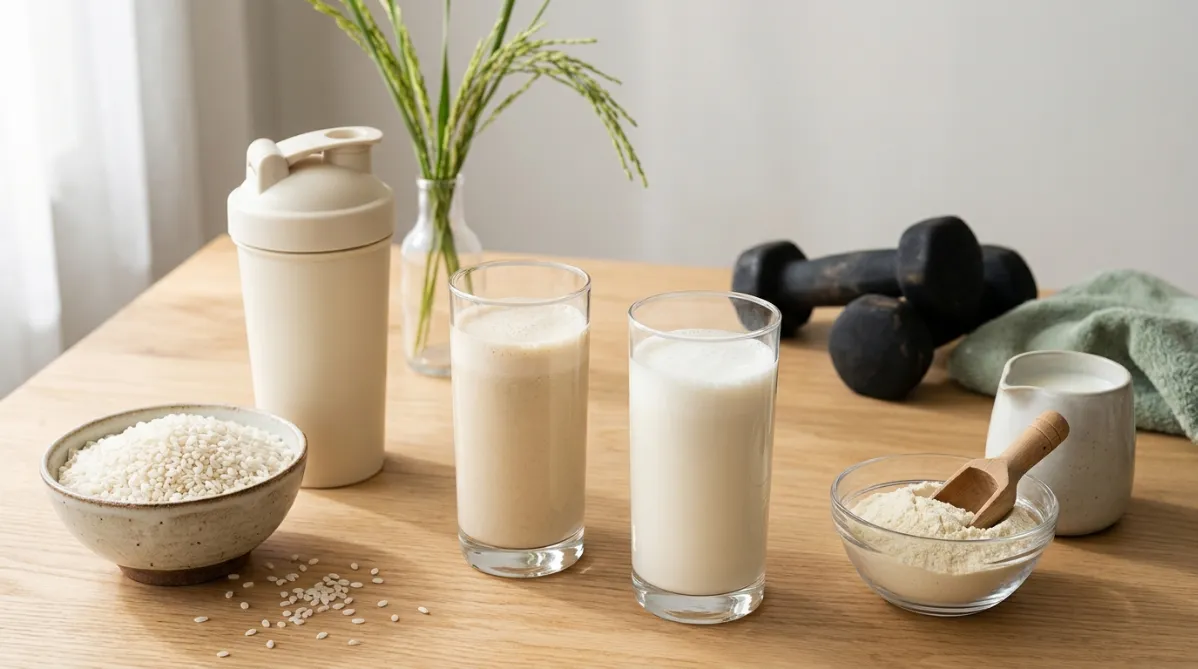
A bright, minimalist editorial still life on a pale oak table, shot from a slightly elevated three-quarter angle in soft natural window light. On the left sits a rustic ceramic bowl of uncooked short-grain white rice, with a few grains scattered across the wood. Beside it is a matte cream-colored shaker bottle. On the right is a small glass bowl of fine ivory whey powder with a wooden scoop resting in it, and a small pitcher of milk behind it. Two identical tall glasses of creamy, lightly frothed shake stand side by side in the center, one a touch warmer beige and the other a soft white. They suggest equal outcomes without any text or labels. A pair of worn black neoprene-coated dumbbells and a folded sage-green gym towel sit slightly out of focus in the background. A sprig of green rice stalks in a slim vase adds a fresh, natural accent.

The palette is warm neutrals: cream, oatmeal, soft sage, and muted terracotta, with gentle shadows and a shallow depth of field. The surface has subtle grain, and fine powder dust is caught in the light. The composition is clean and balanced, with generous negative space on the upper right for a headline overlay. The mood is calm, modern, and health-forward, like a contemporary nutrition magazine or wellness journal. Photorealistic, crisp detail, creamy bokeh, and a gentle matte film-like finish.
Nutrition

48 g de proteină din orez egalizează zerul pentru mușchi și forță în 8 săptămâni

Dr. Gymbro · · 4 min read

Studiul care contestă presupunerea că zerul este singura opţiune

Se spune adesea că proteina din plante rămâne inferioară zerului. Zerul este bogat în leucină, se digeră rapid şi are un istoric îndelungat în cercetările privind creşterea musculară. Proteina din orez este de obicei considerată opţiunea mai slabă, din cauză că are un conţinut mai scăzut de leucină şi un profil aminoacidic mai puţin favorabil.

Un studiu din 2013, realizat de Joy şi colegii săi în Nutrition Journal, a testat această ipoteză în condiţii avantajoase pentru orez. Rezultatul: 48 g de izolat de proteină din orez au produs aceleaşi îmbunătăţiţi în masă slabă, grosime musculară, forţă şi putere ca 48 g de izolat de zer pe parcursul a opt săptămâni de antrenament.

Ce au făcut cercetătorii

Echipa a recrutat 24 de bărbaţi tineri, antrenaţi în rezistenţă, pe care i-a împărţit aleatoriu în două grupuri egale. Fiecare grup a consumat, în zilele de antrenament, 48 g din izolatul de proteină din orez sau 48 g din izolatul de zer. Cele două suplimente au fost egalizate în calorii şi azot, astfel încât energia totală şi conţinutul de proteină să fie identice.

Programul de antrenament a urmat o perioadizare zilnică, trei zile pe săptămână, timp de opt săptămâni. Participanţii au băut suplimentul imediat după fiecare sesiune.

Cercetătorii au măsurat:

  • Grosimea musculară prin ultrasunete;
  • Compoziţia corporală prin absorptiometrie cu raze X cu dublă energie (DXA);
  • Forţa pentru partea superioară şi inferioară a corpului prin împins la piept şi presă pentru picioare;
  • Performanţa de putere;
  • Recuperarea percepută, durerea musculară şi disponibilitatea de a antrena în jurul primei sesiuni de antrenament.

Compoziţia corporală, forţa şi grosimea au fost evaluate în săptămânile 0, 4 şi 8.

Ce au descoperit

Ambele grupuri au înregistrat îmbunătăţiţi semnificative în timp. Masa corporală slabă, masa musculară, forţa şi puterea au crescut, în timp ce masa grasă a scăzut. Rezultatul cheie este ce nu s‑a întâmplat: nu au existat interacţiuni grup‑timp, adică niciun supliment nu a depăşit pe celălalt. Evaluările privind recuperarea, durerea şi disponibilitatea de a antrena au fost, de asemenea, similare între grupuri.

Designul studiului este util deoarece elimină factori de confuzie obişnuiţi. Cu calorii, azot, momentul consumului şi antrenament egale, sursa de proteină a fost singura variabilă diferită, iar aceasta nu a influenţat în mod detectabil rezultatele măsurate.

De ce contează doza

Autorii au contextualizat studiul în jurul unei „găuri” specifice. Cercetările anterioare sugerau că proteina animală ar putea depăşi cea vegetală la doze mici‑modeste. Acest experiment a folosit o doză mare, ceea ce ar putea explica performanţa excelentă a orezului.

Mecanismul probabil este leucină, aminoacidul cel mai asociat cu declanşarea sintezei proteinelor musculare. Zerul conţine mai multă leucină per gram. O porţie suficient de mare de proteină din orez poate închide acea diferenţă, furnizând suficiente cantităţi de leucină şi aminoacizi esenţiali pentru a atinge pragul unei reacţii anabolice puternice. Aceasta este o explicaţie plauzibilă, nu o demonstraţie directă a studiului. O porţie de 48 g este, de asemenea, mai mare decât ceea ce mulţi consumă după antrenament.

Limitări și precauţii

Înainte să schimbi zerul cu orez, ține cont de câteva aspecte:

  • Eşantion mic. Douăzeci şi patru de participanţi, câte 12 pe grup, pot rata diferenţe modeste. „Nicio diferenţă semnificativă” nu înseamnă „identic”.
  • Durată scurtă. Opt săptămâni este suficient pentru adaptări timpurii, dar nu pentru tendinţe pe termen lung.
  • Numai bărbaţi tineri antrenaţi. Rezultatele nu se aplică neapărat femeilor, persoanelor în vârstă sau începătorilor.
  • Posibile legături cu industria. Studiile de suplimente sunt adesea susţinute de companii care vând produsul testat. Verifică declaraţiile de conflict de interese şi sursele de finanţare înainte de a trage concluzii.
  • Doza mare. Porţiuni mai mici de proteină din orez (20‑25 g) s‑ar putea să nu egaleze zerul, deoarece furnizează mai puţină leucină. Acest studiu nu a testat aceste doze.
  • Alţi factori. Aportul total zilnic de proteine şi dieta nu au fost focusul principal al studiului, aşa că alte influenţe alimentare nu pot fi excluse complet.

Concluzii practice

Doza: Studiul a folosit 48 g de izolat de proteină din orez în zilele de antrenament. Dacă vrei să reproduci rezultatul, ținteşte aproape de această cantitate, nu de o linguriţă mică.

Momentul consumului: Participanţii au consumat suplimentul imediat după antrenament. Nu există dovezi că momentul era esenţial, deoarece aportul total zilnic contează mai mult, dar acesta a fost protocolul care a funcţionat.

Cui îi este util: Cel mai relevant pentru vegani, persoanele intolerante la lactate sau alergice la proteinele din lapte şi pentru oricine preferă produse pe bază de plante. Pentru aceşti sportivi, studiul sugerează că renunţarea la zer nu înseamnă renunţarea la câştiguri, atâta timp cât doza este adecvată.

Dacă iei mai puţin: Ia în considerare o porţie mai mare sau combină proteina din orez cu alte proteine vegetale sau cu o sursă suplimentară de leucină. Aceasta este o inferenţă rezonabilă bazată pe raţionamentul privind leucina, nu pe constatarea directă a studiului.

Dacă tolerezi zerul: Nimic din acest material nu spune că orezul este superior. Studiul a identificat echivalenţă, aşa că alegerea se poate face în funcţie de digestie, preţ, gust şi valori personale.

Concluzie finală

Acest studiu arată că vechea ierarhie „zer peste plante” nu este absolută. Când doza, caloriile şi azotul sunt egale, iar doza este mare, izolatul de proteină din orez susţine creşteri în masă slabă, forţă şi putere comparabile cu zerul la bărbaţii antrenaţi pe parcursul a opt săptămâni. Eşantionul este mic, perioada scurtă, iar doza mare limitează gradul de generalizare. Totuşi, pentru sportivii pe bază de plante reprezintă o dovadă încurajatoare că un shake de proteină din orez bine dosat poate face treaba.

Recap rapid:

  • 48 g de izolat de proteină din orez au egalat 48 g de izolat de zer într-un studiu randomizat cu 24 de bărbaţi antrenaţi;
  • Masa slabă, grosimea musculară, forţa şi puterea au crescut în ambele grupuri, fără diferenţe semnificative între ele;
  • Doza mare probabil a permis orezului să concureze, așa că nu presupune că porţiuni mici vor da aceleaşi rezultate;
  • Verifică declaraţiile de finanţare şi tratează aceste constatări ca promițătoare, nu definitive.
Original study

Read the original research on pubmed.ncbi.nlm.nih.gov →

This article summarizes published research for general information. It is not medical advice.

DG

Written by

Dr. Gymbro

Dr. Gymbro writes for Dr. Gymbro: science-backed fitness, nutrition & performance.

Related Articles

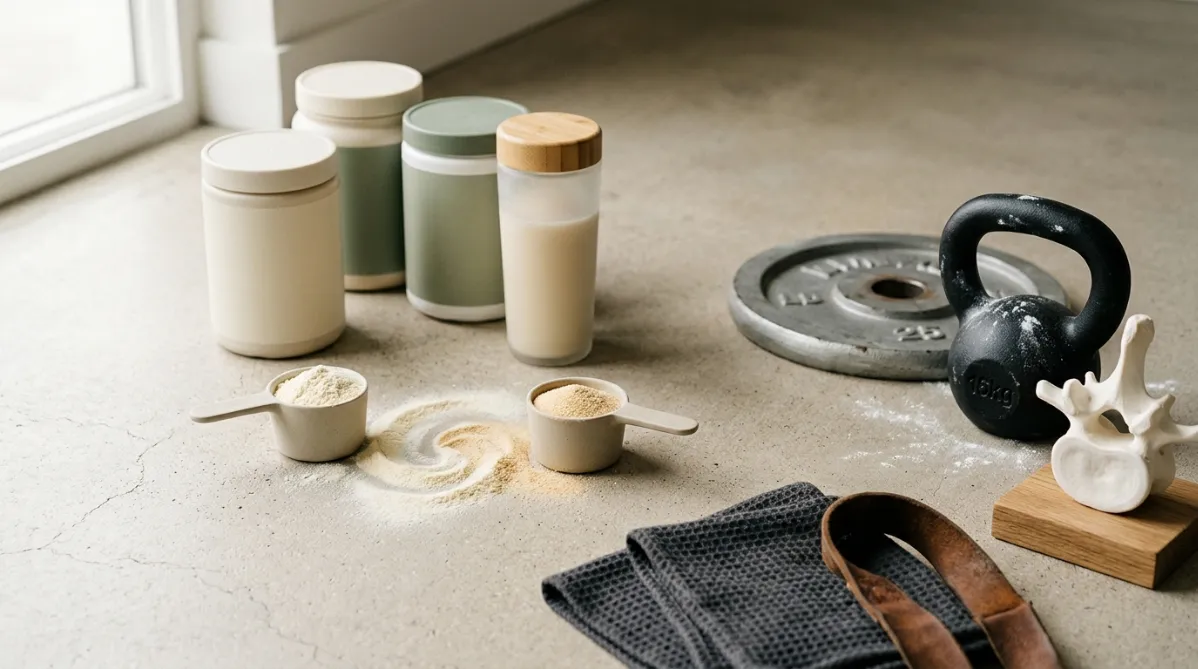
A wide, softly lit editorial still life on a pale warm-gray concrete surface, shot from a slightly elevated three-quarter angle. In the center-left, two matte ceramic scoops sit side by side. One holds fine ivory whey powder, the other holds slightly coarser, pale golden collagen peptide powder. A small, elegant dusting of both powders spills between them and blends into a soft swirl. Behind them, three minimalist cream and sage-green supplement tubs with no legible text stand in a staggered row, with a frosted glass shaker bottle of creamy liquid beside them.

On the right, a brushed-steel barbell plate and a compact chalk-dusted kettlebell rest slightly out of focus, suggesting resistance training. Pale wisps of chalk hang in the air. A folded charcoal gym towel and a pair of worn leather lifting straps lie in the foreground. A single cross-section of a clean white bone model, a stylized vertebra, rests on a small oak block at the far right. It subtly signals the bone-density theme without looking clinical.

Natural window light enters from the left, casting long, gentle shadows and a warm highlight on the powders. The palette is muted and modern: oatmeal, bone white, sage green, soft charcoal, and touches of warm amber. Shallow depth of field keeps the scoops tack-sharp and melts the background into creamy blur. Leave generous negative space in the upper right for headline overlay. The overall feel is a premium health and science journal cover: clean, tactile, minimalist, with fine film-like grain and a calm, editorial mood.
nutrition

Whey Plus colagen depășește orice variantă singulară la ridicatori — dar există un detaliu

BY DR. GYMBRO ·

Amestecarea a 30 g de zer cu 10 g de colagen a depășit zerul singur, colagenul singur și placebo în toți parametrii evaluaţi într-un studiu de opt săptămâni la bărbaţi antrenaţi la forță. Combinaţia a adus +2,66 kg de masă musculară (prin BIA), a crescut densitatea minerală osoasă a coloanei lombare și a îmbunătăţit performanțele la genuflexiune, împins de la piept și markerii de remodelare osoasă. Colagenul singur a influențat doar osul, iar zerul singur a influențat doar mușchiul. Cu doar 40 de participanţi, diferențe mari în aportul total de proteine și un salt surprinzător al DMO‑ului solicită rezerve.

A wide, softly lit bedroom scene at dusk, styled like a modern editorial photograph. In the foreground, a rumpled bed with textured oatmeal linen sheets and a single dented pillow sits beside a light oak nightstand. On the nightstand is a tall glass of creamy, milky white protein shake, a small wooden scoop and a matte ceramic tub with no readable label, beside a minimalist analog alarm clock. The clock's hands show a late hour, and it casts a faint shadow on the wall. A pair of clean white running shoes rests on the floor by the bed. A folded gray athletic hoodie lies at the foot of the bed, suggesting an athlete's lifestyle.

Warm amber light from a bedside lamp mixes with cool blue-gray twilight from a tall window with sheer curtains. The glow lands on the glass and gives the milky surface a soft sheen. Through the window, a muted city skyline fades into evening haze.

The palette is calm and sophisticated: warm cream, soft sage green, dusty blue, and a touch of terracotta from a small ceramic vase holding dried pampas grass. The composition follows the rule of thirds, with the glass and clock in the right third and open negative space on the left for headline text. Shallow depth of field keeps the glass and clock crisp while the background blurs gently.

The mood is quiet, slightly restless, and thoughtful, hinting at a night that does not go as planned. A subtle detail, a half-drawn curtain letting in a thin stripe of light across the rumpled sheets, suggests interrupted sleep. The look is clean, contemporary, and magazine-quality, with fine film grain, natural tones, and soft shadows, like a lifestyle wellness journal cover. No people, no text, no futuristic elements.
recovery

Proteina pentru somn care a determinat persoanele cu somn slab să se trezească mai des

BY DR. GYMBRO ·

Alpha‑lactalbumina este promovată ca „proteina pentru somn”, iar studiile acute anterioare sugerau că ar putea ajuta sportivii să doarmă și să performeze. Un nou studiu randomizat încrucișat a testat suplimentul la 24 de sportivi cu probleme reale de somn. După o săptămână de administrare a 40 g cu două ore înainte de culcare, nu s‑a observat niciun beneficiu asupra somnului; numărul trezirilor a crescut ușor (11,01 vs 10,25) și înălțimea săriturii a scăzut (27,68 vs 28,58 cm). Singurul efect pozitiv a fost reducerea stării emoționale negative seara. Iată ce s‑a testat, ce arată datele și cine ar trebui să renunțe la acest supliment.

A bright, airy, minimalist kitchen counter in soft morning light, shot from a slightly elevated three-quarter angle in a wide landscape composition. Two matching ceramic bowls sit side by side on a pale oak butcher-block surface. The left bowl holds fine, creamy-beige pea protein powder with a small wooden scoop resting in it. The right bowl holds smooth, ivory-white whey powder with an identical scoop. Between and slightly behind them sits a third, smaller empty bowl with a plain scoop, hinting at the placebo. Scattered around the bowls are fresh green pea pods, some split open to reveal bright, round peas, and a small glass bottle of milk with delicate condensation. A sage-green linen napkin is folded loosely at the edge of the frame.

In the soft-focus background, a young man in a fitted heather-gray t-shirt is seen from the shoulders down, casually flexing one arm while holding a matte shaker bottle, the biceps subtly defined and the pose relaxed and natural. A minimalist notebook with a pencil and a simple hand-drawn bar chart lies open on the counter, suggesting analysis without legible text. A small potted herb plant and a ceramic mug add warmth.

The color palette is muted and editorial: warm cream, sage green, soft terracotta, pale wood, and touches of charcoal. Light streams in from a window on the left, casting gentle long shadows and a subtle golden glow across the powders so their textures look fine and tactile. Shallow depth of field keeps the bowls crisp while the background melts into a creamy blur. The look is modern lifestyle-magazine photography, clean and uncluttered, with generous negative space on the right third of the frame for headline overlay. It is natural, appetizing, and trustworthy, in the style of a contemporary wellness and nutrition journal.
nutrition

Proteină din mazăre vs zer: rezultatul surprinzător al începătorilor pe care nimeni nu l-a așteptat

BY DR. GYMBRO ·

Poate proteina vegetală să construiască mușchi la fel de bine ca zerul? Un studiu de 12 săptămâni pe 161 de bărbaţi a comparat proteina din mazăre, zerul și un placebo, iar rezultatele pentru începători au surprins: grosimea bicepsului a crescut cu 20,2 % pentru mazăre versus 8,6 % pentru placebo. Diferenţa în grupul total a fost doar o tendinţă, iar concluzia principală a venit din analiza unui subgrup. Iată ce a demonstrat studiul, ce nu a putut dovedi şi cum pot ridicătorii vegani sau intoleranţi la lactoză să folosească aceste informaţii.

A clean, editorial flat-lay photograph shot from above on a pale warm-grey stone countertop, bathed in soft diffused morning light from the left. At the center sits a matte white supplement tub with a minimal sage-green label, its lid resting beside it. A small wooden scoop spills fine cream-colored whey powder in a gentle arc across the surface, creating delicate natural texture and soft shadows. Next to the powder, a small ceramic dish holds a handful of pale tan capsules and a few tiny golden-brown ginseng root slices and fragments of dried Panax notoginseng root, hinting at the botanical origin of the ingredient. A sprig of fresh green leaves with serrated edges adds a touch of organic color on the upper right.

In the foreground, a tall glass of milky shake with a subtle frothy surface, condensation beads on its sides, sits beside a folded linen napkin in oatmeal tone. A slim brushed-steel spoon and a minimal glass of water complete the arrangement. A pair of simple, elegant reading glasses and a closed notebook with a thin pencil rest at the upper left, suggesting a researcher's desk and a thoughtful review of data, with no legible text visible.

The palette is soft and modern: warm cream, sage green, muted terracotta, pale wood, and gentle off-white, with one small accent of deep amber from the ginseng slices. Composition follows the rule of thirds with generous negative space on the right side for title overlay. Shallow depth of field, crisp focus on the powder and capsules, with the edges gently softened. The mood is calm, trustworthy, and wellness-focused, evoking a contemporary health and science magazine aesthetic. High-resolution, natural color grading, subtle film grain, minimal and airy, 16:9 landscape.
nutrition

AstraGin: ingredientul ascuns de pe etichetă care a crescut absorbția whey‑ului

BY DR. GYMBRO ·

Pe eticheta suplimentului pre‑antrenament se găseşte un ingredient minuscul pe care probabil l-ai trecut cu vederea: AstraGin. Un studiu pilot pe oameni a arătat că a sporit absorbţia valinei cu 14 %, a leucinei cu 8 % și a aminoacizilor esențiali cu aproape 13 % la adulţi între 60 și 80 de ani. Zonulina din sânge, un indicator al permeabilităţii intestinale, a scăzut tot cu 13 %. Diferenţele în forţă şi masă musculară nu au fost semnificative statistic, iar studiul a inclus doar 30 de participanţi. Iată ce spun cu adevărat datele despre eficacitatea AstraGin.

This page is available in