Dr. Gymbro
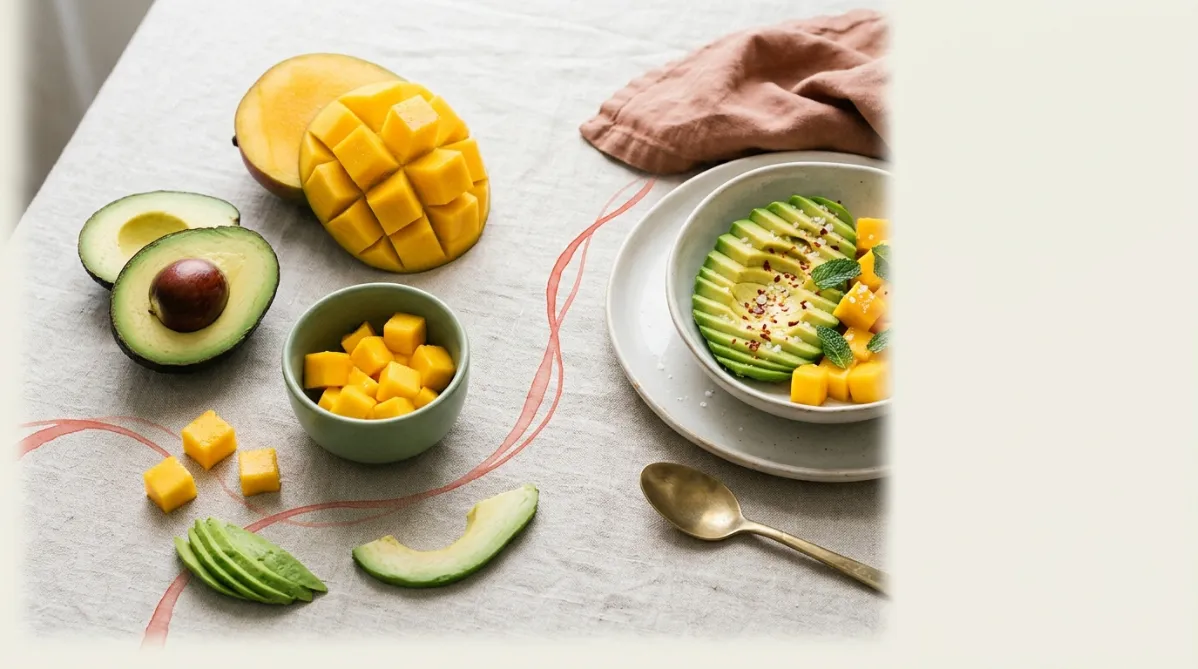
A wide, softly lit editorial still life photographed from slightly above on a pale oat-colored linen surface. On the left, a halved ripe Hass avocado with its glossy pit still nestled in one half, the flesh a buttery gradient from deep green at the skin to creamy yellow at the center. Beside it, a ripe mango is sliced into thick cheeks with a neat crosshatch pattern, the golden-orange flesh catching the light. A small ceramic bowl in matte sage green holds a cup of diced mango cubes. A few scattered mango cubes and a thin avocado slice fan out across the surface.

On the right, a minimalist ceramic plate holds a simple composed bowl: sliced avocado fanned over mango, with a sprinkle of flaky sea salt, a pinch of chili flakes, and a few torn mint leaves. A linen napkin in muted terracotta is draped casually at the edge of the frame. A single brushed-brass spoon rests nearby.

A subtle graphic touch ties in the artery theme: a thin, elegant line of warm coral red, like a hand-drawn ribbon or gentle wave, curves through the negative space on the surface, suggesting a blood vessel and flow without looking clinical. It passes softly beneath the fruit as if painted on the table in watercolor.

Natural morning window light enters from the upper left, creating soft long shadows and gentle highlights on the fruit's surface. The palette is warm and fresh: avocado greens, mango golds and oranges, cream, sage, and a hint of coral. Shallow depth of field blurs the background edges into creamy neutrals, leaving generous clean empty space on the right third for title text. Modern wellness magazine aesthetic, crisp but organic, high-end food photography, with a subtle film-like grain and calm, balanced composition.
Nutrition

Avocado + Mango zilnic: Ce s‑a schimbat în artere (și ce nu)

Dr. Gymbro · · 4 min read

Opt săptămâni. Un avocado. O cană de mango. În fiecare zi. Vasele de sânge ale persoanelor cu prediabet au reacţionat. Zahărul din sânge, inflamaţia şi majoritatea celorlalţi markeri nu s‑au modificat.

Aceasta este esenţa unui nou studiu randomizat publicat în Journal of the American Heart Association. Este un rezultat interesant, dar trebuie citit pentru ceea ce arată cu adevărat.

Ce au făcut exact cercetătorii

O echipă de la Illinois Institute of Technology, condusă de Britt Burton‑Freeman, a randomizat 82 de adulţi cu prediabet. Vârsta medie era de aproximativ 45 de ani, iar IMC‑ul mediu, de circa 30. Toţi au urmat o dietă parţial controlată, cu alimente furnizate săptămânal: 1.500 kcal/zi pentru femei şi 1.750 kcal/zi pentru bărbaţi.

Un grup a primit zilnic, timp de 8 săptămâni, un avocado întreg şi o cană de mango. Grupul de control a primit alimente cu acelaşi conţinut energetic, dar sărace în grăsimi şi fibre, în locul fructelor. Caloriile erau egale, aşa că diferenţa constă în calitatea şi compoziţia alimentelor, nu în cantitatea totală consumată.

Variabila principală a fost dilatarea mediată de flux (FMD). Este un test ecografic care măsoară cât de bine se lărgeşte o arteră când fluxul sanguin creşte şi reprezintă un indicator standard al funcţiei endoteliale.

Rezultatul de titlu: FMD a crescut

FMD a crescut cu aproximativ un punct procentual în grupul cu avocado‑mango şi a scăzut în grupul de control. Diferenţa dintre grupuri a fost de circa 2,1 puncte procentuale (efect –2,11 ± 0,77 %, P = 0,008), semnul reflectând comparaţia control‑versus‑fruct.

Scăderea observată în grupul de control contează la fel de mult ca creşterea grupului cu fructe. O dietă săracă în fibre şi fructe ar fi putut deteriora funcţia vasculară în decursul a două luni, în timp ce dieta cu fructe a inversat această tendinţă. Consumul total de fructe, fibre, vitamina C şi grăsimi mononesaturate a crescut semnificativ în grupul cu avocado‑mango.

Tensiunea arterială: un semnal doar la bărbaţi

Tensiunea arterială diastolică a diferit între dietele studiate, iar efectul s‑a manifestat în principal la bărbaţi (P = 0,03). Tensiunea arterială diastolică centrală a arătat o tendinţă (P = 0,07), dar nu a atins semnificaţia statistică.

Această diferenţă specifică sexului trebuie considerată ca un punct de plecare pentru cercetări viitoare. Efectele în subgrupuri, într-un studiu cu 82 de persoane, sunt uşor de supra‑interpretat, iar studiul nu a fost conceput să explice de ce bărbaţii au răspuns mai bine.

Ce nu s‑a schimbat

Majoritatea celorlalte variabile secundare nu au arătat diferenţe semnificative (P > 0,05). Acestea includ markeri legaţi de glucoză, inflamaţie şi majoritatea profilului metabolic. Câţiva markeri lipidici şi renali au avut valori marginale (P < 0,1), dar nu suficiente pentru a susţine un efect clar.

Prin urmare, nu este un truc pentru scăderea glicemiei sau un remediu antiinflamator. Este dovada că două fructe întregi pot îmbunătăţi o măsură vasculară importantă într-un grup cu risc ridicat, chiar dacă glicemia nu se modifică vizibil.

Citirea printului mic

Studiul a fost finanţat parţial de Hass Avocado Board şi de National Mango Board, iar autorii au declarat această sursă de fonduri. Finanţarea industrială nu invalidează datele, dar este un motiv să aşteptăm replicarea independentă.

Design‑ul nu poate separa efectul avocado‑ului de cel al mango‑ului. S‑a testat combinaţia, aşa că nu ştim care fruct, sau care componentă (fibre, vitamina C, grăsimi mononesaturate, polifenoli), a generat efectul asupra vaselor. FMD este un marker surrogate, nu un atac de cord sau un accident vascular cerebral, iar opt săptămâni reprezintă un interval scurt.

Cum să integrezi această combinație în dieta ta

Matematica calorică este întrebarea practică. Un avocado mediu are aproximativ 240‑320 kcal, în funcţie de mărime, iar o cană de bucăţi de mango, în jur de 100 kcal. Aşteaptă‑te la circa 350‑420 kcal pentru ambele. În acest studiu, acestea au reprezentat o parte importantă dintr‑o zi de 1.500‑1.750 kcal şi au fost compensate de celelalte alimente furnizate.

  • În regim de reducere: Tratează perechea ca pe un bloc energetic dens şi alocă‑i un buget caloric. Înlocuieşte alte grăsimi (uleiuri, brânză, nuci) şi carbohidraţi rafinaţi în loc să le adaugi peste tot. Jumătate de avocado cu jumătate de cană de mango îţi oferă o parte din efect pentru circa 175‑210 kcal.
  • În menţinere: Doza completă se potriveşte uşor. Înlocuieşte un snack procesat sau un desert cu ea şi aportul caloric zilnic rămâne aproximativ acelaşi.
  • În creştere în greutate (bulking): Poţi adăuga porţia în plus, deoarece probabil ai suficient spaţiu caloric.

Cine ar putea beneficia cel mai mult: Persoanele cu prediabet sau supraponderale şi cei cu o dietă săracă în fructe şi fibre. Dacă deja consumi multe legume şi fructe, beneficiul ar putea fi mai mic, iar studiul nu oferă răspunsuri definitive.

Idei simple de mese

  • Toast cu avocado pe pâine integrală, însoţit de o cană de mango.
  • Smoothie cu jumătate de avocado, mango, spanac şi iaurt grecesc pentru proteină.
  • Bol cu pui sau creveţi, mango tăiat cubuleţe, felii de avocado, fasole neagră şi lime.
  • Salsa de mango‑avocado peste peşte la grătar.
  • Bucăţi de mango congelat ca gustare de seară, cu avocado consumat la prânz sau cină.

Concluzia finală

La adulţii cu prediabet, adăugarea unui avocado şi a unei căni de mango zilnic, timp de 8 săptămâni, a îmbunătăţit dilatarea mediată de flux comparativ cu o dietă de control săracă în fibre şi grăsimi, iar tensiunea arterială diastolică s‑a ameliorat la bărbaţi. Glucoza şi majoritatea celorlalţi markeri nu au înregistrat modificări. Alimentele nu sunt medicamente, iar acest rezultat este modest. Totuşi, înlocuirea unor alimente sărace în fibre cu fructe integrale şi grăsimi sănătoase reprezintă o schimbare ieftină şi cu risc scăzut, iar arterele tale pot reacţiona chiar dacă valorile de laborator rămân neschimbate.
Original study

Read the original research on pubmed.ncbi.nlm.nih.gov →

This article summarizes published research for general information. It is not medical advice.

DG

Written by

Dr. Gymbro

Dr. Gymbro writes for Dr. Gymbro: science-backed fitness, nutrition & performance.

Related Articles

A wide, softly lit editorial still life on a pale warm-gray stone surface. In the center, three small clear glass vials of differing liquid heights stand in a staggered row, filled with luminous citrus-orange liquid. The shortest vial holds a thin layer of liquid, the middle one is about half full, and the tallest is nearly full, subtly suggesting rising levels without any charts or text. Beside the vials, a halved blood orange and a halved lemon sit with glistening, dewy pulp, and a few loose orange segments scatter across the surface. In the foreground, a shallow ceramic dish holds a few translucent golden softgel capsules catching the light, and a single droplet of orange liquid rests on the stone with a delicate glossy highlight.

Behind the vials, a large, out-of-focus backdrop in muted peach and cream tones fades into a gentle gradient. Soft morning window light enters from the left and casts long, elegant shadows to the right. Thin sprigs of green citrus leaves add a fresh contrast in the upper corner. A few macro-scale glossy spheres, resembling tiny bubbles of oil or water, float on the surface near the vials, their rounded, shimmering skins hinting at encapsulation in a natural, organic way.

The palette is warm and restrained: apricot, tangerine, cream, soft sage, and pale stone gray. The composition follows the rule of thirds, with the vials slightly right of center and generous negative space on the left for a headline overlay. Shallow depth of field, crisp focus on the middle vial, fine film-like grain, and a clean, minimalist styling reminiscent of contemporary wellness and science magazine photography. No people, no text, no lab equipment, no futuristic elements. A calm, modern, trustworthy, editorial mood.
nutrition

Vitamina C liposomală crește de 6 ori nivelul plasmatic; o nouă formulă îl dublează

BY DR. GYMBRO ·

Un studiu crossover a arătat că vitamina C liposomală convențională generează aproximativ de 6 ori mai multă expunere în sânge decât vitamina C simplă, iar o formulă dublu‑encapsulată ajunge aproape de 11 ori. Diferența este izbitoare, dar studiul a inclus doar 12 persoane, a folosit o doză unică de 350 mg și a urmărit o fereastră de 8 ore. În plus, cercetarea a fost finanțată de producătorul noii formule, care deține un brevet. Iată ce arată cu adevărat cifrele, de ce încapsularea modifică absorbția și cine ar putea (sau nu) să beneficieze.

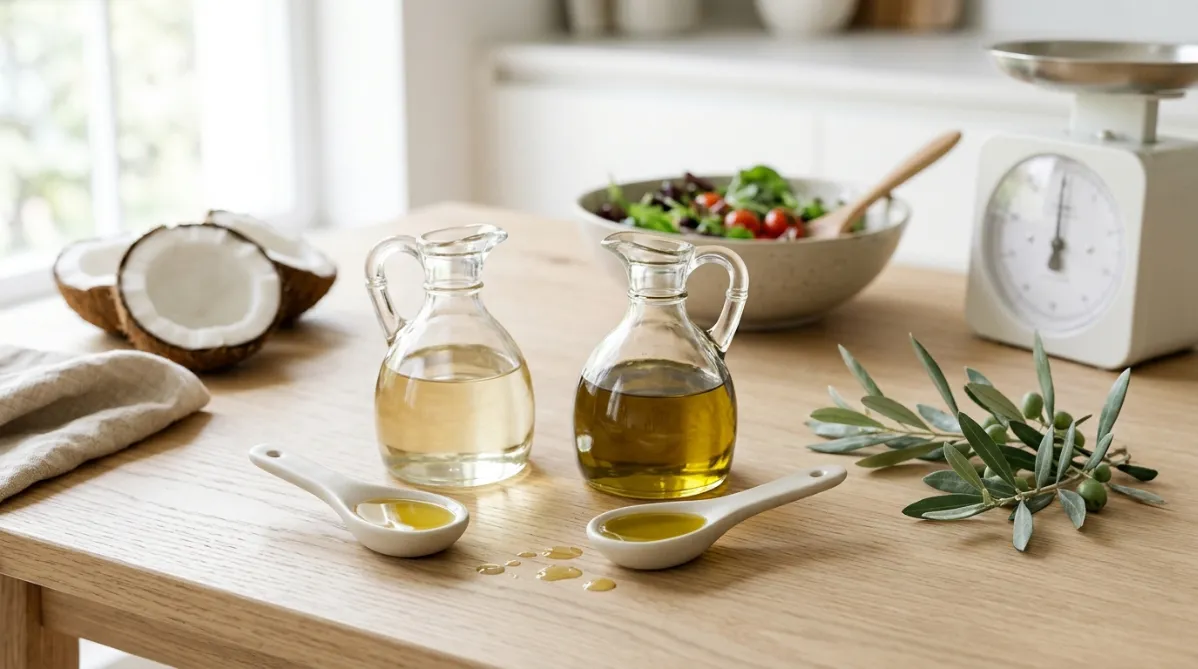
A calm, editorial-style still life shot from a slightly elevated angle, in a bright minimalist kitchen with soft natural window light coming from the left. On a pale oak wooden table sit two small glass cruets side by side: one filled with clear, pale golden MCT oil, the other with deeper green-gold extra virgin olive oil. Between and in front of them, two shallow ceramic spoons in matte off-white, each holding a glistening pour of its respective oil, with a few droplets catching the light on the table surface. A sprig of fresh olive branch with silvery-green leaves rests to the right, and a halved coconut with white flesh sits softly out of focus at the left edge, hinting at the source of MCTs. In the background, a blurred linen cloth in warm beige and a small bowl of mixed greens and cherry tomatoes suggest a healthy diet. A simple analog kitchen scale in brushed white metal sits subtly in the soft-focus background, a quiet nod to weight loss without being literal. Color palette: creamy whites, warm sand, soft sage green, and glowing golden amber highlights. Shallow depth of field, gentle shadows, delicate specular highlights on the oil, subtle film grain, clean negative space on the right third for headline overlay. Modern wellness magazine aesthetic, tactile, airy, and sophisticated, shot as if with an 85mm lens, 16:9 landscape composition.
nutrition

Ulei MCT vs ulei de măsline într-o dietă: un grup a terminat cu 1,7 kg mai ușor

BY DR. GYMBRO ·

Un studiu randomizat din 2008 a comparat uleiul MCT cu uleiul de măsline pe parcursul a 16 săptămâni de dietă. Grupul care a utilizat MCT a terminat cu aproximativ 1,7 kg în minus și cu un nivel mai scăzut de grăsime abdominală. Diferențele în pierderea de grăsime au fost însă doar tendințe, iar peste o treime dintre participanți au părăsit studiul. În articolul de față vom analiza ce arată cu adevărat cercetarea, de ce MCT‑urile ar putea funcționa, cum se administrează fără probleme gastrointestinale și cine ar trebui să le evite.

A bright, minimalist editorial still life on a soft warm-white surface, shot from a slightly elevated angle in natural morning light. In the center-left, a small matte ceramic dish holds a handful of pale cream capsules and tablets, a few spilling casually onto the surface. Beside it sits a sleek analog blood pressure cuff, softly coiled, in muted sage green fabric. Fresh potassium-rich foods are arranged in a loose, balanced composition around the pills: a halved ripe avocado with its pit, a peeled banana, a cut sweet potato with glowing orange flesh, a few leafy spinach stems, and a small cluster of white beans in a wooden bowl. A single slim pair of chrome dumbbell handles or a small chalked kettlebell rests discreetly at the right edge, hinting at the lifter audience without dominating the frame.

The palette is soft and modern: warm cream, sage green, terracotta orange, and buttery yellow, with subtle blush-pink shadows. The background is a smooth, out-of-focus pale oatmeal wall with a gentle diagonal shadow from a window, creating a calm, airy mood. The right third of the frame has generous negative space for headline text. A faint, delicate line of hand-drawn-style red accent, such as a small red ribbon or a thin red pencil resting near the pills, adds a quiet "caution" note without feeling alarming.

The overall look is clean, contemporary health-journal photography with shallow depth of field, crisp focus on the pills and produce, soft diffused highlights, and fine natural texture in the ceramic, linen, and food surfaces. Subtle film-like grain, editorial styling, and a calm, trustworthy, slightly cautionary tone. 16:9 landscape composition.
science research

Tabletele cu potasiu reduc tensiunea arterială cu 5 mmHg în patru săptămâni, dar există un obstacol

BY DR. GYMBRO ·

Un nou meta‑analiză a 19 studii randomizate a constatat că potasiul oral a scăzut tensiunea sistolică măsurată în cabinet cu aproximativ 5 mmHg în aproximativ patru săptămâni. Însă povestea nu e atât de simplă: valorile pe 24 de ore au scăzut mai puțin, iar efectele secundare au apărut la 12,8 % dintre cei care au luat potasiu, față de 3,2 % în grupurile de control. Rezultatele se referă la hipertensiunea primară netratată, iar suplimentele de potasiu pot fi periculoase pentru persoanele cu boală renală sau cele care folosesc inhibitori ACE, ARB‑uri sau diuretice care păstrează potasiul. Iată ce arată datele, ce nu arată și cum ar trebui să le interpreteze cei care practică ridicarea greutăților și au diete sărace în legume.

A bright, airy editorial still life photographed from slightly above on a pale oat-colored linen surface, in soft natural window light with gentle long shadows. In the foreground, a rustic ceramic bowl holds halved and whole oranges, glossy red bell pepper slices, and a few kiwi halves with emerald flesh. Beside it sit loose strawberries and a small pile of bright yellow lemon wedges. Their colors pop against the muted neutral palette. A single clear glass of water with a slice of orange rests nearby, catching the light.

On the right side of the frame, a pair of well-worn but clean walking sneakers in sage green and cream sits casually on the surface, with one lace loosely trailing. Behind them, a simple wooden chair with a light ash finish is partly visible and slightly out of focus, a quiet nod to the sit-to-stand test. A small stainless-steel stopwatch lies next to the shoes, with a subtle reflective glint.

A minimalist ceramic dish holds a few small, round, pale-yellow vitamin capsules, kept understated. A sprig of green leaves and a folded cotton napkin in soft terracotta add a warm accent. A small open notebook with a pencil rests in the upper left, its page blank except for faint, abstract pencil lines suggesting a simple rising graph, with no legible text.

The composition leaves generous negative space on the left third for title overlay, with a soft cream-to-peach gradient background. The mood is fresh, healthy, and contemplative, like a modern wellness magazine or a trendy online journal. The color palette is warm citrus orange, sunny yellow, sage green, and soft cream, with gentle terracotta accents. The depth of field is shallow, with crisp focus on the fruit and shoes and a creamy blur in the background. The overall look is clean, natural, and editorial, with fine film-like grain, true-to-life color, and a calm, optimistic tone. Landscape 16:9 framing.
nutrition

Vitamina ieftină care întărește picioarele pe măsură ce îmbătrânești

BY DR. GYMBRO ·

Un studiu britanic amplu, cu peste 5.000 de adulți cu vârste cuprinse între 48 și 92 de ani, a constatat că persoanele cu nivel optim de vitamina C în sânge (≥ 50 µmol/L) mergeau mai repede și se ridicau din scaun mai rapid decât cele cu niveluri scăzute. La femei s‑a observat și o forță de prindere, ajustată pe înălțime, mai mare, în timp ce la bărbaţi nu a apărut nicio corelație. Vitamina C din alimentație a arătat asocieri doar la femei și nu într-un model clar. Designul este transversal, deci nu poate demonstra că vitamina C cauzează o funcție mai bună. Iată ce arată datele, ce nu arată și de ce ar merita să‑ți verifici nivelul sanguin.

This page is available in