Dr. Gymbro
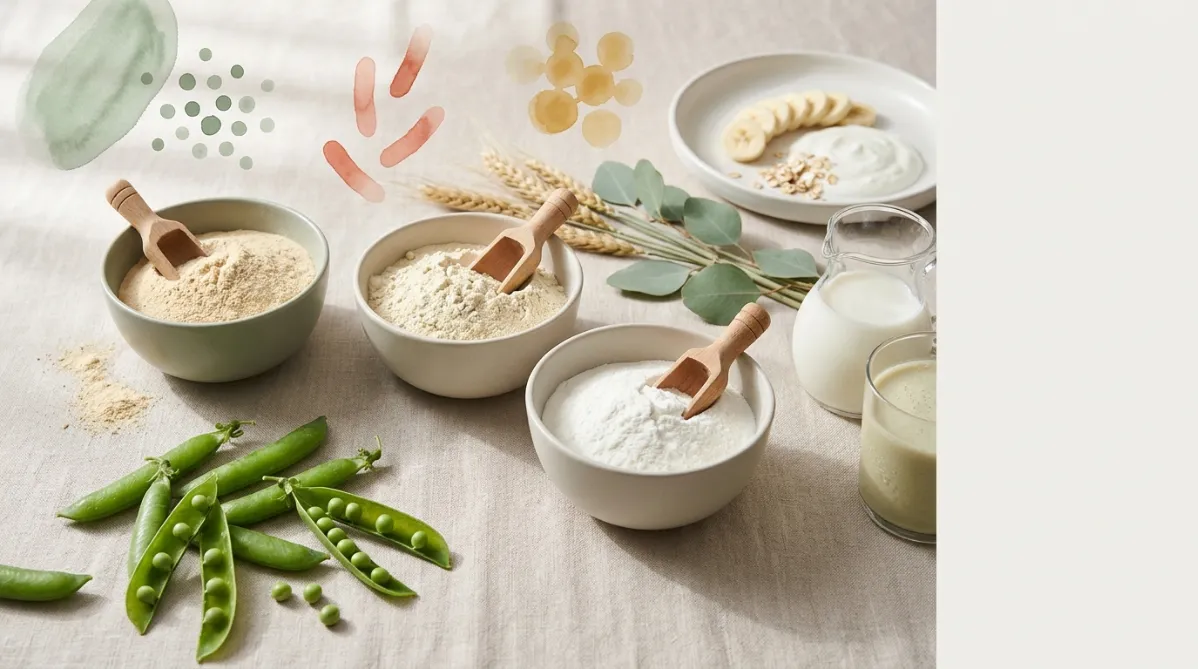
A wide, softly lit editorial flat-lay on a pale oat-colored linen surface, shot from slightly above. Three matte ceramic bowls sit in a loose diagonal across the frame. One holds fine, creamy beige pea protein concentrate, another holds paler, powdery pea protein isolate, and the third holds bright white whey protein isolate. Each bowl has a small wooden scoop resting beside it, with a few fine dustings of powder on the linen. Fresh green pea pods, split open to show round peas, spill naturally in the left foreground. A small glass pitcher of milk sits near the right edge, next to a half-full glass of a smooth, pale green-beige shake with condensation on the surface.

Behind the bowls, a few sprigs of dried wheat and soft eucalyptus leaves add organic texture. In the upper right, a shallow white ceramic plate holds a small arrangement of gut-friendly foods: sliced banana, a spoonful of plain yogurt, and a few oats. Delicate watercolor-style abstract shapes in sage green, warm coral, and soft mustard float subtly in the background. They suggest microscopic organisms, like loose dots, rods, and clustered circles, but stay painterly and minimal, not scientific or futuristic.

Natural window light enters from the left, casting long, gentle shadows and a warm, airy glow. The palette is muted and modern: sage green, cream, warm beige, blush, and touches of terracotta. The composition leaves generous clean negative space on the right third for a headline overlay. The depth of field is shallow, with the nearest pea pods and the front bowl crisp and the background softly blurred. The style is high-end wellness magazine photography with a subtle tactile, handmade feel, calm, fresh, and contemporary, in a 16:9 landscape format.
Science & Research

Ce pulbere proteică îți remodelază intestinul? Mazărea a reușit în patru săptămâni

Dr. Gymbro · · 4 min read

Shake‑ul tău proteic poate face mai mult decât să hrănească muşchii. Un nou studiu suedez randomizat arată că tipul de pulbere proteică pe care îl alegi poate modifica bacteriile din intestin în doar patru săptămâni. Două forme de proteină din mazăre au produs acest efect, fiecare favorizând microbi diferiţi.

Studiul: trei pulberi, o doză, patru săptămâni

Cercetătorii de la Universitatea Örebro au publicat un studiu randomizat, dublu-orb, cu trei braţe paralele în European Journal of Nutrition. Adulţi sănătoşi au primit una dintre cele trei suplimentări: concentrat de proteină din mazăre (PPC), izolat de proteină din mazăre (PPI) sau izolat de proteină din zer (WPI). Doza a fost 0,5 g de proteină per kg de greutate corporală pe zi, timp de patru săptămâni.

Compoziţia microbiotei intestinale a fost principalul rezultat evaluat. Echipa a colectat probe de materii fecale și chestionare de stil de viaţă săptămânal. De asemenea, la început, la mijloc și la final au prelevat sânge în stare de repaus și urină pe 24 h pentru a monitoriza markeri metabolici. Este un studiu pe oameni, nu pe șoareci sau pe culturi în plasmă. Studiul a fost înregistrat sub numărul NCT05611138.

Cercetătorii au făcut două comparaţii: PPC vs. PPI și PPI vs. WPI. Astfel au putut analiza diferenţa plantă‑animal și diferenţa dintre două forme vegetale cu matrici alimentare diferite.

Principala constatare: proteină din mazăre a schimbat diversitatea

Ambele pulberi din mazăre au produs o modificare măsurabilă. Suplimentarea cu PPC și PPI a redus semnificativ α‑diversitatea (varietatea speciilor din microbiota unei persoane) și a crescut β‑diversitatea (diferenţele dintre comunităţi). Autorii menţionează că aceste efecte au fost parţial modulate de indicele de masă corporală (IMC).

O scădere a α‑diversităţii poate părea alarmantă, deoarece o diversitate mai mare este adesea asociată cu un intestin sănătos. Abstractul nu precizează dacă această schimbare este benefică, nocivă sau neutra. Autorii subliniază că modificările de compoziţie trebuie încă corelate cu funcţia, așa că nu trageţi o concluzie fermă.

Bacteriile care au crescut

La nivel de specie, cele două forme de mazăre s-au diferențiat astfel:

  • Concentrat de proteină din mazăre (PPC): Anaerobutyricum hallii și Bifidobacterium longum au crescut semnificativ.
  • Izolat de proteină din mazăre (PPI): Lactobacillus crispatus și Limosilactobacillus frumenti au crescut semnificativ.

Autorii descriu aceste bacterii ca fiind benefice și concluzionează că diferite proteine alimentare le modulează selectiv. Abstractul nu menționează ce specii s‑au modificat în grupul cu zer, așa că nu putem compara direct.

Ce nu arată acest studiu

Câteva rezerve înainte de a‑ţi schimba pulberea:

  • Doar adulţi sănătoși. Rezultatele nu se aplică persoanelor cu afecţiuni digestive.
  • Compoziţie, nu funcţie. Autorii afirmă că sunt necesare studii suplimentare pentru a lega aceste schimbări de funcționalitatea microbiană.
  • Markeri metabolici neprezentaţi în abstract. Sângele și urina au fost analizate, dar rezultatele nu sunt raportate în rezumat.
  • Răspunsuri individuale. Autorii subliniază importanţa variabilităţii individuale, IMC‑ul influențând efectele asupra diversităţii.
  • Patru săptămâni este un interval scurt. Nu ştim dacă modificările persistă, se amplifică sau se diminuează în timp.

Recomandări practice: cum să alegi pulberea

Doza. Studiul a folosit 0,5 g/kg greutate corporală pe zi. Pentru o persoană de 80 kg aceasta înseamnă 40 g de proteină zilnic din supliment. Abstractul nu specifică momentul administrării (înainte de antrenament, după antrenament sau cu mesele), așa că nu există recomandări de timing bazate pe acest studiu.

Concentrat de proteină din mazăre. În studiu, PPC a fost asociat cu creșterea B. longum și A. hallii. Dacă vrei o pulbere vegetală și ești interesat de efectele asupra intestinului, aceasta poate fi o opţiune. Concentratele sunt, în general, mai puţin procesate decât izolatele, deşi studiul nu a testat această ipoteză.

Izolat de proteină din mazăre. PPI a dus la creşterea L. crispatus și L. frumenti. Este forma mai purificată, pe care mulţi sportivi o preferă pentru densitatea ridicată de proteină.

Izolat de proteină din zer. WPI a fost comparativul animal. Nu există date în abstract care să sugereze că zerul ar fi dăunător pentru microbiom; pur şi simplu nu se raportează modificări specifice bacteriene pentru acest grup.

Cui îi poate fi util

Sportivilor vegetali le revine cel mai direct beneficiu. Dacă te bazezi pe mazăre pentru a-ţi atinge aportul zilnic de proteină, studiul arată că nu este neutru pentru intestin – influențează anumite specii bacteriene, iar forma aleasă poate conta.

Persoanelor cu probleme gastrointestinale trebuie să fie prudente. Participanţii au fost sănătoși, așa că aceste constatări nu se pot extrapola la afecţiuni precum SII sau boala inflamatorie intestinală. Dacă ai un intestin sensibil, încearcă orice pulbere nouă treptat și discută cu un medic sau dietetician.

Concluzie

Patru săptămâni de consum de proteină din mazăre, în oricare dintre forme, au remodelat comunitatea microbiană a adulţilor sănătoşi. Concentratul și izolatul au favorizat diferite specii benefice. Întrebarea mare rămâne: ce înseamnă aceste schimbări pentru sănătatea ta? Pentru moment, alege pulberea de proteină ca pe un alt factor care influenţează ecosistemul intestinal, nu doar ca pe un simplu aport de macro‑nutrienţi.
Original study

Read the original research on pubmed.ncbi.nlm.nih.gov →

This article summarizes published research for general information. It is not medical advice.

DG

Written by

Dr. Gymbro

Dr. Gymbro writes for Dr. Gymbro: science-backed fitness, nutrition & performance.

Related Articles

A bright, airy, minimalist kitchen counter in soft morning light, shot from a slightly elevated three-quarter angle in a wide landscape composition. Two matching ceramic bowls sit side by side on a pale oak butcher-block surface. The left bowl holds fine, creamy-beige pea protein powder with a small wooden scoop resting in it. The right bowl holds smooth, ivory-white whey powder with an identical scoop. Between and slightly behind them sits a third, smaller empty bowl with a plain scoop, hinting at the placebo. Scattered around the bowls are fresh green pea pods, some split open to reveal bright, round peas, and a small glass bottle of milk with delicate condensation. A sage-green linen napkin is folded loosely at the edge of the frame.

In the soft-focus background, a young man in a fitted heather-gray t-shirt is seen from the shoulders down, casually flexing one arm while holding a matte shaker bottle, the biceps subtly defined and the pose relaxed and natural. A minimalist notebook with a pencil and a simple hand-drawn bar chart lies open on the counter, suggesting analysis without legible text. A small potted herb plant and a ceramic mug add warmth.

The color palette is muted and editorial: warm cream, sage green, soft terracotta, pale wood, and touches of charcoal. Light streams in from a window on the left, casting gentle long shadows and a subtle golden glow across the powders so their textures look fine and tactile. Shallow depth of field keeps the bowls crisp while the background melts into a creamy blur. The look is modern lifestyle-magazine photography, clean and uncluttered, with generous negative space on the right third of the frame for headline overlay. It is natural, appetizing, and trustworthy, in the style of a contemporary wellness and nutrition journal.
nutrition

Proteină din mazăre vs zer: rezultatul surprinzător al începătorilor pe care nimeni nu l-a așteptat

BY DR. GYMBRO ·

Poate proteina vegetală să construiască mușchi la fel de bine ca zerul? Un studiu de 12 săptămâni pe 161 de bărbaţi a comparat proteina din mazăre, zerul și un placebo, iar rezultatele pentru începători au surprins: grosimea bicepsului a crescut cu 20,2 % pentru mazăre versus 8,6 % pentru placebo. Diferenţa în grupul total a fost doar o tendinţă, iar concluzia principală a venit din analiza unui subgrup. Iată ce a demonstrat studiul, ce nu a putut dovedi şi cum pot ridicătorii vegani sau intoleranţi la lactoză să folosească aceste informaţii.

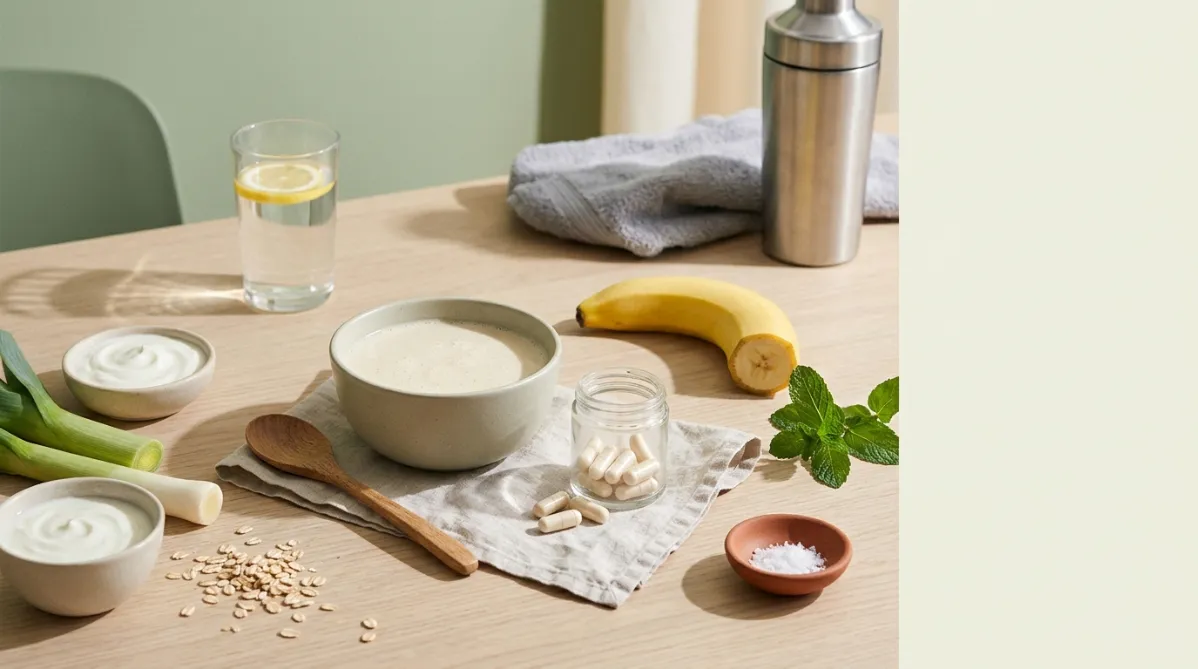
A bright, minimalist still life on a soft sage-green and warm cream backdrop, shot from a slightly elevated angle in natural morning window light. In the center sits a matte ceramic bowl of creamy vanilla protein shake with a wooden spoon resting beside it. Next to it, a small glass jar with a few off-white probiotic capsules spilling onto a pale linen napkin. Around them are fresh, gut-friendly foods arranged with editorial restraint: a halved ripe banana, a small bowl of plain yogurt with a swirl on top, a few stalks of leeks, a handful of oats scattered on the surface, and a sprig of fresh mint. A tall glass of water with a lemon slice catches the light and casts a delicate caustic shadow across the table.

In the background, slightly out of focus, a folded gray gym towel and a sleek stainless steel shaker bottle hint at an athletic lifestyle without dominating the scene. The surface is a pale oak tabletop with subtle grain. A soft diffused shadow falls to the left, giving gentle depth.

The palette is calm and modern: sage green, oatmeal, warm white, soft butter yellow, and touches of terracotta from a small clay dish holding a pinch of sea salt. The composition leaves generous negative space on the right third for headline overlay. The mood is clean, wellness-focused, and quietly editorial, like a feature in a contemporary health and science journal. Shallow depth of field, crisp focus on the capsules and bowl, subtle film grain, and natural color grading. No people, no text, no logos, no futuristic elements.
nutrition

Vânturi de proteină? Probioticul BB536 reduce mirosul, dar doar la unii

BY DR. GYMBRO ·

Te confrunţi cu gaze uriașe și mirosuri neplăcute din cauza whey‑ului? Un studiu recent a testat probioticul *Bifidobacterium longum* BB536 la sportivi cu dietă bogată în proteine și a observat scăderi ale compușilor mirositori, dar doar în anumite subgrupuri. Studiul, de dimensiuni reduse și finanţat de producător, rămâne exploratoriu. Află ce este BB536, de ce microbiomul tău poate influenţa eficacitatea și ce alternative mai accesibile poţi încerca mai întâi.

A bright, minimalist editorial still life on a pale oat-colored linen surface, shot from a slightly elevated three-quarter angle in soft natural window light. On the left, a matte ceramic bowl of fine white collagen powder with a wooden scoop resting beside it, a light dusting of powder spilling across the linen. On the right, a matching bowl of creamy off-white whey powder with a brushed-steel scoop. Between them sits a small, neatly balanced stack of simple geometric wooden blocks and a single smooth gray stone, hinting at a scale or comparison without showing a literal scale. Behind them, a lightly blurred row of three clean amber glass supplement jars with plain cream labels, unbranded. A single rolled yoga towel and a pair of small chrome dumbbells sit softly out of focus in the background on a pale plaster shelf. Accents of muted sage green and warm terracotta appear in a ceramic cup and a folded napkin, giving the palette a calm, contemporary wellness-magazine feel. A thin, elegant sprig of dried eucalyptus lies at the edge of the frame. Shadows are long, gentle, and slightly cool, with a creamy shallow depth of field and fine grain. The composition leaves generous negative space across the upper third for title overlay, with a subtle gradient from warm ivory to pale gray-blue in the background wall. The styling is clean and modern like a trendy health journal website, with a refined, tactile, editorial photography look, balanced symmetry, and no text, no people, no futuristic or laboratory elements.
nutrition

Colagenul învinge zeroul pentru mușchi într-o analiză a 78 de studii?

BY DR. GYMBRO ·

O meta‑analiză de rețea din 2026, care a cuprins 78 de studii randomizate și 4.755 de participanţi, a plasat colagenul pe primul loc în ceea ce privește creşterea forţei şi a masei fără grăsime în urma antrenamentului cu rezistenţă, depăşind zeroul. Şi, mai surprinzător, niciun alt supliment proteic nu a depăşit placebo. Totuşi, colagenul este o proteină incompletă, cu conţinut scăzut de leucină, iar intervalele de încredere sunt largi. Iată ce arată efectiv datele, de ce rezultatul necesită confirmare directă şi ce să faci cu suplimentele tale în aşteptarea unor studii suplimentare.

A wide, softly lit editorial still life on a pale oat-colored linen surface, shot from a slightly elevated three-quarter angle. On the left, a matte ceramic bowl in warm cream holds fine, pale golden-beige yeast protein powder, with a small wooden scoop resting beside it and a few loose dusty swirls on the linen. In the center, two tall frosted glass tumblers stand side by side. One holds a creamy, light tan shake with a delicate froth, and the other holds clear water with a faint ripple, creating a quiet visual contrast. On the right, a loosely folded charcoal gym towel, a brushed-steel shaker bottle, and a single small kettlebell in muted sage green sit slightly out of focus.

A few elements hint at the science without looking clinical. A minimalist matte-white notebook lies open with soft, blurred handwriting and a hand-drawn bar chart in thin pencil. Beside it rests a slim brass pen. A single sprig of dried wheat and a small dish of baker's yeast granules on a wooden board nod to the ingredient's fermentation origin.

Natural morning window light enters from the upper left, casting long, gentle shadows and a warm highlight along the glass rims. The palette is earthy and calm: oat, cream, soft terracotta, sage, and warm gray, with a subtle peachy glow in the background. The backdrop is a smooth plaster wall in muted putty tone, with a faint shadow of a window frame across it.

The composition leaves generous negative space in the upper third for a title overlay. Shallow depth of field keeps the glasses and bowl crisp while the gym props melt softly into the background. The overall mood is modern, wholesome, and trustworthy, with the feel of a contemporary health and nutrition magazine. The photograph has fine film-like grain and natural texture, and no text, logos, or labels appear anywhere.
recovery

Amestecul de proteine din drojdie rivalizează cu zerul în reducerea durerii musculare și a CK – dar are un dezavantaj

BY DR. GYMBRO ·

Proteina din drojdie începe să apară în pudrele proteice ca alternativă la zer, iar un nou studiu randomizat pe sportivi bine pregătiţi a comparat un amestec drojdie‑zer cu apă, după un antrenament eccentric intens. În comparație cu apa, amestecul a redus nivelul de creatinkinază (CK) și, la bărbaţi, senzaţia de durere, comportându‑se aproape identic cu zerul pur. Totuşi grupul de control a fost doar apă, fără a fi egalat în calorii, iar multe rezultate sunt exploratorii, după corecţia pentru multiplicitate. Iată ce arată datele, ce nu şi cine ar putea fi interesat să încerce acest amestec.

This page is available in