Dr. Gymbro
A quiet, sunlit editorial still life on a pale oatmeal linen surface, shot from a slightly elevated three-quarter angle with soft morning window light raking in from the left. On the left side, a small matte ceramic dish holds a few white round tablets, next to a minimalist amber glass bottle with a blank cream label. In the center, a slim glass of water sits beside a handmade stoneware espresso cup filled with dark coffee, with a thin ribbon of steam curling upward. On the right, a pair of worn but clean sage-green running shoes rests on a pale wooden bench, with a folded charcoal athletic towel and a stainless steel stopwatch beside them. The background is softly blurred: a calm bedroom-to-morning transition, with the left third of the frame in cool, dusky blue-gray tones suggesting night, with rumpled white bedding and a small bedside lamp glowing dimly. The tones then blend gradually across the frame into warm golden peach morning light on the right, where a blurred indoor court or track line is faintly visible through a tall window. The color palette is muted and modern: warm cream, soft sage, dusty blue, terracotta accents, and hints of amber. Delicate shadows, shallow depth of field, fine natural film grain, and generous negative space across the top of the frame for headline text. The mood is calm, precise, and thoughtful, in the style of a contemporary wellness and science journal photograph, clean and minimalist with tactile textures of linen, ceramic, glass, and wood.
Nutrition

Melatonină și cofeină: doar combinația reduce markerii de deteriorare musculară

Dr. Gymbro · · 4 min read

Cofeina a crescut distanța parcursă de bărbații antrenaţi în testul shuttle – un rezultat deja bine cunoscut. Surpriza studiului crossover constă în faptul că doar combinația melatonină administrată seara și cofeină dimineața a reușit să reducă și markerii de deteriorare musculară și inflamație. Nici cofeina, nici melatonina luate separat nu au produs acest efect, iar beneficiul așteptat asupra somnului nu a fost observat.

Combinația pe scurt

Protocolul a fost simplu: 6 mg de melatonină luate înainte de culcare, urmate de 3 mg/kg de cofeină dimineața următoare, iar testul de alergare shuttle (parcurs de 5 m) a fost efectuat la o oră după administrarea cofeinei. Studiul, publicat în Nutrients în 2026 de o echipă tunisiană, spaniolă și norvegiană, a urmărit să investigheze o posibilă interacţiune pe care sportivii o pot produce în mod accidental. Mulţi consumă melatonină pentru a se relaxa și cofeină pentru a se trezi, însă puţine cercetări au examinat ambele substanţe simultan.

Cum a fost realizat studiul

Catorăzece bărbaţi antrenaţi (vârstă medie 22,4 ± 2,9 ani) au parcurs patru condiţii într-un design randomizat, dublu‑ceg, crossover, cu placebo:

  • PLA + PLA: placebo noaptea, placebo dimineața
  • PLA + CAF: placebo noaptea, 3 mg/kg cofeină dimineața
  • MEL + PLA: 6 mg melatonină noaptea, placebo dimineața
  • MEL + CAF: melatonină noaptea, cofeină dimineața

Sângele a fost prelevat înainte și după exerciţiu pentru a monitoriza creatine kinase, lactate dehydrogenase, aspartate aminotransferase și alanine aminotransferase (markeri de deteriorare musculară), plus C‑reactive protein (marker de inflamație). Frecvenţa cardiacă maximă și scorul percepţiei efortului au fost, de asemenea, înregistrate în timpul testului. Somnul a fost evaluat doar în noaptea următoare administrării melatoninei sau placebo.

Rezultatul 1: Cofeina a crescut distanţa, cu sau fără melatonină

Distanţa totală parcursă în testul shuttle a crescut atât în grupul MEL + CAF, cât şi în PLA + CAF, în comparaţie cu placebo dublu. Melatonina luată singură nu a modificat distanţa. Practic, creşterea performanţei reflectă efectul cunoscut al cofeinei. Doza de 3 mg/kg este moderată, bine studiată, iar rezultatul se aliniază cu literatura care arată că cofeina susţine eforturi repetate de intensitate mare.

Rezultatul 2: Doar combinaţia a redus markerii de deteriorare și inflamație

Acesta este punctul cheie. Combinaţia MEL + CAF a redus semnificativ markerii de deteriorare musculară și inflamație în comparație cu celelalte trei condiţii (PLA + PLA, MEL + PLA și PLA + CAF) (p < 0,05). Niciuna dintre substanţe luată singură nu a generat această scădere. Patternul sugerează o interacţiune, deşi studiul nu explică mecanismul. Melatonina are proprietăţi antioxidante și antiinflamatorii, iar autorii consideră că cele două substanţe se completează – una sprijinind recuperarea, cealaltă performanţa. Este, totuşi, o ipoteză, nu o demonstrație fermă.

Rezultatul 3: Nicio schimbare în somn

Melatonina este comercializată în special ca ajutor pentru somn, așa că acest rezultat poate surprinde. Nu s‑au înregistrat diferenţe semnificative ale parametrilor de somn între condiţii (p > 0,05). Bărbaţii tineri, sănătoşi şi antrenaţi pot avea puţin spaţiu pentru îmbunătăţi. Somnul a fost evaluat doar în noaptea imediat următoare administrării. Prin urmare, dacă vă aşteptaţi un somn mai profund, acest studiu nu oferă dovezi în acest sens. Eventualele beneficii nu pot fi atribuite unei îmbunătăţi a somnului.

Protocol practic (bazat pe ceea ce a fost testat)

  • Seara: 6 mg melatonină înainte de culcare
  • Dimineaţa: cofeină la 3 mg/kg greutate corporală (un sportiv de 70 kg ar lua aproximativ 210 mg)
  • Momentul: testul de exerciţiu a început la o oră după doza de cofeină
  • Cui i se potriveşte: sportivi care se antrenează sau concurează dimineaţa şi practică sporturi de echipă cu sprinturi repetate de tip shuttle, deoarece acesta a fost tipul de test utilizat.

Acestea sunt condiţiile testate în studiu. Alte doze, alte momente de administrare sau alte tipuri de sportivi nu au fost investigate. Toleranţa la cofeină este individuală, iar persoanele sensibile pot reacţiona diferit. Melatonina și cofeina sunt suplimente cu propriile lor considerente, aşa că oricine are o afecţiune medicală sau ia medicamente ar trebui să consulte un specialist.

Atenționări importante

  • Eșantion mic: doar paisprezece bărbaţi tineri și antrenaţi; rezultatele nu pot fi generalizate la femei, la persoanele în vârstă sau la sportivi de elită.
  • Test unic: performanţa a fost evaluată doar cu testul shuttle‑run de 5 m, deci concluziile se referă la acest tip de efort.
  • Markerii din sânge nu reflectă direct performanţa: niveluri mai scăzute de creatine kinase sau C‑reactive protein sunt interesante, dar nu dovedesc o recuperare mai rapidă, reducerea accidentărilor sau o adaptare antrenamentală superioară.
  • Nicio creștere de performanţă adăugată de melatonină: în ceea ce privește distanţa parcursă, combinaţia nu a depășit clar cofeina singură.
  • Mecanism necunoscut: studiul arată o asociere în cadrul unei singure sesiuni, nu explică de ce apare această asociere.

Concluzie

Dacă deja folosiţi cofeină înainte de sesiunile de dimineaţă, acest studiu nu oferă niciun motiv să aşteptaţi că melatonina va creşte distanţa parcursă. Totuşi, sugerează că cele două substanţe pot modifica markerii de deteriorare musculară şi inflamație într‑un mod în care niciuna nu reuşeşte singură. Acest indiciu merită să fie replicat în grupuri mai mari, pe perioade mai lungi şi cu măsuri de recuperare care să fie resimțite de sportivi. Pentru moment, combinaţia poate fi considerată un semnal interesant, nu o soluție dovedită de recuperare.
Original study

Read the original research on pubmed.ncbi.nlm.nih.gov →

This article summarizes published research for general information. It is not medical advice.

DG

Written by

Dr. Gymbro

Dr. Gymbro writes for Dr. Gymbro: science-backed fitness, nutrition & performance.

Related Articles

A wide, editorial-style photograph of a competition swimming pool lane seen from just above the water line at the starting end, in soft morning light. In the foreground, on the pool deck, a white ceramic espresso cup sits on the edge of a blue-gray starting block, a thin curl of steam rising from it. The cup is in crisp focus, with a few droplets of water on the textured non-slip deck around it. Behind it, the pool stretches into the distance as a series of calm lanes divided by red and white lane ropes. The turquoise water glints with gentle ripples and long, shimmering reflections. At the far end, a lone swimmer in a dark cap and goggles is mid-stroke, caught in a small burst of white splash, and slightly out of focus because of the shallow depth of field.

Large windows along the side wall let in pale golden sunlight, which throws soft diagonal light across the water and the deck. The palette is clean and modern: aqua, deep teal, warm cream and a small accent of coffee brown. The cup's warm tones stand out against the cool blues. The composition follows the rule of thirds, with the cup in the lower left third and open negative space of water and light on the right, leaving room for headline text. The look is minimal, airy and contemporary, like a high-end sports and science magazine, with subtle film grain, natural color grading, and a slightly desaturated, calm mood. Faint stopwatch-like details appear only as a thin black timing pad edge on the starting block, with no text or numbers visible. The overall feel is quiet anticipation just before a race, precise and fresh, with a sense of small margins and measured performance.
nutrition

Cafeina face înotătorii mai rapizi, dar cu mult mai puțin decât te-ai aștepta

BY DR. GYMBRO ·

Înotătorii au savurat cafeaua înaintea curselor de ani de zile, dar chiar ajută? O meta‑analiză multistrat, bazată pe 13 studii crossover, arată un câștig de circa 1,7 % – un avantaj important într-un sport măsurat în sute de secunde. Cel mai clar beneficiu apare la doze de 6 mg/kg sau mai mari, în timp ce dozele mai mici nu produc un efect concludent. Cafeina crește și lactatul sanguin post‑cursă, iar rezultatele variază mult între studii. Iată ce susțin dovezile și ce rămâne incert.

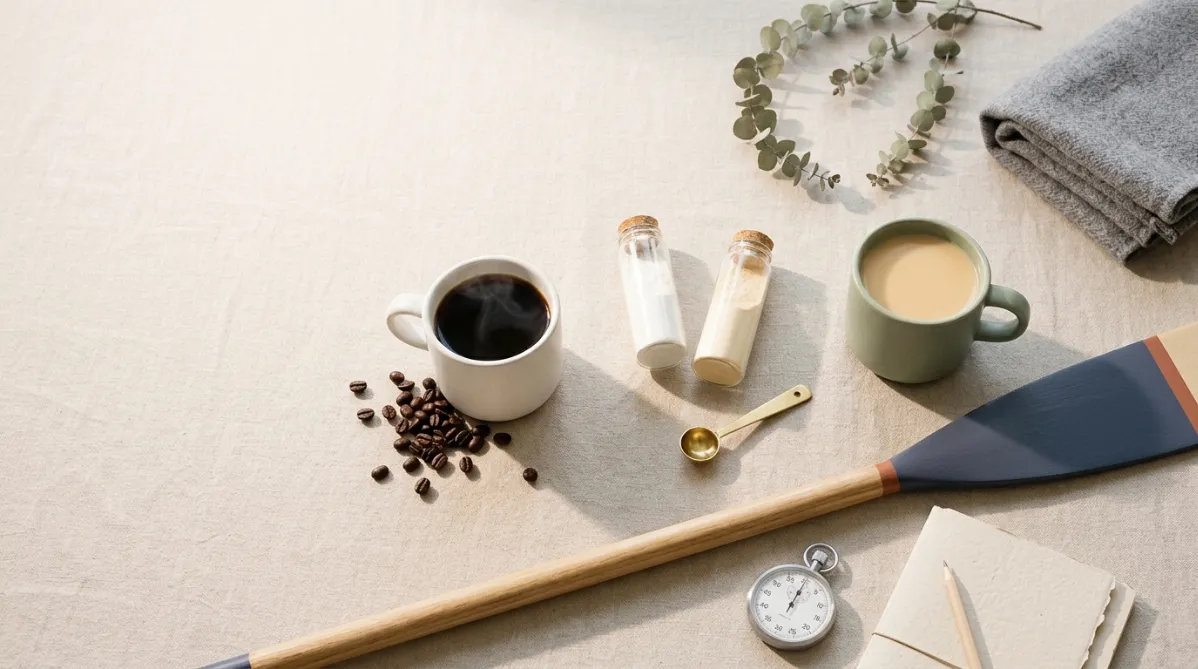
A wide, editorial-style flat lay photographed from above on a pale oat-colored linen surface in soft morning window light. On the left, a small matte white ceramic cup of black coffee with a delicate swirl of steam, beside a few scattered roasted coffee beans. On the right, a second matte sage-green ceramic cup holding a pale, creamy golden tea-like drink, mirroring the first. Between them, two small glass vials with cork stoppers sit side by side: one holding fine white powder, the other holding slightly warmer cream-colored powder, with a tiny brass measuring spoon resting nearby. In the lower foreground, a slim wooden rowing oar lies diagonally across the frame, its blade edge softly entering from the right, painted a muted navy with a thin terracotta stripe. A minimalist analog stopwatch with a brushed-steel case rests near the oar, and a folded cream notebook with a thin pencil suggests data-taking. In the upper corner, a crescent-shaped dried eucalyptus sprig and a small folded gray wool throw hint at sleep and calm without being literal. The palette is warm and restrained: oat, cream, sage, soft navy, terracotta, and espresso brown. Shadows are long and gentle, with shallow depth of field and subtle film grain, giving a refined, modern wellness-magazine feel. Generous negative space on the left third of the composition leaves room for a headline overlay. Clean, calm, tactile, and contemporary, with no text, logos, or futuristic elements.
science research

Paraxantina vs Cofeina: Combinația câștigătoare și aliatul somnului

BY DR. GYMBRO ·

Paraxantina, principalul metabolit al cofeinei, a fost recent comparată direct cu cofeina într-un studiu pe 14 vâslași. Combinaţia de 200 mg din fiecare a depășit placebo la o probă de 2000 m, dar cu un efect modest (d = 0,30). Niciunul dintre compuşi nu a demonstrat o îmbunătăţire clară a performanţei luat separat, iar paraxantina singură a părut mai prietenoasă cu somnul subiectiv. Mai jos găseşti cifrele, limitele şi cine ar putea beneficia cu adevărat.

A wide, softly lit editorial flat-lay on a pale warm-gray stone countertop, shot from slightly above. On the left, a small rustic ceramic bowl in matte cream holds a handful of dried guarana seeds, dark glossy brown with pale cream arils, a few spilling onto the surface. Beside it sits a halved fresh guarana fruit in vivid red-orange, split open to show the white flesh and black seed inside, looking like a tiny eye. On the right, two open clear capsules rest side by side. One is filled with fine white caffeine powder, the other with a fine earthy brown guarana powder, and a little of each dusts the stone in delicate, deliberate lines. Between them, a minimalist matte-black espresso cup with a thin ribbon of steam rises on the right edge of the frame. A brushed-steel stopwatch and a slim dark-green linen notebook with a pencil sit in the upper background, slightly out of focus, to hint at performance testing without clutter. A few green leaves of a guarana vine curve in from the top-left corner, catching soft light.

The lighting is natural window light from the left, with gentle long shadows and a subtle warm highlight on the seeds. The palette is muted and modern: warm creams, terracotta red, deep espresso brown, sage green, and charcoal accents. The background is clean with generous negative space on the upper right for headline text. Shallow depth of field, crisp focus on the seeds and capsules, fine grain, and a calm premium magazine look like a contemporary wellness and sports-science journal. No people, no text, no logos, no futuristic elements.
science research

Guarana vs cafeină: aceeași doză, dar Guarana a crescut puterea maximă

BY DR. GYMBRO ·

Doza de cafeină a fost identică, însă doar Guarana a generat o creștere semnificativă a puterii maxime. Într-un studiu crossover randomizat pe 18 bărbați activi, Guarana a crescut puterea de vârf cu 4 % față de placebo, în timp ce cafeina anhidruă nu a atins semnificaţia statistică. Totuși, Guarana nu a învins cafeina în confruntarea directă, iar diferenţele dintre ele sunt pur descriptive. Articolul analizează rezultatele, limitările studiului și cum să dosăm Guarana în funcție de conţinutul de cafeină dacă vrei să încerci această opţiune.

A cyclist's legs mid-pedal on a stationary road bike, shot in a bright, airy, minimalist studio with a soft warm-grey backdrop. In the foreground on a pale oak table sits a small ceramic dish holding four deep coral-red softgel capsules, with a few translucent droplets of red-orange oil glistening beside them. Beside the dish is a sprig of dried red microalgae-toned seaweed and a halved wild salmon fillet, its coral flesh echoing the capsule color. Behind the table, slightly out of focus, a cyclist in a fitted charcoal jersey and matte black shorts rides a bike on an indoor trainer. Only the torso and legs are visible, with no face. A white towel hangs over the handlebars and a clear water bottle catches the light.

Soft diffused morning light streams from a large window on the left, creating long gentle shadows and a subtle golden-hour glow on the skin and the glossy capsules. The palette is restrained and editorial: warm cream, sand, soft grey and charcoal, with vivid coral-red as the single accent color. A minimalist analog stopwatch with a clean white face sits on the table, its hands near the 85-minute mark. A thin, elegant line-graph shape is subtly suggested by a curved strip of red ribbon lying on the table, rising from left to right to hint at the performance gain without any text.

The composition follows the rule of thirds, with the capsules and stopwatch in the lower left and the cyclist's motion-blurred legs sweeping across the right. Shallow depth of field, crisp macro detail on the capsules, and a fine film-like grain. The overall feel is a modern health and science magazine cover: clean, calm, sophisticated, and natural, with negative space in the upper area for a headline. There are no futuristic elements, no glowing effects, no laboratory equipment, and no text or logos. Landscape 16:9 format.
nutrition

Astaxantina administrată timp de 4 zile a crescut timpul de epuizare la ciclism de la 72 la 85 de minute, conform unui mic studiu

BY DR. GYMBRO ·

Patru zile de astaxantină (28 mg/zi) au prelungit timpul de epuizare la ciclism de la aproximativ 72 la 85 de minute – o creștere de circa 18 %. Protocolul a atenuat creșterile markerilor de leziune musculară (CK și LDH) și ale peroxidării lipidice (MDA) după o sesiune intensă la 75 % VO₂max. Markerii inflamatori și consumul de combustibil nu s‑au modificat, astfel încât mecanismul rămâne neclar. Doza este mult peste cea oferită de majoritatea capsulelor, iar studiul a inclus doar zece bărbaţi tineri. Iată ce arată datele și unde se oprește dovada.

This page is available in