Dr. Gymbro
A bright, airy, minimalist kitchen counter in soft morning light, shot from a slightly elevated three-quarter angle in a wide landscape composition. Two matching ceramic bowls sit side by side on a pale oak butcher-block surface. The left bowl holds fine, creamy-beige pea protein powder with a small wooden scoop resting in it. The right bowl holds smooth, ivory-white whey powder with an identical scoop. Between and slightly behind them sits a third, smaller empty bowl with a plain scoop, hinting at the placebo. Scattered around the bowls are fresh green pea pods, some split open to reveal bright, round peas, and a small glass bottle of milk with delicate condensation. A sage-green linen napkin is folded loosely at the edge of the frame.

In the soft-focus background, a young man in a fitted heather-gray t-shirt is seen from the shoulders down, casually flexing one arm while holding a matte shaker bottle, the biceps subtly defined and the pose relaxed and natural. A minimalist notebook with a pencil and a simple hand-drawn bar chart lies open on the counter, suggesting analysis without legible text. A small potted herb plant and a ceramic mug add warmth.

The color palette is muted and editorial: warm cream, sage green, soft terracotta, pale wood, and touches of charcoal. Light streams in from a window on the left, casting gentle long shadows and a subtle golden glow across the powders so their textures look fine and tactile. Shallow depth of field keeps the bowls crisp while the background melts into a creamy blur. The look is modern lifestyle-magazine photography, clean and uncluttered, with generous negative space on the right third of the frame for headline overlay. It is natural, appetizing, and trustworthy, in the style of a contemporary wellness and nutrition journal.
Nutrition

Proteină din mazăre vs zer: rezultatul surprinzător al începătorilor pe care nimeni nu l-a așteptat

Dr. Gymbro · · 4 min read

Proteină din mazăre vs zer – ce spune știința?

Dacă ești vegan, intolerant la lactoză sau pur și simplu nu-ți place balonarea provocată de lactate, probabil te-ai întrebat dacă proteina vegetală poate construi mușchi la fel de bine ca zerul. Un studiu dublu-orb, randomizat, pe 12 săptămâni, cu 161 de bărbaţi a pus față în față proteina din mazăre, zerul și un placebo. Rezultatul principal este interesant, însă detaliile contează la fel de mult.

Ce au testat de fapt

Studiul, publicat în Journal of the International Society of Sports Nutrition în 2015 de Babault și colaboratorii săi, a avut următorul design:

  • Proteină din mazăre (brand NUTRALYS) – 53 de participanţi
  • Proteină din zer – 54 de participanţi
  • Placebo – 54 de participanţi

Toţi au urmat 12 săptămâni de antrenament de rezistenţă axat pe membrelor superioare. Fiecare participant a consumat 25 g de proteină (sau placebo) de două ori pe zi, adică aproximativ 50 g pe zi. Grosimea bicepsului a fost măsurată cu ultrasunete, iar forţa a fost evaluată cu un dinamometru izocinetic la început, la ziua 42 și la ziua 84.

Rezultatele: toată lumea a crescut, dar grupurile s‑au separat puţin

La toţi participanţii, grosimea bicepsului a crescut de la 24,9 mm la 26,9 mm la mijlocul studiului și la 27,3 mm la final. Acest efect al timpului a fost foarte semnificativ (P < 0,0001), deci antrenamentul a funcționat.

Diferenţa între grupuri a fost doar o tendinţă (P = 0,09), ceea ce nu atinge pragul de semnificație statistică. Forţa a crescut şi ea în timp, fără diferenţe semnificative între mazăre, zer și placebo.

Aşadar, în grupul total nu poţi spune că mazărea a învins ceva. Este un început modest pentru un titlu, de aceea partea următoare contează.

Întorsătura pentru începători

Cercetătorii au efectuat apoi o analiză de sensibilitate pe participanţii cei mai slabi, definiţi prin forţa la începutul studiului – o aproximare rezonabilă pentru persoanele noi la ridicare sau care revin după o pauză. În acest subgrup grupurile s‑au separat (P < 0,05):

  • Proteină din mazăre: +20,2 % grosime biceps
  • Proteină din zer: +15,6 %
  • Placebo: +8,6 %

Creșterea cu mazăre a fost semnificativ mai mare decât cea a placebo‑ului. Zerul a căzut undeva între ele și nu a fost diferit statistic nici față de mazăre, nici față de placebo. Astfel, mazărea nu a învins zerul, dar a depășit pragul statistic față de placebo în acest subgrup.

Autorii au concluzionat că proteina din mazăre a susţinut creşteri mai mari ale grosimii decât placebo‑ul, în special la persoanele care încep sau reiau antrenamentele de forță. Deoarece nu au existat diferenţe semnificative între cele două proteine, au sugerat mazărea ca alternativă la produsele pe bază de zer.

Detaliile fine pe care nu le poţi ignora

  • Comparaţia principală a fost doar o tendinţă. Diferenţa în grupul total (P = 0,09) nu a fost semnificativă.
  • Descoperirea pozitivă provine dintr‑un subgrup. Analizele de sensibilitate pot genera ipoteze utile, dar sunt mai vulnerabile la întâmplare decât rezultatul principal.
  • Legături cu industria. Câţiva autori sunt afiliaţi cu Roquette, producătorul NUTRALYS. Aceasta nu invalidează studiul, iar trial‑ul a fost înregistrat (NCT02128516), însă este un context de luat în calcul.
  • Populaţie restrânsă. Participanţii erau bărbaţi tineri și s‑a antrenat doar partea superioară a corpului, în special bicepşii. Rezultatele nu se pot extrapola automat la femei, persoane în vârstă sau la antrenamente pentru picioare.
  • Niciun câştig clar pentru zer. Creşterea de 15,6 % a grupului cu zer nu a fost diferită statistic de mazăre sau placebo, aşa că studiul nu poate clasifica aceste proteine ca fiind superioare.

Interpretarea corectă este că proteina din mazăre pare a fi o opţiune viabilă atunci când antrenamentul este suficient de intens şi aportul total de proteine este adecvat. Nu este dovadă că mazărea este superioară, sau chiar egală în toate contexte.

Concluzii practice

Doza. Studiul a folosit 25 g de proteină de două ori pe zi, cam 50 g de proteină suplimentară zilnic. Este un obiectiv solid și realist pentru mulţi ridicatori, deşi aportul total zilnic din alimentație contează şi el.

Momentul consumului. Lucrarea nu a testat momentul exact ca variabilă. Împărţirea proteinelor în două porţii, una în jurul antrenamentului, este o metodă practică pentru a reproduce studiul. Consistenţa pe parcursul celor 12 săptămâni probabil a contat mai mult decât minutul exact.

Cui îi este potrivită. Proteina din mazăre este o alegere firească pentru vegani, persoane cu intoleranţă la lactoză sau sensibilitate la lactate şi oricine preferă produse pe bază vegetală. Cel mai puternic semnal apare la ridicătorii începători sau cei reveniţi, care răspund rapid la orice proteină decentă şi la stimulul de antrenament.

Cum să alegi o proteină din mazăre.

  • Caută un conţinut clar de proteină per porţie, ideal 20‑25 g.
  • Optează pentru produse cu liste scurte de ingrediente şi puţini aditivi.
  • Verifică testele de terţă parte, cum ar fi NSF sau Informed Choice, pentru calitate şi absenţa contaminanţilor.
  • Ține minte că studiul a folosit un izolat specific de brand. Alte produse pot varia în procesare și profil de aminoacizi.
  • Compară costul pe gram de proteină, nu doar preţul per tub.

Concluzie finală

Întrebarea „proteină din mazăre vs zer” nu are un răspuns categoric din acest studiu. În rândul a 161 de bărbaţi, proteina din mazăre a susţinut creşterea musculară în combinație cu antrenamentul, iar la cei mai slabi participanţi a generat o creştere de 20,2 % a grosimii bicepsului versus 8,6 % pentru placebo. Zerul a înregistrat progrese similare, iar datele nu arată că unul a depăşit pe celălalt. Dacă eviţi lactatele, acest trial îţi oferă un motiv rezonabil, bazat pe dovezi, să foloseşti proteina din mazăre, atâta timp cât îţi menţii așteptările realiste şi antrenamentul consecvent.
Original study

Read the original research on pubmed.ncbi.nlm.nih.gov →

This article summarizes published research for general information. It is not medical advice.

DG

Written by

Dr. Gymbro

Dr. Gymbro writes for Dr. Gymbro: science-backed fitness, nutrition & performance.

Related Articles

A bright, minimalist editorial still life on a pale oak table, shot from a slightly elevated three-quarter angle in soft natural window light. On the left sits a rustic ceramic bowl of uncooked short-grain white rice, with a few grains scattered across the wood. Beside it is a matte cream-colored shaker bottle. On the right is a small glass bowl of fine ivory whey powder with a wooden scoop resting in it, and a small pitcher of milk behind it. Two identical tall glasses of creamy, lightly frothed shake stand side by side in the center, one a touch warmer beige and the other a soft white. They suggest equal outcomes without any text or labels. A pair of worn black neoprene-coated dumbbells and a folded sage-green gym towel sit slightly out of focus in the background. A sprig of green rice stalks in a slim vase adds a fresh, natural accent.

The palette is warm neutrals: cream, oatmeal, soft sage, and muted terracotta, with gentle shadows and a shallow depth of field. The surface has subtle grain, and fine powder dust is caught in the light. The composition is clean and balanced, with generous negative space on the upper right for a headline overlay. The mood is calm, modern, and health-forward, like a contemporary nutrition magazine or wellness journal. Photorealistic, crisp detail, creamy bokeh, and a gentle matte film-like finish.
nutrition

48 g de proteină din orez egalizează zerul pentru mușchi și forță în 8 săptămâni

BY DR. GYMBRO ·

Se crede că proteina vegetală este inferioară zerului, dar un studiu din 2013 pe bărbaţi antrenaţi a demonstrat exact opusul la o doză mare. Într-un grup de 24 de sportivi rezistenţă, 48 g de izolat de proteină din orez administrat după antrenament au generat aceleaşi creşteri în masă slabă, grosime musculară, forţă şi putere ca 48 g de zer pe parcursul a opt săptămâni. De ce a ţinut pasul orezul? Probabil pentru că doza mare a închis diferenţa de leucină. Mai jos aflăm ce a arătat studiul, care sunt limitele sale şi cum pot veganii şi sportivii intoleranţi la lactate să îl folosească.

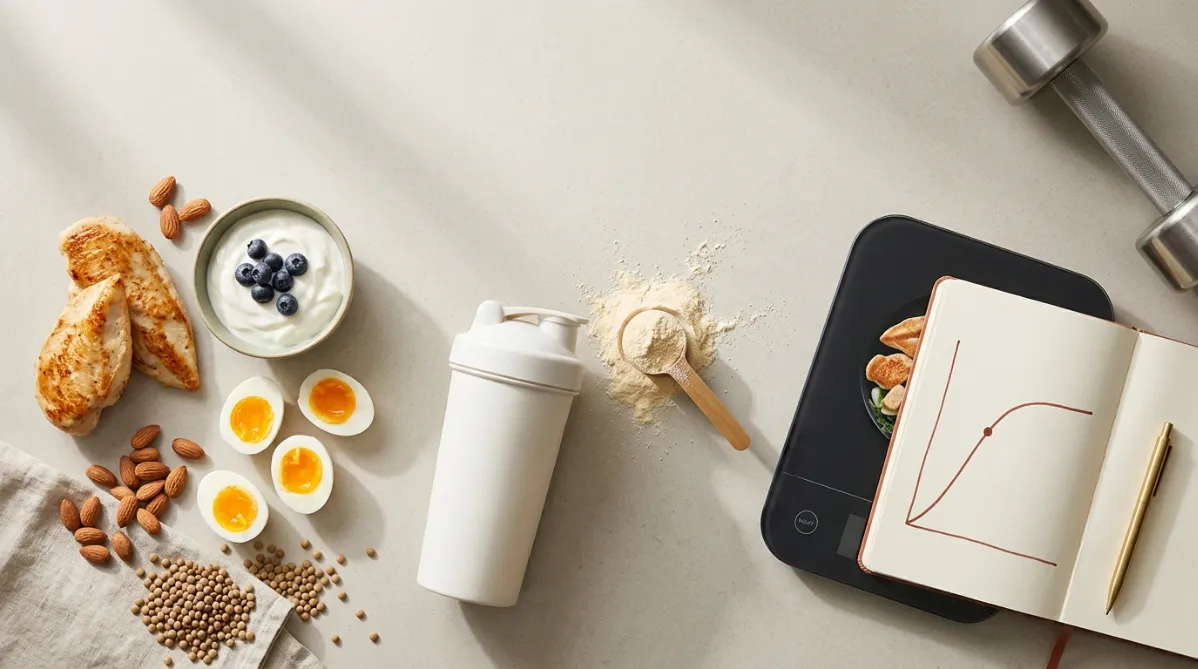
A wide, editorial flat-lay photograph shot from directly above on a pale warm-gray stone countertop, lit by soft natural morning window light with gentle diagonal shadows. On the left, a neatly arranged cluster of whole-food protein sources: two seared chicken breast slices with a golden crust, a small ceramic bowl of creamy Greek yogurt topped with blueberries, three halved soft-boiled eggs with jammy orange yolks, a handful of raw almonds, and a small pile of dried lentils scattered on a linen napkin. At the center, a matte white shaker bottle and a wooden scoop resting in a pile of fine vanilla-colored protein powder, a few grains dusted artfully across the surface. On the right, a minimalist kitchen scale in matte black displaying a portion of food, next to an open notebook with a hand-drawn curve that rises steeply and then flattens into a plateau, drawn in a deep terracotta ink pen, with a small dot marking the bend. A brass pen lies beside the notebook. A single dumbbell with a brushed steel finish sits partially in frame at the upper right corner, grounding the fitness theme without feeling gym-like. Color palette: warm cream, sage green, terracotta, soft charcoal, and butter yellow accents, with generous negative space along the top edge for title overlay. Shallow depth of field, crisp textures, subtle film grain, modern lifestyle magazine aesthetic, clean and calm composition, 16:9 landscape.
nutrition

Câtă proteină maximizează cu adevărat mușchii? Platoul de 1,6 g/kg, explicat

BY DR. GYMBRO ·

Crezi că ai nevoie de peste 2 g de proteină pe kilogram pentru a-ți crește masa? O meta‑analiză a 49 de studii, care a inclus 1 863 de adulţi sănătoși, a arătat că beneficiile în construcţia mușchilor se plafonează în jurul valorii de 1,6 g/kg pe zi. Limita superioară a intervalului de încredere se situează la aproximativ 2,2 g/kg, oferind celor care ridică greutăţi o marjă practică în loc de o doză arbitrară. Sportivii antrenaţi au profitat cel mai mult de suplimentare, în timp ce efectul s‑a diminuat odată cu înaintarea în vârstă. Iată ce înseamnă aceste cifre pentru farfuria, shakerul și bugetul tău.

A wide, softly lit editorial still life on a pale warm-gray concrete surface, shot from a slightly elevated three-quarter angle. In the center-left, two matte ceramic scoops sit side by side. One holds fine ivory whey powder, the other holds slightly coarser, pale golden collagen peptide powder. A small, elegant dusting of both powders spills between them and blends into a soft swirl. Behind them, three minimalist cream and sage-green supplement tubs with no legible text stand in a staggered row, with a frosted glass shaker bottle of creamy liquid beside them.

On the right, a brushed-steel barbell plate and a compact chalk-dusted kettlebell rest slightly out of focus, suggesting resistance training. Pale wisps of chalk hang in the air. A folded charcoal gym towel and a pair of worn leather lifting straps lie in the foreground. A single cross-section of a clean white bone model, a stylized vertebra, rests on a small oak block at the far right. It subtly signals the bone-density theme without looking clinical.

Natural window light enters from the left, casting long, gentle shadows and a warm highlight on the powders. The palette is muted and modern: oatmeal, bone white, sage green, soft charcoal, and touches of warm amber. Shallow depth of field keeps the scoops tack-sharp and melts the background into creamy blur. Leave generous negative space in the upper right for headline overlay. The overall feel is a premium health and science journal cover: clean, tactile, minimalist, with fine film-like grain and a calm, editorial mood.
nutrition

Whey Plus colagen depășește orice variantă singulară la ridicatori — dar există un detaliu

BY DR. GYMBRO ·

Amestecarea a 30 g de zer cu 10 g de colagen a depășit zerul singur, colagenul singur și placebo în toți parametrii evaluaţi într-un studiu de opt săptămâni la bărbaţi antrenaţi la forță. Combinaţia a adus +2,66 kg de masă musculară (prin BIA), a crescut densitatea minerală osoasă a coloanei lombare și a îmbunătăţit performanțele la genuflexiune, împins de la piept și markerii de remodelare osoasă. Colagenul singur a influențat doar osul, iar zerul singur a influențat doar mușchiul. Cu doar 40 de participanţi, diferențe mari în aportul total de proteine și un salt surprinzător al DMO‑ului solicită rezerve.

A wide, softly lit bedroom scene at dusk, styled like a modern editorial photograph. In the foreground, a rumpled bed with textured oatmeal linen sheets and a single dented pillow sits beside a light oak nightstand. On the nightstand is a tall glass of creamy, milky white protein shake, a small wooden scoop and a matte ceramic tub with no readable label, beside a minimalist analog alarm clock. The clock's hands show a late hour, and it casts a faint shadow on the wall. A pair of clean white running shoes rests on the floor by the bed. A folded gray athletic hoodie lies at the foot of the bed, suggesting an athlete's lifestyle.

Warm amber light from a bedside lamp mixes with cool blue-gray twilight from a tall window with sheer curtains. The glow lands on the glass and gives the milky surface a soft sheen. Through the window, a muted city skyline fades into evening haze.

The palette is calm and sophisticated: warm cream, soft sage green, dusty blue, and a touch of terracotta from a small ceramic vase holding dried pampas grass. The composition follows the rule of thirds, with the glass and clock in the right third and open negative space on the left for headline text. Shallow depth of field keeps the glass and clock crisp while the background blurs gently.

The mood is quiet, slightly restless, and thoughtful, hinting at a night that does not go as planned. A subtle detail, a half-drawn curtain letting in a thin stripe of light across the rumpled sheets, suggests interrupted sleep. The look is clean, contemporary, and magazine-quality, with fine film grain, natural tones, and soft shadows, like a lifestyle wellness journal cover. No people, no text, no futuristic elements.
recovery

Proteina pentru somn care a determinat persoanele cu somn slab să se trezească mai des

BY DR. GYMBRO ·

Alpha‑lactalbumina este promovată ca „proteina pentru somn”, iar studiile acute anterioare sugerau că ar putea ajuta sportivii să doarmă și să performeze. Un nou studiu randomizat încrucișat a testat suplimentul la 24 de sportivi cu probleme reale de somn. După o săptămână de administrare a 40 g cu două ore înainte de culcare, nu s‑a observat niciun beneficiu asupra somnului; numărul trezirilor a crescut ușor (11,01 vs 10,25) și înălțimea săriturii a scăzut (27,68 vs 28,58 cm). Singurul efect pozitiv a fost reducerea stării emoționale negative seara. Iată ce s‑a testat, ce arată datele și cine ar trebui să renunțe la acest supliment.

This page is available in