Dr. Gymbro
A wide, cinematic landscape photograph of a freediver suspended mid-water in a calm, sunlit turquoise sea, shot from slightly below so the surface glimmers above like rippling silver glass. The diver wears a sleek matte black wetsuit and a long, elegant pair of carbon fins. Their body is streamlined, arms relaxed at their sides, head tilted slightly down in a state of serene focus. Shafts of soft golden sunlight pierce the water diagonally and illuminate fine floating particles and a trail of tiny bubbles rising from the diver's fins. A single thin dive line descends vertically into deeper blue at the right of the frame, adding a graphic compositional element.

In the lower left foreground, slightly out of focus, a minimalist still-life element rests on a pale sandy seabed: a small, clean white scoop with a mound of fine white powder, casually echoing creatine without any text or labels. The scoop is softly lit and has a shallow depth of field blur, creating a gentle visual link between supplement and sport.

The color palette is refined and modern: deep teal, aquamarine, soft cerulean, warm cream highlights, and touches of sunlit gold. The water gradients smoothly from bright, luminous turquoise near the top to a rich inky navy at the bottom, giving depth and a sense of quiet intensity. Leave generous negative space on the left third of the image for headline placement, with the diver positioned on the right third following the rule of thirds.

The mood is calm, athletic, and contemplative, like an editorial image from a premium health and science magazine. Style: high-end editorial photography, natural light, subtle film grain, soft contrast, crisp detail on the diver and gentle bokeh in the background. No text, no logos, no futuristic or sci-fi elements, no graphics overlays.
Nutrition

Креатин діє навіть коли не можеш дихати: випробування фрідайверів показали

Dr. Gymbro · · 4 min read

Що відбувається з вашими м’язами, коли ви змушуєте їх працювати на максимум і не подаєте новий кисень?

Нове рандомізоване дослідження серед фрідайверів підказує, що креатин – найвивченіша добавка у спортивному харчуванні – може допомогти саме в такій ситуації.

Головний результат: більше роботи, менше лактату

Дослідники під керівництвом Курмазовича застосували стандартний протокол завантаження креатину‑моногідрату серед тренованих дайверів, які практикують апное. Учасники виконували тест на велосипедному ергометрі, роблячи один вдих‑видих, намагаючись подолати якомога більшу відстань. Після семиденної приймання креатину вони виконали більшу загальну роботу і витримали довший час до втоми, порівняно з плацебо‑групою.

Найнеочікуваніший результат — рівень лактату. У групі, яка отримувала креатин, концентрація лактації в крові була нижчою, ніж у плацебо, незважаючи на кращу продуктивність. Зазвичай підвищена інтенсивність супроводжується ростом лактату, тому це спантеличує. У статті зазначено суттєву взаємодію Time × Group щодо лактату (p = 0.003).

Як було організовано дослідження

Це подвійне сліпе, рандомізоване, плацебо‑контрольоване дослідження, опубліковане в Journal of the International Society of Sports Nutrition у 2026 році. У ньому брали участь 20 тренованих дайверів, що практикували апное (18 чоловіків і 2 жінки, середній вік ≈ 41,6 р.)

  • Тест: Коротке розігрівання, потім максимальної велосипедної спроби на один вдих‑видих з метою подолати якомога більшу відстань.
  • Протокол: Тестування до прийому добавок, випадковий розподіл на креатин‑моногідрат (20 г/день протягом 7 днів) або плацебо, після чого повторне тестування.
  • Вимірювання: Загальна робота, час до втоми, рівень лактату в крові, виведений pCO₂ після зусиль, сприйняте навантаження під час апное, оцінка м’язової втоми, а також склад тіла за допомогою DXA‑сканування.
  • Реєстрація: ClinicalTrials.gov NCT07233707.

Чому креатин може бути важливим під час утримання дихання

Логіка проста. Креатин відомий своєю здатністю підтримувати анаеробний енергетичний доступ та буферні процеси. Під час апное м’язи більше покладаються на анаеробний синтез АТФ, тому АТФ, який генерується за рахунок фосфокреатину, може бути особливо корисним. До цього ніхто не перевіряв, чи проявляється ця перевага під час добровільного апное.

Результати підтверджують цю ідею. Загальна робота (p = 0.011) і час до втоми (p = 0.028) значно збільшилися у групі креатину порівняно з плацебо. Стаття не доводить механізм безпосередньо, тому трактуйте пояснення як правдоподібну гіпотезу, а не як остаточний факт.

Інші результати

  • Маса без жиру збільшилася сильніше у групі креатину (p = 0.017). Креатин часто асоціюють із затримкою води, і дослідження не розрізняє причину, тому слід обережно трактувати це як чистий приріст м’язової маси.
  • Сприйняте навантаження під час апное не відрізнялося між групами. Креатин підвищив продуктивність без збільшення відчуття важкості під час затримки дихання.
  • Оцінка м’язової втоми дещо підвищилася у групі креатину — автори також це відзначають.
  • Виведений pCO₂, жирова маса та загальна маса тіла не показали значних різниць між групами.

Практичні підказки

Доза: У дослідженні застосовували 20 г/день креатину‑моногідрату протягом 7 днів — класичний протокол завантаження. У статті не зазначено, як саме розподіляли дозу протягом дня. Багато спортсменів розподіляють навантажувальну дозу на кілька прийомів, що є поширеною практикою, проте ця стратегія в дослідженні не перевірялась.

Таймінг: Дослідження не вивчало, коли саме приймати креатин щодо тренування чи змагання, тому доказової відповіді немає. Висновок стосується лише тижня завантаження, а не передтренувального прийому.

Кому це може бути корисно:

  • Фрідиверам і спірістам: саме ця група досліджувалась, отже доказ найпряміший.
  • Бойовим спортсменам і плавцям: у цих видах спорту часто потрібні короткі затримки дихання та повторювані анаеробні сплески. Це лише екстраполяція, оскільки дослідження їх не охоплювало.
  • Будь‑кому, хто виконує інтенсивну анаеробну роботу: креатин вже давно доведений у такому контексті. Це дослідження додає нову ситуацію, у якій він, схоже, працює.

Обмеження

  1. Малий розмір вибірки. Лише 20 учасників – результати попередні. Невелика кількість даних може перебільшити ефект і потребує підтвердження.
  2. Вузька популяція. Група складалася головно з чоловіків‑дайверів середнього віку, лише дві жінки – тому мало що можна сказати про статеві різниці.
  3. Лабораторний велоергометр не є дайвінгом. Тест на максимальної їзди на один вдих‑видих не відповідає глибинному зануренню, статичній апное чи змаганням. Автори пропонують креатин як потенційну стратегію для спорту з утриманням дихання, що не є прямим доказом покращення реальної дайв‑перформанси.
  4. Безпека. Фрідайвінг має серйозні ризики, включаючи втрату свідомості. Дослідження не робить довготривалу апное безпечною, і креатин не є виправданням для перевищення власних меж. Ніколи не практикуйте апное наодинці.
  5. Незрозумілий результат з лактатом. Менший лактат при більшій роботі – цікаве явище, проте стаття не пояснює причину, тому не варто надмірно інтерпретувати.
  6. Оцінка м’язової втоми. Трохи підвищене сприйняття втоми означає, що користь не була без жодних компромісів.

Підсумок

Тиждень завантаження креатином‑моногідратом підвищив загальну роботу та час до втоми під час вело‑тесту з апное у тренованих дайверів, при цьому рівень лактату в крові був нижчим, ніж у плацебо. Через малу вибірку це більше сигнал, ніж остаточний вердикт. Якщо ви займаєтеся апное або іншими анаеробними видами спорту і вже розглядаєте креатин, це дослідження додає додаткову підтримку. Перш ніж почати, порадьтеся з кваліфікованим фахівцем, особливо якщо є проблеми з нирками чи інші медичні стані.

Джерело: Kurmazovic et al. Load and breath‑hold: impact of 7‑day creatine monohydrate loading on breath‑hold exercise performance – a double‑blind randomized controlled trial. J Int Soc Sports Nutr, 2026. DOI: https://doi.org/10.1080/15502783.2026.2732743 | PubMed 42868132
Original study

Read the original research on pubmed.ncbi.nlm.nih.gov →

This article summarizes published research for general information. It is not medical advice.

DG

Written by

Dr. Gymbro

Dr. Gymbro writes for Dr. Gymbro: science-backed fitness, nutrition & performance.

Related Articles

A bright, modern editorial flat-lay photographed from above on a soft off-white stone surface. At the center sits a matte ceramic scoop heaped with fine white creatine powder, with a loose dusting of powder fanning out across the surface. Beside it is a minimalist frosted-glass jar with a plain label and a brushed-steel shaker bottle lying on its side. To the left, a wooden comb and a small folded strip of graph paper with a single hand-drawn upward curve in muted terracotta ink, suggesting a data spike without any text. A few loose strands of dark brown hair curve elegantly across the stone near the comb. To the right, a clean glass beaker filled with water and a sprig of green rosemary, and an open notebook with blank pages and a sleek pen. The palette is warm neutrals: cream, sand, soft sage green, and a single accent of terracotta orange. Natural window light falls from the upper left, casting long, gentle shadows and a subtle diffused glow. The composition leaves generous negative space on the right third for title overlay. Shallow depth of field with crisp focus on the powder scoop, a premium health-and-science magazine look, minimalist, calm, and trendy, with fine grain and soft contrast. Landscape 16:9 framing.
science research

Креатин і випадіння волосся: пояснення 56 % сплеску DHT

BY DR. GYMBRO ·

У дослідженні 2009 року виявили, що семиденний завантажувальний курс креатину (25 г/день) підвищив рівень DHT на 56 %, а при підтримці в 5 г/день рівень залишався приблизно на 40 % вище базового. Оскільки DHT пов’язаний із чоловічою облисінням, ця знахідка підживила дискусію про креатин і випадання волосся. Проте в експерименті брали участь лише 20 регбістів, тривалість склала три тижні, і волосся взагалі не вимірювали. Подальші дослідження не змогли стабільно повторити підвищення DHT. Нижче розглянуто, що саме показують дані, кому це може бути актуально, і як коригувати підхід, якщо ви занепокоєні.

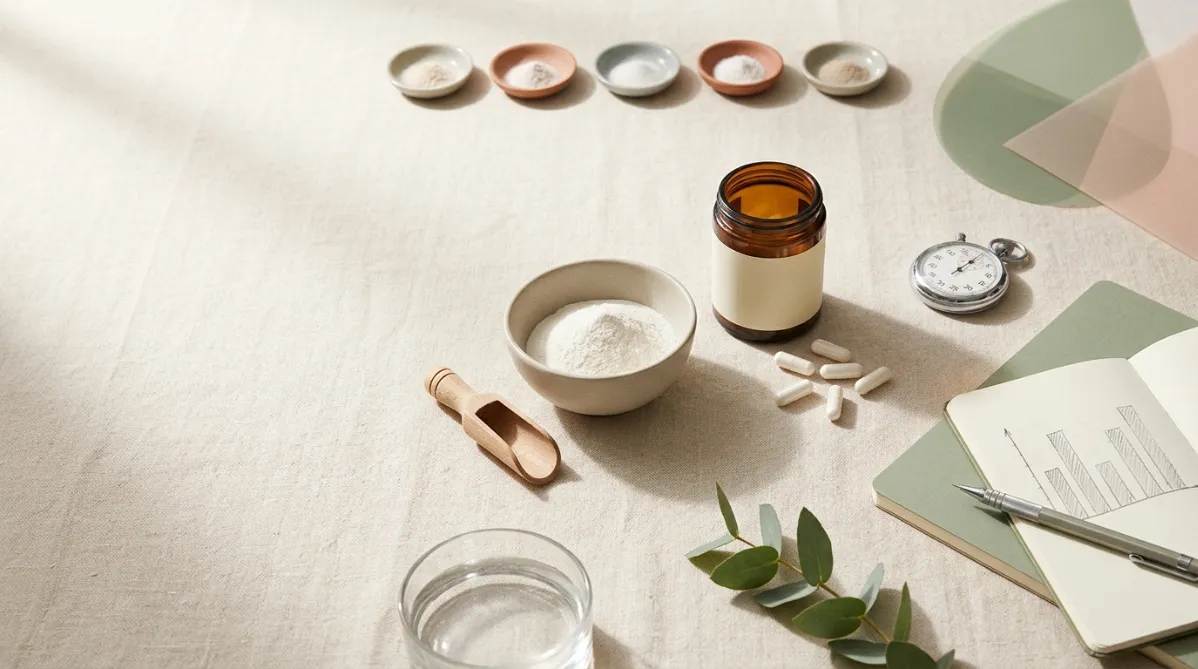
A wide, editorial-style still life photographed from slightly above on a pale oat-colored linen surface, lit by soft morning window light from the left. In the center sits a small matte ceramic bowl holding a mound of fine white powder, with a minimalist wooden scoop resting beside it. Next to the bowl is an open amber glass supplement jar with a plain cream label, and a few white capsules spill across the linen in a loose arc.

To the right, a neatly arranged cluster of analog "study" objects suggests careful measurement: a vintage stopwatch with a clean white face, a slim notebook with a sage-green cover open to a hand-drawn bar chart (blurred, no legible text), and a mechanical pencil lying across the page. A small row of six identical ceramic dishes, each holding a pinch of powder, is lined up along the top edge of the frame to hint at the six-week trial. One dish is slightly out of alignment, a subtle visual cue for ambiguity.

A shallow glass of water and a single sprig of green eucalyptus add a calm, organic note in the foreground. Soft, long shadows fall across the textured linen, and the palette stays restrained: warm cream, soft sage, muted terracotta, pale gray, and touches of amber from the glass jar. A few translucent paper cutouts in two tones (sage and blush) overlap in the upper right corner as a modern graphic accent, evoking overlapping data points without showing any numbers.

Depth of field is shallow, with the bowl and stopwatch in crisp focus and the edges gently softened. The composition leaves generous negative space on the left third for title text overlay. The overall mood is thoughtful, balanced, and quietly skeptical, in the style of a contemporary wellness and science magazine: clean, tactile, minimal, with a subtle film-like grain and natural color grading. No people, no futuristic or sci-fi elements, no readable text or logos.
nutrition

GAA: мозковий підсилювач? Результати 6‑тижневого випробування складні

BY DR. GYMBRO ·

GAA, прекурсор креатину, який рекламують як підсилювач мозку, нарешті пройшов своє перше серйозне людське випробування. У шістьтижневому, подвійно сліпому дослідженні з 58 здоровими дорослими спостерігалося певне прискорення реакції та окремі сигнали щодо настрою і стресу. Однак більшість когнітивних тестів не показали змін, а багато заголовкових результатів були лише тенденціями. Показники безпеки виглядали нормальними, проте дослідження було малим, дослідницьким і не включало порівняння з чистим креатином.

A bright, minimalist flat-lay photograph of two supplement scoops on a pale warm-gray stone surface, shot from directly above in soft natural window light. On the left, a matte ceramic scoop holds fine white creatine monohydrate powder, heaped in a clean mound. On the right, a second scoop of the same shape holds slightly coarser off-white beta-alanine powder, with a small, deliberate gap between the two. Each scoop sits in its own soft shadow, which suggests separation rather than combination. Between them, a thin brushed-brass ruler or a single slim line of fine powder runs across the surface and subtly divides the composition.

Around the scoops, a few restrained props in a muted editorial palette of sage green, cream, terracotta, and soft charcoal: a small glass jar with a minimalist label that has no readable text, a folded linen napkin, a single sprig of eucalyptus, and a stainless-steel shaker bottle softly out of focus in the upper corner. A few loose powder grains are scattered naturally across the stone. A small stack of blank cream index cards with a pencil rests in the lower right, hinting at research and note-taking without any legible writing.

The composition follows a clean rule-of-thirds layout, with generous negative space on the right third for headline overlay. The lighting is gentle and diffused, with long, soft shadows falling to the lower left. The color grading is calm and slightly desaturated, with creamy highlights and a subtle film-like grain. The overall look is a modern wellness and science journal cover, with an airy, trustworthy, contemporary editorial feel, shallow depth of field, and crisp detail on the powders.
nutrition

Креатин + бета‑аланін: «Бонусний» стек, який дослідники не змогли знайти

BY DR. GYMBRO ·

Стек креатину з бета‑аланіном рекламують як ідеальну пару для підвищення продуктивності, проте новий мережевий мета‑аналіз 52 рандомізованих досліджень не виявив між ними синергії. Креатин суттєво покращив результати спринту, стрибків, повторних спринтів та витривалості верхньої частини тіла у порівнянні з плацебо. Ефекти бета‑аланіну були незначущими або залежали від конкретних умов, а комбінація не додала нічого понад креатин. Нижче – що саме досліджувалося, які недоліки є та що це означає для вашого бюджету на добавки.

A wide, editorial-style photograph of a volleyball player mid-landing from a jump on a sunlit indoor court, captured from a low side angle. The athlete's knee is slightly bent and the patellar tendon area is in sharp focus, with soft natural muscle definition and a light strip of kinesiology tape just below the kneecap. The polished honey-toned hardwood floor reflects warm window light, and the background falls away into a creamy blur of pale court lines and tall windows.

In the lower right foreground, slightly out of focus, a matte ceramic bowl holds a small mound of fine white creatine powder. A wooden scoop rests beside it, next to a clear glass of water and a folded white towel. This sits on a light oak bench at the edge of the court. A resistance band and a slanted decline board, used for eccentric rehab, lean softly against the wall behind the bench.

The palette is warm and natural: cream, soft white, honey oak, muted sage green accents from a gym bag, and a touch of terracotta from the athlete's sneakers. Light is golden-hour and diffused, with gentle shadows and a subtle film-grain finish. The composition follows the rule of thirds, with the athlete on the left and the supplement still life on the right. Negative space in the upper portion leaves room for a headline overlay.

The overall mood is calm, modern, and health-focused, like a contemporary wellness or sports-science journal cover. Shallow depth of field, a clean minimalist aesthetic, and true-to-life color. No text, no logos, no futuristic or digital elements.
recovery

Креатин при «стрибаючому коліні»: полегшення болю вже на 4‑му тижні

BY DR. GYMBRO ·

Синдром «стрибаючого коліна» може вивести спортсмена з гри надовго, а нове дослідження перевіряє, чи креатин прискорює одужання. У 20 атлетів, які проходили ексцентричну реабілітацію, лише група, що отримувала креатин, показала значне поліпшення у болі та функції (VISA‑P) вже через 4 тижні, а також збільшення висоти стрибка. На 8‑му тижні обидві групи мали схожі результати, і різниця між ними не досягла статистичної значущості (p = 0,099). Ось що робило дослідження, як вживали креатин, кому це може бути корисно та чому маленька вибірка вимагає обережності.

This page is available in