Dr. Gymbro
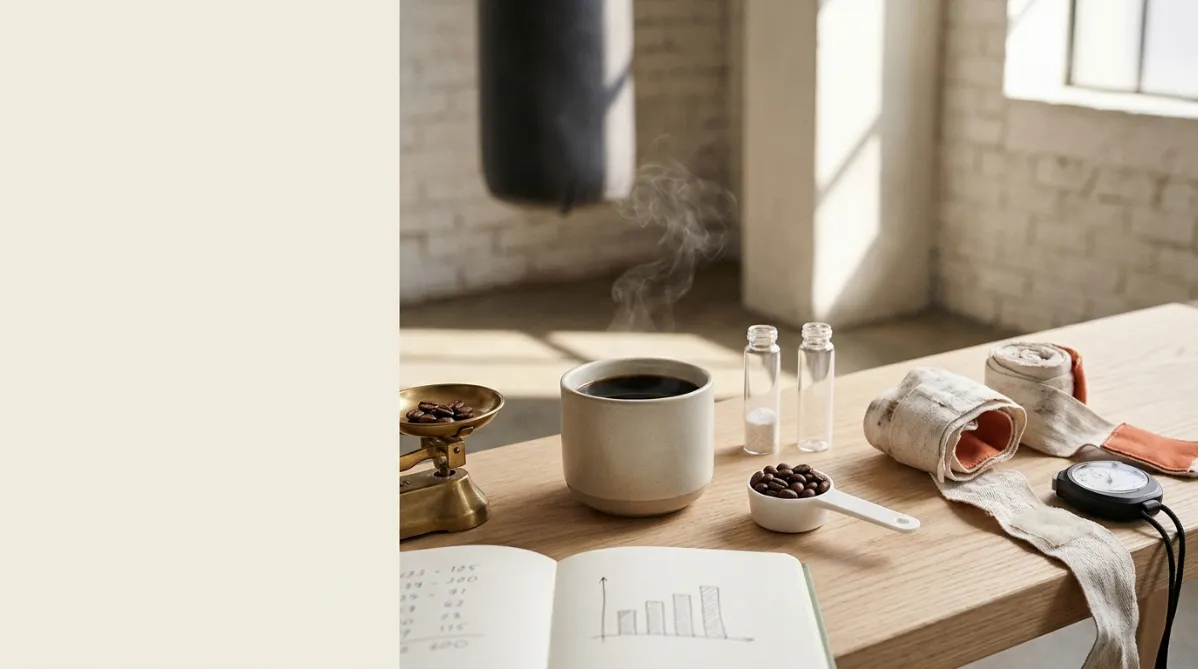
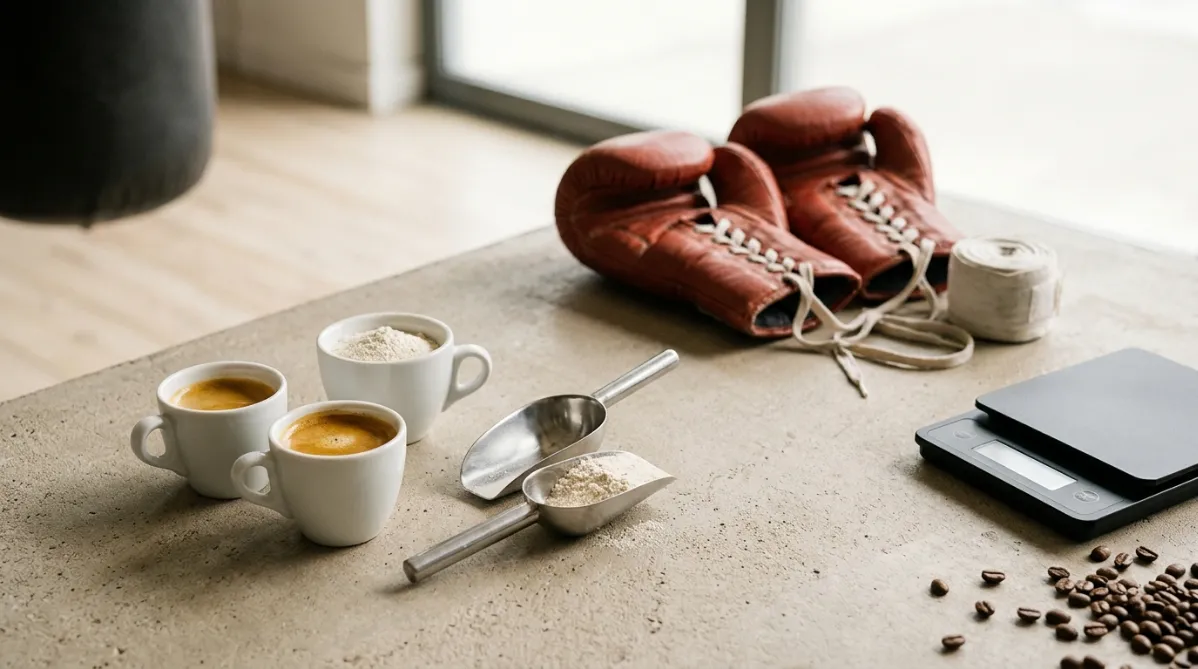
A landscape editorial photograph with a modern, clean magazine feel, shot on a pale warm-gray concrete surface in soft natural window light from the left. In the foreground, two matte white ceramic espresso cups sit side by side. The left cup holds a small amount of dark espresso with golden crema. The right cup is filled twice as high. Beside them, two small stainless steel scoops hold fine coffee-colored powder, one half full and one heaped, suggesting a dose comparison without any text or labels. A pair of worn red leather boxing gloves rests slightly out of focus behind the cups, laces loosely draped, with a white hand wrap rolled neatly beside them. A minimalist digital kitchen scale in matte black sits at the edge of the frame, with a few roasted coffee beans scattered across the surface. In the soft-focus background, a boxing gym corner appears: a hanging heavy bag in muted charcoal, pale wood plank flooring, and a tall window with diffused morning light. The palette is warm cream, espresso brown, brick red, and soft slate gray, with gentle shadows and a shallow depth of field. The composition follows the rule of thirds, with the cups and scoops in the lower left third and open negative space on the right for headline overlay. The look is tactile and refined, like a high-end health and performance journal. It has natural grain, subtle contrast, and a calm, confident mood. There are no people, no text, no logos, and no futuristic elements.
Nutrition

Подвійна доза кофеїну майже не допомогла боксерам — ось що спрацювало

Dr. Gymbro · · 4 min read

Думаєте, що подвоєння порції передтренувального комплексу автоматично подвоїть ефективність? Нове дослідження серед конкурентних боксерів показало, що це не так. Дослідники порівнювали 3 мг/кг і 6 мг/кг кофеїну з плацебо. Обидві дози підвищували висоту стрибка, а більша доза не виявилася стабільно кращою.

Що саме робили дослідники

Статтю опублікували у Journal of the International Society of Sports Nutrition (2026) Туерхонцзяном та співавторами. Дослідження було рандомізованим, подвійно‑сліпим, плацебо‑контрольованим кросовер‑дослідом. У дослідженні взяли участь п'ятнадцять чоловіків‑боксерів, усі з національним другим класом у Китаї або вище.

Кожен боксер проходив три умови в випадковому порядку, з одноденною «змивкою» між ними:

  • Плацебо
  • 3 мг/кг кофеїну (CAF3)
  • 6 мг/кг кофеїну (CAF6)

Команда вимірювала контрмувментний стрибок (CMJ), ballistic push‑up (BPU) і ізокінетичний піковий крутний момент (PT) домінуючого плеча та коліна. Тести проводились у базовому стані та у блоках, починаючи через 30 і 60 хвилин після прийому. Для статистики застосовували корекцію Холма за 10 запланованих інтерактивних тестів, що захищає від хибнопозитивних результатів.

Головний висновок: обидві дози мали ефект протягом 60 хвилин

У запланованому 60‑хвилинному вимірюванні і 3, і 6 мг/кг перевершували плацебо за висотою стрибка, піковою потужністю та відносною піковою потужністю. Між цими двома дозами статистично значущих відмінностей не виявлено.

Для вибуховості нижніх кінцівок нижча доза забезпечила вимірювану користь. Подвоєння дози нічого не додало в цьому тесті.

Де 6 мг/кг випереджала

Вища доза показала перевагу лише за деякими показниками:

  • Ballistic push‑up: CAF6 забезпечив вищий конверсійний імпульс, а також середню та пікову потужність у порівнянні з плацебо через 60 хвилин. CAF3 не відрізнявся від плацебо.
  • Крутний момент коліна: Найчіткіший дозо‑специфічний результат. CAF6 обігнав і плацебо, і CAF3 у 60‑хвилинному вимірюванні.
  • Плечовий крутний момент: Флексія та екстензія PT збільшились під дією кофеїну у певні моменти, проте стабільної переваги однієї дози над іншою не виявлено.

Автори зробили висновок, що патерн реакції залежить від дози та завдання, і що 6 мг/кг не є стабільно кращим за 3 мг/кг. Більша доза принесла кілька додаткових виграшів, а не універсальне підвищення.

Таблиця «мг‑на‑кг»

Ось як виглядають ці дози у міліграмах кофеїну:

Вага тіла 3 мг/кг 6 мг/кг
60 кг (132 фунт) 180 мг 360 мг
70 кг (154 фунт) 210 мг 420 мг
80 кг (176 фунт) 240 мг 480 мг
90 кг (198 фунт) 270 мг 540 мг
100 кг (220 фунт) 300 мг 600 мг

Перевірте етикетку вашого передтренувального комплексу. Багато продуктів вказують 200–400 мг кофеїну на порцію, а деякі комбінують його з іншими стимуляторами. Якщо ви берете дві дози, каву та енергетик, ви можете легко перевищити 6 мг/кг, навіть не помітивши цього.

Таймінг: орієнтуйтесь на ~60 хвилин

Значущі ефекти зафіксовано під час 60‑хвилинного блоку. Це найкраще підтверджене вікно у дослідженні, тому прийом кофеїну приблизно за годину до тренування відповідає його результатам. Анотація підкреслює саме 60‑хвилинний інтервал, а не 30‑хвилинний, тому не розраховуйте на пікову користь від дози, прийнятої безпосередньо перед стартом.

Чому «більше» не обов’язково краще

У статті не вказано побічних ефектів, тому нижче представлено загальну інформацію, а не результати саме цього дослідження. Високі дози кофеїну часто пов’язують з тремтінням, тривожністю, підвищеним серцебиттям, розладом шлунка і порушенням сну. Для боксера надмірна збудливість може завадити концентрації та відновленню, а прийом ввечері порушує нічний сон.

Якщо 3 мг/кг забезпечує більшість вимірюваних вигод, переходити до 6 мг/кг – це збільшений ризик побічних ефектів за обмежену додаткову користь. Така торгівля може мати сенс для окремих показників, наприклад, крутного моменту коліна, проте це не «безкоштовне» підвищення.

Кому це корисно

  • Сила‑потужність та бойові спортсмени, які шукають оптимальну стартову дозу.
  • Туристи та любителі спортзалу, які підозрюють, що їхній передтренувальний комплекс занадто міцний.
  • Людям, чутливим до кофеїну, яким варто починати з нижчого рівня.

Практичний підхід: починайте приблизно з 3 мг/кг, приймайте за годину до тренування і підвищуйте лише за явною потребою та при добрій переносимості. Реакція на кофеїн індивідуальна, тому тестуйте будь‑яку дозу під час тренування, а не вперше в день змагань.

Обмеження, про які варто знати

  • Ударна техніка не тестувалась. Автори зазначають, що результати стосуються лише обраних нейром’язових показників, а не прямого підвищення ефективності удару чи змагального боксу.
  • Невелика вибірка. П’ятнадцять чоловіків‑боксерів – це скромна група, і дані можуть не поширюватись на жінок чи інші рівні спортсменів.
  • Лабораторні тести. Стрибки, віджимання та ізокінетичний крутний момент – це контрольовані вимірювання, а не бойовий поєдинок.
  • Змішаний патерн доз. Відмінності між дозами залежать від завдання, а в анотації зазначено, що класифікації індивідуальних реакцій є дослідницькими.
  • Звичний споживчий фон. У статті не розглядається, як звичний рівень споживання кофеїну впливає на реакції, тому сприймайте особисту толерантність як відкриту тему.

Підсумок

У тренованих боксерів 3 мг/кг кофеїну підвищували стрибкову продуктивність майже так само, як і 6 мг/кг, у 60‑хвилинний момент. Вища доза дала переваги лише в окремих випадках, зокрема в ballistic push‑up та крутному моменті коліна. Перш ніж збільшувати порцію, розрахуйте свою дозу в мг/кг, приймайте за годину до тренування і пам’ятайте, що поки що жодне дослідження не довело, що це переводить у кращий удар.

Джерело: Tuerhongjiang et al. Acute effects of 3 and 6 mg·kg‑1 caffeine on strength‑power performance and isokinetic peak torque in competitive male boxers: a randomized, double‑blind, placebo‑controlled crossover trial. J Int Soc Sports Nutr. 2026. DOI: 10.1080/15502783.2026.2743368 | PubMed
Original study

Read the original research on pubmed.ncbi.nlm.nih.gov →

This article summarizes published research for general information. It is not medical advice.

DG

Written by

Dr. Gymbro

Dr. Gymbro writes for Dr. Gymbro: science-backed fitness, nutrition & performance.

Related Articles

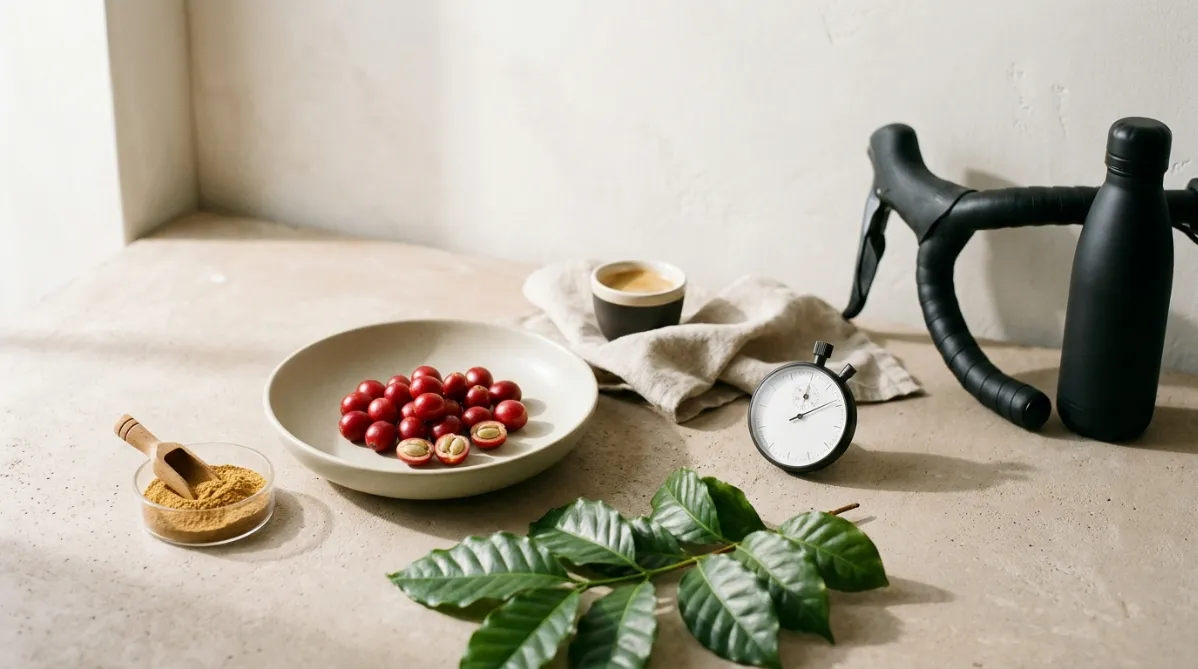
A wide editorial still life on a pale, warm-toned concrete surface in soft morning window light. In the center-left, a shallow matte ceramic bowl holds a small pile of bright red coffee cherries with glossy skins, a few sliced open to reveal pale mucilage and paired green-tan beans. Beside it, a small glass dish of fine, golden-brown powdered extract with a tiny wooden scoop resting on its edge. A sprig of coffee plant leaves, deep green and waxy, arcs across the foreground.

On the right side, slightly out of focus, a sleek road cyclist's handlebar and a matte black water bottle lean against a light plaster wall, suggesting athletic training without showing a person. A minimalist analog stopwatch with a clean white face and thin black hands sits in the mid-ground, angled toward the camera, its hands paused near the fifteen-minute mark. A folded linen cloth in oatmeal beige and a single small espresso cup with a thin crema ring add quiet texture.

The color palette is restrained and modern: cherry red, sage green, cream, soft terracotta, and charcoal accents. Light comes from the left, casting long, gentle shadows with a subtle warm glow and a hint of dust in the air. Shallow depth of field with crisp focus on the cherries and stopwatch, creamy bokeh in the background. Composition leaves open negative space in the upper right for a headline overlay. The overall feel is a clean, trendy health-and-science magazine cover: tactile, natural, minimal, and calm, shot in a 16:9 landscape frame with fine film-like grain and true-to-life tones.
nutrition

Екстракт кавової вишні: 200 мг кофеїну підвищили результативність велоспорту на 4,6 %

BY DR. GYMBRO ·

Доза у 200 мг кофеїну з екстракту цілих кавових вишень допомогла підготовленим велосипедистам виконати на 4,6 % більше роботи під час 15‑хвилинного тайм‑трейлу. Однак популярна ідея про прискорене відновлення глікогену не підтвердилася. У дослідженні, проведеному у випадковому, подвійно сліпому кросовер‑дизайні, брали участь лише 12 спортсменів, а фінансування забезпечив індустріальний спонсор; не було групи, яка отримувала чистий кофеїн. Ось що показали дані, чого не виявили і кому це може бути цікаво.

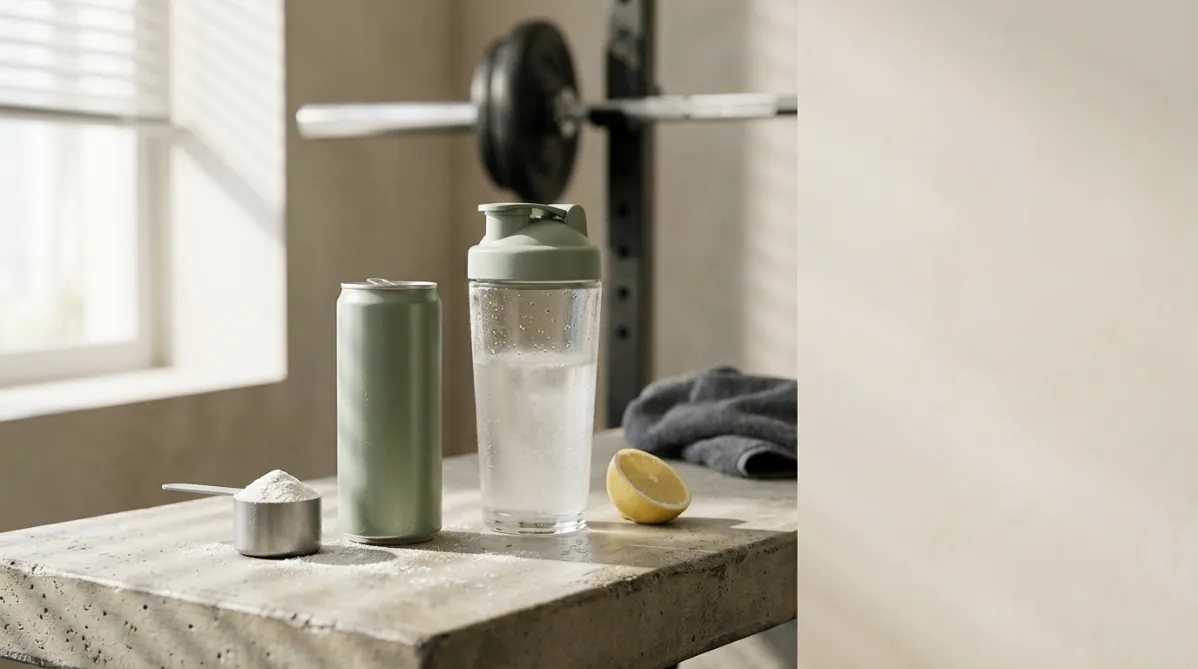
A sleek aluminum energy drink can and a matte scoop of white pre-workout powder sit side by side on a pale concrete gym bench, lit by soft morning window light. The can is slim and minimalist, with a muted sage green label and no legible text. Beside it is a clear glass shaker half full of cloudy, lightly frothy liquid with condensation beading on its surface. A few fine grains of powder are scattered across the bench, catching the light. Behind them, slightly out of focus, a stainless steel barbell rests on a rack, and a folded charcoal gym towel sits at the edge of the frame.

The color palette is warm neutral: oatmeal, soft gray, and sage, with a single accent of pale citrus yellow from a halved lemon wedge placed near the glass. A thin, elegant shadow from the window blinds falls diagonally across the scene, giving it an editorial, magazine-style rhythm. The composition leaves generous negative space on the right third of the frame, a smooth blurred wall in warm off-white, suitable for headline text overlay.

The shot is a low-angle, shallow depth-of-field product-style photograph, as if taken with an 85mm lens at f/2. The foreground objects are tack sharp and the background melts into creamy blur. The mood is calm, clean, and modern, like a wellness or science journal feature. Subtle film grain and gentle contrast add a tactile, contemporary lifestyle feel. There are no people, no logos, and no futuristic or sci-fi elements, just a quiet, considered still life that suggests the choice between a canned drink and a scooped supplement.
nutrition

Ваш енергетичний напій може працювати як передтренувальний — але з одним підступом

BY DR. GYMBRO ·

Кофеїн і таурин часто зустрічаються разом у енергетичних напоях і передтренувальних добавках, проте чи дійсно ця комбінація підвищує продуктивність? Новий мета‑аналіз 11 рандомізованих досліджень (234 учасники) виявив помірне підвищення пікової сили та часу до вичерпання, а також зниження сприйманих зусиль. Частота серцебиття не змінилася, а результат щодо часу реакції був надто непослідовним, щоб йому довіряти. Основний недолік – малі розміри досліджень, які не дозволяють встановити, чи додає таурин щось до ефекту кофеїну. Ось що говорять дані і кому варто бути обережним.

A wide, editorial-style still life shot from a slightly elevated angle on a pale oak gym bench, bathed in soft morning window light. In the center sits a matte ceramic cup of black coffee with delicate steam curling upward, flanked by a small white scoop of coffee beans and two identical glass vials, one filled with a few grains of fine powder and one empty, hinting at dose comparison. Next to the cup rests a pair of worn white boxing hand wraps, loosely coiled, and a slim black stopwatch with its face softly visible. In the foreground, a minimalist notebook lies open with blurred handwritten numbers and a simple pen sketch of a bar graph with bars of equal height, subtle and unreadable, suggesting a null result without any legible text. A small brass kitchen scale sits to the side with a few coffee beans on its tray.

In the soft-focus background, a boxing gym interior is visible: a hanging heavy bag in muted charcoal, exposed brick wall painted off-white, and tall windows casting long diagonal light across the floor. The color palette is warm and restrained: cream, sand, espresso brown, soft charcoal, with a single accent of muted terracotta orange in the hand wraps and a faint sage green in the notebook cover. Shallow depth of field with creamy bokeh, fine film grain, and gentle shadows give it a contemporary lifestyle-magazine and wellness-journal feel. The composition leaves generous negative space on the left third for headline overlay. Clean, calm, trendy, and tactile, with natural textures like wood grain, ceramic glaze, and cotton fabric. No people, no text, no futuristic elements.
science research

Кава з низькою дозою кофеїну не підвищила швидкість у елітних бойовиків

BY DR. GYMBRO ·

Вважаєте, що чашка кави перед тренуванням робить ваші спринти швидшими? Нове рандомізоване, подвійне сліпе кросовер‑стаді з 15 спортсменами‑бойовиками показало, що дози кофеїну 1,5 і 3 мг/кг (приблизно 100 і 200 мг для атлета вагою 68 кг) не підвищили жодного спринтерського показника порівняно з декофеїнізованою кавою. Це маленьке дослідження‑нульовий результат, а не доказ того, що кофеїн не працює, і більшість позитивних досліджень застосовують капсули у діапазоні 3–6 мг/кг. Нижче – розрахунок дози, головні застереження та практичні рекомендації перед наступним інтенсивним заняттям.

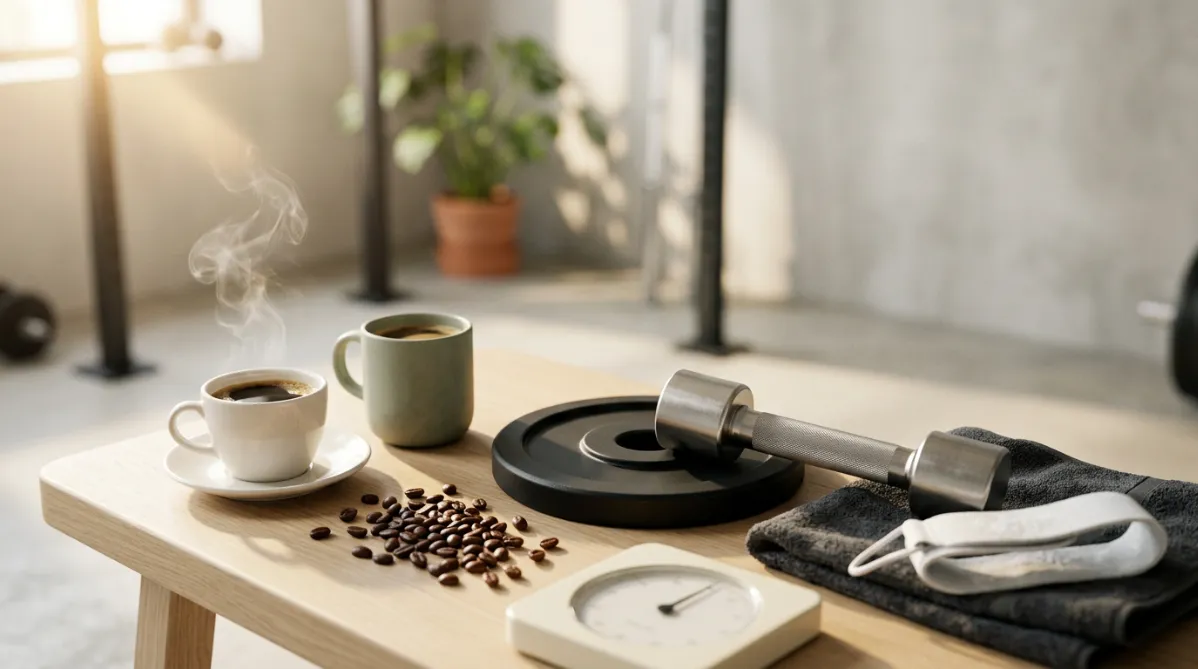
A wide, editorial-style flat lay photographed from slightly above on a pale oak gym bench with a soft matte finish. On the left, a small white ceramic cup of black coffee sits on a matching saucer, with a thin curl of steam rising and catching warm window light. Beside it is a second, slightly larger handleless stoneware mug in muted sage green, also filled with coffee, so the pair suggests one to two cups. In the center-right foreground rests a sleek matte-black steel barbell plate, partly overlapping a brushed-steel dumbbell with fine knurling. A folded charcoal gym towel and a clean white chalk-dusted wrist strap lie casually to one side. A small scatter of whole roasted coffee beans spills across the bench in front of the cups, glossy and deep brown. Near the bottom edge, a minimalist analog kitchen scale in soft cream with a thin black needle hints at precise dosing, without any readable numbers or text.

Soft morning sunlight streams in from the upper left, creating long, gentle shadows and a warm golden glow against cool neutral tones. The background is a softly blurred, airy home gym or boutique training studio with out-of-focus squat rack uprights, pale concrete walls, and a leafy green plant in a terracotta pot adding a touch of organic color. The palette is restrained and modern: warm cream, espresso brown, charcoal, sage green, and hints of brushed silver. Shallow depth of field keeps the cups and beans tack sharp while the background melts into creamy bokeh. The composition leaves generous negative space on the right third for a title overlay, with a balanced, calm, premium magazine feel, like a contemporary wellness and sports science journal. High-resolution, natural color grading, subtle film grain, realistic textures on ceramic, steel, and coffee crema.
nutrition

Скільки кофеїну перед підйомом ваги? Мета‑аналіз показує, що 1–2 мг/кг все ще діє

BY DR. GYMBRO ·

Стандартна рекомендація щодо кофеїну перед підйомом ваги — 3–6 мг/кг, що зазвичай відповідає кільком чашкам кави або порції передтренувального комплексу. Метa‑аналіз 2022 р., який охопив 12 досліджень, виявив, що дози всього 0,9–2 мг/кг підвищують силу (d ≈ 0,17), м’язову витривалість (d ≈ 0,21) і середню швидкість штанги (d ≈ 0,56). Для більшості підйомників це приблизно одна‑дві чашки кави. Ефект помірний, дані отримані з одноразових досліджень, проте вони свідчать про можливість досягти схожих результатів, використовуючи менше кофеїну.

This page is available in