Dr. Gymbro
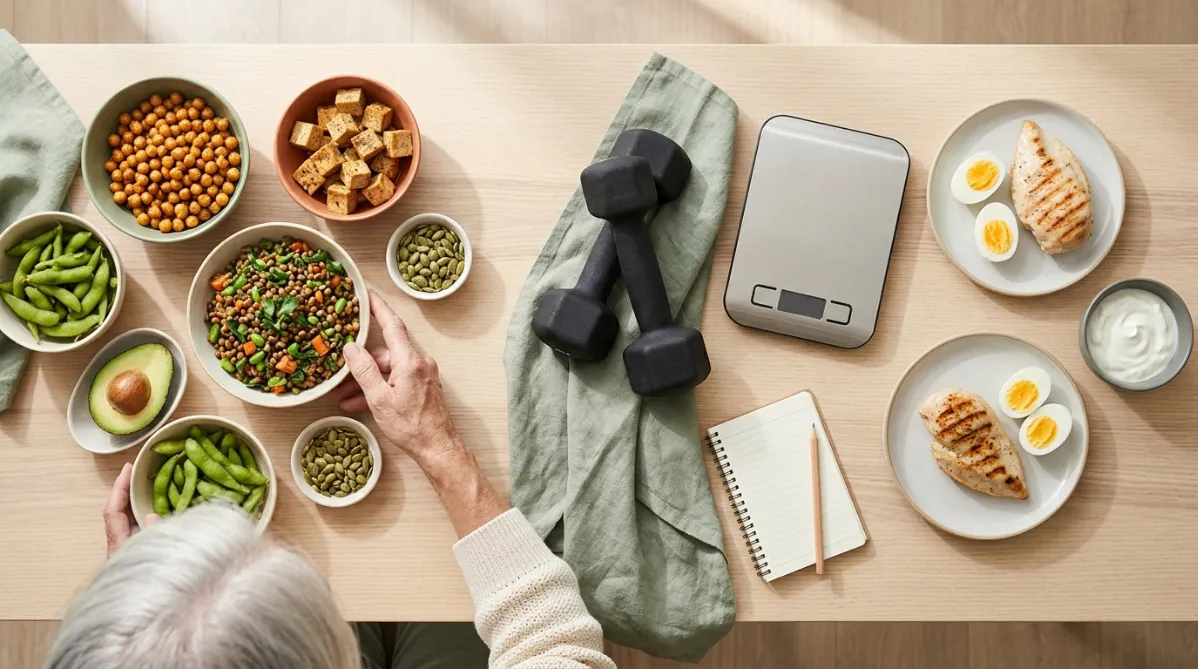
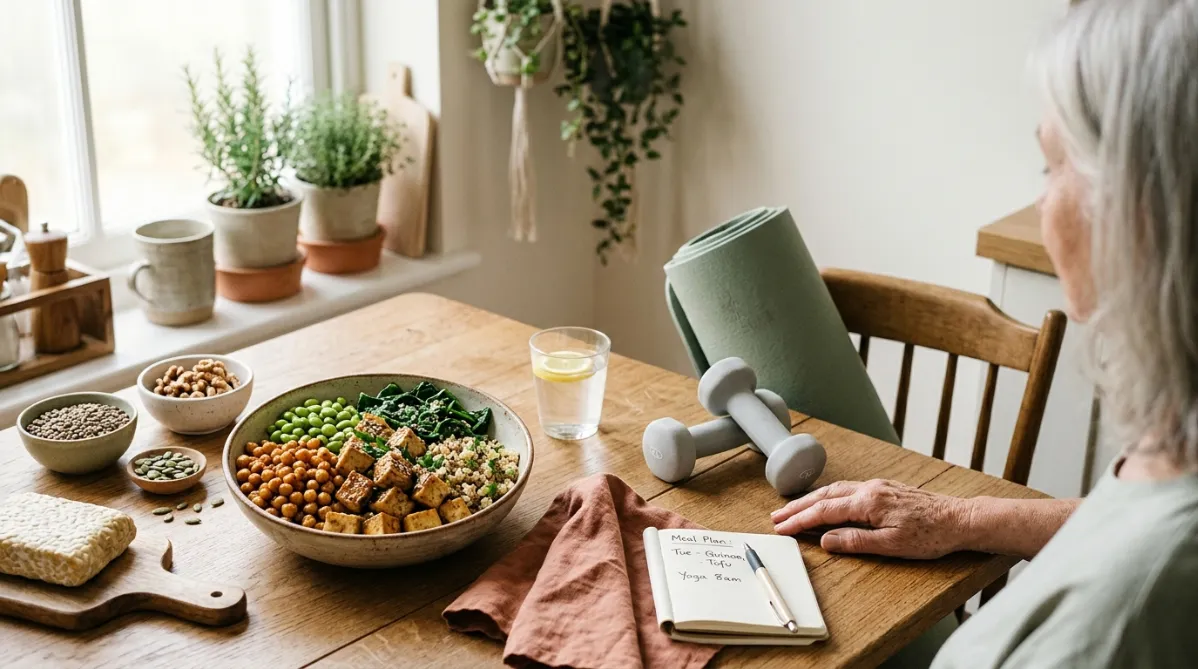
A bright, airy overhead flat-lay on a pale oak table in soft morning light. On the left, a vibrant plant-based protein spread in ceramic bowls: roasted chickpeas, marinated tofu cubes, lentil salad with herbs, edamame, sliced avocado, and a small dish of pumpkin seeds. On the right, a few contrasting items: a simple plate with grilled chicken breast, a hard-boiled egg halved, and a small bowl of Greek yogurt. Between the two sides, a pair of compact, matte-black hexagonal dumbbells rests on a folded sage-green linen towel, with a simple stainless-steel kitchen scale and a small open notebook with a pencil, suggesting tracking protein intake. A pair of weathered, elegant older hands, silver-haired and mid-60s, reaches in gently to pick up a bowl, with a casual cream knit sleeve visible. Natural window light casts soft diagonal shadows across the table. The palette is warm and muted: sage green, cream, terracotta, soft charcoal, with pops of fresh green and orange from the vegetables. Shallow depth of field, crisp focus on the food and dumbbells, gentle blur at the edges. The composition follows a clean editorial style with generous negative space at the top and right for headline text. The overall feel is modern wellness-magazine photography: calm, clean, and inviting, with tactile textures of linen, ceramic, wood, and fresh produce. Landscape 16:9 framing.
Nutrition

هل يمكنك أن تصبح نباتيًا بعد 55؟ ما كشفه تجربة رفع 108 أشخاص

Dr. Gymbro · · 3 min read

هل يمكنك بناء عضلة بنظام نباتي بعد 55 سنة؟

نعم، بحسب تجربة عشوائية حديثة. لكن النباتيين تناولوا بروتينًا أقل واكتسبوا عضلة أقل، ولم يتمكن الباحثون من إثبات تعادل النظامين.

تصميم الدراسة: ما تم اختباره فعليًا

تُعرف تجربة IMPACT بأنها تجربة عشوائية من نوع non‑inferiority (عدم التفوق). هدفها كان معرفة ما إذا كان النظام النباتي اللبني‑البيض (أطعمة نباتية + ألبان وبيض، دون لحوم أو أسماك) يمكن أن يوازي النظام الحيواني من حيث تناول البروتين وزيادة الكتلة العضلية أثناء التدريب المقاوم.

  • المشاركون: 108 بالغًا عمرهم 55 سنة فأكثر (متوسط العمر 66 سنة؛ 58 % إناث؛ متوسط مؤشر كتلة الجسم 25.7 كغ/م²)
  • التدريب: 12 أسبوعًا، ثلاث جلسات مقاومة أسبوعيًا لكلا المجموعتين
  • النظام الغذائي: إرشاد غذائي لتناول إما نظام نباتي لبني‑بيض أو نظام حيواني. اختار المشاركون أطعمتهم بأنفسهم مع هدف ألا يقل استهلاك البروتين عن 1.2 غ/كغ/يوم.
  • نسبة مصدر البروتين: على الأقل 60 % من البروتين نباتي في المجموعة النباتية، وعلى الأقل 60 % من البروتين حيواني في المجموعة الحيوانية
  • المخرجات الأساسية: استهلاك البروتين (سجلات غذائية لمدة 3 أيام) وكتلة العضلات الطرفية (الكتلة الخالية من الدهون للذراعين والساقين، مقاسة بـ DXA)
  • المخرجات الثانوية: قوة الضغط على الساق، أداء اختبار الوقوف من الكرسي، وقوة قبضة اليد

لم يذكر المؤلفون أي تعارض مصالح. لا يتضمن الملخص معلومات عن التمويل. تم تسجيل التجربة تحت الرقم NCT06172725.

الأرقام الرئيسة

مجموعة نباتية مجموعة حيوانية
استهلاك البروتين 1.24 غ/كغ/يوم 1.58 غ/كغ/يوم
نسبة مصدر البروتين 76 % نباتي 67 % حيواني
تغير الكتلة العضلية الطرفية +0.38 كغ +0.66 كغ

كانت الزيادة في كلتا المجموعتين ذات دلالة إحصائية (النباتيين P = 0.004، الحيوانيين P < 0.001). تحسّن القوة في اختبار الضغط والوقوف من الكرسي ظهر في كلا المجموعتين دون فروق ذات دلالة.

النتيجة الحاسمة: عدم إثبات عدم التفوق

حدّد الباحثون مسبقًا حدًا مقبولًا: يمكن للمجموعة النباتية أن تكون أقل في استهلاك البروتين بحد أقصى 0.12 غ/كغ/يوم أو أقل في الكتلة العضلية بحد 0.25 كغ، وتُعتبر غير أقل (non‑inferior). لم يتحقق أيٌّ من هذين الحدين.

  • الفارق في البروتين: -0.33 غ/كغ/يوم (فاصل الثقة 95 %: -0.49 إلى -0.17) وهو خارج الحد المسموح.
  • الفارق في الكتلة العضلية: -0.33 كغ (فاصل الثقة 95 %: -0.69 إلى 0.03). الفاصل يلامس الصفر، لذا لا يمكن القول إن النظامين مختلفان إحصائيًا، لكنه أيضًا يتجاوز حد الـ -0.25 كغ، لذا لا يمكن اعتبارهما متكافئين.

وبما أن استهلاك البروتين اختلف بين المجموعتين، لا يمكن للدراسة أن تحدد ما إذا كان الفرق ناتجًا عن كمية البروتين، أو نوعه، أو عوامل أخرى.

ما يمكن أن يستفيده الرياضيون النباتيون

الجرعة. الحد الأدنى في الدراسة كان 1.2 غ/كغ/يوم. متوسط استهلاك البروتين للمجموعة النباتية كان 1.24 غ/كغ/يوم، بينما كان 1.58 غ/كغ/يوم للمجموعة الحيوانية. بمعنى شخص يزن 80 كغ يحتاج تقريبًا 99 غ بروتين يوميًا إذا كان نباتيًا مقابل 126 غ إذا كان حيوانيًا. لذا يجب اعتبار 1.2 غ/كغ كحد أدنى وليس هدفًا كافيًا.

اختيارات الطعام. اختار المشاركون أطعمتهم بأنفسهم تحت إشراف إرشادي. لم يذكر الملخص أي أطعمة محددة، لذا لا يوجد «قائمة طعام» مدعومة بالبيانات. السماح بالألبان والبيض يعني أن النتائج لا تنطبق على النظام النباتي الصرف (vegan).

التوقيت. لا يتضمن الملخص أي معلومات عن توقيت تناول البروتين أو توزيعه على الوجبات، لذا لا يمكن استخراج نصائح حول ذلك.

المستهدفون. كبار السن الذين يرغبون في تقليل استهلاك اللحوم لأسباب صحية أو بيئية ومستعدون لتخطيط بروتينهم بدقة. كلا المجموعتين حققتا زيادة في الكتلة العضلية والقوة مع التدريب المقاوم.

من يجب أن يحذر. من لديه شهوة قليلة للطعام، أو استهلاك بروتين منخفض أساسيًا، أو هدف أقصى للزيادة العضلية، يجب أن يكون حذرًا. النظام النباتي في هذه التجربة أدى إلى انخفاض في استهلاك البروتين وزيادة عضلية أقل عددًا. الأشخاص الذين يعانون من أمراض الكلى أو حالات طبية أخرى يجب أن يستشيروا طبيبهم قبل تعديل كمية البروتين.

حدود الدراسة التي يجب مراعاتها

  • مدة قصيرة: 12 أسبوعًا لا تكفي لاستنتاجات طويلة الأمد حول الحفاظ على العضلة أو النتائج الصحية.
  • استهلاك ذاتي: سجلات الطعام لمدة 3 أيام مفيدة لكنها غير مثالية.
  • أنظمة مختارة ذاتيًا: يعكس سلوكًا واقعيًا لكنه يعني تباينًا في استهلاك البروتين بين المشاركين.
  • مؤشر بديل: قياس كتلة العضلات الطرفية بواسطة DXA هو مؤشر غير مباشر للعضلة.
  • العينة: معظم المشاركين كانوا أصحاء ومقيمين في المجتمع مع متوسط BMI 25.7؛ قد لا تنطبق النتائج على كبار السن الضعفاء أو ناقصي الوزن.
  • بيانات غير مذكورة: نتائج اختبار قبضة اليد غير مذكورة في الملخص.

الخلاصة

التدريب المقاوم أثّر إيجابيًا في كلا النظامين. كبار السن الذين يتبعون نظامًا نباتيًا لبني‑بيض تحت إشراف غذائي اكتسبوا عضلة وأصبحوا أقوى، لكنهم تناولوا بروتينًا أقل وحقّقوا زيادة عضلية أقل، ولم تثبت الدراسة عدم التفوق. الدرس العملي هو عدم تجنّب النظام النباتي، بل ضرورة التخطيط لتناول بروتين كافي (≥ 1.2 غ/كغ/يوم) وعدم الاعتماد على أن الصحن النباتي سيغطي الاحتياجات تلقائيًا.
Original study

Read the original research on pubmed.ncbi.nlm.nih.gov →

This article summarizes published research for general information. It is not medical advice.

DG

Written by

Dr. Gymbro

Dr. Gymbro writes for Dr. Gymbro: science-backed fitness, nutrition & performance.

Related Articles

A landscape editorial photograph of a sunlit kitchen table, shot from a slightly elevated three-quarter angle. On the left, a rustic ceramic bowl holds a warm plant-based protein meal: roasted chickpeas, marinated tofu cubes, edamame, quinoa, and wilted greens, topped with toasted sesame seeds. Around it are small dishes of lentils, walnuts, pumpkin seeds, and a block of tempeh on a wooden board. On the right, a pair of weathered hands belonging to an older adult with silver hair, partially visible and softly out of focus, rests beside a pair of light dumbbells and a rolled sage-green yoga mat leaning against a chair. A linen napkin, a glass of water with a lemon slice, and a small handwritten notebook with a pen suggest careful planning. Soft morning light streams through a large window on the left and casts gentle long shadows across the pale oak tabletop. The color palette is muted and earthy: warm cream, sage green, terracotta, soft mustard, and natural wood tones. The background has shallow depth of field, with blurred shelves of herbs in pots and a few hanging plants. The mood is calm, hopeful, and health-focused, in the style of a modern lifestyle magazine or science journal feature, with clean composition, generous negative space in the upper right for headline text, and a subtle film-like grain. No text, no logos, no futuristic elements.
nutrition

التحول إلى النظام النباتي بعد سن 65؟ فقدان 1.15 كغ من الكتلة العضلية خلال 12 أسبوعًا

BY DR. GYMBRO ·

أظهرت تجربة عشوائية مدتها 12 أسبوعًا شملت 72 بالغًا أعمارهم 65 سنة فأكثر أن التحول إلى النظام النباتي دون التخطيط لتلبية احتياجات البروتين كلفهم فقدان 1.15 كغ من الكتلة العضلية، بينما حافظت مجموعة اللحوم على وزنها. خفّف إضافة تمارين المقاومة الفقد إلى 0.62 كغ؛ تحسين ملحوظ لكنه لم يمحِ الفقد تمامًا. السبب الحقيقي هو انخفاض تناول البروتين بنحو 20‑28 غرامًا يوميًا، وليس النباتات نفسها. إليكم ما تظهره البيانات وكيفية حماية عضلاتكم في نظام غذائي نباتي.

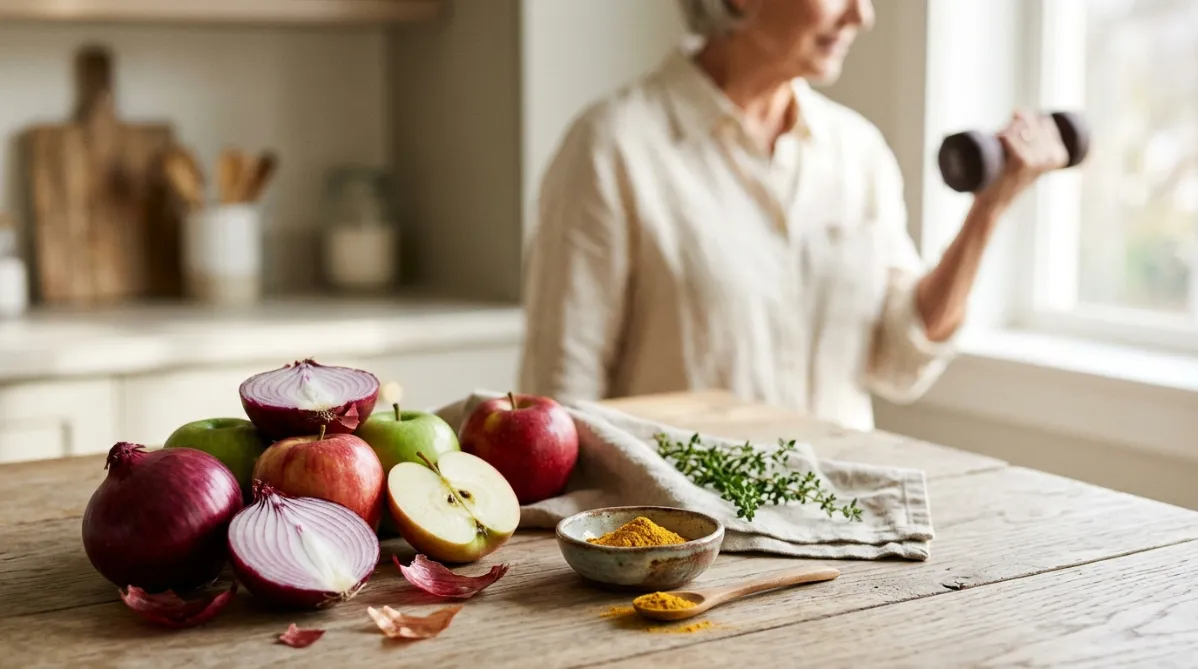
A landscape editorial photograph of a rustic kitchen table in soft morning window light. On a weathered light oak surface, a loose arrangement of fresh red onions, a few halved to show their purple-white rings, and crisp red and green apples, one sliced open to reveal pale flesh. A small ceramic bowl holds a pinch of golden-yellow quercetin powder, with a wooden spoon resting beside it. In the softly blurred background, an older woman in a cream linen shirt lifts a modest dumbbell near a sunlit window, her posture strong and relaxed. Her silhouette is out of focus, which keeps the produce as the main subject.

The palette is warm and natural: deep magenta onion skins, glossy apple reds, buttery yellow accents, and creamy neutrals. A gentle shallow depth of field gives creamy bokeh in the background. The light is diffused and golden, with delicate shadows and a few dried onion skin flakes scattered across the wood for texture. A folded linen napkin and a small sprig of thyme add a curated, modern lifestyle-magazine feel.

The composition follows the rule of thirds, with the produce at lower left and negative space on the right, where the blurred lifter and window glow provide balance. The overall look is clean, calm, and contemporary, like a premium health and wellness journal cover: natural, tactile, and optimistic, with fine film-like grain and true-to-life color.
nutrition

الكيرسيتين يضاعف مكاسب القوة ثلاث مرّات لدى المتدربين كبار السن — دون زيادة في كتلة العضلة

BY DR. GYMBRO ·

الفلافونويد الرخيص الموجود في البصل والتفاح قد زاد من مكاسب القوة لدى المتدربين الأكبر سناً بما يفوق ما يحققه التدريب وحده. في تجربة عشوائية مزدوجة التعمية، حقق كبار السن الذين تناولوا 200 ملغ/يوم من غليكوزيدات الكيرسيتين زيادة تقارب 15 % في قوة الركبة على مدى ستة أسابيع، مقابل حوالي 5 % في مجموعة البلاسيبو. الغريب أن كتلة العضلة لم تتغير في أي من المجموعتين؛ يبدو أن الفارق جاء من الجهاز العصبي حيث سرّعت وحدات المحرك عالية العتبة في الإطلاق.

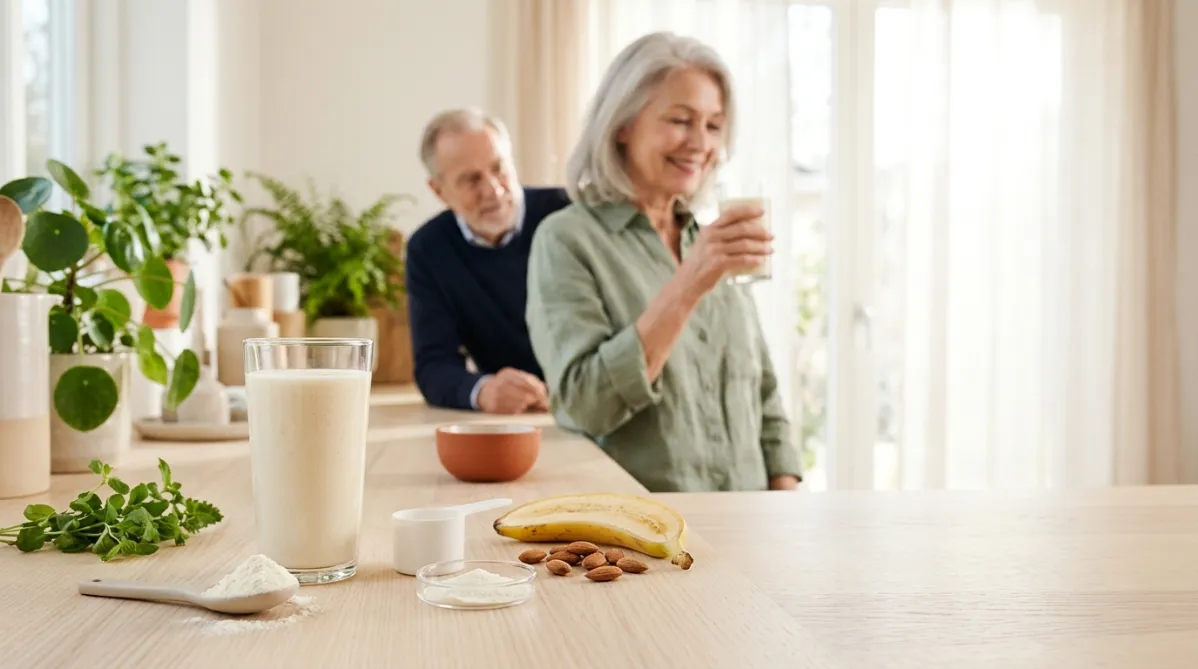
A bright, modern editorial still life on a clean, softly lit kitchen countertop of pale ash wood. In the foreground, a tall glass of creamy off-white protein shake sits beside a small ceramic spoon holding a mound of fine white powder. Next to it is a minimalist matte-white scoop and a small glass dish with a few pinches of powder. Scattered nearby are a few natural elements: a halved banana, a handful of raw almonds, and a sprig of fresh green herbs for a splash of color.

In the soft-focus midground, an older woman in her late 60s with silver-gray hair, wearing a sage-green linen shirt, smiles gently as she lifts a glass. Her face is slightly blurred and warm, bathed in natural window light. Beside her, slightly further back and out of focus, an older man in a navy sweater leans on the counter, a neutral presence that subtly contrasts with her. A wide window behind them floods the scene with soft morning light, with sheer curtains and a few leafy houseplants.

The color palette is muted and fresh: warm cream, soft sage, pale peach, and light oak, with a touch of terracotta from a small ceramic bowl. Shallow depth of field, creamy bokeh, subtle film-like grain, and gentle shadows give it a contemporary lifestyle-magazine feel. Composition follows the rule of thirds, with the shake and powder on the left third and open negative space on the right for headline overlay. The mood is calm, optimistic, and health-focused, polished like a trendy wellness journal cover, with no text, no logos, and no futuristic or sci-fi elements.
nutrition

3 غرام HMB + 40 غرام واي: الزيادة المفاجئة التي تفيد النساء لا الرجال

BY DR. GYMBRO ·

كان يُعتقد أن مكملات بناء العضلات تُفيد الرجال كبار السن أكثر، لكن دراسة تتبع علامات (Tracer) أظهرت عكس ذلك: إضافة 3 غرام من الكالسيوم‑HMB إلى مشروب يحتوي على 40 غرام واي عزّز تخليق بروتين العضلات لدى النساء الأكبر سناً، ولم تُظهر فائدة مماثلة لدى الرجال. كما خفّض HMB من تحلل العضلات في الفترة المتأخرة بعد الوجبة لدى جميع المشاركين. تجدر الإشارة إلى أن الدراسة قصيرة (3 ساعات) وشملت 24 مشاركاً فقط، لذا لا يمكن اعتبارها دليلًا على زيادة العضلات على المدى الطويل. إليك الجرعة، التوقيت، من قد يستفيد، ومن ينبغي أن يتجنّبها.

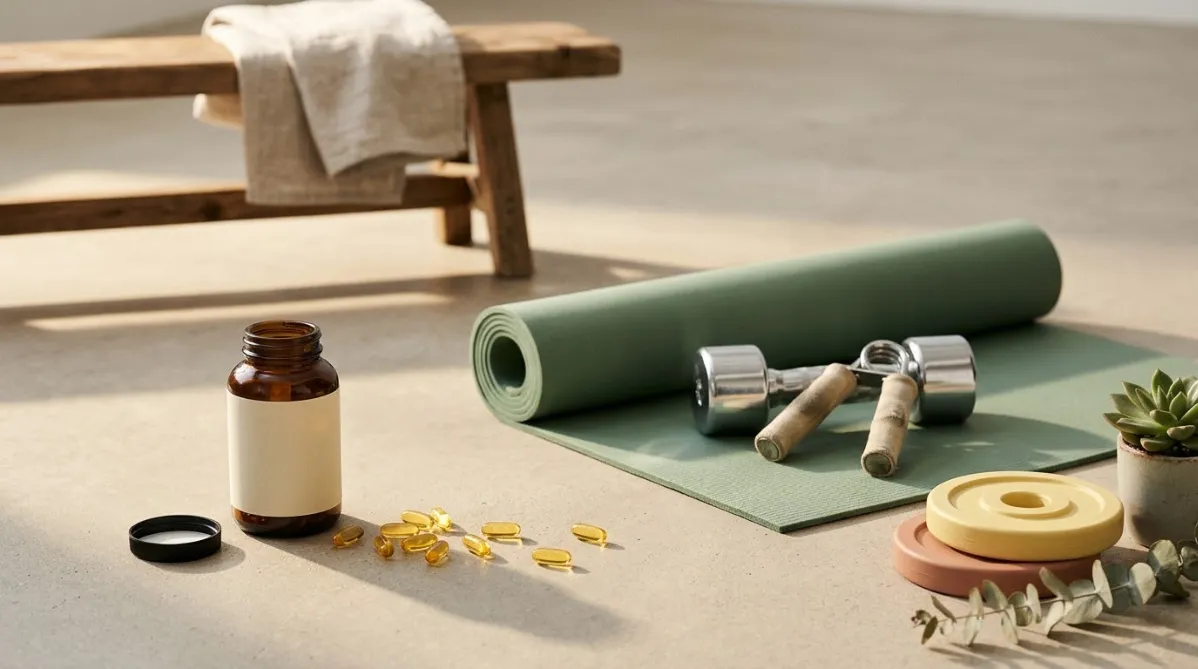
A soft-lit editorial still life on a pale warm-gray concrete surface, shot from a slightly elevated three-quarter angle in a wide landscape frame. On the left, a single amber glass supplement bottle with a minimalist cream label, its lid set beside it. A few golden-yellow softgel capsules are scattered in a loose arc across the surface, catching the light like small drops of honey. At the center-right, a matte sage-green yoga mat is partly unrolled, with a polished chrome dumbbell resting on it. Next to the dumbbell sits a worn canvas hand gripper, a nod to the handgrip finding. Behind them, a wooden gym bench is slightly out of focus, and a folded linen towel sits on top of it.

Warm morning sunlight enters from the upper left through a large window. It casts long, gentle diagonal shadows and a faint golden glow across the scene, a quiet reference to vitamin D and sunshine. A sprig of dried eucalyptus or a small potted succulent adds an organic touch near the bottom right. A small, neatly stacked pile of two or three matte pastel-toned weight plates in butter yellow and dusty terracotta adds color blocking.

The palette is muted and modern: butter yellow, sage, warm sand, soft terracotta, and off-white, with a single strong amber accent from the bottle. The depth of field is shallow, with crisp focus on the capsules and bottle and a creamy blur falling off toward the background. The negative space on the upper right is clean and uncluttered, which leaves room for a headline overlay. The overall feel is calm, minimalist, and contemporary, like a premium health and wellness magazine or a trendy online journal. The grain is subtle, the contrast gentle, and the textures tactile: brushed metal, frosted glass, linen, and concrete. There are no people, no text, and no futuristic elements.
science research

فيتامين د لا يحرق الدهون ولا يبني العضلات، باستثناء واحد

BY DR. GYMBRO ·

أظهر تحليل ميتا شمل 28 تجربة عشوائية على 1,675 مشاركًا أن إضافة فيتامين د إلى برنامج التمرين لا تُحدث فقدانًا ملحوظًا للدهون ولا تزيد الكتلة العضلية. ارتفعت مستويات فيتامين د في الدم بحوالي 34 نانومول/لتر، لكن وزن الجسم، مؤشر كتلة الجسم، نسبة الدهون وكتلة العضلات الخالية من الدهون لم تتحسن مقارنةً بالتمرين وحده. تحسنت قوة مد الركبة بمقدار 4.36 كغ وتحسّن قبضة اليد لدى كبار السن الذين تناولوا جرعات عالية، لكن الفوائد تقتصر على فئات محددة ولا يجوز الاعتماد على فيتامين د كمكمل لتغيير التركيب الجسدي.

This page is available in