Dr. Gymbro
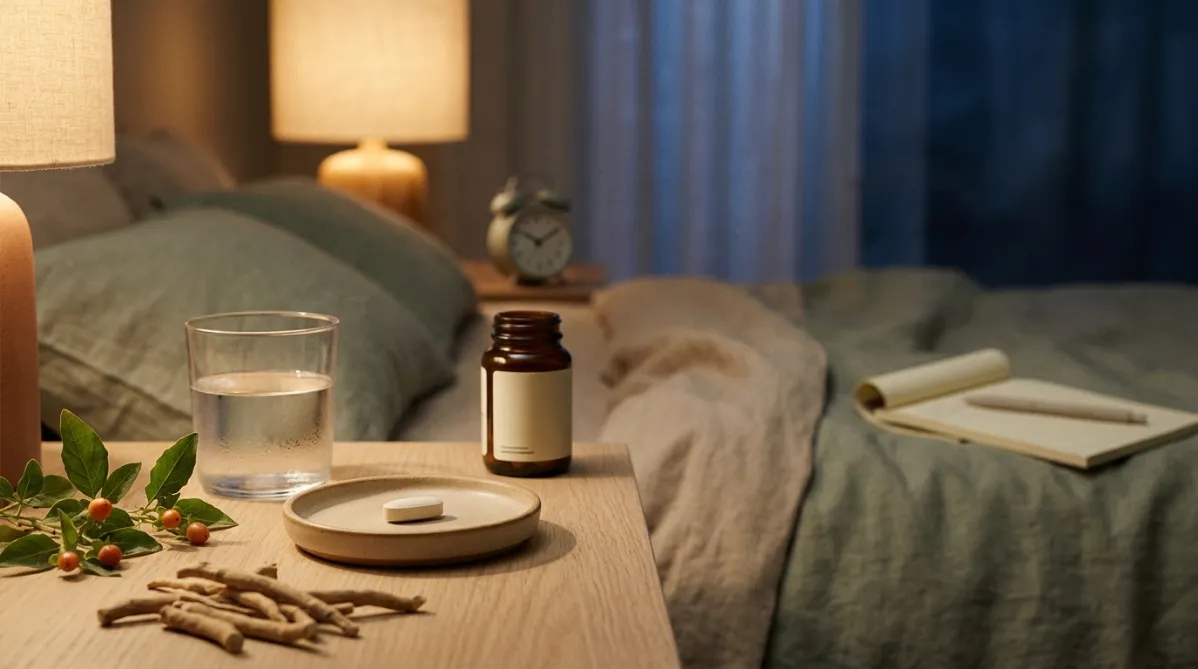
A softly lit, minimalist editorial still life on a pale oat-colored linen surface, shot from a slightly elevated three-quarter angle. In the center-left, a small handmade ceramic dish in matte sage green holds a modest pile of dried ashwagandha root pieces and a scattering of fine tan powder. A few fresh ashwagandha sprigs, with delicate green leaves and small orange-red berries in papery husks, rest beside it. In front, a single tiny capsule sits alone on the linen, with a slim glass dropper bottle in amber tint just behind it, suggesting a very small dose. To the right, a neat row of three small glass vials stands slightly out of focus, their contents a muted gold, hinting at comparison without any labels or text. A delicate brass measuring spoon lies at the edge of the frame, catching a thin highlight.

Soft morning window light falls from the upper left, casting long, gentle shadows and a warm glow across the textures: rough linen weave, matte ceramic, glossy glass, and the powdery root. The color palette is calming and earthy, with sage green, warm cream, soft terracotta, amber, and touches of muted coral from the berries. In the background, a blurred, airy room with a pale plaster wall and a hint of a wooden shelf holding a notebook and a small glass of water, adding a quiet wellness-journal atmosphere. Shallow depth of field, crisp focus on the dish and capsule, and generous negative space on the right third of the frame for headline overlay. The overall mood is calm, thoughtful, and slightly skeptical, like a contemporary health and science magazine feature, with natural, realistic photography, fine grain, and subtle film-like color grading.
Science & Research

مجرد 30 ملغ من الأشواغاندا تخفّف التوتر خلال 4 أسابيع — ما هو الفخ

Dr. Gymbro · · 3 min read

معظم التجارب على الأشواغاندا تستخدم جرعات تتراوح بين 250 و600 ملغ يوميًا. تجربة عشوائية جديدة اختبرت 30 ملغ، أي تقريبًا عُشر الجرعة المعتادة، ولا تزال تُظهر دلائل على انخفاض التوتر واستجابة كورتيزول مخفّضة. قبل أن تندفع لشرائها، هناك بعض التحذيرات الواقعية.

الادعاء الكبير: جزء من الجرعة المعتادة

نُشرت الدراسة في Advances in Therapy واختبرت مستخلصًا مسجلاً تحت اسم Ashwa.30™. أشار الباحثون إلى أن الأشواغاندا ارتبطت بتقليل التوتر والقلق حسب تقارير المشاركين، لكن معظم التجارب استمرت 6‑8 أسابيع بجرعات 250‑600 ملغ يوميًا. هدفهم كان معرفة ما إذا كانت جرعة أقل ومدة أقصر ما زالت تُحدث فرقًا.

تم اختيار ستين بالغًا (18‑65 سنة) يعانون من توتر، ووزعوهم عشوائيًا إلى مجموعة تلقت 30 ملغ من المستخلص ومجموعة أخرى تلقت دواءً وهميًا لمدة 28 يومًا. كانت الدراسة مزدوجة التعمية ومراقبة بالدواء الوهمي، وهو التصميم المناسب لسؤال حول مكمل غذائي. سُجّلت التجربة في سجل التجارب السريرية الأسترالي والنيوزيلندي.

ما تم قياسه

استخدم المشاركون مقياس الاكتئاب والقلق والتوتر (DASS)، وقيموا مزاجهم يوميًا، وملأوا مقياس تعب تشالدر. كما خضعوا لاختبار Socially Evaluated Cold‑Pressor Test (SECPT) في اليومين السابع والثامن والعشرين. في هذا الاختبار يُوضع اليد في ماء بارد تحت مراقبة، ويتم تسجيل:

  • التوتر والإرهاق الذاتي
  • المؤشرات القلبية والجلدية
  • درجة حرارة الجلد
  • مستوى الكورتيزول والكروموجرانين A في اللعاب

يُعَدّ اختبار SECPT مهمًا لأن الاستبيانات لا تكشف سوى ما يشعر به الإنسان، بينما الاختبار المنضبط يوضح رد فعل الجسم.

ما الذي تحسّن فعليًا

في التحليل الأساسي سُجّلت مجموعة الأشواغاندا انخفاضًا أكبر في التوتر الذاتي مقارنةً بمجموعة البلاسيبو (p = 0.046). كما كانت التقييمات اليومية للتوتر أقل (p = 0.043).

خلال اختبار الضغط في اليوم 28 أبلغت مجموعة الأشواغاندا عن مستويات توتر أقل (p = 0.044). ظل مستوى الكورتيزول في اللعاب ثابتًا تقريبًا لدى المجموعة التي تناولت المستخلص، بينما ارتفع لدى مجموعة البلاسيبو. فسّر المؤلفون ذلك على أنه تخفّف في استجابة الكورتيزول (p = 0.047). بعبارة بسيطة، لم يرتفع الكورتيزول كثيرًا عند التعرض للضغط المعياري.

الفخ: ما يجب قراءته قبل الشراء

النتائج مثيرة، لكنها ليست قوية. إليك الصورة الصريحة:

  • قيمة p على الحد الأدنى. جميع النتائج الرئيسة تقع تحت 0.05 مباشرةً (0.043‑0.047). وهذا يعني دلالة إحصائية هشة، خاصةً مع عدد المشاركين المحدود (60).
  • تحليل البروتوكول غير ذي دلالة. عندما حدّ المؤلفون التحليل للمتابعين للبروتوكول بدقة، كانت النتائج «متسقة في الاتجاه لكن غير ذات دلالة إحصائية».
  • معظم النتائج الثانوية سلبية. لم تُظهر أي من القياسات الفسيولوجية أو الثانوية فرقًا إحصائيًا بين المجموعتين.
  • الممول هو صانع المستخلص. شركة Natural Remedies Pvt Ltd، التي تصنّع المستخلص، مولّت الدراسة، وكان العديد من موظفيها مشاركين في كتابة الورقة. تقول الورقة إن الممول لم يشارك في جمع البيانات أو تفسيرها أو قرار النشر. المؤلف الرئيسي يدير أيضًا منظمة أبحاث تعاقدية تتلقى تمويلًا من شركات المكملات.
  • الكتّاب يصفون النتائج بأنها تمهيدية. يرون أن النتائج تبرر إجراء دراسات أكبر وأكثر صلابة، ولا تُعد دليلًا قاطعًا.

لمن قد تكون مناسبة

الدراسة شملت بالذات البالغين الذين أبلغوا عن توتر، لذا هذه هي الفئة التي تنطبق عليها النتائج. إذا كنت موظفًا تحت ضغط مستمر، أو أحد الوالدين، أو طالبًا، أو أي شخص يشعر بالإجهاد بسبب متطلبات الحياة، فهذه هي الفئة المستهدفة.

قد يهتم الرياضيون الذين يعانون من توتر عالي، لأن التوتر والانتعاش مرتبطان ارتباطًا وثيقًا في التدريب. لكن الدراسة لم تختبر الرياضيين، ولا القوة، ولا الأداء، ولا الانتعاش. لذا أي توقع لفائدة خاصة بالصالات هو مجرد تخمين.

نتائج التعب قيّمة محدودة. شملت الدراسة مقاييس للتعب، لكن الملخص لم يُظهر فروقًا ذات دلالة إحصائية في النتائج الثانوية الأخرى. لذلك لا تتوقع دفعة طاقة بناءً على هذه الورقة.

خلاصة عملية: الجرعة، المدة، التوقيت

  • الجرعة: 30 ملغ يوميًا من المستخلص المحدد (Ashwa.30™). هذا الرقم يخص هذا المستخلص فقط؛ لا تفترض أن 30 ملغ من أي مسحوق أشواغاندا سيتصرف بالمثل.
  • المدة: 28 يومًا. تم قياس تأثير التوتر المبلغ عنه على مدى أربعة أسابيع، وكانت نتيجة الكورتيزول مأخوذة من اختبار اليوم الـ28.
  • التوقيت: لا يذكر الملخص متى تناول المشاركون الجرعة خلال اليوم، لذا لا توجد إرشادات زمنية مستندة إلى الأدلة.
  • التوقعات: اعتبرها إشارة مبكرة ومتواضعة. لا تتوقع تغييرًا جذريًا في شعورك.
  • السلامة: لا يذكر الملخص أي معلومات عن السلامة أو الآثار الجانبية. إذا كنت مريضًا، حاملًا، أو تتناول أدوية، استشر طبيبك قبل بدء أي مكمل.

الخلاصة

جرعة منخفضة جدًا من مستخلص الأشواغاندا ارتبطت بانخفاض التوتر الذاتي وارتفاع أقل في مستوى الكورتيزول في تجربة صغيرة مدتها 28 يومًا ومراقبة بالدواء الوهمي. وهذا يثير الاهتمام لأنه يلمّح إلى أن الجرعات الأقل قد تستحق الاختبار. لكن النتائج هشة، ولم تثبت في تحليل البروتوكول، ولم تدعمها معظم القياسات الثانوية، وكانت ممولة من صانع المستخلص. القراءة المسؤولة هي «واعد لكنه غير مثبت». ستوضح الدراسات الأكبر المستقلة ما إذا كانت 30 ملغ كافية بالفعل.

المصدر: Lopresti AL et al., Adv Ther 2026; 43(11):5482‑5505. DOI: 10.1007/s12325-026-03740-y
Original study

Read the original research on pubmed.ncbi.nlm.nih.gov →

This article summarizes published research for general information. It is not medical advice.

DG

Written by

Dr. Gymbro

Dr. Gymbro writes for Dr. Gymbro: science-backed fitness, nutrition & performance.

Related Articles

A landscape editorial still life shot from slightly above on a pale oat-colored linen surface, lit by soft morning window light with gentle long shadows. On the left, in warm golden sunlight, sits a small ceramic bowl of dried ashwagandha root pieces and a scatter of fine tan powder. Beside it are a few rough, rosy-gold slices of Rhodiola rosea root and a sprig of tiny succulent-like green leaves with yellow blossoms. A matte sand-colored stoneware mug of steaming tea and a simple glass of water stand nearby. A small amber glass bottle with a minimal unbranded label tips out two capsules.

The right side of the frame is cooler and bluer, as if dusk is arriving. It holds a muted indigo ceramic dish with a few pale capsules, a small bundle of dried chamomile flowers (the source of apigenin), and a few green tea leaves. A slim, unlit beeswax candle and a folded charcoal wool blanket suggest evening. The warm and cool halves meet softly in the center, where a rumpled white cotton napkin sits beneath a small brass spoon.

In the background, out of focus, a wooden shelf holds a worn paperback, a small potted plant, and the edge of a kettlebell in matte black, hinting at an active lifestyle. Subtle film grain, shallow depth of field, and a muted palette of cream, terracotta, sage green, and deep indigo give it a clean, modern wellness-magazine feel. Leave generous negative space in the upper third for a headline overlay. No text, no logos, no people.
recovery

أشواغاندا وروديولا نجحتا؛ مجموعة مكملات النوم المسائية لم تنجح

BY DR. GYMBRO ·

تجربة رباعية الفروع حديثة تُلقي بظلالٍ من الثلج على عالم خلط المكملات. في عينة مكوّنة من 103 بالغٍ سليمٍ ونشيط، أظهر مزيج الصباح من 600 ملغ أشواغاندا و300 ملغ روديولا روزيا انخفاضًا ملحوظًا في التوتر المدرك، وتحسّنًا في جودة النوم، ومزاجًا أكثر إيجابية. أما مجموعة المكملات المسائية الشهيرة التي تشمل المغنيسيوم ثلاثي الثيونات، إل‑ثيانين وأبيجينين فلم تُظهر أي فائدة، بل بدا الجمع بينها والأسطر الصباحية أسوأ على مقياس التأثير الإيجابي. إليكم ما توصل إليه البحث، وأسباب ضرورة الحذر (فقط أسبوعين ومجموعات صغيرة)، وكيف قد يستفيد الرياضيون منه.

A soft, editorial still life photographed in a calm bedside setting at dusk, in landscape format. On a pale oak nightstand sits a single smooth, off-white oval caplet resting on a small matte ceramic dish in warm oatmeal tones. Next to it is a half-full glass of water with delicate condensation. Behind them, a small amber glass supplement bottle with a minimal cream label stands slightly out of focus. A few dried ashwagandha roots and a sprig of green leaves with small orange-red berries are arranged loosely across the wood grain in the foreground, adding an organic, botanical feel.

The background is a softly blurred bedroom with linen bedding in muted sage and sand tones. A warm lamp with a paper shade casts a golden glow from the left. Through a sheer curtain, deep blue twilight hints at evening. The light is gentle and directional, with long soft shadows and a subtle film-grain texture.

A small analog alarm clock with a muted face sits in the blurred distance, suggesting nighttime without dominating the scene. To the right, a folded cream notepad and a slim pen suggest research and note-taking, adding a quiet editorial touch. The composition follows the rule of thirds, with the caplet and dish in the lower-left third and generous negative space on the right for headline overlay.

The palette is earthy and restrained: sage green, warm beige, soft terracotta, and muted navy. The mood is thoughtful, trustworthy, and wellness-focused, like a modern health journal or a minimalist lifestyle magazine. Shallow depth of field with a crisp focus on the caplet, shot at eye level with an 85mm lens aesthetic, and high-end, natural, and tactile.
science research

حبوبة واحدة من الأشواجندا قبل النوم تتفوق على الدواء الوهمي: اقرأ ذلك قبل الشراء

BY DR. GYMBRO ·

في تجربة عشوائية مزدوجة التعمية شملت 226 مشاركًا، أظهرت حبة واحدة من الأشواجندا تُؤخذ مرة يوميًا بعد الوجبة، ويفضل ليلاً، تفوقها على الدواء الوهمي في خفض التوتر والقلق وتحسين الرفاهية الذهنية على مدار 8 أسابيع. وصلت الفروقات إلى قيمة إحصائية p<0.0001 في كل من تحليل النية للعلاج (ITT) وتحليل البروتوكول (PP)، ولم تُسجَّل أي أحداث جانبية خطيرة أو مرتبطة بالدواء. إلا أن الملخص لم يذكر جرعة الحبة ولا نوع المستخلص، والمؤلفان الرئيسيان مرتبطان بالشركة المصنعة. إليكم ما تُظهره الدراسة، وما ينقصها، وما يجب مراعاته قبل تجربة المنتج.

A calm, softly lit flat-lay on a pale oat-colored linen surface, shot from slightly above in a wide landscape composition. On the left, a matte ceramic bowl holds fine cream-colored plant protein powder, with a wooden scoop resting beside it and a few loose dusty-beige grains scattered across the linen. In the center, a small rustic wooden board displays dried ashwagandha roots, pale tan and gnarled, next to a few fresh rhodiola rhizomes with rosy-pink and coppery tones, and a few small sprigs of green leaves and tiny yellow-gold rhodiola flowers. On the right, a tall glass of creamy pale-blush smoothie sits next to a folded soft gray-blue cotton napkin, with a tumbler of water in the background. A delicate sprig of dried lavender and a small ceramic dish of capsules add subtle texture. Morning window light enters from the upper left, casting long, gentle shadows and a warm golden glow across the scene, with a faint hint of dusk-blue in the shadows to suggest restful sleep. The palette is muted and earthy: sage green, warm cream, dusty rose, soft terracotta, and touches of slate blue. The background is softly blurred with shallow depth of field, leaving generous negative space in the upper right for headline text. The style is editorial wellness photography, like a modern lifestyle journal, minimal, organic, tactile, and refined, with natural textures, subtle film grain, and a serene, restorative mood. No text, no people, no futuristic elements.
recovery

أشواغندا وروديولا مع بروتين ستاك: تقليل مشاكل النوم بنسبة 56 %

BY DR. GYMBRO ·

استمر ثلاثون يوماً على بروتين نباتي مع روديولا وأشواغندا، وخفضت صعوبة النوم التي أبلغ عنها المشاركون بنسبة 56 % في تجربة مزدوجة التعمية وضابطة بالدواء الوهمي. كما انخفض النعاس أثناء النهار بنسبة 60 % وتحسّن المجموع الكلي لدرجة النوم 3.7 أضعاف مقارنةً بالدواء الوهمي. لكن المنتج كان مكوّناً من عدة مكونات، لذا لا يمكن نسب الفائدة لمكوّن واحد. زاوية الطور في قياس المقاومة الكهربائية للجسم، وهو مؤشر على صحة الخلايا، لم تتغير تقريباً. فيما يلي ما توصلت إليه الدراسة التي شملت 100 مشارك، والجرعات المستخدمة، ومن يمكنه الاستفادة فعلياً من النتائج.

recovery

الكرز الحامض يقلل الالتهاب بعد الماراثون بنسبة 37٪، لكن الساقين لا تتحسّن

BY DR. GYMBRO ·

أظهرت تجربة عشوائية على عدّائي الماراثون أن مسحوق الكرز الحامض (صيفة فيستولا) يخفض مستوى البروتين التفاعلي C عالي الحساسية (hs‑CRP) بنحو 37٪ مقارنةً بالدواء الوهمي. غير أن القوة، أداء القفز، الألم العضلي أو مستويات الكرياتين كيناز (CK) لم تتغير. العينة صغرى (35 عدّاء) والتمويل من مورد المكوّن، ما يحدّ من تعميم النتائج على العدّائين المحترفين.

This page is available in