Dr. Gymbro
A soft-lit, minimalist editorial still life on a pale warm-gray seamless backdrop. In the center, a sterile glass vial with a clear, faintly golden liquid sits beside a slim syringe, both resting on a smooth matte terracotta ceramic slab. Beside them, a neat arrangement of translucent, pearly fat-like droplets in varying sizes, glistening like water beads, spills across the surface to suggest localized fat volume. Behind the objects, a large, softly blurred arc of cream and blush-pink paper forms a gentle curve suggesting an abdomen silhouette, without showing any human body. In the lower foreground, a slim measuring tape in muted sage green loops casually around the vial base, with legible tick marks hinting at volume reduction. To the right, a minimalist ceramic beaker with fine milliliter markings sits half-filled, catching a sliver of window light. Subtle data-inspired elements appear as flat, tasteful props: two thin stacks of off-white paper cards, one tall and one very short, symbolizing treatment versus placebo outcomes, with a few cards fading out toward the edge of frame to hint at participant dropout. A single small coral-red dot sticker on one card nods to injection-site reactions. Lighting is diffused natural morning light from the left, creating long, gentle shadows and soft highlights on glass and ceramic. The palette is restrained and modern: warm neutrals, soft sage, terracotta, blush, and touches of translucent gold. Shallow depth of field with crisp focus on the vial and syringe, background gently dissolving. Composition follows the rule of thirds with generous negative space on the right for headline overlay. The overall mood is calm, credible, and contemporary, like a premium health-science magazine cover, shot on a medium-format camera with fine grain and a clean, high-end editorial finish.
Science & Research

هل CBL‑514 يحرق الدهون فعلاً؟ ما نعرفه

Dr. Gymbro · · 5 min read

هل CBL‑514 يحرق الدهون فعلاً؟ ما نعرفه

النتيجة التي يُستند إليها هي أنه بعد 8 أسابيع من الجرعة الأخيرة، فقد 69.6 % (16/23) من مشاركي مجموعة CBL‑514 ما لا يقل عن 150 مل من الدهون تحت الجلدية البطنية. بالمقابل، لم يحقق أي من المشاركين في مجموعة البلاسيبو ذلك (0/16) (P < .001). تبدو النتيجة ملفتة، لكنها تحتاج إلى وضعها في السياق المناسب؛ فقد انخفض عدد المشاركين بسبب الانسحاب، وكانت التجربة أحادية التعمية، وفترة المتابعة قصيرة، ولم يُسجل انخفاض في وزن الجسم.

هذه المقالة تستند إلى ورقة المرحلة الثانية:

Gold M et al., Aesthetic Surgery Journal 2025;45(6):611‑620 (الوصول المفتوح على PMC, NCT04897412).

المقال لا يُعد نصيحة طبية.

أولاً: ما هو CBL‑514 (وما ليس هو)

CBL‑514 (ليس "CL‑514") هو حقن تجريبي من إنتاج شركة Caliway Biopharmaceuticals. ليس مكملًا غذائيًا ولا حبة ولا منتجًا تجاريًا معتمدًا. في الدراسة تم حقنه في منطقة البطن. الآلية المقترحة، استنادًا إلى أعمال غير سريرية سابقة مذكورة في الورقة، هي تحفيز تفتت الخلايا الدهنية (ما يُسمى أحيانًا injection lipolysis). هذه العملية لا تعني تسريع الأيض أو حرق السعرات، ولا تؤدي إلى فقدان وزن شامل. هوية الجزيء الكيميائي لم تُفصح عنها الأوراق.

كيف أُجري الاختبار

كانت دراسة المرحلة الثانية عشوائية، أحادية التعمية، ومُحكمة بالبلاسيبو، أُجريت في خمسة مراكز بالولايات المتحدة وأستراليا. وُقِّس المشاركون بنسبة 2:1 بين مجموعة CBL‑514 ومجموعة الملح الفارغ. كان المشاركون فقط هم المجهولين؛ بينما الباحثون، وفريق الموقع، والشركة الراعية لم يكونوا كذلك. تلقى المشاركون حتى أربع جرعات بفواصل أربعة أسابيع، وتمت المتابعة بعد 4 أسابيع و8 أسابيع من الجرعة الأخيرة. قُدر حجم الدهون باستخدام قياس سمك الطبقة الدهنية بالموجات فوق الصوتية في أربع نقاط، ثم ضرب هذا السمك في مساحة المعالجة المقدرة بـ300 سم². الشركة الراعية شاركت في تصميم الدراسة، وتحليل البيانات، وكتابة التقرير.

النتائج الرئيسية (تحليل النية للعلاج – ITT)

فقدان ≥150 مل (النقطة الأولية):

  • بعد 4 أسابيع: 63.9 % (23/36) في مجموعة CBL‑514 مقابل 17.4 % (4/23) في البلاسيبو؛ P < .001
  • بعد 8 أسابيع: 69.6 % (16/23) في مجموعة CBL‑514 مقابل 0 % (0/16) في البلاسيبو؛ P < .001

فقدان ≥200 مل:

  • بعد 4 أسابيع: 58.3 % (21/36) مقابل 8.7 % (2/23)؛ P < .001
  • بعد 8 أسابيع: 60.9 % (14/23) مقابل 0 % (0/16)؛ P < .001

متوسط التغيير (LS‑mean) مقارنةً بالأساس:

  • -199.80 مل بعد 4 أسابيع
  • -209.46 مل بعد 8 أسابيع

مقارنةً بالبلاسيبو، كان الفرق -206.62 مل (95 % CI -276.09 إلى -137.16) بعد 4 أسابيع و‑216.28 مل (95 % CI -288.28 إلى -144.28) بعد 8 أسابيع.

عدد الجرعات المطلوبة: من بين 28 مشاركًا في مجموعة CBL‑514 وصلوا إلى فقدان 150 مل، حقق 12 منهم (42.9 %) ذلك بعد جرعة واحدة، و10 (35.7 %) بعد جرعتين. أي أن 22 من 28 (78.6 %) وصلوا للهدف بعد جرعة أو جرعتين.

الحد الاستكشافي ≥250 مل: وصل إلى 44.4 % (16/36) بعد 4 أسابيع و52.2 % (12/23) بعد 8 أسابيع؛ ولم يتحقق في مجموعة البلاسيبو. أحد المشاركين في مجموعة CBL‑514 فقد أكثر من 750 مل، وهو استثناء غير نمطي.

مجموعة البروتوكول الكامل (PP) تبدو أفضل، ولكن مع تحذير

في مجموعة التحليل وفق البروتوكول الكامل (PP) – التي تضم 30 مشاركًا فقط أكملوا جميع الجرعات وحافظوا على وزن ثابت – كان متوسط التغيير LS حوالي -315 مل بعد 4 أسابيع و‑279 مل بعد 8 أسابيع. الفروقات بين المجموعتين بلغت -312.08 مل و‑276.83 مل على التوالي. نظرًا لأن مجموعة PP تمثل فقط الأشخاص الذين استكملوا الدراسة وربما استجابوا للعلاج، فهي لا تعكس ما قد يحدث في الجمهور العام.

التحذير: الانسحاب، عدم التعمية الكاملة، والمتابعة القصيرة

من بين 75 مشاركًا عولجوا، أكمل 38 فقط، بينما لم يكمل 37 (معدل عدم إكمال 49.3 %). الأسباب شملت فقدان المتابعة (6)، سحب المشاركين (7)، عدم استقرار الوزن (7)، مشاكل جدولة (6)، وآثار جانبية (4). لهذا السبب انخفض عدد المتابعين من 36 إلى 23 في مجموعة CBL‑514، ومن 23 إلى 16 في مجموعة البلاسيبو.

الدراسة أُجريت بأحادية التعمية فقط؛ لذا كان الباحثون غير المجهولين هم من أجروا تقييمات الموجات فوق الصوتية. العينة كانت غالبةً من النساء (94 % في مجموعة CBL‑514) ومعظمها من البيض (86 %). المتابعة توقفت بعد 8 أسابيع من الجرعة الأخيرة، لذا لا يُعرف ما إذا كان التأثير يدوم. حجم العينة كان استكشافيًا، ولم يُجرَ تعديل لتعدد الاختبارات.

هل هو "حرق للدهون"؟ ليس بالمعنى النظامي

لم يتغير وزن الجسم بشكل ملحوظ. في مجموعة CBL‑514 ارتفع الوزن بمقدار +0.45 كغ بعد 4 أسابيع و+0.02 كغ بعد 8 أسابيع؛ وفي مجموعة البلاسيبو انخفض بمقدار -0.76 كغ و‑0.26 كغ على التوالي. لم تُبلغ الدراسة عن فروق ذات دلالة إحصائية في متوسط الوزن أو مؤشر كتلة الجسم. وأشار الباحثون إلى أن فقدان الدهون المحلي ظهر حتى لدى بعض المشاركين الذين زاد وزنهم بأكثر من كغ، رغم أن البيانات الدقيقة لم تُذكر. إذًا ما يحدث هو تقليل حجم الدهون موضعيًا في المنطقة المحقونة، وليس حرقًا منهظاميًا أو فقدان وزن شامل.

تُظهر الورقة مثالين صوريين يُظهران انخفاضًا محليًا يتراوح بين 40.85 % و 47.37 % مع تغير وزن أقل من كغ. تُعد هذه الصور توضيحات فقط ولا تعطي ضمانات.

مقارنة بالشفط الجراحي أو التبريد الدهني (cryolipolysis)

يقول المؤلفون إن النتائج "مقارنة بما يحققه الشفط الجراحي"، وأن الاتجاه العام مع التبريد الدهني "يبدو أكبر". أشاروا إلى دراسة واحدة للتبريد الدهني أظهرت انخفاضًا متوسطًا قدره 264.8 مل عبر البطن والجانبين بعد 12 أسبوعًا (حتى 24 دورة على مدار جلستين)، ودراسة أخرى أظهرت انخفاضًا قدره 39.6 مل في الجنب بعد شهرين من دورة واحدة. هذه ليست تجارب مباشرة مقارنة؛ واختلاف طرق القياس يجعل أي استنتاج حول تفوق CBL‑514 غير مؤكد.

السلامة: ليست تافهة

تقريبًا جميع المشاركين عانوا من تفاعلات في موقع الحقن، حتى في مجموعة البلاسيبو الملحي. كان التورم وتغير اللون أو الصلابة أكثر شيوعًا مع CBL‑514. شعر 9 من 49 مشاركًا في مجموعة CBL‑514 (18.4 %) بألم شديد في موقع الحقن. توقّف مشاركان عن الدراسة بسبب آثار جانبية مرتبطة بالدواء. سُجِل ارتفاع واحد في مستوى الدهون قد يكون مرتبطًا بفرط كوليسترول مسبق. لم تُبلغ عن إصابات عصب أو قرحة أو نخر، لكن ذلك يأتي من دراسة صغيرة بمتابعة 8 أسابيع فقط.

الخلاصة

أظهر CBL‑514 انخفاضًا واضحًا ومهمًا إحصائيًا في حجم الدهون المحلي مقارنةً بالملح في تجربة المرحلة الثانية. التأثير – نحو 200 مل في المتوسط بحسب تحليل ITT – هو إشارة من دراسة صغيرة، شاركت فيها الشركة الراعية، وكانت أحادية التعمية، وفقد نصف المشاركين على طول الطريق. لا يُعد CBL‑514 أداة لفقدان الوزن، ولا هو متوفر للمستهلكين، ولا حصل على اعتماد رسمي. ستحتاج إلى تجارب أكبر، أُجريت على فترات أطول، ويفضل أن تكون مزدوجة التعمية لتؤكد ما إذا كان التأثير مستدامًا وكيفية مقارنته بالخيارات المتاحة حالياً. حتى ذلك الحين، الوصف الأكثر صدقًا هو "واعد لكنه غير مثبت".

هذه المقالة لأغراض إعلامية فقط ولا تمثل نصيحة طبية. المصدر: Gold et al., Aesthetic Surgery Journal 2025.
Original study

Read the original research on pmc.ncbi.nlm.nih.gov →

This article summarizes published research for general information. It is not medical advice.

DG

Written by

Dr. Gymbro

Dr. Gymbro writes for Dr. Gymbro: science-backed fitness, nutrition & performance.

Related Articles

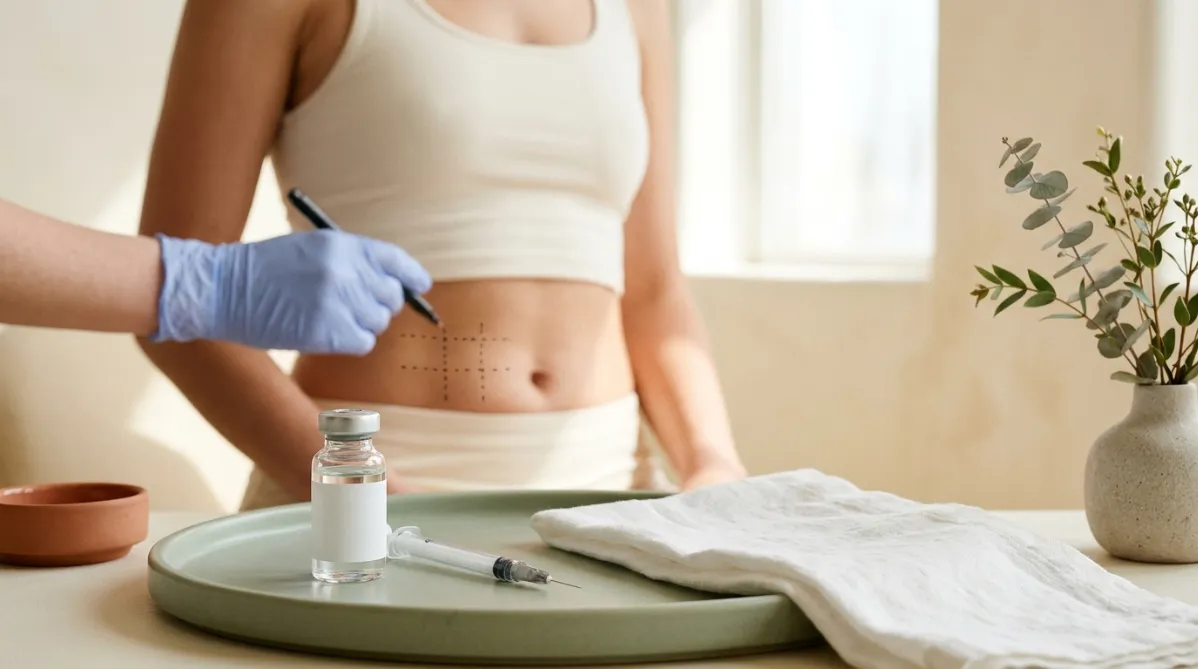
A soft, editorial still life in a bright, minimalist clinical-meets-wellness setting, shot in landscape format with a shallow depth of field. In the foreground, a single sterile glass vial with a clear liquid and a slim silver-capped syringe rest on a matte, pale sage-green ceramic tray. Next to them is a neatly folded white linen cloth. The vial's label is blank and clean, with no readable text. Behind the tray, slightly out of focus, the torso of a person in a simple cream-colored fitted tank top is visible from the ribs to the hips. A gentle, hand-drawn-style dotted grid of tiny ink dots is marked on the lower abdomen, suggesting localized injection points in a contained patch, not the whole body. A soft hand in a light nitrile glove hovers near the area holding a fine pen.

The background is a warm, creamy off-white wall with a faint, diffused window light casting long, soft shadows across the scene. A small sprig of dried eucalyptus in a minimalist stone vase sits at the far right edge, adding organic texture. Color palette: muted sage green, warm ivory, soft peach skin tones, and brushed silver accents, with a subtle touch of terracotta in a small ceramic dish at the left.

Lighting is natural morning daylight, airy and diffused, with gentle highlights on the glass vial that catch tiny reflections. The composition follows the rule of thirds, with the vial and syringe on the left third and open negative space on the right, which would suit headline overlay. The overall feel is modern, calm, trustworthy, and sophisticated, like a contemporary health and science magazine cover, with fine film-like grain, crisp detail on the glass and a creamy bokeh backdrop. No text, no logos, no futuristic elements.
science research

ما هو CBL‑514؟ هل يحرق الدهون؟

BY DR. GYMBRO ·

تتداول عبارة «حقنة حرق الدهون» كأنها بديل لمرحلة القطع أو لحقنة فقدان وزن على نمط أوزمبيك، لكن CBL‑514 لا ينتمي إلى أي من هذين المفهومين. هو دواء تجريبي يُحقن كجزيء صغير لتقليل الدهون تحت الجلد في منطقة محددة من البطن، وقد أظهر تجربة المرحلة الثانية عام 2025 انخفاضًا في حجم الدهون مقاس بالموجات فوق الصوتية مقارنةً بالدواء الوهمي، بينما ظل وزن الجسم ثابتًا تقريبًا. نستعرض فيما يلي ما تكشفه البيانات، والتحفظات الواجب مراعاتها، ولماذا يُعد هذا تعديلًا موضعيًا وليس حرقًا نظاميًا للدهون.

A calm, editorial-style still life photographed in soft natural window light on a pale travertine surface. In the foreground, a small clear glass vial with a silver cap and a slim, capped syringe rest beside a folded white linen cloth, their edges catching delicate highlights. Behind them is a minimalist arrangement of translucent frosted acrylic cards in pale sage green and warm sand, staggered like pages of a clinical report. A few of the cards carry abstract bar-chart shapes and simple circle diagrams in muted terracotta and deep teal. One circle is just under half filled, a quiet nod to the participants who did not finish the trial. A slim brass ruler and a rounded ultrasound-style glass paperweight lie diagonally across the middle ground, hinting at measurement without any machinery. On the right, a sprig of dried eucalyptus in a matte ceramic bud vase adds organic softness. The background is a smooth, softly blurred wall in warm cream, with long gentle shadows falling from the left. The palette is restrained: ivory, sage, sand, terracotta, and touches of teal and brass. The composition leaves generous negative space in the upper left for a headline overlay. The mood is thoughtful, trustworthy, and modern, like a contemporary health and science journal. Shot on a 50mm lens at shallow depth of field, with fine film-like grain and a clean, high-end magazine finish. There are no people, no text, no logos, and no futuristic elements.
science research

حقن إزالة الدهون CBL‑514: ماذا تقول العلوم؟

BY DR. GYMBRO ·

CBL‑514 هو حقن تجريبي يهدف إلى تقليل حجم الخلايا الدهنية موضعياً. تُظهر الدراسة العشوائية من المرحلة الثانية (NCT04897412) نتائج واعدة في خفض دهون البطن، لكن التجربة كانت أحادية التعمية، شارك الراعي في جميع مراحلها، وصل معدل الانسحاب إلى 49 ٪، وكان معظم المشاركين من النساء والبيض. المقال يوضح تفاصيل البروتوكول، طريقة القياس، والقيود التي تحولّ هذه النتائج من "واعدة" إلى "مُؤكَّدة".

A wide, editorial-style photograph of a clean, bright clinical consultation space with a modern wellness-journal feel. In the foreground, a minimalist matte white tabletop holds a small glass vial with a soft gray label and a sterile syringe laid parallel beside it. Next to them sits a neatly folded stack of printed research pages, with a few subtle sage-green highlighted lines and a simple bar chart in muted tones. A slim stainless steel measuring tape curls loosely nearby, and a fine-point pen rests on the pages.

In the softly blurred midground, the torso of an athletic person in a fitted charcoal training top stands slightly out of focus. One hand rests lightly at the waist, which suggests body composition without showing a face. A weighted matte-black kettlebell and a folded gray gym towel sit on a pale oak bench to one side, a quiet reference to lifters and training.

The background is a calm wall in warm off-white and pale stone, with a tall window to the left. It lets in diffused morning daylight that casts long, gentle shadows across the table. A single green leafy plant in a ceramic pot adds a touch of organic color on the right edge.

The palette is restrained and contemporary: soft whites, warm beige, sage green, charcoal, and a small accent of muted coral. The composition follows the rule of thirds, with the vial and syringe on the left third and open negative space on the right, where headline text could sit. Use shallow depth of field, crisp focus on the vial's glass edges, and subtle highlights on the glass. The mood is thoughtful, credible, and analytical, in the style of a premium health and science magazine. Shoot it as if with a 50mm lens at f/2.8, with natural light, fine grain, and a clean, uncluttered finish.
science research

حقن CBL‑514 لفقدان الدهون: ما ينبغي على لاعبي كمال الأجسام قراءته عن تجربة المرحلة الثانية

BY DR. GYMBRO ·

أظهرت تجربة عشوائية محكومة بالدواء الوهمي من المرحلة الثانية أن حقن CBL‑514 قللت من كمية الدهون تحت الجلد في البطن حسب قياسات الموجات فوق الصوتية، بينما لم يتغير وزن الجسم بشكل ملحوظ. بعد 8 أسابيع، وصل 69.6 ٪ من المشاركين الذين تلقوا العلاج إلى خسارة لا تقل عن 150 مل من الدهون، مقارنةً بـ0 ٪ في مجموعة الدواء الوهمي. التجربة كانت عمياء من جانب واحد، نصف المشاركين في مجموعة العلاج انسحبوا، وفترة المتابعة كانت قصيرة. الدواء لا يزال تجريبيًا وغير معتمد كملحق لحرق الدهون. إليكم ما يجب أن يستخلصه الرياضيون في مرحلة القطع من هذه النتائج.

A wide, editorial-style flat lay photographed from above on a pale warm-gray stone surface, bathed in soft diffused natural light from a window at the left. At the center sits a clean white clinical document folder, slightly open, with blurred printed charts and abstract bar graphs peeking out, no readable text. Beside it rests a minimalist glass vial with a pale frosted label and a silver cap, laid on its side, and a sleek stainless steel ruler marked in centimeters running diagonally across the frame, a quiet nod to the "mg/cm²" dosing concept. Three small ceramic dishes in a row at the right hold progressively larger amounts of fine white powder, suggesting graduated dose levels without implying consumer use. A sprig of dried eucalyptus and a matte sage-green fountain pen add organic softness. A thin translucent grid overlay, like tracing paper with a faint 10 x 10 square outline, is partially draped over the surface to evoke a measured treatment area. The palette is muted and modern: ivory, sage green, soft slate blue, and touches of brushed silver, with generous negative space on the left third for a headline. Shadows are gentle and long, depth of field shallow, with the foreground ruler crisp and the background edges melting into a soft blur. The mood is calm, trustworthy, scientific yet approachable, like a contemporary health and science magazine cover. Subtle film grain, high-end editorial photography, 16:9 landscape composition.
science research

جرعات CBL‑514 – ماذا يقول العلم؟

BY DR. GYMBRO ·

لا توجد «جرعة موصى بها» للمستهلك من CBL‑514، ولا توجد كبسولة أو بروتوكول بالملغ/كغ لتطبيقه في صالات الرياضة. الجرعات المتاحة هي فقط تلك التي حقّقها الباحثون في التجارب السريرية. يوضح هذا المقال بروتوكول المرحلة الثانية (2 مغ/سم² بحد أقصى 600 مغ لكل جلسة على مساحة 300 سم²) ودراسة إيجاد الجرعة للمرحلة 2a المبكرة (1.2، 1.6، و2.0 مغ/سم²). كما يبيّن لماذا لا يجوز خلط أرقام الدراستين، ومن أين جاءت النسبة المتداولة 24.96 ٪. CBL‑514 غير معتمد، ولا يُقصد من هذا المقال تقديم نصائح طبية أو دليل «اعمل‑ها‑بنفسك».

This page is available in