Dr. Gymbro
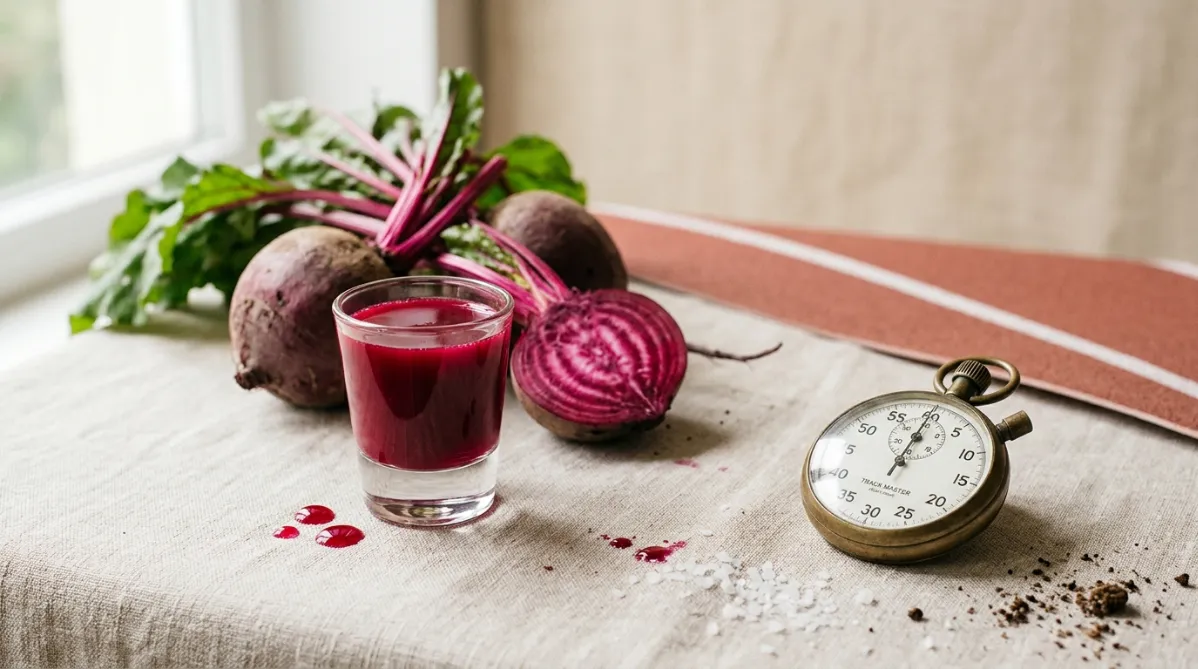
A wide editorial still life on a clean, pale oatmeal-colored linen surface, lit by soft natural window light from the left. In the center-left, a small clear glass shot glass filled with deep magenta-crimson beetroot juice catches a glowing highlight, with a few droplets beaded on the surface beside it. Behind it sit two whole beetroots with their leafy stems, the skins a dusty burgundy and the stems a vivid pink-red, and one beetroot sliced in half to reveal concentric rings of magenta and soft pink. To the right, a vintage-style brass stopwatch rests at an angle on the linen, its white face crisp and its hands frozen, slightly out of focus in the foreground edge. A faint curve of a sprinting track lane, in muted terracotta with thin white lines, sweeps diagonally across the blurred background, hinting at a running track without showing any people. Scattered across the surface are a few small, delicate beet-colored splashes and a light dusting of coarse sea salt. The palette is restrained and modern: warm cream, terracotta, dusty rose, deep magenta, and touches of sage green from the leaves. Shallow depth of field and a gentle film-like grain give it a contemporary lifestyle-magazine feel. The composition leaves generous negative space on the upper right for title overlay. Minimalist, tactile, calm, and sophisticated, in the style of a high-end health and science journal's editorial photography, 16:9 landscape.
Nutrition

Cukrová řepa zvýšila nitrit 35‑krát, ale sprinteri nebyli rychlejší

Dr. Gymbro · · 3 min read

Cukrová řepa je jedním z nejrozšířenějších přírodních doplňků zaměřených na sportovní výkon. Nová studie ji otestovala na sportovcích, u nichž by se teoreticky mohl projevit boost rychlých svalových vláken, ale stopky se nepohnuly.

Hlavní výsledek: velká biochemická změna, žádné zvýšení rychlosti

Výzkumníci ze Španělska a Velké Británie podali trénovaným mužským sprinterům malou dávku řepné šťávy. Šťáva sloužila jako nosič. Salivační dusičnan vzrostl z cca 230 µM po placebu na cca 6 164 µM po konzumaci šťávy. Salivační nitrit – sloučenina spojená s dráhou oxidu dusnatého – poskočil z cca 130 µM na cca 4 509 µM, tedy zhruba 35‑násobně.

Výkonnostní data se však téměř nezměnila. Sprint na 60 m trval 7,55 s oproti 7,58 s v kontrolních podmínkách. Na 100 m to byl čas 12,57 s oproti 12,51 s v kontrole. Ani jeden rozdíl nebyl statisticky významný (p = 0,407 a p = 0,343). Sloučenina se dostala do organismu, ale sportovci nezaznamenali zrychlení.

Jak byla studie provedena

Článek, publikovaný v Journal of the International Society of Sports Nutrition, použil randomizovaný, dvojkřížový, placebem kontrolovaný design. Každý sportovec absolvoval dva pokusy – jeden s řepnou šťávou a jeden s placebem.

  • Velikost vzorku: 12 trénovaných mužských sprinterů, průměrný věk 24,3 ± 4,8 let
  • Dávka řepy: 70 ml šťávy obsahující 6,4 mmol dusičnanu (≈ 400 mg)
  • Placebo: 70 ml nápoje s pouhými 0,04 mmol dusičnanu
  • Časování: Testování výkonu začalo 150 min po požití
  • Testy: Countermovement jump, squat jump, sprint na 60 m a sprint na 100 m
  • Hodnocení svalů: Tensiomyografie (neinvazivní měření kontraktilních vlastností svalů) na sval čtyřhlavý stehenní (rectus femoris), dvojhlavý stehenní (biceps femoris) a obě hlavy lýtkového svalu (gastrocnemium) před a po testech

Autoři uvedli, že nemají žádné finanční konflikty zájmů.

Skoky a svalová funkce potvrdily stejný výsledek

Data ze skoků odpovídala datům ze sprintů. Výška skoku Countermovement Jump byla cca 44,1 cm vs 43,6 cm v kontrolě (p = 0,400). Výška squat jump byla prakticky identická – cca 42 cm (p = 0,911). Efektové velikosti byly malé (‑0,25 – 0,29).

Výsledky tensiomyografie byly také nejednoznačné. Napříč svaly a měřenými proměnnými se p‑hodnoty pohybovaly od 0,065 do 0,914. Jedinou výjimkou byl čas relaxace biceps femoris (p = 0,047) – hranice významnosti mezi mnoha srovnáními, která se u vzorku 12 může snadno jednat o náhodu. To neodůvodňuje tvrzení, že řepná šťáva mění funkci hamstringů; autoři celkově dospěli k závěru, že neuromuskulární funkci nezlepšila.

Proč možná selhala?

Abstrakt článku to nevyjasňuje, takže následující část slouží spíše jako kontext. Doplňování dusičnanu se obvykle spojuje s oxidem dusnatým, zvýšeným průtokem krve a efektivitou svalů. Tyto mechanismy jsou obecně spojovány spíše s vytrvalostí a opakovaným úsilím než s krátkými maximálními sprinty dobře trénovaných atletů. Trénovaní sprinteri mohou mít také menší prostor pro další zlepšení. Zvýšená hladina nitritu ve slinách nezaručuje, že dojde ke změně svalové kontrakce, která by se projevil na trati.

Omezení, která byste měli znát

Jedná se o malý výzkum, takže jej neberte jako konečný závěr.

  • Malý vzorek: Dvanáct sportovců může přehlédnout mírné efekty. Zisk několika setin sekundy může být pro soutěžního sprintera zásadní a tento design to nezaručuje.
  • Pouze muži: Výsledky neříkají nic o ženských sprinterkách.
  • Jedna dávka, jedno časování: Testováno pouze 70 ml (~6,4 mmol dusičnanu) 150 min po požití. Vyšší dávky, jiné časování nebo vícedenní nasycení nebyly zkoušeny.
  • Pouze akutní účinek: Studie sledovala jednorázový příjem, ne dlouhodobé doplňování.
  • Vysoká variabilita: Salivační dusičnan a nitrit měly velmi velké směrodatné odchylky, takže individuální reakce se výrazně lišily.
  • Registrace: Studie byla registrována retrospektivně na ClinicalTrials.gov, což představuje metodologickou slabinu.

Praktické závěry

Dávka a časování použité ve studii: 70 ml koncentrované řepné šťávy (~6,4 mmol dusičnanu), podáno zhruba 2,5 hodiny před testem. Nepřinesla zlepšení sprintu ani skoku.

Kdo by mohl stále experimentovat: Vytrvalostní sportovci a lidé, kteří mají rádi produkty z řepy, mohou mít důvod je užívat. Toto tvrzení vychází z jiných výzkumů a tato konkrétní práce to neřeší.

Kdo by to pravděpodobně měl vynechat, pokud je cílem rychlost: Sprinteri a sportovci zaměření na sílu, kteří očekávají, že jediný předzávodní šálek jim zkrátí čas na 60 m či 100 m. Na základě těchto důkazů je lepší investovat do osvědčených základů – spánku, bílkovin, kreatinu a kvalitního tréninku.

Rozumný přístup, pokud vás to zajímá: Vyzkoušejte to v tréninku, ne v závodním dni. Sledujte své časy za stejných podmínek s a bez šťávy. Pokud užíváte léky na krevní tlak nebo máte zdravotní potíže (např. problémy s ledvinami), poraďte se s lékařem, než začnete koncentrované produkty dusičnanu užívat.

Závěrečné shrnutí

Tato studie ukazuje, že zvýšení hladiny dusičnanu a nitritu není samo o sobě dostačující k tomu, aby trénovaní sprinteri byli rychlejší, alespoň při jednorázové dávce u 12 mužů. Nepotvrzuje, že řepná šťáva nikomu nepomůže, ale naznačuje, že sprinteri by neměli očekávat rychlý zázrak z jediné dávky řepné šťávy.
Original study

Read the original research on pubmed.ncbi.nlm.nih.gov →

This article summarizes published research for general information. It is not medical advice.

DG

Written by

Dr. Gymbro

Dr. Gymbro writes for Dr. Gymbro: science-backed fitness, nutrition & performance.

Related Articles

A wide, editorial-style still life photographed in soft natural window light, set on a pale oak gym bench or a light concrete surface. In the center foreground, a tall clear glass of deep magenta-crimson beetroot juice catches the light, with a faint luminous glow along its rim and condensation beading on the outside. Two other glasses sit slightly behind it, one holding a pale, neutral-colored liquid and one empty. They suggest the placebo and no-treatment conditions without any labels. Beside the glasses, a halved raw beetroot shows concentric rings of vivid fuchsia and violet. A few whole beets with their leafy stems and dark green and burgundy leaves are scattered casually nearby.

On the right side of the frame, slightly out of focus, a matte black women's-size dumbbell and a neatly folded light gray towel rest on the bench. Behind them, the soft blur of a minimalist, airy training space includes a barbell rack and a leg press machine in muted tones. The background is bright and neutral, in warm off-white, soft sand, and light gray, so the magenta of the juice is the dominant accent color.

A small, restrained motif of four evenly spaced chalk marks or four small round weight plates arranged in a neat row on the bench hints at the "four sets" of the trial. A few drops of beet juice have splashed onto the surface, forming a tasteful organic pattern.

The composition follows the rule of thirds, with the glass of juice on the left third and open negative space on the right for headline text. Shallow depth of field, crisp focus on the glass and beet, subtle film-like grain, and a calm, modern, trendy magazine aesthetic. The palette is magenta, deep burgundy, sage green, cream, and soft gray. The mood is quiet, skeptical, and scientific without any laboratory imagery, with clean lines and an elegant, minimal feel.
supplements

Červená řepa nepřidala ani jedno opakování ženám, které trénují s váhami

BY DR. GYMBRO ·

Červená řepa je často propagována jako přírodní podpora výkonu, ale dvojitě zaslepená křížová studie u žen, které pravidelně posilují, nenalezla žádný přínos. Šestnáct účastnic vypily nápoj bohatý na nitráty, placebo nebo nic a poté absolvovaly čtyři série bench pressu a leg pressu až do selhání. Počet opakování, vnímaná zátěž, srdeční frekvence, krevní tlak i hladina laktátu se statisticky nezměnily. Výsledky neznamenají, že červená řepa je naprosto bezcenná, ale naznačují, že její ergogenní účinek může být u této skupiny a při tomto protokolu omezený.

A wide, editorial-style photograph of a bright, modern gym corner softened by morning window light. In the foreground, a rustic matte-white ceramic table holds a tall clear glass of deep magenta beetroot juice, beads of condensation on the glass, a few fresh whole beetroots with leafy crimson-veined stems beside it, and one beetroot sliced in half to reveal its vivid concentric purple-pink rings. Next to the glass sits a small, neat notebook with a pencil, suggesting a research note, with no legible text. Behind the table, slightly out of focus, a young woman lifter with a tidy ponytail and a fitted charcoal training set stands at a barbell resting on a squat rack, chalk-dusted hands gripping the bar, calm and focused expression. A loaded bench with a bar is visible further back, with matte black plates and a light wooden floor. The palette is restrained and trendy: warm off-white, soft concrete gray, muted sage green accents from the beet leaves, and a bold beetroot magenta as the focal color. Shallow depth of field with a creamy bokeh background, natural side lighting casting long gentle shadows, subtle film grain. Composition follows the rule of thirds, with the juice and beets on the left third and the lifter on the right, leaving clean negative space in the upper area for a headline overlay. Mood is thoughtful, clean, and slightly skeptical, like a contemporary health and science journal cover. Realistic photography style, high-end magazine look, no text, no logos, no futuristic elements.
nutrition

Červená řepa nezvládla silové sportovkyně – a dokonce zpomalila bench press

BY DR. GYMBRO ·

Červená řepa má pověst přírodního podněcova výkonnosti, ale nová křížová studie na 18 silových sportovkyních neukázala žádný přínos při dřepu. Ještě podivnější je, že síla a rychlost bench pressu mírně klesla při jednom zatížení (60 % 1RM) po dávce ~6,7 mmol dusičnanů podané 2,5 h před tréninkem. Pokles byl jen asi 5 W a 0,02 m/s, s mezními P‑hodnotami, takže nejde o definitivní závěr. Studie zkoumala konkrétní podmínky, ale nedává odpověď na všechny otázky. Přesto může být pro některé sportovce experimentování s dusičnany zajímavé.

A wide, editorial-style photograph of a soccer pitch at golden hour, shot from a low angle at the edge of the touchline. In the foreground, a pair of worn leather cleats sits beside a small, matte white scoop and a minimalist ceramic jar of fine white powder resting on the dewy grass. A few loose grains of powder dust the blades of grass and catch the warm light. The jar is unbranded, with a clean, modern look.

In the midground, slightly out of focus, a lone player in a plain charcoal training kit stands mid-stride on the pitch, caught in a sprint. The motion blur in the legs suggests speed, and long shadows stretch across the freshly mowed stripes of the turf. A soccer ball rests a few meters ahead of the player.

Behind them, the stadium stands curve softly into the distance, rendered in a hazy, muted gradient of peach, soft amber, and pale blue sky. The mowing pattern on the grass forms clean diagonal lines that lead the eye toward the horizon. A thin white chalk line cuts across the frame, adding a subtle graphic element.

The palette is warm and restrained: sage and deep green grass, cream white, soft apricot light, and touches of charcoal. The mood is calm, thoughtful, and slightly skeptical rather than hyped, like a magazine feature on sports science. Shallow depth of field with a creamy bokeh background, fine film grain, and gentle natural contrast. The composition follows the rule of thirds, with the jar and cleats in the lower left and open negative space in the upper right, which leaves room for a headline overlay. The look is contemporary and clean, like a premium health and performance journal.
nutrition

Kreatin pro fotbal: 41 studií, jedna nepříjemná pravda o sprintech

BY DR. GYMBRO ·

Kreatin je všude a sprintově náročná povaha fotbalu jej činí ideálním doplňkem. Nový systematický přehled zahrnující 41 jedinečných studií tuto myšlenku prověřil a dospěl k závěru opatrnějšímu než marketingové sliby. Některé studie ukázaly přínosy pro opakované sprinty, anaerobní výkon a sílu, ale důkazy jsou nekonzistentní a mají velmi nízkou jistotu. Nároky na zrychlenou regeneraci mají jen málo podpory a tělesná hmotnost často vzrostla bez jasného nárůstu svalové hmoty. Zde je shrnutí, kdo by mohl mít z kreatinu užitek a kdo by měl být opatrný.

A wide, editorial-style still life photographed on a pale warm-gray concrete surface in soft, diffused morning window light. On the left side, a tall clear glass filled with deep magenta-crimson beetroot juice sits beside two halved raw beetroots, their concentric rings of vivid fuchsia and purple clearly visible, with a few small green-and-red-veined leaves draped casually nearby. On the right side, a matching clear glass of cloudy white creatine solution rests next to a small matte ceramic bowl heaped with fine white powder and a minimal wooden scoop, a light dusting of powder scattered across the surface. In the center, between the two sides, a simple matte black barbell grip and a single chalk-dusted weight plate edge rise into the frame at a low angle, hinting at lifting without showing a person. The composition is split in a balanced, symmetrical way, with a subtle vertical shadow line dividing the saturated magenta tones on the left from cool, neutral whites and creams on the right. The background is softly blurred with a muted sage-green and oatmeal-toned wall, with plenty of negative space at the top for a headline overlay. Shallow depth of field, crisp focus on the glasses' condensation droplets and the textured beetroot flesh. The color palette is limited and refined: magenta, cream, charcoal, and soft sage. The mood is clean, modern, and health-journal chic, like a contemporary wellness magazine cover, with natural shadows, a tactile matte finish, and subtle film-like grain. No text, no logos, no futuristic elements.
nutrition

Řepová šťáva vs kreatin: Kdo vyhrává při posilování během 72 hodin?

BY DR. GYMBRO ·

Nová randomizovaná křížová studie postavila řepovou šťávu proti kreatinu během zhruba 72‑hodinového suplementačního období u začínajících kulturistů. Kreatin si získal výhodu v počtu opakování bench pressu při 80 % 1RM, zatímco řepová šťáva převýšila v rychlosti pohybu, svalové saturaci kyslíkem, maximální srdeční frekvenci i v obnově HRV. V abstraktu chybí informace o dávkách a načasování suplementace, což je důležité poznamenat. Níže najdete kompletní přehled a tip, kdo by si který doplněk měl zvolit.

This page is available in