Dr. Gymbro
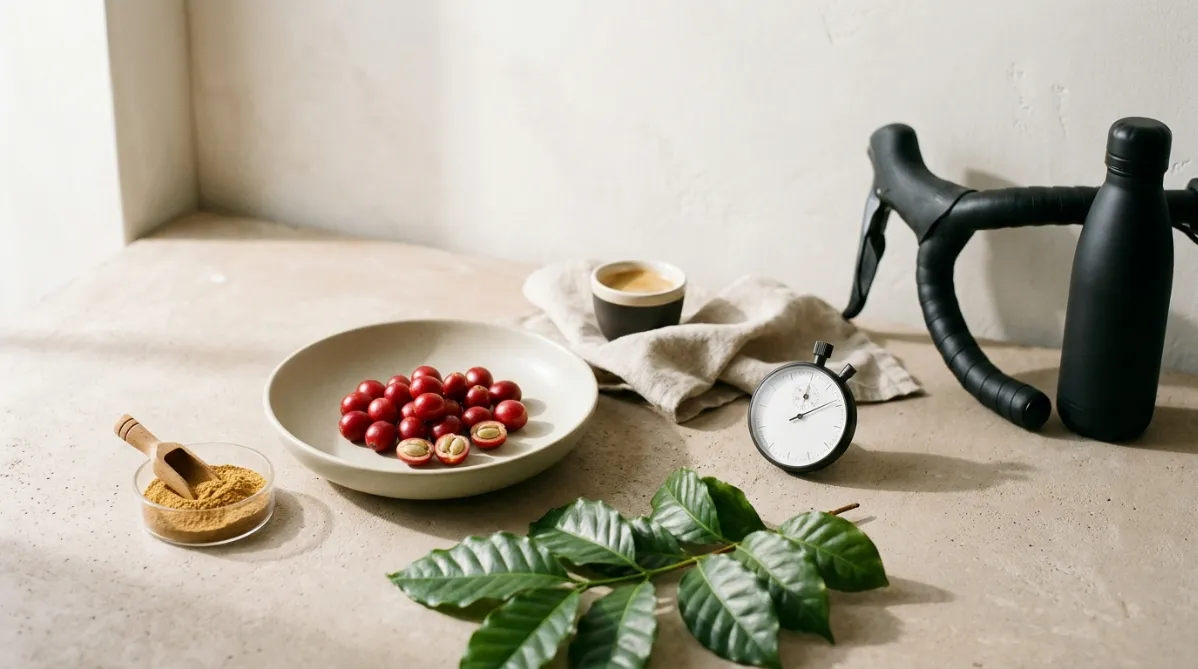
A wide editorial still life on a pale, warm-toned concrete surface in soft morning window light. In the center-left, a shallow matte ceramic bowl holds a small pile of bright red coffee cherries with glossy skins, a few sliced open to reveal pale mucilage and paired green-tan beans. Beside it, a small glass dish of fine, golden-brown powdered extract with a tiny wooden scoop resting on its edge. A sprig of coffee plant leaves, deep green and waxy, arcs across the foreground.

On the right side, slightly out of focus, a sleek road cyclist's handlebar and a matte black water bottle lean against a light plaster wall, suggesting athletic training without showing a person. A minimalist analog stopwatch with a clean white face and thin black hands sits in the mid-ground, angled toward the camera, its hands paused near the fifteen-minute mark. A folded linen cloth in oatmeal beige and a single small espresso cup with a thin crema ring add quiet texture.

The color palette is restrained and modern: cherry red, sage green, cream, soft terracotta, and charcoal accents. Light comes from the left, casting long, gentle shadows with a subtle warm glow and a hint of dust in the air. Shallow depth of field with crisp focus on the cherries and stopwatch, creamy bokeh in the background. Composition leaves open negative space in the upper right for a headline overlay. The overall feel is a clean, trendy health-and-science magazine cover: tactile, natural, minimal, and calm, shot in a 16:9 landscape frame with fine film-like grain and true-to-life tones.
Nutrition

ਕੌਫੀ ਚੈਰੀ ਐਕਸਟ੍ਰੈਕਟ: 200 ਮਿ.ਗਾ ਕੈਫੀਨ ਨਾਲ ਸਾਈਕਲਿੰਗ ਆਉਟਪੁੱਟ ਵਿੱਚ 4.6% ਵਾਧਾ

Dr. Gymbro · · 4 min read

A modest 200 mg of caffeine, delivered inside a whole coffee fruit extract, made trained cyclists do more work in a hard 15-minute effort. The extract did not make their muscles refuel any faster afterward. That split result comes from a new randomized trial in the Journal of the International Society of Sports Nutrition (Pavis et al., 2026), and it is useful both for anyone eyeing the next "superfruit" pre-workout and for anyone who has heard that coffee cherry helps you refill glycogen.

What Is Coffee Cherry Extract, Anyway?

The coffee "bean" is the seed of a fruit. The fruit around it, the coffee cherry, is often discarded during processing. The extract tested here came from whole Coffea arabica cherry and was concentrated for caffeine and polyphenols, including chlorogenic acids. Each dose supplied 200 mg of caffeine and 15 mg of polyphenols.

That caffeine dose is relatively low by sports-nutrition standards. The researchers wanted to know whether a compound‑rich, whole‑fruit product could do two things: improve performance and speed up muscle glycogen resynthesis.

How the Study Was Run

The design was strong, but the group was small.

  • Design: randomized, double-blind, placebo-controlled crossover trial
  • Participants: 12 trained cyclists (11 men, 1 woman) with a V̇O2max of 55 ± 2 mL·kg⁻¹·min⁻¹
  • Exercise test 1: 30 minutes on a cycle ergometer at about 79% V̇O2max, followed by a 15-minute time trial (TT1)
  • Recovery: a second supplement was taken with 1 g/kg body mass of carbohydrate, and a second time trial (TT2) was done the following morning
  • Measurements: blood samples throughout, plus muscle biopsies right after TT1 (0 h), then at 4 h and 24 h

Because every cyclist took both the extract and the placebo, each person served as their own control. That is a real strength in a small study.

The Headline Result: More Work, Lower Perceived Effort

Blood tests confirmed the supplement was absorbed. Plasma caffeine and chlorogenic acid were significantly higher with the extract than with placebo during exercise and recovery (p < 0.001).

The performance numbers followed. In the 15‑minute time trial, cyclists produced 4.6% ± 1.5% more total work with the coffee cherry extract: 3.14 ± 0.15 vs. 3.02 ± 0.17 kJ/kg. The effect size was Hedge's g = 0.8 (95% CI 0.2 to 1.4), which is large, though the wide interval shows how uncertain the estimate is with only 12 people. The difference was statistically significant (p < 0.05).

Perceived exertion was also lower during the steady‑state portion with the extract. The same work felt easier. Respiratory exchange ratio did not differ, so there was no clear sign that the supplement shifted fuel use in a dramatic way.

The Myth‑Bust: No Glycogen Refuelling Boost

The other half of the hypothesis did not hold up. Muscle glycogen rose substantially during recovery in both conditions, as expected when athletes eat carbohydrate. From 0 to 4 hours, glycogen increased by 64 ± 13 mmol/kg dw with placebo and 44 ± 10 mmol/kg dw with the extract. From 4 to 24 hours, it rose by 53 ± 8 and 45 ± 10 mmol/kg dw, respectively. The authors describe the increases as similar between conditions, and the extract was not shown to enhance glycogen resynthesis.

The extract did not accelerate glycogen storage in this setup. Carbohydrate intake drove refuelling, and the supplement added nothing detectable on top. Some caffeine research has suggested that caffeine plus carbohydrate can boost glycogen storage, but this trial did not find that with a 1 g/kg carbohydrate dose. The abstract also does not report the TT2 performance result, so we can't say what happened to next‑morning performance.

Why Should You Be Cautious?

Several limitations matter before you rush to buy a bottle.

  • Tiny sample. Twelve cyclists, only one of them female, limits how far the findings can be generalized.
  • No caffeine‑only arm. The study compared the extract to placebo, not to plain 200 mg caffeine. We can't tell whether the benefit came from caffeine, the polyphenols, or both together. Despite the "coffee cherry vs. plain caffeine" framing, this trial did not test that head‑to‑head.
  • One product, one dose. The results apply to this specific extract, not to every coffee fruit product.
  • Industry funding. The grant came from FutureCeuticals, and three authors are its employees. The University of Exeter authors state they kept full independence in interpreting the data and deciding to submit. The trial was pre‑registered (NCT05404841), which is a point in its favor.
  • Short‑effort performance. A 15‑minute time trial does not necessarily reflect a multi‑hour race or a lifting session.

Practical Takeaways

Dose: The tested dose was 200 mg caffeine with 15 mg polyphenols from the extract, taken before exercise. For context, that caffeine amount is roughly what you would get from about two typical cups of brewed coffee, though cup strength varies widely.

Timing: In the study, the supplement was taken before the exercise bout. The abstract does not specify the exact lead time, so follow the product label and what you already know works for you with caffeine.

Who it may suit: Trained endurance athletes who want a performance edge from a lower caffeine dose, or those who prefer a whole‑fruit product to standard caffeine pills. It is a reasonable thing to trial in training, not on race day.

Who should skip it (general guidance, not from the paper): People who are caffeine‑sensitive, have anxiety or sleep problems, have heart rhythm issues or high blood pressure, are pregnant, or train late in the evening should be careful or check with a clinician first.

What it won't do: Don't count on it to speed up glycogen refuelling. If you need to restore muscle fuel quickly, the carbohydrate matters most, and this study gives no reason to expect the extract to help.

Bottom Line

In this small, well‑controlled crossover trial, a whole coffee cherry extract with a low caffeine dose improved cycling time‑trial work by 4.6% and made steady effort feel easier. The "helps you refuel" claim, however, was not supported. Larger studies with a caffeine‑only comparison are needed to find out whether the coffee fruit does anything that plain caffeine can't.
Original study

Read the original research on pubmed.ncbi.nlm.nih.gov →

This article summarizes published research for general information. It is not medical advice.

DG

Written by

Dr. Gymbro

Dr. Gymbro writes for Dr. Gymbro: science-backed fitness, nutrition & performance.

Related Articles

A sleek aluminum energy drink can and a matte scoop of white pre-workout powder sit side by side on a pale concrete gym bench, lit by soft morning window light. The can is slim and minimalist, with a muted sage green label and no legible text. Beside it is a clear glass shaker half full of cloudy, lightly frothy liquid with condensation beading on its surface. A few fine grains of powder are scattered across the bench, catching the light. Behind them, slightly out of focus, a stainless steel barbell rests on a rack, and a folded charcoal gym towel sits at the edge of the frame.

The color palette is warm neutral: oatmeal, soft gray, and sage, with a single accent of pale citrus yellow from a halved lemon wedge placed near the glass. A thin, elegant shadow from the window blinds falls diagonally across the scene, giving it an editorial, magazine-style rhythm. The composition leaves generous negative space on the right third of the frame, a smooth blurred wall in warm off-white, suitable for headline text overlay.

The shot is a low-angle, shallow depth-of-field product-style photograph, as if taken with an 85mm lens at f/2. The foreground objects are tack sharp and the background melts into creamy blur. The mood is calm, clean, and modern, like a wellness or science journal feature. Subtle film grain and gentle contrast add a tactile, contemporary lifestyle feel. There are no people, no logos, and no futuristic or sci-fi elements, just a quiet, considered still life that suggests the choice between a canned drink and a scooped supplement.
nutrition

ਤੁਹਾਡੀ ਐਨਰਜੀ ਡਰਿੰਕ ਪ੍ਰੀ‑ਵਰਕਆਉਟ ਵਾਂਗ ਕੰਮ ਕਰ ਸਕਦੀ ਹੈ—ਪਰ ਇੱਕ ਸ਼ਰਤ

BY DR. GYMBRO ·

ਕੈਫੀਨ ਅਤੇ ਟੌਰੀਨ ਅਕਸਰ ਐਨਰਜੀ ਡਰਿੰਕਸ ਅਤੇ ਪ੍ਰੀ‑ਵਰਕਆਉਟ ਪਾਊਡਰਾਂ ਵਿੱਚ ਇਕੱਠੇ ਹੁੰਦੇ ਹਨ, ਪਰ ਕੀ ਇਹ ਜੋੜੀ ਵਾਸਤਵ ਵਿੱਚ ਪ੍ਰਦਰਸ਼ਨ ਨੂੰ ਵਧਾਉਂਦੀ ਹੈ? 11 ਰੈਂਡਮਾਈਜ਼ਡ ਟਰਾਇਲ (234 ਭਾਗੀਦਾਰ) ਦੀ ਨਵੀਂ ਮੈਟਾ‑ਵਿਸ਼ਲੇਸ਼ਣ ਨੇ ਪੀਕ ਪਾਵਰ ਅਤੇ ਥਕਾਵਟ ਤੱਕ ਦੇ ਸਮੇਂ ਵਿੱਚ ਮੱਧਮ ਸੁਧਾਰ ਦਿਖਾਇਆ, ਪਰ ਹਾਰਟ ਰੇਟ ਅਤੇ ਰੀਐਕਸ਼ਨ ਟਾਈਮ 'ਤੇ ਕੋਈ ਪ੍ਰਭਾਅ ਨਹੀਂ ਮਿਲਿਆ। ਅਧਿਐਨਾਂ ਦਾ ਆਕਾਰ ਛੋਟਾ ਹੈ, ਇਸ ਲਈ ਇਹ ਪੱਕਾ ਨਹੀਂ ਕਹਿ ਸਕਦੇ ਕਿ ਟੌਰੀਨ ਕੈਫੀਨ ਤੋਂ ਇਲਾਵਾ ਕੁਝ ਜੋੜਦੀ ਹੈ।

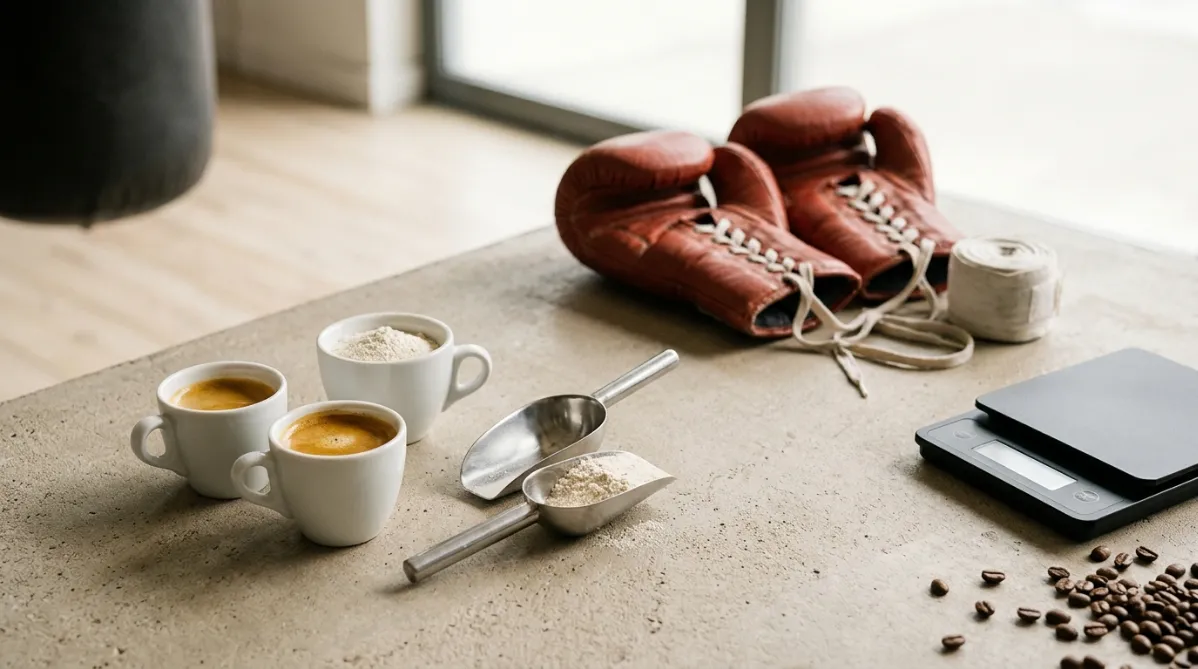
A landscape editorial photograph with a modern, clean magazine feel, shot on a pale warm-gray concrete surface in soft natural window light from the left. In the foreground, two matte white ceramic espresso cups sit side by side. The left cup holds a small amount of dark espresso with golden crema. The right cup is filled twice as high. Beside them, two small stainless steel scoops hold fine coffee-colored powder, one half full and one heaped, suggesting a dose comparison without any text or labels. A pair of worn red leather boxing gloves rests slightly out of focus behind the cups, laces loosely draped, with a white hand wrap rolled neatly beside them. A minimalist digital kitchen scale in matte black sits at the edge of the frame, with a few roasted coffee beans scattered across the surface. In the soft-focus background, a boxing gym corner appears: a hanging heavy bag in muted charcoal, pale wood plank flooring, and a tall window with diffused morning light. The palette is warm cream, espresso brown, brick red, and soft slate gray, with gentle shadows and a shallow depth of field. The composition follows the rule of thirds, with the cups and scoops in the lower left third and open negative space on the right for headline overlay. The look is tactile and refined, like a high-end health and performance journal. It has natural grain, subtle contrast, and a calm, confident mood. There are no people, no text, no logos, and no futuristic elements.
nutrition

ਕੈਫ਼ੀਨ ਦੀ ਦੋ ਗੁਣਾ ਖੁਰਾਕ ਨੇ ਬਾਕਸਰਾਂ ਦੀ ਥੋੜੀ ਹੀ ਮਦਦ ਕੀਤੀ — ਅਸਲ ਕਾਰਨ ਕੀ ਸੀ

BY DR. GYMBRO ·

ਕੀ ਤੁਸੀਂ ਸੋਚਦੇ ਹੋ ਕਿ ਪ੍ਰੀ‑ਵਰਕਆਉਟ ਦੀ ਦੂਜੀ ਸਕੂਪ ਨਾਲ ਪ੍ਰਦਰਸ਼ਨ ਦੋ ਗੁਣਾ ਹੋ ਜਾਂਦਾ ਹੈ? 15 ਮੁਕਾਬਲਤੀ ਬਾਕਸਰਾਂ ‘ਤੇ ਕੀਤੀ ਗਈ ਇਕ ਕ੍ਰਾਸ‑ਓਵਰ ਟਰਾਇਲ ਨੇ ਦਿਖਾਇਆ ਕਿ 3 ਮਿ.ਗ੍ਰਾ./ਕਿ.ਗ੍ਰਾ. ਅਤੇ 6 ਮਿ.ਗ੍ਰਾ./ਕਿ.ਗ੍ਰਾ. ਕੈਫ਼ੀਨ ਦੀ ਤੁਲਨਾ ਵਿੱਚ ਵੱਡੀ ਖੁਰਾਕ ਹਮੇਸ਼ਾ ਬਿਹਤਰ ਨਹੀਂ ਹੁੰਦੀ। ਦੋਹਾਂ ਖੁਰਾਕਾਂ ਨੇ 60 ਮਿੰਟ ਉਤੇ ਉਚਾ ਜੰਪ ਹਾਈਟ ਅਤੇ ਪਾਵਰ ਵਧਾਇਆ, ਪਰ 6 ਮਿ.ਗ੍ਰਾ./ਕਿ.ਗ੍ਰਾ. ਨੇ ਸਿਰਫ਼ ਕੁਝ ਵਿਸ਼ੇਸ਼ ਨਤੀਜਿਆਂ ‘ਚ ਹੀ ਥੋੜ੍ਹਾ ਫ਼ਾਇਦਾ ਦਿੱਤਾ। ਇੱਥੇ ਮੀਲ/ਕਿ.ਗ੍ਰਾ. ਦੀ ਗਿਣਤੀ, ਡਾਟਾ ਦੁਆਰਾ ਸਮਰਥਿਤ ਸਮਾਂ, ਅਤੇ ਮਹੱਤਵਪੂਰਨ ਚੇਤਾਵਨੀਆਂ ਦਿੱਤੀਆਂ ਗਈਆਂ ਹਨ, ਜਿਸ ਵਿੱਚ ਇਹ ਵੀ ਸ਼ਾਮਲ ਹੈ ਕਿ ਪੰਚ (ਮਾਰਨਾ) ਕਦੇ ਵੀ ਟੈਸਟ ਨਹੀਂ ਕੀਤਾ ਗਿਆ।

A wide, editorial-style still life shot from a slightly elevated angle on a pale oak gym bench, bathed in soft morning window light. In the center sits a matte ceramic cup of black coffee with delicate steam curling upward, flanked by a small white scoop of coffee beans and two identical glass vials, one filled with a few grains of fine powder and one empty, hinting at dose comparison. Next to the cup rests a pair of worn white boxing hand wraps, loosely coiled, and a slim black stopwatch with its face softly visible. In the foreground, a minimalist notebook lies open with blurred handwritten numbers and a simple pen sketch of a bar graph with bars of equal height, subtle and unreadable, suggesting a null result without any legible text. A small brass kitchen scale sits to the side with a few coffee beans on its tray.

In the soft-focus background, a boxing gym interior is visible: a hanging heavy bag in muted charcoal, exposed brick wall painted off-white, and tall windows casting long diagonal light across the floor. The color palette is warm and restrained: cream, sand, espresso brown, soft charcoal, with a single accent of muted terracotta orange in the hand wraps and a faint sage green in the notebook cover. Shallow depth of field with creamy bokeh, fine film grain, and gentle shadows give it a contemporary lifestyle-magazine and wellness-journal feel. The composition leaves generous negative space on the left third for headline overlay. Clean, calm, trendy, and tactile, with natural textures like wood grain, ceramic glaze, and cotton fabric. No people, no text, no futuristic elements.
science research

ਘੱਟ-ਡੋਜ਼ ਕੈਫੀਨ ਕੌਫੀ ਨੇ ਐਲਾਈਟ ਲੜਾਕੂਆਂ ਦੀ ਸਪ੍ਰਿੰਟ ‘ਚ ਕੋਈ ਵਾਧਾ ਨਹੀਂ ਕੀਤਾ

BY DR. GYMBRO ·

ਕੀ ਤੁਹਾਨੂੰ ਲੱਗਦਾ ਹੈ ਕਿ ਵਰਕ‑ਆਊਟ ਕੌਫੀ ਤੁਹਾਡੀਆਂ ਸਪ੍ਰਿੰਟਾਂ ਨੂੰ ਤੇਜ਼ ਕਰਦੀ ਹੈ? 15 ਰਾਸ਼ਟਰੀ‑ਸਤਰ ਦੇ ਕਾਮਬੈਟ ਐਥਲੀਟਾਂ ਉੱਤੇ ਕੀਤੀ ਇੱਕ ਰੈਂਡਮਾਈਜ਼ਡ, ਡਬਲ‑ਬਲਾਈਂਡ ਕ੍ਰਾਸ‑ਓਵਰ ਟਰਾਇਲ ਵਿੱਚ 1.5 mg/kg (68 kg ਵਾਲੇ ਖਿਡਾਰੀ ਲਈ ਲਗਭਗ 100 mg) ਅਤੇ 3 mg/kg (ਲਗਭਗ 200 mg) ਕੈਫੀਨ ਡੋਜ਼ਾਂ ਨੂੰ ਡੀ‑ਕੈਫੀਨ ਨਾਲ ਤੁਲਨਾ ਕਰਕੇ ਕੋਈ ਪ੍ਰਦਰਸ਼ਨ ਫਾਇਦਾ ਨਹੀਂ ਮਿਲਿਆ। ਪੀਕ ਪਾਵਰ, ਮੀਨ ਪਾਵਰ, ਥਕਾਵਟ, ਊਰਜਾ ਸਿਸਟਮ ਦੀਆਂ ਅਨੁਮਾਨਿਤ ਯੋਗਦਾਨਾਂ ‘ਤੇ ਵੀ ਕੋਈ ਫ਼ਰਕ ਨਹੀਂ ਦਿਖਿਆ। ਇਹ ਛੋਟਾ ਅਧਿਐਨ ਕੈਫੀਨ ਨੂੰ ਅਸਫਲ ਨਹੀਂ ਕਹਿੰਦਾ, ਪਰ ਦਰਸਾਉਂਦਾ ਹੈ ਕਿ 3–6 mg/kg ਦੀਆਂ ਉੱਚ ਡੋਜ਼ਾਂ ‘ਤੇ ਅਧਿਆਨ ਵੱਧ ਭਰੋਸੇਯੋਗ ਹਨ। ਹੇਠਾਂ ਡੋਜ਼ ਦੀ ਗਿਣਤੀ, ਚੇਤਾਵਨੀਆਂ ਤੇ ਅਗਲੀ ਟ੍ਰੇਨਿੰਗ ਤੋਂ ਪਹਿਲਾਂ ਕਿਹੜਾ ਕਰਨਾ ਚਾਹੀਦਾ ਹੈ, ਦਿੱਤਾ ਗਿਆ ਹੈ।

A wide, editorial-style flat lay photographed from slightly above on a pale oak gym bench with a soft matte finish. On the left, a small white ceramic cup of black coffee sits on a matching saucer, with a thin curl of steam rising and catching warm window light. Beside it is a second, slightly larger handleless stoneware mug in muted sage green, also filled with coffee, so the pair suggests one to two cups. In the center-right foreground rests a sleek matte-black steel barbell plate, partly overlapping a brushed-steel dumbbell with fine knurling. A folded charcoal gym towel and a clean white chalk-dusted wrist strap lie casually to one side. A small scatter of whole roasted coffee beans spills across the bench in front of the cups, glossy and deep brown. Near the bottom edge, a minimalist analog kitchen scale in soft cream with a thin black needle hints at precise dosing, without any readable numbers or text.

Soft morning sunlight streams in from the upper left, creating long, gentle shadows and a warm golden glow against cool neutral tones. The background is a softly blurred, airy home gym or boutique training studio with out-of-focus squat rack uprights, pale concrete walls, and a leafy green plant in a terracotta pot adding a touch of organic color. The palette is restrained and modern: warm cream, espresso brown, charcoal, sage green, and hints of brushed silver. Shallow depth of field keeps the cups and beans tack sharp while the background melts into creamy bokeh. The composition leaves generous negative space on the right third for a title overlay, with a balanced, calm, premium magazine feel, like a contemporary wellness and sports science journal. High-resolution, natural color grading, subtle film grain, realistic textures on ceramic, steel, and coffee crema.
nutrition

ਲਿਫਟਿੰਗ ਤੋਂ ਪਹਿਲਾਂ ਕਿੰਨਾ ਕੈਫੀਨ? ਇੱਕ ਮੈਟਾ-ਐਨਾਲਿਸਿਸ ਕਹਿੰਦੀ ਹੈ 1–2 mg/kg ਵੀ ਕਾਫੀ ਹੈ

BY DR. GYMBRO ·

ਲਿਫਟਿੰਗ ਤੋਂ ਪਹਿਲਾਂ ਕੈਫੀਨ ਦੀ ਆਮ ਸਿਫਾਰਿਸ਼ 3–6 mg/kg ਹੁੰਦੀ ਹੈ, ਜਿਸਦਾ ਮਤਲਬ ਕਈ ਕੱਪ ਕਾਫੀ ਜਾਂ ਭਾਰੀ ਪ੍ਰੀ‑ਵਰਕਆਉਟ ਸਕੂਪ ਹੁੰਦਾ ਹੈ। 2022 ਦੀ ਇੱਕ ਮੈਟਾ‑ਐਨਾਲਿਸਿਸ ਨੇ 12 ਟ੍ਰਾਇਅਲਾਂ ਵਿੱਚ ਪਤਾ ਲਗਾਇਆ ਕਿ ਸਿਰਫ 0.9–2 mg/kg ਦੀ ਡੋਜ਼ ਵੀ ਮਾਸਪੇਸ਼ੀ ਤਾਕਤ (d≈0.17), ਮਾਸਪੇਸ਼ੀ ਠਿਕਾਣਾ (d≈0.21) ਅਤੇ ਮੀਨ ਬਾਰ ਵੇਲੋਸਿਟੀ (d≈0.56) ਵਿੱਚ ਸੁਧਾਰ ਕਰਦੀ ਹੈ। ਬਹੁਤ ਸਾਰੇ ਲਿਫਟਰਾਂ ਲਈ ਇਹ ਲਗਭਗ ਇੱਕ ਤੋਂ ਦੋ ਕੱਪ ਕਾਫੀ ਦੇ ਬਰਾਬਰ ਹੈ। ਪ੍ਰਭਾਵ ਹਲਕੇ ਹਨ ਅਤੇ ਇਕ‑ਸੈਸ਼ਨ ਅਧਿਐਨ ਤੋਂ ਆਉਂਦੇ ਹਨ, ਪਰ ਇਹ ਦਿਖਾਉਂਦੇ ਹਨ ਕਿ ਘੱਟ ਕੈਫੀਨ ਨਾਲ ਵੀ ਲਾਭ ਮਿਲ ਸਕਦੇ ਹਨ।

This page is available in