Dr. Gymbro
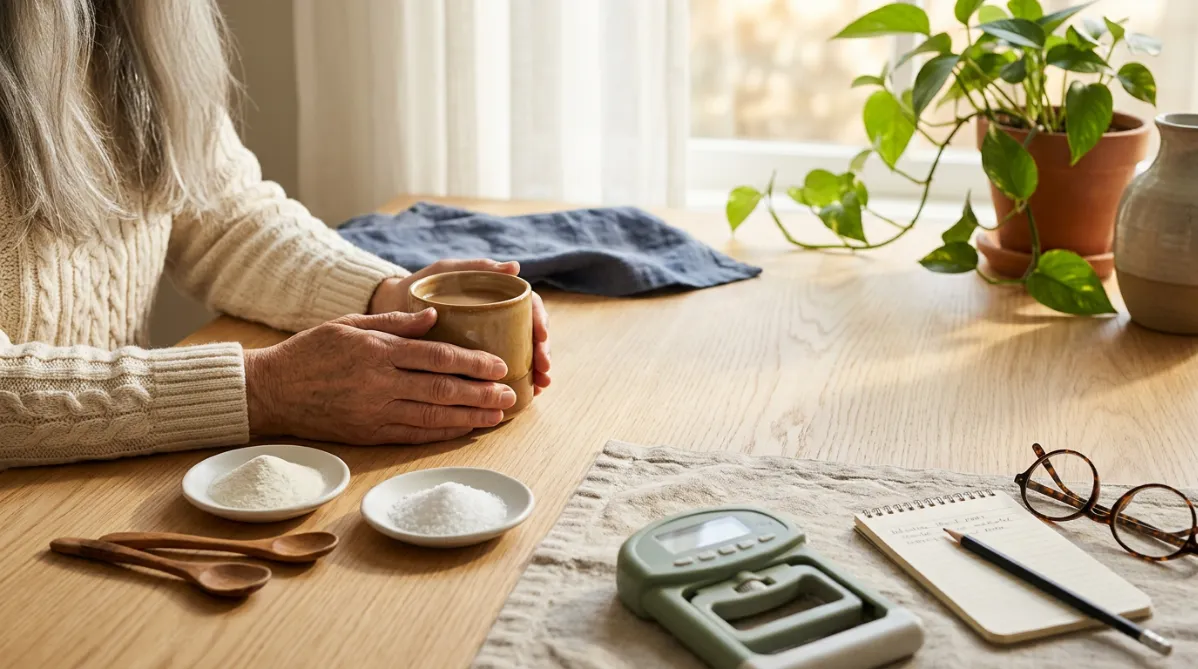
A landscape editorial photograph of a sunlit kitchen table in soft morning light. An older adult's hands, with silver hair and a cream knit sleeve just visible, rest around a ceramic mug. Beside the mug are two small matte white ceramic dishes. One holds a mound of fine white powder, and the other holds a slightly different crystalline white powder. Two wooden spoons lie next to them. A handheld hand-grip dynamometer in muted sage green sits on a linen placemat in the foreground, slightly out of focus. A small open notebook with a pencil and a pair of round tortoiseshell reading glasses sit nearby, with no legible text.

The tabletop is pale oak with a visible grain. Behind it, a window with sheer curtains lets in warm golden light, and the blurred shapes of a trailing green pothos plant and a pale terracotta vase show in the background. The color palette is warm cream, sage green, soft terracotta, and pale wood, with a touch of muted navy from a folded napkin. The mood is calm, thoughtful, and quietly scientific without any laboratory feel.

The composition follows the rule of thirds. The hands and dishes sit in the left-center, and generous negative space on the right is suitable for a title overlay. Shallow depth of field, 50mm lens look, gentle film grain, and soft shadows. Modern lifestyle-magazine and health-journal aesthetic, natural and unstaged, high-end editorial photography.
Nutrition

Precursorul creatinei depășește creatina în forța de prindere la persoanele peste 65 de ani

Dr. Gymbro · · 5 min read

Precursorul creatinei depășește creatina în forța de prindere la persoanele peste 65 de ani

O „rudă” mai ieftină și mai puțin cunoscută a creatinei a depășit standardul de aur al suplimentelor în ceea ce privește forța de prindere la adulţii peste 65 de ani. Înainte să‑ți revizuiești protocolul, reţine nota de subsol: a fost un pilot mic, de 8 săptămâni, cu 21 de finalizatori, fără program de exerciţii şi cu intervale de încredere care abia ating zero. Este interesant și merită urmărit, dar nu constituie un motiv să renunţi la monohidrata de creatină.

Ce este GAA și de ce se compară cu creatina?

Acidul guanidinoacetat (GAA) este precursorul metabolic imediat al creatinei. În organism, GAA este sintetizat în rinichi și apoi metilat în ficat pentru a forma creatina. Acest pas final folosește un grup metil donat de S‑adenosilmetionină (SAMe).

Raţionamentul cercetătorilor este că îmbătrânirea poate slăbi sinteza și transportul creatinei. Dacă este aşa, furnizarea precursorului ar putea ocoli unele blocaje şi ar putea influența energia musculară și metabolismul proteinelor diferit faţă de creatina însăşi. Creatina deja ajută adulţii în vârstă, în special când este combinată cu antrenament de rezistenţă, dar rezultatele fără exerciţiu sunt mai puţin consistente. Acolo a încercat să umple acest gol studiul pe care îl prezentăm.

Cum a fost realizat studiul

Studiul, publicat în Journal of Nutritional Science and Vitaminology (2026; 72(4):284‑290), provine de la Laboratorul de Bioenergetică Aplicată condus de Ostojic și colaboratori. A fost randomizat, dublu orb și etichetat explicit ca pilot explorator.

  • Participanţi: 25 de adulţi aparent sănătoşi, în vârstă de 65 de ani sau mai mult, au fost randomizaţi; 21 au finalizat (GAA n=11, creatină n=10).
  • Intervenţie: 2,0 g/zi de GAA versus o doză echimolară de monohidrat de creatină pentru 8 săptămâni (aproximativ 2,5 g de creatină, având în vedere greutăţile moleculare diferite).
  • Fără exerciţii structurate în protocol.
  • Rezultate măsurate: forţa de prindere a mâinii, compoziţia corporală și compartimentele de fluide prin bioimpedanţă multiplă (BIA), precum şi markeri sanguini: miozostatină, IGF‑1, mTOR, homocisteină totală, albumină și proteină totală.

Aderenţa a depășit 97 % în ambele grupuri, fără evenimente adverse raportate.

Rezultatele: forţa de prindere, masă musculară, miozostatină

Forţa de prindere – a crescut semnificativ la grupul GAA (p = 0,01), dar nu la grupul cu creatină. Interacţiunea timp‑tratament a fost semnificativă (p = 0,04), iar dimensiunea efectului între grupuri a fost mare în favoarea GAA (g‑ul lui Hedges = 0,91). Intervalul de încredere 95 % a variat între 0,00 și 1,81; limita inferioară egală cu zero înseamnă că avantajul real poate varia de la neglijabil la foarte mare.

Compoziţia corporală – în BIA, grupul GAA a prezentat creşeri semnificative în masă fără grăsime, masă celulară, masă musculară și apă totală corporală. Grupul cu creatină nu a înregistrat schimbări comparabile. Dimensiunile efectului au fost în favoarea GAA pentru forţă, indici musculari și compartimente legate de hidratare, deşi din nou cu intervale largi.

Miozostatină – ambele suplimente au scăzut nivelul circulant de miozostatină, o proteină care limitează creşterea musculară, dar suprimarea a fost mai pronunţată la GAA. Dacă această modificare sanguină se traduce în schimbări musculare semnificative la vârstnici rămâne o întrebare deschisă.

Alţi markeri – creatina a produs o mică scădere a albuminei serice, dar în limitele normale. IGF‑1 seric a fost sub pragul de detecţie al testului la majoritatea participanţilor, astfel că axa GH‑IGF‑1 nu a putut fi evaluată.

Atenţionări importante

  • Mărimea pilotului – cu 10‑11 persoane pe grup, studiul nu a fost dimensionat să ofere concluzii definitive. Autorii însuşi descriu rezultatele ca preliminare și generatoare de ipoteze.
  • BIA nu este o scanare – impedanţa bioelectrică estimează masa musculară pe baza proprietăţilor electrice și este sensibilă la hidratare. Creatina este cunoscută pentru a muta apa în mușchi, iar grupul GAA a arătat, de asemenea, creștere a apei totale corporale. Prin urmare, „câștigurile” în masă musculară pot reflecta parțial lichidele. DXA sau RMN ar oferi o măsură mai robustă.
  • Fără exerciţiu – studiul a investigat ce fac suplimentele pe cont propriu. În viaţa reală, majoritatea beneficiilor creatinei la vârstnici apar în combinație cu antrenament de rezistenţă, așa că aceste rezultate s‑ar putea să nu se aplice persoanelor care ridică greutăţi.
  • Întrebarea homocisteinei – sinteza creatinei din GAA consumă grupuri metil, iar studii anterioare au raportat creşteri ale homocisteinei. Nivelurile ridicate de homocisteină constituie un factor de risc cardiovascular și cognitiv. Acest trial a măsurat homocisteina totală, dar rezumatul nu raportează un rezultat evident, astfel că trebuie revăzută lucrarea completă înainte de a trage concluzii. În practică, cercetătorii care lucrează cu GAA recomandă aport adecvat de folat, B6, B12 și alţi donatori de metil, precum betaina, în special la persoanele în vârstă, mai predispuse la deficit de B12.
  • Durată scurtă și intervale largi – opt săptămâni nu ne spun nimic despre siguranţa pe termen lung sau persistenţa efectelor.

Concluzii practice

  • Doza studiată a fost de 2 g/zi de GAA, versus o doză echimolară de monohidrat de creatină (aprox. 2,5 g, conform calculelor noastre).
  • Cine ar putea lua în considerare GAA: adulţi în vârstă care nu răspund la creatină sau care nu fac exerciţii. Este încă o speculație și ar trebui discutat cu un medic, mai ales la persoanele cu risc cardiovascular, probleme renale sau deficit de vitaminele B.
  • De ce monohidrata de creatină rămâne opţiunea de referinţă: are decenii de date privind siguranţa și eficacitatea în multiple populaţii, este ieftină și beneficiile sale sunt cel mai bine documentate alături de antrenament de rezistenţă. GAA are o bază de dovezi mult mai restrânsă și un posibil cost al homocisteinei.
  • Ce ar schimba tabloul: studii mai mari, cu putere statistică adecvată, la persoane cu sarcopenie, utilizând DXA sau RMN, monitorizând homocisteina și statusul vitaminelor B și includând braţe cu exerciţii.

Concluzia finală

Acest pilot conferă GAA un titlu real, deşi provizoriu: forță de prindere superioară faţă de creatină la adulţii în vârstă, pe parcursul a 8 săptămâni fără exerciţiu. Însă intervalul de încredere care atinge zero, numărul redus de finalizatori și estimările de masă musculară bazate pe BIA constituie un semnal ce merită urmărit, nu un verdict. Pentru moment, monohidrata de creatină combinată cu antrenament de rezistenţă rămâne opţiunea dovedită, iar GAA este doar un supliment de observat.
Original study

Read the original research on pubmed.ncbi.nlm.nih.gov →

This article summarizes published research for general information. It is not medical advice.

DG

Written by

Dr. Gymbro

Dr. Gymbro writes for Dr. Gymbro: science-backed fitness, nutrition & performance.

Related Articles

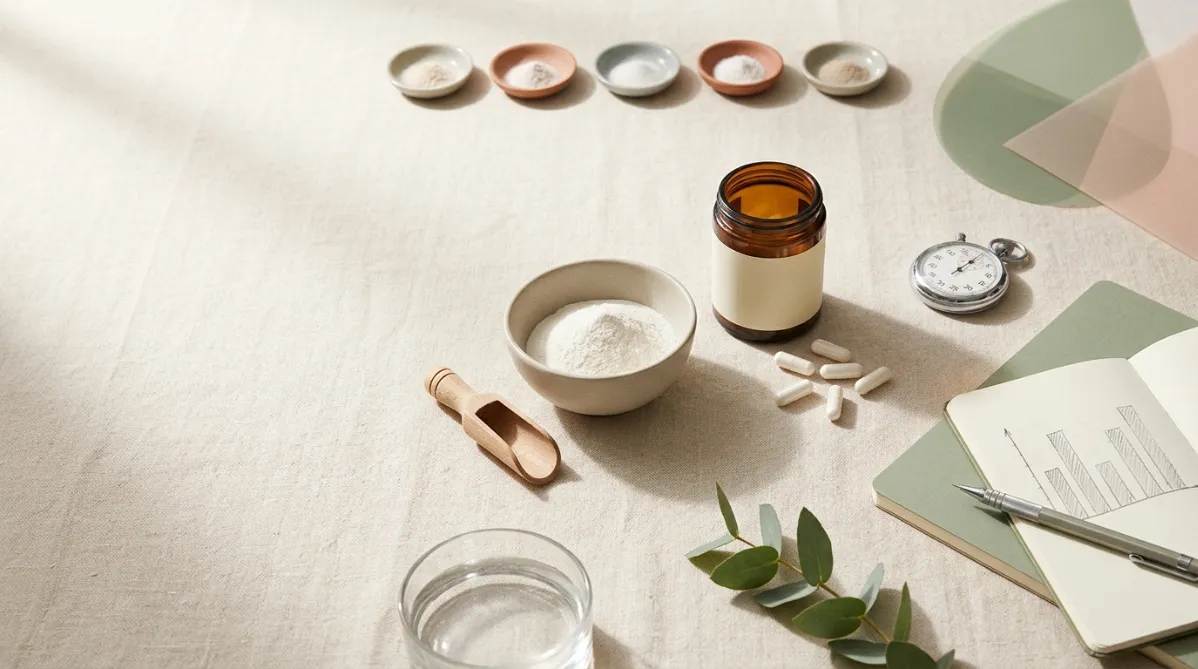
A wide, editorial-style still life photographed from slightly above on a pale oat-colored linen surface, lit by soft morning window light from the left. In the center sits a small matte ceramic bowl holding a mound of fine white powder, with a minimalist wooden scoop resting beside it. Next to the bowl is an open amber glass supplement jar with a plain cream label, and a few white capsules spill across the linen in a loose arc.

To the right, a neatly arranged cluster of analog "study" objects suggests careful measurement: a vintage stopwatch with a clean white face, a slim notebook with a sage-green cover open to a hand-drawn bar chart (blurred, no legible text), and a mechanical pencil lying across the page. A small row of six identical ceramic dishes, each holding a pinch of powder, is lined up along the top edge of the frame to hint at the six-week trial. One dish is slightly out of alignment, a subtle visual cue for ambiguity.

A shallow glass of water and a single sprig of green eucalyptus add a calm, organic note in the foreground. Soft, long shadows fall across the textured linen, and the palette stays restrained: warm cream, soft sage, muted terracotta, pale gray, and touches of amber from the glass jar. A few translucent paper cutouts in two tones (sage and blush) overlap in the upper right corner as a modern graphic accent, evoking overlapping data points without showing any numbers.

Depth of field is shallow, with the bowl and stopwatch in crisp focus and the edges gently softened. The composition leaves generous negative space on the left third for title text overlay. The overall mood is thoughtful, balanced, and quietly skeptical, in the style of a contemporary wellness and science magazine: clean, tactile, minimal, with a subtle film-like grain and natural color grading. No people, no futuristic or sci-fi elements, no readable text or logos.
nutrition

GAA: Booster pentru creier? Rezultatele studiului de 6 săptămâni sunt complicate

BY DR. GYMBRO ·

GAA, precursorul creatinei vândut ca booster pentru creier, a primit în sfârșit primul test serios pe oameni. Într-un studiu dublu-orb pe șase săptămâni, cu 58 de adulți sănătoși, s-au observat unele îmbunătățiri ale timpului de reacție și câteva semnale privind starea de spirit și stresul. Majoritatea testelor cognitive nu au arătat efecte, iar multe rezultate de titlu au fost doar tendințe. Indicatorii de siguranță au fost în regulă, dar studiul a fost mic, explorator și nu a inclus un grup comparativ cu doar creatină.

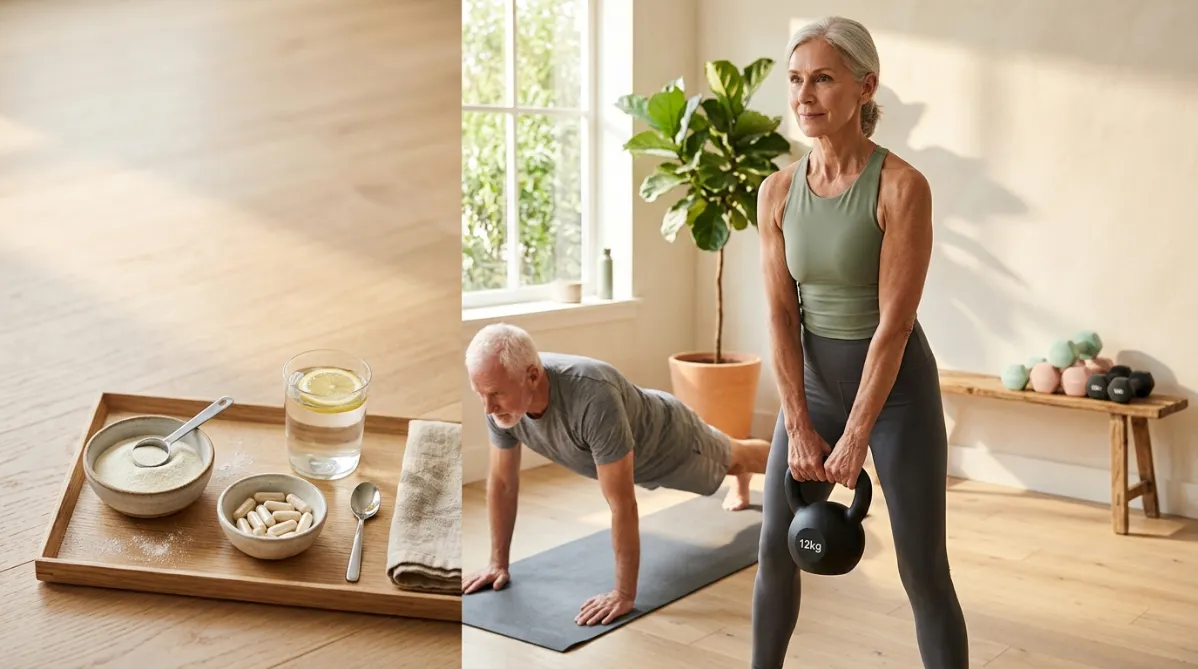
A warm, softly lit modern home gym or sunlit studio, photographed in a clean editorial style. In the center-right of the frame, a silver-haired woman in her mid-60s with a calm, confident expression grips a matte black kettlebell at hip height. She wears a fitted sage-green athletic top and charcoal leggings. Her forearms and shoulders show lean, defined strength rather than bulk. Beside her, slightly out of focus, a man in his late 60s with short white hair and a trim beard performs a controlled bodyweight plank on a pale oak floor.

In the foreground on the left, a minimalist wooden tray holds two small ceramic bowls. One contains fine white powder and the other holds a few cream-colored capsules. Next to them sit a glass of water with a lemon slice and a folded linen towel. A subtle scatter of powder dusts the tray. The foreground is shot with shallow depth of field and a creamy bokeh falloff.

Behind them, tall windows pour in golden morning light, with long soft shadows across the floor. A potted fiddle-leaf fig and a stacked set of pastel-toned dumbbells on a low wooden shelf add texture. The wall is warm off-white plaster with a hint of terracotta in the corner.

The palette is muted and modern: sage green, warm cream, soft terracotta, natural oak, and charcoal, with gentle highlights. The mood is quietly optimistic, focused, and grounded, suggesting strength, vitality, and measured scientific curiosity. The composition leaves clean negative space in the upper-left for a headline overlay. The look is a high-end wellness magazine cover with natural film-like grain, soft contrast, and crisp detail on the hands and kettlebell. There is no text, no logos, and no futuristic elements, only authentic, aspirational realism.
nutrition

Creatina și HMB au făcut persoanele peste 60 de ani mai puternice în 6 săptămâni, nu mai mari

BY DR. GYMBRO ·

Un studiu dublu-orb, încrucișat, pe 30 de adulți activi peste 60 de ani a arătat că suplimentarea cu creatină și HMB crește forța în șase săptămâni, fără să genereze creșteri semnificative ale masei musculare. Analizele sugerează că îmbunătățirile sunt în mare parte de natură neuromusculară. Atenție, însă: eșantion mic, durată scurtă și metoda de evaluare a compoziției corporale (BIA) limitează concluziile.

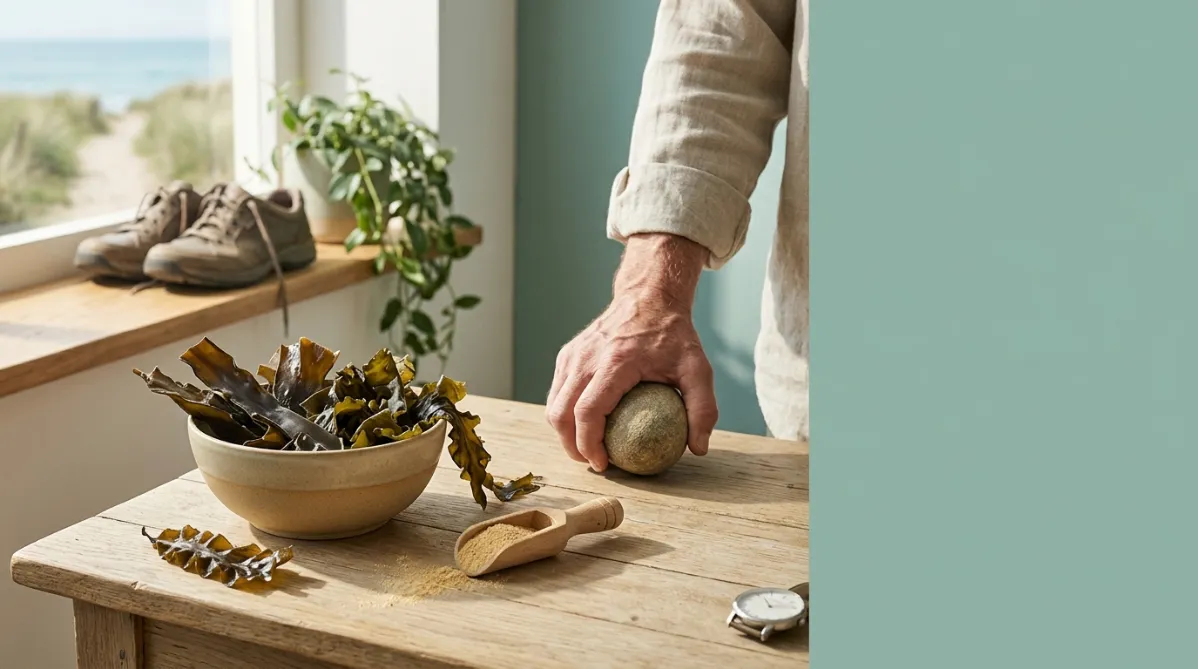
A wide, softly lit editorial photograph of a rustic light-oak table by a sunny window. On it, a handful of dried brown kelp and wakame seaweed fronds spill from a handmade matte ceramic bowl in warm sand tones, their glossy, ruffled edges catching the light. Beside the bowl sits a small wooden scoop holding fine golden-beige powder, with a little of it dusted across the table. In the middle ground, an older adult's weathered but strong hand grips a smooth, rounded river stone, with the knuckles and tendons subtly emphasized to suggest strength and vitality. Only the hand and part of a forearm in a soft oatmeal linen sleeve are visible.

In the background, slightly out of focus, a pair of worn leather walking shoes rests on a windowsill next to a trailing green plant. Beyond the window, a blurred coastal path winds through dune grass toward a pale blue sea, hinting at walking and an active daily life. A simple analog wristwatch lies on the table's edge, a quiet nod to the twelve-week timeline.

The palette is muted and natural: sage green, warm sand, soft ocean teal, and creamy off-white, with deep olive-brown accents from the seaweed. Morning light streams in from the left, casting long, gentle shadows and a faint golden glow. The depth of field is shallow, with crisp focus on the hand and seaweed and a creamy bokeh background. The composition follows the rule of thirds, with the hand and bowl on the left and generous negative space on the right for headline text. The mood is calm and hopeful, with a clean, contemporary wellness-magazine feel. The image is shot as if on a 50mm lens with subtle film grain and a natural, uncluttered, tactile look.
science research

Fucoidan din alge marine a îmbunătățit forța de strângere la persoanele peste 60 de ani în 12 săptămâni

BY DR. GYMBRO ·

Pierderea forței odată cu înaintarea în vârstă este una dintre cele mai comune, dar puțin discutate, aspecte ale îmbătrânirii, iar antrenamentul cu rezistență nu e o opțiune pentru toată lumea. Un nou studiu randomizat pe 12 săptămâni a constatat că un fucoidan cu greutate moleculară mică, administrat la 1.650 mg pe zi, a îmbunătățit semnificativ forța de strângere și performanța la testul de mers pe șase minute la adulții peste 60 de ani. Surprinzător, masa musculară nu s‑a modificat, iar adăugarea de BCAA și vitamina D nu a adus beneficii suplimentare. Studiul a fost mic și a testat un singur produs de marcă, așa că reprezintă o direcție promițătoare, nu o concluzie definitivă. Iată ce a arătat cercetarea și ce înseamnă în practică.

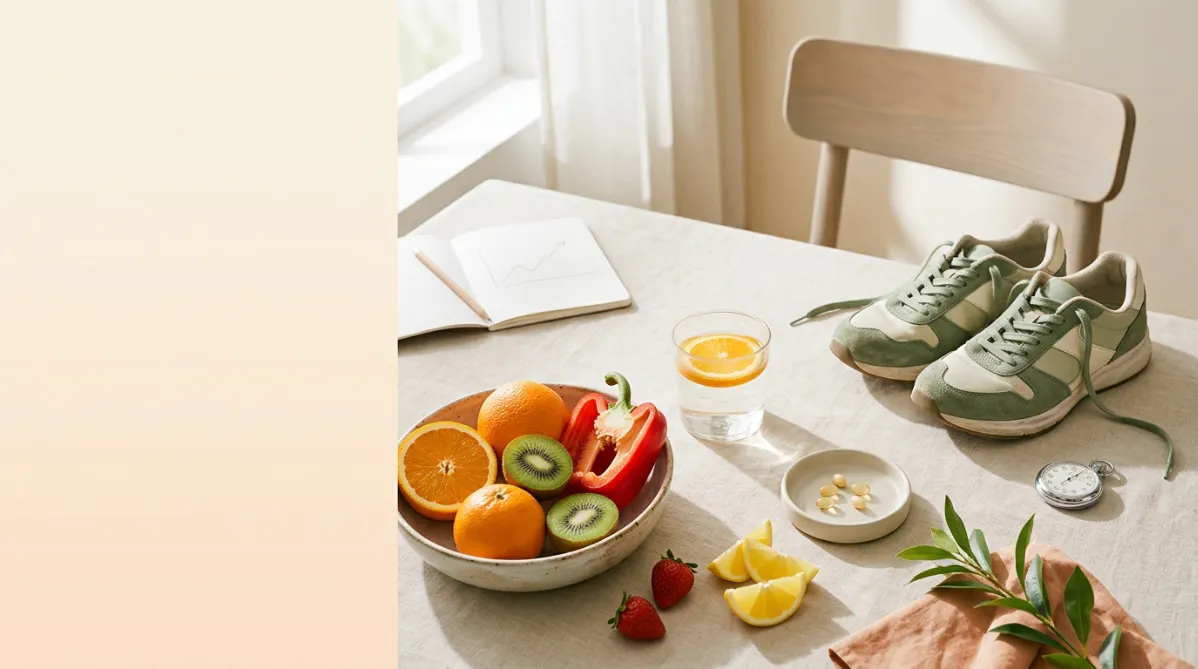
A bright, airy editorial still life photographed from slightly above on a pale oat-colored linen surface, in soft natural window light with gentle long shadows. In the foreground, a rustic ceramic bowl holds halved and whole oranges, glossy red bell pepper slices, and a few kiwi halves with emerald flesh. Beside it sit loose strawberries and a small pile of bright yellow lemon wedges. Their colors pop against the muted neutral palette. A single clear glass of water with a slice of orange rests nearby, catching the light.

On the right side of the frame, a pair of well-worn but clean walking sneakers in sage green and cream sits casually on the surface, with one lace loosely trailing. Behind them, a simple wooden chair with a light ash finish is partly visible and slightly out of focus, a quiet nod to the sit-to-stand test. A small stainless-steel stopwatch lies next to the shoes, with a subtle reflective glint.

A minimalist ceramic dish holds a few small, round, pale-yellow vitamin capsules, kept understated. A sprig of green leaves and a folded cotton napkin in soft terracotta add a warm accent. A small open notebook with a pencil rests in the upper left, its page blank except for faint, abstract pencil lines suggesting a simple rising graph, with no legible text.

The composition leaves generous negative space on the left third for title overlay, with a soft cream-to-peach gradient background. The mood is fresh, healthy, and contemplative, like a modern wellness magazine or a trendy online journal. The color palette is warm citrus orange, sunny yellow, sage green, and soft cream, with gentle terracotta accents. The depth of field is shallow, with crisp focus on the fruit and shoes and a creamy blur in the background. The overall look is clean, natural, and editorial, with fine film-like grain, true-to-life color, and a calm, optimistic tone. Landscape 16:9 framing.
nutrition

Vitamina ieftină care întărește picioarele pe măsură ce îmbătrânești

BY DR. GYMBRO ·

Un studiu britanic amplu, cu peste 5.000 de adulți cu vârste cuprinse între 48 și 92 de ani, a constatat că persoanele cu nivel optim de vitamina C în sânge (≥ 50 µmol/L) mergeau mai repede și se ridicau din scaun mai rapid decât cele cu niveluri scăzute. La femei s‑a observat și o forță de prindere, ajustată pe înălțime, mai mare, în timp ce la bărbaţi nu a apărut nicio corelație. Vitamina C din alimentație a arătat asocieri doar la femei și nu într-un model clar. Designul este transversal, deci nu poate demonstra că vitamina C cauzează o funcție mai bună. Iată ce arată datele, ce nu arată și de ce ar merita să‑ți verifici nivelul sanguin.

This page is available in