Dr. Gymbro
←

#gaa

2 articles
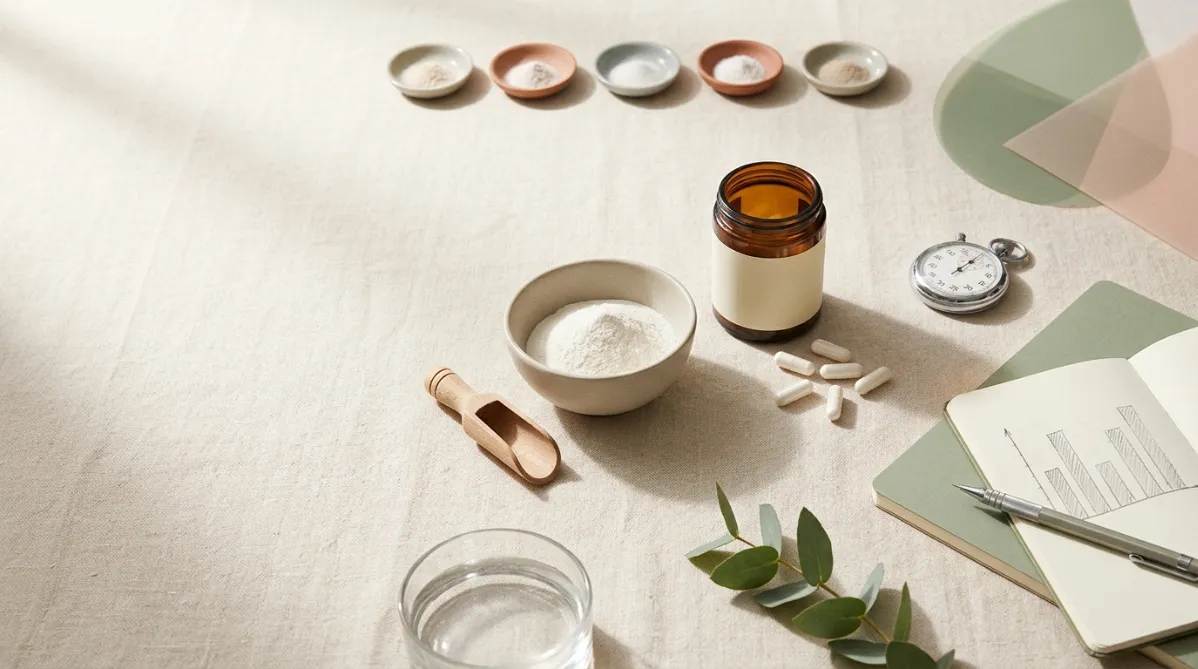
A wide, editorial-style still life photographed from slightly above on a pale oat-colored linen surface, lit by soft morning window light from the left. In the center sits a small matte ceramic bowl holding a mound of fine white powder, with a minimalist wooden scoop resting beside it. Next to the bowl is an open amber glass supplement jar with a plain cream label, and a few white capsules spill across the linen in a loose arc.

To the right, a neatly arranged cluster of analog "study" objects suggests careful measurement: a vintage stopwatch with a clean white face, a slim notebook with a sage-green cover open to a hand-drawn bar chart (blurred, no legible text), and a mechanical pencil lying across the page. A small row of six identical ceramic dishes, each holding a pinch of powder, is lined up along the top edge of the frame to hint at the six-week trial. One dish is slightly out of alignment, a subtle visual cue for ambiguity.

A shallow glass of water and a single sprig of green eucalyptus add a calm, organic note in the foreground. Soft, long shadows fall across the textured linen, and the palette stays restrained: warm cream, soft sage, muted terracotta, pale gray, and touches of amber from the glass jar. A few translucent paper cutouts in two tones (sage and blush) overlap in the upper right corner as a modern graphic accent, evoking overlapping data points without showing any numbers.

Depth of field is shallow, with the bowl and stopwatch in crisp focus and the edges gently softened. The composition leaves generous negative space on the left third for title text overlay. The overall mood is thoughtful, balanced, and quietly skeptical, in the style of a contemporary wellness and science magazine: clean, tactile, minimal, with a subtle film-like grain and natural color grading. No people, no futuristic or sci-fi elements, no readable text or logos.
nutrition

GAA: Booster pentru creier? Rezultatele studiului de 6 săptămâni sunt complicate

BY DR. GYMBRO ·

GAA, precursorul creatinei vândut ca booster pentru creier, a primit în sfârșit primul test serios pe oameni. Într-un studiu dublu-orb pe șase săptămâni, cu 58 de adulți sănătoși, s-au observat unele îmbunătățiri ale timpului de reacție și câteva semnale privind starea de spirit și stresul. Majoritatea testelor cognitive nu au arătat efecte, iar multe rezultate de titlu au fost doar tendințe. Indicatorii de siguranță au fost în regulă, dar studiul a fost mic, explorator și nu a inclus un grup comparativ cu doar creatină.

A landscape editorial photograph of a sunlit kitchen table in soft morning light. An older adult's hands, with silver hair and a cream knit sleeve just visible, rest around a ceramic mug. Beside the mug are two small matte white ceramic dishes. One holds a mound of fine white powder, and the other holds a slightly different crystalline white powder. Two wooden spoons lie next to them. A handheld hand-grip dynamometer in muted sage green sits on a linen placemat in the foreground, slightly out of focus. A small open notebook with a pencil and a pair of round tortoiseshell reading glasses sit nearby, with no legible text.

The tabletop is pale oak with a visible grain. Behind it, a window with sheer curtains lets in warm golden light, and the blurred shapes of a trailing green pothos plant and a pale terracotta vase show in the background. The color palette is warm cream, sage green, soft terracotta, and pale wood, with a touch of muted navy from a folded napkin. The mood is calm, thoughtful, and quietly scientific without any laboratory feel.

The composition follows the rule of thirds. The hands and dishes sit in the left-center, and generous negative space on the right is suitable for a title overlay. Shallow depth of field, 50mm lens look, gentle film grain, and soft shadows. Modern lifestyle-magazine and health-journal aesthetic, natural and unstaged, high-end editorial photography.
nutrition

Precursorul creatinei depășește creatina în forța de prindere la persoanele peste 65 de ani

BY DR. GYMBRO ·

Un mic studiu pilot la adulții peste 65 de ani a arătat că acidul guanidinoacetat (GAA), precursorul direct al creatinei, a îmbunătățit forța de prindere mai mult decât monohidrata de creatină. Studiul a durat 8 săptămâni, a implicat 21 de participanţi care au finalizat și nu a inclus niciun program de exerciții. GAA a demonstrat, de asemenea, o suprimare mai pronunțată a miozostatinului și creșteri ale indicilor musculari măsuraţi prin BIA, deşi aceste valori pot reflecta şi hidratarea. Întrebarea de siguranță rămâne nivelul homocisteinei, deoarece GAA consumă grupuri metil și a crescut această substanță în alte cercetări. În continuare, prezentăm ce a arătat studiul, ce nu poate confirma și de ce monohidrata de creatină rămâne opţiunea dovedită.

This page is available in