Dr. Gymbro
←

#pipecolic acid

1 article
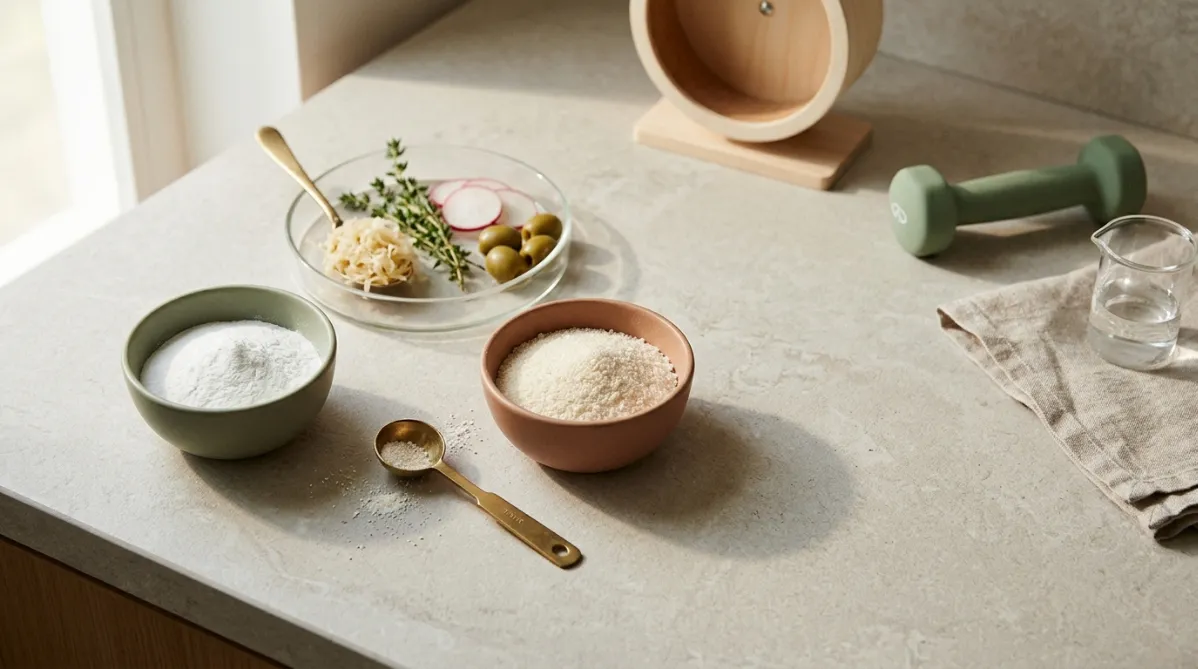
A wide editorial still life on a pale warm-gray stone countertop, lit by soft natural window light from the left. In the center, two small matte ceramic bowls sit side by side. One holds fine white creatine powder, and the other holds a slightly coarser, creamy off-white crystalline powder. Between them, a delicate brass measuring spoon rests at a slight angle, dusted with a few grains. Behind the bowls, a shallow glass dish holds a handful of whole food ingredients that suggest gut health: fermented sauerkraut, a few sprigs of fresh thyme, sliced radishes, and a small cluster of green olives. Their colors are soft and natural. To the right, a minimalist wooden mouse running wheel stands out of focus as a quiet visual nod to the exercise study. Beside it, a small, slim dumbbell in muted sage green rests on the counter. A folded linen napkin in oatmeal tone and a single glass beaker with clear water add a subtle lab-meets-kitchen feel without looking clinical. The palette is calm and modern: sage green, terracotta, cream, soft sand, and touches of warm brass. Shadows are gentle and elongated, with a shallow depth of field that keeps the powders crisp and the background creamy. The composition leaves generous negative space on the right third for title text. The overall mood is clean, thoughtful, and trendy, like a contemporary wellness and science magazine, with fine film-like grain, natural textures, and a refined editorial look.
science research

Compusul microbian PAS învinge creatina la șoareci – dar există o limitare

BY DR. GYMBRO ·

Un studiu recent pe şoareci arată că acidul pipecolic şi succinatul – împreună denumiţi PAS – depăşesc creatina monohidrată în forţa de prindere şi în forţa musculară după şapte săptămâni de alergare pe roată încărcată. Surpriza este că niciunul dintre compuşi nu a crescut masa musculară sau grosimea fibrelor, astfel încât beneficiul este strict funcţional. Ambele suplimente au îmbunătăţit performanţa la alergare comparativ cu grupul de control, dar datele sunt limitate la animale, fără informaţii despre doze sau siguranţă la oameni. Iată ce a arătat studiul şi ce trebuie (şi ce nu) să reţii din el.

This page is available in