Dr. Gymbro
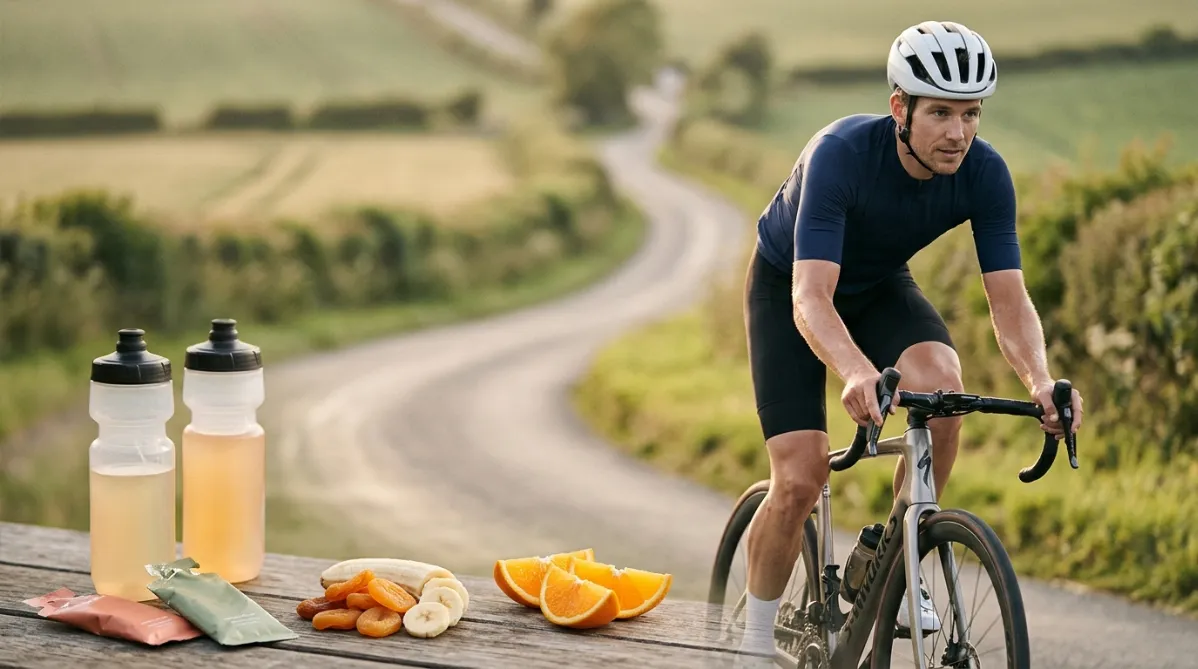
A cyclist in mid-ride, photographed from a low three-quarter side angle on a quiet country road at golden hour, wearing a matte navy jersey and a white helmet, with soft warm light catching the sweat on his forearms. His expression is calm and focused. The road bends gently through rolling green fields, and the background is softly blurred with creamy bokeh.

In the foreground on the left, a styled flat-lay-inspired still life sits on a weathered wooden surface and blends into the scene. It includes two clear water bottles with pale citrus-tinted liquid, a few torn energy gel packets in muted coral and sage, and a small pile of dried apricots and sliced banana. A handful of glossy orange slices adds a bright accent. The shallow depth of field keeps the cyclist sharp in the middle distance while the foreground items are gently softened.

The color palette is warm and editorial: soft peach, muted terracotta, sage green, cream, and deep navy. The light is natural and golden, with long, gentle shadows and a slight film-grain texture, like a high-end lifestyle or sports-science magazine spread. The composition follows the rule of thirds, with the cyclist on the right third and open negative space in the upper left, suitable for headline overlay.

The mood is energetic yet thoughtful, clean and modern, and the photograph feels authentic rather than staged. There are no logos, no readable text, and no futuristic or sci-fi elements. The overall look is crisp, airy, and refined, in the style of a contemporary health and performance journal cover.
Nutrition

Saatte 100 g Karbonhidrat, Bisikletçileri Daha Hızlı Tuttu—Ve Glikojeni Neden Azaltmadı

Coach Ryan · · 4 min read

Herkes, bisiklette daha fazla yakıt almanın daha fazla glikojen tasarrufu demek olduğunu varsayar. Yeni bir randomize çalışma, bu düşüncenin eksik olduğunu gösteriyor. Saatte 100 g karbonhidrat alan bisikletçiler, dört saatlik zor bir sürüşün sonunda, 60 g alanlara göre ölçülebilir derecede daha hızlıydılar. Ancak kas glikojeni seviyeleri neredeyse aynı kalmıştı.

Bu çalışma Güney Danimarka Üniversitesi'nden ve Medicine & Science in Sports & Exercise (2026) dergisinde yayımlanmış. Yüksek karbonhidrat alımının sadece glikojen depolarını doldurmadığını, başka faydaları da olduğunu gösteren bir kanıt daha ekliyor.

Çalışma: Aslında Ne Yaptılar?

  • Tasarım: Randomize, çift kör, çapraz.
  • Katılımcılar: 15 antrenmanlı erkek bisikletçi ve triatlet.
  • Hazırlık: Her deneme öncesi 24 saat boyunca karbonhidrat ağırlıklı diyet.
  • Sürüş: 240 dakikalık, %60 yoğunlukta, sürücünün yeni 15 dakikalık zaman denemesi ortalama gücüne göre ara ara yüksek yoğunluklu interval eklenmiş uzun bir sürüş.
  • Test: Sürüş sonrası 15 dakikalık bir zaman denemesi (TT) ve taze durumdaki 15 dakikalık TT karşılaştırması.
  • Değişken: Saatte 60 g karbonhidrat (CHO60) vs. saatte 100 g karbonhidrat (CHO100), içecek ve jel formunda 1 : 0,8 glukoz‑fruktoz oranıyla.
  • Ölçümler: Sürüş öncesi ve sonrası geniş kas (vastus lateralis) biyopsileri, bütün vücut karbonhidrat oksidasyonu ve kan glukozu.

Çapraz tasarım sayesinde her sürücü her iki koşulu da deneyimledi; bu da karşılaştırmayı temizletti. Ne sporcular ne de araştırmacılar hangi koşulun ne olduğunu bilmiyordu.

Ana Sonuç: 4 Saat Sonra Daha Az Düşüş

Araştırmacılar "dayanıklılık"ı ölçüyordu; yani uzun bir efor sonrası performansın ne kadar düştüğü. İki koşul da 15 dakikalık TT performansında bir düşüş gösterdi, ama azalış büyüklüğü farklıydı:

  • CHO60: yaklaşık -%9,3 (± 2,0)
  • CHO100: yaklaşık -%6,4 (± 1,7)
  • Fark: istatistiksel olarak anlamlı (P = 0,025)

Mutlak olarak, son zaman denemesinde ortalama güç, 100 g/h koşulunda 60 g/h’ye göre 9 W daha yüksekti (P = 0,028). Dokuz watt kağıt üstünde mütevazı görünebilir, ama uzun bir yarışta bu fark kimin tepeye çıkıp kimin geride kalacağını belirleyebilir.

Beklenmedik Sonuç: Glikojen Açıklamıyor

İlk akla gelen tahmin, daha çok karbonhidrat alımının daha az kas glikojeni yakılması olduğu yönündedir. Biyopsiler bu varsayımı çürüttü. Glikojen her iki koşulda da belirgin biçimde azaldı ve sürüş sonrası seviyeler istatistiksel olarak birbirine eşitti:

  • CHO60: 192 ± 99 mmol·kg⁻¹ kuru ağırlık
  • CHO100: 209 ± 111 mmol·kg⁻¹ kuru ağırlık
  • P = 0,56

Bireyler arasındaki dağılım genişti; bu bir "ölçülebilir fark yok" sonucu, etkisiz olduğu kanıtı değil. Yine de yazarlar, 100 g/h alımının kas glikojeni kullanımını değiştirmeden dayanıklılığı artırdığını belirtiyor.

Değişen Şey: Bütün Vücut Karbonhidrat Oksidasyonu

Yüksek alımın gerçekten etkilediği, sürüş ilerledikçe vücudun karbonhidrat yakmayı ne kadar sürdürebildiğiydi:

  • CHO60: Başlangıçta 2,6 ± 0,6 g·dak⁻¹, sonunda 1,9 ± 0,4 g·dak⁻¹
  • CHO100: Başlangıçta 2,6 ± 0,4 g·dak⁻¹, sadece 2,3 ± 0,5 g·dak⁻¹’ye düştü
  • Koşul × zaman etkileşimi: P = 0,047

Kan şekeri her iki koşulda da stabil kaldı (CHO60’da 5,6‑5,7 mmol·L⁻¹, CHO100’de 6,0‑6,1 mmol·L⁻¹). Yani 60 g/h grubu hipoglisemiyle mücadele etmiyordu. 100 g/h avantajı kan şekeri düzeyini korumaktan kaynaklanmıyordu.

Makaledeki veriler, ek alınan karbonhidratın hâlâ yakıt olarak kullanılabildiğini ve sürüşün sonuna kadar karbonhidrat oksidasyonunu sürdürebildiğini gösteriyor. Mekanizma kesin değil; beyin, bağırsak ya da diğer dokularla ilgili açıklamalar spekülasyon olarak kalıyor.

Sizin İçin Ne Anlama Geliyor?

Kimler İçin?

  • Yaklaşık 3 saat ve üzeri uzun oturumlar ya da yarışlar yapan sürücüler ve triatletler. Çalışmada 4 saatlik bir sürüş kullanıldı ve fayda sürüş bitiminde ortaya çıktı.
  • Performansının yarışın son bölümlerinde (son tırmanış, kaçak grup, sprint bitişi vb.) kritik olduğu sporcular.
  • Yüksek karbonhidrat alımına zaten tolerans geliştirmiş, bağırsaklarını eğitmiş atletler.

Doz

  • Saatte 100 g karbonhidrat hedefleyin; çalışmada karşılaştırılan 60 g/h’ye kıyasla.
  • Glukoz ve fruktozu yaklaşık 1 : 0,8 oranında kullanın. İçtiğiniz içecek ve jel etiketlerini bu oran için kontrol edin; pek çok spor içeceği bu karışım üzerine kuruludur.
  • Toplam miktarı içecek ve jel arasında bölüştürün, tek bir kaynağa dayanmamaya çalışın.

Zamanlama

  • Çalışmada karbonhidrat, dört saat boyunca saat başı eşit şekilde verildi. Büyük ve nadir alımlardan ziyade, düzenli küçük dozlar hedefleyin.
  • Sürücüler ayrıca sürüş öncesi 24 saat boyunca karbonhidrat ağırlıklı bir diyetle başladı. Ön‑etkinlik yüklemenizi atlamayın.

Bağırsakınızı Eğitin

  • Bir gecede 60 g/h’den 100 g/h’ye çıkmak mide problemlerine yol açabilir. Alımınızı birkaç hafta içinde adım adım artırarak uzun oturumlarda ve yarış gününe özel ürünlerde alıştırın.
  • 100 g/h’ye rahat ulaşamıyorsanız, iyi tolere edilen daha düşük bir doz, mideyi rahatsız eden yüksek bir dozdan fazlasını verir.

Şimdilik Atlaması Gerekenler

  • 2‑3 saatten kısa oturumlar yapan herkes. Bu çalışma daha kısa sürelileri test etmedi.
  • Yüksek karbonhidrat alımında sürekli gastrointestinal sorun yaşayan sporcular. Önce bireysel bir uzmana danışın.
  • Karbonhidrat metabolizmasını etkileyen bir tıbbi durumu olanlar; bir klinisyen ya da diyetisyenle görüşmelidir.

Kısıtlamalar

Tasarıma bakıldığında güçlü bir çalışma, ama örneklem çok küçüktür: 15 erkek, hepsi eğitimli bisikletçi ya da triatlet. Sonuçlar doğrudan kadınlara, daha yaşlı atletlere, amatör sürücülere ya da farklı sporlara uygulanamaz. Karşılaştırma sadece 60 g/h vs. 100 g/h olduğu için, 80 g/h’nın faydaların büyük kısmını yakalayıp yakalamadığını söylemek mümkün değil. Glikojen verileri de sürücüler arasında geniş bir değişkenlik gösterdi; bu da “fark yok” sonucunun ne kadar kesin okunabileceğini sınırlıyor.

Yine de çalışma, 60 g/h’yi bir tavan olarak kabul eden sürücülere önemli bir mesaj veriyor. Yakıt, glikojen ölçümüyle görülmeyen şekillerde uzun bir sürüşe yardımcı olabilir. Üç saatten uzun yarışıyorsanız ve bağırsaklarınızı eğittiyseniz, 1 : 0,8 glukoz‑fruktoz oranıyla saat başı 100 g karbonhidrat denemek antrenmanda ciddi bir test değeridir.
Original study

Read the original research on pubmed.ncbi.nlm.nih.gov →

This article summarizes published research for general information. It is not medical advice.

CR

Written by

Coach Ryan

Coach Ryan writes for Dr. Gymbro: science-backed fitness, nutrition & performance.

Related Articles

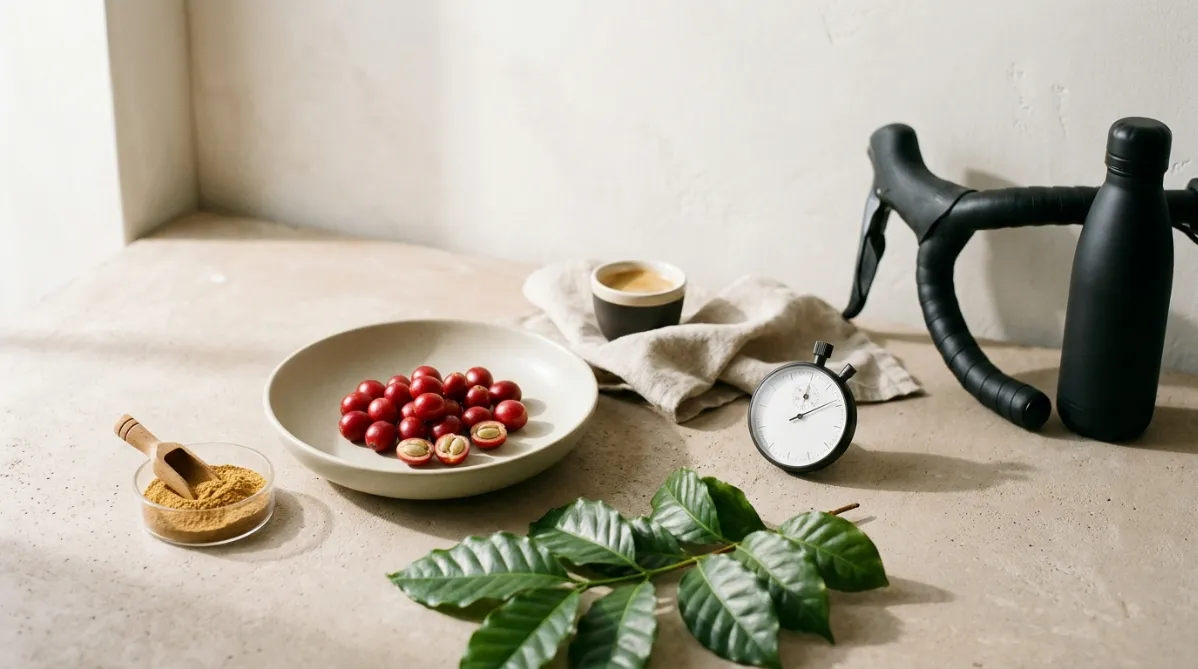
A wide editorial still life on a pale, warm-toned concrete surface in soft morning window light. In the center-left, a shallow matte ceramic bowl holds a small pile of bright red coffee cherries with glossy skins, a few sliced open to reveal pale mucilage and paired green-tan beans. Beside it, a small glass dish of fine, golden-brown powdered extract with a tiny wooden scoop resting on its edge. A sprig of coffee plant leaves, deep green and waxy, arcs across the foreground.

On the right side, slightly out of focus, a sleek road cyclist's handlebar and a matte black water bottle lean against a light plaster wall, suggesting athletic training without showing a person. A minimalist analog stopwatch with a clean white face and thin black hands sits in the mid-ground, angled toward the camera, its hands paused near the fifteen-minute mark. A folded linen cloth in oatmeal beige and a single small espresso cup with a thin crema ring add quiet texture.

The color palette is restrained and modern: cherry red, sage green, cream, soft terracotta, and charcoal accents. Light comes from the left, casting long, gentle shadows with a subtle warm glow and a hint of dust in the air. Shallow depth of field with crisp focus on the cherries and stopwatch, creamy bokeh in the background. Composition leaves open negative space in the upper right for a headline overlay. The overall feel is a clean, trendy health-and-science magazine cover: tactile, natural, minimal, and calm, shot in a 16:9 landscape frame with fine film-like grain and true-to-life tones.
nutrition

Kahve Kirazı Ekstresi: 200 mg Kafein Bisiklet Performansını %4,6 Artırdı

BY DR. GYMBRO ·

Tam kahve kirazı ekstresinden düşük bir 200 mg kafein dozu, antrenmanlı bisikletçilerin 15 dakikalık bir zaman denemesinde %4,6 daha fazla iş yapmalarını sağladı. Ancak glikojenin yeniden doldurulmasını hızlandırdığı yönündeki yaygın inanç doğru çıkmadı. Bu randomize, çift kör, çapraz geçiş denemesi yalnızca 12 bisikletçiyi içeriyordu ve endüstri tarafından finanse edildi; ayrıca sade kafeinle bir karşılaştırma grubu bulunmadı. İşte verilerin gösterdikleri, göstermedikleri ve kimlerin bu denemeyi değerlendirebileceği.

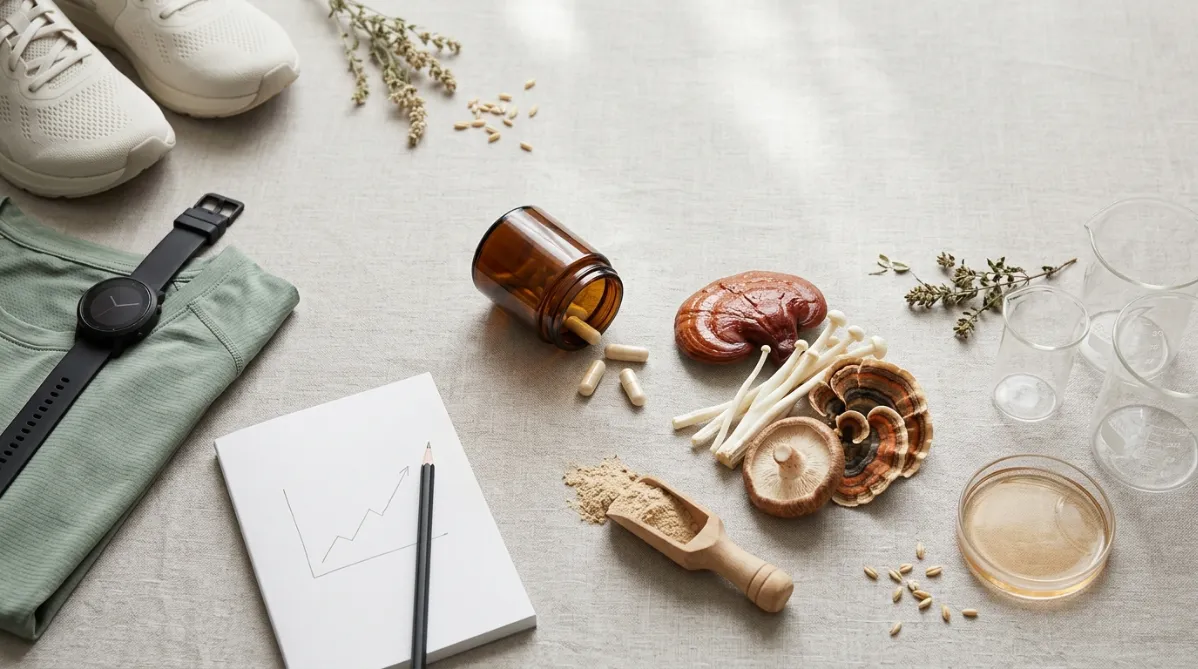
A wide, editorial-style flat lay photographed from above on a pale warm-gray linen surface in soft natural window light. At the center, a small open amber glass jar tips gently onto its side, spilling a few cream-colored capsules across the fabric. Next to the jar sits a loose arrangement of fresh mushrooms: a cluster of golden-tan reishi with glossy, lacquered caps, a few slender white enoki stems, a halved shiitake showing its pale gills, and a curl of turkey tail with concentric bands of rust, cream, and charcoal. A small wooden scoop holds a pile of fine beige mushroom powder.

On the left third of the frame, a matte black sports watch with a minimal face lies beside a folded sage-green running shirt and a pair of lightweight off-white running shoes, hinting at athletic training without showing a person. A slim white notebook with a single pencil rests nearby, open to a blank page with a faint hand-drawn line graph trending upward, in thin graphite strokes.

On the right side, a pair of clear glass beakers and a single small petri dish with a soft amber-tinted liquid add a subtle laboratory note, kept calm and organic. A single sprig of dried herbs and a few scattered oat-colored grains add texture.

The palette is earthy and refined: oatmeal, soft sage, terracotta, warm amber, and charcoal accents against the muted neutral background. Shadows are soft and diffused, with a gentle highlight on the glass and the glossy reishi cap. The composition leaves generous negative space in the upper right for a headline overlay. Shallow depth of field blurs the edges slightly, while the central mushrooms and capsules stay crisp. The overall feel is modern, clean, and trendy, like a wellness and science magazine cover, with tactile natural textures, minimal styling, and a quiet sense of curiosity and skepticism.
science research

Bir Mantar Kapsülü VO2max'i %14,8 Artırdı—Ama Büyük Bir Kısıtlama Var

BY DR. GYMBRO ·

40 gün boyunca bir mantar kapsülü kullanıp %14,8’lik bir VO2max artışı elde etmek kulağa gerçek dışı geliyor. *Antioxidants* dergisindeki yeni bir makaleye göre, günde 320 mg beta‑glukan içeren çoklu mantar ekstresi alan 50 genç erkek sporcu, VO2max değerini 46,26 mL·kg⁻¹·dak⁻¹’den 53,12 mL·kg⁻¹·dak⁻¹’ye yükseltmiş. Ancak araştırmada plasebo grubu, randomizasyon ve körleme bulunmuyor; sporcular aynı zamanda antrenmanlarına devam etmiş. Hücre deneyleri de sadece tek bir bileşiği incelemiş, kapsülü değil. İşte bulgular, sınırlamaları ve dikkat edilmesi gereken noktalar.

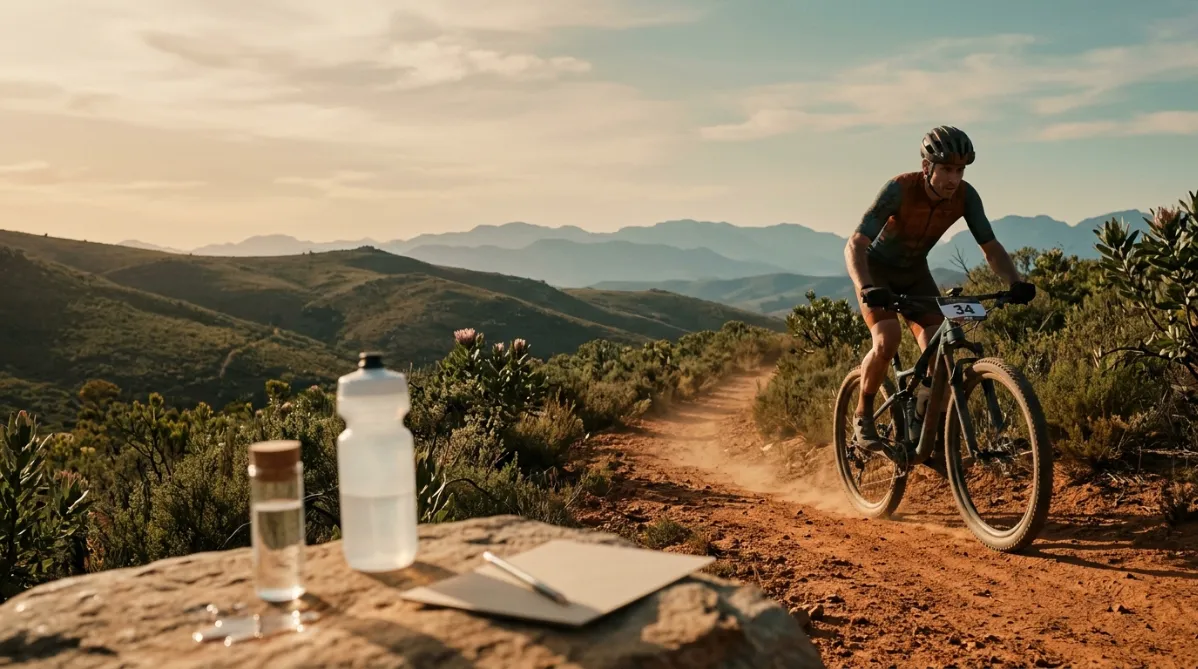
Wide landscape editorial photograph of a mountain biker mid-ride on a dusty red-orange singletrack trail in the South African Western Cape, golden hour light raking across the scene. The rider is in sharp focus on the right third of the frame, wearing a weathered cycling kit with a race number plate on the handlebars, dust kicking up from the rear tire. Behind them, rolling hills covered in fynbos shrubland and silhouetted protea plants fade into soft, hazy blue mountains. Warm amber sunlight creates long shadows and a soft rim light around the rider and bike.

In the lower left foreground, slightly out of focus, a small minimalist glass vial and a clear water bottle sit on a flat sun-bleached rock, with a few drops of liquid catching the light. Next to them, a simple matte paper notecard and a pencil suggest data collection, with no legible text. The vial and bottle are clean, understated, and modern, with no branding.

The color palette is earthy and refined: terracotta, ochre, sage green, dusty teal sky, and cream highlights. The composition uses shallow depth of field, a generous negative space in the upper left sky for headline overlay, and subtle film grain. The mood is contemplative, skeptical, and quietly sophisticated, like a feature photograph from a high-end outdoor sports and science magazine. Natural, candid, cinematic, shot on a 50mm lens with soft contrast and muted saturation. No futuristic elements, no glowing effects, no molecular graphics, no text.
science research

Ketone IQ Cape Epic'te Keton Seviyesini Yükseltti, Ancak Başka Bir Etki Sağlamadı

BY DR. GYMBRO ·

8 günlük Cape Epic'te sürücüler, günde iki kez Ketone IQ içti ve kan ketonları yaklaşık 1 mM seviyesine ulaştı; fakat yorgunluk, kalp atışları, reaksiyon süresi ve iyileşme açısından placebo içenlerle aynı sonuçları gösterdi. Çift kör deneme, R‑1,3‑butanediol'ü laboratuvar yerine gerçek yarış koşullarında test etti. Yazarlar, hafif ketozun fayda sağlamadığını ve butanediol'ün keton esterleriyle karıştırılmaması gerektiğini vurguluyor. Sadece 18 sürücüyle yapılan bu sınırlı çalışma, pahalı bir keton içeceğiyle iyileşme bekleyen herkes için çarpıcı bir veri sunuyor.

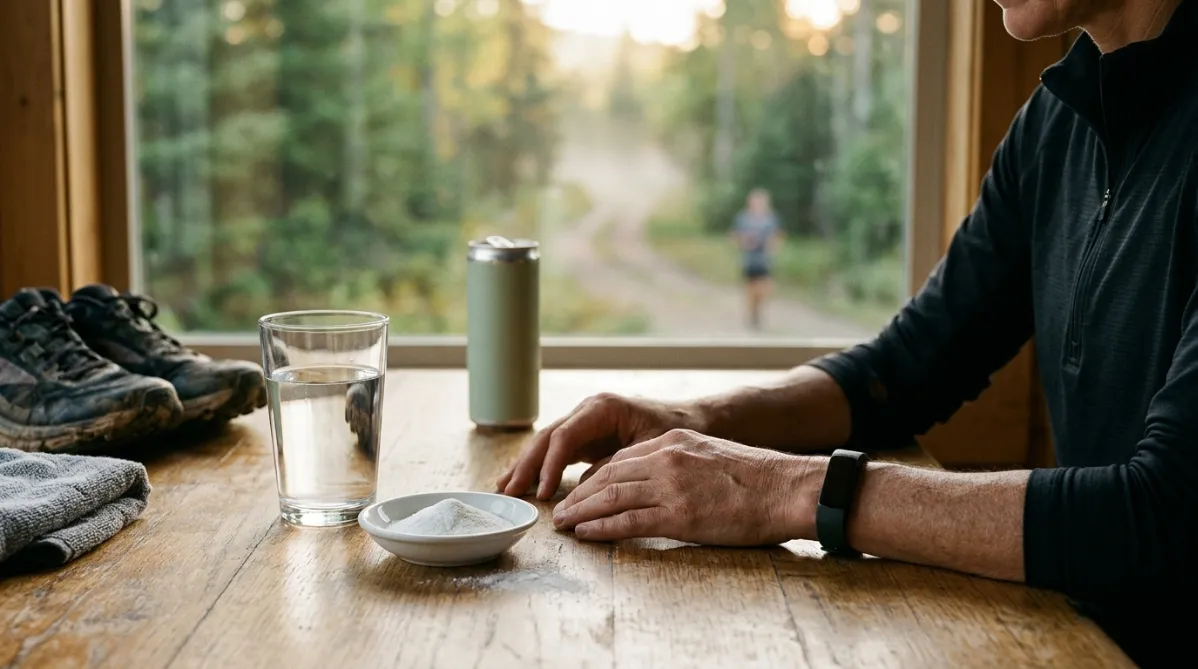
A landscape editorial photograph of a lone runner's hands resting on a weathered wooden table beside a small white ceramic dish of fine white powder and a clear glass of water, shot in soft morning light. A slim matte aluminum energy drink can, unbranded with a minimalist pale sage-green label, stands slightly out of focus in the background, with a single scoop of powder dusted lightly on the tabletop. A pair of worn running shoes and a folded gray towel sit at the edge of the frame. Through a large window behind them, a blurred misty trail winds through green trees at sunrise, with warm golden light spilling across the scene.

The color palette is calm and modern: creamy off-white, sage green, warm honey gold, and soft charcoal. The composition follows the rule of thirds, with the dish and glass in the lower left third and generous negative space on the right for a title overlay. The depth of field is shallow, with a crisp focus on the powder's delicate texture and tiny glints of light on the glass rim. The mood is clean, thoughtful, and quietly energetic, like a contemporary health and science magazine feature. Natural grain, subtle film-like softness, and gentle shadows give it an authentic lifestyle-editorial look. There are no text, logos, or futuristic elements, only tactile, real-world materials like wood, ceramic, glass, cotton, and metal.
nutrition

Enerji İçeceği İçeriği Tek Başına Dayanıklılığı Artırıyor

BY DR. GYMBRO ·

Herkes kafeinden bahsediyor, ama enerji içeceği kutusundaki diğer bileşen sesini hiç çıkarmadan tek başına işe yarayabilir. 2018'de yayınlanan 10 çalışmanın meta‑analizi, izole taurinin dayanıklılık performansını iyileştirdiğini (Hedges' g = 0,40) ve tek bir dozun yeterli olduğunu gösterdi. Doz (1–6 g) ya da takviyenin süresi fayda üzerinde anlamlı bir fark yaratmadı. Ancak kanıt tabanı küçüktür ve güven aralıkları geniştir; bu yüzden sonuç umut verici ama kesin bir garanti değildir.

This page is available in