Dr. Gymbro
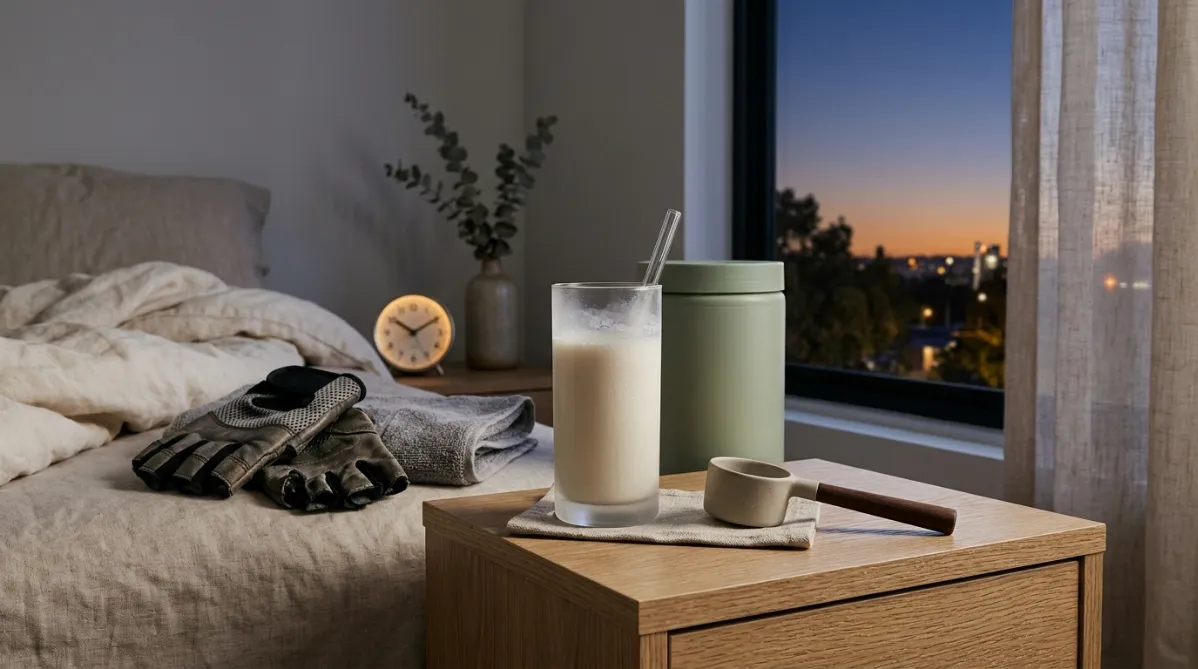
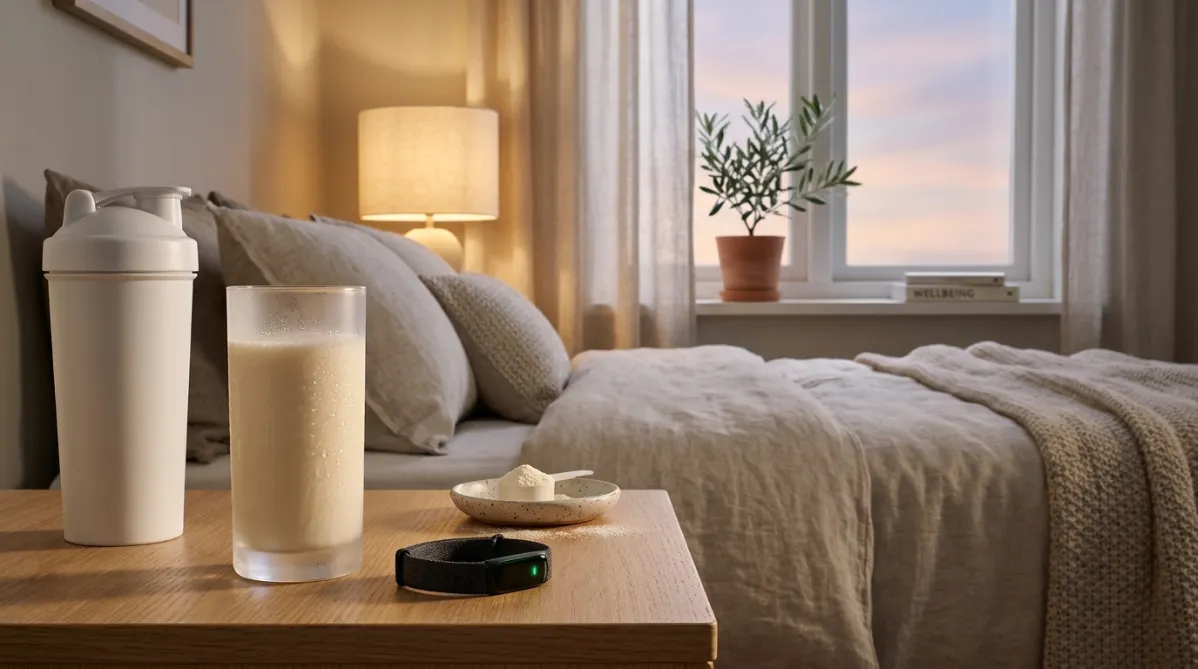
A softly lit bedside table in a calm, modern bedroom at dusk, photographed in wide landscape format with shallow depth of field. In the foreground, a matte white shaker bottle sits beside a tall frosted glass of creamy, pale vanilla-colored protein shake, with a few condensation droplets catching warm light. Next to the glass rests a slim fitness band on a dark charcoal fabric strap, its small LED glowing a gentle green, lying casually on a light oak wooden surface. A small scoop of fine white protein powder rests on a ceramic dish nearby, with a light dusting of powder on the wood.

In the soft-focus background, a neatly made bed with oatmeal-colored linen bedding and a textured knit throw blanket. A sheer curtain filters the last peach and lavender light of evening from a large window. A small potted olive branch in a terracotta vase and a closed paperback book add a quiet editorial touch. A bedside lamp with a warm, cream-colored shade casts a golden glow across the scene and creates gentle highlights on the glass.

The palette is muted and harmonious: warm cream, soft sand, oatmeal beige, faint sage green accents, and touches of dusty lavender in the window light. The mood is peaceful, reassuring, and clean, like a contemporary wellness magazine or a trendy health journal feature. Lighting is natural and cinematic, with soft shadows and a subtle film-like grain. The composition follows the rule of thirds, with the shake and band on the left third and open negative space on the right for headline overlay. Minimalist, Scandinavian-inspired styling, high-end lifestyle photography, crisp details, and a tranquil, premium editorial feel.
Recovery

Казеїн перед сном не зіпсує ваш сон: дані WHOOP доводять

Dr. Gymbro · · 4 min read

Ви, ймовірно, чули попередження: важкий протеїновий коктейль одразу перед сном змусить вас крутитися в кроваті і залишить нездорово відновленими. Нове рандомізоване дослідження серед елітних спортсменок‑жінок випробувало цю ідею за допомогою пристроїв WHOOP. Результат виявився складнішим, ніж просте «так» чи «ні»: коктейль не зіпсував сон, але й не покращив його.

Міф під мікроскопом

Харчування перед сном стало популярною тактикою відновлення. Повільно засвоювані білки, такі як казеїн, обирають, бо вони мають постачати амінокислоти протягом ночі. Тривога полягає в тому, що калорії ввечері можуть порушити сон, підвищити частоту серцебиття або зменшити ефективність нічного відновлення.

Дослідники з Університету Флориди, спільно з колегою зі Стейт‑Університету Південної Дакоти, вирішили це перевірити. У їхній статті, опублікованій у Journal of the International Society of Sports Nutrition (Paterson et al., 2026), зазначається, що рандомізованих, подвійних сліпих крос‑овер‑випробувань, порівняльних за макронутрієнтами перед сном у елітних спортсменок‑жінок, було дуже мало.

Як проводилося дослідження

Було набрано 25 спортсменок‑студенток NCAA Division I у віці 18‑25 років; 21 учасниця завершила випробування. Кожна спортсменка проходила чотири умови у рандомізованому, подвійно сліпому, плацебо‑контрольованому крос‑овер‑дизайні:

  • 40 г казеїну (160 ккал)
  • 40 г альфа‑лактоальбуміну (протеїн з сироватки, 160 ккал)
  • 40 г вуглеводів (160 ккал)
  • 40 г плацебо (≈ 5 ккал)

Кожна умова тривала три послідовні ночі, між ними був щонайменше триденний «wash‑out». Усього протокол займав 4‑8 тижнів. Спортсменки вживали добавку приблизно за 2 години після останнього прийому їжі і за 30 хвилин до сну – це був їхній останній калорійний прийом за день.

Що вимірювали

Об’єктивні дані збирали за допомогою браслету WHOOP 4.0: загальний час сну, латентність засинання, ефективність сну, частота серцебиття у стані спокою та варіабельність серцевого ритму (HRV). Кожного ранку спортсменки заповнювали анкети про суб’єктивну якість сну, час, потрібний для засинання, і відчуття відновлення. У невеликій підгрупі з шести учасниць сліпі безперервні глюкометри вимірювали рівень глюкози вночі.

Числа: по суті, нічого суттєвого

Не було виявлено значних ефектів для жодного з об’єктивних показників сну чи відновлення (усі p > 0,05). За чотирьох умов:

  • Загальний час сну: 7,47 – 7,62 години
  • Ефективність сну: 91,5 % – 92,0 %
  • Частота серцебиття у стані спокою: 53,5 – 54,1 уд/хв
  • HRV: 98,2 – 103,9 мс

Суб’єктивні дані розповіли ту ж історію. Оцінка якості сну коливалася від 69 % до 75 %, самозвітний час засинання – від 16 до 20 хвилин, а сприйняте відновлення – від 61 % до 66 %. Жодна з цих змін не була статистично значущою між умовами.

У під‑аналізі глюкометрії рівень глюкози змінювався протягом ночі (p = 0,008), що очікувано. Однак різниці між умовами не виявлено (p = 0,187) і не було взаємодії «лікування‑час» (p = 0,550).

Автори зробили висновок, що три ночі прийому казеїну, альфа‑лактоальбуміну або вуглеводів перед сном не погіршували об’єктивні та суб’єктивні показники сну чи відновлення у порівнянні з плацебо.

Неочікуваний поворот: нічого не підвищило сон

Це не історія «протеїн перед сном покращує сон». Жодна з активних умов не перевершила плацебо за жодним показником сну. Якщо вам потрібен казеїн для синтезу м’язового протеїну, дотримання дієти чи досягнення добової норми білка, це дослідження свідчить, що турбуватись про сон не треба. Якщо ж ви сподівалися, що протеїн стане засобом для кращого сну, дані цього дослідження це не підтверджують.

Дослідження також не вимірювало м’язові результати, продуктивність чи зміну складу тіла, тому не може сказати, чи передсонний протеїн допомагає відновленню в контексті набору м’язової маси.

Обмеження, про які варто знати

  • Короткочасний вплив: Кожна умова тривала лише три ночі. Довгострокові ефекти залишаються невідомими.
  • Дані зі смарт‑пристроїв: WHOOP зручний і практичний, але це не полісомнографія – золотий стандарт лабораторного вимірювання фаз сну.
  • Вузька популяція: Усі учасники – молоді, елітні спортсменки‑коллежанки, які вже добре сплять (≈ 7,5 год/ніч, ефективність > 91 %). Результати можуть не поширюватись на людей зі слабким сном, старших, чоловіків чи не‑спортсменів.
  • Мала підгрупа CGM: Лише шість спортсменок мали безперервний моніторинг глюкози, тому результати суб‑аналізу слід розглядати як попередні.
  • Розмір вибірки: 21 учасниця – досить скромно для виявлення незначних ефектів.
  • Декларування інтересів: Один із авторів є неплатним членом International Protein Board.

Практичні висновки

Доза: У дослідженні використовували 40 г протеіну чи вуглеводів (160 ккал). Це кількість, про яку є дані в цій роботі.

Час: Спортсменки вживали добавку приблизно за 30 хвилин до сну, що становить близько 2 годин після останнього прийому їжі – останні калорії дня.

Для кого: Атлети та активні люди, які хочуть використати передсонне харчування для досягнення білкових чи енергетичних цілей. У групі молодих жінок‑атлеток, які добре сплять, це не шкодило сну, HRV чи частоті спокою.

Кому варто утриматись або бути обережним:

  • Людям з алергією на молочні продукти або тим, хто не переносить молочні білки, бо обидва активних варіанти походять з молока.
  • Ті, хто особисто помітив, що пізня вечеря порушує їх сон. Це середні дані, індивідуальна реакція може відрізнятись.
  • Ті, кому не потрібні додаткові калорії або протеїн. Оскільки користі для сну не виявлено, немає підстав додавати його лише заради кращого нічного відпочинку.

Висновок: Твердження «протеїновий коктейль перед сном руйнує ваш сон» не підтверджується у цьому випробуванні. Ставте передсонний коктейль у роль інструменту харчування, а не «хаку» для сну, і контролюйте власні дані WHOOP чи іншого трекера, якщо хочете зрозуміти, як ви реагуєте.
Original study

Read the original research on pubmed.ncbi.nlm.nih.gov →

This article summarizes published research for general information. It is not medical advice.

DG

Written by

Dr. Gymbro

Dr. Gymbro writes for Dr. Gymbro: science-backed fitness, nutrition & performance.

Related Articles

A landscape editorial still life shot from slightly above on a pale oat-colored linen surface, lit by soft morning window light with gentle long shadows. On the left, in warm golden sunlight, sits a small ceramic bowl of dried ashwagandha root pieces and a scatter of fine tan powder. Beside it are a few rough, rosy-gold slices of Rhodiola rosea root and a sprig of tiny succulent-like green leaves with yellow blossoms. A matte sand-colored stoneware mug of steaming tea and a simple glass of water stand nearby. A small amber glass bottle with a minimal unbranded label tips out two capsules.

The right side of the frame is cooler and bluer, as if dusk is arriving. It holds a muted indigo ceramic dish with a few pale capsules, a small bundle of dried chamomile flowers (the source of apigenin), and a few green tea leaves. A slim, unlit beeswax candle and a folded charcoal wool blanket suggest evening. The warm and cool halves meet softly in the center, where a rumpled white cotton napkin sits beneath a small brass spoon.

In the background, out of focus, a wooden shelf holds a worn paperback, a small potted plant, and the edge of a kettlebell in matte black, hinting at an active lifestyle. Subtle film grain, shallow depth of field, and a muted palette of cream, terracotta, sage green, and deep indigo give it a clean, modern wellness-magazine feel. Leave generous negative space in the upper third for a headline overlay. No text, no logos, no people.
recovery

Ашваганда + родіола спрацювали. Вечірній стек для сну не дав результату

BY DR. GYMBRO ·

Новий чотиригруповий дослід кине виклик шанувальникам комбінованих добавок. У 103 здорових, активних людей ранкове поєднання 600 мг ашваганди та 300 мг *Rhodiola rosea* знизило сприйнятий стрес, покращило якість сну і підвищило настрій. Популярний вечірній стек – магній L‑треонат, L‑теанін і апігін – нічого не додав, а їх спільний прийом навіть погіршив позитивний афект. Дізнайтеся, що саме виявило дослідження, чому його треба розглядати обережно (лише два тижні, малі групи) і як це може бути корисним для спортсменів.

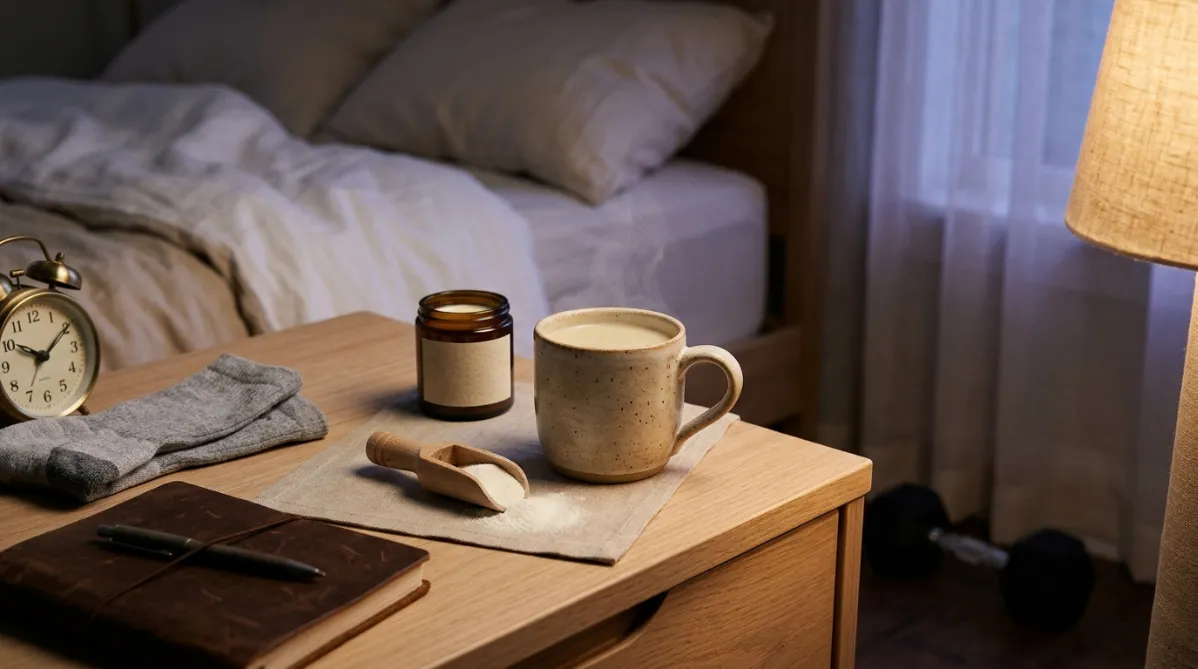
A softly lit bedroom nightstand scene in landscape format, photographed in a modern editorial lifestyle style. In the center of the frame sits a handmade ceramic mug in warm oatmeal tones, filled with a pale creamy drink. A thin wisp of steam rises from it. Beside the mug, a small wooden scoop rests on a matte linen-textured surface with a fine dusting of white collagen powder. A minimal amber glass jar with a cream label stands just behind, with no readable text. The nightstand is pale oak with subtle grain.

To the left, a neatly folded pair of gray cotton athletic socks and a worn leather-bound training journal with a pen on top hint at a lifter's routine. A small brass alarm clock reads about 9:30 and is slightly out of focus. On the right side, a sheer curtain filters the last blue-violet twilight from a window, while a warm bedside lamp with a linen shade casts a honey-colored glow across the scene. The glow contrasts gently with the cool dusk tones.

Behind the nightstand, the edge of a rumpled bed with soft white and sand-colored bedding is visible, with a dumbbell resting quietly on the floor in the soft-focus background to suggest recovery after training. The depth of field is shallow, with the mug and scoop in crisp focus and the background dissolving into creamy bokeh.

The palette is calm and earthy: warm beige, soft cream, muted terracotta, and dusk blue accents. The lighting is cinematic and low-key, with gentle highlights on the ceramic rim and a subtle rim light on the steam. The composition follows the rule of thirds, with the mug placed on the left third and generous negative space on the right for title overlay. The mood is serene, restorative, and quietly scientific without any clinical elements. The finish is clean, high-end, and magazine-worthy, with fine film grain and natural color grading, like a wellness feature in a contemporary online journal.
recovery

Трюк з 15 г колагену перед сном, який знизив нічні пробудження на 27 %

BY DR. GYMBRO ·

Постійні пробудження вночі підривають відновлення, навіть якщо тренування та харчування налаштовані ідеально. Маленьке дослідження виявило, що 15 г колагенових пептидів, прийнятих за годину до сну, знизили кількість прокидань, зафіксованих полісомнографією, з 29,3 до 21,3 – приблизно на 27 % менше. Учасники також показали кращі результати вранці у тесті Струпа. Однак загальна тривалість сну, латентність сну та ефективність сну не змінилися, а дослідження охопило лише 13 чоловіків протягом 7 ночей з продуктом, наданим індустрією. Ось що дійсно показують дані і як безпечно випробувати це спортсменам.

A quiet bedside scene at dusk, shot in soft natural light with a shallow depth of field. A tall frosted glass of creamy, pale-white shake sits on a light oak nightstand, with a thin film of condensation on the glass and a faint milky residue near the rim. Beside it, a matte ceramic scoop rests on a small linen coaster. A minimalist tub of unbranded protein powder in muted sage green sits slightly out of focus in the background.

To the left, a neatly made bed with oatmeal-colored linen sheets and a rumpled cream duvet. A pair of worn lifting gloves and a folded gray gym towel sit on the edge of the bed, suggesting an evening workout just finished. A small analog alarm clock reads about 10:30 PM, its soft face glowing faintly. A sprig of dried eucalyptus in a small stoneware bud vase adds an organic touch.

Through a large window on the right, deep indigo twilight fades into a warm amber horizon, and the last light spills across the wall in long, gentle gradients. A sheer curtain moves slightly. The palette is warm neutrals (cream, oak, sand, soft terracotta) with a few muted blue-violet accents from the evening sky.

The composition uses the rule of thirds, with the glass at the left-center foreground and generous negative space on the right, where headline text could sit. The mood is calm, restorative, and editorial, like a modern wellness and nutrition journal. The lighting is gentle and diffused, with subtle film grain and slightly lifted shadows. The textures of linen, wood, glass, and ceramic are crisp. The image is clean and uncluttered, with no text, logos, or people, and no futuristic or sci-fi elements.
nutrition

40 г нічний шейк: що робить казеїн перед сном

BY DR. GYMBRO ·

Тренування ввечері, а потім голодування протягом восьми годин: чи шкодить це відновленню? У 2012‑му дослідженні 16 молодих чоловіків отримали 40 г казеїну за 30 хвилин до сну і зафіксували, що протягом ночі білок був перетравлений і всмоктаний, синтез білка у всьому організмі зріс, а чистий білковий баланс перейшов з від’ємного в позитивний. Синтез м’язового білка підвищився приблизно на 22 %, хоча статистично це лише межове значення. Ось що означають ці результати, чого вони не доводять і як їх застосувати на практиці.

A sunlit, minimalist home gym corner photographed in soft golden morning light, with a young athletic man seated on a wooden bench, leaning forward with his elbows resting on his knees, catching his breath after a hard leg session. He wears a muted sage-green t-shirt and charcoal shorts, his face turned slightly away from the camera, calm and focused. A matte ceramic dish in the foreground holds a few small, translucent golden softgel capsules, with a glass of water beside it catching the light and casting a soft caustic shadow across a pale oak floor. Behind him, a loaded barbell rests on a squat rack, slightly out of focus, and a tall window pours warm sunlight diagonally across the scene, creating long gentle shadows and a hazy glow. A small potted green plant sits on a shelf at the edge of the frame. The color palette is warm and editorial: cream, soft gold, sage green, pale wood, and charcoal accents. Shallow depth of field, with crisp focus on the capsules and glass in the lower third and a creamy bokeh background. The composition leaves generous negative space on the right side for a headline overlay. The mood is clean, modern, and aspirational, like a high-end wellness magazine or a trendy health journal feature. Shot on a 50mm lens, natural light, fine film grain, subtle matte finish, landscape 16:9 framing.
recovery

Вітамін D прискорює відновлення сили у чоловіків без дефіциту

BY DR. GYMBRO ·

Чоловіки з цілком нормальним рівнем вітаміну D все ж відновлювали силу швидше після інтенсивного тренування ніг, коли щодня приймали 4 000 МО. У цьому рандомізованому плацебо‑контрольованому дослідженні 28 активних чоловіків показали приблизно 8 % кращий пік ізометричної сили вже через 24 години. Маркери м’язового пошкодження (ALT і AST) підвищувалися менш виразно, але біль у м’язах не знизився.

This page is available in