Dr. Gymbro
A wide, editorial-style flat lay photographed from slightly above on a pale oak gym bench with a soft matte finish. On the left, a small white ceramic cup of black coffee sits on a matching saucer, with a thin curl of steam rising and catching warm window light. Beside it is a second, slightly larger handleless stoneware mug in muted sage green, also filled with coffee, so the pair suggests one to two cups. In the center-right foreground rests a sleek matte-black steel barbell plate, partly overlapping a brushed-steel dumbbell with fine knurling. A folded charcoal gym towel and a clean white chalk-dusted wrist strap lie casually to one side. A small scatter of whole roasted coffee beans spills across the bench in front of the cups, glossy and deep brown. Near the bottom edge, a minimalist analog kitchen scale in soft cream with a thin black needle hints at precise dosing, without any readable numbers or text.

Soft morning sunlight streams in from the upper left, creating long, gentle shadows and a warm golden glow against cool neutral tones. The background is a softly blurred, airy home gym or boutique training studio with out-of-focus squat rack uprights, pale concrete walls, and a leafy green plant in a terracotta pot adding a touch of organic color. The palette is restrained and modern: warm cream, espresso brown, charcoal, sage green, and hints of brushed silver. Shallow depth of field keeps the cups and beans tack sharp while the background melts into creamy bokeh. The composition leaves generous negative space on the right third for a title overlay, with a balanced, calm, premium magazine feel, like a contemporary wellness and sports science journal. High-resolution, natural color grading, subtle film grain, realistic textures on ceramic, steel, and coffee crema.
Nutrition

Скільки кофеїну перед підйомом ваги? Мета‑аналіз показує, що 1–2 мг/кг все ще діє

Dr. Gymbro · · 3 min read

Скільки кофеїну перед підйомом ваги? Мета‑аналіз показує, що 1–2 мг/кг все ще діє

Якщо ви шукаєте «скільки кофеїну перед підйомом», ви, ймовірно, натрапили на стандартну рекомендацію: 3–6 мг/кг маси тіла, прийняти за 30–60 хвилин до тренування. Для спортсмена вагою 80 кг це 240–480 мг — приблизно дві‑п’ять чашок кави або велика порція передтренувального порошку.

Мета‑аналіз 2022 р., проведений Джозо Ґргічем у журналі Nutrition, задає інше питання: чи можна знизити дозу і все одно отримати користь?

Що саме об’єднали дослідники

Огляд шукав у шести базах даних випробування, у яких вивчали низькі дози кофеїну під час силових тренувань. Дванадцять досліджень відповідали критеріям, і в усіх вони застосовували 0,9–2 мг/кг. Якість методології оцінювали як «добру» або «відмінну» за шкалою PEDro. Дані аналізували випадкові ефекти, що дозволяє враховувати різниці між дослідженнями за учасниками, протоколами та видами вправ.

Три результати були включені в аналіз: сила м’язів, м’язова витривалість і середня швидкість штанги. Усі порівнювалися з плацебо в гострих, одноразових експериментах.

Три розміри ефекту

Усі три показники віддавали перевагу кофеїну, навіть при скромних дозах:

  • Сила м’язів: d Коена = 0,17 (95 % ДІ 0,03–0,31; p = 0,02)
  • М’язова витривалість: d = 0,21 (95 % ДІ 0,07–0,35; p = 0,003)
  • Середня швидкість штанги: d = 0,56 (95 % ДІ 0,12–1,01; p = 0,01)

Ці цифри треба інтерпретувати в контексті. За традиційними пороговими значеннями ефекти на силу та витривалість вважаються малі. Нижня межа інтервалу для сили (0,03) майже дорівнює нулю, тому реальна користь може бути дуже незначною у деяких підйомників. Ефект на швидкість виглядає помірним, проте його довірчий інтервал досить широкий (0,12‑1,01), що свідчить про невизначеність оцінки. Дані про швидкість, ймовірно, були зібрані у меншій кількості досліджень і мають більшу варіативність.

Автор зазначає, що отримані розміри ефекту схожі на ті, що повідомлялись для вищих доз. Це не доводить, що 1 мг/кг еквівалентний 6 мг/кг у всіх ситуаціях, адже огляд не порівнював різні дози в рамках одних і тих же випробувань. Проте він підказує, що користь не зростає лінійно зі збільшенням дози, і мінімальна ефективна доза може бути нижчою, ніж зазвичай вважається.

Як виглядає 1–2 мг/кг у реальному житті

Розрахунок простий: множимо свою масу (кг) на 0,9–2.

  • 70 кг (≈154 lb): 63–140 мг
  • 80 кг (≈176 lb): 72–160 мг
  • 90 кг (≈198 lb): 81–180 мг

Для більшості людей це приблизно одна‑дві чашки кави. Тобто доза може надходити зі звичайних напоїв, а не лише з «потужних» передтренувальних комплексів. Вміст кофеїну сильно варіює в залежності від сорту, обсмаження та об’єму порції, тому «одна чашка» — лише орієнтир. Якщо потрібна точність, звертайтеся до етикеток на таблетках кофеїну або у вашому передтренувальному засобі.

Практичні рекомендації

Починайте з малих доз. Якщо ви звикли приймати 300–400 мг перед кожним тренуванням, ці дані свідчать, що схожий підвищений результат можна отримати, вживши значно менше. Нижча доза також знижує ризик тривожності, прискореного серцебиття і порушень сну, які часто супроводжують великі прийоми стимуляторів.

Слідкуйте за часом прийому. У більшості досліджень кофеїн споживали за 30–60 хвилин до вправи — це хороша відправна точка. Тренування ввечері варто планувати, враховуючи можливі проблеми зі сном, адже поганий сон підриває відновлення і якість тренувань.

Знайте свою чутливість. Генетика, звичка до кофеїну та індивідуальна толерантність впливають на реакцію. Регулярні великі споживачі можуть відчувати менший ефект від низької дози, ніж ті, хто рідко п’є каву. Деякі люди стають нервовими навіть при дозах, які інші сприймають без проблем. Просте самодослідження допоможе: проведіть дві однакові сесії (з кофеїном і без) і порівняйте швидкість штанги або кількість повторень.

Не чекайте чуда. Розмір ефекту 0,17‑0,21 — скромний. Кофеїн може підвищити ваші показники лише на межі, але він не замінить прогресивного навантаження, достатню кількість білка, калорій і сон.

Обмеження, які варто мати на увазі

Це мета‑аналіз гострих досліджень продуктивності. Він показує, що відбувається в одній тренувальній сесії після низької дози, а не що станеться, коли кофеїн вживається протягом місяців чи років. Огляд не розкриває, чи низькодозова стратегія сприяє довгостроковому збільшенню сили або м’язової маси.

Індивідуальні реакції різняться, і середні значення можуть приховувати людей, які реагують дуже сильно, і тих, хто взагалі не реагує. Довірчі інтервали для сили та швидкості також вказують на невизначеність оцінок. Оскільки дослідження охоплювали діапазон 0,9‑2 мг/кг, огляд не може точно визначити, де саме межа ефективності, і чи найнижчі дози працюють так само, як найвищі в цьому діапазоні.

Підсумок

Дані показують, що для підвищення результатів у залі не обов’язково споживати класичні 3‑6 мг/кг. За результатами 12 високоякісних досліджень дози 0,9‑2 мг/кг пов’язуються з незначними, але статистично значущими покращеннями сили (d ≈ 0,17) і м’язової витривалості (d ≈ 0,21), а також більш виразним, хоча менш точним, підвищенням середньої швидкості штанги (d ≈ 0,56). Для більшості підйомників це приблизно одна‑дві чашки кави. Використовуйте це як стартову точку, протестуйте на власному тренуванні і збільшуйте дозу лише за потреби.
Original study

Read the original research on pubmed.ncbi.nlm.nih.gov →

This article summarizes published research for general information. It is not medical advice.

DG

Written by

Dr. Gymbro

Dr. Gymbro writes for Dr. Gymbro: science-backed fitness, nutrition & performance.

Related Articles

A sleek aluminum energy drink can and a matte scoop of white pre-workout powder sit side by side on a pale concrete gym bench, lit by soft morning window light. The can is slim and minimalist, with a muted sage green label and no legible text. Beside it is a clear glass shaker half full of cloudy, lightly frothy liquid with condensation beading on its surface. A few fine grains of powder are scattered across the bench, catching the light. Behind them, slightly out of focus, a stainless steel barbell rests on a rack, and a folded charcoal gym towel sits at the edge of the frame.

The color palette is warm neutral: oatmeal, soft gray, and sage, with a single accent of pale citrus yellow from a halved lemon wedge placed near the glass. A thin, elegant shadow from the window blinds falls diagonally across the scene, giving it an editorial, magazine-style rhythm. The composition leaves generous negative space on the right third of the frame, a smooth blurred wall in warm off-white, suitable for headline text overlay.

The shot is a low-angle, shallow depth-of-field product-style photograph, as if taken with an 85mm lens at f/2. The foreground objects are tack sharp and the background melts into creamy blur. The mood is calm, clean, and modern, like a wellness or science journal feature. Subtle film grain and gentle contrast add a tactile, contemporary lifestyle feel. There are no people, no logos, and no futuristic or sci-fi elements, just a quiet, considered still life that suggests the choice between a canned drink and a scooped supplement.
nutrition

Ваш енергетичний напій може працювати як передтренувальний — але з одним підступом

BY DR. GYMBRO ·

Кофеїн і таурин часто зустрічаються разом у енергетичних напоях і передтренувальних добавках, проте чи дійсно ця комбінація підвищує продуктивність? Новий мета‑аналіз 11 рандомізованих досліджень (234 учасники) виявив помірне підвищення пікової сили та часу до вичерпання, а також зниження сприйманих зусиль. Частота серцебиття не змінилася, а результат щодо часу реакції був надто непослідовним, щоб йому довіряти. Основний недолік – малі розміри досліджень, які не дозволяють встановити, чи додає таурин щось до ефекту кофеїну. Ось що говорять дані і кому варто бути обережним.

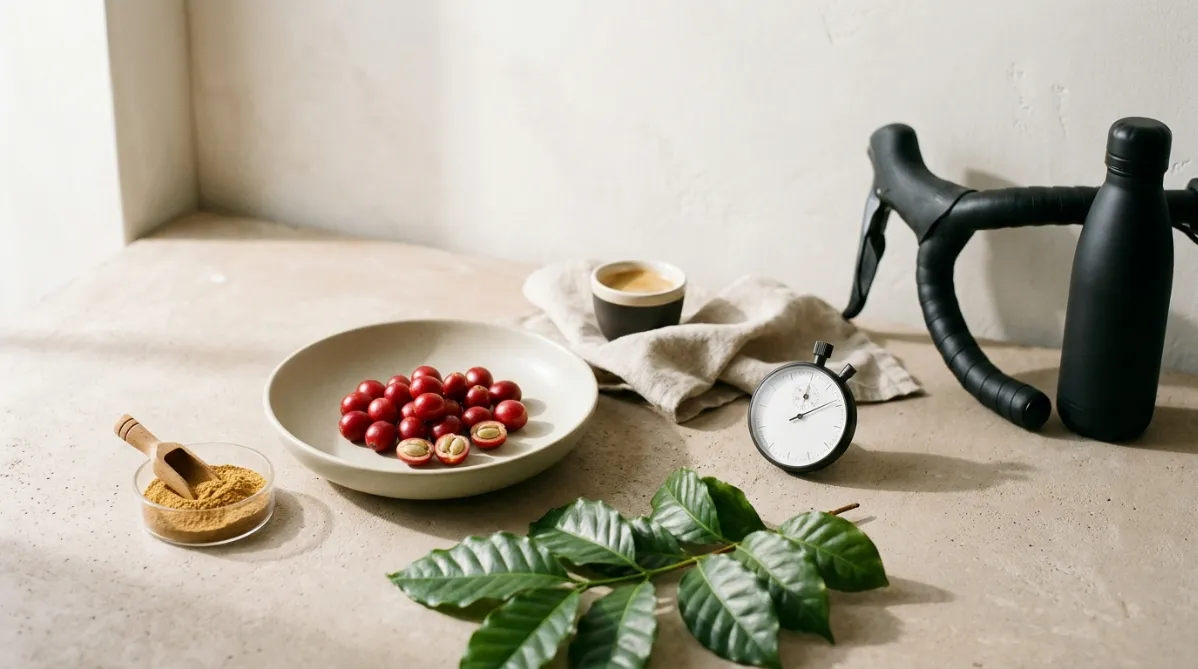
A wide editorial still life on a pale, warm-toned concrete surface in soft morning window light. In the center-left, a shallow matte ceramic bowl holds a small pile of bright red coffee cherries with glossy skins, a few sliced open to reveal pale mucilage and paired green-tan beans. Beside it, a small glass dish of fine, golden-brown powdered extract with a tiny wooden scoop resting on its edge. A sprig of coffee plant leaves, deep green and waxy, arcs across the foreground.

On the right side, slightly out of focus, a sleek road cyclist's handlebar and a matte black water bottle lean against a light plaster wall, suggesting athletic training without showing a person. A minimalist analog stopwatch with a clean white face and thin black hands sits in the mid-ground, angled toward the camera, its hands paused near the fifteen-minute mark. A folded linen cloth in oatmeal beige and a single small espresso cup with a thin crema ring add quiet texture.

The color palette is restrained and modern: cherry red, sage green, cream, soft terracotta, and charcoal accents. Light comes from the left, casting long, gentle shadows with a subtle warm glow and a hint of dust in the air. Shallow depth of field with crisp focus on the cherries and stopwatch, creamy bokeh in the background. Composition leaves open negative space in the upper right for a headline overlay. The overall feel is a clean, trendy health-and-science magazine cover: tactile, natural, minimal, and calm, shot in a 16:9 landscape frame with fine film-like grain and true-to-life tones.
nutrition

Екстракт кавової вишні: 200 мг кофеїну підвищили результативність велоспорту на 4,6 %

BY DR. GYMBRO ·

Доза у 200 мг кофеїну з екстракту цілих кавових вишень допомогла підготовленим велосипедистам виконати на 4,6 % більше роботи під час 15‑хвилинного тайм‑трейлу. Однак популярна ідея про прискорене відновлення глікогену не підтвердилася. У дослідженні, проведеному у випадковому, подвійно сліпому кросовер‑дизайні, брали участь лише 12 спортсменів, а фінансування забезпечив індустріальний спонсор; не було групи, яка отримувала чистий кофеїн. Ось що показали дані, чого не виявили і кому це може бути цікаво.

A landscape editorial photograph with a modern, clean magazine feel, shot on a pale warm-gray concrete surface in soft natural window light from the left. In the foreground, two matte white ceramic espresso cups sit side by side. The left cup holds a small amount of dark espresso with golden crema. The right cup is filled twice as high. Beside them, two small stainless steel scoops hold fine coffee-colored powder, one half full and one heaped, suggesting a dose comparison without any text or labels. A pair of worn red leather boxing gloves rests slightly out of focus behind the cups, laces loosely draped, with a white hand wrap rolled neatly beside them. A minimalist digital kitchen scale in matte black sits at the edge of the frame, with a few roasted coffee beans scattered across the surface. In the soft-focus background, a boxing gym corner appears: a hanging heavy bag in muted charcoal, pale wood plank flooring, and a tall window with diffused morning light. The palette is warm cream, espresso brown, brick red, and soft slate gray, with gentle shadows and a shallow depth of field. The composition follows the rule of thirds, with the cups and scoops in the lower left third and open negative space on the right for headline overlay. The look is tactile and refined, like a high-end health and performance journal. It has natural grain, subtle contrast, and a calm, confident mood. There are no people, no text, no logos, and no futuristic elements.
nutrition

Подвійна доза кофеїну майже не допомогла боксерам — ось що спрацювало

BY DR. GYMBRO ·

Думаєте, що подвійна порція передтренувального комплексу автоматично подвоїть результативність? Нове дослідження серед конкурентних боксерів показало, що це не так. На 60‑хвилинному етапі як 3 мг/кг, так і 6 мг/кг кофеїну підвищували висоту стрибка, а більша доза не давала стабільно кращих результатів. Переваги 6 мг/кг було виявлено лише у деяких специфічних показниках, зокрема в ballistic push‑up та крутному моменті коліна.

A wide, editorial-style still life shot from a slightly elevated angle on a pale oak gym bench, bathed in soft morning window light. In the center sits a matte ceramic cup of black coffee with delicate steam curling upward, flanked by a small white scoop of coffee beans and two identical glass vials, one filled with a few grains of fine powder and one empty, hinting at dose comparison. Next to the cup rests a pair of worn white boxing hand wraps, loosely coiled, and a slim black stopwatch with its face softly visible. In the foreground, a minimalist notebook lies open with blurred handwritten numbers and a simple pen sketch of a bar graph with bars of equal height, subtle and unreadable, suggesting a null result without any legible text. A small brass kitchen scale sits to the side with a few coffee beans on its tray.

In the soft-focus background, a boxing gym interior is visible: a hanging heavy bag in muted charcoal, exposed brick wall painted off-white, and tall windows casting long diagonal light across the floor. The color palette is warm and restrained: cream, sand, espresso brown, soft charcoal, with a single accent of muted terracotta orange in the hand wraps and a faint sage green in the notebook cover. Shallow depth of field with creamy bokeh, fine film grain, and gentle shadows give it a contemporary lifestyle-magazine and wellness-journal feel. The composition leaves generous negative space on the left third for headline overlay. Clean, calm, trendy, and tactile, with natural textures like wood grain, ceramic glaze, and cotton fabric. No people, no text, no futuristic elements.
science research

Кава з низькою дозою кофеїну не підвищила швидкість у елітних бойовиків

BY DR. GYMBRO ·

Вважаєте, що чашка кави перед тренуванням робить ваші спринти швидшими? Нове рандомізоване, подвійне сліпе кросовер‑стаді з 15 спортсменами‑бойовиками показало, що дози кофеїну 1,5 і 3 мг/кг (приблизно 100 і 200 мг для атлета вагою 68 кг) не підвищили жодного спринтерського показника порівняно з декофеїнізованою кавою. Це маленьке дослідження‑нульовий результат, а не доказ того, що кофеїн не працює, і більшість позитивних досліджень застосовують капсули у діапазоні 3–6 мг/кг. Нижче – розрахунок дози, головні застереження та практичні рекомендації перед наступним інтенсивним заняттям.

This page is available in