Dr. Gymbro
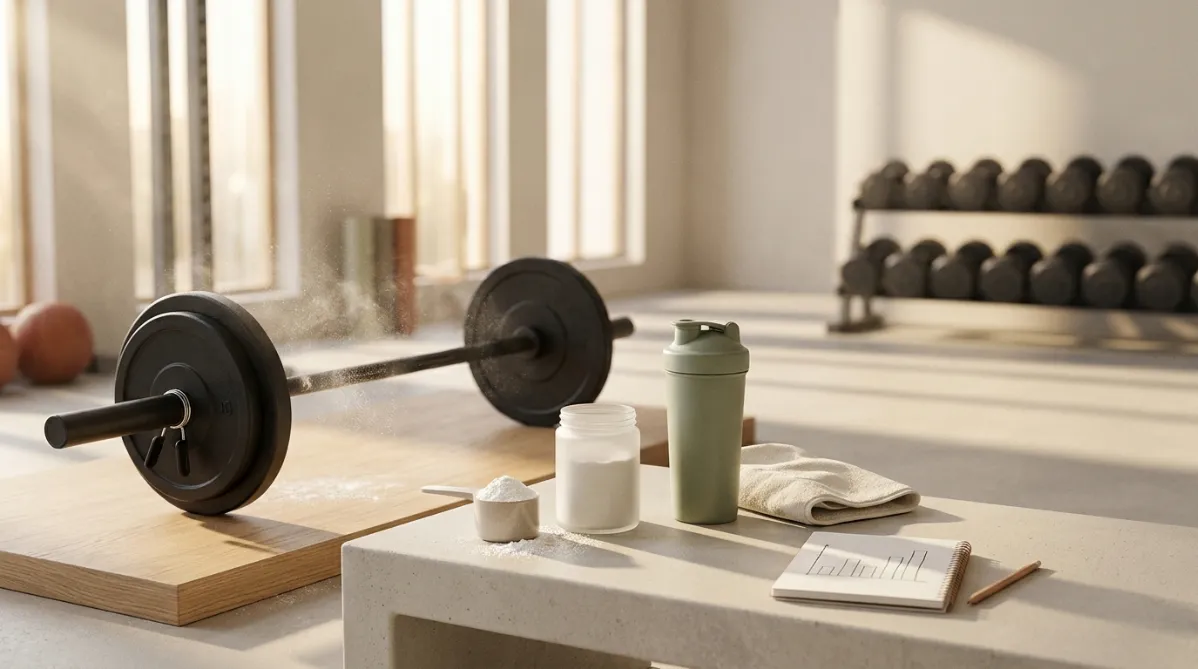
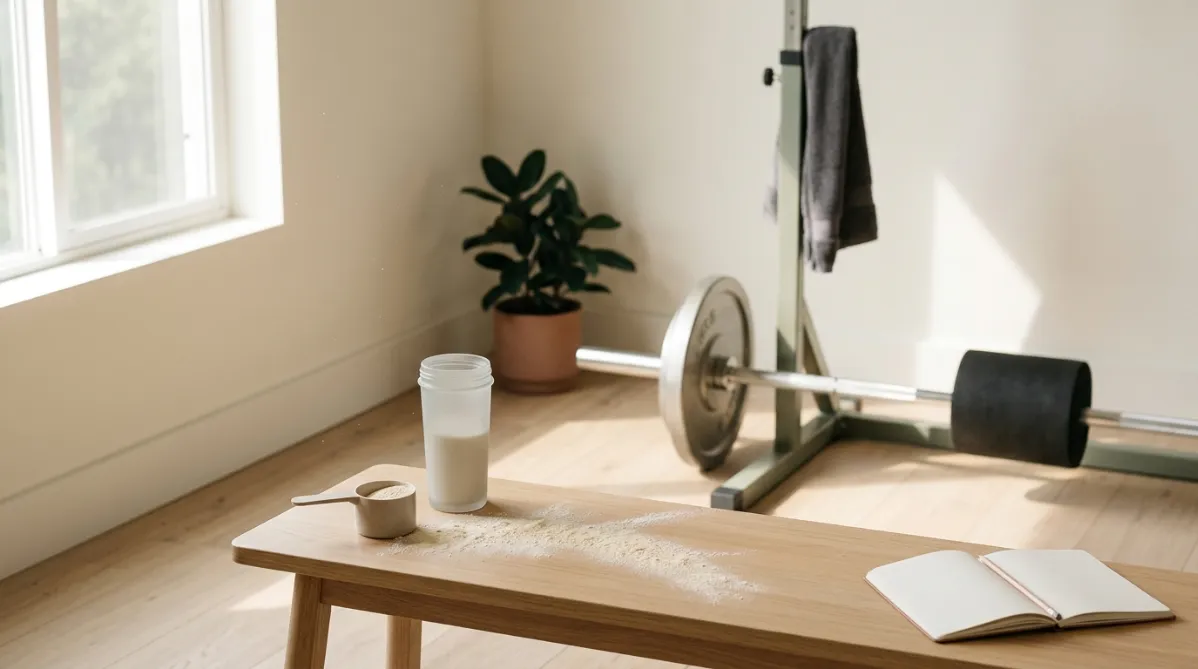
A wide, softly lit editorial photograph of a minimalist home gym corner with pale oak flooring and a warm off-white wall. In the foreground on a light wooden bench sits a matte ceramic scoop resting beside a simple frosted glass shaker bottle, with a delicate dusting of fine cream-colored protein powder spilled across the wood in a natural, casual arc. In the soft-focus midground, a loaded barbell rests on a squat rack with brushed steel plates, and a neatly folded charcoal towel hangs over the rack's upright. To the right, a small open notebook with a pencil lies on the bench, suggesting tracked training logs, with no legible text. Morning sunlight streams diagonally through a large window on the left, casting long gentle shadows and a warm golden glow across the scene, with subtle dust motes floating in the light. The color palette is muted and modern: sage green, warm sand, soft terracotta, and cream, with a single accent of deep forest green from a potted plant in the background corner. Shallow depth of field, crisp detail on the powder and scoop, creamy bokeh on the barbell. Shot as if with a 50mm lens at f/2, natural film-like grain, clean negative space on the upper right for headline overlay. The mood is calm, thoughtful, and science-minded, with a contemporary wellness magazine aesthetic, realistic and tactile, with no people, no logos, and no text.
Nutrition

Bột Protein Có Tăng Sức Mạnh Không? 23 Nghiên Cứu Tiết Lộ Bản Chất

Dr. Gymbro · · 5 min read

Bột Protein Có Thêm Vài Kilogram Vào Squat Và Bench, Nhưng Chỉ Trong Một Số Điều Kiện

Bột protein có thể giúp bạn nâng được vài kilogram ở squat và bench press, nhưng chỉ khi đáp ứng một số điều kiện nhất định. Một phân tích meta mới gồm 23 thử nghiệm ngẫu nhiên có kiểm soát đã chứng minh lợi ích này là có thực, vừa phải và không đồng đều cho mọi người.

Các Con Số Đáng Chú Ý

Phân tích, được công bố trên Frontiers in Nutrition năm 2026 bởi Zhang, Wang và Huang, tổng hợp dữ liệu của 611 người trẻ khỏe mạnh. Câu hỏi của họ là liệu việc bổ sung protein có mang lại lợi ích về sức mạnh so với chỉ tập luyện kháng lực không. Các nhà nghiên cứu đã tìm kiếm trên PubMed, Web of Science, Cochrane Library và SPORTDiscus đến ngày 1‑4‑2026, sau đó ghép kết quả bằng mô hình ngẫu nhiên‑hiệu.

So với chỉ tập luyện, việc thêm protein cho thấy:

  • Squat: +7,40 kg (95 % CI: 2,15 – 12,66, p = 0,006)
  • Bench press: +2,63 kg (95 % CI: 0,77 – 4,49, p = 0,006)

Cả hai hiệu ứng đều có ý nghĩa thống kê. Tuy nhiên, khoảng tin cậy của squat khá rộng, vì vậy lợi ích thực tế có thể chỉ hơn 2 kg hoặc thậm chí hơn 12 kg. Các phân tích độ nhạy, loại bỏ từng nghiên cứu hoặc nhóm nghiên cứu, vẫn giữ được hiệu ứng tổng hợp có ý nghĩa và cùng hướng.

Nơi Lợi Ích Squat Xuất Hiện

Kết quả về squat không đồng nhất giữa các thử nghiệm. Phân tích phụ cho thấy lợi thế sức mạnh chủ yếu xuất hiện trong hai hoàn cảnh:

  1. Can thiệp ngắn hạn, 12 tuần hoặc ít hơn.
  2. Protein được tiêu thụ quanh thời gian tập (trước và/hoặc sau) và trước khi ngủ.

Meta‑regression kiểm tra xem những yếu tố này có giải thích sự khác biệt giữa các nghiên cứu không. Độ dài can thiệp là một moderator có ý nghĩa (p = 0,037). Thời điểm dùng protein chỉ là moderator biên giới (p = 0,073), chưa đạt mức ý nghĩa truyền thống. Vì vậy, phát hiện về thời gian vẫn còn yếu hơn so với phát hiện về độ dài, và tín hiệu thời gian nên được xem là một gợi ý hứa hẹn.

Bản tóm tắt không giải thích tại sao các thử nghiệm ngắn hơn lại cho lợi ích lớn hơn. Các giải thích có thể là người tham gia mới bắt đầu tập hoặc tiêu thụ protein cơ bản thấp, nhưng bài báo chỉ đưa ra đây là câu hỏi cho nghiên cứu trong tương lai và chưa có bằng chứng chắc chắn.

Tại Sao Các Tác Giả Gọi Nó “Có Điều Kiện”

Các tác giả không khẳng định bột protein là “thuốc tăng sức mạnh” cho mọi người. Họ kết luận lợi ích phụ thuộc vào độ dài can thiệp, thời điểm dinh dưỡng, nền tảng tập luyện và mức protein nền. Một vận động viên đã tiêu thụ đủ protein từ thực phẩm có thể thu được ít lợi ích từ một muỗng bột. Đó là cách đọc hợp lý, nhưng bản tóm tắt không kiểm chứng trực tiếp, và các tác giả kêu gọi các nghiên cứu đo lường lượng protein thường xuyên.

Những Bài Học Thực Tiễn

Liều lượng: Đây là khoảng trống lớn nhất. Các tác giả yêu cầu các thử nghiệm tương lai tiêu chuẩn hoá liều protein và nguồn gốc, vì các nghiên cứu hiện có chưa thống nhất. Bản tóm tắt không đưa ra liều tối ưu, vì vậy không thể khuyên bạn nên dùng bao nhiêu gram.

Thời điểm: Lợi ích squat tập trung ở các thử nghiệm mà protein được dùng quanh thời gian tập và trước khi ngủ. Nếu bạn quyết định bổ sung, đây là một lựa chọn hợp lý. Với thống kê biên giới, hãy xem đây là thói quen chi phí thấp chứ không phải quy tắc chắc chắn.

Độ dài: Lợi nhuận rõ ràng nhất xuất hiện trong các chương trình 12 tuần hoặc ít hơn. Điều này không có nghĩa protein ngừng hiệu quả sau 12 tuần, chỉ cho thấy lợi ích tổng hợp không xuất hiện ở các thử nghiệm dài hơn.

Đối tượng: Kết quả áp dụng cho người trẻ khỏe mạnh đang tập kháng lực. Nếu chế độ ăn của bạn đã đáp ứng đủ nhu cầu protein, lợi ích bổ sung có thể nhỏ. Ngược lại, nếu bạn gặp khó khăn đạt mức protein qua thực phẩm, việc bổ sung là giải pháp tiện lợi, dù phân tích này không kiểm chứng trường hợp đó.

Những Giới Hạn Cần Biết

Bằng chứng ở đây đến từ các thử nghiệm ngẫu nhiên có kiểm soát trên người – thiết kế mạnh nhất cho câu hỏi này, và không có nghiên cứu động vật hay tế bào hỗ trợ các con số tiêu đề. Các hạn chế nằm ở những chỗ khác:

  • Đa dạng: Các tác giả phải dùng phân tích phụ, meta‑regression và kiểm tra leave‑one‑out để khám phá sự khác nhau giữa các nghiên cứu, cho thấy các thử nghiệm không đồng nhất.
  • Nhóm phụ khám phá: Các phát hiện về độ dài và thời điểm đến từ phân tích phụ và moderator, phù hợp hơn cho việc tạo giả thuyết hơn là chứng minh.
  • Thiếu chi tiết: Báo cáo không đồng nhất về liều protein, nguồn gốc và chế độ ăn nền, làm hạn chế khả năng kết luận cách bổ sung tốt nhất.
  • Dân số hạn chế: Kết quả chỉ bao gồm người trẻ khỏe mạnh, vì vậy không nên mở rộng sang người cao tuổi, bệnh nhân hay vận động viên đỉnh cao.
  • Kích thước hiệu ứng khiêm tốn: Vài kilogram ở squat hoặc bench là mức tăng nhỏ, và khoảng tin cậy rộng của squat cho thấy hiệu ứng thực tế có thể nhỏ hơn hoặc lớn hơn nhiều.

Các tác giả không báo cáo xung đột lợi nhuận thương mại hay tài chính, và bài đánh giá đã được đăng ký trước trên PROSPERO (CRD42024534481).

Kết Luận

Bổ sung protein cùng với tập kháng lực dường như mang lại lợi thế sức mạnh vừa phải ở người trẻ khỏe mạnh, trung bình khoảng 7 kg ở squat và 2,6 kg ở bench. Đây không phải là con đường tắt. Lợi ích dường như phụ thuộc vào thời gian tập, thời điểm uống protein và lượng protein bạn đã tiêu thụ. Hiện tại, bước thực tiễn là đảm bảo nhu cầu protein hàng ngày, cân nhắc dùng protein quanh buổi tập và trước khi ngủ nếu bạn bổ sung, và không mong đợi kết quả quá lớn. Các tác giả khẳng định cần thêm các thử nghiệm thiết kế tốt hơn để xác định liều lượng và sự khác biệt cá nhân.

Original study

Read the original research on pubmed.ncbi.nlm.nih.gov →

This article summarizes published research for general information. It is not medical advice.

DG

Written by

Dr. Gymbro

Dr. Gymbro writes for Dr. Gymbro: science-backed fitness, nutrition & performance.

Related Articles

A wide, editorial-style still life photographed in soft natural window light on a pale oak gym bench. In the foreground, a small rustic ceramic bowl in warm sand tones holds a mound of fine golden-beige ashwagandha root powder, with a few dried gnarled ashwagandha roots and a sprig of green leaves with tiny orange-red berries resting beside it. A wooden scoop dusted with powder lies at an angle. Just behind, a matte black barbell with a single chalk-dusted steel plate sits slightly out of focus, a light haze of white chalk hanging in the air and catching the sunlight.

On the left side, a neat stack of printed research papers with a sharp black pen and a few muted sage-green sticky tabs. One page shows a simple, abstract forest-plot-style line graph with small squares and horizontal lines, subtly out of focus, hinting at statistics without legible text. A pair of minimal round reading glasses rests on the pages. A small linen gym towel is folded near the edge of the bench.

The palette is restrained and modern: warm cream, soft sage green, muted terracotta, charcoal black, and brushed steel highlights. The background is a softly blurred minimalist studio space with a pale plaster wall and a long soft shadow cast by a window frame, giving a calm, contemplative mood. Shallow depth of field, crisp detail on the powder and roots, gentle film-like grain, and generous negative space on the right third of the frame for a headline overlay. The overall look is a clean, trendy health-and-science journal cover, thoughtful and skeptical rather than promotional, balancing the natural herbal element against the discipline of strength training.
nutrition

Ashwagandha cho người tập tạ: Tăng sức mạnh hay ảo ảnh thống kê?

BY DR. GYMBRO ·

Ashwagandha được bán cho người tập tạ như một chất tăng sức mạnh và khối cơ, nhưng một meta‑phân tích mới chỉ tổng hợp ba thử nghiệm với 161 người. Khi áp dụng kiểm định HKSJ nghiêm ngặt, các kết quả về sức mạnh đều mất ý nghĩa thống kê và mỗi kết quả lại dựa vào một nghiên cứu duy nhất. GRADE đánh giá bằng chứng từ thấp đến rất thấp và không có tác dụng đáng tin cậy nào đối với lượng mỡ cơ thể. Bài viết dưới đây tóm tắt những gì thực sự được chứng minh và ai có thể vẫn muốn thử.

A soft-lit editorial still life on a pale warm-gray concrete surface, shot from a slightly elevated three-quarter angle in a wide landscape frame. On the left, a single amber glass supplement bottle with a minimalist cream label, its lid set beside it. A few golden-yellow softgel capsules are scattered in a loose arc across the surface, catching the light like small drops of honey. At the center-right, a matte sage-green yoga mat is partly unrolled, with a polished chrome dumbbell resting on it. Next to the dumbbell sits a worn canvas hand gripper, a nod to the handgrip finding. Behind them, a wooden gym bench is slightly out of focus, and a folded linen towel sits on top of it.

Warm morning sunlight enters from the upper left through a large window. It casts long, gentle diagonal shadows and a faint golden glow across the scene, a quiet reference to vitamin D and sunshine. A sprig of dried eucalyptus or a small potted succulent adds an organic touch near the bottom right. A small, neatly stacked pile of two or three matte pastel-toned weight plates in butter yellow and dusty terracotta adds color blocking.

The palette is muted and modern: butter yellow, sage, warm sand, soft terracotta, and off-white, with a single strong amber accent from the bottle. The depth of field is shallow, with crisp focus on the capsules and bottle and a creamy blur falling off toward the background. The negative space on the upper right is clean and uncluttered, which leaves room for a headline overlay. The overall feel is calm, minimalist, and contemporary, like a premium health and wellness magazine or a trendy online journal. The grain is subtle, the contrast gentle, and the textures tactile: brushed metal, frosted glass, linen, and concrete. There are no people, no text, and no futuristic elements.
science research

Vitamin D sẽ không giúp bạn giảm mỡ hay tăng cơ, ngoại trừ một trường hợp

BY DR. GYMBRO ·

Meta‑phân tích đáp ứng liều dựa trên 28 thử nghiệm ngẫu nhiên với 1.675 người đã xem xét liệu việc bổ sung vitamin D vào chương trình tập luyện có mang lại lợi ích vượt trội hơn so với chỉ tập luyện. Mặc dù nồng độ vitamin D trong máu tăng trung bình 34 nmol/L, nhưng cân nặng, BMI, khối lượng mỡ, tỷ lệ mỡ cơ thể và khối lượng không mỡ không có sự cải thiện. Sức mạnh leg press cũng không thay đổi; ngoại lệ duy nhất là tăng nhẹ sức mạnh mở rộng đầu gối (+4,36 kg) và cải thiện lực nắm tay ở người cao tuổi hoặc liều cao. Dưới đây là nhóm người có thể hưởng lợi và những lưu ý trước khi mua thêm viên thuốc.

A softly lit, minimalist strength-training studio photographed in a modern editorial style. In the foreground, a matte black barbell loaded with weight plates rests on a light oak platform, with fine chalk dust floating in warm morning light. Beside it on a pale concrete bench sits a simple ceramic scoop of white creatine powder, with a small spill of fine crystals catching the light, next to a minimal frosted glass jar with no label. A matte sage-green shaker bottle and a folded cream towel sit nearby. In the soft-focus background, tall windows let in diffused golden sunlight, casting long, gentle shadows across the floor. A rack of neatly arranged dumbbells is blurred in muted charcoal tones.

The color palette is calm and sophisticated: warm off-white, sand, sage green, soft charcoal, and touches of terracotta. A small open notebook with a pencil lies on the bench, suggesting research and data tracking, with abstract hand-drawn bar graph lines faintly visible on the page but not legible. The composition follows the rule of thirds, with the barbell and powder on the left and generous negative space on the right for headline text. Shallow depth of field, crisp textures on the metal knurling and powder grains, subtle film grain, and a contemporary wellness-magazine look. Clean, airy, and editorial, with a grounded, scientific yet approachable mood. Landscape 16:9 composition.
science research

Creatine Kết Hợp Tập Luyện: Tăng Sức Mạnh Nhanh Hơn, Không Cần Chiến Thuật Liều Lượng Phức Tạp

BY DR. GYMBRO ·

Một meta‑phân tích bao gồm 63 nghiên cứu và 1.489 người tham gia đã hỏi: creatine có tăng bao nhiêu sức mạnh khi kết hợp với tập tạ? Kết quả cho thấy cải thiện sức mạnh vừa phải và đồng đều ở phần trên và dưới cơ thể, trong khi tăng khối cơ là nhẹ và khối mỡ không thay đổi đáng kể. Điều bất ngờ là chiến lược liều dùng, liều hàng ngày và giao thức không ảnh hưởng đáng kể tới kết quả. Tuổi tác là yếu tố duy nhất được xác định, với hiệu quả sức mạnh lớn hơn ở người trẻ. Dưới đây là những gì bài báo thực sự phát hiện và những gì nó không thể khẳng định.

A wide, editorial-style still life photographed in soft natural window light on a pale oak or light grey concrete surface. In the center-left, a shallow ceramic bowl filled with plump, dusky blue-black blackcurrants, some with tiny glossy highlights and a few still attached to slender green stems with serrated leaves. Beside the bowl, a matte black dumbbell handle rests diagonally, partially in frame and slightly out of focus, suggesting strength training without a gym setting. In the foreground, two small minimalist glass dishes sit side by side: one holds a small pile of deep purple powder, the other a larger pile, a subtle visual nod to the low versus high dose. A few scattered berries add a natural touch. A folded linen cloth in muted oatmeal tone adds texture, and a single white capsule sits near the dishes for scale.

The background is a soft, creamy off-white wall with gentle shadow gradients from the window, leaving generous negative space on the right third of the frame for title overlay. The color palette is restrained and modern: deep indigo and violet from the berries, warm neutral beige, charcoal black, and touches of fresh leaf green. Shallow depth of field, crisp focus on the berries in the foreground, subtle film grain, and a calm, refined, contemporary magazine aesthetic like a wellness or sports science journal cover. Overhead angle tilted slightly to about 35 degrees, balanced composition, clean and uncluttered, with natural soft shadows and a premium, quietly athletic mood.
nutrition

Cây Nho Đen cho Người Tập Cơ: Tại sao Liều Thấp Vượt Qua Liều Cao

BY DR. GYMBRO ·

Một nghiên cứu mới cho thấy việc dùng chiết xuất nho đen New Zealand trong một tuần có thể tăng sức mạnh bench press ở người tập sức bền, và liều 250 mg thường cho kết quả tương đương hoặc tốt hơn liều 600 mg. Liều cao tăng công suất bench press lên gần 80 W so với placebo, trong khi liều thấp cải thiện điểm Stroop. Tuy nhiên, placebo cũng mang lại lợi ích đáng kể trong bài tập leg press, vì vậy các cải thiện này cần được xem xét cẩn thận. Với chỉ 20 người tham gia và thời gian bảy ngày, đây là một tín hiệu hứa hẹn chứ không phải bằng chứng chắc chắn.

This page is available in