Dr. Gymbro
A wide landscape editorial photograph shot from above at a slight angle, showing a bright, minimalist kitchen counter of pale oak wood. Three matching ceramic bowls in soft matte tones (warm cream, sage green, and muted terracotta) sit in a loose row. Each holds a different protein powder: fine ivory whey, slightly coarser beige soy, and speckled pale yellow-green pea protein. A small fourth pile of tiny gray-black chia seeds sits apart on a folded linen napkin, off to the side, to suggest the lone outlier. Wooden scoops rest in each bowl, with a few soft dustings of powder on the surface. In the foreground, a clear glass shaker with a creamy blended drink and a single sprig of fresh mint stands beside a small stack of fresh produce: a halved avocado, a handful of edamame pods, and a few green peas in an open pod. A matte white notebook and a thin brass pen are tucked at the edge of the frame, suggesting research and note-taking. Natural morning light pours in from the left through an unseen window, casting long, soft shadows and gentle highlights on the powder textures. The color palette is calm and earthy, with creams, sage, soft terracotta, and warm wood tones, and a clean, slightly muted editorial grade. Shallow depth of field keeps the bowls crisp while the background, a blurred white tiled wall and a hint of a trailing green plant, melts away. Plenty of negative space on the right side of the frame leaves room for a headline overlay. The overall mood is fresh, trustworthy, and modern, like a contemporary wellness and science journal.
Nutrition

Whey không phải là lựa chọn duy nhất cho người mới bắt đầu: Đậu nành và đậu Hà Lan cũng đủ sức

Dr. Gymbro · · 5 min read

Nếu bạn mới bắt đầu tập tạ và đang đứng trước hai lựa chọn: bột whey hay bột protein đậu Hà Lan, liệu việc chuyển sang thực vật có làm giảm kết quả? Một meta‑analysis mới đã đưa ra câu trả lời. Khi các nhà nghiên cứu tổng hợp các thí nghiệm đo bằng DEXA, nhóm dùng protein thực vật không kém đáng kể so với nhóm dùng whey. Tuy nhiên, điều này không có nghĩa là hai loại protein giống hệt nhau; các tác giả cũng nhấn mạnh điểm này.

Nghiên cứu trong 30 giây

Callegari và các đồng nghiệp từ Đại học Bang São Paulo (UNESP) ở Brazil đã công bố một bài tổng quan hệ thống và meta‑analysis trên Journal of the International Society of Sports Nutrition (2026;23(1):2752317). Họ tìm kiếm trên PubMed, Web of Science và ScienceDirect, tuân thủ PRISMA 2020 và đăng ký giao thức trên PROSPERO (CRD420251145410). Tổng cộng năm nghiên cứu đáp ứng tiêu chí được đưa vào phân tích.

Tiêu chuẩn lựa chọn

  • Đối tượng: người trưởng thành chưa được đào tạo, tuổi 18‑59
  • Can thiệp: luyện sức mạnh kết hợp với bổ sung protein thực vật hoặc whey
  • Kết quả đo: thành phần cơ thể bằng Dual‑Energy X‑Ray Absorptiometry (DEXA)

Bài báo mở truy cập, DOI: https://doi.org/10.1080/15502783.2026.2752317; bản ghi PubMed: PMID 42954267.

Kết quả chính

Cả protein thực vật và whey, khi kết hợp với luyện sức mạnh, đều liên quan tới việc tăng khối lượng cơ và giảm mỡ cơ thể. Giữa hai nhóm không có sự khác biệt thống kê đáng kể. Các tác giả kết luận rằng các chất bổ sung dựa trên đậu nành và đậu Hà Lan có thể hỗ trợ thay đổi thành phần cơ thể có lợi ở người lớn mới bắt đầu luyện sức mạnh, và có thể được xem như những lựa chọn thực tiễn thay thế whey.

Kết quả này đáng chú ý vì whey đã lâu được coi là “protein tốt nhất” cho cơ bắp. Trong phân tích này, khi chương trình tập luyện và tổng lượng protein được đồng nhất, nguồn protein không tạo ra sự khác biệt đo được về thành phần cơ thể ở người mới bắt đầu.

Đọc kỹ trước khi chuyển đổi

“Không có sự khác biệt đáng kể” không đồng nghĩa với “được chứng minh là bằng nhau”. Các tác giả đã nhấn mạnh điều này nhiều lần. Với chỉ năm nghiên cứu và khoảng tin cậy rộng, phân tích không thể loại trừ khả năng có sự khác biệt thực sự theo bất kỳ hướng nào. Bài viết rõ ràng nói rằng kết quả không nên được hiểu là bằng chứng về sự tương đương sinh lý và cần có các thí nghiệm đủ sức mạnh hơn.

Ba hạn chế quan trọng

  1. Chỉ người chưa được đào tạo. Người mới bắt đầu phản ứng mạnh mẽ với hầu hết các chương trình tập và protein hợp lý. Kết quả không cho biết gì về người tập lâu năm, nơi khoảng cách lợi ích hẹp hơn và sự khác biệt dễ nhận ra hơn.
  2. Protein đã được cân bằng. So sánh giữ nguyên tổng lượng protein và các biến số tập luyện. Điều này không nói gì về trường hợp bạn thay đổi một muỗng whey bằng một muỗng sản phẩm thực vật yếu hơn, hoặc nếu bạn tổng cộng tiêu thụ ít protein hơn.
  3. Cơ sở bằng chứng nhỏ. Năm thí nghiệm là nền tảng mỏng để đưa ra khẳng định rộng.

Do đó, kết luận chính là: whey có lẽ không thiết yếu cho người mới bắt đầu, nhưng không có bằng chứng nào khẳng định protein thực vật đã “đẳng cấp” như whey.

Còn protein chia thì sao?

Hiện chỉ có một nghiên cứu duy nhất về protein hạt chia và nó không cho thấy thay đổi đáng kể về khối lượng cơ. Các tác giả khẳng định không thể rút ra kết luận chắc chắn về hiệu quả của chia. Những kết luận về đậu nành và đậu Hà Lan không áp dụng cho chia.

Những gợi ý thực tiễn

Tóm tắt phần abstract của bài báo không đưa ra liều dùng cụ thể, vì vậy các khuyến nghị dưới đây là hướng dẫn dinh dưỡng thể thao chung, không phải kết quả trực tiếp từ meta‑analysis này.

  • Tổng lượng protein hằng ngày là yếu tố quan trọng nhất. Một chuẩn được trích dẫn rộng rãi cho người tập tạ là khoảng 1,6 g protein/kg cân nặng mỗi ngày. Người nặng 75 kg nên nhắm tới khoảng 120 g protein mỗi ngày từ mọi nguồn. Bổ sung protein giúp bạn đạt được con số này; nó không phải là “thuốc thần”.
  • Liều mỗi khẩu phần. Protein thực vật thường chứa ít leucine hơn whey trên mỗi gram, trong khi leucine là chất kích hoạt chính cho tổng hợp protein cơ. Một cách thực tế là dùng khẩu phần hơi lớn hơn với đậu Hà Lan hoặc đậu nành, hoặc chọn hỗn hợp, và phân bố protein qua 3‑4 bữa trong ngày. Đây là biện pháp phòng ngừa, không phải gì được thử nghiệm trong nghiên cứu này.
  • Thời gian dùng. Nghiên cứu không đề cập tới thời điểm tiêu thụ. Sự nhất quán quan trọng hơn “cửa sổ sinh học” chặt chẽ. Hãy dùng khi nó giúp bạn đạt mục tiêu protein hằng ngày, ví dụ sau buổi tập hoặc như một bữa nhẹ.

Ai nên chọn gì

Protein thực vật (đậu nành hoặc đậu Hà Lan) phù hợp nếu bạn:

  • Là người ăn chay hoặc thuần chay
  • Gặp khó chịu với sữa hoặc lactose
  • Muốn một lựa chọn bền vững hơn (điểm mà các tác giả cũng nhắc tới)
  • Mới bắt đầu tập tạ và muốn một loại bổ sung tiết kiệm chi phí, phù hợp với chế độ ăn

Whey vẫn là lựa chọn hợp lý nếu bạn:

  • Tiêu hóa sữa tốt và đã quen uống whey
  • Muốn protein dựa trên nền tảng nghiên cứu rộng lớn nhất
  • Thấy giá rẻ hơn hoặc thuận tiện hơn ở nơi bạn sinh sống

Hãy thận trọng nếu:

  • Bạn dị ứng với đậu nành hoặc đậu Hà Lan; cần kiểm tra nhãn sản phẩm
  • Bạn là người tập nâng cao, vì bằng chứng này chỉ áp dụng cho người chưa được đào tạo
  • Bạn dự định dùng protein chia để tăng cơ, vì hiện chưa có bằng chứng hỗ trợ

Kết luận

Giả thuyết cũ rằng whey là lựa chọn duy nhất cho người mới bắt đầu trở nên bấp bênh hơn sau phân tích này. Khi protein và chương trình tập luyện được đồng nhất, đậu nành và đậu Hà Lan không kém đáng kể so với whey về thay đổi khối lượng cơ hay mỡ ở người chưa được đào tạo. Tuy nhiên, chỉ có năm nghiên cứu và khoảng tin cậy rộng nên kết luận vẫn còn mở. Hãy đạt được tổng lượng protein cần thiết, tập luyện đều đặn, và chọn bột protein mà bạn thực sự sẽ dùng.

Nguồn: Callegari IOM, Silva GM, Oliveira AG. Is plant‑based protein supplementation as effective as whey protein? A systematic review and meta‑analysis in untrained adults undergoing resistance training. J Int Soc Sports Nutr. 2026;23(1):2752317. doi:10.1080/15502783.2026.2752317. PMID: 42954267.
Original study

Read the original research on pubmed.ncbi.nlm.nih.gov →

This article summarizes published research for general information. It is not medical advice.

DG

Written by

Dr. Gymbro

Dr. Gymbro writes for Dr. Gymbro: science-backed fitness, nutrition & performance.

Related Articles

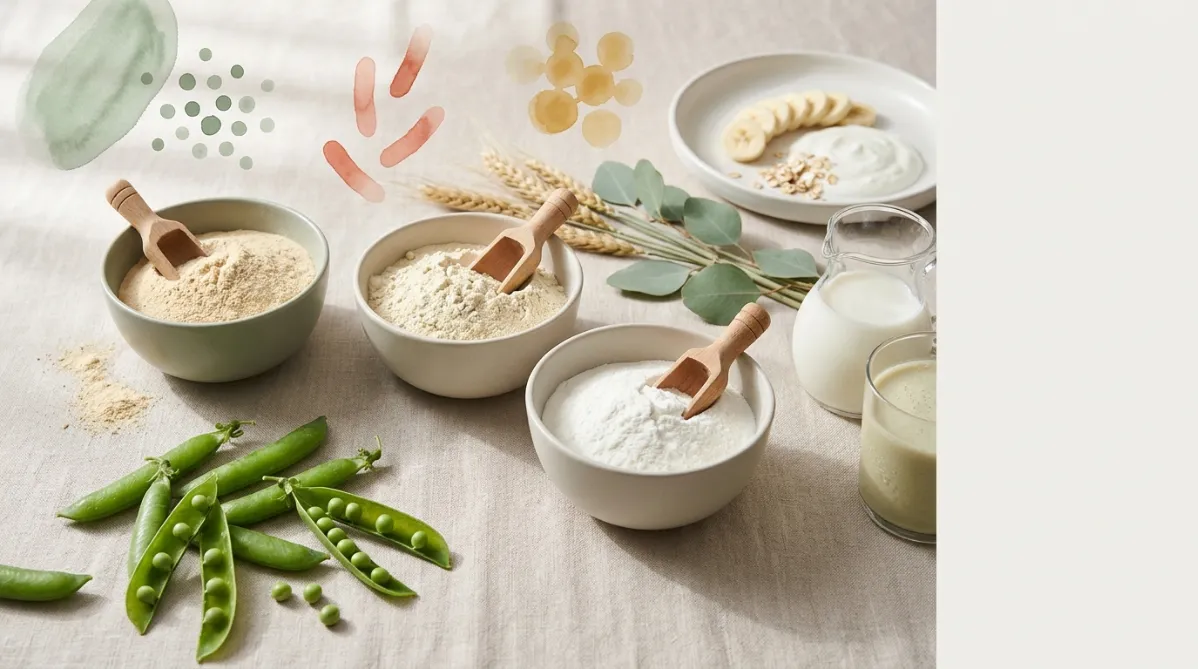
A wide, softly lit editorial flat-lay on a pale oat-colored linen surface, shot from slightly above. Three matte ceramic bowls sit in a loose diagonal across the frame. One holds fine, creamy beige pea protein concentrate, another holds paler, powdery pea protein isolate, and the third holds bright white whey protein isolate. Each bowl has a small wooden scoop resting beside it, with a few fine dustings of powder on the linen. Fresh green pea pods, split open to show round peas, spill naturally in the left foreground. A small glass pitcher of milk sits near the right edge, next to a half-full glass of a smooth, pale green-beige shake with condensation on the surface.

Behind the bowls, a few sprigs of dried wheat and soft eucalyptus leaves add organic texture. In the upper right, a shallow white ceramic plate holds a small arrangement of gut-friendly foods: sliced banana, a spoonful of plain yogurt, and a few oats. Delicate watercolor-style abstract shapes in sage green, warm coral, and soft mustard float subtly in the background. They suggest microscopic organisms, like loose dots, rods, and clustered circles, but stay painterly and minimal, not scientific or futuristic.

Natural window light enters from the left, casting long, gentle shadows and a warm, airy glow. The palette is muted and modern: sage green, cream, warm beige, blush, and touches of terracotta. The composition leaves generous clean negative space on the right third for a headline overlay. The depth of field is shallow, with the nearest pea pods and the front bowl crisp and the background softly blurred. The style is high-end wellness magazine photography with a subtle tactile, handmade feel, calm, fresh, and contemporary, in a 16:9 landscape format.
science research

Bột Protein nào Định Hình Lại Đường Ruột? Đậu Hà Lan Thay Thế trong 4 Tuần

BY DR. GYMBRO ·

Một thử nghiệm kéo dài bốn tuần ở Thụy Điển đã so sánh bột protein đậu hà lan cô đặc, bột protein đậu hà lan tách riêng và bột protein whey tách riêng, với vi khuẩn đường ruột là chỉ số chính. Cả hai dạng protein đậu hà lan đều làm thay đổi đáng kể độ đa dạng vi sinh vật trong ruột, và mỗi dạng lại thúc đẩy các loài có lợi khác nhau. Dạng cô đặc tăng cường *Bifidobacterium longum* và *Anaerobutyricum hallii*, trong khi dạng tách riêng nâng cao *Lactobacillus crispatus* và *Limosilactobacillus frumenti*. Tuy nhiên các nhà nghiên cứu lưu ý rằng chúng ta vẫn chưa biết những biến đổi này có ý nghĩa gì về chức năng. Dưới đây là những gì bạn cần biết cho bình bột protein tiếp theo của mình.

A wide, editorial-style flat lay shot from directly above on a pale oak table in soft morning window light. At the center, an open matte cream-colored protein powder tub sits tipped slightly, with a wooden scoop resting beside it and a small, elegant dusting of fine powder spilling across the wood grain. To the left, a neat balanced arrangement of whole foods: two soft-boiled eggs in a ceramic dish, a small bowl of Greek yogurt with a drizzle of honey, a handful of almonds, and a halved avocado. To the right, a minimalist brass kitchen scale holding a small ceramic bowl, with a handwritten notebook page beside it showing simple pencil-drawn bar charts and a few scribbled numbers, no legible text. A matte shaker bottle in muted sage green stands near the top edge, along with a folded linen napkin in warm oatmeal tone. The color palette is restrained and modern: warm creams, soft sage, terracotta accents, and natural wood, with gentle diffused shadows and subtle film-like grain. Composition leaves generous negative space on the left third of the frame for headline overlay. The mood is calm, thoughtful, and quietly skeptical, like a contemporary health and science magazine cover. Shallow depth of field, crisp textures on powder and ceramic, high-end lifestyle photography, clean and uncluttered.
nutrition

Bí mật đằng sau bột protein: Tăng hiệu suất hay chỉ vì lượng calo bằng nhau

BY DR. GYMBRO ·

Bột protein thực sự có giúp bạn vận động tốt hơn và hồi phục nhanh hơn hay chỉ là nguồn calo thừa kèm nhãn hiệu lòe loẹt? Một meta‑analysis Bayesian dựa trên 75 thử nghiệm ngẫu nhiên với 1.206 vận động viên cho thấy lợi ích có tồn tại nhưng còn hạn chế. Điều đáng chú ý là mọi kết quả có ý nghĩa thống kê đều xuất hiện trong các nghiên cứu mà lượng năng lượng tiêu thụ không được cân bằng giữa các nhóm. Lời khuyên thực tiễn nhất là: bổ sung khoảng 1 g/kg/ngày protein, để tổng lượng protein đạt khoảng 2 g/kg/ngày.

A bright, airy, minimalist kitchen counter in soft morning light, shot from a slightly elevated three-quarter angle in a wide landscape composition. Two matching ceramic bowls sit side by side on a pale oak butcher-block surface. The left bowl holds fine, creamy-beige pea protein powder with a small wooden scoop resting in it. The right bowl holds smooth, ivory-white whey powder with an identical scoop. Between and slightly behind them sits a third, smaller empty bowl with a plain scoop, hinting at the placebo. Scattered around the bowls are fresh green pea pods, some split open to reveal bright, round peas, and a small glass bottle of milk with delicate condensation. A sage-green linen napkin is folded loosely at the edge of the frame.

In the soft-focus background, a young man in a fitted heather-gray t-shirt is seen from the shoulders down, casually flexing one arm while holding a matte shaker bottle, the biceps subtly defined and the pose relaxed and natural. A minimalist notebook with a pencil and a simple hand-drawn bar chart lies open on the counter, suggesting analysis without legible text. A small potted herb plant and a ceramic mug add warmth.

The color palette is muted and editorial: warm cream, sage green, soft terracotta, pale wood, and touches of charcoal. Light streams in from a window on the left, casting gentle long shadows and a subtle golden glow across the powders so their textures look fine and tactile. Shallow depth of field keeps the bowls crisp while the background melts into a creamy blur. The look is modern lifestyle-magazine photography, clean and uncluttered, with generous negative space on the right third of the frame for headline overlay. It is natural, appetizing, and trustworthy, in the style of a contemporary wellness and nutrition journal.
nutrition

Protein Đậu Hà Lan vs Whey: Kết Quả Bất Ngờ cho Người Mới Bắt Đầu

BY DR. GYMBRO ·

Liệu protein thực vật có thực sự giúp tăng cơ như whey? Một thí nghiệm kéo dài 12 tuần với 161 nam giới so sánh protein đậu Hà Lan, whey và giả dược cho thấy kết quả bất ngờ: độ dày bắp tay tăng 20,2 % với protein đậu Hà Lan, trong khi giả dược chỉ tăng 8,6 %. Tuy nhiên sự khác biệt toàn nhóm chỉ là xu hướng, và phát hiện nổi bật đến từ phân tích nhóm con. Bài viết tóm tắt những gì nghiên cứu chứng minh, những gì chưa được khẳng định, và cách vận động viên thuần chay hoặc không dung nạp lactose có thể áp dụng.

A wide, editorial flat-lay photograph shot from directly above on a pale warm-gray stone countertop, lit by soft natural morning window light with gentle diagonal shadows. On the left, a neatly arranged cluster of whole-food protein sources: two seared chicken breast slices with a golden crust, a small ceramic bowl of creamy Greek yogurt topped with blueberries, three halved soft-boiled eggs with jammy orange yolks, a handful of raw almonds, and a small pile of dried lentils scattered on a linen napkin. At the center, a matte white shaker bottle and a wooden scoop resting in a pile of fine vanilla-colored protein powder, a few grains dusted artfully across the surface. On the right, a minimalist kitchen scale in matte black displaying a portion of food, next to an open notebook with a hand-drawn curve that rises steeply and then flattens into a plateau, drawn in a deep terracotta ink pen, with a small dot marking the bend. A brass pen lies beside the notebook. A single dumbbell with a brushed steel finish sits partially in frame at the upper right corner, grounding the fitness theme without feeling gym-like. Color palette: warm cream, sage green, terracotta, soft charcoal, and butter yellow accents, with generous negative space along the top edge for title overlay. Shallow depth of field, crisp textures, subtle film grain, modern lifestyle magazine aesthetic, clean and calm composition, 16:9 landscape.
nutrition

Bao nhiêu protein thực sự tối ưu hoá cơ bắp? Giải thích mức “đỉnh” 1,6 g/kg

BY DR. GYMBRO ·

Bạn có nghĩ mình cần hơn 2 g protein cho mỗi pound để tăng cơ? Một siêu phân tích meta gồm 49 thử nghiệm và 1.863 người trưởng thành cho thấy lợi ích tối đa trong việc xây dựng cơ bắp đạt mức bão hoà khoảng 1,6 g/kg mỗi ngày. Giới hạn trên của khoảng tin cậy là khoảng 2,2 g/kg, đưa ra một dải nhu cầu thực tế cho người tập thay vì một liều “khổng lồ” ngẫu nhiên. Người đã có kinh nghiệm tập luyện thu được lợi ích lớn nhất từ việc bổ sung protein, trong khi lợi ích giảm dần theo tuổi tác. Dưới đây là những con số nghĩa là gì đối với đĩa ăn, bình shake và ngân sách của bạn.

This page is available in