Dr. Gymbro
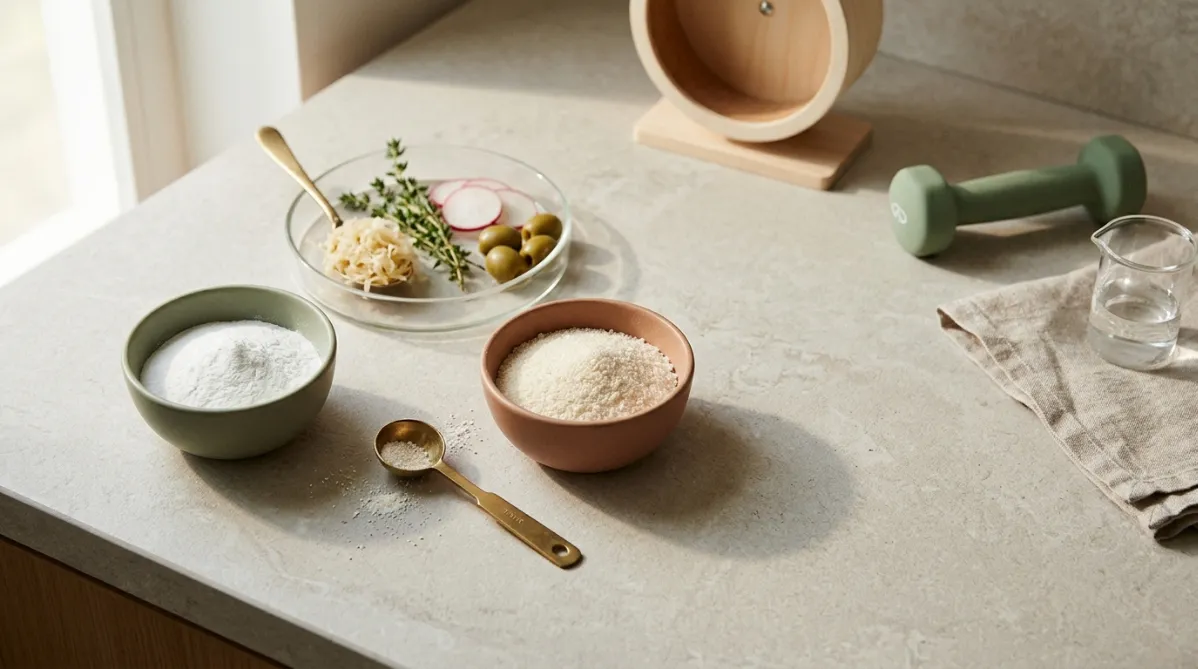
A wide editorial still life on a pale warm-gray stone countertop, lit by soft natural window light from the left. In the center, two small matte ceramic bowls sit side by side. One holds fine white creatine powder, and the other holds a slightly coarser, creamy off-white crystalline powder. Between them, a delicate brass measuring spoon rests at a slight angle, dusted with a few grains. Behind the bowls, a shallow glass dish holds a handful of whole food ingredients that suggest gut health: fermented sauerkraut, a few sprigs of fresh thyme, sliced radishes, and a small cluster of green olives. Their colors are soft and natural. To the right, a minimalist wooden mouse running wheel stands out of focus as a quiet visual nod to the exercise study. Beside it, a small, slim dumbbell in muted sage green rests on the counter. A folded linen napkin in oatmeal tone and a single glass beaker with clear water add a subtle lab-meets-kitchen feel without looking clinical. The palette is calm and modern: sage green, terracotta, cream, soft sand, and touches of warm brass. Shadows are gentle and elongated, with a shallow depth of field that keeps the powders crisp and the background creamy. The composition leaves generous negative space on the right third for title text. The overall mood is clean, thoughtful, and trendy, like a contemporary wellness and science magazine, with fine film-like grain, natural textures, and a refined editorial look.
Science & Research

مركب الميكروبيوم المعوي PAS يتفوق على الكرياتين في الفئران—لكن هناك تحذير

Dr. Gymbro · · 3 min read

كرياتين مونوهيدرات كان الملك غير المتزعزع لمكملات القوة لعقود طويلة. الآن، تُظهر دراسة على الفئران أن جزيئين مرتبطين بميكروبيوم الأمعاء، حمض البيبيكوليك والسكسينات (PAS)، يحققان تحسينات أكبر في قوة القبضة وقوة العضلة مقارنةً بالكرياتين. المفاجأة أن أيًا من المكملين لم يُزيد حجم العضلة.

تحذير أساسي: التجربة أُجريت على الفئران فقط. لا توجد بيانات بشرية، ولا جرعات مُعتمدة للإنسان، ولا سبب للانطلاق إلى الشراء الآن. إليكم ما وجده الباحثون، وما يعنيه، وما لا يعنيه.

ما اختبرته الدراسة فعليًا

الورقة نشرت في American Journal of Physiology – Cell Physiology (2026) وصاغها فريق بقيادة بيرك، داريديا، العُموري، رينج، بيرسون، فالنتينو، مكارثي، وين وإسماعيل. تستند الدراسة إلى اكتشافهم السابق أن PAS يحد من ضمور العضلات ويحافظ على وظائفها عند تثبيت الأطراف الخلفية للفئران.

في هذه المرة طرحوا سؤالًا مختلفًا: هل يمكن أن يُحسّن PAS التكيف مع التدريب، وكيف يساوي أو يتفوق على كرياتين مونوهيدرات، الذي يصفه المؤلفون بأنه "المعيار الذهبي" للمكملات القوية؟

قسم الباحثون الفئران إلى ثلاث مجموعات: مجموعة ضابطة (بدون مكمل)، مجموعة تُعطى كرياتين، ومجموعة تُعطى PAS، خلال برنامج سبعة أسابيع من الجري على عجلة محملة بالأوزان تدريجيًا. في النهاية قيّموا أداء التدريب، تركيبة الجسم، حجم العضلة، ووظيفة العضلة.

النتيجة الرئيسية: القوة والقدرة

أظهر كل من الكرياتين وPAS تحسينًا في الأداء خلال تمارين عالية الكثافة مقارنةً بالمجموعة الضابطة. الفئران التي تناولت أيًا من المكملين ركضت مسافات أطول واستمرت وقتًا أطول على العجلة خلال فترة التدريب. بناءً على ذلك، عمل المكملان، ولم يُصِف الملخص ذلك كفوز حصري لـ PAS.

التميُّز ظهر في مقاييس القوة والقدرة. أظهرت الفئران التي عولجت بـ PAS ما يلي:

  • قوة قبضة أعلى مقارنةً بالمجموعة الضابطة والكرياتين.
  • إنتاج قوة أعلى لعضلة السوليوس خارج الجسم مقارنةً بالمجموعتين.
  • معدل أسرع لتطوير القوة في السوليوس مقارنةً بالمجموعتين.

معدل تطوير القوة هو السرعة التي يمكن للعضلة أن تولد فيها القوة، وهو عنصر أساسي للقدرة. يخلص المؤلفون إلى أن PAS عزز تكيفات القوة والقدرة للتمرين بما يتجاوز ما تحققه الكرياتين.

التحوّل المفاجئ: لا زيادة في الكتلة

هنا يختفي افتراض "العضلات الكبيرة". لا الكرياتين ولا PAS زادا الكتلة النحيلة، ولا كتلة العضلة، ولا مساحة مقطع ألياف السوليوس مقارنةً بالمجموعة الضابطة.

إذن، ميزة PAS لم تكمن في الحجم. العضلة أنتجت قوة أكبر وطورتها أسرع دون أن تنمو بشكل ملحوظ. هذا يشير إلى تغيّر في طريقة عمل العضلة وليس إلى زيادة في كمية العضلة. الملخص لا يحدد الآلية، لذا أي تفسير يبقى تخمينًا.

كما يذكّرنا أن القوة والحجم ليسا شيئًا واحدًا. لو كنت تراقب الوزن فقط أو تقيس محيط الخصر في هذه التجربة، لكانت الفروقات مخفية عنك.

لماذا يهم الباحثون؟ فئة جديدة من المكملات المانحة للطاقة؟

يصف المؤلفون PAS بأنه "مكمل تمارين واعد" وي argue أن النتائج تؤسس الـ exerkines المشتقة من الميكروبات (MDEs) كفئة جديدة من المكملات المانحة للطاقة. الـ exerkines هي جزيئات إشارة ترتبط بالتمرين، ووسم "المستمدة من الميكروبات" يعكس فكرة أن ميكروبات الأمعاء تُنتج جزيئات تساعد العضلة على التكيف مع التدريب.

أظهر PAS الآن فائدته في سياقين مختلفين تمامًا لدى الفئران: الحفاظ على العضلة أثناء عدم الاستخدام وتعزيز تكيف القوة أثناء التدريب. وهذا يجعلها مرشحًا للدراسات المستقبلية، لكنها لا تزال في مراحله الأولية.

ما يمكن أخذّه عمليًا: الجرعة، التوقيت، ومن هو المستهدف

الإجابة صريحة ضعيفة، لأن الدراسة ما قبل السريرية.

  • الجرعة: لا يُذكر في الملخص جرعة ذات صلة بالإنسان، ولا يمكن تحويل جرعة الفئران إلى جرعة آمنة للإنسان بصورة عشوائية. لا توجد جرعة بشرية معتمدة.
  • التوقيت: تلقت الفئران العلاج طوال برنامج التدريب الذي استمر سبعة أسابيع. التوقيت المثالي حول التمارين لدى البشر غير معروف.
  • المستهدف: لا أحد بعد. PAS ليس مكملًا بشريًا مثبتًا بناءً على هذه الورقة.
  • من يجب أن يتجنبه: كل من يفكر في تطبيق هذه النتائج اليوم. وهذا يشمل النساء الحوامل، والأشخاص الذين يتناولون أدوية، أو الذين يعانون من أمراض مزمنة، الذين ينبغي أن يكونوا حذرين جدًا من أي مركب غير مختبر.
  • ما ينبغي فعله بدلًا من ذلك: كرياتين مونوهيدرات يظل المكمل ذو السجل البشري الطويل، ولا شيء في هذه الدراسة يغيّر ذلك. الدراسة لا تُظهر أن PAS يتفوق على الكرياتين لدى البشر.

القيود التي لا يمكن تجاهلها

  1. دليل حيواني فقط. الجري على العجلة لا يعادل جلسات رفع الأوزان، وغالبًا ما تفشل النتائج في الانتقال إلى البشر.
  2. مقاييس محدودة. تركّز النتائج على قوة السوليوس التي قُيّمت خارج الجسم، بالإضافة إلى قوة القبضة. هذه معلومات مفيدة لكنها ضيقة.
  3. لا زيادة في الحجم. إذا كان هدفك تضخم العضلة، لا شيء هنا يشير إلى أن PAS يحقق ذلك.
  4. تقرير واحد فقط. النتيجة تحتاج إلى تكرار مستقل، بيانات سلامة بشرية، وتجارب لتحديد الجرعات.

الخلاصة

في فئران مارست تمارين على عجلة محملة بالأوزان لمدة سبعة أسابيع، تفوق PAS الكرياتين في قوة القبضة، وقوة السوليوس، ومعدل تطوير القوة، رغم أن لا أحد من المركبين زاد كتلة العضلة. هذه إشارة مثيرة تُظهر أن الـ exerkines المرتبطة بالميكروبيوم المعوي قد تُصبح فئة جديدة من مساعدات الأداء يوماً ما. حتى تُجرى تجارب بشرية، اعتبرها نتيجة مختبر واعدة، لا توصية مكمل.
Original study

Read the original research on pubmed.ncbi.nlm.nih.gov →

This article summarizes published research for general information. It is not medical advice.

DG

Written by

Dr. Gymbro

Dr. Gymbro writes for Dr. Gymbro: science-backed fitness, nutrition & performance.

Related Articles

A bright, modern editorial still life shot from a slightly elevated angle on a pale warm-gray stone countertop, bathed in soft natural window light with gentle diffused shadows. In the center, a small glass bowl holds a scatter of translucent golden-amber fish oil softgel capsules, a few spilled casually onto the surface and catching the light like tiny glowing beads. Beside the bowl sits a single chrome dumbbell with a matte finish, slightly out of focus, and a neatly folded charcoal gym towel. To the left, a clean arrangement of alternative "better spent" items: a ceramic dish of raw eggs, a wedge of salmon fillet on a wooden board with a sprig of dill, and a small bowl of Greek yogurt with a spoon, all styled with restraint. A minimalist notebook with a thin pen lies at the right edge, with faint, abstract pencil-drawn bar charts and a flat horizontal line suggesting "no effect," legible only as soft shapes with no readable text. The color palette is muted and sophisticated: warm cream, soft sage green, sandy beige, and pops of golden amber from the capsules, with a single accent of coral from the salmon. Shallow depth of field keeps the capsules crisp while the background melts into a creamy blur of a sunlit kitchen with a hint of green plant leaves. The composition leaves generous negative space on the right third for title overlay, in a 16:9 landscape format. The mood is calm, thoughtful, and quietly skeptical, in the style of a contemporary health and science magazine, with a crisp editorial photography look, fine grain, and natural color grading. No people, no futuristic elements, and no text.
science research

زيت السمك للعضلات؟ 8 تجارب تُظهر عدم فاعليته

BY DR. GYMBRO ·

يُسوّق زيت السمك منذ عقود على أنه يُعزّز التعافي ويُزيد كتلة العضلات، لكن تحليلًا تلويًا نُشر في مجلة Nutrition يُظهر أن الأدلة لا تدعم ذلك. جمع الباحثون أربع تجارب حول كتلة الجسم الخالية من الدهون وثمانية تجارب (22 نتيجة) حول قوة العضلات لدى بالغين أصحاء غير بدينين، ولم يثبتوا أي فائدة واضحة. نتيجة القوة تقريبًا صفر، وتقدير كتلة الجسم الخالية من الدهون غير دقيق بما يكفي لتحديد أي تأثير. وعلى الرغم من أن درجة اليقين كانت منخفضة جدًا، فهذا لا يعني عدم وجود تأثير، بل لا يبرّر شراء زيت السمك بهدف زيادة الكتلة.

A landscape editorial still life on a soft, warm-neutral background of pale oat linen and light travertine stone. In the center-left, a matte brushed-steel kettlebell and a pair of worn chalk-dusted hand grippers rest on a low pale wooden bench. Beside them sits a shallow ceramic bowl of fermented and fiber-rich foods: sliced chicory root, Jerusalem artichokes, oats, leeks, and a few green banana slices. Soft powdery chalk drifts in the air like fine dust in a sunbeam.

On the right, a minimalist glass apothecary jar and a delicate petri-style glass dish hold a swirl of translucent amber-gold gel with tiny, organic rod-shaped forms. They are rendered as abstract, elegant botanical-looking filaments in soft coral and sage green, like watercolor ink bleeding through water. A single fine thread of this ink-like color curls out of the jar and gently loops across the surface toward the kettlebell, suggesting a quiet connection between gut and muscle without literal anatomy.

Late-morning window light enters from the upper left and casts long, soft shadows with gentle highlights on the metal and glass. Sage green, terracotta, cream, and muted gold make up the palette, with a subtle film-grain finish. The composition is airy, with generous negative space on the far right and top for headline overlay. The shallow depth of field, crisp focus on the foreground objects, and creamy blur behind them give it the polished, modern feel of a wellness and science magazine cover.
science research

البكتيريا المعوية المرتبطة بزيادة القوة: Roseburia inulinivorans

BY DR. GYMBRO ·

اكتشفت دراسة في مجلة *Gut* علاقة بين بكتيريا معوية واحدة، *Roseburia inulinivorans*، وزيادة قوة قبضة اليد، الضغط على الساق، ورفع البنش لدى البالغين. وعند إعطائها للفئران ارتفعت قوتها. لم تظهر أنواع أخرى من *Roseburia* نفس التأثير، وكانت وفرة هذه البكتيريا أقل لدى كبار السن مقارنةً بالشباب. الدليل السببي موجود فقط في الفئران، ولا يوجد حالياً أي منتج بروبيوتيك تجاري مبني على هذه النتيجة. إليكم ما توصلت إليه الدراسة، وكيفية الاستفادة من الألياف لتقوية أمعائكم بأقل مخاطر.

A softly lit, minimalist strength-training studio photographed in a modern editorial style. In the foreground, a matte black barbell loaded with weight plates rests on a light oak platform, with fine chalk dust floating in warm morning light. Beside it on a pale concrete bench sits a simple ceramic scoop of white creatine powder, with a small spill of fine crystals catching the light, next to a minimal frosted glass jar with no label. A matte sage-green shaker bottle and a folded cream towel sit nearby. In the soft-focus background, tall windows let in diffused golden sunlight, casting long, gentle shadows across the floor. A rack of neatly arranged dumbbells is blurred in muted charcoal tones.

The color palette is calm and sophisticated: warm off-white, sand, sage green, soft charcoal, and touches of terracotta. A small open notebook with a pencil lies on the bench, suggesting research and data tracking, with abstract hand-drawn bar graph lines faintly visible on the page but not legible. The composition follows the rule of thirds, with the barbell and powder on the left and generous negative space on the right for headline text. Shallow depth of field, crisp textures on the metal knurling and powder grains, subtle film grain, and a contemporary wellness-magazine look. Clean, airy, and editorial, with a grounded, scientific yet approachable mood. Landscape 16:9 composition.
science research

الكرياتين مع رفع الأثقال: دفعة أكبر للقوة ولا فائز للجرعة

BY DR. GYMBRO ·

تحليل تلوي شمل 63 دراسة و1,489 مشاركًا بحث عن مقدار الزيادة التي يضيفها الكرياتين إلى تمارين المقاومة. أظهر التحليل أن الزيادة في القوة كانت متوسطة ومستقرة في الجزء العلوي والسفلي من الجسم، بينما كان الارتفاع في الكتلة الخالية من الدهون أقل ولم يتغير معدل الدهون بشكل ملحوظ. المفاجأة أن استراتيجية الجرعة، الجرعة اليومية، والبروتوكول لم تؤثر بشكل كبير على النتائج. العمر كان العامل الوحيد الذي أظهر علاقة مع حجم الفائدة، حيث كان التأثير أقوى لدى المشاركين الأصغر سنًا.

A wide, softly lit editorial still life photographed on a pale oak desk at the blue hour just before dawn. In the center-left foreground, a clear glass of water sits beside a small ceramic dish holding a mound of fine white powder, with a matte wooden scoop resting beside it, a light dusting of powder scattered across the wood grain. Behind them, a minimalist analog alarm clock in muted sage green reads close to 4:00. Next to it is an open linen-bound notebook with a pencil and a few abstract handwritten lines, plus a ceramic mug of black coffee with a thin trail of steam. To the right, a slim laptop is open to a blurred, softly glowing screen with no legible text. A window in the background shows a deep indigo sky turning peach at the horizon, with soft city silhouettes out of focus. Warm light from a small brass desk lamp creates a gentle pool of amber on the desk, contrasting with the cool blue ambient light from the window. The palette is muted and modern: dusty blue, warm cream, soft sage, and a touch of apricot. Shallow depth of field, fine film grain, and generous negative space on the right third for title overlay. The mood is calm, focused, and slightly weary but hopeful, like a contemporary health and science magazine cover. Clean composition, natural textures, subtle shadows, and a high-end lifestyle photography aesthetic.
nutrition

الكرياتين قبل السهر الليلي؟ جرعة أقل لا تزال تخفّف التدهور المعرفي

BY DR. GYMBRO ·

ماذا لو كانت ملعقة كبيرة من الكرياتين قادرة على تخفيف الضبابية الذهنية خلال ليلة بلا نوم؟ وجدت دراسة جديدة في مجلة *Nutrients* أن جرعة واحدة مقدارها 0.2 غ/كغ (حوالي 14‑16 غ للبالغين) قلّلت الانخفاض في مهام المنطق والرياضيات وسرعة اللغة واليقظة خلال 21 ساعة من السهر، مع تحسينات تصل إلى 12٪. يبدو أن النساء استفدن أكثر. إلا أن عدد المشاركين كان 29 فقط، وكانت الجرعة عدة أضعاف الجرعة اليومية المعتادة، وكان التأثير أصغر من تجربة الجرعة الأعلى (0.35 غ/كغ) التي أجراها نفس الفريق. إليكم ما تظهره البيانات وما لا تُظهره.

This page is available in