Dr. Gymbro
A wide editorial still life on a pale warm-gray stone countertop, lit by soft natural window light from the left. In the center, two small matte ceramic bowls sit side by side. One holds fine white creatine powder, and the other holds a slightly coarser, creamy off-white crystalline powder. Between them, a delicate brass measuring spoon rests at a slight angle, dusted with a few grains. Behind the bowls, a shallow glass dish holds a handful of whole food ingredients that suggest gut health: fermented sauerkraut, a few sprigs of fresh thyme, sliced radishes, and a small cluster of green olives. Their colors are soft and natural. To the right, a minimalist wooden mouse running wheel stands out of focus as a quiet visual nod to the exercise study. Beside it, a small, slim dumbbell in muted sage green rests on the counter. A folded linen napkin in oatmeal tone and a single glass beaker with clear water add a subtle lab-meets-kitchen feel without looking clinical. The palette is calm and modern: sage green, terracotta, cream, soft sand, and touches of warm brass. Shadows are gentle and elongated, with a shallow depth of field that keeps the powders crisp and the background creamy. The composition leaves generous negative space on the right third for title text. The overall mood is clean, thoughtful, and trendy, like a contemporary wellness and science magazine, with fine film-like grain, natural textures, and a refined editorial look.
Science & Research

肠道微生物衍生的 PAS 在小鼠中优于肌酸——但有个陷阱

Dr. Gymbro · · 1 min read

肌酸单水合物长期以来被视为力量补剂的王者。近日一项小鼠研究却显示,肠道微生物相关的两种分子——哌啶酸和琥珀酸(统称 PAS),在提升握力和肌肉力量方面超过了肌酸,而且两者都没有使肌肉变大。

首要的警示:这项研究只在小鼠身上完成。 目前没有任何人体数据、没有确定的人体剂量,也没有理由立刻去购买。下面先介绍研究者的发现,随后说明它的意义与局限。

实验究竟测了什么

该论文发表在《American Journal of Physiology – Cell Physiology》(2026),作者团队包括 Burke、Daredia、El‑Amouri 等人。它基于他们早前的工作——PAS 能在后肢固定导致的肌肉萎缩模型中保护肌肉功能。

本次的核心问题是:PAS 能否促进运动适应?它与被视为“黄金标准”的肌酸单水合物相比如何?

研究设计:小鼠随机分为三组,分别接受车辆(对照)、肌酸或 PAS,随后进行 7 周递增负荷轮跑训练。实验结束后测量了运动表现、体成分、肌肉大小以及肌肉功能。

关键结果:力量和功率

在高强度运动表现方面,肌酸和 PAS 均优于对照组——小鼠跑得更远、跑的时间更长。该指标并未显示 PAS 优于肌酸。

真正的差异出现在力量和功率指标上。接受 PAS 的小鼠表现为:

  • 握力显著高于车辆组和肌酸组;
  • 离体跟腱(soleus)力产生高于两组;
  • **力量发展速率(rate of force development)**更快,同样高于两组。

力量发展速率指的是肌肉产生力量的速度,是功率的关键要素。作者因此得出结论:PAS 能在运动训练中提升力量和功率的适应,超出肌酸的效果。

剧情反转:没有额外的肌肉体积

这里正好击破了“更大肌肉等于更强”的常规认知。无论是肌酸还是 PAS,都未让小鼠的瘦体重、肌肉重量或跟腱肌纤维横截面积出现显著增长。

也就是说,PAS 的优势并非来源于肌肉体积的增加,而是让已有的肌肉在功能上更高效。论文并未阐明具体机制,任何解释都只能是推测。

这也提醒我们:力量与体积并不等同。如果只用体重秤或皮尺来评估,完全会错过这类差异。

研究者为何在意:或许是一类新型的助力补剂?

作者将 PAS 描述为“有前景的运动补剂”,并提出 微生物来源的运动因子(MDE,microbial‑derived exerkines) 可能成为全新的助力补剂类别。所谓 exerkine 是指与运动相关的信号分子,而“微生物来源”则强调了肠道菌群在产生这些分子、帮助肌肉适应训练中的潜在角色。

PAS 已经在两种截然不同的鼠模型中显示益处:

  1. 防止因不使用导致的肌肉萎缩;
  2. 增强训练期间的力量适应。 这让它成为未来研究的有力候选,但仍处于非常早期的阶段。

实际应用提示:剂量、时间窗与适用人群

由于目前仅是临床前研究,下面的答案只能说信息不足。

  • 剂量:论文只给出了小鼠的剂量,无法直接换算成人体安全剂量;目前没有任何已确认的人体剂量。
  • 使用时机:小鼠在整个 7 周训练期间持续给药,人类的最佳服用时机尚不清楚。
  • 适用人群:目前没有任何人群可以正式使用 PAS;它既不是保健品,也不是药品。
  • 应当回避的人群:所有想立即尝试的消费者,尤其是孕妇、正在服药或有慢性疾病的人,更应保持警惕。
  • 推荐替代方案:肌酸单水合物仍是经多年人体研究验证的安全且有效的补剂,本研究并未改变这一事实。

必须注意的局限性

  1. 仅限动物:小鼠的轮跑并不等同于人类的杠铃训练,跨种转化成功率低。
  2. 测量范围窄:力量提升主要体现在离体跟腱测试和握力,两项指标虽有价值,但仍属局部表现。
  3. 不促肌肥大:如果你的目标是增大肌肉体积,PAS 并未显示此效应。
  4. 单一报告:该发现尚未被独立实验复现,也缺乏人体安全性和剂量研究。

小结

在进行七周递增负荷轮跑的小鼠中,PAS 在握力、跟腱力产生以及力量发展速率上超过了肌酸,尽管两者均未导致肌肉质量增加。这提示肠道微生物衍生的运动因子未来可能成为新型的运动助剂。但在人类尚无临床试验数据之前,请把它视为实验室的有趣信号,而非实际的补剂建议。
Original study

Read the original research on pubmed.ncbi.nlm.nih.gov →

This article summarizes published research for general information. It is not medical advice.

DG

Written by

Dr. Gymbro

Dr. Gymbro writes for Dr. Gymbro: science-backed fitness, nutrition & performance.

Related Articles

A bright, modern editorial still life shot from a slightly elevated angle on a pale warm-gray stone countertop, bathed in soft natural window light with gentle diffused shadows. In the center, a small glass bowl holds a scatter of translucent golden-amber fish oil softgel capsules, a few spilled casually onto the surface and catching the light like tiny glowing beads. Beside the bowl sits a single chrome dumbbell with a matte finish, slightly out of focus, and a neatly folded charcoal gym towel. To the left, a clean arrangement of alternative "better spent" items: a ceramic dish of raw eggs, a wedge of salmon fillet on a wooden board with a sprig of dill, and a small bowl of Greek yogurt with a spoon, all styled with restraint. A minimalist notebook with a thin pen lies at the right edge, with faint, abstract pencil-drawn bar charts and a flat horizontal line suggesting "no effect," legible only as soft shapes with no readable text. The color palette is muted and sophisticated: warm cream, soft sage green, sandy beige, and pops of golden amber from the capsules, with a single accent of coral from the salmon. Shallow depth of field keeps the capsules crisp while the background melts into a creamy blur of a sunlit kitchen with a hint of green plant leaves. The composition leaves generous negative space on the right third for title overlay, in a 16:9 landscape format. The mood is calm, thoughtful, and quietly skeptical, in the style of a contemporary health and science magazine, with a crisp editorial photography look, fine grain, and natural color grading. No people, no futuristic elements, and no text.
science research

鱼油增肌?8项试验称别指望它

BY DR. GYMBRO ·

鱼油长期被宣传为恢复和增肌的助推器,但《Nutrition》最新的系统综述指出,证据并不存在。研究者汇总了健康非肥胖成人中四项关于无脂体重的试验和八项(共22个效应)关于力量的试验,发现两者均未显示明确的益处。力量的效应几乎为零,而无脂体重的估计误差过大,无法得出结论。证据确定性极低,这并不等同于证明没有作用,但也没有理由为了增肌而购买鱼油。以下是数据的意义以及更值得花钱的方向。

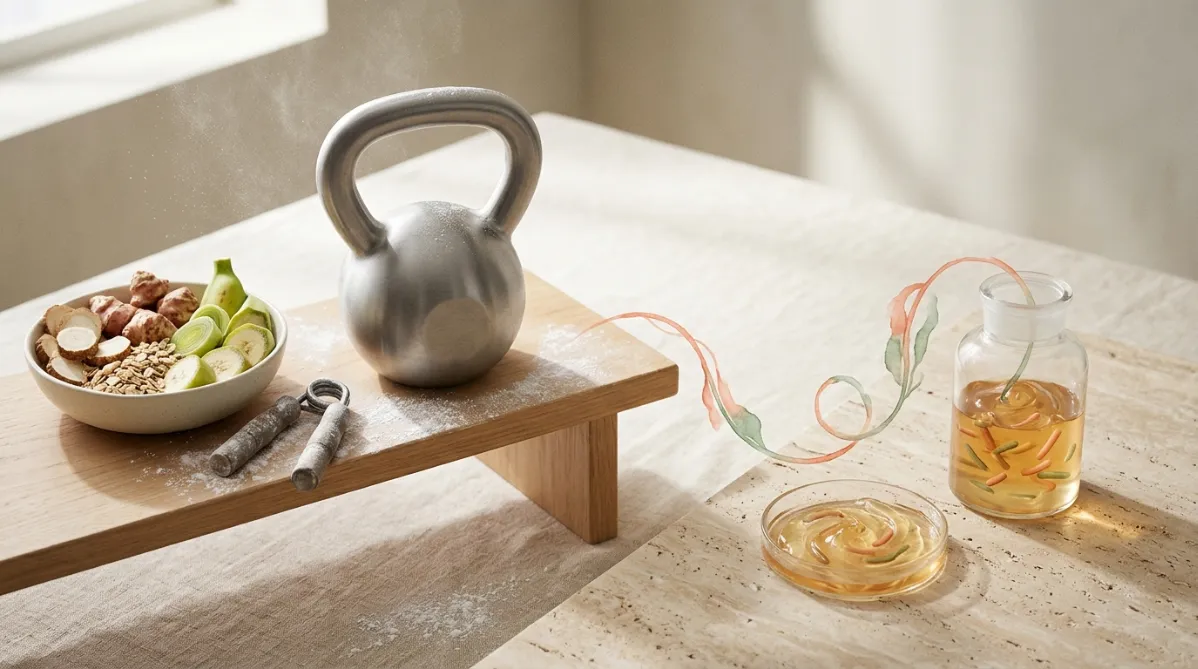
A landscape editorial still life on a soft, warm-neutral background of pale oat linen and light travertine stone. In the center-left, a matte brushed-steel kettlebell and a pair of worn chalk-dusted hand grippers rest on a low pale wooden bench. Beside them sits a shallow ceramic bowl of fermented and fiber-rich foods: sliced chicory root, Jerusalem artichokes, oats, leeks, and a few green banana slices. Soft powdery chalk drifts in the air like fine dust in a sunbeam.

On the right, a minimalist glass apothecary jar and a delicate petri-style glass dish hold a swirl of translucent amber-gold gel with tiny, organic rod-shaped forms. They are rendered as abstract, elegant botanical-looking filaments in soft coral and sage green, like watercolor ink bleeding through water. A single fine thread of this ink-like color curls out of the jar and gently loops across the surface toward the kettlebell, suggesting a quiet connection between gut and muscle without literal anatomy.

Late-morning window light enters from the upper left and casts long, soft shadows with gentle highlights on the metal and glass. Sage green, terracotta, cream, and muted gold make up the palette, with a subtle film-grain finish. The composition is airy, with generous negative space on the far right and top for headline overlay. The shallow depth of field, crisp focus on the foreground objects, and creamy blur behind them give it the polished, modern feel of a wellness and science magazine cover.
science research

与更强举重相关的肠道细菌:Roseburia inulinivorans

BY DR. GYMBRO ·

一种名为 Roseburia inulinivorans 的肠道细菌与人群的握力、腿推和卧推表现正相关;在小鼠实验中补充该菌可提升握力。其他 Roseburia 属的菌种未出现同样效果,而该菌在老年人中的丰度低于年轻人。需注意,因果关系的证据仅来源于小鼠,尚无可商用的益生菌产品。本文概述《Gut》期刊的发现、可能的作用机制以及在科学尚未成熟时的低风险调理建议。

A softly lit, minimalist strength-training studio photographed in a modern editorial style. In the foreground, a matte black barbell loaded with weight plates rests on a light oak platform, with fine chalk dust floating in warm morning light. Beside it on a pale concrete bench sits a simple ceramic scoop of white creatine powder, with a small spill of fine crystals catching the light, next to a minimal frosted glass jar with no label. A matte sage-green shaker bottle and a folded cream towel sit nearby. In the soft-focus background, tall windows let in diffused golden sunlight, casting long, gentle shadows across the floor. A rack of neatly arranged dumbbells is blurred in muted charcoal tones.

The color palette is calm and sophisticated: warm off-white, sand, sage green, soft charcoal, and touches of terracotta. A small open notebook with a pencil lies on the bench, suggesting research and data tracking, with abstract hand-drawn bar graph lines faintly visible on the page but not legible. The composition follows the rule of thirds, with the barbell and powder on the left and generous negative space on the right for headline text. Shallow depth of field, crisp textures on the metal knurling and powder grains, subtle film grain, and a contemporary wellness-magazine look. Clean, airy, and editorial, with a grounded, scientific yet approachable mood. Landscape 16:9 composition.
science research

肌酸加举重:力量提升更显著,剂量方案并非关键

BY DR. GYMBRO ·

一项包含63项研究、1,489名受试者的元分析评估了肌酸在力量训练中的额外益处。结果显示,肌酸能中等幅度提升上下肢力量,瘦体质量略有增长,体脂并未出现显著变化。令人惊讶的是,剂量方案、每日摄入量以及补充时间等因素对效果几乎没有影响,唯一的显著调节因素是年龄——年轻受试者的力量提升更为明显。

A wide, softly lit editorial still life photographed on a pale oak desk at the blue hour just before dawn. In the center-left foreground, a clear glass of water sits beside a small ceramic dish holding a mound of fine white powder, with a matte wooden scoop resting beside it, a light dusting of powder scattered across the wood grain. Behind them, a minimalist analog alarm clock in muted sage green reads close to 4:00. Next to it is an open linen-bound notebook with a pencil and a few abstract handwritten lines, plus a ceramic mug of black coffee with a thin trail of steam. To the right, a slim laptop is open to a blurred, softly glowing screen with no legible text. A window in the background shows a deep indigo sky turning peach at the horizon, with soft city silhouettes out of focus. Warm light from a small brass desk lamp creates a gentle pool of amber on the desk, contrasting with the cool blue ambient light from the window. The palette is muted and modern: dusty blue, warm cream, soft sage, and a touch of apricot. Shallow depth of field, fine film grain, and generous negative space on the right third for title overlay. The mood is calm, focused, and slightly weary but hopeful, like a contemporary health and science magazine cover. Clean composition, natural textures, subtle shadows, and a high-end lifestyle photography aesthetic.
nutrition

熬夜前服用肌酸?低剂量仍能减轻大脑功能衰退

BY DR. GYMBRO ·

如果一次大剂量的肌酸能够缓解熬夜后的脑雾会怎样?《Nutrients》最新研究显示,单次0.2 g/kg(约14‑16 克)的剂量在21小时不眠期间能显著减缓逻辑、数字、语言速度及警觉性任务的下降,最高提升可达12%。女性受益更为明显。不过,参与者仅有29人,剂量是日常推荐的数倍,且效果低于同组早前使用0.35 g/kg时的结果。下面一起看看数据到底说明了什么,以及哪些仍未可知。

This page is available in