Dr. Gymbro

#carbon sequestration

1 article
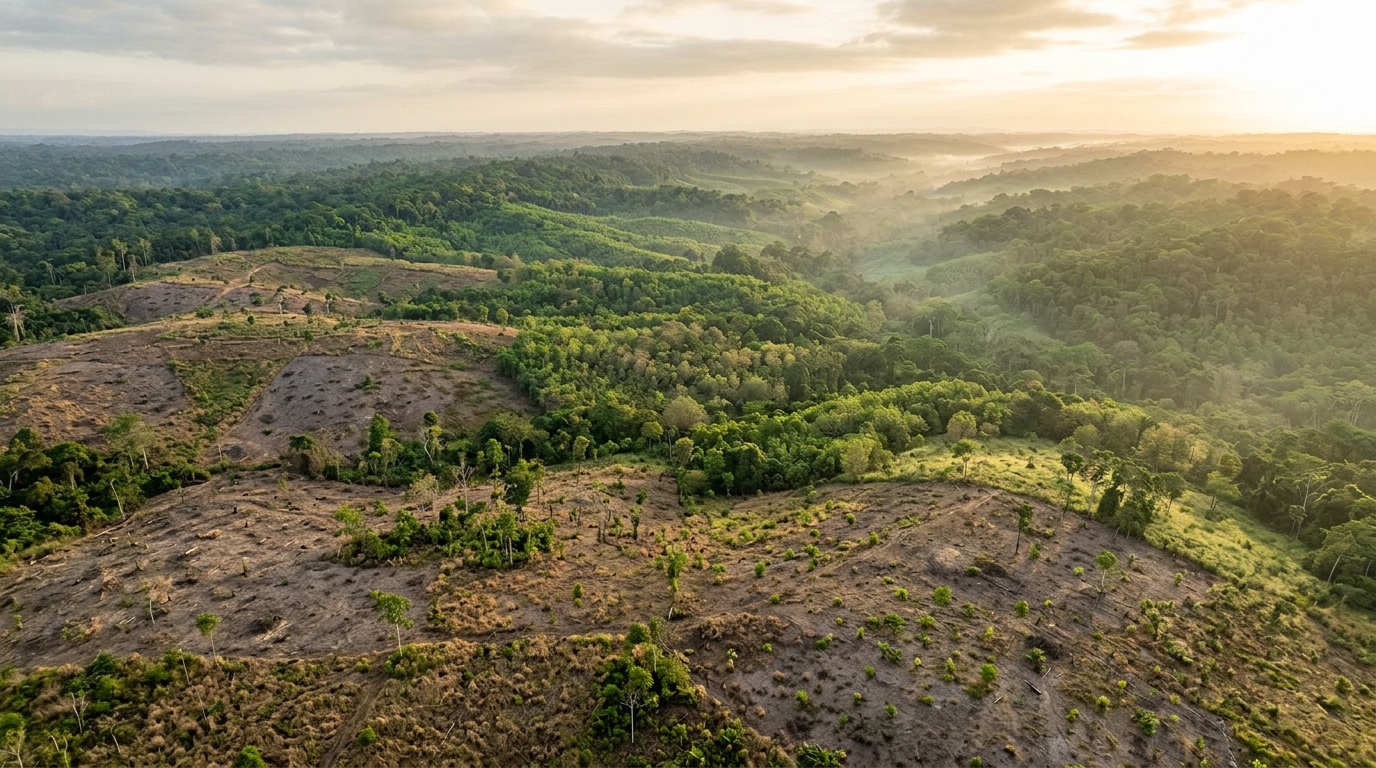
A sweeping aerial view of vast tropical landscape showing the dramatic transition from degraded land to lush, regenerating forest. The foreground displays patchy, cleared areas with scattered vegetation and bare soil, gradually transforming into dense, vibrant green canopy in the distance. Sunlight filters through morning mist, illuminating the contrast between brown, sparse grassland and the emerald green of naturally recovering rainforest. Young saplings and pioneer species dot the middle ground, creating a mosaic of different vegetation stages. The scene captures the natural progression of forest regeneration across rolling hills that stretch to the horizon. Wispy clouds drift over the landscape, while the golden hour lighting emphasizes the hope and potential of natural restoration. The image conveys the scale and beauty of tropical forest recovery, with varying shades of green representing different stages of natural regeneration across this vast, Mexico-sized expanse of healing land.
general

Nature's eigene Lösung: 215 Millionen Hektar tropischer Fläche könnten von selbst zu Wald werden

BY DR. GYMBRO ·

Eine bahnbrechende Studie zeigt, dass 215 Millionen Hektar tropischer Fläche – ein Gebiet, das größer ist als Mexiko – sich von selbst zu Wäldern entwickeln könnten, ohne teure Aufforstungsprogramme. Diese naturnahe Regeneration könnte über 30 Jahre hinweg 23,4 Gigatonnen Kohlenstoff binden, wobei fünf Länder mehr als die Hälfte des Potenzials ausmachen. Die Ergebnisse bieten einen kostengünstigen Weg, globale Klimaziele zu erreichen und gleichzeitig die Biodiversität wiederherzustellen.

This page is available in