Dr. Gymbro
←

#repeated sprint

1 article
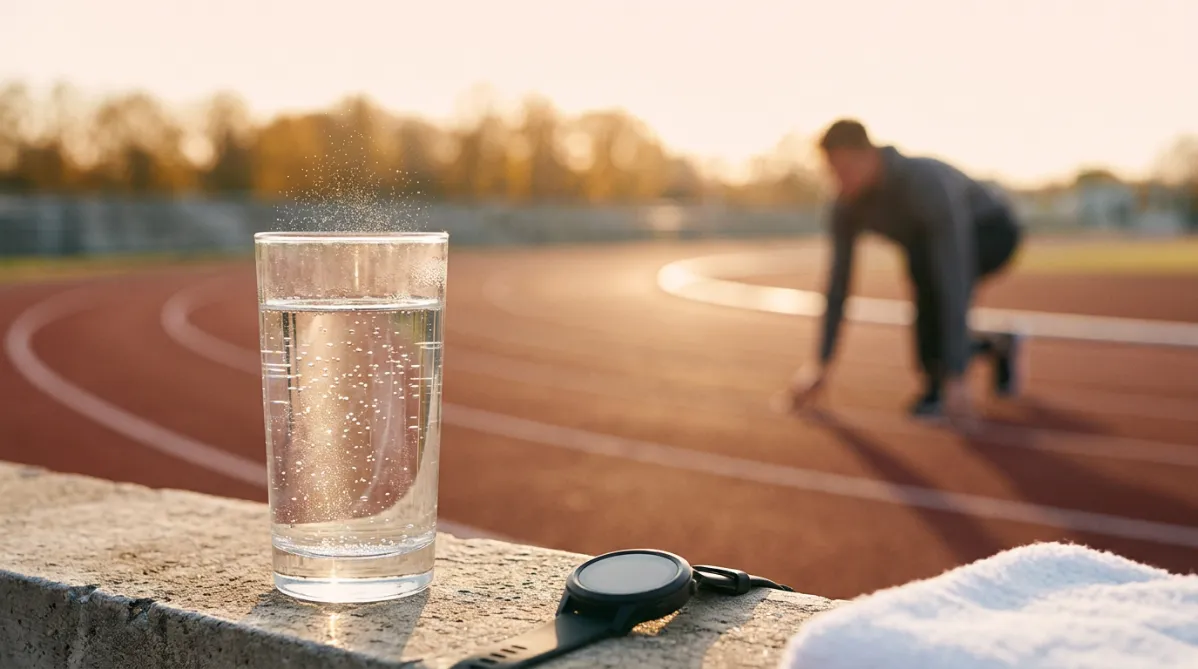
A wide, editorial-style photograph of a clear glass of water on a weathered concrete ledge at the edge of an outdoor running track, shot in soft golden-hour light. Tiny, fine bubbles cling to the inside of the glass and drift upward, catching warm backlight so the water looks luminous and crisp. The glass is about three-quarters full, with delicate condensation beading on its surface. In the softly blurred background, the curved lanes of a terracotta-red track sweep diagonally across the frame, with faint white lane lines leading toward the horizon. A lone sprinter in a charcoal athletic top crouches in a starting position, out of focus, rendered as a muted silhouette. Long shadows stretch across the track, and a hazy line of trees glows amber in the distance.

Foreground details are sharp: a matte black sports watch rests beside the glass, its screen dark, and a folded white towel sits at the edge of the frame. The palette is warm and restrained, with terracotta, sand, soft peach sky, charcoal, and the cool, clean glint of water as the focal accent. Shallow depth of field, 85mm lens look, fine film grain, gentle natural lens flare from the low sun. The composition follows the rule of thirds, with the glass placed on the left third and generous negative space on the right for headline text. The mood is calm, athletic, and modern, like a contemporary health and performance magazine cover, with no text, logos, or futuristic elements.
science research

Apă cu hidrogen înainte de sprinturi: puterea menţinută şi recuperarea accelerată

BY DR. GYMBRO ·

Un pahar de 280 mL de apă îmbogăţită cu hidrogen, consumat cu aproximativ un minut înainte de sprinturile la intensitate maximă, a menţinut o producţie de putere mai mare într-un nou studiu crossover. Sportivii au prezentat, de asemenea, o recuperare mai rapidă a variabilităţii ritmului cardiac, iar lactatul din sânge a fost cu aproximativ 1 mmol/L mai scăzut la 3 minute după efort. Însă studiul a implicat doar 13 bărbaţi, a fost unic‑cec şi a testat o singură doză acută. Iată ce au descoperit cercetătorii, cum a fost administrată substanţa, pentru cine ar putea fi potrivită şi de ce ar trebui să rămâneţi sceptici.

This page is available in