Dr. Gymbro
←

#repeated sprint

1 article
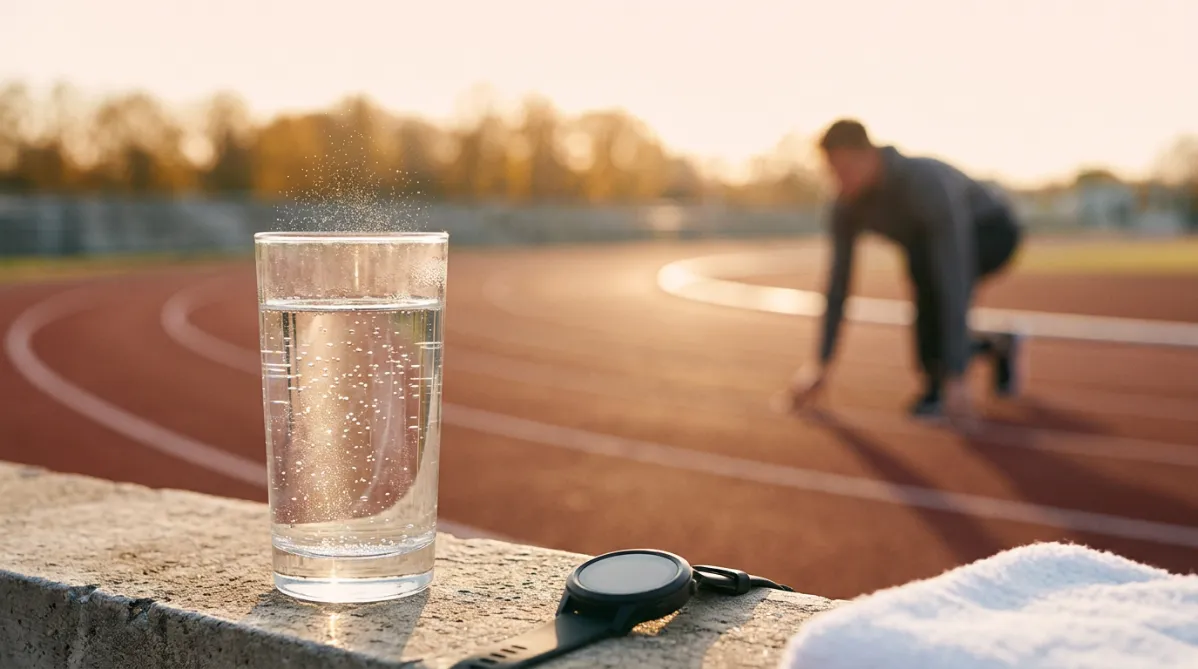
A wide, editorial-style photograph of a clear glass of water on a weathered concrete ledge at the edge of an outdoor running track, shot in soft golden-hour light. Tiny, fine bubbles cling to the inside of the glass and drift upward, catching warm backlight so the water looks luminous and crisp. The glass is about three-quarters full, with delicate condensation beading on its surface. In the softly blurred background, the curved lanes of a terracotta-red track sweep diagonally across the frame, with faint white lane lines leading toward the horizon. A lone sprinter in a charcoal athletic top crouches in a starting position, out of focus, rendered as a muted silhouette. Long shadows stretch across the track, and a hazy line of trees glows amber in the distance.

Foreground details are sharp: a matte black sports watch rests beside the glass, its screen dark, and a folded white towel sits at the edge of the frame. The palette is warm and restrained, with terracotta, sand, soft peach sky, charcoal, and the cool, clean glint of water as the focal accent. Shallow depth of field, 85mm lens look, fine film grain, gentle natural lens flare from the low sun. The composition follows the rule of thirds, with the glass placed on the left third and generous negative space on the right for headline text. The mood is calm, athletic, and modern, like a contemporary health and performance magazine cover, with no text, logos, or futuristic elements.
science research

Acqua di Idrogeno Prima degli Sprint: Potenza Mantenuta e Recupero Accelerato

BY DR. GYMBRO ·

Un unico bicchiere da 280 mL di acqua arricchita d’idrogeno, bevuto circa un minuto prima di sprint massimali, ha consentito di mantenere più alta la potenza in un nuovo studio crossover. Gli atleti hanno mostrato anche un recupero più rapido della variabilità della frequenza cardiaca, e il lattato sanguigno era circa 1 mmol/L più basso a 3 minuti dall’esercizio. Lo studio, però, ha coinvolto solo 13 uomini, è stato a singolo cieco e ha testato una singola dose acuta. Ecco cosa hanno scoperto i ricercatori, come l’hanno dosato, a chi potrebbe interessare e perché è bene rimanere scettici.

This page is available in