Dr. Gymbro
←

Nutrition

50 articles
nutrition

20 g di sero non hanno attivato la sintesi muscolare negli uomini anziani

BY DR. GYMBRO ·

Il siero, le proteine vegetali e le proteine vegetali arricchite con leucina hanno tutti fallito lo stesso test in uno studio di Maastricht su 45 uomini di circa 69 anni. I livelli ematici di amminoacidi sono cambiati come previsto, con il siero il più alto in assoluto e la miscela arricchita il picco più elevato di leucina. Tuttavia la sintesi proteica muscolare è risultata identica tra i gruppi e non superiore a quella a digiuno. Il risultato suggerisce che, per gli adulti più anziani, la quantità di proteina conta più della sua origine. Ecco cosa ha testato lo studio, cosa non ha testato e come applicare i risultati.

nutrition

HMB durante il cutting: i soggetti mantengono la massa muscolare e perdono 5 kg di grasso in più

BY DR. GYMBRO ·

I dietisti che hanno assunto uno shake arricchito di CaHMB per 12 settimane hanno mantenuto la massa muscolare e hanno perso circa 5 kg di grasso in più rispetto al gruppo placebo. È uno dei risultati più sorprendenti tra gli integratori per una popolazione a restrizione calorica, proveniente da uno studio doppio cieco su 102 adulti con obesità. Anche il grasso viscerale, il metabolismo basale e la glicemia a digiuno sono migliorati. Tuttavia lo shake conteneva 24 g di proteine, mentre il controllo era solo carboidrati, quindi l’HMB non può prendersi tutto il merito. Ecco il dosaggio, a chi è indicato e le cautele da considerare prima di acquistare una confezione.

nutrition

12 settimane di 715 mg di DHA riducono il dolore muscolare post‑allenamento: il punto critico

BY DR. GYMBRO ·

Uno studio di 12 settimane su atleti che si allenano cinque o più giorni a settimana ha mostrato che 715 mg al giorno di DHA microincapsulato aumentano l’Omega‑3 Index di circa 2,4 punti. Il dolore muscolare è risultato più basso sia a 24 che a 48 ore dopo un intenso ciclo eccentrico, e l’altezza del salto si è recuperata meglio a 48 ore, con una dimensione d’effetto moderata. Tuttavia non è un rimedio rapido: i benefici compaiono solo dopo tre mesi di assunzione quotidiana. Lo studio è piccolo (38 partecipanti) e i gruppi sono sbilanciati (12 nel controllo, 26 nel DHA), perciò i risultati sono promettenti ma non definitivi. Ecco cosa significano per te dosaggio, tempistica e avvertenze.

nutrition

La caffeina ha reso i calciatori più veloci, ma non più reattivi

BY DR. GYMBRO ·

Molti credono che la caffeina migliori tutti gli aspetti della performance sportiva, ma uno studio controllato su calciatori amatoriali dipinge un quadro più sfumato. Una dose di 300 mg (circa 3,7 mg/kg) ha aumentato l’agilità pianificata e l’altezza del salto, mentre i benefici sulla reattività a luci o avversari umani sono stati minimi o non significativi. Scopri cosa ha evidenziato lo studio, come interpretare i risultati e a chi possono davvero servire questi dati.

nutrition

Bere 60 g di carboidrati a metà allenamento ti rende più forte? Non proprio

BY DR. GYMBRO ·

Le bevande a base di carboidrati da assumere durante l’allenamento sono ovunque, ma aumentano davvero la forza? Un piccolo studio randomizzato, in doppio cieco e crossover, su 15 adulti allenati alla resistenza ha testato 60 g di maltodestrina durante una sessione di sollevamento con carico equivalente. La glicemia è aumentata di circa 19 mg/dL, mentre lattato, indice di forza reattiva e presa non hanno mostrato variazioni significative. Le ripetizioni di estensione del ginocchio fino al cedimento sono state circa 2,5 in più con i carboidrati, ma il dato proviene da soli 10 soggetti e non è risultato significativo dopo le correzioni. Ecco cosa dimostra davvero lo studio, a chi potrebbe ancora interessare e perché è più un generatore di ipotesi che una conferma definitiva.

nutrition

Il cioccolato fondente aggiunge 4,3 cm al salto delle donne. Dovresti farci caso?

BY DR. GYMBRO ·

Uno studio su atlete CrossFit ha mostrato che, dopo tre giorni di integrazione con 30 g al giorno di cioccolato fondente al 85 %, il salto verticale è aumentato di circa 4,3 cm rispetto a un placebo. I test di forza al ginocchio sono migliorati, ma il dolore muscolare è rimasto invariato. Gli autori avvertono però che gli effetti sono “insolitamente grandi” e che non sono stati modellati né gli effetti di periodo né quelli di carry‑over. Questo riepilogo analizza dose, tempistica, destinatari e spiega perché si tratta più di un segnale promettente che di una prova definitiva.
A wide, editorial-style still life shot from a slightly elevated three-quarter angle on a pale oak gym bench, lit by soft morning window light. In the foreground sits a minimalist matte-white glass beaker of clear, faintly amber liquid, with a few condensation droplets on its surface. Beside it rests a small ceramic dish of white crystalline powder and a stainless steel scoop. In the middle ground, a chalk-dusted steel barbell with black bumper plates rests on the bench's edge. A pair of worn leather lifting straps and a small notebook with a pencil lie nearby, suggesting data logging. Behind them, softly blurred, is a bright, airy studio with concrete walls, a wooden plyo box, and a tall leafy plant catching the light.

The palette is warm and muted: cream, sand, soft sage green, and charcoal, with one small accent of burnt orange in the amber liquid and a terracotta towel draped over the bench. Fine chalk dust floats in sunbeams that cut diagonally across the frame. The shallow depth of field keeps the beaker and barbell sharp while the background melts into creamy bokeh. Composition follows the rule of thirds, with the beaker on the left third and generous negative space on the right for headline text. The mood is calm, premium, and contemporary, like a high-end wellness and sports-science magazine photograph with subtle film grain, natural shadows, and realistic textures.
nutrition

I chetoni hanno mantenuto una produzione di forza dell'8 % più elevata, ma i salti non hanno mostrato miglioramenti

BY DR. GYMBRO ·

Cinquanta grammi di un precursore di chetoni hanno mantenuto la velocità di sviluppo della forza dell'8 % più alta un'ora dopo l’ingestione in uno studio dell’Ohio State, ma non hanno influito sui salti con contramovimento. Lo studio crossover su 20 adulti attivi ha mostrato picchi di chetoni nel sangue intorno a 2,2 mM a 120 minuti, accompagnati da una riduzione della glicemia del 24 % e da un aumento di 13 bpm della frequenza cardiaca. L’integrazione può interessare chi esegue sforzi massimali ripetuti, ma resta un’indagine piccola e acuta.
A bright, modern gym scene in soft natural morning light, shot in landscape with shallow depth of field. In the foreground, a matte white scoop sits on the rim of a minimalist matte-black tub of white powder, with a few fine grains scattered across a light oak wooden bench. Beside it is a clear glass shaker bottle filled with a pale, cloudy liquid, with condensation beads on the surface. In the soft-focus midground, a hack squat machine stands with a loaded barbell sled and stacked plates in brushed steel and black rubber. A lifter in a fitted charcoal t-shirt and shorts, face turned away, is mid-set with strong, defined quads and calves, and a light sheen of sweat catches the sunlight. Tall industrial windows in the background cast long golden light beams across a polished concrete floor, with a hint of green from a potted plant in the corner. The palette is warm and editorial: cream, sage green, charcoal, and a touch of terracotta orange. A small, neat notebook with a pen lies open on the bench, with tally marks hinting at counted reps. The composition follows the rule of thirds, with the supplement and shaker on the lower left, the lifter and machine on the right, and open negative space at the top for headline overlay. The style is clean, contemporary lifestyle photography, like a premium wellness magazine, with subtle film grain, natural color grading, and crisp detail on the foreground objects.
nutrition

8 g di Citrullina Malato: +11 ripetizioni negli Hack Squat e meno dolore muscolare

BY DR. GYMBRO ·

Una dose di 8 g di citrullina malato assunta un’ora prima di una sessione di gambe ha aggiunto circa 11 ripetizioni extra agli hack squat in uno studio crossover doppio cieco. Gli atleti hanno riferito minore indolenzimento a 24 e 48 h rispetto al placebo, senza variazioni di lattato ematico né di percezione dello sforzo. Scopri chi può beneficiarne, come è stato dosato e perché le limitazioni del campione e del disegno sperimentale impediscono di esagerare con i risultati.
A wide, editorial-style still life photographed on a pale warm-gray concrete surface in soft morning window light. In the center sits an open, matte white supplement tub with a scoop resting beside it, a small mound of fine white powder spilling onto the surface. Next to it is a clear glass of water with a faint cloudy swirl of dissolved powder. A few loose capsules in muted coral and cream tones are scattered casually in the foreground. Behind them, slightly out of focus, is a clean running track lane in terracotta red with crisp white lines curving across the background. A pair of minimalist off-white sprint spikes rests on the edge of the track, laces loosely undone. A stopwatch with a brushed metal casing lies partially in frame at the right, its face reading a blurred, indistinct time.

The composition uses generous negative space on the left third, leaving a calm area of soft gray and cream for headline text. Shadows are long, gentle, and slightly cool, contrasting with the warm terracotta of the track. The palette is restrained: terracotta, bone white, soft sage green accents from a small leaf sprig tucked near the tub, and charcoal gray details. Shallow depth of field with a crisp focus on the scoop and powder, creamy bokeh behind. The mood is thoughtful, skeptical, and calm, like a modern wellness or science journal cover. Subtle film grain, natural color grading, and a tactile, tangible feel, with no text, no logos, and no futuristic elements.
nutrition

Beta‑alanina è presente in quasi tutti i pre‑allenamento: i dati sugli sprint dicono che potrebbe non funzionare

BY DR. GYMBRO ·

Beta‑alanina è presente in quasi tutti i pre‑allenamento e le tipiche formicolii fanno credere che stia funzionando. Una meta‑analisi multilivello del 2026 su 17 studi randomizzati non ha trovato benefici sulla capacità di sprint ripetuti, né nella performance media, né nel picco, né nella riduzione della fatica. Dose, durata e livello di allenamento non hanno modificato il risultato. Gli autori ipotizzano che gli sprint ripetuti siano limitati dal recupero di fosfocreatina piuttosto che dall’acidosi, obiettivo della beta‑alanina. Scopri chi può ancora trarne beneficio, chi può evitarla e quali sono i limiti dello studio.
A wide, editorial-style still life photographed in soft natural window light on a pale oak or light grey concrete surface. In the center-left, a shallow ceramic bowl filled with plump, dusky blue-black blackcurrants, some with tiny glossy highlights and a few still attached to slender green stems with serrated leaves. Beside the bowl, a matte black dumbbell handle rests diagonally, partially in frame and slightly out of focus, suggesting strength training without a gym setting. In the foreground, two small minimalist glass dishes sit side by side: one holds a small pile of deep purple powder, the other a larger pile, a subtle visual nod to the low versus high dose. A few scattered berries add a natural touch. A folded linen cloth in muted oatmeal tone adds texture, and a single white capsule sits near the dishes for scale.

The background is a soft, creamy off-white wall with gentle shadow gradients from the window, leaving generous negative space on the right third of the frame for title overlay. The color palette is restrained and modern: deep indigo and violet from the berries, warm neutral beige, charcoal black, and touches of fresh leaf green. Shallow depth of field, crisp focus on the berries in the foreground, subtle film grain, and a calm, refined, contemporary magazine aesthetic like a wellness or sports science journal cover. Overhead angle tilted slightly to about 35 degrees, balanced composition, clean and uncluttered, with natural soft shadows and a premium, quietly athletic mood.
nutrition

Ribes Nero per Sollevatori: Perché la Bassa Dose Batte la Dose Alta

BY DR. GYMBRO ·

Un integratore di ribes nero assunto per una settimana ha aumentato il 1RM in panca nei sollevatori allenati; la dose più piccola (250 mg) ha spesso eguagliato o superato quella da 600 mg. La dose alta ha incrementato la potenza in panca di quasi 80 W rispetto al placebo, mentre la dose bassa ha migliorato i punteggi del test Stroop. Tuttavia anche il placebo ha superato il controllo senza capsule nella pressa per le gambe, perciò questi guadagni appariscenti vanno letti con cautela. Con soli 20 partecipanti e una durata di sette giorni, si tratta più di un segnale promettente che di un aiuto alla forza provato. Ecco cosa è risultato solido, cosa no e chi potrebbe voler provare questo integratore.
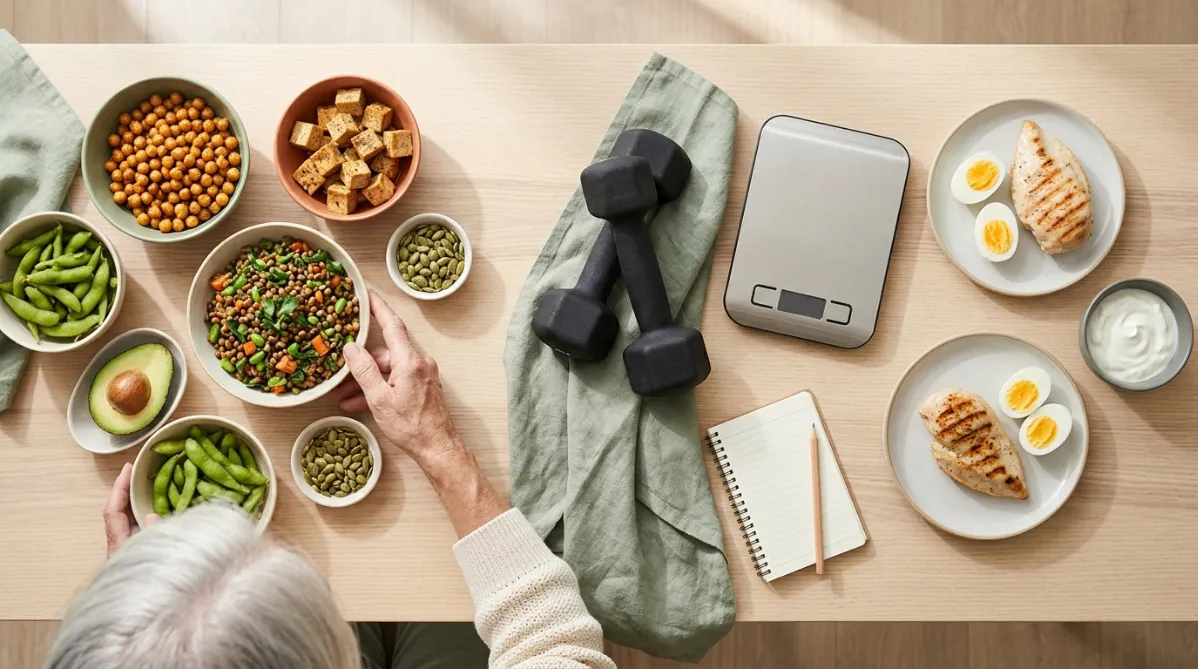
A bright, airy overhead flat-lay on a pale oak table in soft morning light. On the left, a vibrant plant-based protein spread in ceramic bowls: roasted chickpeas, marinated tofu cubes, lentil salad with herbs, edamame, sliced avocado, and a small dish of pumpkin seeds. On the right, a few contrasting items: a simple plate with grilled chicken breast, a hard-boiled egg halved, and a small bowl of Greek yogurt. Between the two sides, a pair of compact, matte-black hexagonal dumbbells rests on a folded sage-green linen towel, with a simple stainless-steel kitchen scale and a small open notebook with a pencil, suggesting tracking protein intake. A pair of weathered, elegant older hands, silver-haired and mid-60s, reaches in gently to pick up a bowl, with a casual cream knit sleeve visible. Natural window light casts soft diagonal shadows across the table. The palette is warm and muted: sage green, cream, terracotta, soft charcoal, with pops of fresh green and orange from the vegetables. Shallow depth of field, crisp focus on the food and dumbbells, gentle blur at the edges. The composition follows a clean editorial style with generous negative space at the top and right for headline text. The overall feel is modern wellness-magazine photography: calm, clean, and inviting, with tactile textures of linen, ceramic, wood, and fresh produce. Landscape 16:9 framing.
nutrition

Diventare vegetariani dopo i 55 anni? Cosa ha rivelato uno studio sul sollevamento con 108 partecipanti

BY DR. GYMBRO ·

Stai valutando di eliminare la carne mentre ti alleni nella tua tarda cinquantina, sessantina o oltre? Lo studio randomizzato IMPACT, condotto su 108 adulti più anziani, ha mostrato che sia i vegetariani sia gli onnivori hanno aumentato massa muscolare e forza in 12 settimane di allenamento di resistenza. Tuttavia, il gruppo vegetariano ha assunto meno proteine (1,24 vs 1,58 g/kg/giorno) e ha guadagnato meno muscolo appendicolare (+0,38 vs +0,66 kg). I ricercatori non sono riusciti a dimostrare la non‑inferiorità della dieta vegetariana, rendendo il risultato sul muscolo statisticamente inconcludente. Scopri cosa dimostra davvero lo studio, dove mancano i dati e come impostare gli obiettivi proteici se ti alleni con una dieta prevalentemente vegetale.

A wide, softly lit editorial still life photographed on a pale oak desk at the blue hour just before dawn. In the center-left foreground, a clear glass of water sits beside a small ceramic dish holding a mound of fine white powder, with a matte wooden scoop resting beside it, a light dusting of powder scattered across the wood grain. Behind them, a minimalist analog alarm clock in muted sage green reads close to 4:00. Next to it is an open linen-bound notebook with a pencil and a few abstract handwritten lines, plus a ceramic mug of black coffee with a thin trail of steam. To the right, a slim laptop is open to a blurred, softly glowing screen with no legible text. A window in the background shows a deep indigo sky turning peach at the horizon, with soft city silhouettes out of focus. Warm light from a small brass desk lamp creates a gentle pool of amber on the desk, contrasting with the cool blue ambient light from the window. The palette is muted and modern: dusty blue, warm cream, soft sage, and a touch of apricot. Shallow depth of field, fine film grain, and generous negative space on the right third for title overlay. The mood is calm, focused, and slightly weary but hopeful, like a contemporary health and science magazine cover. Clean composition, natural textures, subtle shadows, and a high-end lifestyle photography aesthetic.
nutrition

Creatina prima di una nottata in bianco? Una dose più bassa attenua ancora il calo cognitivo

BY DR. GYMBRO ·

E se una grossa dose di creatina potesse attenuare la foschia cerebrale di una nottata in bianco? Un nuovo studio pubblicato su *Nutrients* ha scoperto che una singola dose di 0,2 g/kg, circa 14‑16 g per la maggior parte degli adulti, ha ridotto il calo di prestazioni nei compiti di logica, numerici, velocità linguistica e vigilanza durante 21 ore di veglia, con miglioramenti fino al 12 %. Le donne sembravano trarne maggior beneficio. Tuttavia, hanno partecipato solo 29 persone, la dose è molte volte superiore a quella giornaliera abituale e l’effetto è stato minore rispetto alla precedente sperimentazione con 0,35 g/kg. Ecco cosa mostrano i dati e cosa no.

A wide, editorial-style still life photographed in soft natural window light on a pale oak gym bench. In the foreground, a small rustic ceramic bowl in warm sand tones holds a mound of fine golden-beige ashwagandha root powder, with a few dried gnarled ashwagandha roots and a sprig of green leaves with tiny orange-red berries resting beside it. A wooden scoop dusted with powder lies at an angle. Just behind, a matte black barbell with a single chalk-dusted steel plate sits slightly out of focus, a light haze of white chalk hanging in the air and catching the sunlight.

On the left side, a neat stack of printed research papers with a sharp black pen and a few muted sage-green sticky tabs. One page shows a simple, abstract forest-plot-style line graph with small squares and horizontal lines, subtly out of focus, hinting at statistics without legible text. A pair of minimal round reading glasses rests on the pages. A small linen gym towel is folded near the edge of the bench.

The palette is restrained and modern: warm cream, soft sage green, muted terracotta, charcoal black, and brushed steel highlights. The background is a softly blurred minimalist studio space with a pale plaster wall and a long soft shadow cast by a window frame, giving a calm, contemplative mood. Shallow depth of field, crisp detail on the powder and roots, gentle film-like grain, and generous negative space on the right third of the frame for a headline overlay. The overall look is a clean, trendy health-and-science journal cover, thoughtful and skeptical rather than promotional, balancing the natural herbal element against the discipline of strength training.
nutrition

Ashwagandha per i sollevatori: potenziamento della forza o miraggio statistico?

BY DR. GYMBRO ·

L'ashwagandha è commercializzata ai sollevatori come potenziatore di forza e massa; una recente meta‑analisi di RCT sull'allenamento con i pesi ha mostrato incrementi del 1RM su panca e squat che, sulla carta, sembrano impressionanti. Tuttavia, solo tre studi, per un totale di 161 partecipanti, sono stati aggregati. I risultati sulla forza hanno perso la significatività con il test HKSJ, più rigoroso, e dipendevano tutti da un singolo studio influente. GRADE ha valutato la qualità delle prove come bassa o molto bassa, e non è emerso alcun effetto affidabile sul grasso corporeo.
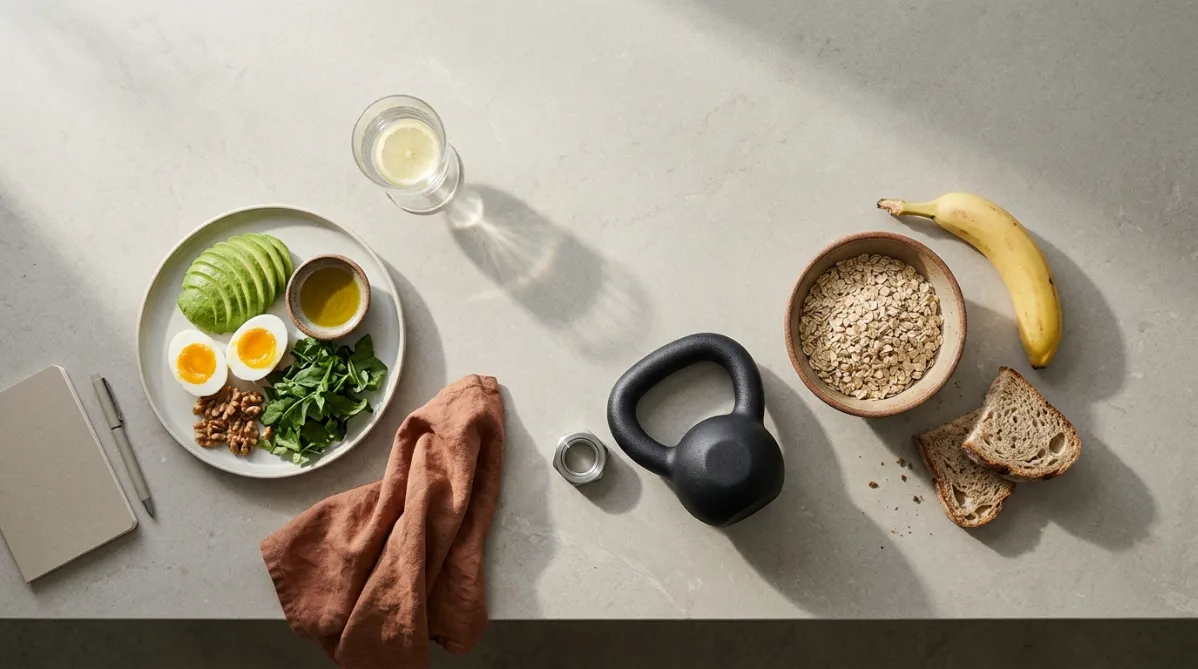
A wide, editorial-style flat lay photographed from above on a pale warm-gray stone countertop, bathed in soft natural window light with gentle long shadows. On the left half, a minimalist keto plate: sliced avocado fanned out in creamy green, two soft-boiled eggs halved to reveal golden yolks, a small pile of dark leafy greens, a few walnuts, and a glossy drizzle of olive oil in a small ceramic dish. On the right half, a contrasting arrangement of carbohydrates: a rustic bowl of oats, a ripe banana, and a few slices of sourdough, arranged with equal visual weight. Between the two sides, a matte black kettlebell sits at the center, and a slim brushed-steel barbell collar rests nearby, suggesting resistance training without a gym setting. A simple, elegant glass of water with a lemon slice catches the light and casts a delicate refracted glow, hinting at water weight and glycogen. A linen napkin and a small, neutral-toned notebook with a pen add a journal-like touch. The palette is muted and modern: sage green, cream, terracotta, charcoal, and soft butter yellow. The composition is clean and balanced with generous negative space across the top and bottom edges, suitable for headline overlay. The mood is calm, thoughtful, and science-informed, like a contemporary health and wellness magazine cover. Shallow depth of field, crisp textures on the food, subtle film-like grain, and high-end, trendy food photography styling.
nutrition

Keto per i sollevatori: il grasso diminuisce, ma la massa magra è inferiore di 1,4 kg

BY DR. GYMBRO ·

Una revisione basata su 50 studi ha dimostrato che le diete chetogeniche riducono il grasso e, in generale, mantengono la forza. Tuttavia, negli adulti allenati alla resistenza la massa magra risulta circa 1,37 kg più bassa rispetto a diete non chetogeniche. Gli autori valutano questa evidenza con bassa certezza e sottolineano che non indica una perdita di muscolo, poiché glicogeno e acqua possono spiegare gran parte del risultato. Le prestazioni ad alta intensità sono state più spesso invariate o compromesse. Scopri a chi può andare bene il keto per il cutting, chi dovrebbe evitarlo e come tutelare la massa magra.
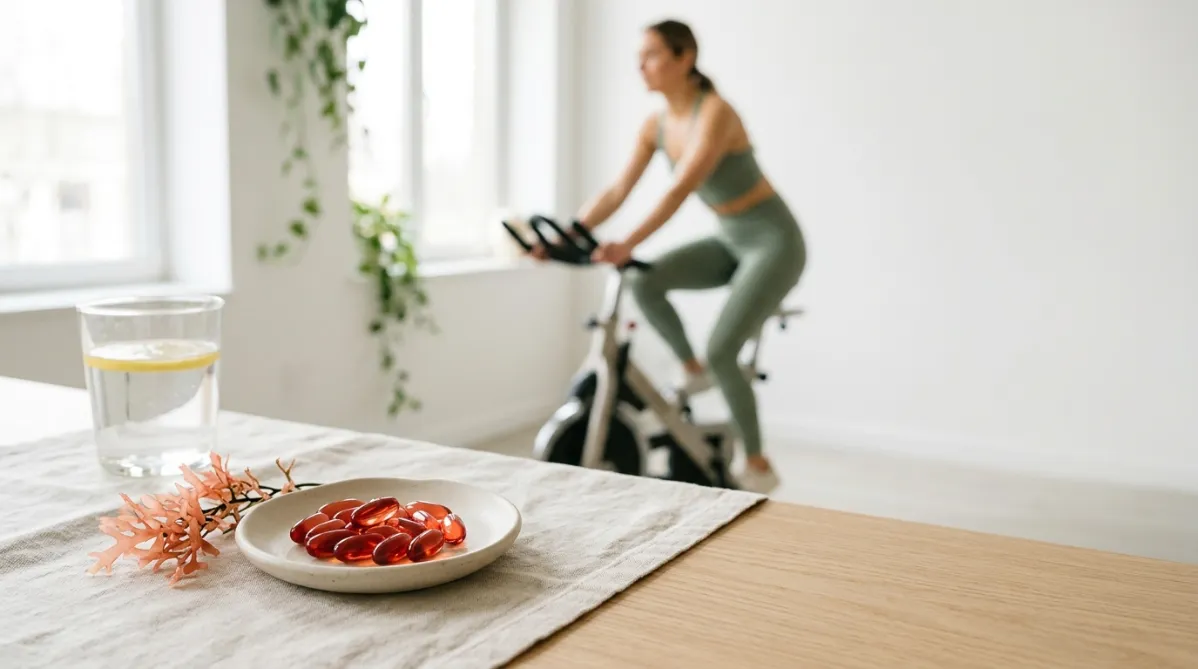
A wide, airy editorial photograph shot in soft morning light. In the foreground, a small matte ceramic dish holds a few deep coral-red softgel capsules, and a sprig of pink-orange wild salmon-toned microalgae sits beside it as a subtle nod to the nutrient's natural source. The capsules catch a warm glint and lie on a pale oatmeal linen cloth over a light oak surface. A glass of water with a thin lemon slice sits slightly out of focus nearby.

In the soft-focus background, a woman in sage-green athletic wear cycles on a stationary bike in a bright, minimalist studio with large windows, white walls, and a few trailing green plants. Her posture is relaxed and steady, which suggests moderate effort and calm breathing. Her face is turned slightly away from the camera, and the background blur is creamy and shallow.

The palette is restrained and modern: warm coral and salmon accents against cream, soft sage, pale wood, and diffused daylight. A gentle diagonal composition leads from the capsules at lower left toward the cyclist at upper right, with generous negative space on the right third for headline overlay. The style is clean and contemporary, like a wellness or science journal: natural film-like grain, subtle depth of field, and no text, graphs, or lab equipment. The mood is calm, healthy, and quietly credible.
nutrition

L'astaxantina sposta il combustibile delle donne verso i grassi senza sforzo aggiuntivo

BY DR. GYMBRO ·

Due settimane di astaxantina a 12 mg al giorno hanno ridotto il rapporto di scambio respiratorio (RER) in donne attive durante un ciclo moderato, indicando un maggiore utilizzo dei grassi. Frequenza cardiaca, lattato ematico e percezione dello sforzo sono rimasti invariati, perciò il cambiamento è avvenuto senza alcun carico aggiuntivo. Lo studio, randomizzato, doppio cieco e crossover, ha coinvolto solo 20 partecipanti e ha valutato l'uso di carburante, non la perdita di grasso. Scopri cosa ha rivelato la ricerca, a chi può interessare e quali aspetti restano ancora incerti.
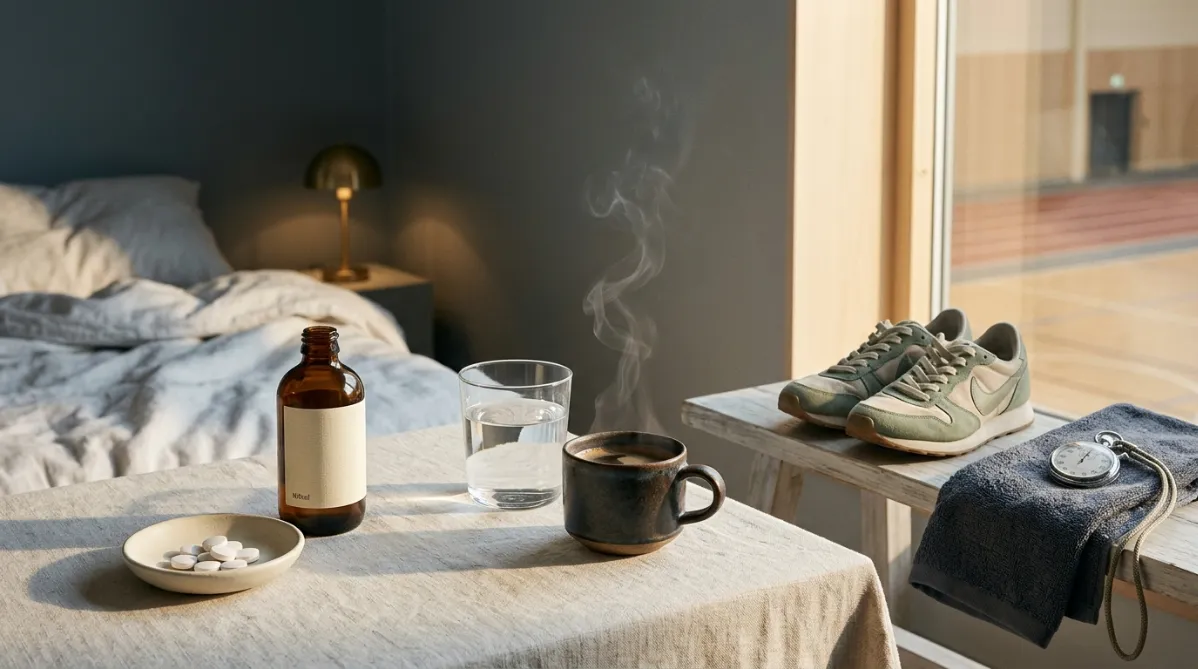
A quiet, sunlit editorial still life on a pale oatmeal linen surface, shot from a slightly elevated three-quarter angle with soft morning window light raking in from the left. On the left side, a small matte ceramic dish holds a few white round tablets, next to a minimalist amber glass bottle with a blank cream label. In the center, a slim glass of water sits beside a handmade stoneware espresso cup filled with dark coffee, with a thin ribbon of steam curling upward. On the right, a pair of worn but clean sage-green running shoes rests on a pale wooden bench, with a folded charcoal athletic towel and a stainless steel stopwatch beside them. The background is softly blurred: a calm bedroom-to-morning transition, with the left third of the frame in cool, dusky blue-gray tones suggesting night, with rumpled white bedding and a small bedside lamp glowing dimly. The tones then blend gradually across the frame into warm golden peach morning light on the right, where a blurred indoor court or track line is faintly visible through a tall window. The color palette is muted and modern: warm cream, soft sage, dusty blue, terracotta accents, and hints of amber. Delicate shadows, shallow depth of field, fine natural film grain, and generous negative space across the top of the frame for headline text. The mood is calm, precise, and thoughtful, in the style of a contemporary wellness and science journal photograph, clean and minimalist with tactile textures of linen, ceramic, glass, and wood.
nutrition

Melatonina e poi caffeina: solo la combinazione riduce i marcatori di danno muscolare

BY DR. GYMBRO ·

La caffeina ha fatto correre più lontano uomini allenati, ma solo la combinazione melatonina‑caffeina ha anche ridotto i marcatori di danno muscolare e di infiammazione. Il protocollo prevedeva 6 mg di melatonina prima di andare a letto, seguiti da 3 mg/kg di caffeina un’ora prima del test. La melatonina non ha modificato il sonno misurato, rendendo il risultato ancora più curioso. Lo studio, un piccolo crossover con 14 uomini allenati e un unico test di performance, è comunque preliminare. Ecco cosa è stato testato, a chi potrebbe interessare e cosa non dimostra.
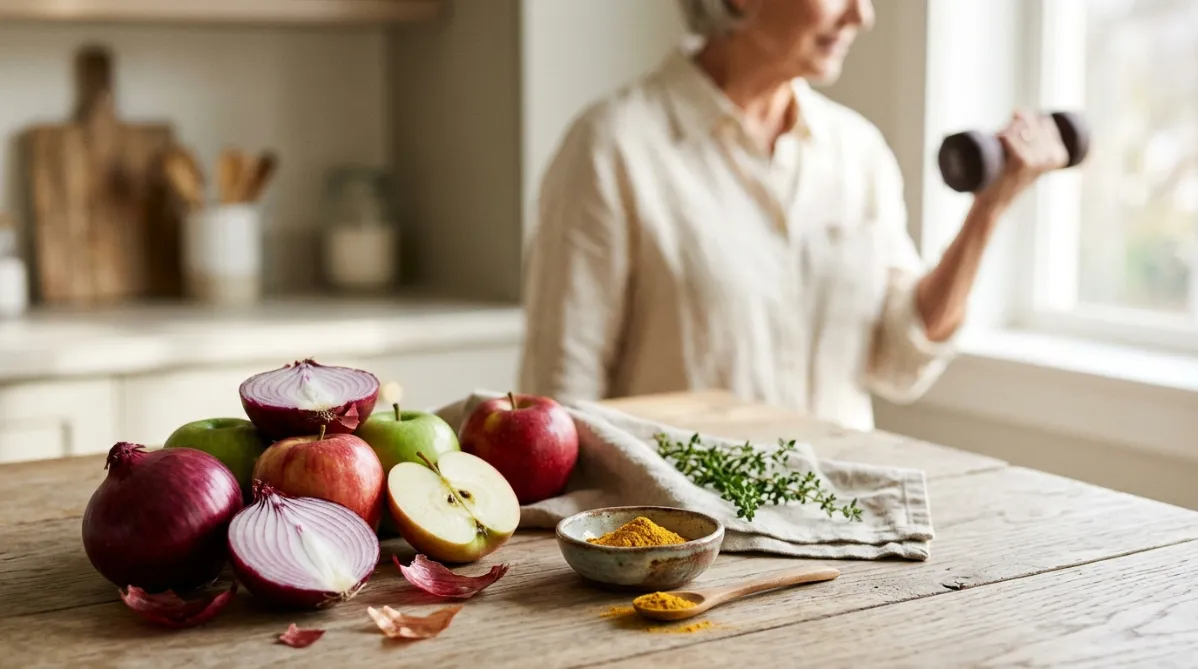
A landscape editorial photograph of a rustic kitchen table in soft morning window light. On a weathered light oak surface, a loose arrangement of fresh red onions, a few halved to show their purple-white rings, and crisp red and green apples, one sliced open to reveal pale flesh. A small ceramic bowl holds a pinch of golden-yellow quercetin powder, with a wooden spoon resting beside it. In the softly blurred background, an older woman in a cream linen shirt lifts a modest dumbbell near a sunlit window, her posture strong and relaxed. Her silhouette is out of focus, which keeps the produce as the main subject.

The palette is warm and natural: deep magenta onion skins, glossy apple reds, buttery yellow accents, and creamy neutrals. A gentle shallow depth of field gives creamy bokeh in the background. The light is diffused and golden, with delicate shadows and a few dried onion skin flakes scattered across the wood for texture. A folded linen napkin and a small sprig of thyme add a curated, modern lifestyle-magazine feel.

The composition follows the rule of thirds, with the produce at lower left and negative space on the right, where the blurred lifter and window glow provide balance. The overall look is clean, calm, and contemporary, like a premium health and wellness journal cover: natural, tactile, and optimistic, with fine film-like grain and true-to-life color.
nutrition

Quercetina triplica i guadagni di forza negli atleti anziani, senza aumentare la massa muscolare

BY DR. GYMBRO ·

Un flavonoide economico presente in cipolle e mele potrebbe aver incrementato notevolmente i guadagni di forza negli atleti più anziani, superando di gran lunga quello che l’allenamento da solo può offrire. In uno studio randomizzato, in doppio cieco, gli adulti anziani che hanno assunto 200 mg al giorno di quercetina glicoside hanno aumentato la forza del ginocchio di circa il 15 % in sei settimane, contro un 5 % nel gruppo placebo, senza alcun cambiamento della massa muscolare.
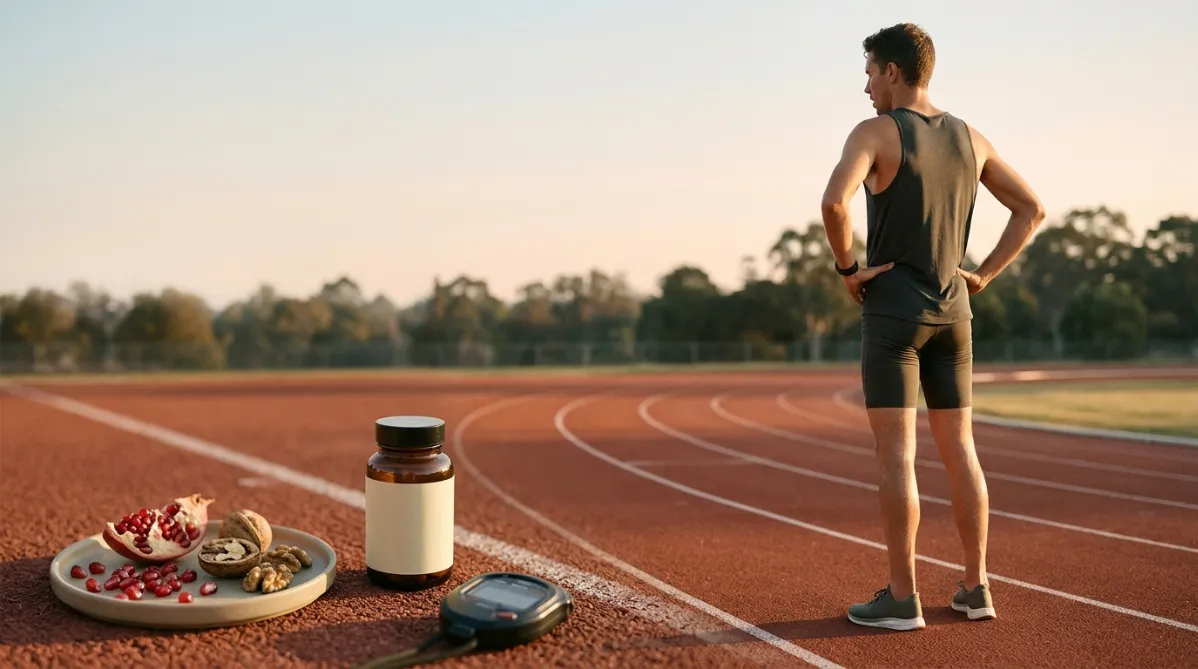
A wide landscape editorial photograph of a lone male distance runner, seen from behind in soft three-quarter profile, pausing on a red-clay outdoor running track at golden hour. He wears a minimalist charcoal singlet and fitted shorts, with a faint sheen of sweat on his calves and shoulders. His hands rest loosely on his hips as he catches his breath, and the white lane lines curve gracefully into the distance. Low amber sunlight rakes across the track and casts long, soft shadows. A hazy line of trees and a pale peach sky blur into creamy bokeh behind him.

In the lower foreground, slightly out of focus, a small matte ceramic dish holds a few pomegranate seeds and halved walnuts, a nod to the natural food sources of urolithin A. Beside it sits a minimalist amber glass supplement bottle with a plain cream label, and a stopwatch lies face-up on the track's edge. The stopwatch is blurred just enough to read as an object, not a number.

The palette is warm and earthy, with terracotta, burnt orange, soft cream, and muted sage green. The look is refined and contemporary, like a high-end wellness or sports-science magazine, with natural film-like grain, shallow depth of field, and gentle contrast. The composition follows the rule of thirds. The runner sits in the right third, the still life anchors the lower left, and open negative space in the upper left leaves room for a headline overlay. The mood is calm and thoughtful, suggesting recovery, measured results, and quiet scientific skepticism rather than hype. No text, no logos, no futuristic elements.
nutrition

Urolithin A non ha reso gli atleti di élite più veloci — ma ha ridotto i danni muscolari

BY DR. GYMBRO ·

L'Urolitina A è stata presentata come “supplemento per i mitocondri”. In uno studio su corridori maschi d’élite con VO2max medio di 66 mL·kg⁻¹·min⁻¹ non ha migliorato i tempi sui 3000 m, ma ha ridotto il marcatore di danno muscolare (CK) e la percezione di sforzo post‑gara. Il VO2max è aumentato del 5,4 % nel gruppo UA rispetto al 3,6 % del placebo, senza differenza statisticamente significativa. Scopri cosa ha realmente fatto una dose di 1000 mg al giorno per quattro settimane e quali limitazioni considerare, tra cui i piccoli campioni e i legami con l’industria.
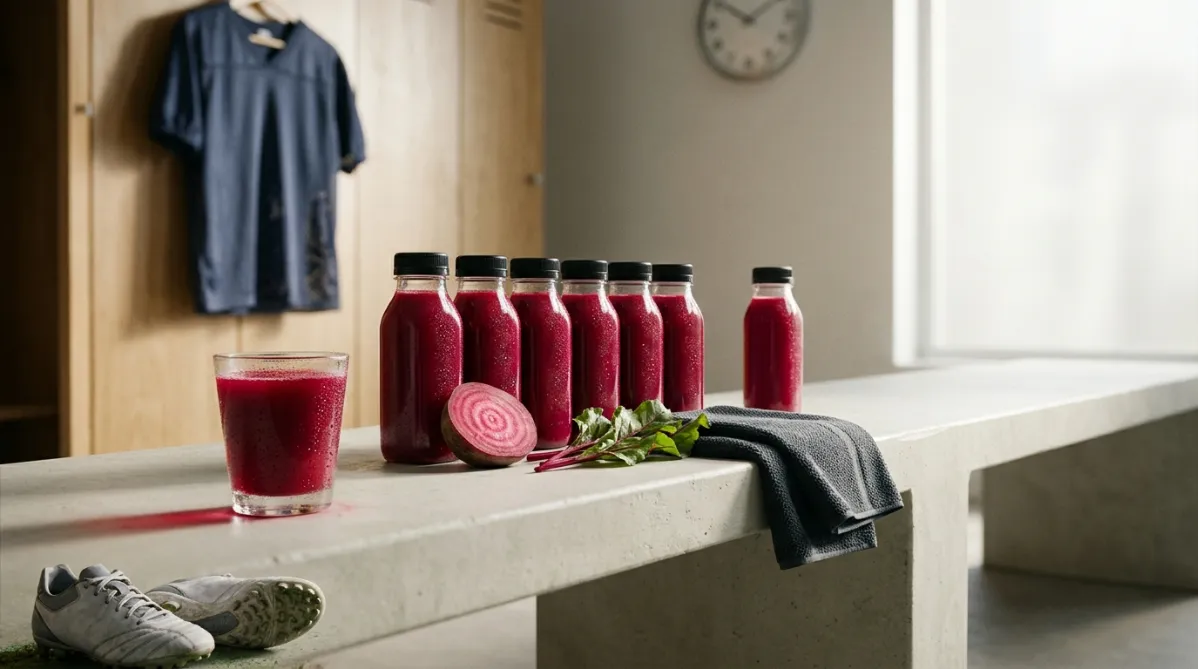
A landscape editorial photograph with a clean, modern magazine feel. On a pale concrete bench in a softly lit locker room, a single small glass shot of deep magenta-red beetroot juice sits in the left third of the frame. It is slightly out of focus in the foreground, with condensation beading on the glass and a faint ruby glow cast on the surface beneath it. Behind it, in crisp focus, is a neat row of seven identical small glass bottles of the same vivid juice, lined up like a weekly calendar. The bottles suggest multi-day loading, and the last one is subtly set apart from the others, with a simple analog wall clock blurred in the background.

Around the bottles are a few styled props: a halved raw beetroot showing concentric pink and crimson rings, a few small green-stemmed beet leaves, and a folded charcoal athletic towel. A pair of worn white and gray football cleats rests at the edge of the frame, with a hint of turf on the soles. A mesh-fabric team jersey in muted navy hangs on a wooden locker door in the soft background.

The lighting is natural window light from the right, with soft diffused shadows, warm highlights, and a gentle morning feel. The color palette is restrained and contemporary: deep beet magenta, warm off-white, slate gray, light oak, and touches of fresh leaf green. The composition has generous negative space on the right side, where the light falls across the empty bench, so there is room for a headline overlay. Shallow depth of field, a 35mm lens look, fine film-like grain, and a minimalist, high-end lifestyle-journal aesthetic. No people's faces, no text, no futuristic elements.
nutrition

Succo di barbabietola per gli sport di squadra: perché un colpo pre‑partita non funziona

BY DR. GYMBRO ·

Quel piccolo bicchiere rosso nello spogliatoio potrebbe non fare quello che credi. Una nuova meta‑analisi su 24 studi con atleti di sport di squadra ha rilevato che il succo di barbabietola e il nitrato dietetico offrono benefici modesti ma reali, soprattutto nei compiti specifici di squadra (g = 0,143, certezza moderata). L’approccio più supportato è quello di un caricamento di più giorni con un’ultima dose assunta 2‑3 ore prima dell’esercizio, mentre le singole dosi pre‑partita non hanno mostrato effetti chiari. Sprint singoli, la maggior parte dei marcatori metabolici e le risposte cardiorespiratorie non sono migliorati, e non è emersa una relazione dose‑risposta.

A lone trail runner pauses on a high alpine ridge at dawn, holding a small enamel camp mug of steaming coffee, with thin ribbons of steam curling into crisp, cold air. She wears a fitted charcoal running vest and a muted sage windbreaker, and her breath is faintly visible. Behind her, layered mountain ranges fade into soft blue and lavender haze, and a sea of low clouds fills the valley below. Warm golden sunlight skims the ridgeline and rim-lights her profile, shoulders, and the rising steam. In the foreground, a scattering of dried alpine grasses and lichen-covered stones is in sharp focus, with a worn trail snaking toward the summit. Near the mug sits a small pair of trail running shoes with dusty soles and a simple analog wristwatch resting on a flat rock.

The composition follows a wide 16:9 editorial layout. The subject sits slightly right of center on the rule of thirds, leaving generous negative space in the pale peach-and-powder-blue sky on the left, where headline text could sit. The palette is restrained and modern: warm amber, soft cream, dusty sage, slate blue, and a touch of terracotta. The look is cinematic but natural, with shallow depth of field on the foreground details, gentle film grain, and a slightly matte finish. It evokes a high-end outdoor lifestyle magazine or a contemporary wellness journal. The mood is calm, focused, and quietly determined, capturing the contrast between thin, cold altitude air and the warmth of a coffee ritual. The image has no text, logos, or futuristic elements, and no gym equipment, only natural light, texture, and atmosphere.
nutrition

Caffeina in Alta Quota: il boost di resistenza che l'ipossia non può cancellare

BY DR. GYMBRO ·

L'aria rarefatta penalizza la resistenza, ma una nuova meta‑analisi suggerisce che la caffeina può recuperare parte di quel deficit. Analizzando nove studi crossover controllati con placebo (117 partecipanti), gli autori hanno riscontrato un aumento delle prestazioni di medio‑grande entità in ipossia (g = 0,76). Sorprendentemente, la saturazione di ossigeno e la percezione dello sforzo non sono cambiate, mentre frequenza cardiaca, lattato e ventilazione sono aumentati. La prova è di bassa certezza e solo 19 partecipanti erano donne, perciò il risultato è promettente ma non definitivo.
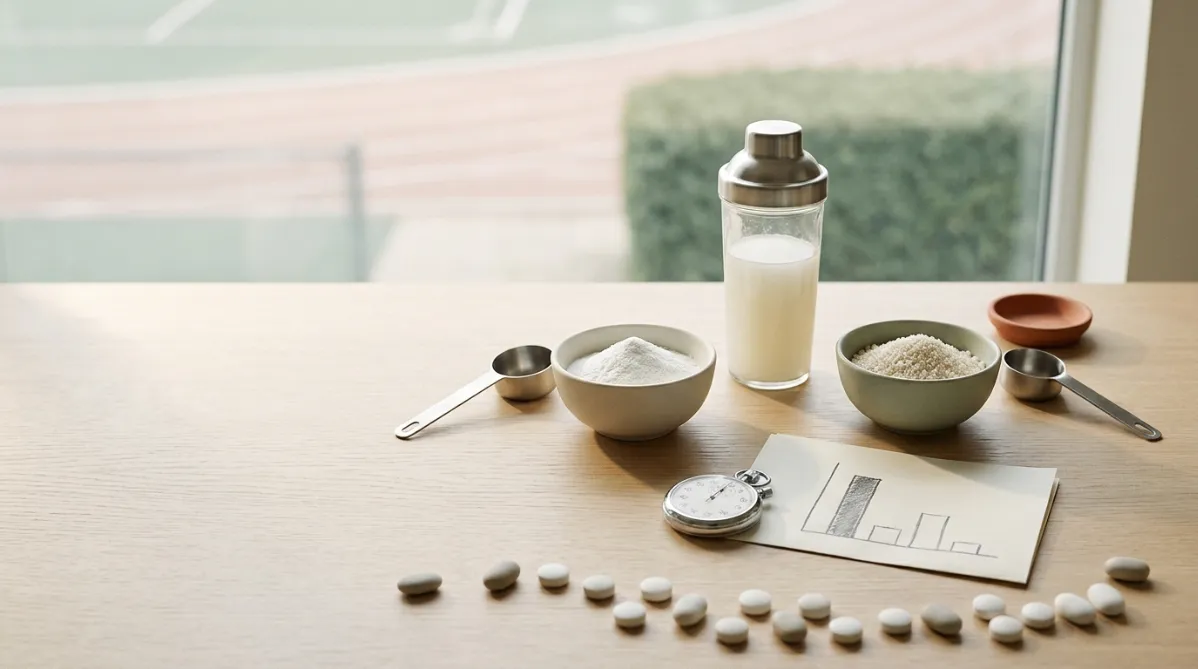
A wide, editorial-style still life shot from a slightly elevated angle on a pale oak laboratory-meets-kitchen countertop, bathed in soft, diffused morning window light. In the center, two small matte ceramic bowls sit side by side: one holds fine white creatine powder, the other holds slightly coarser off-white L-arginine crystals. A brushed steel scoop rests beside each. Between and slightly behind them stands a clear glass shaker bottle filled with a cloudy, pale liquid, catching a gentle highlight. In the foreground, a minimalist analog stopwatch lies on the wood surface, its face crisp and legible, next to a folded sheet of off-white paper with a hand-drawn simple bar chart in charcoal pencil, with one tall bar and a few shorter ones, no text or numbers. In the soft-focus background, a blurred gym-style window view shows a pale running track and a muted sage-green hedge, suggesting sprinting and athletic testing without any people. Eighteen small smooth stones or white pills are arranged in a neat loose arc across the lower edge of the frame, a subtle nod to the small sample size, with one stone set slightly apart. The color palette is calm and modern: warm cream, bone white, soft sage, muted terracotta accents from a small clay dish, and thin touches of brushed metal. Shadows are long and gentle, the depth of field shallow, with a fine film-like grain. The composition leaves generous negative space on the left third for a title overlay. The mood is clean, thoughtful, and trustworthy, like a contemporary health and science journal cover, with no futuristic elements, no glowing effects, and no text.
nutrition

Creatina + L‑Arginina: +~99 W di potenza di picco. Il problema

BY DR. GYMBRO ·

Un nuovo studio crossover ha scoperto che assumere creatina e L‑arginina insieme un’ora prima del test aumenta la potenza di picco di sprint di circa 99 W rispetto al placebo. La combinazione supera anche ciascun integratore assunto da solo in termini di potenza di picco e altezza del salto controbilanciato. Tuttavia i ricercatori non sono riusciti a dimostrare una sinergia reale tra i due, e lo studio ha coinvolto solo 18 uomini. Ecco i risultati, le dosi impiegate e a chi conviene essere prudente.
A bright, modern editorial still life on a clean, softly lit kitchen countertop of pale ash wood. In the foreground, a tall glass of creamy off-white protein shake sits beside a small ceramic spoon holding a mound of fine white powder. Next to it is a minimalist matte-white scoop and a small glass dish with a few pinches of powder. Scattered nearby are a few natural elements: a halved banana, a handful of raw almonds, and a sprig of fresh green herbs for a splash of color.

In the soft-focus midground, an older woman in her late 60s with silver-gray hair, wearing a sage-green linen shirt, smiles gently as she lifts a glass. Her face is slightly blurred and warm, bathed in natural window light. Beside her, slightly further back and out of focus, an older man in a navy sweater leans on the counter, a neutral presence that subtly contrasts with her. A wide window behind them floods the scene with soft morning light, with sheer curtains and a few leafy houseplants.

The color palette is muted and fresh: warm cream, soft sage, pale peach, and light oak, with a touch of terracotta from a small ceramic bowl. Shallow depth of field, creamy bokeh, subtle film-like grain, and gentle shadows give it a contemporary lifestyle-magazine feel. Composition follows the rule of thirds, with the shake and powder on the left third and open negative space on the right for headline overlay. The mood is calm, optimistic, and health-focused, polished like a trendy wellness journal cover, with no text, no logos, and no futuristic or sci-fi elements.
nutrition

3 g di HMB + 40 g di Whey: la sorpresa che funziona per le donne, non per gli uomini

BY DR. GYMBRO ·

Si pensava che gli integratori per aumentare la massa muscolare fossero più utili agli uomini anziani, ma uno studio recente ha ribaltato le aspettative: 3 g di calcio‑HMB aggiunti a uno shake da 40 g di whey hanno potenziato la sintesi proteica muscolare nelle donne anziane, senza effetti negli uomini. L’HMB ha inoltre ridotto la degradazione muscolare nella fase tardiva del pasto per tutti i partecipanti. Si tratta però di uno studio acuto di sole 3 ore su 24 soggetti, quindi non è una prova di guadagni muscolari a lungo termine. Scopri dosaggio, timing, chi può trarne beneficio e chi dovrebbe evitarlo.
A wide, editorial-style landscape photograph of a calm, sunlit studio scene. In the center-left, a young man's bare lower leg and ankle are planted on a matte sand-colored yoga mat, heel slightly lifted in a mid calf-raise. The Achilles tendon and calf muscle are defined by soft, directional window light, with gentle shadows that emphasize natural contours. On a pale oak wooden surface at the right of the frame sits a minimalist glass of water beside a small ceramic bowl of fine white collagen peptide powder, with a wooden scoop resting on the rim. A few loose grains of powder catch the light. Beside them is a muted sage-green matte canister with no legible text or branding.

In the soft-focus background, a clean off-white wall and a tall linen curtain diffuse warm morning light. A slim notebook with a pencil and a small analog stopwatch lie on the wood, hinting at measured testing. The palette is restrained and modern: warm cream, sand, soft sage, pale oak, and subtle terracotta accents. Shallow depth of field with a creamy bokeh background, crisp focus on the ankle and tendon. The mood is quiet, thoughtful, and scientific without being clinical, like a contemporary wellness and science journal cover. Natural film-like grain, balanced negative space on the upper right for headline placement, and a soft, high-end magazine aesthetic. No text, no logos, no futuristic elements.
nutrition

Peptidi di collagene rendono i tendini più rigidi e incrementano la forza esplosiva

BY DR. GYMBRO ·

Il collagene non serve solo alla pelle. In una sperimentazione randomizzata di 16 settimane, 10 g al giorno di peptidi di collagene hanno reso più rigidi il muscolo del polpaccio e il tendine d'Achille, accelerando la produzione di forza in giovani uomini sedentari. Tuttavia né la forza massima né la massa muscolare sono aumentati. Gli autori sono affiliati al produttore di integratori Morinaga e lo studio è stato condotto su un gruppo molto limitato. Ecco cosa mostrano i dati, chi potrebbe trarne beneficio e cosa resta ancora da dimostrare.
A bright, modern gym scene shot in soft natural daylight from large windows, with a wide landscape composition. In the foreground, slightly off-center to the left, sits a clean white ceramic scoop resting on a matte surface beside a small pile of fine white powder. Next to it are two clear glass tumblers on a pale oak bench. One is filled a third of the way with cloudy water and the other two-thirds of the way, a quiet visual nod to different doses. A minimalist matte shaker bottle in sage green stands behind them, slightly out of focus.

The middle ground shows a polished leg press machine with a black padded seat and brushed steel frame. Several weight plates are loaded on its pegs, and the machine catches warm highlights. Beyond it, a bent-over barbell rests on a rubber floor, deliberately softer in focus to suggest contrast between the two exercises.

The background is an airy, uncluttered studio-style gym with pale concrete walls, a few green potted plants, and long soft shadows across the floor. The color palette is muted and editorial: warm off-white, sand, sage green, charcoal, and a subtle accent of terracotta orange. A shallow depth of field gives it a magazine-like, premium wellness-journal look.

Add a subtle graphic touch: three thin horizontal lines of different lengths in terracotta, painted or projected on the wall, hinting at a bar chart comparing three results without any text or numbers. The overall mood is calm, focused, and scientific yet approachable, like a contemporary health and fitness publication cover. Clean lines, generous negative space on the right side for title overlay, and crisp, high-resolution photographic quality.
nutrition

Gli 8 g di citrullina malato sono troppo bassi? Solo 12 g hanno incrementato le ripetizioni alla leg press

BY DR. GYMBRO ·

La maggior parte dei pre‑workout a base di citrullina malato propone una dose di 8 g, ma uno studio pilota in doppio cieco suggerisce che potrebbe non essere sufficiente. In 12 adulti allenati alla resistenza, solo la somministrazione di 12 g ha aumentato in modo significativo il numero totale di ripetizioni, mentre 8 g non ha raggiunto la significatività. L’effetto è comparso sulla leg press (17 ripetizioni per il placebo, 19 per 8 g e 20 per 12 g), ma non sulle remate. Assunta un’ora prima dell’allenamento, la dose più alta appare promettente, ma il campione ristretto ne fa solo un’ipotesi, non una conclusione definitiva.
A bright, minimalist still life on a soft sage-green and warm cream backdrop, shot from a slightly elevated angle in natural morning window light. In the center sits a matte ceramic bowl of creamy vanilla protein shake with a wooden spoon resting beside it. Next to it, a small glass jar with a few off-white probiotic capsules spilling onto a pale linen napkin. Around them are fresh, gut-friendly foods arranged with editorial restraint: a halved ripe banana, a small bowl of plain yogurt with a swirl on top, a few stalks of leeks, a handful of oats scattered on the surface, and a sprig of fresh mint. A tall glass of water with a lemon slice catches the light and casts a delicate caustic shadow across the table.

In the background, slightly out of focus, a folded gray gym towel and a sleek stainless steel shaker bottle hint at an athletic lifestyle without dominating the scene. The surface is a pale oak tabletop with subtle grain. A soft diffused shadow falls to the left, giving gentle depth.

The palette is calm and modern: sage green, oatmeal, warm white, soft butter yellow, and touches of terracotta from a small clay dish holding a pinch of sea salt. The composition leaves generous negative space on the right third for headline overlay. The mood is clean, wellness-focused, and quietly editorial, like a feature in a contemporary health and science journal. Shallow depth of field, crisp focus on the capsules and bowl, subtle film grain, and natural color grading. No people, no text, no logos, no futuristic elements.
nutrition

Puzzetti di Proteine? Il Probiotico BB536 Riduce l'Odore, Ma Solo in Alcuni Intestini

BY DR. GYMBRO ·

Fastidi di gas e odori sgradevoli dovuti a tutto quel whey? Un nuovo studio ha testato il probiotico Bifidobacterium longum BB536 su atleti con diete ad alto contenuto proteico e ha rilevato una diminuzione di composti odorosi come il metilmercaptano e l'ammoniaca. Il problema: nel gruppo complessivo non c’è stata nessuna differenza significativa rispetto al placebo, e i risultati più promettenti provengono da sotto‑gruppi post‑hoc. Lo studio è piccolo, esplorativo e finanziato dal produttore del probiotico. Scopriamo cos’è il BB536, perché il tuo microbioma di base può decidere chi ne trae beneficio, e quali soluzioni più economiche provare prima.
A wide, softly lit editorial still life on a pale warm-gray stone surface. In the center, three small clear glass vials of differing liquid heights stand in a staggered row, filled with luminous citrus-orange liquid. The shortest vial holds a thin layer of liquid, the middle one is about half full, and the tallest is nearly full, subtly suggesting rising levels without any charts or text. Beside the vials, a halved blood orange and a halved lemon sit with glistening, dewy pulp, and a few loose orange segments scatter across the surface. In the foreground, a shallow ceramic dish holds a few translucent golden softgel capsules catching the light, and a single droplet of orange liquid rests on the stone with a delicate glossy highlight.

Behind the vials, a large, out-of-focus backdrop in muted peach and cream tones fades into a gentle gradient. Soft morning window light enters from the left and casts long, elegant shadows to the right. Thin sprigs of green citrus leaves add a fresh contrast in the upper corner. A few macro-scale glossy spheres, resembling tiny bubbles of oil or water, float on the surface near the vials, their rounded, shimmering skins hinting at encapsulation in a natural, organic way.

The palette is warm and restrained: apricot, tangerine, cream, soft sage, and pale stone gray. The composition follows the rule of thirds, with the vials slightly right of center and generous negative space on the left for a headline overlay. Shallow depth of field, crisp focus on the middle vial, fine film-like grain, and a clean, minimalist styling reminiscent of contemporary wellness and science magazine photography. No people, no text, no lab equipment, no futuristic elements. A calm, modern, trustworthy, editorial mood.
nutrition

Vitamina C liposomiale: concentrazioni nel sangue fino a sei volte più alte, una nuova formula le raddoppia

BY DR. GYMBRO ·

Uno studio crossover ha scoperto che la vitamina C liposomiale convenzionale genera circa sei volte più esposizione nel sangue rispetto alla vitamina C pura, mentre una nuova forma a doppia incapsulazione ne raggiunge circa undici. Lo studio, però, coinvolge solo 12 soggetti, una singola dose da 350 mg e otto ore di osservazione, ed è stato finanziato dal produttore della nuova formula. Ecco cosa mostrano i dati, perché l’incapsulazione cambia l’assorbimento e chi potrebbe trarne beneficio.
A wide, editorial-style flat lay photographed from above on a pale, warm oatmeal-colored linen surface, lit by soft natural window light with gentle long shadows. In the center, a matte ceramic bowl in muted sage green holds a small mound of fine, creamy beige chickpea protein powder, with a wooden scoop resting beside it. Scattered around the bowl are whole dried chickpeas, a few golden roasted chickpeas, and a handful of fresh green chickpea pods, some split open to show the pale round seeds. On the left side of the frame sits a sleek, minimalist stainless steel cycling bottle, slightly out of focus, with a folded cycling cap in dusty terracotta and a pair of well-worn leather cycling gloves. A slim wooden board holds sliced lemon and a sprig of rosemary, adding a fresh touch. On the right, a small glass of cloudy, cream-colored protein shake with condensation droplets catches the light. Between the objects there is generous negative space, so a headline could be overlaid. A thin, delicate line of terracotta ribbon crosses the lower edge of the frame. The palette is earthy and calm: cream, sage, terracotta, soft gold, and warm wood tones, with a subtle film-like grain. The look is contemporary and trendy, like a wellness and nutrition science magazine: clean, tactile, shallow depth of field, crisp focus on the powder and chickpeas, and soft, creamy falloff toward the edges. No text, no logos, no people, and no futuristic elements.
nutrition

La proteina di ceci riduce CRP e LDH nei ciclisti in sole due settimane

BY DR. GYMBRO ·

Due settimane di integrazione post‑allenamento con idrolizzato di proteina di ceci (12 g al giorno) hanno ridotto i livelli di CRP e LDH in ciclisti competitivi, nonostante un apporto proteico già superiore a 2 g/kg/giorno. Lo studio, in doppio cieco, non ha valutato performance, recupero né sensazioni di indolenzimento. Scopri cos’è un idrolizzato, a chi può interessare e perché si tratta di un segnale promettente, non di uno strumento di recupero provato.
A calm, editorial-style still life shot from a slightly elevated angle, in a bright minimalist kitchen with soft natural window light coming from the left. On a pale oak wooden table sit two small glass cruets side by side: one filled with clear, pale golden MCT oil, the other with deeper green-gold extra virgin olive oil. Between and in front of them, two shallow ceramic spoons in matte off-white, each holding a glistening pour of its respective oil, with a few droplets catching the light on the table surface. A sprig of fresh olive branch with silvery-green leaves rests to the right, and a halved coconut with white flesh sits softly out of focus at the left edge, hinting at the source of MCTs. In the background, a blurred linen cloth in warm beige and a small bowl of mixed greens and cherry tomatoes suggest a healthy diet. A simple analog kitchen scale in brushed white metal sits subtly in the soft-focus background, a quiet nod to weight loss without being literal. Color palette: creamy whites, warm sand, soft sage green, and glowing golden amber highlights. Shallow depth of field, gentle shadows, delicate specular highlights on the oil, subtle film grain, clean negative space on the right third for headline overlay. Modern wellness magazine aesthetic, tactile, airy, and sophisticated, shot as if with an 85mm lens, 16:9 landscape composition.
nutrition

Olio MCT vs Olio d'Oliva in una dieta: un gruppo è risultato 1,7 kg più leggero

BY DR. GYMBRO ·

Un trial dietetico di 16 settimane ha confrontato l'olio MCT con l'olio d'oliva; il gruppo MCT è terminato circa 1,7 kg più leggero e con meno grasso addominale. Le differenze nella perdita di grasso erano solo tendenze, oltre un terzo dei partecipanti ha abbandonato e lo studio risale al 2008. Ecco cosa dimostra davvero la ricerca, perché gli MCT potrebbero funzionare, come dosarli senza problemi gastrici e chi dovrebbe evitarli.
A wide, softly lit editorial still life on a warm off-white linen surface. In the foreground, a matte ceramic bowl holds creamy plain yogurt topped with fresh blueberries and a drizzle of honey. Beside it sit a small glass jar of pale kefir, a few fermented vegetables in a shallow dish, and a spoon with a dusting of oats. A pair of worn, dark red boxing hand wraps lies loosely coiled in the middle ground, partly unrolled across the linen. A slim brushed-steel digital kitchen scale sits just behind them, its display blurred. A small glass bottle with a minimalist cream label and a few capsules spilled onto a wooden tray add a subtle supplement cue. At the right edge, a folded gray towel and a sleek water bottle hint at training without cluttering the scene.

The background is a softly out-of-focus pale sage-green wall with gentle diagonal window light that casts long, delicate shadows and a warm golden highlight along the left side. The color palette is muted and modern: sage, oatmeal, terracotta, deep crimson, and touches of cobalt from the blueberries. The composition uses generous negative space on the upper right for headline overlay, with the objects arranged along a low diagonal from lower left to center right. Shallow depth of field, crisp textures on the ceramic, the grain of the wood, and the weave of the wraps. The mood is calm, clean, and quietly athletic, like a high-end health and science magazine cover. Photographic realism, natural color grading, subtle film grain, and a slightly overhead three-quarter camera angle.
nutrition

Probiotici durante una riduzione di peso: gli atleti hanno perso più grasso corporeo

BY DR. GYMBRO ·

Ridurre il peso prima di un combattimento è un'agonia, e un nuovo studio suggerisce che i batteri intestinali potrebbero renderla un po' più efficace. In 32 atleti di sport da combattimento, durante una fase di riduzione di peso di quattro settimane, chi ha assunto un probiotico ha perso una percentuale di grasso corporeo maggiore rispetto al placebo, ha mostrato trigliceridi e LDL‑C più bassi, acidi grassi a catena corta più alti e aumenti minori di acidi grassi liberi circolanti. Tuttavia tutti hanno comunque perso massa muscolare; lo studio è piccolo, breve e limitato a un solo sport. Ecco cosa mostrano i dati, cosa non mostrano e come considerare i probiotici come un complemento, non una scorciatoia.
A wide, softly lit editorial still life on a clean, light oak gym bench in a bright, minimalist training studio. In the foreground, two matching frosted translucent shaker bottles stand side by side. One holds a pale, creamy white drink and the other a clear, faintly golden carbohydrate drink. Condensation beads on both. Beside them rest a pair of matte black hex dumbbells and a folded sage-green towel. A small ceramic bowl of rolled oats and a sliced banana sit at the edge of the frame, hinting at a balanced daily meal. In the soft-focus background, tall windows let in diffused morning light, and a barbell rack is blurred into gentle geometric lines. The palette is muted and modern: warm cream, sage green, charcoal, and soft terracotta accents. Light falls from the left in long, gentle shadows across the bench. The composition is airy, with generous negative space on the right third for the headline. The mood is calm, credible, and contemporary, like a premium health and science journal feature. Shallow depth of field, crisp textures on the wood grain and glass, and a subtle film-like grain. No people, no text, no futuristic elements.
nutrition

Frullato proteico intra‑allenamento: studio bioptico di otto settimane non ha mostrato guadagni muscolari aggiuntivi

BY DR. GYMBRO ·

Credi di dover sorseggiare proteine durante l’allenamento o rischi di perdere i guadagni? Uno studio svedese randomizzato con biopsie muscolari dimostra il contrario. In otto settimane, uomini che si allenavano a stomaco pieno hanno aumentato la massa muscolare tanto con una bevanda solo carboidrati quanto con una a base di carboidrati più proteine. L’allenamento ha stimolato una notevole crescita delle fibre di tipo IIA, quasi azzerando quelle di tipo IIX. Lo studio è piccolo e di natura esplorativa, quindi non si escludono effetti modesti, ma il messaggio pratico è chiaro: l’allenamento e l’apporto proteico giornaliero hanno la precedenza.
A bright, minimalist editorial still life on a pale oat-colored linen surface, shot from a slightly elevated three-quarter angle in soft natural window light. On the left, a matte ceramic bowl of fine white collagen powder with a wooden scoop resting beside it, a light dusting of powder spilling across the linen. On the right, a matching bowl of creamy off-white whey powder with a brushed-steel scoop. Between them sits a small, neatly balanced stack of simple geometric wooden blocks and a single smooth gray stone, hinting at a scale or comparison without showing a literal scale. Behind them, a lightly blurred row of three clean amber glass supplement jars with plain cream labels, unbranded. A single rolled yoga towel and a pair of small chrome dumbbells sit softly out of focus in the background on a pale plaster shelf. Accents of muted sage green and warm terracotta appear in a ceramic cup and a folded napkin, giving the palette a calm, contemporary wellness-magazine feel. A thin, elegant sprig of dried eucalyptus lies at the edge of the frame. Shadows are long, gentle, and slightly cool, with a creamy shallow depth of field and fine grain. The composition leaves generous negative space across the upper third for title overlay, with a subtle gradient from warm ivory to pale gray-blue in the background wall. The styling is clean and modern like a trendy health journal website, with a refined, tactile, editorial photography look, balanced symmetry, and no text, no people, no futuristic or laboratory elements.
nutrition

Collagene supera il siero nel muscolo in un'analisi di 78 studi?

BY DR. GYMBRO ·

Una meta‑analisi di rete del 2026 su 78 studi randomizzati con 4.755 partecipanti ha classificato il collagene al primo posto per guadagni di forza e massa magra, davanti al siero. Sorprendentemente, nessun altro integratore proteico ha superato il placebo. Il collagene è però una proteina incompleta e povera di leucina, con intervalli di confidenza ampi. Ecco cosa mostrano davvero i numeri, perché il risultato necessita di conferma diretta e cosa fare con il tuo stack di integratori nel frattempo.
A wide, editorial-style photograph of a professional soccer pitch at golden hour, shot from a low angle at the edge of the grass. In the foreground, slightly off-center to the left, a pair of worn leather cleats sits beside a scatter of three small matte ceramic dishes. One holds fine white taurine powder, one holds dark roasted coffee beans, and one holds pale cream-colored softgel capsules. Soft warm light catches the textures: the grain of the beans, the powder's fine crystalline sheen, the glossy curve of the capsules. A clean white sports towel and a brushed-steel water bottle rest nearby, with a small stopwatch lying on the turf, its face softly glowing.

Behind them, the field stretches into a gentle blur. A lone player in a muted navy training kit mid-sprint leaves a faint streak of motion across the frame, with painterly bokeh from stadium floodlights and distant stands. The grass is a rich, deep green with crisp white line markings curving across the midground and leading the eye toward the athlete. Long amber shadows stretch across the pitch, and a hazy peach and pale blue sky fills the upper right, leaving open negative space for a title overlay.

The palette is restrained and modern: deep green, warm cream, soft amber, charcoal, and a touch of muted coral. The depth of field is shallow, with sharp detail on the supplements and cleats. The mood is calm, premium, and scientific without feeling clinical, like a contemporary sports-science magazine or wellness journal cover. The lighting is natural and cinematic, with gentle film grain and a subtle vignette. The composition follows the rule of thirds, with clean lines and no text, logos, or clutter.
nutrition

Taurina, caffeina e PS: vantaggi per i calciatori professionisti. Il rovescio della medaglia?

BY DR. GYMBRO ·

I calciatori professionisti che hanno assunto taurina, caffeina e fosfatidilserina per 14 giorni hanno ottenuto risultati migliori negli sprint di 30 m, nei tempi di reazione e nei punteggi di affaticamento mentale rispetto al placebo, in uno studio randomizzato su 97 giocatori. Tuttavia, raddoppiare la dose di PS da 300 a 600 mg ha prodotto solo una differenza modesta e non costante. Gli autori sottolineano che i dati non dimostrano un miglioramento della resistenza alla fatica e che la PS non è mai stata testata da sola. Ecco cosa conteneva lo stack, cosa ha fatto e cosa non può dirti.
A wide, editorial-style photograph of a bright, modern gym corner softened by morning window light. In the foreground, a rustic matte-white ceramic table holds a tall clear glass of deep magenta beetroot juice, beads of condensation on the glass, a few fresh whole beetroots with leafy crimson-veined stems beside it, and one beetroot sliced in half to reveal its vivid concentric purple-pink rings. Next to the glass sits a small, neat notebook with a pencil, suggesting a research note, with no legible text. Behind the table, slightly out of focus, a young woman lifter with a tidy ponytail and a fitted charcoal training set stands at a barbell resting on a squat rack, chalk-dusted hands gripping the bar, calm and focused expression. A loaded bench with a bar is visible further back, with matte black plates and a light wooden floor. The palette is restrained and trendy: warm off-white, soft concrete gray, muted sage green accents from the beet leaves, and a bold beetroot magenta as the focal color. Shallow depth of field with a creamy bokeh background, natural side lighting casting long gentle shadows, subtle film grain. Composition follows the rule of thirds, with the juice and beets on the left third and the lifter on the right, leaving clean negative space in the upper area for a headline overlay. Mood is thoughtful, clean, and slightly skeptical, like a contemporary health and science journal cover. Realistic photography style, high-end magazine look, no text, no logos, no futuristic elements.
nutrition

Il succo di barbabietola delude le donne sollevatrici e rallenta anche la panca

BY DR. GYMBRO ·

Il succo di barbabietola è famoso come potenziatore naturale delle prestazioni, ma uno studio crossover su 18 donne allenate non ha mostrato alcun beneficio per lo squat. Ancora più strano, la potenza e la velocità della panca sono diminuite leggermente a un carico (60 % 1RM) dopo una dose di circa 6,7 mmol di nitrato assunta 2,5 ore prima dell’allenamento. Il calo è stato di circa 5 W e 0,02 m/s, con valori p al limite della soglia, quindi non è una conclusione definitiva. Ecco cosa ha testato lo studio, cosa non può dirci, e chi potrebbe ancora voler sperimentare con i nitrati.
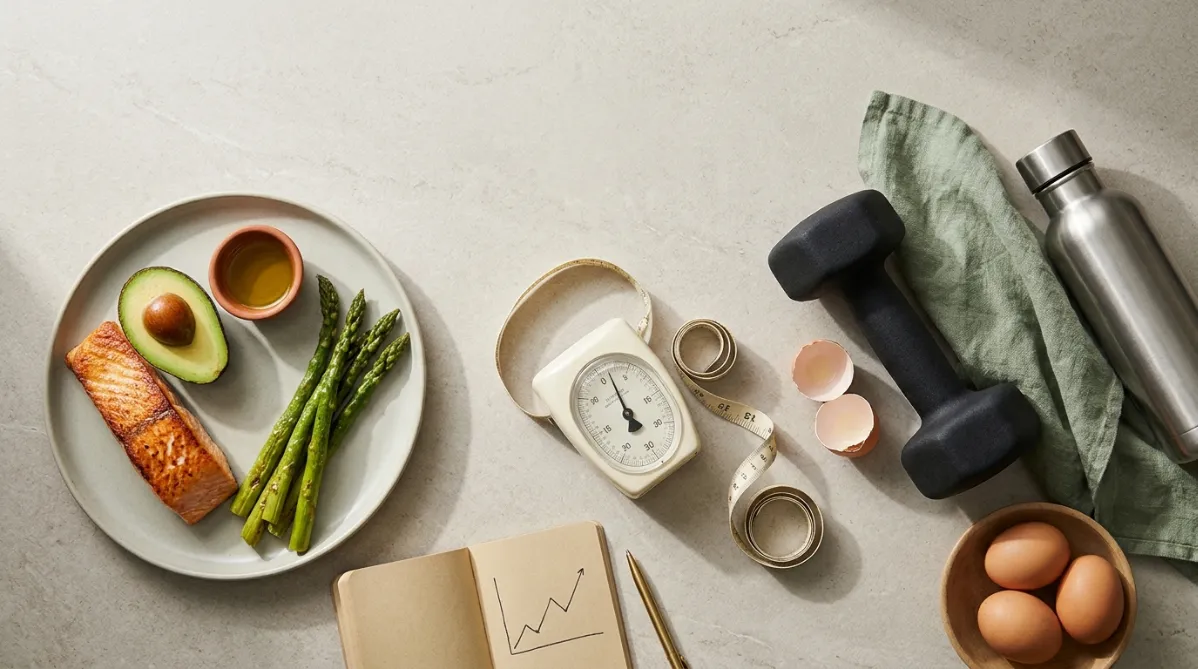
A bright, minimalist editorial flat-lay photographed from above on a pale warm-gray stone countertop in soft natural window light. On the left, a ceramic plate holds a keto-style meal: a seared salmon fillet with crisp skin, half an avocado with a glossy pit, a scattering of bright green asparagus spears, and a small dish of golden olive oil. On the right, a matte black dumbbell rests beside a folded sage-green linen towel and a slim stainless steel water bottle. A raw egg and a few whole eggs in a shallow wooden bowl add a protein cue. In the center, a clean analog kitchen scale and a flexible cream-colored measuring tape curl gracefully in a loose spiral, hinting at body composition tracking. A small open notebook with a minimal hand-drawn line graph, with no legible text, sits at the lower edge with a thin brass pen.

The palette is calm and modern: muted sage green, creamy ivory, warm terracotta accents from a small clay ramekin, and deep charcoal from the dumbbell. Shadows are soft and long, falling diagonally, giving gentle depth. The composition leaves generous negative space at the top and right for title placement. Shallow depth of field, crisp focus on the salmon and dumbbell, subtle film-like grain, and a refined, trendy health-journal look reminiscent of contemporary wellness magazines. Natural, airy, balanced, and slightly editorial, with no people, no text, and no futuristic elements.
nutrition

Il keto preserva il muscolo durante un taglio? I dati sulla massa magra sorprendono

BY DR. GYMBRO ·

Il keto è spesso pubblicizzato come un modo per salvare il muscolo durante un taglio, grazie ai presunti effetti anti‑catabolici dei chetoni. Una nuova review narrativa su *Nutrients* mette alla prova questa idea con i dati clinici e la ritrova carente. Le diete chetogeniche riducono soprattutto il grasso, ma le meta‑analisi mostrano una perdita di massa magra leggermente più marcata rispetto a diete non chetogeniche. Poiché DXA e BIA non distinguono muscolo da acqua e glicogeno, l’effetto reale sul tessuto muscolare resta incerto. Ciò che davvero protegge il muscolo è il classico trio: proteine adeguate, allenamento di resistenza e un deficit moderato.
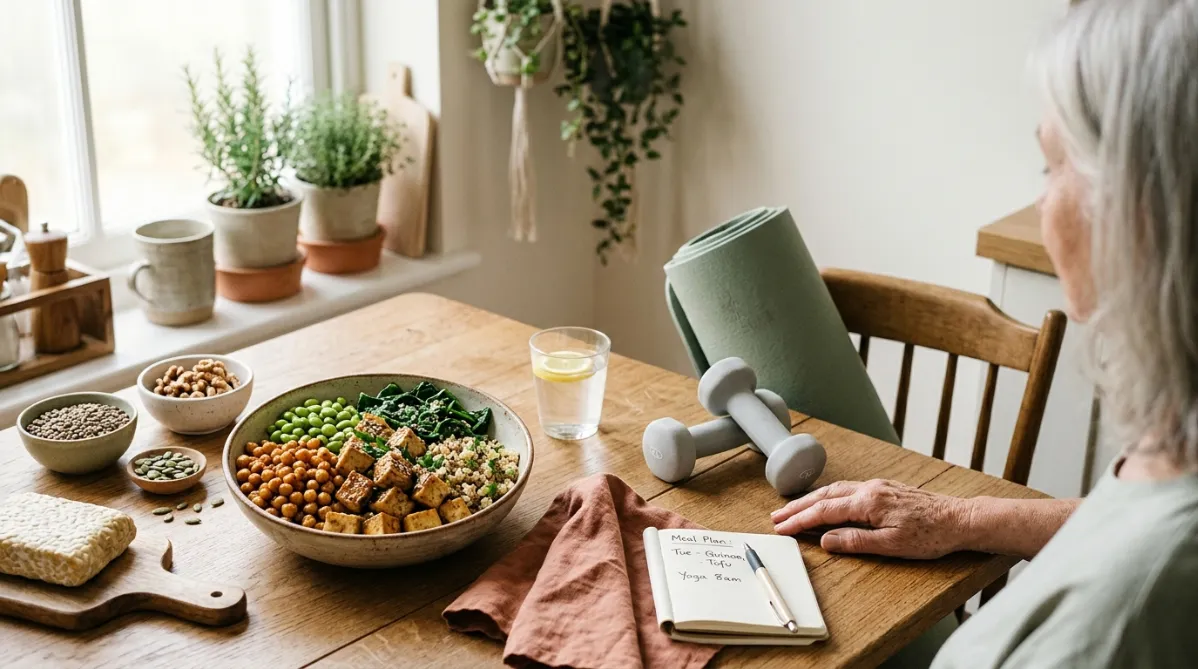
A landscape editorial photograph of a sunlit kitchen table, shot from a slightly elevated three-quarter angle. On the left, a rustic ceramic bowl holds a warm plant-based protein meal: roasted chickpeas, marinated tofu cubes, edamame, quinoa, and wilted greens, topped with toasted sesame seeds. Around it are small dishes of lentils, walnuts, pumpkin seeds, and a block of tempeh on a wooden board. On the right, a pair of weathered hands belonging to an older adult with silver hair, partially visible and softly out of focus, rests beside a pair of light dumbbells and a rolled sage-green yoga mat leaning against a chair. A linen napkin, a glass of water with a lemon slice, and a small handwritten notebook with a pen suggest careful planning. Soft morning light streams through a large window on the left and casts gentle long shadows across the pale oak tabletop. The color palette is muted and earthy: warm cream, sage green, terracotta, soft mustard, and natural wood tones. The background has shallow depth of field, with blurred shelves of herbs in pots and a few hanging plants. The mood is calm, hopeful, and health-focused, in the style of a modern lifestyle magazine or science journal feature, with clean composition, generous negative space in the upper right for headline text, and a subtle film-like grain. No text, no logos, no futuristic elements.
nutrition

Diventare vegano dopo i 65 anni? La massa magra è diminuita di 1,15 kg in 12 settimane

BY DR. GYMBRO ·

Una sperimentazione randomizzata di 12 settimane su 72 adulti di 65 anni o più ha mostrato che, passando a una dieta vegana senza pianificare l’apporto proteico, si è registrata una perdita di 1,15 kg di massa magra. Il gruppo onnivoro è rimasto stabile, mentre l’allenamento di resistenza ha limitato la perdita a 0,62 kg. Il vero responsabile è stato il calo di proteine, di circa 20‑28 g al giorno, non le piante in sé. Ecco i dati e i consigli per preservare i muscoli con una dieta vegetale.
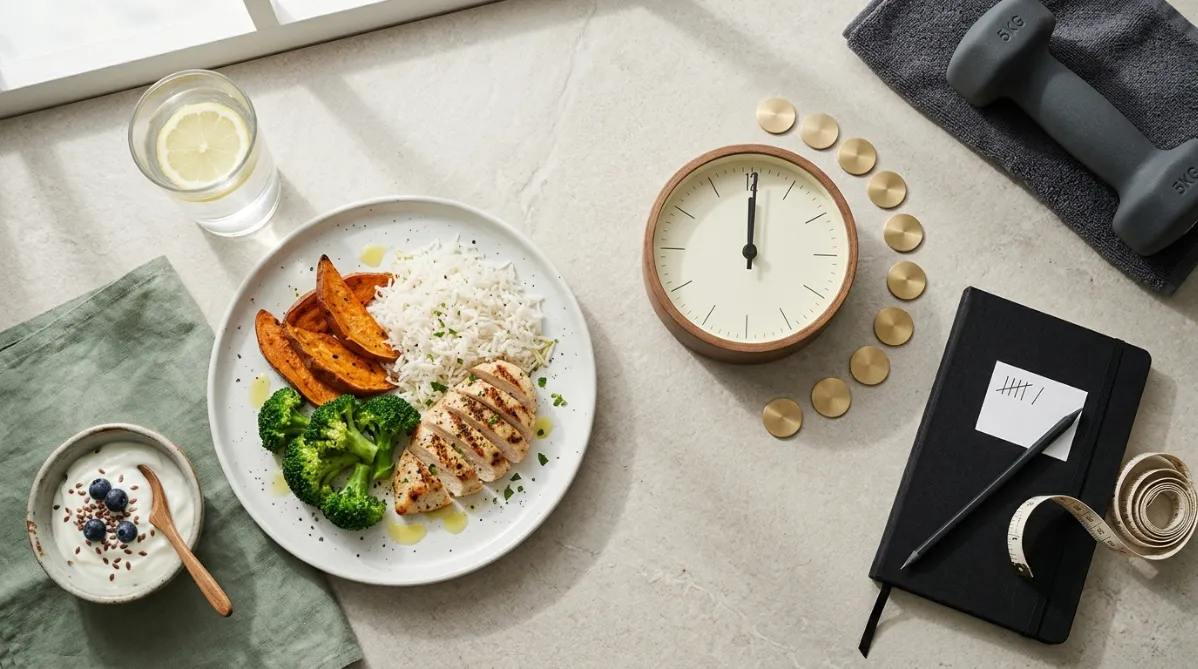
A wide, editorial-style flat lay photographed from above on a pale warm-gray stone surface, bathed in soft natural window light with gentle diagonal shadows. On the left side, a minimalist matte white ceramic plate holds a balanced bulking meal: sliced grilled chicken breast, a mound of fluffy basmati rice, roasted sweet potato wedges, and bright green broccoli, with a drizzle of olive oil glistening. Beside it sits a tall glass of water with a lemon slice and a small bowl of Greek yogurt topped with blueberries. On the right side, a round analog clock face is subtly placed, or a simple wooden clock with a minimalist design, its hands marking noon, with a soft arc of eight small brushed-brass discs arranged in a curved line beside it, suggesting an eight-hour eating window. A sleek black notebook with a pencil rests nearby, with a few hand-drawn tally marks and a tape measure loosely coiled next to it. A single dumbbell with a matte charcoal finish sits at the top right edge, partially cropped, hinting at strength training. The color palette is muted and sophisticated: sage green, warm cream, terracotta, soft charcoal, and touches of brass. Generous negative space on the right third for title text overlay. Shallow depth of field with crisp focus on the plate, subtle film grain, and a calm, modern wellness-magazine aesthetic reminiscent of contemporary health and fitness journals. Clean composition, natural textures like linen napkin and speckled ceramic, and no people or text visible.
nutrition

Digiuno 16:8 durante il bulk: stessa massa muscolare, meno della metà del grasso accumulato

BY DR. GYMBRO ·

I sollevatori che hanno concentrato il loro bulk in una finestra di 8 ore hanno guadagnato la stessa quantità di muscolo e forza dei soggetti che hanno mangiato normalmente, ma con meno della metà del grasso in più. La sorpresa è che il digiuno non è stato la magia: il gruppo 16:8 ha semplicemente ingerito meno calorie rispetto al surplus previsto, con conseguente riduzione di proteine e carboidrati. Questo studio randomizzato di 12 settimane suggerisce che il mangiare a tempo limitato sia uno strumento di aderenza per un bulk più magro, non un trucco metabolico. Di seguito i dati, il target proteico raggiunto e a chi può interessare.
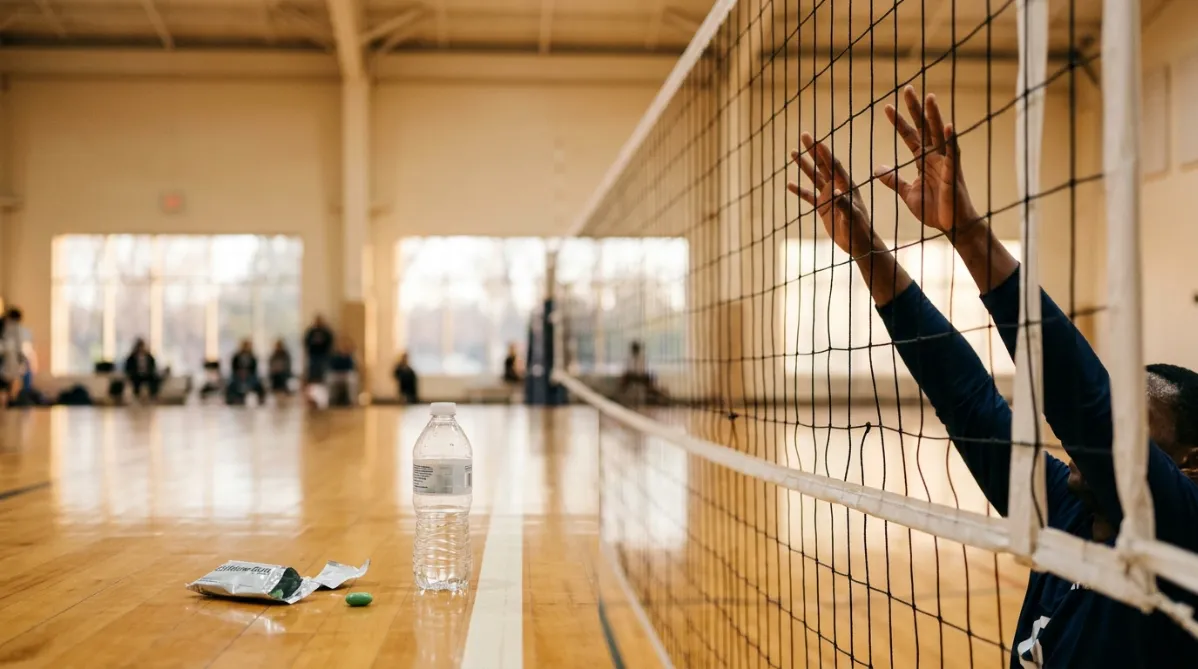
A landscape editorial photograph of a volleyball net in a softly lit indoor gym, shot from a low angle on the court. In the foreground, a pair of athletic hands in mid-block reach above the net, fingers spread, caught in crisp focus. The athlete's face is out of frame, so the attention stays on the hands and the net. In the lower left foreground, a small open foil pack of caffeine chewing gum sits on the polished maple floor, with two mint-green gum pieces beside it and a clear water bottle. The pack is unbranded and minimal.

The background is a warm blur of honey-toned hardwood, pale gym walls, and tall windows with diffused late-afternoon light streaming in. Dust motes glow in the light shafts. The palette is muted and modern: warm wood amber, soft cream, sage green, and a touch of deep navy from the athlete's jersey. Shallow depth of field and gentle film grain give the image a refined, magazine-like feel. The composition follows the rule of thirds, with the hands and net on the right and open negative space on the left, where headline text could sit.

The mood is calm, focused, and slightly cinematic, like a feature in a contemporary sports science journal. The lighting is soft and natural, with long gentle shadows across the court lines. No futuristic or digital elements, no charts, no text. The overall look is clean, tactile, and editorial.
nutrition

Affaticamento rallenta le reazioni del 18 %: la gomma alla caffeina le riduce al 3 %

BY DR. GYMBRO ·

Dopo un protocollo di affaticamento ripetuto e intensissimo, le giocatrici di pallavolo d'élite che hanno assunto il placebo hanno rallentato le sequenze di blocco reattivo del 18,4 %. Con la gomma alla caffeina a 6 mg/kg il rallentamento è sceso al 3,0 %, mentre a 3 mg/kg è stato del 6,4 %. La potenza del salto‑blocco e la rigidità del drop‑jump sono rimaste più alte con la caffeina. Lo studio, però, ha coinvolto solo 15 atlete, il blinding era incompleto e gli effetti collaterali erano più frequenti alla dose più alta, senza che venisse stabilita una dose ideale. Ecco cosa significano i numeri in milligrammi reali e chi potrebbe davvero trarne vantaggio.
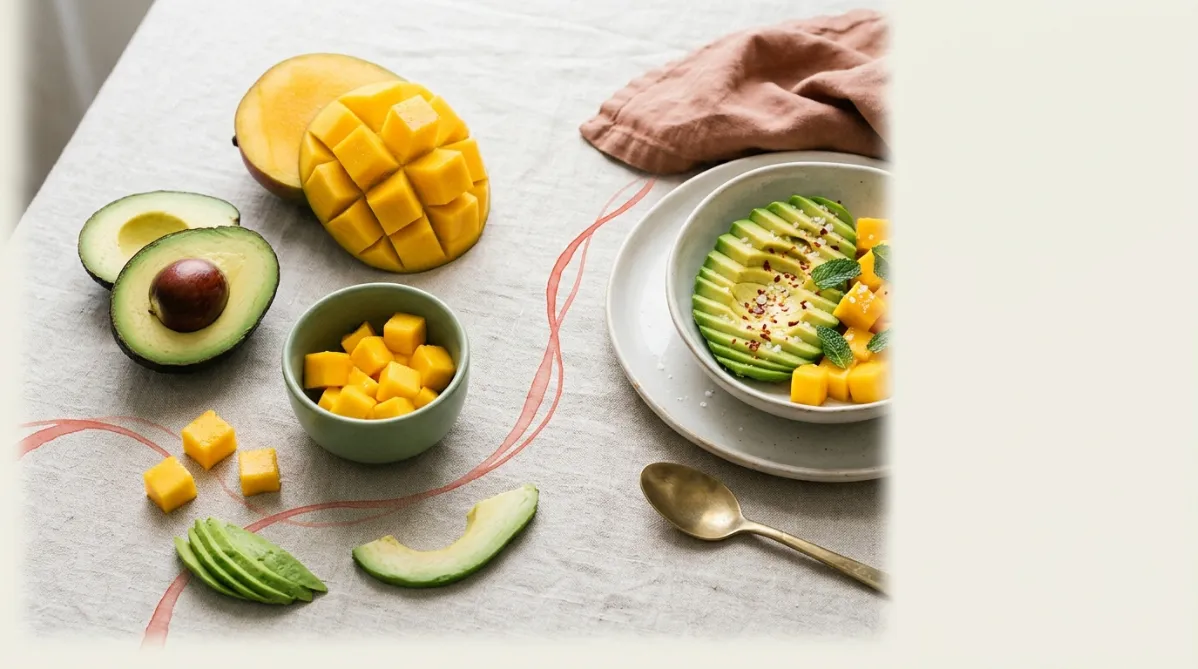
A wide, softly lit editorial still life photographed from slightly above on a pale oat-colored linen surface. On the left, a halved ripe Hass avocado with its glossy pit still nestled in one half, the flesh a buttery gradient from deep green at the skin to creamy yellow at the center. Beside it, a ripe mango is sliced into thick cheeks with a neat crosshatch pattern, the golden-orange flesh catching the light. A small ceramic bowl in matte sage green holds a cup of diced mango cubes. A few scattered mango cubes and a thin avocado slice fan out across the surface.

On the right, a minimalist ceramic plate holds a simple composed bowl: sliced avocado fanned over mango, with a sprinkle of flaky sea salt, a pinch of chili flakes, and a few torn mint leaves. A linen napkin in muted terracotta is draped casually at the edge of the frame. A single brushed-brass spoon rests nearby.

A subtle graphic touch ties in the artery theme: a thin, elegant line of warm coral red, like a hand-drawn ribbon or gentle wave, curves through the negative space on the surface, suggesting a blood vessel and flow without looking clinical. It passes softly beneath the fruit as if painted on the table in watercolor.

Natural morning window light enters from the upper left, creating soft long shadows and gentle highlights on the fruit's surface. The palette is warm and fresh: avocado greens, mango golds and oranges, cream, sage, and a hint of coral. Shallow depth of field blurs the background edges into creamy neutrals, leaving generous clean empty space on the right third for title text. Modern wellness magazine aesthetic, crisp but organic, high-end food photography, with a subtle film-like grain and calm, balanced composition.
nutrition

Avocado + Mango al Giorno: Cosa è Cambiato nelle Arterie (e Cosa Non è Cambiato)

BY DR. GYMBRO ·

Otto settimane di avocado e una tazza di mango al giorno hanno modificato alcune caratteristiche delle arterie di adulti con prediabete, ma non hanno influenzato la glicemia. In uno studio randomizzato su 82 partecipanti, la dilatazione mediata dal flusso è aumentata di circa l'1 % nella dieta a base di frutta, mentre è diminuita nel gruppo di controllo a basso contenuto di fibre, con una differenza tra i gruppi di circa 2,1 % (P = 0,008). La pressione diastolica è migliorata soprattutto negli uomini, mentre la maggior parte degli altri marcatori non ha mostrato differenze. Lo studio è stato in parte finanziato dal Hass Avocado Board e dal National Mango Board; vediamo quindi cosa dimostra, cosa no e come inserire questa combinazione in una dieta da dimagrimento o di mantenimento.
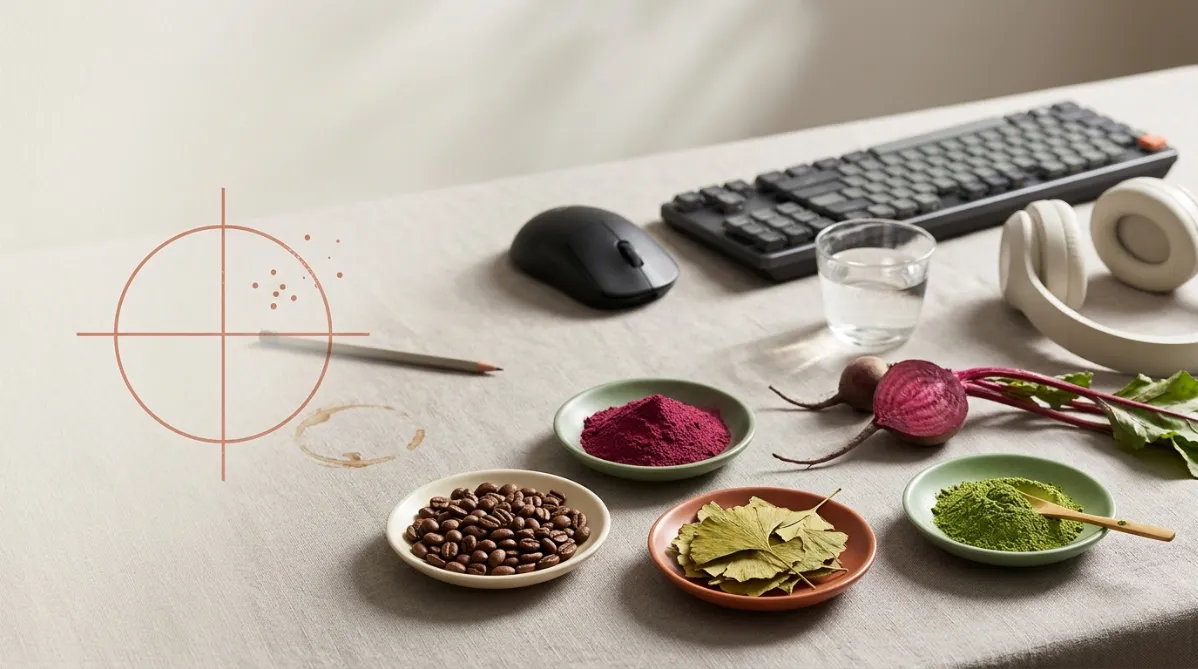
A landscape editorial still life on a softly textured warm-gray linen surface, shot from a slightly elevated three-quarter angle in diffused natural window light. In the foreground, four small ceramic dishes are arranged in a gentle arc. One holds roasted coffee beans, one holds deep magenta beetroot powder, one holds dried golden-green Ginkgo biloba leaves, and one holds bright jade matcha-style green tea powder with a tiny bamboo scoop. Each dish has a distinct, saturated color that stands out against the muted backdrop. Behind them, slightly out of focus, sits a minimalist matte-black gaming mouse beside a sleek, low-profile mechanical keyboard. A pair of matte off-white headphones rests on the right. A single fresh beetroot with its leafy stem and a halved beet showing concentric magenta rings lie casually near the dishes. A small glass of water catches the light, casting soft refracted highlights across the linen.

On the left, a clean, graphic crosshair motif is rendered as a thin circle and cross lines in soft terracotta ink, as if stamped on the paper surface, with a few tiny scattered dots clustered just off-center to hint at drifting aim. A subtle ring of coffee residue and a pencil lie near it, suggesting a researcher's desk. The color palette is warm and earthy: cream, sage green, terracotta, deep beet magenta, charcoal black, and touches of gold. The shallow depth of field gives creamy bokeh in the background, with soft shadows falling to the left. The mood is calm, modern, and intelligent, like a premium health and performance magazine cover, with generous negative space on the upper left for headline text. The composition is balanced and uncluttered, with crisp detail on the ingredients, fine natural textures like leaf veins and powder grain, and a refined, trendy editorial feel. There are no people, no text, and no futuristic elements.
nutrition

Cervello fritto, mira imprecisa: quale integratore la ripristina davvero?

BY DR. GYMBRO ·

Dopo tre ore di gioco competitivo il tuo mirino inizia a vacillare e i colpi sfuggono di pochi pixel. Uno studio crossover su 20 giocatori FPS di alto livello ha confrontato caffeina, nitrato di barbabietola, Ginkgo biloba e catechine del tè verde con il placebo. Tutti gli integratori hanno migliorato il recupero della precisione, ma non ci sono state differenze significative tra loro; caffeina, nitrato e catechine hanno anche restituito la stabilità. Nessuno ha influito sulla localizzazione spaziale o sul multitasking, che sono migliorati solo grazie al riposo. Ecco come interpretare i risultati e perché è necessario rimanere cauti con questo campione ridotto.
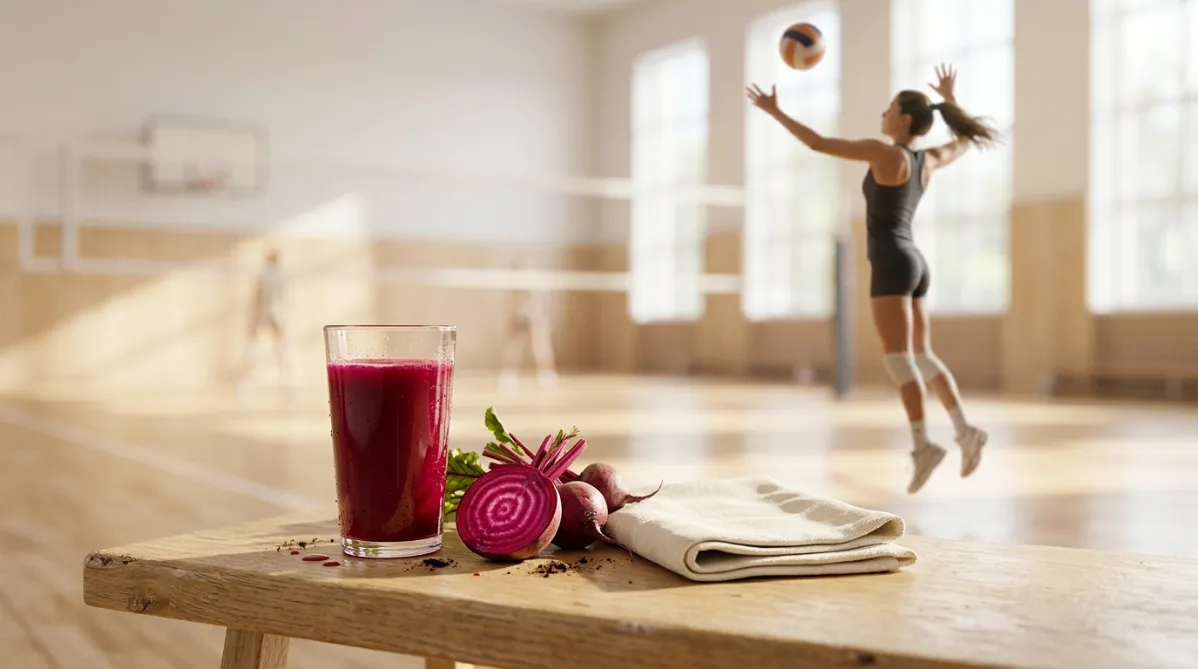
A wide, editorial-style photograph of a deep magenta glass of beetroot juice standing on a pale oak gym bench in soft morning light. Beside it sit a halved raw beetroot with vivid fuchsia and white concentric rings, a few whole beets with leafy stems, and a folded cream towel. Behind them, slightly out of focus, a female volleyball player in a fitted charcoal athletic set is caught mid-jump on an indoor court. Her arms are raised, her ponytail lifts, and a volleyball hangs near her fingertips. The polished wooden court floor reflects warm light from tall windows. The background fades into a creamy blur of pale wood tones, soft white walls, and hints of a net.

The composition follows a rule-of-thirds layout. The juice and beets fill the lower left third in crisp focus, and the jumping athlete is the softly blurred focal point on the right. Fine condensation beads on the glass, and a few juice droplets rest on the bench like small jewels. The palette is limited and modern: rich beet magenta, warm honey wood, soft off-white, and charcoal accents. The light is natural and diffused with gentle long shadows. The shallow depth of field suggests a high-end lifestyle and health magazine. The look is clean and minimal with plenty of negative space in the upper left for a title overlay. The mood is energetic yet calm, hinting at recovery and bounce. It has fine film-like texture and true-to-life color, with no text, logos, or futuristic elements.
nutrition

Succo di barbabietola e altezza del salto: il terzo giorno restituisce lo slancio?

BY DR. GYMBRO ·

Dopo 200 salti con carico le gambe sono quasi distrutte, ma il succo di barbabietola potrebbe restituire lo slancio entro il terzo giorno? Uno studio crossover su giocatrici di pallavolo ha rilevato un’altezza di salto maggiore a 72 h e una soglia del dolore al polpaccio più alta con il succo di barbabietola. Indolenzimento, agilità, gonfiore e la maggior parte delle misure di forza non sono cambiati, mentre l’interazione complessiva sul salto è stata solo una tendenza. In questo articolo analizziamo i risultati, come gli atleti possono usare il succo dopo lavori pliometrici intensi e perché, con un campione piccolo e solo femminile, occorre prudenza.
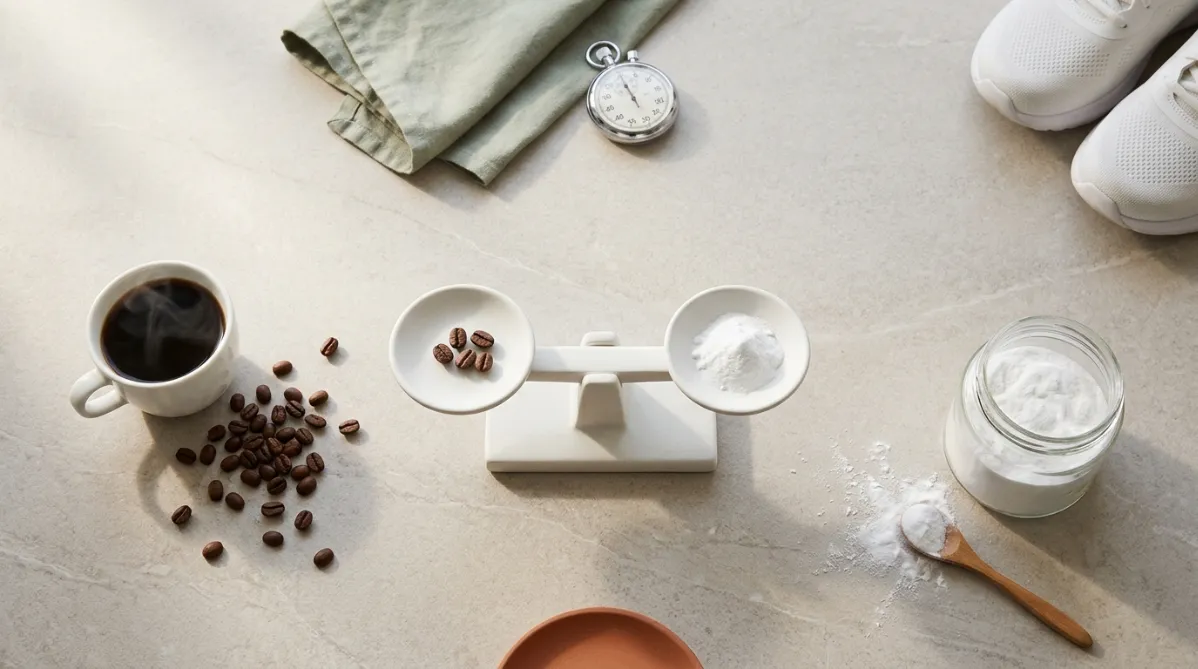
A calm, editorial-style flat lay photographed from above on a pale, warm-gray stone countertop in soft morning window light. On the left, a small white ceramic cup of black coffee with a delicate swirl of steam, beside a scattering of whole roasted coffee beans. On the right, a minimalist glass jar of fine white baking soda powder with a wooden spoon resting beside it, a few soft white grains dusted across the surface. In the center, a clean white scale-like balance made of matte ceramic with two small dishes: one holding a few coffee beans, the other a small mound of white powder, perfectly level to suggest the idea of equal outcomes. A folded sage-green linen napkin and a simple stainless steel stopwatch rest near the top edge, along with a pair of minimalist white running shoes partially visible in the corner. Subtle long shadows, gentle natural highlights, and a shallow depth of field give a tactile, premium feel. The color palette is muted and modern: cream, warm espresso brown, soft sage, and chalky white, with a single accent of pale terracotta in a small ceramic dish. Composition is balanced and uncluttered with generous negative space on the upper right for a title overlay. The overall mood is clean, contemporary, and quietly scientific, like a cover from a trendy health and performance journal. Wide landscape 16:9 framing, crisp detail, natural film-like grain.
nutrition

Caffeina + Bicarbonato di Sodio: batte ognuno da solo?

BY DR. GYMBRO ·

Combinare due aiuti ergogenici comprovati sembra una vittoria garantita, ma una nuova meta‑analisi su 13 studi crossover dimostra che i numeri non sono così semplici. Confrontato al placebo, caffeina più bicarbonato di sodio ha aumentato la potenza media di circa 8,4 W e ha ridotto i tempi dei test di circa l'1,6 %. Tuttavia, questi risultati crollano quando si escludono singoli studi, e la combinazione non ha superato né la caffeina né il bicarbonato da sole. Ecco cosa mostrano i dati, quali sono i dosaggi tipici e chi dovrebbe interessarsi a questa combinazione.
A wide, editorial-style still life photographed in soft natural morning light on a pale oak table. In the foreground, three tall glasses stand in a row: one with clear water, one with a lightly cloudy electrolyte drink with a faint citrus tint, and one with a creamy, milky protein beverage. Fine condensation beads on each glass, and a few water droplets catch the light on the wood surface. Beside the glasses sit a scoop of fine white protein powder spilling slightly from a matte ceramic bowl, a halved lemon, a small pinch of coarse sea salt on a slate dish, and a folded linen napkin in warm oatmeal. A sleek stainless steel sports bottle rests slightly out of focus on the right.

In the softly blurred background, a sunlit window frames a quiet urban running path with green trees. A pair of well-worn running shoes and a rolled yoga mat lean against a pale plaster wall, suggesting an athlete's post-workout moment without showing a face. The palette is calm and modern: warm creams, soft sage green, muted sky blue, and touches of citrus yellow. Shallow depth of field, gentle shadows, and generous negative space on the upper left for title text. The mood is clean, fresh, and contemporary, like a premium health and science journal cover, with subtle film-like grain and crisp, natural textures.
nutrition

Le proteine nella tua bevanda migliorano l’idratazione? 16 studi dicono sì, nella maggior parte dei casi

BY JAKE THE TITAN ·

La maggior parte degli atleti pensa all’idratazione come una combinazione di acqua, elettroliti e, talvolta, carboidrati. Una recente revisione sistematica e meta‑analisi pubblicata su *Sports Medicine* suggerisce che le proteine meritino un posto in questa discussione. Analizzando 16 studi su soggetti umani, il team dell’Università di Loughborough ha evidenziato che le bevande proteiche favoriscono una maggiore ritenzione di liquidi, una minore produzione di urina e un miglior bilancio idrico netto rispetto ai controlli. L’abstract, però, non specifica se il confronto fosse con acqua, con una bevanda sportiva o con altro, perciò l’affermazione “il latte batte l’acqua” non è sostenuta direttamente dai dati.
A wide, editorial-style flat lay on a pale warm-gray stone surface, shot from slightly above in soft natural window light with gentle diagonal shadows. On the left, a matte white ceramic bowl holds fine white baking soda powder, with a wooden scoop resting beside it and a light dusting of powder across the stone. In the center, a small glass jar of white beta-alanine powder sits next to a clear glass of water that catches the light. To the right, a neatly folded charcoal gym towel lies under a single brushed-steel dumbbell, and a sleek matte black stopwatch sits nearby. A printed anatomical cross-section of a thigh, in muted sage green and soft terracotta line-art tones, is tucked under the items like an elegant editorial illustration. It shows quad muscle groups in a stylized, minimalist way and is not clinical or futuristic. A few sprigs of dried eucalyptus and a lemon wedge add organic texture and a pop of soft yellow. The palette is cream, sage, warm gray, and charcoal, with small terracotta accents. The composition leaves generous negative space at the upper left for a title overlay. Shallow depth of field blurs the background edges, and the mood is calm, modern, and trustworthy, like a contemporary health and fitness journal. The look is high-end magazine photography with subtle film grain, clean and minimal.
nutrition

Beta‑alanina + bicarbonato di sodio: la crescita del quad in risonanza magnetica. Il problema?

BY DR. GYMBRO ·

Un nuovo studio di otto settimane ha mostrato che gli uomini che hanno assunto beta‑alanina insieme al bicarbonato di sodio hanno registrato una crescita del quadricipite del 21‑24 % alla risonanza magnetica, contro un 5‑9 % nel gruppo placebo. Il gruppo con gli integratori ha inoltre completato circa il 29 % in più di volume di allenamento, il che potrebbe spiegare gran parte dell’effetto. Tuttavia, con solo 20 partecipanti e nessun guadagno di forza aggiuntivo, il quadro risulta più sfumato rispetto ai numeri di prima pagina. Ecco cosa ha scoperto lo studio, cosa non ha trovato, e come valutare dosi, formicolio e comfort gastrico.
A wide, softly lit editorial photograph of a minimalist home gym corner with pale oak flooring and a warm off-white wall. In the foreground on a light wooden bench sits a matte ceramic scoop resting beside a simple frosted glass shaker bottle, with a delicate dusting of fine cream-colored protein powder spilled across the wood in a natural, casual arc. In the soft-focus midground, a loaded barbell rests on a squat rack with brushed steel plates, and a neatly folded charcoal towel hangs over the rack's upright. To the right, a small open notebook with a pencil lies on the bench, suggesting tracked training logs, with no legible text. Morning sunlight streams diagonally through a large window on the left, casting long gentle shadows and a warm golden glow across the scene, with subtle dust motes floating in the light. The color palette is muted and modern: sage green, warm sand, soft terracotta, and cream, with a single accent of deep forest green from a potted plant in the background corner. Shallow depth of field, crisp detail on the powder and scoop, creamy bokeh on the barbell. Shot as if with a 50mm lens at f/2, natural film-like grain, clean negative space on the upper right for headline overlay. The mood is calm, thoughtful, and science-minded, with a contemporary wellness magazine aesthetic, realistic and tactile, with no people, no logos, and no text.
nutrition

La proteina in polvere aumenta la forza? 23 studi svelano il segreto

BY DR. GYMBRO ·

Aggiungere la proteina in polvere al tuo allenamento ti rende davvero più forte? Una meta‑analisi del 2026 su 23 studi randomizzati e 611 giovani adulti ha evidenziato un vantaggio medio di 7,4 kg nello squat e 2,6 kg nella panca. Il beneficio nello squat è stato più evidente in programmi di 12 settimane o meno e in studi in cui le proteine sono state assunte intorno all’allenamento e prima di dormire. Tuttavia il segnale temporale è solo borderline, non è stata identificata una dose ottimale e gli autori sottolineano che il vantaggio è condizionato, non universale. Ecco cosa i dati supportano e cosa no.
A wide landscape editorial photograph shot from above at a slight angle, showing a bright, minimalist kitchen counter of pale oak wood. Three matching ceramic bowls in soft matte tones (warm cream, sage green, and muted terracotta) sit in a loose row. Each holds a different protein powder: fine ivory whey, slightly coarser beige soy, and speckled pale yellow-green pea protein. A small fourth pile of tiny gray-black chia seeds sits apart on a folded linen napkin, off to the side, to suggest the lone outlier. Wooden scoops rest in each bowl, with a few soft dustings of powder on the surface. In the foreground, a clear glass shaker with a creamy blended drink and a single sprig of fresh mint stands beside a small stack of fresh produce: a halved avocado, a handful of edamame pods, and a few green peas in an open pod. A matte white notebook and a thin brass pen are tucked at the edge of the frame, suggesting research and note-taking. Natural morning light pours in from the left through an unseen window, casting long, soft shadows and gentle highlights on the powder textures. The color palette is calm and earthy, with creams, sage, soft terracotta, and warm wood tones, and a clean, slightly muted editorial grade. Shallow depth of field keeps the bowls crisp while the background, a blurred white tiled wall and a hint of a trailing green plant, melts away. Plenty of negative space on the right side of the frame leaves room for a headline overlay. The overall mood is fresh, trustworthy, and modern, like a contemporary wellness and science journal.
nutrition

Il siero non è speciale per i principianti? Soia e pisello lo eguagliano

BY DR. GYMBRO ·

Credi di aver bisogno del siero per costruire muscoli da principiante? Una nuova meta‑analisi di cinque studi con DEXA ha scoperto che proteine di soia e pisello non sono significativamente inferiori al siero per le variazioni di massa magra o di grasso in adulti non allenati. Però gli autori avvertono che “nessuna differenza significativa” non equivale a dimostrare l’equivalenza, e la base di evidenza è limitata. Ecco cosa mostrano i dati, cosa non mostrano e come scegliere e dosare la tua proteina.
A wide, editorial-style photograph of a single slim silver and blue energy drink can standing upright at center on a polished light-oak gym bench, shot in soft natural window light. The can is unbranded, with a clean, minimal design and a few beads of condensation. Behind it, the softly blurred interior of a bright modern indoor volleyball court stretches into the background, with a pale hardwood floor, a net, and a few volleyballs resting in a mesh cart. Warm morning sunlight enters through tall windows on the left and casts long, gentle shadows across the bench. Beside the can sit a small white towel folded neatly, a simple stopwatch, and a pair of white wireless earbuds. On the right, a small paper cup of white powder and a wooden scoop hint at measured dosing. They are placed deliberately, like a styled still life.

At the very edge of the frame, a pair of delicate white paper wings, origami-like and slightly crumpled, lie flat and unused on the bench, a subtle visual joke about the "wings" slogan. The wings are understated and tactile, not magical or glowing.

The color palette is muted and fresh: warm honey wood, soft cream, pale sky blue, and touches of silver, with a single accent of coral red from a volleyball panel in the background. The depth of field is shallow, with crisp focus on the can and the paper wings and a creamy bokeh background. The composition follows the rule of thirds, with the can slightly left of center and generous negative space on the right for a headline overlay. The mood is calm, clean, and contemporary, like a lifestyle and science magazine cover, with fine film grain and natural contrast. The camera angle is slightly low, at bench level, with a 50mm lens look.
nutrition

Red Bull ti dà le ali? 13 test in palestra non hanno mostrato effetti

BY DR. GYMBRO ·

Lo slogan di Red Bull promette ali, ma un nuovo studio crossover su giocatrici di pallavolo femminile non ne ha rilevati. Una lattina standard non ha migliorato nessuna delle 13 misure nei test Wingate, salto e presa rispetto al placebo. Otto delle 15 atlete hanno segnalato lievi nausea. Probabilmente la ragione è che la lattina conteneva solo circa 1,1 mg/kg di caffeina, ben al di sotto dei 3‑6 mg/kg considerati efficaci. Ecco cosa mostra lo studio, i suoi limiti e come dosare correttamente la caffeina.
A landscape editorial still life in soft natural window light, set on a pale oak tabletop with a matte warm-white wall behind it. In the center-left, a few glossy strands of dark olive-brown kelp (Ecklonia cava) drape in an elegant curve over a shallow ceramic bowl in muted sage green. Next to the bowl, a small pile of fine, dry brown seaweed powder sits beside a minimalist wooden scoop. On the right, an unbranded matte-white supplement tub and a few loose cream-colored capsules are spilled neatly across the surface. A brushed steel cycling water bottle stands slightly out of focus in the background, with a folded gray cycling cap beside it. In the foreground, a clean white notebook with a thin pencil rests next to a simple analog stopwatch, hinting at a performance trial without any text or numbers visible.

The palette is earthy and calm: sage, olive, warm sand, cream and soft charcoal, with one subtle terracotta accent from a small ceramic dish. Long soft shadows fall diagonally across the table, and a gentle highlight catches the wet sheen of the seaweed. Shallow depth of field, with a creamy blurred background and crisp detail on the seaweed texture and capsules. The composition leaves generous negative space on the upper right for a headline overlay. Shot as if with a 50mm lens at f/2.8, top-down angle tilted about 30 degrees, in a modern wellness-magazine style that is minimalist, tactile and refined, with a subtle film-like grain and natural color grading.
nutrition

Le alghe brune nel tuo pre‑allenamento: fanno davvero qualcosa?

BY DR. GYMBRO ·

L'estratto di alga bruna *Ecklonia cava* compare nei pre‑allenamento e nei bruciatori di grassi, ma aiuta davvero a migliorare le prestazioni? Uno studio randomizzato, in doppio cieco e crossover, ha somministrato a 12 ciclisti allenati 263 mg o un placebo prima di un'ora di pedalata e di una serie di sprint massimali. La glicemia è aumentata leggermente, mentre i livelli di lattato, il consumo di ossigeno, l'uso di grassi vs carboidrati e la potenza negli sprint non sono cambiati. Il campione è piccolo, quindi lo studio non può escludere effetti molto ridotti, ma non fornisce alcun supporto a un miglioramento acuto della performance. Ecco cosa è stato testato, cosa significa e dove il tuo denaro potrebbe essere speso meglio.
A softly lit editorial still life on a pale oak table, shot from a slightly elevated three-quarter angle in a wide landscape frame. In the center sits an open amber glass supplement bottle on its side, with a small scatter of cream-colored capsules spilling onto the wood. Next to it is a ceramic dish holding a few dried rosehips in deep coral red, and a sprig of fresh rosehip with glossy orange-red berries and green leaves lies across the foreground. On the left, a neat pair of matching white capsules rests on a folded linen napkin, a quiet visual nod to the placebo and treatment groups. Behind them, slightly out of focus, a woman's hands in a soft oatmeal knit sweater rest on a knee in relaxed denim, suggesting everyday movement without showing a face. A pair of worn, clean running shoes sits at the edge of the frame on a woven jute rug. On the right side of the table, a minimalist notebook lies open with a hand-drawn simple line graph, two gently rising lines nearly overlapping, next to a matte black pen. Morning window light streams from the left, casting long, soft shadows and a warm golden glow with gentle highlights on the glass bottle. The background is a muted sage-green wall with a hint of a leafy plant in a terracotta pot, creamy bokeh throughout. The palette is earthy and calm: warm beige, sage, terracotta, coral red, and soft white. The mood is thoughtful, trustworthy, and quietly skeptical, like a modern health and science journal. Clean composition with generous negative space on the upper right for headline overlay. Fine-grain film texture, shallow depth of field, natural color grading, high-end lifestyle magazine photography.
nutrition

Il supplemento per il ginocchio che non ha raggiunto l'obiettivo ma ha comunque suscitato interesse

BY DR. GYMBRO ·

Uno studio randomizzato ha confrontato un integratore di cartilagine di pollo idrolizzata con estratto di rosa canina su 138 adulti attivi; l'endpoint primario è risultato neutro. Sia il gruppo sperimentale sia quello placebo hanno migliorato di oltre due punti su una scala da 0 a 10. Analisi esplorative hanno suggerito benefici per il dolore nelle attività quotidiane, soprattutto nelle donne in postmenopausa, ma provengono da piccoli sottogruppi e non sono conclusivi. Lo studio è stato redatto da dipendenti delle aziende produttrici. Ecco cosa mostrano i dati, cosa non mostrano e come valutare l’uso di questo integratore.
A warm, softly lit editorial scene of an older woman in her early seventies, with short silver hair and a calm, focused expression. She sits on the edge of a light oak bench in a bright, airy home gym, one hand resting on her thigh as she pauses between sets. She wears a muted sage-green athletic top and charcoal leggings. A well-worn leg extension machine sits blurred in the background, and a tall window floods the room with golden morning light.

In the foreground, slightly out of focus, a small ceramic dish on a pale wooden surface holds two translucent amber softgel capsules. Next to it sit a glass of water and a folded linen towel in warm cream. A single sprig of green algae-like seaweed rests beside the dish as a quiet nod to the algae-oil source. The sprig is delicate and natural, with no laboratory elements.

The color palette is earthy and modern: sage green, warm amber, oatmeal beige, and soft terracotta accents, with gentle highlights on the capsules. The composition follows the rule of thirds. The woman sits on the right, and the capsules and water fill the lower left. Negative space in the upper left keeps the layout clean for a headline overlay.

The photographic style is contemporary lifestyle editorial, shot on a 50mm lens at f/2, with shallow depth of field, soft natural grain, and subtle film-like tones. The mood is thoughtful, reassuring, and quietly skeptical. The scene suggests curiosity about whether a popular supplement delivers, with no drama and no clinical coldness. The image should look like the cover of a trendy health and wellness journal: clean, minimal, human, and sophisticated, with realistic textures in the skin, fabric, wood, and glass.
nutrition

Omega‑3 per gambe indolenzite dopo i 65? Lo studio ha una svolta

BY DR. GYMBRO ·

Gli integratori di omega‑3 sono spesso pubblicizzati come rimedio per alleviare i dolori muscolari e accelerare il recupero. Un nuovo studio randomizzato, in doppio cieco e con placebo, ha messo alla prova questa ipotesi su 43 adulti sani tra i 65 e gli 85 anni, dopo una intensa sessione di estensioni eccentriche delle gambe. Dopo otto settimane di assunzione di 2 g di omega‑3 da olio di alga, il recupero funzionale non è risultato migliore del placebo e la forza è risultata addirittura inferiore a 24 e 72 ore. La risposta biochimica è cambiata, ma “diverso” non significa “migliore”. Ecco cosa è cambiato, cosa no e quali conclusioni trarre per gli allenatori più anziani.
A wide, landscape editorial photograph of a clean, sunlit kitchen countertop in soft morning light. Two matching matte ceramic bowls sit side by side on a pale oak wood surface. One holds fine, bright white creatine powder, the other holds an almost identical powder, with a small stainless steel scoop resting in each. Between them sits a simple glass of water with gentle ripples and a thin wooden stirring spoon. In the soft-focus background, a minimalist amber glass supplement jar with a plain cream label and a sleek matte-white tub with a pastel sage-green lid stand slightly out of focus, suggesting a budget option and a premium option without any readable branding. A small, neatly folded linen napkin in warm oatmeal tones and a sprig of eucalyptus in a tiny stoneware vase add a calm, modern touch.

A few grains of powder are scattered naturally across the wood, catching the light. The color palette is warm neutrals with soft sage green, cream, and muted terracotta accents. The composition uses a shallow depth of field, a slightly elevated three-quarter angle, and generous negative space on the right side for title overlay. The lighting is natural window light from the left, creating long, gentle shadows and a subtle glow on the powder. The overall mood is calm, trustworthy, and thoughtful, like a contemporary health and wellness magazine or a minimalist lifestyle journal. High-resolution, crisp textures, film-like color grading, subtle grain, and a balanced, symmetrical sense of comparison between the two bowls.
nutrition

Questa creatina "più facilmente assorbita" è pari al semplice monoidrato

BY DR. GYMBRO ·

Il mercato della creatina premium si basa su promesse di migliore assorbimento e di uno stomaco più delicato, ma il monoidrato semplice ha il record di ricerca e il prezzo basso. Un nuovo studio randomizzato, in doppio cieco e crossover, ha confrontato un prodotto più recente, OptiCreatine, con il monoidrato su 17 giovani adulti sani. Dopo una singola dose di 5 g, le curve di creatina nel sangue, i picchi, i tempi e i sintomi gastrointestinali erano statisticamente simili. Ecco cosa significa in parole semplici, cosa lo studio non può dirti e come fare acquisti intelligenti.

This page is available in