Dr. Gymbro
←

#squat

2 articles
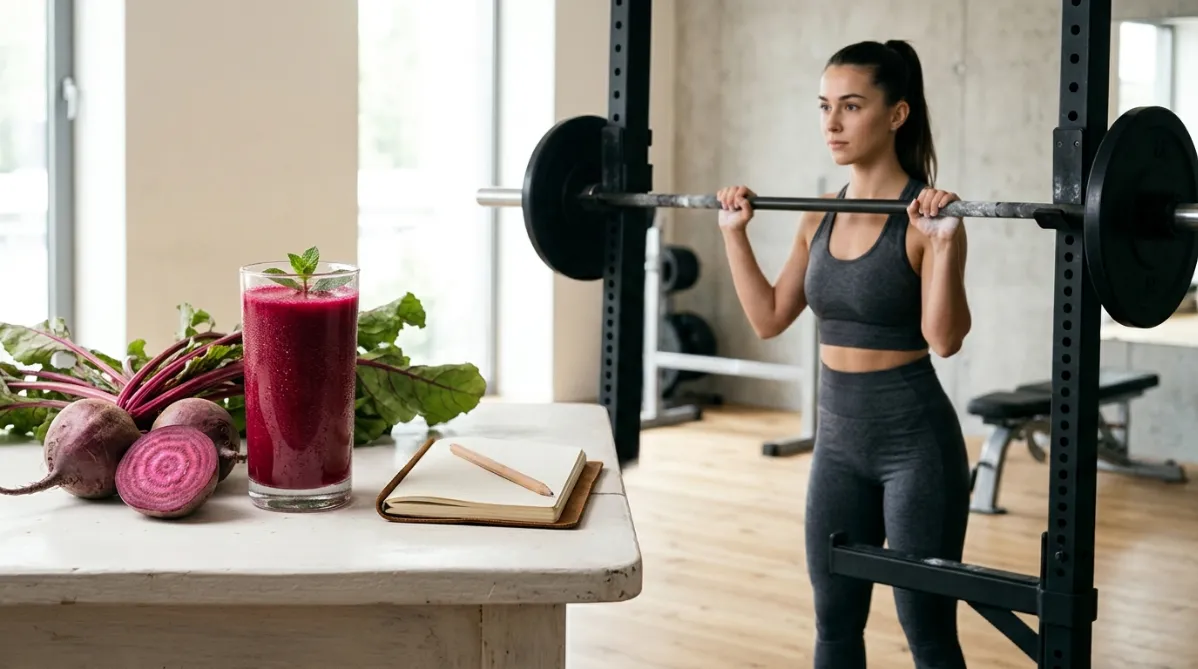
A wide, editorial-style photograph of a bright, modern gym corner softened by morning window light. In the foreground, a rustic matte-white ceramic table holds a tall clear glass of deep magenta beetroot juice, beads of condensation on the glass, a few fresh whole beetroots with leafy crimson-veined stems beside it, and one beetroot sliced in half to reveal its vivid concentric purple-pink rings. Next to the glass sits a small, neat notebook with a pencil, suggesting a research note, with no legible text. Behind the table, slightly out of focus, a young woman lifter with a tidy ponytail and a fitted charcoal training set stands at a barbell resting on a squat rack, chalk-dusted hands gripping the bar, calm and focused expression. A loaded bench with a bar is visible further back, with matte black plates and a light wooden floor. The palette is restrained and trendy: warm off-white, soft concrete gray, muted sage green accents from the beet leaves, and a bold beetroot magenta as the focal color. Shallow depth of field with a creamy bokeh background, natural side lighting casting long gentle shadows, subtle film grain. Composition follows the rule of thirds, with the juice and beets on the left third and the lifter on the right, leaving clean negative space in the upper area for a headline overlay. Mood is thoughtful, clean, and slightly skeptical, like a contemporary health and science journal cover. Realistic photography style, high-end magazine look, no text, no logos, no futuristic elements.
nutrition

Sucul de sfeclă roșie nu aduce beneficii femeilor ridicătoare — și chiar încetinește performanța

BY DR. GYMBRO ·

Sucul de sfeclă roșie este adesea lăudat ca un potențial potențiator natural al performanței, dar un studiu crossover pe 18 femei antrenate la rezistență nu a arătat niciun beneficiu la genuflexiuni. Mai ciudat, puterea și viteza la împinsul din culcat au scăzut ușor la o singură sarcină (60 % din 1RM) după o doză de ~6,7 mmol de nitrat, luată cu 2,5 h înainte de antrenament. Scăderea a fost de doar 5 W și 0,02 m/s, cu valori p marginale, deci nu reprezintă un verdict clar. În articol explicăm ce a testat studiul, ce nu poate spune și cine ar putea încă să experimenteze cu nitratul.
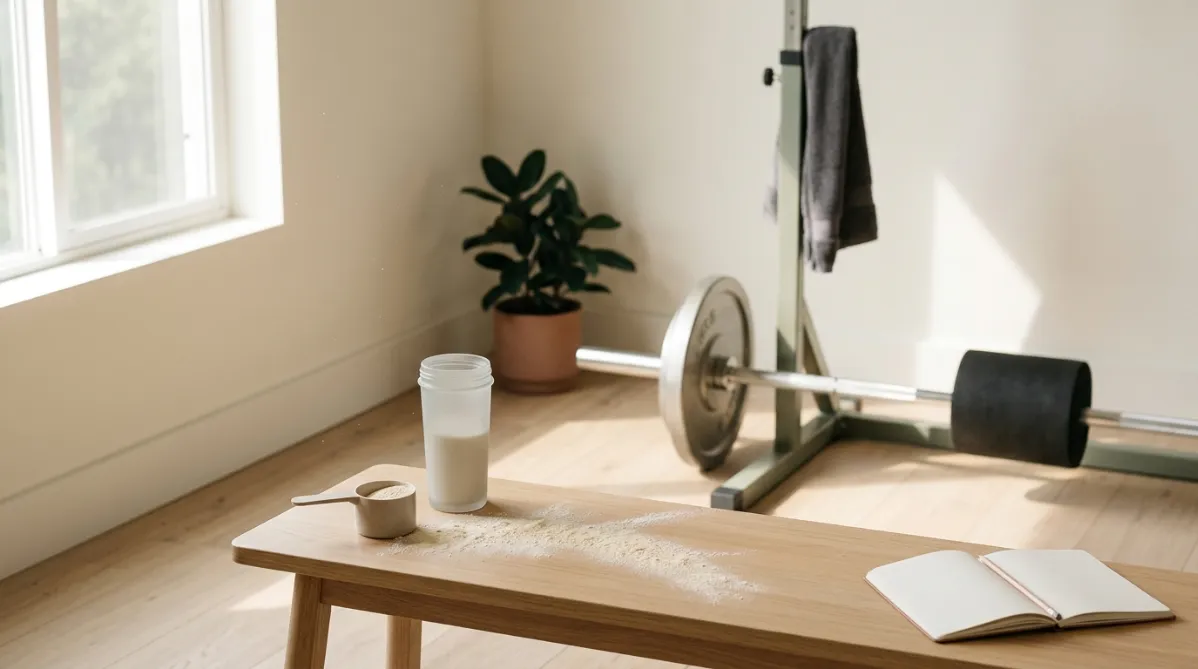
A wide, softly lit editorial photograph of a minimalist home gym corner with pale oak flooring and a warm off-white wall. In the foreground on a light wooden bench sits a matte ceramic scoop resting beside a simple frosted glass shaker bottle, with a delicate dusting of fine cream-colored protein powder spilled across the wood in a natural, casual arc. In the soft-focus midground, a loaded barbell rests on a squat rack with brushed steel plates, and a neatly folded charcoal towel hangs over the rack's upright. To the right, a small open notebook with a pencil lies on the bench, suggesting tracked training logs, with no legible text. Morning sunlight streams diagonally through a large window on the left, casting long gentle shadows and a warm golden glow across the scene, with subtle dust motes floating in the light. The color palette is muted and modern: sage green, warm sand, soft terracotta, and cream, with a single accent of deep forest green from a potted plant in the background corner. Shallow depth of field, crisp detail on the powder and scoop, creamy bokeh on the barbell. Shot as if with a 50mm lens at f/2, natural film-like grain, clean negative space on the upper right for headline overlay. The mood is calm, thoughtful, and science-minded, with a contemporary wellness magazine aesthetic, realistic and tactile, with no people, no logos, and no text.
nutrition

Pulberea de proteine crește forța? 23 de studii dezvăluie capcana

BY DR. GYMBRO ·

Îţi crește cu adevărat forța adăugarea pulberii de proteine la antrenament? O meta‑analiză din 2026, care a cuprins 23 de studii randomizate pe 611 tineri adulți, a arătat un avantaj mediu de 7,4 kg la genuflexiune și 2,6 kg la împins la piept. Beneficiul la genuflexiune a apărut în programe de 12 săptămâni sau mai puțin și în studiile în care proteina a fost consumată în jurul antrenamentului și înainte de culcare. Însă semnalul privind momentul consumului a fost doar marginal, nu s‑a stabilit o doză optimă, iar autorii subliniază că beneficiul este condiționat, nu universal. Iată ce susțin datele și ce nu.

This page is available in