Dr. Gymbro
←

#squat

2 articles
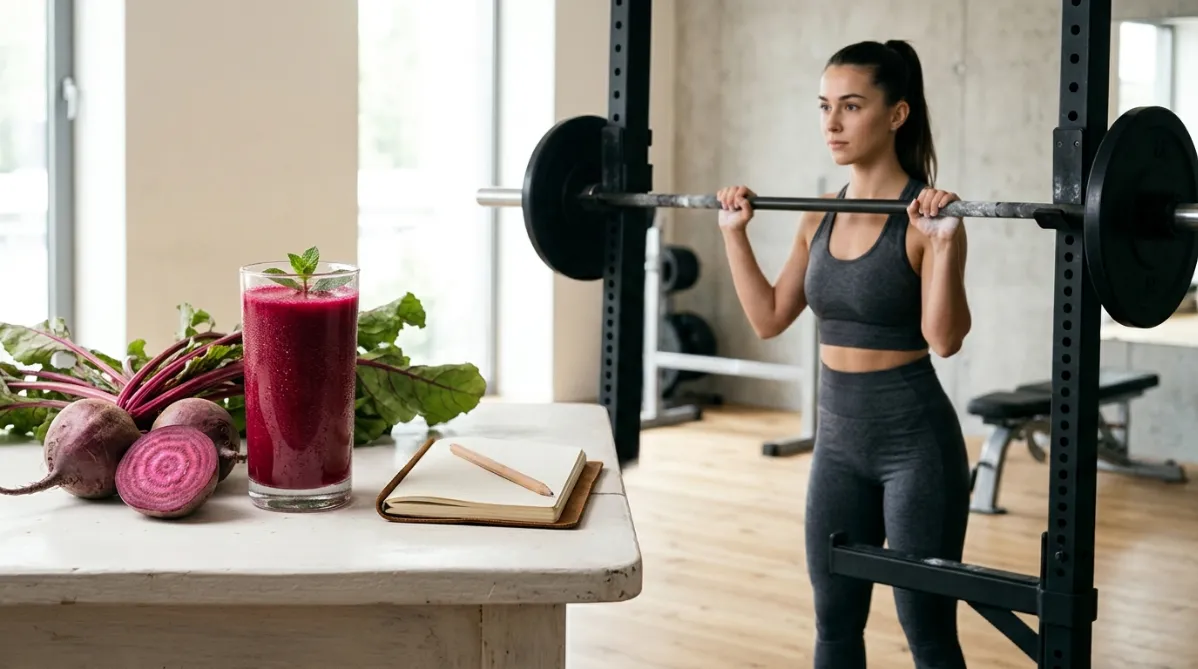
A wide, editorial-style photograph of a bright, modern gym corner softened by morning window light. In the foreground, a rustic matte-white ceramic table holds a tall clear glass of deep magenta beetroot juice, beads of condensation on the glass, a few fresh whole beetroots with leafy crimson-veined stems beside it, and one beetroot sliced in half to reveal its vivid concentric purple-pink rings. Next to the glass sits a small, neat notebook with a pencil, suggesting a research note, with no legible text. Behind the table, slightly out of focus, a young woman lifter with a tidy ponytail and a fitted charcoal training set stands at a barbell resting on a squat rack, chalk-dusted hands gripping the bar, calm and focused expression. A loaded bench with a bar is visible further back, with matte black plates and a light wooden floor. The palette is restrained and trendy: warm off-white, soft concrete gray, muted sage green accents from the beet leaves, and a bold beetroot magenta as the focal color. Shallow depth of field with a creamy bokeh background, natural side lighting casting long gentle shadows, subtle film grain. Composition follows the rule of thirds, with the juice and beets on the left third and the lifter on the right, leaving clean negative space in the upper area for a headline overlay. Mood is thoughtful, clean, and slightly skeptical, like a contemporary health and science journal cover. Realistic photography style, high-end magazine look, no text, no logos, no futuristic elements.
nutrition

Beetroot Juice Failed Women Lifters—and Even Slowed the Bench

BY DR. GYMBRO ·

Beetroot juice has a reputation as a natural performance booster, but a new crossover trial in 18 resistance-trained women found no squat benefit at all. Even stranger, bench press power and velocity dipped slightly at one load (60% 1RM) after a ~6.7 mmol nitrate dose taken 2.5 hours before training. The drop was only about 5 W and 0.02 m/s, with borderline P values, so it's far from a verdict. Here's what the study tested, what it can't tell us, and who might still want to experiment with nitrate.
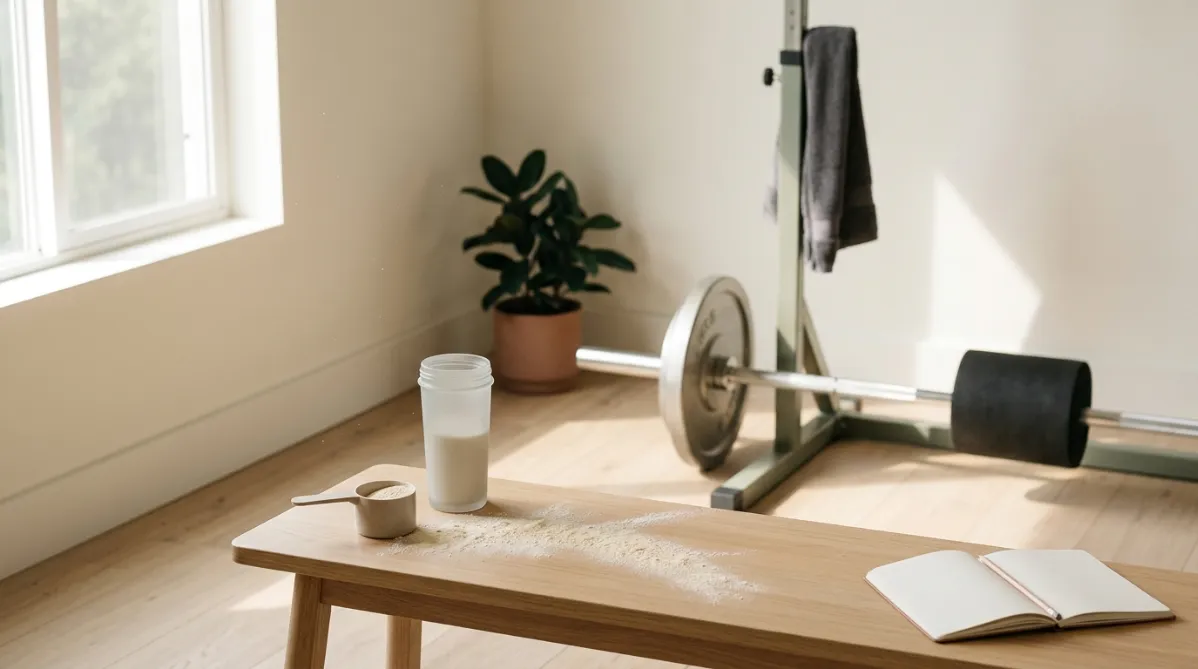
A wide, softly lit editorial photograph of a minimalist home gym corner with pale oak flooring and a warm off-white wall. In the foreground on a light wooden bench sits a matte ceramic scoop resting beside a simple frosted glass shaker bottle, with a delicate dusting of fine cream-colored protein powder spilled across the wood in a natural, casual arc. In the soft-focus midground, a loaded barbell rests on a squat rack with brushed steel plates, and a neatly folded charcoal towel hangs over the rack's upright. To the right, a small open notebook with a pencil lies on the bench, suggesting tracked training logs, with no legible text. Morning sunlight streams diagonally through a large window on the left, casting long gentle shadows and a warm golden glow across the scene, with subtle dust motes floating in the light. The color palette is muted and modern: sage green, warm sand, soft terracotta, and cream, with a single accent of deep forest green from a potted plant in the background corner. Shallow depth of field, crisp detail on the powder and scoop, creamy bokeh on the barbell. Shot as if with a 50mm lens at f/2, natural film-like grain, clean negative space on the upper right for headline overlay. The mood is calm, thoughtful, and science-minded, with a contemporary wellness magazine aesthetic, realistic and tactile, with no people, no logos, and no text.
nutrition

Does Protein Powder Add Strength? 23 Trials Reveal the Catch

BY DR. GYMBRO ·

Does adding protein powder to your training actually make you stronger? A 2026 meta-analysis of 23 randomized trials and 611 young adults found an average edge of 7.4 kg on the squat and 2.6 kg on the bench press. The squat benefit clustered in programs of 12 weeks or less and in trials where protein was taken around workouts and before sleep. But the timing signal was only borderline, no optimal dose was established, and the authors stress the benefit is conditional, not universal. Here is what the data support and what they don't.

This page is available in