
Dr. Gymbro

General

9 articles
A serene, minimalist scene showing a smartphone lying face-down on a smooth white marble surface, surrounded by calming natural elements. Soft morning sunlight streams through a nearby window, casting gentle shadows. A small potted succulent sits nearby alongside a steaming cup of herbal tea in a ceramic mug. The phone's screen is completely black, emphasizing disconnection from digital noise. In the background, slightly blurred, are elements suggesting wellness and tranquility: a yoga mat partially visible, a small stack of books, and dried eucalyptus branches in a simple glass vase. The color palette consists of warm whites, soft beiges, muted greens, and golden sunlight, creating an atmosphere of peace and mindful living. The composition suggests intentional digital minimalism and the conscious choice to step away from technology for mental wellbeing.
general

The Hidden Cortisol Cost of Social Media: Why You Should Consider a Facebook Detox

BY DR. GYMBRO ·

Groundbreaking research reveals that just five days away from Facebook leads to measurable decreases in cortisol levels, offering a simple strategy to combat chronic stress. For fitness enthusiasts looking to avoid 'cortisolmaxxing,' social media detoxification may be one of the most overlooked yet effective interventions for optimizing hormone levels. This comprehensive analysis explores the science behind social media stress and provides practical strategies for reducing cortisol through strategic digital breaks.

A sleek, modern gym interior with warm natural lighting streaming through large windows, featuring a minimalist weight training area with polished concrete floors and exposed brick walls. In the foreground, a single chrome barbell rests on a clean wooden bench, with perfectly organized dumbbells arranged on a contemporary rack in soft focus behind it. The scene captures a peaceful, contemplative moment with subtle shadows creating depth and visual interest. The color palette consists of warm grays, natural wood tones, and soft whites, with subtle amber lighting that creates an inviting, professional atmosphere perfect for serious training.
general

Do Slow Reps Build More Muscle? Revolutionary Meta-Analysis Reveals the Truth About Tempo Training

BY DR. GYMBRO ·

A revolutionary new meta-analysis has finally settled the debate about repetition tempo and muscle growth. Researchers analyzed dozens of studies involving healthy adult males to determine whether slow reps truly build more muscle than faster movements. The surprising findings reveal that moderate tempos (2-4 seconds per rep) combined with higher training volume produce superior results compared to extremely slow repetitions, challenging conventional wisdom in the fitness world.
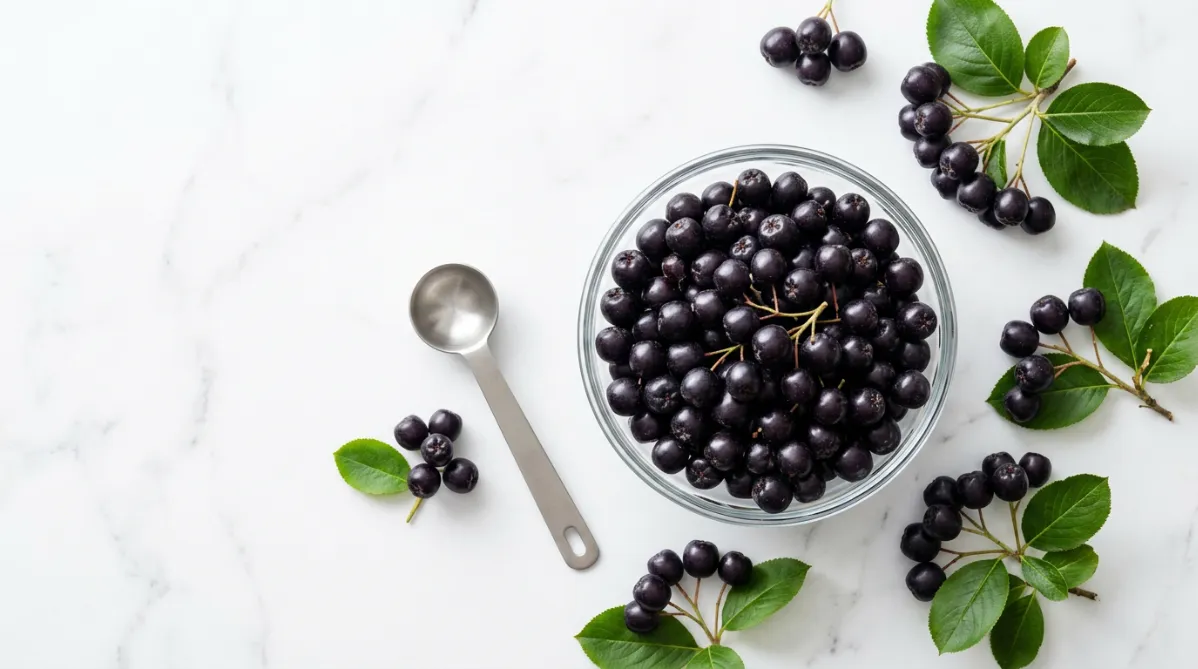
A stunning flat lay arrangement on a clean white marble surface featuring fresh deep purple aronia berries scattered artfully around a modern glass bowl filled with more berries. Soft natural lighting creates gentle shadows and highlights the berries' rich, almost black-purple hue and glossy skin. Minimalist styling with a few green leaves as accents, and perhaps a sleek measuring spoon nearby. The composition is shot from directly above with plenty of negative white space, creating an Instagram-worthy aesthetic that emphasizes the berries' vibrant color and superfood appeal. The lighting is bright and airy, giving the image a premium health and wellness magazine feel.
general

Burn More Fat with This Cyanidin 3-Glucoside Superfood: Aronia's Hidden Thermogenic Power

BY DR. GYMBRO ·

Japanese researchers have discovered that aronia berries, packed with Cyanidin 3-glucoside (C3G), can significantly boost thermogenesis while shuttling glucose into muscle tissue. This deep purple superfood offers a dual-action approach to fat loss, cranking up your body's caloric burn while optimizing muscle glucose utilization. For those with 'cold constitution'—constantly feeling cold and struggling with slow metabolism—aronia may be the natural thermogenic breakthrough that makes traditional fat loss supplements more effective.

A muscular athlete in a modern gym performing a powerful deadlift, with intense focus and determination on their face. Sweat glistens on their skin as they grip a loaded barbell. In the foreground, a glass of deep red beet juice sits on a sleek counter, with fresh beetroot slices arranged nearby. The background features state-of-the-art gym equipment with soft lighting creating dramatic shadows. Overlaid translucent graphics show testosterone and cortisol molecular structures floating in the air, with upward arrows for testosterone (in vibrant green) and downward arrows for cortisol (in calming blue). The overall color palette combines deep reds from the beets, metallic grays from the gym equipment, and energetic greens and blues from the hormone visualizations, creating a scientific yet powerful atmosphere that represents the intersection of nutrition science and athletic performance.
general

The Science-Backed Secret to Maximizing Testosterone and Crushing Cortisol: How Betaine Transforms Your Training Hormones

BY DR. GYMBRO ·

Recent research reveals that betaine supplementation can significantly boost testosterone levels while reducing cortisol response in strength athletes, creating an optimal hormonal environment for muscle growth and recovery. This naturally occurring compound, found in beets and other foods, works through multiple pathways to enhance the anabolic hormone profile that drives training adaptations. With just 2.5 grams daily, athletes are experiencing measurable improvements in strength, body composition, and recovery that stem from betaine's unique ability to simultaneously elevate testosterone and moderate cortisol elevation following intense training sessions.

A muscular athlete in compression gear sits exhausted on a gym bench, head tilted back with sweat glistening on their skin, surrounded by heavy weights and exercise equipment. In the foreground, a glass jar of golden honey sits open with a wooden honey dipper resting beside it, honey slowly dripping from the dipper creating amber trails. Soft, warm lighting illuminates the honey jar, making it glow like liquid gold against the darker gym environment. The athlete's muscles appear defined but fatigued, with subtle visual indicators of strain. In the background, blurred gym equipment and mirrors create depth. The scene conveys the contrast between intense physical exertion and natural, healing nutrition, with the honey positioned as a beacon of recovery and protection for the overtrained body.
general

Overtrained Athletes Find Sweet Relief: How Honey Can Protect Your Muscles From Breakdown

BY DR. GYMBRO ·

Groundbreaking Iranian research reveals that honey supplementation can protect athletes' muscles from breakdown during overtraining. The study found that daily honey consumption significantly reduced muscle protein degradation markers in overtrained athletes, offering a natural solution to one of sports' most challenging problems. This discovery could revolutionize recovery strategies for serious athletes pushing their bodies to the limit.

A close-up, golden honey drop suspended mid-air, crystalline and luminous, falling toward a background of defined human muscle fibers rendered in anatomical detail. The muscle tissue glows with a subtle protective golden aura where the honey makes contact. In the background, abstract representations of antioxidant molecules and anti-inflammatory compounds float like microscopic shields around the muscle strands. The scene has a scientific yet warm aesthetic, with honeycomb hexagonal patterns subtly integrated into the composition. Soft, amber lighting bathes the entire image, creating depth and highlighting the honey's natural transparency and the muscle's healthy pink-red tones. Small particles of pollen and natural honey crystals drift through the frame, emphasizing the organic nature of this protective relationship between honey and muscle tissue.
general

Revolutionary Study Reveals How Honey Protects Muscles During Overtraining

BY DR. GYMBRO ·

A groundbreaking Iranian study reveals that honey supplementation can protect muscles from breakdown during overtraining, offering athletes a natural solution to one of sports' most persistent problems. This research demonstrates how honey's unique blend of antioxidants, anti-inflammatory compounds, and specialized carbohydrates creates a protective barrier against exercise-induced muscle damage. The findings suggest that this simple, accessible intervention could revolutionize recovery protocols for everyone from elite athletes to weekend warriors. As overtraining syndrome affects up to 60% of athletes at some point in their careers, honey emerges as an unexpected ally in the pursuit of optimal performance and muscle preservation.

A detailed cross-section visualization of a human brain with glowing neural pathways and individual neurons firing in response to scent molecules. Colorful, luminescent brain cells are highlighted in the olfactory regions, with electrical impulses represented as bright streaks of light traveling through neural networks. Floating above the brain are translucent representations of various scent molecules—floral compounds, food aromas, and chemical structures—connected by delicate light trails to specific brain regions. The olfactory bulb glows prominently, with branching neural connections extending to the limbic system and other processing areas. The background features a soft gradient from deep blue to purple, creating a scientific yet ethereal atmosphere. Microscopic detail shows individual synapses sparking with bioluminescent activity, while data visualization elements like graphs and neural firing patterns overlay portions of the image, representing the groundbreaking research data being captured in real-time.
general

Scientists Map How Individual Brain Cells Process Smell in Groundbreaking Human Study

BY DR. GYMBRO ·

For the first time, scientists have recorded individual brain cell activity in awake humans processing different scents, revealing how our brains encode smell at the most fundamental neural level. The groundbreaking study discovered that different brain regions play specialized roles—from chemical identification to emotional valuation—while also processing smell-related images and concepts. These findings bridge decades of research gaps and provide unprecedented insights into one of our most mysterious senses, with implications for understanding sensory disorders and human perception.

A sweeping aerial view of vast tropical landscape showing the dramatic transition from degraded land to lush, regenerating forest. The foreground displays patchy, cleared areas with scattered vegetation and bare soil, gradually transforming into dense, vibrant green canopy in the distance. Sunlight filters through morning mist, illuminating the contrast between brown, sparse grassland and the emerald green of naturally recovering rainforest. Young saplings and pioneer species dot the middle ground, creating a mosaic of different vegetation stages. The scene captures the natural progression of forest regeneration across rolling hills that stretch to the horizon. Wispy clouds drift over the landscape, while the golden hour lighting emphasizes the hope and potential of natural restoration. The image conveys the scale and beauty of tropical forest recovery, with varying shades of green representing different stages of natural regeneration across this vast, Mexico-sized expanse of healing land.
general

Nature's Own Solution: 215 Million Hectares of Tropical Land Could Regenerate Forests Naturally

BY DR. GYMBRO ·

A revolutionary study reveals that 215 million hectares of tropical land—an area larger than Mexico—could naturally regenerate forests without costly tree-planting programs. This natural recovery could sequester 23.4 gigatons of carbon over 30 years, with just five countries accounting for over half the potential. The research offers a cost-effective pathway to meeting global climate goals while restoring biodiversity through nature's own healing processes.

A split-screen composition showing the transformation of muscle fibers during stretching. On the left, a detailed cross-section view of relaxed muscle tissue with loose, wavy fibers in soft pink and white tones. On the right, the same muscle tissue during an intense stretch, with fibers elongated and aligned, glowing with increased blood flow in vibrant reds and oranges. The background features a modern research laboratory setting with charts and graphs displaying muscle growth data. Overlaying the image are subtle anatomical illustrations of the quadriceps muscle group and hip flexors. The lighting is clinical yet warm, with blue-white laboratory lighting contrasting against the organic warm tones of the muscle tissue. Small visual elements like stopwatch icons showing "15 min" and strength measurement indicators add scientific context to the transformative muscle-building process.
general

Stretching Your Way to Muscle Growth: New Study Reveals How 15-Minute Sessions Build Strength

BY DR. GYMBRO ·

A revolutionary study from the University of Graz has demonstrated that just 15 minutes of high-intensity stretching, performed three times per week, can produce significant muscle growth and strength gains in the quadriceps. The research challenges traditional training paradigms by showing that supervised hip flexor stretching not only increased muscle thickness but also improved isometric strength and dynamic balance performance. This breakthrough offers new hope for individuals who cannot participate in conventional resistance training due to injury or equipment limitations.

This page is available in