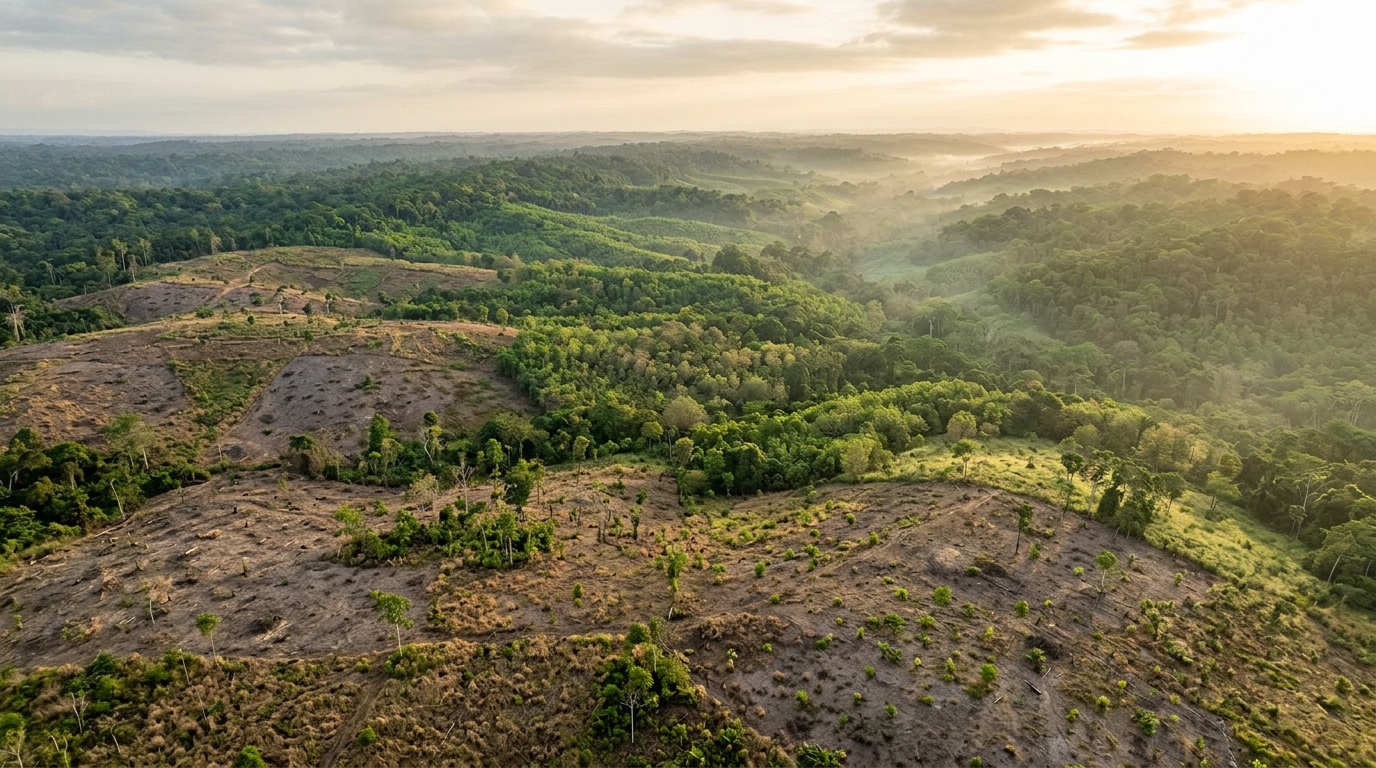
Nature's Own Solution: 215 Million Hectares of Tropical Land Could Regenerate Forests Naturally
A groundbreaking new study published in Nature reveals that an area larger than Mexico—215 million hectares—has the potential for natural forest regeneration across tropical regions worldwide. This discovery offers a cost-effective alternative to expensive tree-planting programs and could sequester massive amounts of carbon while restoring biodiversity.
The Power of Natural Recovery
The research, led by Renato Crouzeilles and an international team of scientists, analyzed forest patterns from 2000 to 2016 to create a high-resolution model predicting where tropical forests could naturally regenerate. Using satellite imagery at 30-meter resolution, the team mapped deforested areas that possess the environmental conditions necessary for forests to return on their own.
"Natural regeneration is not only more cost-effective than tree planting, but it often results in more biodiverse forests," the researchers note. This finding challenges the conventional wisdom that active restoration through tree planting is always the best approach to forest recovery.
Massive Carbon Sequestration Potential
The study estimates that these naturally regenerating forests could sequester 23.4 gigatons of carbon over 30 years—a range between 21.1 and 25.7 gigatons. To put this in perspective, this represents a significant portion of the carbon reductions needed to meet global climate goals. The carbon storage would occur primarily in above-ground biomass as trees grow and mature.
Five Countries Hold the Key
Five nations account for more than half of this regeneration potential: Brazil, Indonesia, China, Mexico, and Colombia together represent 52% of the identified areas. This concentration highlights the critical importance of targeting restoration initiatives in these countries and leveraging their natural regeneration capabilities.
Brazil leads the pack, which isn't surprising given its vast Amazon rainforest and Atlantic Forest regions that have experienced significant deforestation. Indonesia follows closely, with its tropical islands offering substantial opportunities for forest recovery.
Policy Implications and Global Impact
These findings have profound implications for international climate policy and conservation strategies. Rather than focusing solely on expensive tree-planting programs, governments and conservation organizations can identify areas where simply protecting land from further disturbance could allow forests to return naturally.
The research provides a roadmap for achieving national and global environmental commitments, including targets under the Paris Climate Agreement and the UN Sustainable Development Goals. By capitalizing on natural regeneration potential, countries can meet restoration targets more efficiently and with greater biodiversity outcomes.
The study's 30-meter resolution mapping also enables precise, local-level decision-making, allowing policymakers to identify specific areas where natural regeneration is most likely to succeed. This granular approach could revolutionize how we think about forest restoration and carbon sequestration strategies worldwide.