Dr. Gymbro
←

#supplements

50 articles
A wide, softly lit editorial still life on a warm, pale oat-colored surface. At the left, a lower leg and foot rest on a folded cream linen towel, wrapped in a matte white fiberglass cast with a subtle texture and a few faint pen scribbles near the ankle. The skin tone is natural and the lighting is gentle. At the center-right, a small ceramic bowl holds fine white creatine powder, with a matte wooden scoop resting beside it and a dusting of powder on the surface. Next to the bowl is a clear glass of water with light refracting through it, casting soft caustic ripples on the table. This hints at the water-retention idea without being literal.

In the background on the right, slightly out of focus, a pair of light grey resistance bands and a small sage-green dumbbell sit on a wooden stool, suggesting rehab. A tall, leafy plant in a terracotta pot adds organic greenery at the edge of the frame. Morning sunlight streams from a window on the left and creates long, soft shadows and a warm golden-peach glow. The palette is cream, sage green, terracotta, soft sky-blue shadows, and touches of natural wood. The composition has generous negative space in the upper left for a title overlay. Shallow depth of field, shot as if with an 85mm lens, with fine film grain. The look is clean, calm, modern wellness-magazine photography with a minimalist, tactile, trendy feel.
recovery

Creatine in a Cast Won't Clearly Save Muscle, But Rehab Is Different

BY DR. GYMBRO ·

Everyone wants to know if creatine can save your muscle when an injury puts you in a cast. A new systematic review of six randomised trials (118 young people, 1-2 weeks of immobilisation) says the evidence during disuse is mixed, and some apparent lean-mass benefits may just be water. The more intriguing signal came during rehab, where two studies found larger gains in quad size, power and strength with creatine. Here are the real numbers, the limitations, and who might want to try it.
A wide, softly lit editorial still life on a pale oatmeal-colored linen surface. In the center sits a small matte ceramic bowl of fine white creatine powder, with a wooden scoop resting beside it and a few loose pale crystals scattered across the linen. Around the bowl, a fresh plant-based spread is arranged in an organic, uncluttered way: a halved avocado, a handful of chickpeas, bright green edamame pods, a cluster of dark leafy kale, a few red lentils spilled from a small wooden spoon, and a split pomegranate with glossy ruby seeds. A tall glass of water with condensation stands on the right, catching a sliver of window light.

In the soft-focus background, a young athlete in a muted sage-green tank top is mid-jump in a bright, minimalist studio with whitewashed brick walls and pale hardwood floors. The figure is slightly blurred and only partly in frame, which gives a sense of motion and vertical lift without pulling attention from the foreground. A pair of clean white sneakers and a folded gray towel sit on a low wooden bench nearby.

The light is warm natural morning daylight from the left. It casts gentle long shadows and subtle highlights on the powder and the glass. The palette is earthy and calm: cream, sage green, terracotta, warm wood tones, and small pops of avocado green and pomegranate red. The depth of field is shallow, with crisp focus on the bowl and scoop. The composition leaves generous negative space on the upper left for a title overlay, in the clean, contemporary style of a modern health and science magazine. Photographic, high-resolution, refined, and minimal.
science research

Vegans Took Creatine for 4 Weeks: Jumps Rose, Sprints Didn't

BY DR. GYMBRO ·

Vegans eat almost no dietary creatine, so does supplementing hit harder? A new randomized, triple-blind human trial gave 20 active vegans 0.1 g/kg/day of creatine monohydrate for four weeks. Jump performance improved, and so did some body composition measures, but sprint, handgrip and mid-thigh pull results didn't budge. Body water climbed 1.4 kg, and the study couldn't compare vegans with meat-eaters. Here's what the numbers show, what they don't, and who might want to try it.
A sunlit outdoor running track in late afternoon, shot from a low angle with shallow depth of field. In the foreground, a matte black bottle with a minimal off-white label sits on the edge of a warm terracotta-colored track lane, beside a folded white towel and a small glass of amber liquid catching golden light. Condensation beads on the bottle. A faint heat shimmer rises from the track surface and softens the background.

In the midground, slightly out of focus, a lean athlete in a sage-green tank top and charcoal shorts runs on a treadmill-like stretch of track, a thin sheen of sweat on their shoulders, their expression focused and calm. Their motion is gently blurred, suggesting endurance and rhythm. Long soft shadows stretch across the lane lines.

The background fades into hazy peach, apricot, and pale yellow tones, with the suggestion of tall trees and a distant stadium wall. Warm sun flare enters from the upper right, creating a subtle glow and a few soft light streaks across the frame.

Subtle editorial touches: a small notebook with a pencil and a stopwatch rest beside the bottle, hinting at data and timing without any text legible. The color palette is warm and muted, with terracotta, cream, sage, and charcoal accents, and a fine film-like grain. The composition leaves open negative space on the left third for a headline overlay. The overall mood is clean, modern, and health-journal inspired, natural and aspirational, with a calm scientific curiosity rather than hype.
nutrition

Ketone Drinks in the Heat: Longer Endurance and Sharper Memory?

BY DR. GYMBRO ·

Ketone drinks are supposed to be for fat-burning biohackers, but a new heat-stress trial suggests they might also help you finish stronger. In 17 trained men, ketone monoester plus caffeine extended time to exhaustion to 8.9 minutes versus 7.0 with carbs plus caffeine, after 90 minutes of loaded treadmill work at 34 °C. Working-memory accuracy on the 1-back task improved too, while heart rate and core temperature didn't differ meaningfully. But 2-back, reaction time and the hit-and-avoid task showed no benefit, and the study was small, male-only and single-session. Here's what the data show, and what they don't.
A clean, modern editorial flat-lay on a pale oat-colored linen surface, shot from slightly above in soft diffused natural window light. At the center sits an amber glass supplement bottle with a minimalist cream label, unbranded, with a few capsules spilling onto the fabric in soft greens and ivory tones. Around it are fresh botanical elements: a sprig of green tea leaves, sliced ginger root, a small bundle of dried hibiscus petals, and a few pale green pineapple and papaya slices hinting at digestive enzymes. A small ceramic bowl of creamy plain yogurt with a wooden spoon suggests probiotics. To the left, a flexible tailor's measuring tape in soft blush pink loosely curls across the linen, with a slim brushed-brass scale partly visible at the frame edge. On the right, a minimalist white notebook lies open with a hand-drawn simple line chart showing two diverging lines, one trending downward and one flat, with no readable text. A pair of reading glasses with thin gold frames rests beside it, and a tiny pair of balanced brass scales sits in the background, subtly suggesting weighing evidence and caution.

The palette is muted sage green, warm cream, soft terracotta, and touches of blush and brass. Shadows are gentle and long, the depth of field is shallow with a creamy blurred background, and the negative space on the left third of the frame leaves room for a headline overlay. The overall feel is a contemporary health and science journal, calm, trustworthy, and slightly skeptical, in the style of a premium wellness magazine photographed with a 50mm lens, with crisp texture on linen, glass, and botanicals.
nutrition

SlimSEB Probiotic-Enzyme Blend Beat Placebo—But There's a Catch

BY DR. GYMBRO ·

A probiotic, enzyme and botanical blend called SlimSEB beat placebo in a 12-week randomized trial of 87 adults at risk of type 2 diabetes. Obese participants lost 4.5 kg more than placebo and trimmed their waists by 11 cm, while cholesterol and insulin resistance also improved. But the product was supplied by its maker, the trial was small and short, and the multi-ingredient formula means no single component can take credit. Here is what the data show, how they compare with GLP-1 drugs, and who should think twice.
A wide, editorial-style still life photographed from slightly above on a pale oat-colored linen surface, lit by soft morning window light from the left. In the center sits a small matte ceramic bowl holding a mound of fine white powder, with a minimalist wooden scoop resting beside it. Next to the bowl is an open amber glass supplement jar with a plain cream label, and a few white capsules spill across the linen in a loose arc.

To the right, a neatly arranged cluster of analog "study" objects suggests careful measurement: a vintage stopwatch with a clean white face, a slim notebook with a sage-green cover open to a hand-drawn bar chart (blurred, no legible text), and a mechanical pencil lying across the page. A small row of six identical ceramic dishes, each holding a pinch of powder, is lined up along the top edge of the frame to hint at the six-week trial. One dish is slightly out of alignment, a subtle visual cue for ambiguity.

A shallow glass of water and a single sprig of green eucalyptus add a calm, organic note in the foreground. Soft, long shadows fall across the textured linen, and the palette stays restrained: warm cream, soft sage, muted terracotta, pale gray, and touches of amber from the glass jar. A few translucent paper cutouts in two tones (sage and blush) overlap in the upper right corner as a modern graphic accent, evoking overlapping data points without showing any numbers.

Depth of field is shallow, with the bowl and stopwatch in crisp focus and the edges gently softened. The composition leaves generous negative space on the left third for title text overlay. The overall mood is thoughtful, balanced, and quietly skeptical, in the style of a contemporary wellness and science magazine: clean, tactile, minimal, with a subtle film-like grain and natural color grading. No people, no futuristic or sci-fi elements, no readable text or logos.
nutrition

GAA Brain Booster? The 6-Week Trial Result Is Complicated

BY DR. GYMBRO ·

GAA, the creatine precursor sold as a brain booster, just got its first serious human test. In a six-week, double-blind trial of 58 healthy adults, it produced some faster reaction times and a scattering of mood and stress signals. Most cognitive tests, however, showed nothing, and many of the headline results were only trends. Safety markers looked fine, but the study was small, exploratory, and had no creatine-only comparison group. Here is what it really shows, who it might suit, and why the verdict is mixed.
A sunlit, minimalist home gym corner photographed in soft golden morning light, with a young athletic man seated on a wooden bench, leaning forward with his elbows resting on his knees, catching his breath after a hard leg session. He wears a muted sage-green t-shirt and charcoal shorts, his face turned slightly away from the camera, calm and focused. A matte ceramic dish in the foreground holds a few small, translucent golden softgel capsules, with a glass of water beside it catching the light and casting a soft caustic shadow across a pale oak floor. Behind him, a loaded barbell rests on a squat rack, slightly out of focus, and a tall window pours warm sunlight diagonally across the scene, creating long gentle shadows and a hazy glow. A small potted green plant sits on a shelf at the edge of the frame. The color palette is warm and editorial: cream, soft gold, sage green, pale wood, and charcoal accents. Shallow depth of field, with crisp focus on the capsules and glass in the lower third and a creamy bokeh background. The composition leaves generous negative space on the right side for a headline overlay. The mood is clean, modern, and aspirational, like a high-end wellness magazine or a trendy health journal feature. Shot on a 50mm lens, natural light, fine film grain, subtle matte finish, landscape 16:9 framing.
recovery

Vitamin D Sped Strength Recovery in Men Who Weren't Deficient

BY DR. GYMBRO ·

Men with perfectly normal vitamin D levels still recovered strength faster after a brutal leg workout when they took 4,000 IU daily. In this randomized, placebo-controlled trial of 28 active men, peak isometric force bounced back about 8% better at 24 hours. Muscle-damage markers ALT and AST also rose less. But there's a twist: soreness didn't improve at all. Here's what the study found, where it falls short, and who might actually care.
A wide, editorial-style flat lay photographed from above on a pale warm-gray linen surface in soft natural window light. At the center, a small open amber glass jar tips gently onto its side, spilling a few cream-colored capsules across the fabric. Next to the jar sits a loose arrangement of fresh mushrooms: a cluster of golden-tan reishi with glossy, lacquered caps, a few slender white enoki stems, a halved shiitake showing its pale gills, and a curl of turkey tail with concentric bands of rust, cream, and charcoal. A small wooden scoop holds a pile of fine beige mushroom powder.

On the left third of the frame, a matte black sports watch with a minimal face lies beside a folded sage-green running shirt and a pair of lightweight off-white running shoes, hinting at athletic training without showing a person. A slim white notebook with a single pencil rests nearby, open to a blank page with a faint hand-drawn line graph trending upward, in thin graphite strokes.

On the right side, a pair of clear glass beakers and a single small petri dish with a soft amber-tinted liquid add a subtle laboratory note, kept calm and organic. A single sprig of dried herbs and a few scattered oat-colored grains add texture.

The palette is earthy and refined: oatmeal, soft sage, terracotta, warm amber, and charcoal accents against the muted neutral background. Shadows are soft and diffused, with a gentle highlight on the glass and the glossy reishi cap. The composition leaves generous negative space in the upper right for a headline overlay. Shallow depth of field blurs the edges slightly, while the central mushrooms and capsules stay crisp. The overall feel is modern, clean, and trendy, like a wellness and science magazine cover, with tactile natural textures, minimal styling, and a quiet sense of curiosity and skepticism.
science research

A Mushroom Capsule Lifted VO2max 14.8%—But There's a Big Catch

BY DR. GYMBRO ·

A mushroom capsule, 40 days, and a 14.8% rise in VO2max sounds almost too good to be true. In this new Antioxidants paper, 50 young male athletes taking 320 mg/day of a beta-glucan-rich multi-mushroom extract improved from 46.26 to 53.12 mL/kg/min. The big catch is that there was no placebo group, no randomization and no blinding, and the athletes kept training throughout. Cell experiments on rat heart cells add a hypoxia-related hint, but they tested single compounds, not the capsule. Here's what the study found, what it can't tell us, and who should think twice.
A landscape editorial still life on a soft, warm oat-colored linen surface, lit by diffused natural window light from the left. In the center sits a shallow matte ceramic bowl in muted sage green holding a small mound of fine white arginine powder. Beside it rests a wooden scoop dusted with powder. To the left, a loose arrangement of dried Astragalus root slices, pale golden and delicate, fans out in a graceful curve. To the right, a few whole Panax notoginseng roots, knobbly and earthy brown, sit next to a small pile of finely ground tan powder on a folded cream paper. A single sprig of fresh green leaf adds a gentle accent in the background.

In the foreground, a minimalist glass beaker with clear water and a thin linen-wrapped glass dropper sit slightly out of focus. Behind the objects, a softly blurred backdrop in pale blush and sand tones carries a faint, abstract pattern of soft circular shapes, like ripples or molecular dots drawn in subtle terracotta ink. A thin hand-drawn line graph in dusty coral rises gently across the upper right of the background, as if sketched on textured paper, with no readable text.

The composition uses generous negative space on the upper left, which leaves room for a headline overlay. The palette is earthy and calm: sage, cream, terracotta, honey gold, and soft blush. The shallow depth of field gives creamy bokeh. Gentle shadows fall to the right. The overall feel is clean and contemporary, like a wellness and science journal cover, with subtle film grain, high-end editorial photography, and tactile natural textures.
nutrition

The Add-On That Boosted Arginine Absorption 17% in a Small Trial

BY DR. GYMBRO ·

A 2023 crossover trial found that pairing 5 g of arginine with Astragalus and Panax notoginseng saponins raised arginine absorption by 17.3% and lifted the arginine-to-ADMA ratio by 167.1%. Urinary nitrate and cGMP, two nitric oxide markers, also rose. But only 24 people were analysed after six were excluded for large individual differences, and nobody measured workout performance. Here's what the data show, what they don't, and who should think twice.
A wide, softly lit editorial still life on a pale warm-gray concrete surface, shot from a slightly elevated three-quarter angle. In the center-left, two matte ceramic scoops sit side by side. One holds fine ivory whey powder, the other holds slightly coarser, pale golden collagen peptide powder. A small, elegant dusting of both powders spills between them and blends into a soft swirl. Behind them, three minimalist cream and sage-green supplement tubs with no legible text stand in a staggered row, with a frosted glass shaker bottle of creamy liquid beside them.

On the right, a brushed-steel barbell plate and a compact chalk-dusted kettlebell rest slightly out of focus, suggesting resistance training. Pale wisps of chalk hang in the air. A folded charcoal gym towel and a pair of worn leather lifting straps lie in the foreground. A single cross-section of a clean white bone model, a stylized vertebra, rests on a small oak block at the far right. It subtly signals the bone-density theme without looking clinical.

Natural window light enters from the left, casting long, gentle shadows and a warm highlight on the powders. The palette is muted and modern: oatmeal, bone white, sage green, soft charcoal, and touches of warm amber. Shallow depth of field keeps the scoops tack-sharp and melts the background into creamy blur. Leave generous negative space in the upper right for headline overlay. The overall feel is a premium health and science journal cover: clean, tactile, minimalist, with fine film-like grain and a calm, editorial mood.
nutrition

Whey Plus Collagen Beat Either Alone in Lifters—With a Catch

BY DR. GYMBRO ·

Mixing 30 g of whey with 10 g of collagen beat whey alone, collagen alone and placebo on every outcome in a new 8-week trial of resistance-trained men. The stack added 2.66 kg of muscle (by BIA), lifted lumbar spine BMD and improved squat, bench and bone turnover markers. Collagen alone moved bone, and whey alone moved muscle. But with only 40 participants, unmatched protein totals and a surprisingly big BMD jump, there is a catch. Here is what the stack won, who it may suit and who should skip it.
A wide, editorial-style still life shot from a slightly elevated angle on a pale oatmeal-colored linen surface in soft, diffused morning light. At the center, a shallow matte ceramic bowl in warm terracotta holds a small mound of fine, golden-tan ashwagandha root powder. Beside it lie a few gnarled, dried ashwagandha roots and a sprig of green leaves with tiny orange-red berries in their papery husks. To the left, a minimalist amber glass supplement bottle sits with a few capsules spilled beside it, label blank and clean. A wooden scoop rests on the surface, dusted with powder.

On the right side of the frame, a pair of sleek, muted sage-green running shoes sits slightly off-center. A folded cream towel and a stainless steel water bottle sit just behind them, with a single brushed-steel kettlebell partly out of focus in the background to hint at strength training without dominating the scene. The running shoes and the botanical elements share equal visual weight, suggesting the endurance theme.

A thin, curved line of scattered powder sweeps across the linen from the bowl toward the shoes, like a gentle path or track. Soft shadows fall to the left, and a warm sunbeam crosses the surface and picks out the texture of the powder and the roots.

The palette is restrained and modern: warm terracotta, sage green, cream, soft gold, and touches of charcoal. The background is a blurred pale plaster wall with a hint of a window shadow. Shallow depth of field, crisp focus on the bowl and roots, and generous negative space in the upper left for a headline. Contemporary wellness magazine aesthetic, calm, natural, tactile, high-end lifestyle photography, no text, no people, no futuristic elements.
science research

Ashwagandha's Surprise: It Helps Endurance More Than Strength

BY DR. GYMBRO ·

Ashwagandha is often marketed as a strength and muscle booster, but a new meta-analysis points somewhere else. Pooling 13 randomized trials and 599 participants, researchers found the most consistent benefit for aerobic endurance, with a pooled effect of g = 0.54. Strength gains were positive but uncertain, and the data on power were thin. The apparent dose sweet spot of 500-600 mg/day of extract comes with big caveats, including a prediction interval that crosses zero. Here is what the evidence supports, who might benefit, and who should hold off.
A bright, minimalist flat-lay photograph of two supplement scoops on a pale warm-gray stone surface, shot from directly above in soft natural window light. On the left, a matte ceramic scoop holds fine white creatine monohydrate powder, heaped in a clean mound. On the right, a second scoop of the same shape holds slightly coarser off-white beta-alanine powder, with a small, deliberate gap between the two. Each scoop sits in its own soft shadow, which suggests separation rather than combination. Between them, a thin brushed-brass ruler or a single slim line of fine powder runs across the surface and subtly divides the composition.

Around the scoops, a few restrained props in a muted editorial palette of sage green, cream, terracotta, and soft charcoal: a small glass jar with a minimalist label that has no readable text, a folded linen napkin, a single sprig of eucalyptus, and a stainless-steel shaker bottle softly out of focus in the upper corner. A few loose powder grains are scattered naturally across the stone. A small stack of blank cream index cards with a pencil rests in the lower right, hinting at research and note-taking without any legible writing.

The composition follows a clean rule-of-thirds layout, with generous negative space on the right third for headline overlay. The lighting is gentle and diffused, with long, soft shadows falling to the lower left. The color grading is calm and slightly desaturated, with creamy highlights and a subtle film-like grain. The overall look is a modern wellness and science journal cover, with an airy, trustworthy, contemporary editorial feel, shallow depth of field, and crisp detail on the powders.
nutrition

Creatine + Beta-Alanine: The Stack Bonus Researchers Couldn't Find

BY DR. GYMBRO ·

The creatine plus beta-alanine stack is marketed as a performance power couple, but a new network meta-analysis of 52 randomized trials found no synergy between them. Creatine alone significantly improved sprint, jump, repeated-sprint and upper-body endurance outcomes versus placebo. Beta-alanine's effects were non-significant or context-specific, and the combo added nothing beyond creatine. Here's what the study did, where it falls short, and what it means for your supplement budget.
A wide, editorial-style photograph of a volleyball player mid-landing from a jump on a sunlit indoor court, captured from a low side angle. The athlete's knee is slightly bent and the patellar tendon area is in sharp focus, with soft natural muscle definition and a light strip of kinesiology tape just below the kneecap. The polished honey-toned hardwood floor reflects warm window light, and the background falls away into a creamy blur of pale court lines and tall windows.

In the lower right foreground, slightly out of focus, a matte ceramic bowl holds a small mound of fine white creatine powder. A wooden scoop rests beside it, next to a clear glass of water and a folded white towel. This sits on a light oak bench at the edge of the court. A resistance band and a slanted decline board, used for eccentric rehab, lean softly against the wall behind the bench.

The palette is warm and natural: cream, soft white, honey oak, muted sage green accents from a gym bag, and a touch of terracotta from the athlete's sneakers. Light is golden-hour and diffused, with gentle shadows and a subtle film-grain finish. The composition follows the rule of thirds, with the athlete on the left and the supplement still life on the right. Negative space in the upper portion leaves room for a headline overlay.

The overall mood is calm, modern, and health-focused, like a contemporary wellness or sports-science journal cover. Shallow depth of field, a clean minimalist aesthetic, and true-to-life color. No text, no logos, no futuristic or digital elements.
recovery

Creatine for Jumper's Knee? Pain Relief Showed Up by Week 4

BY DR. GYMBRO ·

Jumper's knee can sideline athletes for months, and a new trial asks whether creatine can speed things up. In 20 athletes doing eccentric rehab, only the creatine group had a significant pain and function (VISA-P) improvement at 4 weeks, along with gains in jump height. By week 8, however, both groups had improved similarly, and the between-group interaction only trended (p = 0.099). Here is what the study did, how creatine was taken, who might benefit, and why the small sample demands caution.
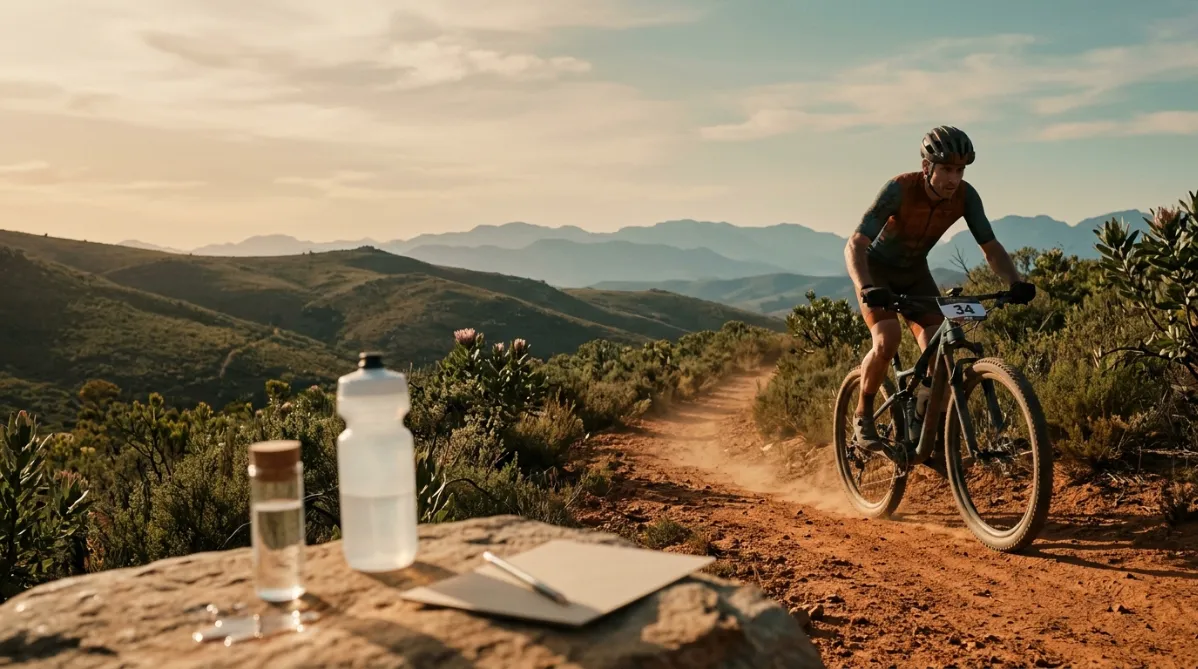
Wide landscape editorial photograph of a mountain biker mid-ride on a dusty red-orange singletrack trail in the South African Western Cape, golden hour light raking across the scene. The rider is in sharp focus on the right third of the frame, wearing a weathered cycling kit with a race number plate on the handlebars, dust kicking up from the rear tire. Behind them, rolling hills covered in fynbos shrubland and silhouetted protea plants fade into soft, hazy blue mountains. Warm amber sunlight creates long shadows and a soft rim light around the rider and bike.

In the lower left foreground, slightly out of focus, a small minimalist glass vial and a clear water bottle sit on a flat sun-bleached rock, with a few drops of liquid catching the light. Next to them, a simple matte paper notecard and a pencil suggest data collection, with no legible text. The vial and bottle are clean, understated, and modern, with no branding.

The color palette is earthy and refined: terracotta, ochre, sage green, dusty teal sky, and cream highlights. The composition uses shallow depth of field, a generous negative space in the upper left sky for headline overlay, and subtle film grain. The mood is contemplative, skeptical, and quietly sophisticated, like a feature photograph from a high-end outdoor sports and science magazine. Natural, candid, cinematic, shot on a 50mm lens with soft contrast and muted saturation. No futuristic elements, no glowing effects, no molecular graphics, no text.
science research

Ketone IQ Raised Ketones at Cape Epic, But Did Nothing Else

BY DR. GYMBRO ·

Riders at the 8-day Cape Epic drank Ketone IQ twice a day and hit about 1 mM blood ketones, yet their fatigue, heart rate, reaction time and recovery looked the same as placebo riders. The double-blind trial tested R-1,3-butanediol in real racing conditions rather than a lab. The authors say the modest ketosis was not effective, and that butanediol should not be confused with ketone esters. With only 18 riders, the study has real limits, but it is a sobering data point for anyone considering a pricey ketone drink for recovery.
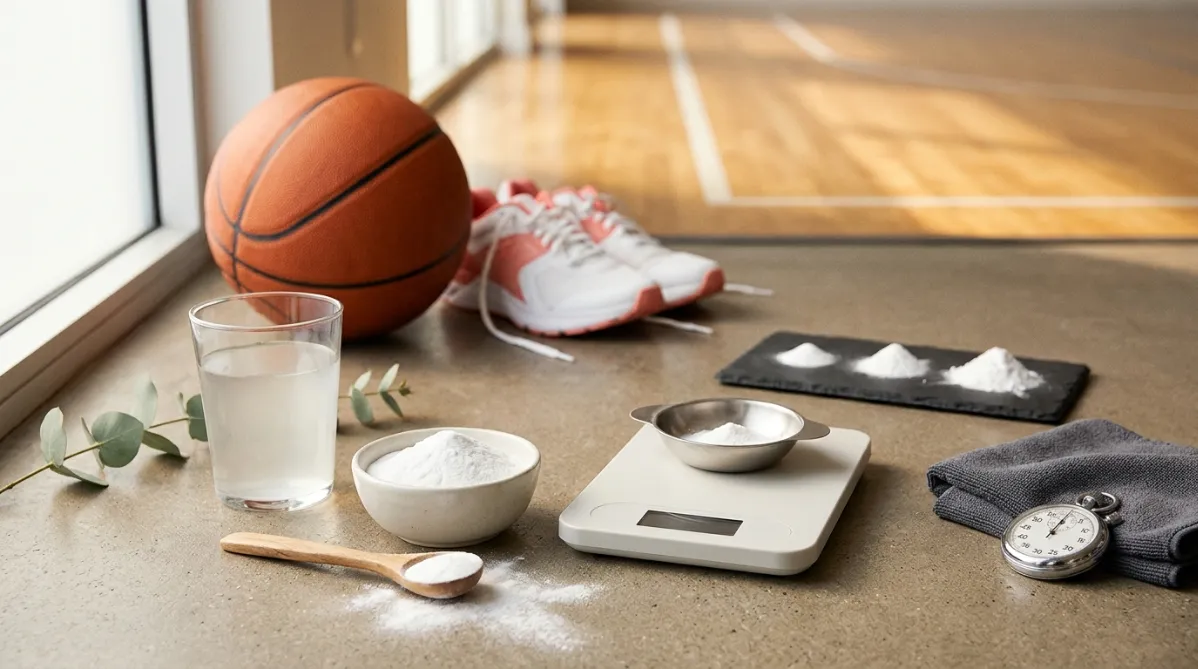
A wide, editorial-style still life shot from a slightly elevated angle on a pale, warm-gray concrete surface lit by soft natural window light from the left. In the center foreground, a clear glass of cloudy water sits beside a small white ceramic bowl heaping with fine white baking soda powder, a wooden measuring spoon resting beside it with a light dusting of powder spilling across the surface in a graceful arc. Next to them, a minimalist digital kitchen scale in matte white shows a small portion of powder in a shallow dish. Slightly behind, an orange basketball is partially in frame, its pebbled texture catching the light, resting beside a pair of clean white and coral athletic sneakers with the laces loosely undone. A folded charcoal gray towel and a stainless steel stopwatch lie to the right, the stopwatch face crisp and legible. Three small, neatly arranged piles of white powder on a slate tile in the midground, in ascending sizes, hint at different doses without any text or labels. In the soft-focus background, the faint outline of an indoor basketball court with warm honey-colored hardwood floor and blurred lane lines stretches across the frame, glowing with golden-hour light. The color palette is restrained and modern: warm off-white, soft gray, burnt orange, and touches of sage green from a single sprig of mint or eucalyptus laid near the glass. Shallow depth of field, crisp textures on powder grains and the ball's surface, gentle shadows, subtle film-like grain. Clean negative space in the upper right for headline overlay. The mood is calm, sleek, and contemporary, like a premium health and sports science magazine cover, with a fresh, minimalist composition and no people, no text, and no futuristic elements.
nutrition

Baking Soda + Sprints: The Dose That Beat Placebo on Every Test

BY DR. GYMBRO ·

A new randomized trial in basketball players found that adding sodium bicarbonate (baking soda) to four weeks of sprint interval training beat placebo on jumping, sprinting, agility, Yo-Yo distance and Wingate power. The higher dose of 0.45 g/kg then outperformed 0.3 g/kg on every single measure. That makes it a cheap, tempting add-on for team-sport athletes. But the stomach is the catch, and the study is small, short and male-only. Here's the dose math, the GI-distress workarounds, and who this actually applies to.
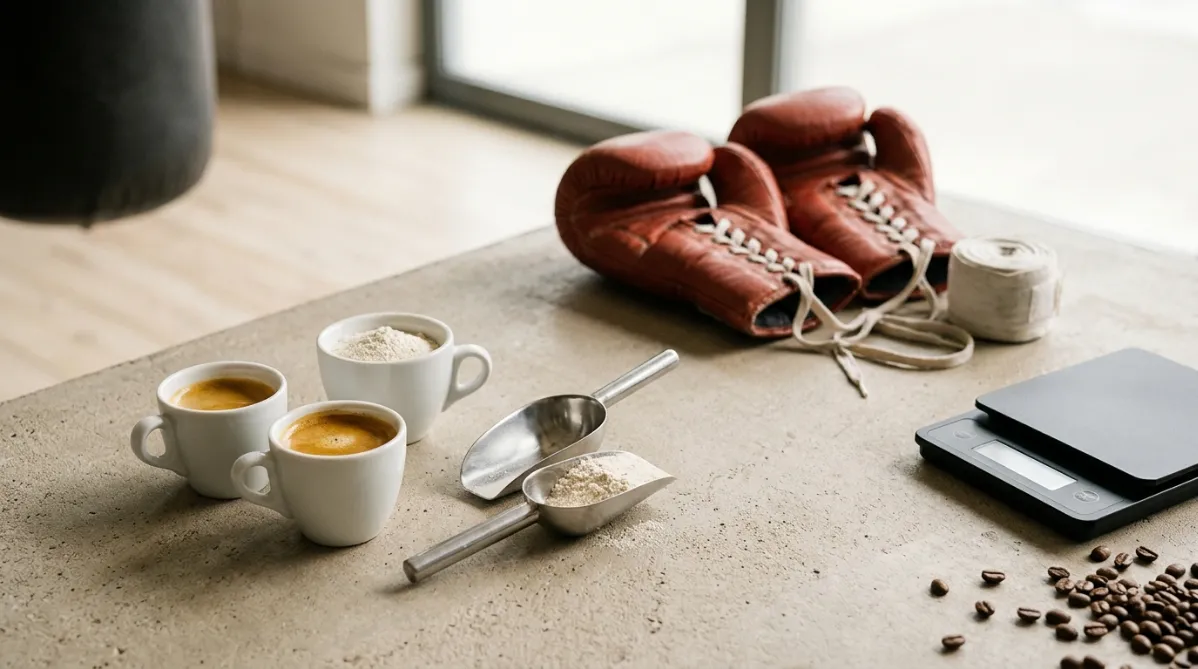
A landscape editorial photograph with a modern, clean magazine feel, shot on a pale warm-gray concrete surface in soft natural window light from the left. In the foreground, two matte white ceramic espresso cups sit side by side. The left cup holds a small amount of dark espresso with golden crema. The right cup is filled twice as high. Beside them, two small stainless steel scoops hold fine coffee-colored powder, one half full and one heaped, suggesting a dose comparison without any text or labels. A pair of worn red leather boxing gloves rests slightly out of focus behind the cups, laces loosely draped, with a white hand wrap rolled neatly beside them. A minimalist digital kitchen scale in matte black sits at the edge of the frame, with a few roasted coffee beans scattered across the surface. In the soft-focus background, a boxing gym corner appears: a hanging heavy bag in muted charcoal, pale wood plank flooring, and a tall window with diffused morning light. The palette is warm cream, espresso brown, brick red, and soft slate gray, with gentle shadows and a shallow depth of field. The composition follows the rule of thirds, with the cups and scoops in the lower left third and open negative space on the right for headline overlay. The look is tactile and refined, like a high-end health and performance journal. It has natural grain, subtle contrast, and a calm, confident mood. There are no people, no text, no logos, and no futuristic elements.
nutrition

Doubling Your Caffeine Barely Helped Boxers—Here's What Did

BY DR. GYMBRO ·

Think a double scoop of pre-workout means double the performance? A new crossover trial in 15 competitive boxers compared 3 mg/kg and 6 mg/kg of caffeine, and the bigger dose was not consistently better. Both doses raised jump height and power at 60 minutes, while 6 mg/kg only pulled ahead on a few outcomes like ballistic push-up power and knee torque. Here is the mg-per-kg conversion for common body weights, the timing the data supports, and the honest caveats, including that punching itself was never tested.
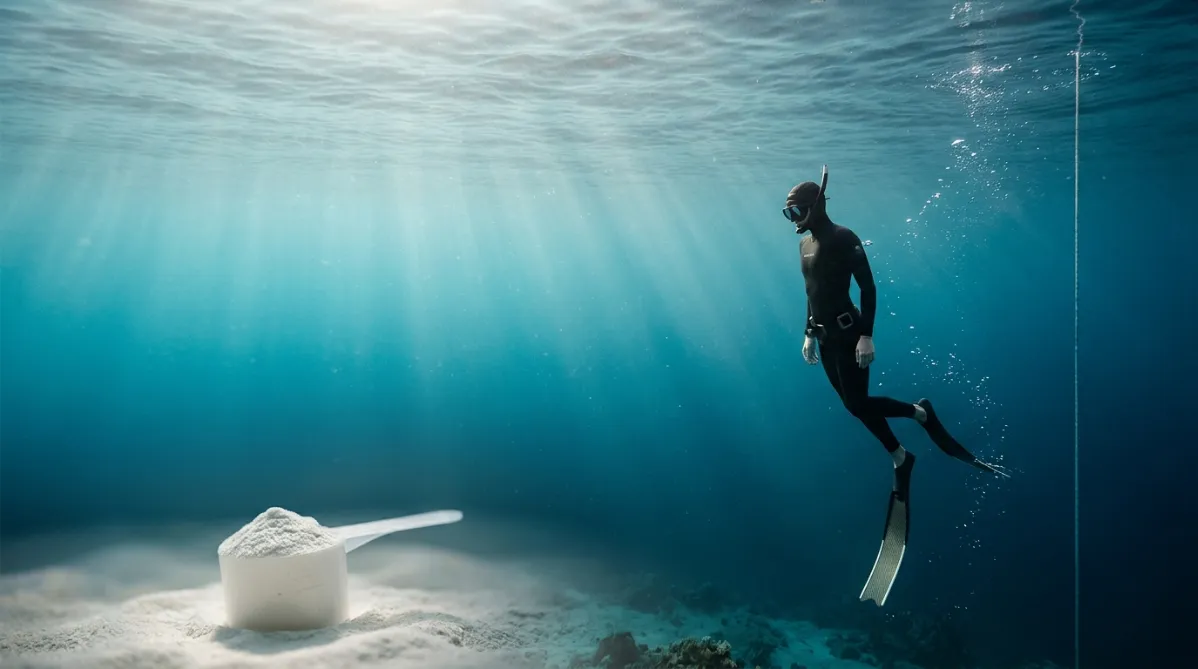
A wide, cinematic landscape photograph of a freediver suspended mid-water in a calm, sunlit turquoise sea, shot from slightly below so the surface glimmers above like rippling silver glass. The diver wears a sleek matte black wetsuit and a long, elegant pair of carbon fins. Their body is streamlined, arms relaxed at their sides, head tilted slightly down in a state of serene focus. Shafts of soft golden sunlight pierce the water diagonally and illuminate fine floating particles and a trail of tiny bubbles rising from the diver's fins. A single thin dive line descends vertically into deeper blue at the right of the frame, adding a graphic compositional element.

In the lower left foreground, slightly out of focus, a minimalist still-life element rests on a pale sandy seabed: a small, clean white scoop with a mound of fine white powder, casually echoing creatine without any text or labels. The scoop is softly lit and has a shallow depth of field blur, creating a gentle visual link between supplement and sport.

The color palette is refined and modern: deep teal, aquamarine, soft cerulean, warm cream highlights, and touches of sunlit gold. The water gradients smoothly from bright, luminous turquoise near the top to a rich inky navy at the bottom, giving depth and a sense of quiet intensity. Leave generous negative space on the left third of the image for headline placement, with the diver positioned on the right third following the rule of thirds.

The mood is calm, athletic, and contemplative, like an editorial image from a premium health and science magazine. Style: high-end editorial photography, natural light, subtle film grain, soft contrast, crisp detail on the diver and gentle bokeh in the background. No text, no logos, no futuristic or sci-fi elements, no graphics overlays.
nutrition

Creatine Works Even When You Can't Breathe: Freediver Trial Shows

BY DR. GYMBRO ·

Creatine is famous for helping you lift heavier and sprint harder, but can it help when you are not breathing at all? A new double-blind trial in trained freedivers found that a 7-day loading phase of 20 g/day boosted total work and time to exhaustion on a breath-hold cycling test. Strangely, blood lactate ended up lower in the creatine group than in placebo despite the better performance. Here is what the study did, who might benefit, and why a sample of just 20 divers means you should keep your expectations in check.
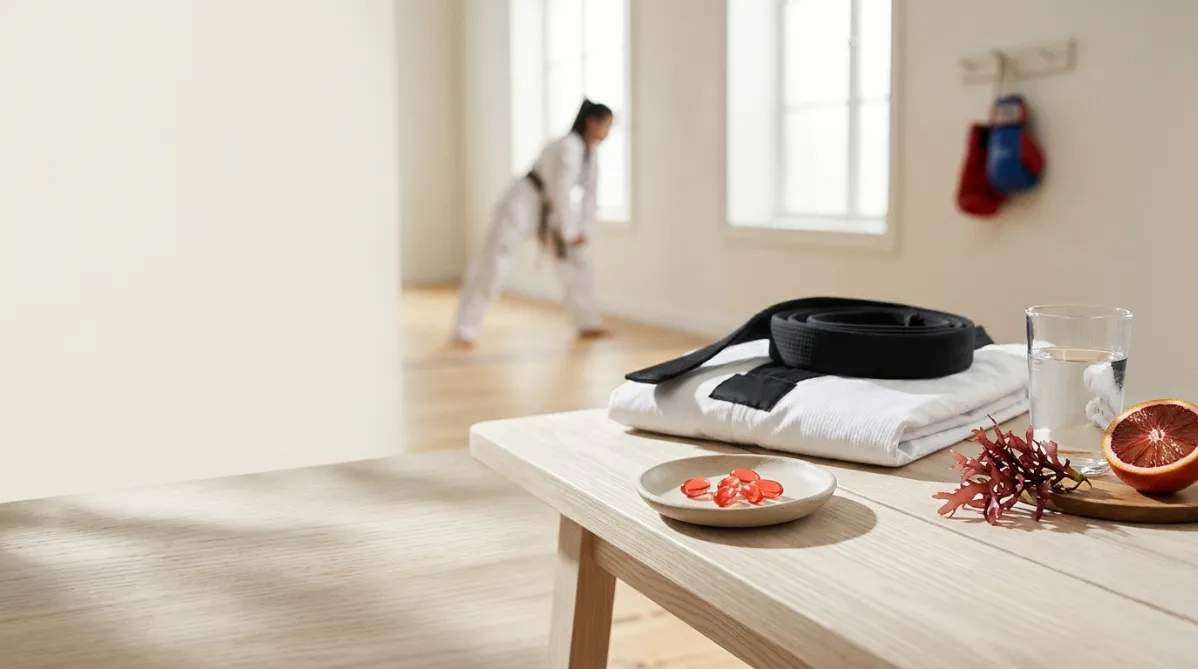
A wide editorial still life shot from a slightly elevated angle on a pale ash-wood bench in a bright, airy training hall. In the center sits a small matte ceramic dish holding a few translucent coral-red softgel capsules, their glossy surfaces catching soft window light. Beside the dish rests a folded white taekwondo dobok with a black belt loosely coiled on top. A sprig of fresh red microalgae-toned seaweed and a halved blood orange add natural color accents. A clean glass of water with subtle condensation stands to one side.

In the softly blurred background, the silhouette of a martial artist in a white uniform stretches near tall windows, with diffused morning light streaming across a sprung wooden floor. A pair of red and blue sparring gloves hangs on a minimal wall hook. Thin, elegant shadows stretch across the bench.

The palette is restrained and modern: warm off-white, soft sand, muted charcoal, with a vivid coral-red accent pulled from the capsules. Shallow depth of field, crisp focus on the capsules and dish, creamy bokeh behind. Natural, gentle lighting with a subtle film-like grain, reminiscent of a contemporary wellness and science magazine cover. Generous negative space on the left third of the frame for headline text. Calm, precise, and quietly athletic in mood, with no text, logos, or futuristic elements.
science research

12 mg Astaxanthin for 28 Days: Muscle Damage and Burnout in Fighters

BY DR. GYMBRO ·

A new randomized trial put 12 mg of daily astaxanthin to the test in young male taekwondo athletes. After 28 days, the supplement group showed a significantly different creatine kinase trajectory than placebo, plus higher SOD and exploratory signs of lower MDA and less emotional and physical exhaustion. But the burnout findings were exploratory, with no group × time interaction on any subscale. The trial was small and measured biomarkers, not performance. Here's what the data show, what they don't, and who might want to pay attention.
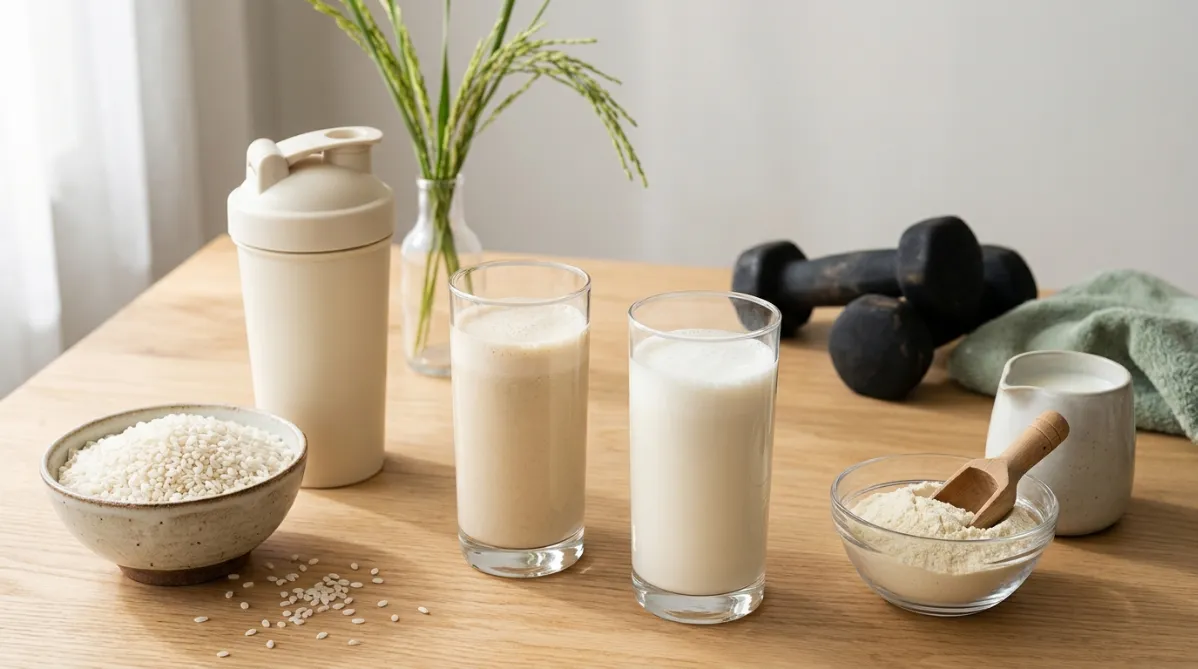
A bright, minimalist editorial still life on a pale oak table, shot from a slightly elevated three-quarter angle in soft natural window light. On the left sits a rustic ceramic bowl of uncooked short-grain white rice, with a few grains scattered across the wood. Beside it is a matte cream-colored shaker bottle. On the right is a small glass bowl of fine ivory whey powder with a wooden scoop resting in it, and a small pitcher of milk behind it. Two identical tall glasses of creamy, lightly frothed shake stand side by side in the center, one a touch warmer beige and the other a soft white. They suggest equal outcomes without any text or labels. A pair of worn black neoprene-coated dumbbells and a folded sage-green gym towel sit slightly out of focus in the background. A sprig of green rice stalks in a slim vase adds a fresh, natural accent.

The palette is warm neutrals: cream, oatmeal, soft sage, and muted terracotta, with gentle shadows and a shallow depth of field. The surface has subtle grain, and fine powder dust is caught in the light. The composition is clean and balanced, with generous negative space on the upper right for a headline overlay. The mood is calm, modern, and health-forward, like a contemporary nutrition magazine or wellness journal. Photorealistic, crisp detail, creamy bokeh, and a gentle matte film-like finish.
nutrition

48 g of Rice Protein Matched Whey for Muscle and Strength in 8 Weeks

BY DR. GYMBRO ·

Plant protein is supposed to lose to whey, but a 2013 trial in trained men found otherwise at a big dose. In 24 resistance-trained males, 48 g of rice protein isolate after training produced the same gains in lean mass, muscle thickness, strength, and power as 48 g of whey over eight weeks. Why did rice keep up? The large dose may have closed the leucine gap. Here is what the study showed, where its limits lie, and how vegans and dairy-intolerant lifters can use it.
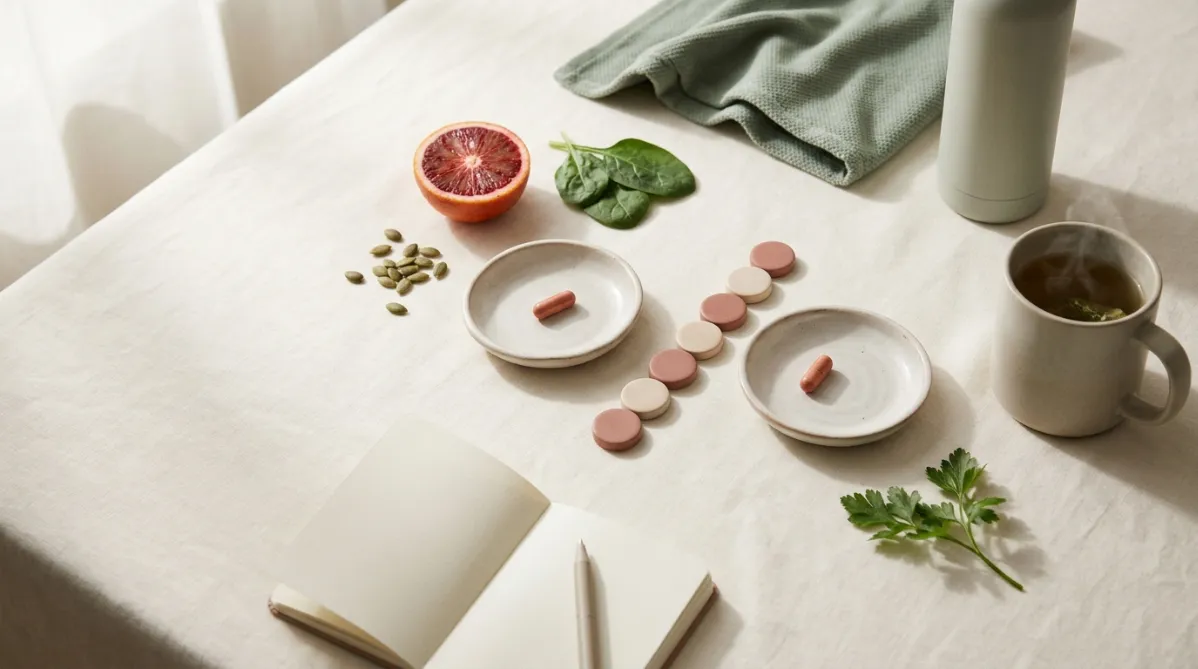
A bright, airy editorial flat-lay shot from slightly above, on a soft warm-white linen surface with gentle natural window light and long, soft shadows. Two small ceramic dishes sit side by side at the center. The left dish holds a single small capsule in muted terracotta. The right dish holds one small capsule in the same color, with a noticeable empty space beside it to suggest rhythm and spacing. Between them lies a minimalist wooden calendar block or a row of seven small round ceramic discs in alternating tones, dusty rose and cream, evoking an every-other-day pattern. Around the dishes are fresh, iron-rich foods arranged with restraint: a halved blood orange, a few deep green spinach leaves, a small scattering of pumpkin seeds, and a sprig of parsley. A folded sage-green athletic towel and a slim, modern water bottle sit at the upper edge, hinting at women who train. A matte ceramic mug of herbal tea sits at the right with a faint curl of steam. A small notebook with a pen lies open at the lower left, its pages blank, suggesting lab results and tracking without any legible text. The palette is soft and cohesive: warm cream, dusty rose, terracotta, sage green, with small accents of deep coral. The mood is calm, clean, and wellness-oriented, like a contemporary health and science journal feature. Shallow depth of field keeps the capsules sharp and softly blurs the edges of the frame. The composition leaves generous negative space on the left third for title overlay. The look is a high-end lifestyle photograph with subtle film grain, natural textures, and refined minimalism, with no people, no text, and no futuristic or laboratory elements.
nutrition

Less Iron, Every Other Day: Same Ferritin Gains in Women

BY DR. GYMBRO ·

Hepcidin can throttle iron absorption after a daily dose, which may be why oral iron so often disappoints and upsets the stomach. A 2026 randomized trial in 66 iron-deficient women tested 21 mg of iron every 48 hours against 30 mg daily for 42 days. Ferritin rose significantly in both groups with no significant difference between them, while hemoglobin stayed stable and GI effects were mild. The catch is that this was active-controlled with no placebo, and the iron forms differed, so the result is comparable rather than superior. Here is what it means for women who train, and why you should test ferritin before supplementing.
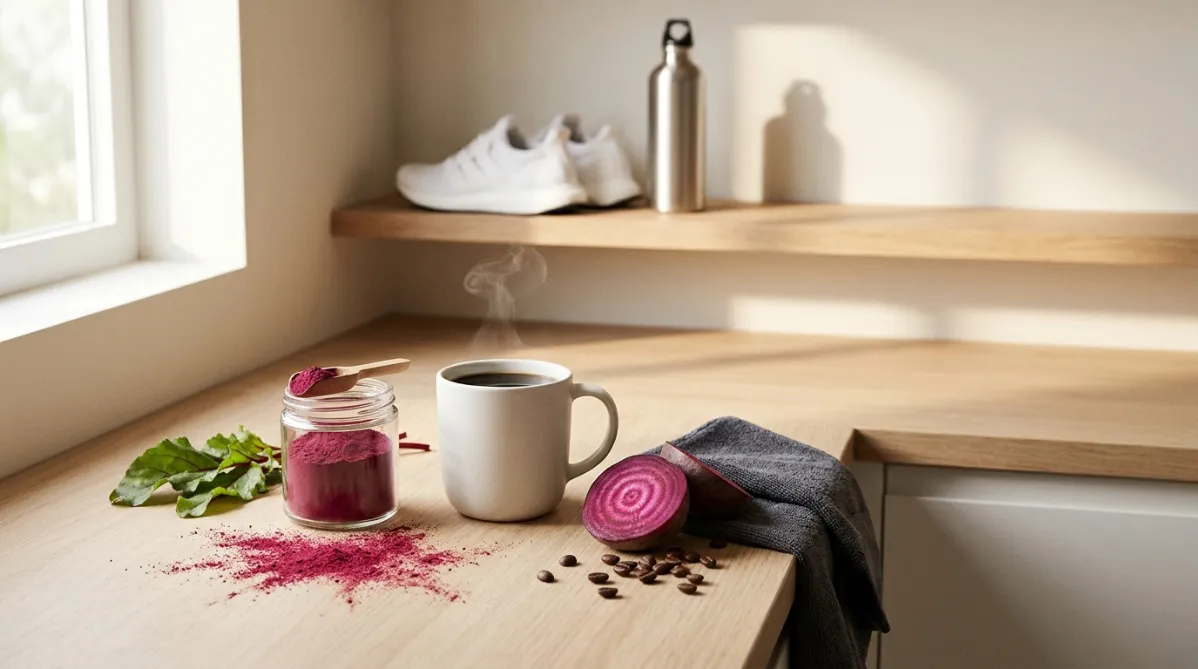
A sunlit, minimalist kitchen counter in a modern home, photographed from a slightly elevated three-quarter angle with soft natural morning light spilling in from a window on the left. In the center sits a matte white ceramic mug of black coffee with a thin curl of steam, beside a small glass jar of deep magenta beetroot powder with a wooden scoop resting on the lid. A scattering of fine crimson powder dusts the pale oak surface in an artful, casual swirl. Nearby, a halved raw beetroot reveals vivid concentric rings of purple and pink, next to a few roasted coffee beans and a neatly folded charcoal gym towel. In the soft-focus background, a pair of clean white running shoes and a stainless steel water bottle sit on a floating shelf, hinting at a pre-workout routine. A single sprig of green beet leaves adds a fresh accent.

The color palette is warm and editorial: creamy neutrals, espresso browns, and rich beet magenta, with gentle highlights and long soft shadows. The composition has generous negative space on the right side for headline text, shallow depth of field, and a crisp, tactile texture on the ceramic, powder, and wood grain. The mood is calm, health-conscious, and contemporary, like a lifestyle feature in a premium wellness magazine or a trendy nutrition journal. Clean, balanced, natural, with subtle film-like grain and a slightly muted, high-end finish.
science research

Pre-Workout Caffeine Stiffens Arteries. Beetroot Powder Offset It

BY DR. GYMBRO ·

A new randomized crossover trial found that a pre-workout-sized dose of caffeine (6 mg/kg) raised markers of arterial stiffness within 2.5 hours. Adding a beetroot powder with 400 mg of nitrate brought those markers back to placebo levels. Blood pressure and endothelial function did not change, so this is a subtle effect rather than a red flag. The study involved just 24 healthy young adults and a single dose, leaving big questions about long-term use and older or hypertensive people. Here is what the data show, what they do not, and how to think about it if you rely on caffeine before training.
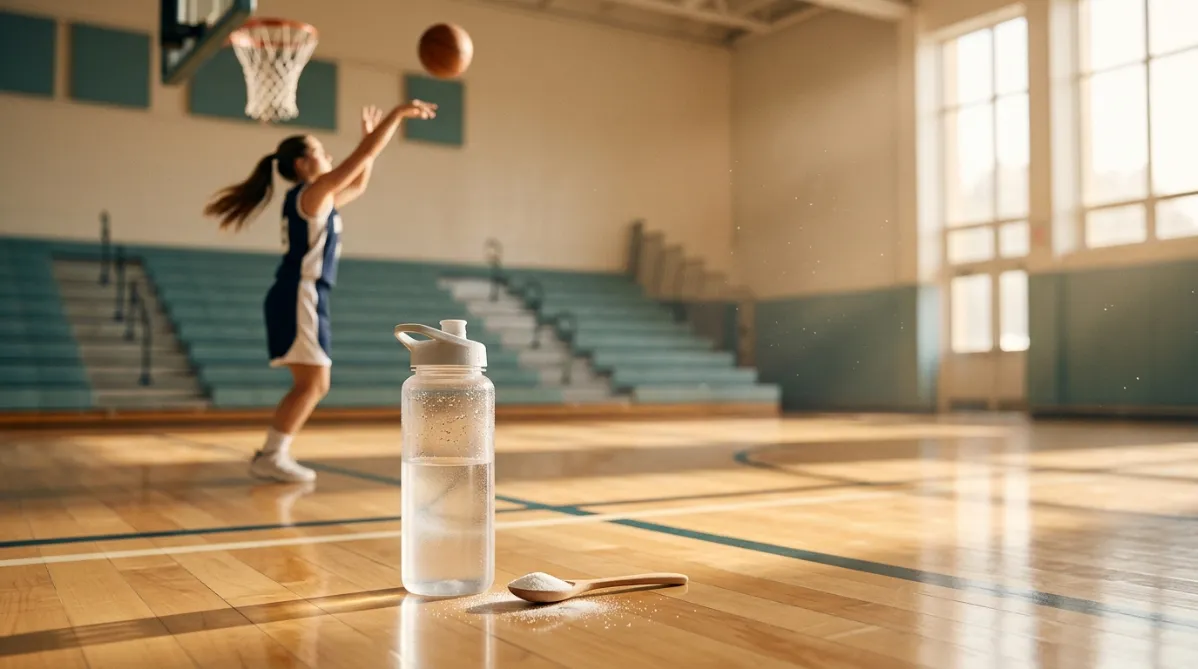
A wide, editorial-style photograph of a hardwood basketball court at golden hour, seen from a low angle near the baseline. In the foreground, slightly off-center to the left, sits a clear sports water bottle on a polished maple floor. It is half full, with tiny beads of condensation on the surface and a faint cloudy shimmer in the liquid. Beside it rests a small wooden spoon dusted with fine white powder, and a few loose grains are scattered on the wood. Warm amber light streams through tall gym windows on the right and casts long soft shadows across the court's painted lines.

In the mid-ground, slightly out of focus, a female basketball player in a navy and white uniform is caught mid-shot. Her arm is extended in a clean follow-through, her wrist relaxed, and the ball is just leaving her fingertips. Her ponytail swings behind her. Behind her, the net hangs crisp against a softly blurred bleacher background in muted teal and cream.

The palette is calm and modern: honey-toned wood, warm cream, deep navy, and soft teal accents. A shallow depth of field gives creamy bokeh in the background, with subtle dust motes floating in the light beams. The composition leaves generous negative space on the upper right for title text. The mood is fresh, athletic, and clean, like a contemporary health and performance journal. The photographic style is natural and film-like, with fine grain, soft contrast, and gentle highlights.
nutrition

The Glutamine Dipeptide That Kept Shooters Accurate When Water Didn't

BY DR. GYMBRO ·

Water is the default hydration advice, but a small study of Division I basketball players suggests it may not protect shooting accuracy as well as water with a little L-alanyl-L-glutamine. Ten women played four 40-minute games, and the low dose of 1 g per 500 ml beat water by 11.1% on shooting. The higher dose did not do better on shooting, and jump power didn't change at all. Here are the numbers, the practical takeaways, and the caveats you should weigh before stirring any of it into your bottle.
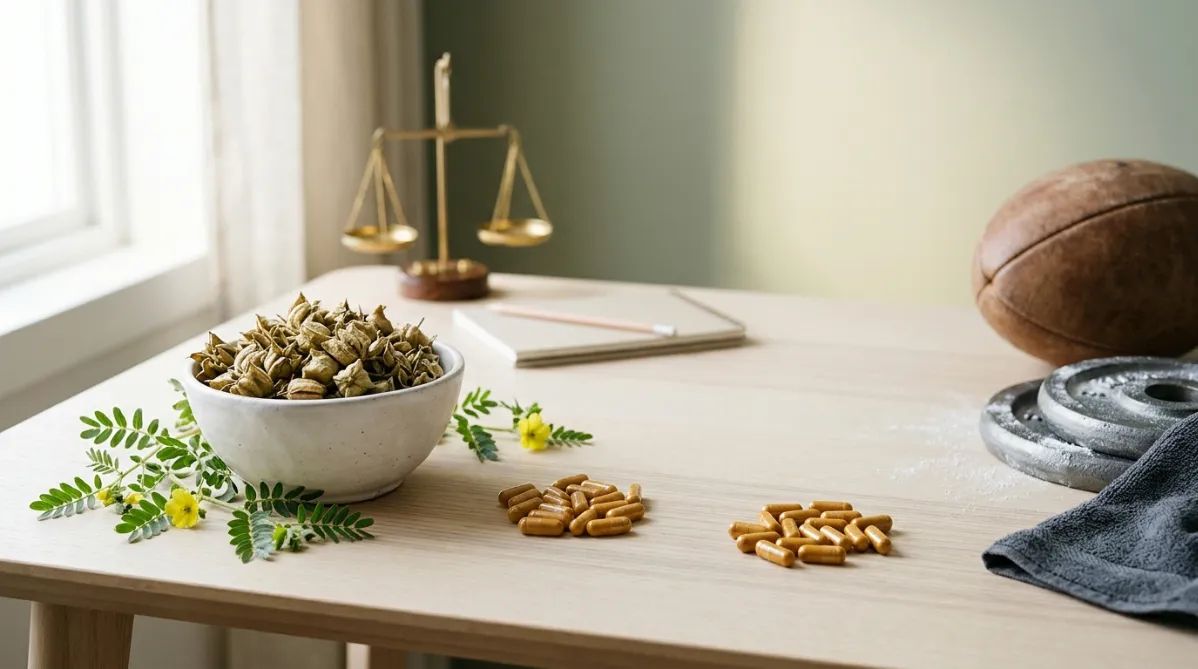
A wide, landscape editorial photograph shot from slightly above, showing a rustic matte-white ceramic bowl of dried tribulus terrestris, spiky star-shaped seed pods in warm tan and khaki tones, with a few fresh green trailing vines and tiny yellow flowers draped beside it. The bowl sits at the left third of the frame on a pale ash-wood table. Scattered nearby are two identical sets of plain, unlabeled amber supplement capsules, one pile slightly apart from the other, hinting at a placebo comparison. To the right, slightly out of focus, a worn leather rugby ball rests next to a chalk-dusted steel barbell plate and a folded charcoal-gray athletic towel.

Soft diffused natural light streams in from a window on the left, creating gentle long shadows and a calm, clean atmosphere. The background is a muted sage-green and cream gradient with a shallow depth of field, leaving generous negative space on the right side for title overlay. A small, minimal notebook with a pencil and a simple balance scale made of brushed brass sits subtly in the midground, suggesting scientific scrutiny without any laboratory clutter.

The color palette is earthy and refined: sage green, sand, warm amber, charcoal, and off-white. The style is modern lifestyle-magazine photography, crisp textures, subtle film grain, and a high-end wellness journal feel. The composition is balanced, uncluttered, and minimalist, with a quiet, thoughtful mood that conveys skepticism and evidence-based inquiry. No text, no logos, no people, no futuristic or sci-fi elements.
science research

Tribulus Terrestris Flopped in Elite Rugby Players: 5-Week Trial

BY DR. GYMBRO ·

Tribulus terrestris is marketed as a natural testosterone booster that builds muscle in under a month. So researchers tested it on elite rugby league players in a double-blind trial. Everyone got stronger and gained fat-free mass, but the placebo group did just as well. The supplement also didn't change the urinary T/E ratio. Here's what the study found, its limits, and where your money is better spent.
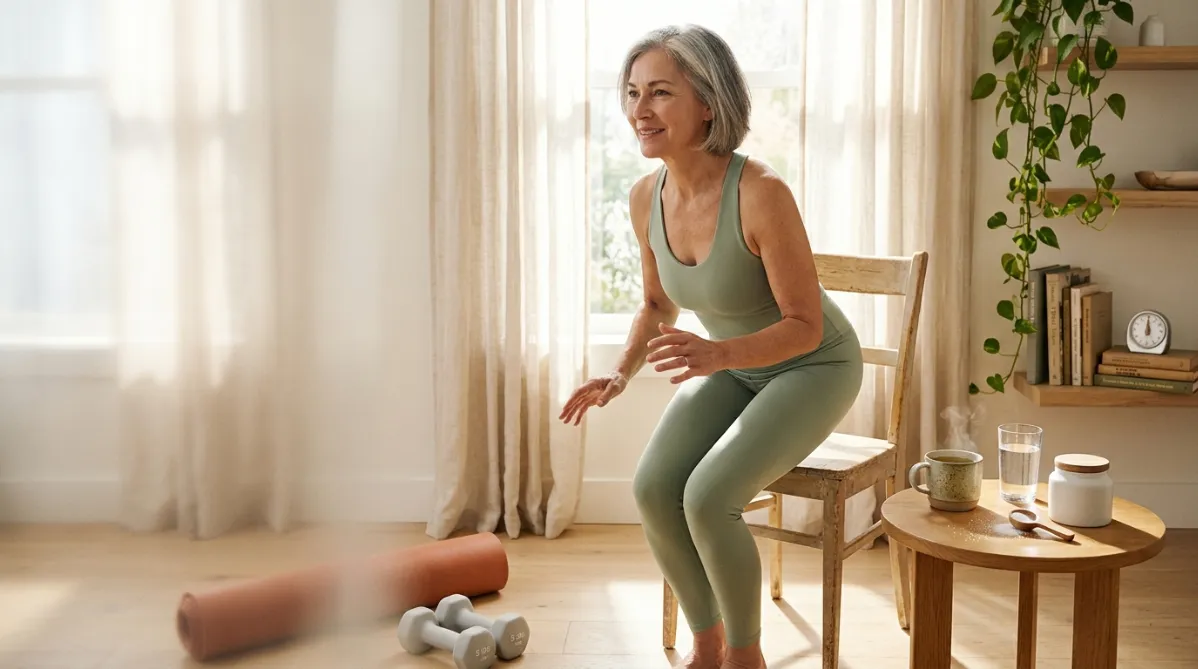
A wide landscape editorial photograph of a bright, airy sunlit living room with pale oak floors and a large window with sheer linen curtains. In the center, a woman in her late 50s with silver-streaked hair, wearing soft sage-green athletic wear, rises from a simple wooden chair, caught mid-motion with a calm, determined expression. Her hands are lightly extended forward for balance. Beside her on a small round oak side table sits a ceramic mug of tea, a glass of water, and a small matte white jar with a wooden scoop resting beside it, a few fine white crystalline grains scattered on the tabletop. In the soft-focus foreground, a pair of light-gray dumbbells and a rolled terracotta-colored yoga mat rest on the floor. A trailing green pothos plant spills from a shelf in the background, with a stack of books and a small analog kitchen timer nearby.

The color palette is warm and muted: cream, sage green, soft terracotta, natural wood, and gentle morning-gold light. Light streams diagonally across the scene, creating long soft shadows and a subtle glow on the woman's shoulders. Shallow depth of field blurs the background gently, while the woman and the table remain crisp. The composition follows the rule of thirds, with the woman on the right and generous negative space on the left, suited for headline overlay. The mood is hopeful, grounded, and modern, like a high-end wellness magazine or a trendy health journal. Natural film-like grain, soft contrast, and a slight matte finish give it a contemporary lifestyle photography feel. There are no futuristic elements, no digital overlays, and no text.
science research

Creatine Helped Women With Bad Knees Stand Up Better. Not Why You Think

BY DR. GYMBRO ·

Creatine is usually pitched at young lifters, but a randomized, double-blind trial tested it in postmenopausal women with knee osteoarthritis. After 12 weeks of leg training, the creatine group's timed-stands score rose from 15.7 to 18.1, while placebo barely moved (15.0 to 15.2). Creatine also improved stiffness, lean mass and quality of life. But pain relief and leg-press max strength were no better than placebo. Here's what the numbers show and who this might actually help.
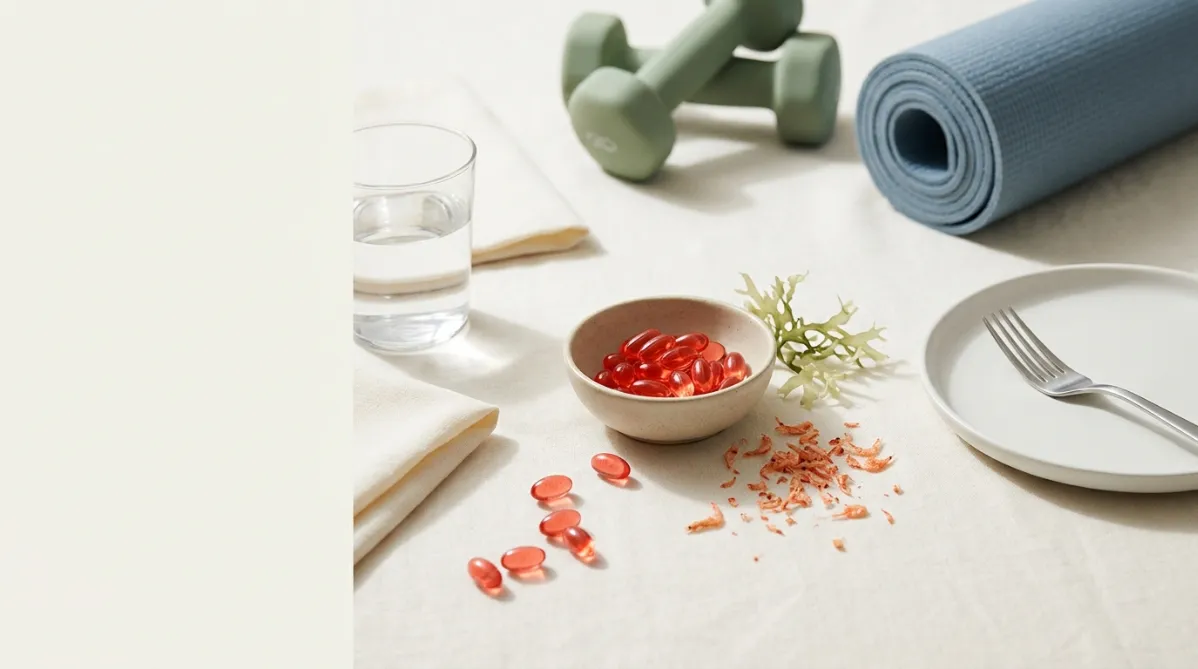
A bright, minimalist editorial still life on a soft warm-white linen surface, shot from a slightly elevated angle in natural morning window light. In the center, a small shallow ceramic bowl in matte oatmeal tones holds several glossy, translucent coral-red softgel capsules, with a few spilled onto the surface in a gentle arc. Beside the bowl, a single ripe peach-pink shrimp-like krill shape is absent; instead a delicate scatter of tiny coral-orange dried krill-pink petals and a sprig of pale green seaweed hint at the marine origin. To the left, an empty clear glass of water and a folded cream napkin suggest fasting. To the right, a simple matte white plate sits bare with a silver fork resting across it. In the soft-focus background, a pair of sage green hand weights and a neatly rolled yoga mat in dusty blue add a quiet nod to muscle and strength. Soft shadows fall diagonally across the scene, giving gentle depth. The palette is calm and modern: warm ivory, coral red, sage green, dusty blue, and soft beige. Shallow depth of field with crisp focus on the capsules, which catch small bright highlights. Clean negative space on the left third of the frame for headline text. The overall feel is a contemporary wellness magazine or health journal cover, airy, refined, and editorial, with subtle film-like grain and natural color grading. Landscape 16:9 composition.
nutrition

Krill Oil Cut Muscle Loss on a Fasting Diet by Up to 6x in a Trial

BY DR. GYMBRO ·

Dieting hard often means losing muscle along with fat, but a new randomized trial suggests one supplement may change that. In 41 adults doing 8 weeks of alternate-day fasting, krill oil and placebo groups lost the same body weight (about 4.6 vs 4.5 kg). Yet the krill group lost just 0.2 kg of fat-free mass versus 1.2 kg for placebo, and held onto handgrip strength too. Before you stock up, there are catches: the sample was small and the capsule also contained astaxanthin and choline. Here are the numbers, the dose and who should skip it.
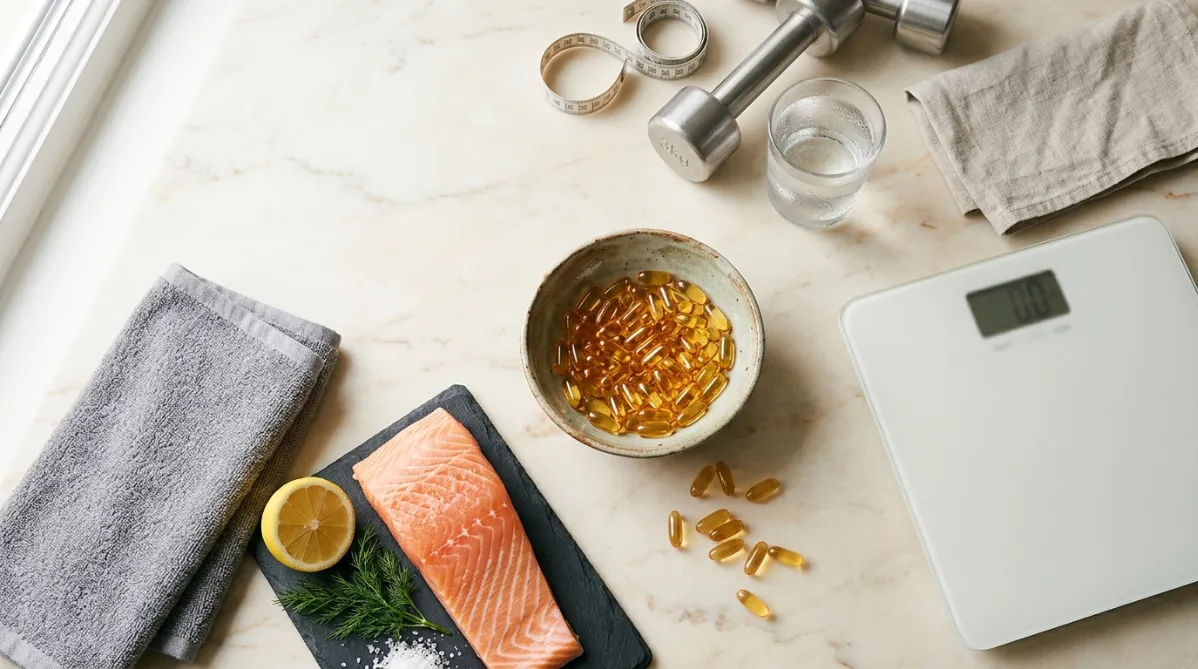
A wide, editorial-style flat lay photographed from above on a pale, warm-toned marble surface with soft natural window light coming from the left. At the center sits a shallow ceramic bowl filled with glistening golden-amber fish oil capsules, a few spilled casually onto the marble. Beside the bowl, a sleek minimalist bathroom scale in matte white sits at the right edge, its digital display blurred so it appears static. To the left, a neatly folded heather-gray athletic towel rests beside a small cluster of fresh ingredients: a halved lemon, a sprig of dill, and a fillet of raw salmon on a slate board, its coral-pink flesh with delicate white marbling catching the light. Near the top of the frame, a pair of brushed-steel dumbbells in a light finish and a soft tape measure curl loosely across the surface, suggesting body composition tracking without being clinical. A small glass of water with condensation and a linen napkin add quiet lifestyle detail. The color palette is calm and modern: cream, soft sage green, warm gold, coral, and muted gray. Shadows are soft and diffused, with gentle highlights on the capsules making them glow like tiny amber beads. The composition has generous negative space on the upper left for headline text, with a shallow depth of field that keeps the capsules and salmon crisp while the edges fall softly out of focus. The overall mood is clean, health-conscious, and contemporary, like a high-end wellness magazine or science journal cover, with a subtle film-like grain and natural, true-to-life tones. No people, no text, no futuristic elements.
nutrition

Fish Oil Swapped Fat for Muscle in 6 Weeks. Scale Didn't Budge.

BY DR. GYMBRO ·

What if the scale doesn't move, but your body quietly trades fat for muscle? A double-blind trial of 44 healthy adults found that 6 weeks of fish oil (about 2.4 g EPA+DHA daily) shifted body composition by roughly half a kilo each way, with body weight unchanged. A drop in salivary cortisol tracked with the changes, though that link is only correlational. Resting metabolic rate didn't budge, and the sample was small. Here's what the numbers really show, and how to use them sensibly.
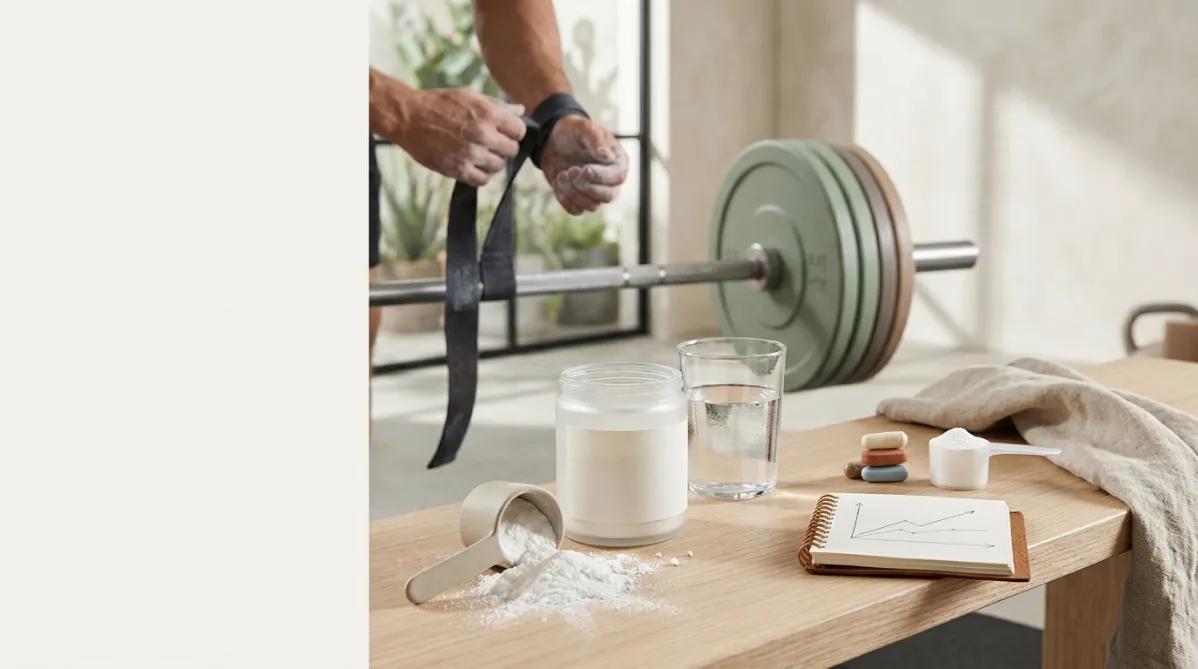
A wide, editorial-style still life photographed in soft natural window light, set on a pale oak gym bench or light wooden table. In the foreground, a matte ceramic scoop rests in a small mound of fine white creatine powder, with a few loose grains scattered across the surface. Next to it sits a minimalist frosted glass jar with a plain unbranded label. Beside the jar is a clear glass of water with delicate condensation. A pair of worn chalk-dusted hands is out of focus in the background, wrapping a lifting strap around a barbell. The barbell is a brushed steel bar with a few muted sage-green and warm gray bumper plates.

On the right side of the frame, a small stack of three different supplement capsules and tablets in neutral cream, terracotta, and soft blue sits next to a single clean white scoop of powder. This subtly contrasts the "stack" with the "plain" option. A folded linen towel in oatmeal beige drapes over the end of the bench. A small leather-bound notebook lies open, with a simple hand-drawn line graph showing two lines, one rising steadily and one flat, in pencil.

The background is softly blurred and shows a bright, airy, modern home gym with large windows, pale plaster walls, and a few green plants. Warm morning sunlight casts long, gentle shadows diagonally across the scene. The color palette is muted and sophisticated: cream, warm white, sage green, soft terracotta, and charcoal accents. Shallow depth of field with a crisp focus on the powder and scoop. Generous negative space on the left third for headline overlay. The mood is calm, thoughtful, and trustworthy, like a high-end health and science magazine cover, with subtle film grain and natural textures. No text, no logos, no futuristic elements.
nutrition

Creatine Stack Built Muscle in Beginners—But Not Strength. Why?

BY DR. GYMBRO ·

A new randomized trial gave novice lifters a creatine-based supplement blend for four weeks and found more muscle mass, a better testosterone/cortisol pattern, and improved recovery. Yet leg press 1RM improved no more than with placebo. The reasons may include beginner neural gains, a short study window, and early water retention, though the paper can't prove which. Kidney markers stayed normal, but the study was small, men-only, industry-funded, and didn't detail the full formula. For new lifters, the safest evidence-based move is still plain creatine monohydrate.
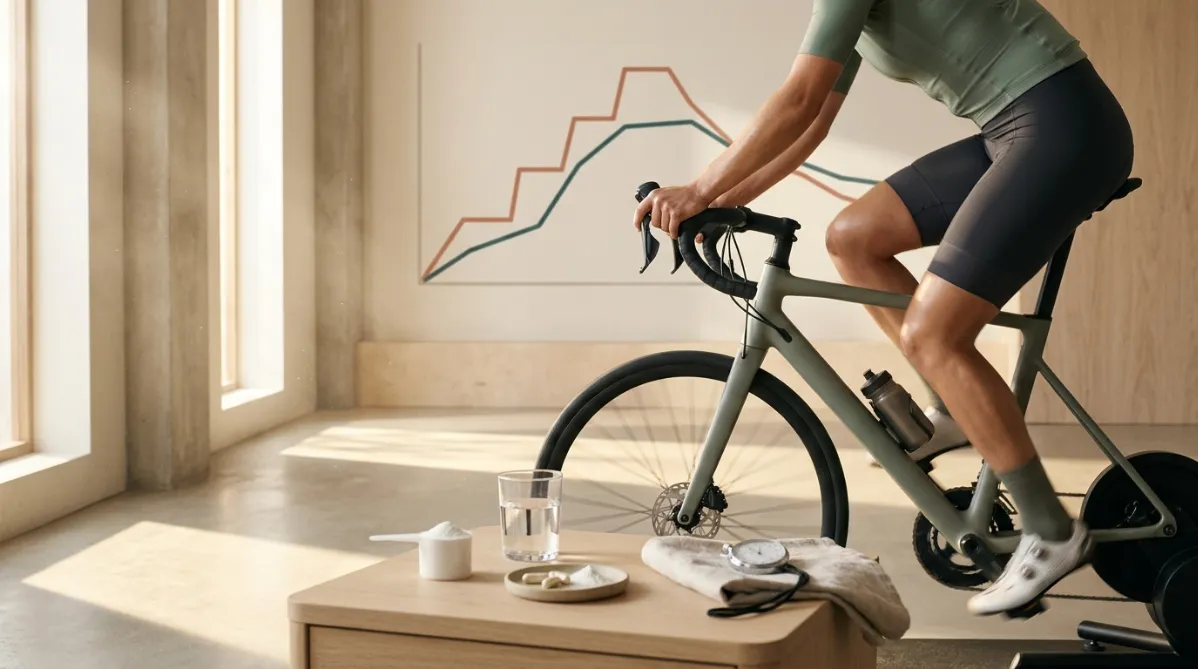
A wide, editorial-style photograph of a lone cyclist's legs and torso mid-sprint on a stationary indoor bike in a bright, minimalist performance studio. The scene is shot from a low three-quarter angle with shallow depth of field. The cyclist wears matte charcoal shorts and a fitted sage-green top, with a subtle sheen of sweat catching soft window light. Their hands grip the handlebars and the pedals are caught in a slight motion blur, which conveys explosive effort.

In the foreground, slightly out of focus on a pale oak side table, sit a small matte white scoop and a clear glass of water. Next to them is a little ceramic dish holding a few off-white capsules and a pinch of fine white powder. A folded linen towel and a slim stopwatch rest nearby. The stopwatch face is softly legible, hinting at timed sprint intervals.

The background is warm cream concrete and pale wood, with tall windows casting long diagonal shafts of golden morning light across the floor. Faint dust motes drift in the light. On the wall behind, a clean, abstract line graph is painted in muted terracotta and deep teal. It shows one line rising in steps like five sprint bouts and another line gently falling, a subtle visual nod to power up and lactate down. The graph is minimal and stylized, with no readable numbers or text.

The color palette is earthy and modern: sage green, terracotta, warm cream, soft charcoal, and touches of natural wood. The lighting is soft and directional with gentle highlights and natural shadows. The overall look is calm, refined, and contemporary, like a premium wellness and sports science magazine cover. The composition follows the rule of thirds, with the cyclist on the right and open negative space on the left for a headline. The image is crisp, grainy in a subtle film-like way, and free of any futuristic or sci-fi elements.
science research

This Carnitine Form Lifted Sprint Power Up to 15% and Cut Lactate

BY DR. GYMBRO ·

A 2009 crossover study found that a single 4.5 g dose of glycine propionyl-L-carnitine (GPLC) lifted peak and mean sprint power by 2.6% to 15% across five all-out cycling bouts. Blood lactate was also 16.2% lower 14 minutes after exercise. But the "15%" is the top of a range, not an average, and the study involved just 24 men in one lab. This article breaks down how GPLC differs from regular L-carnitine and ALCAR, where the nitric oxide theory fits, and who might actually benefit. It also covers dose, timing and the limits of the evidence.
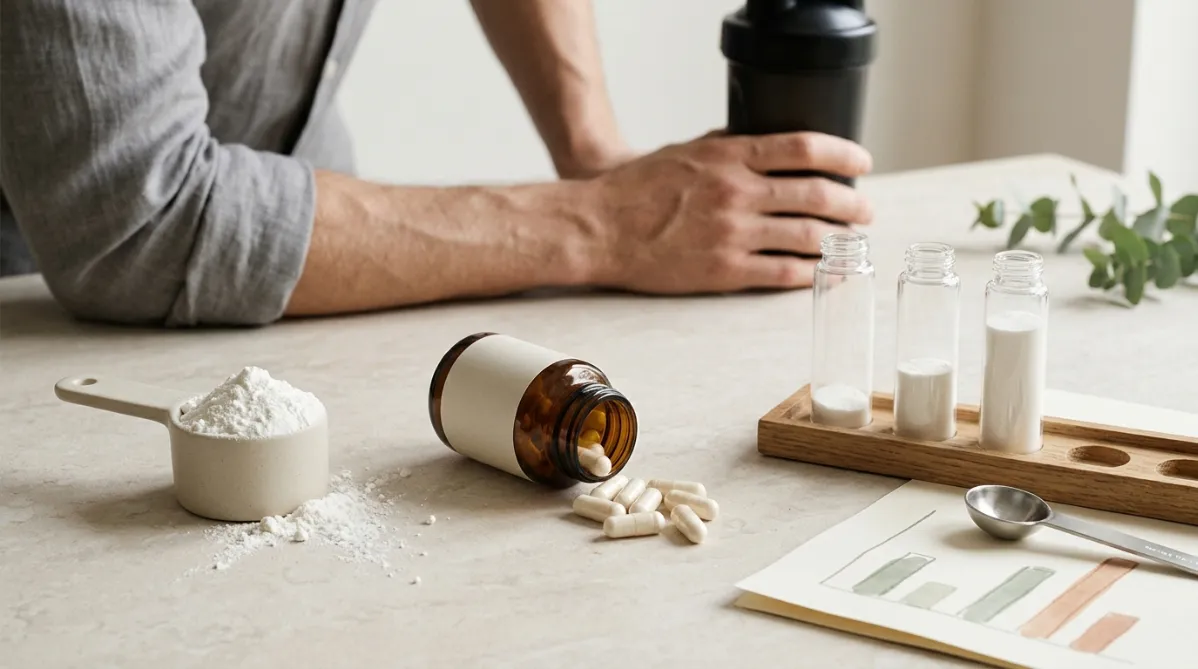
A modern editorial still life photographed from a slightly elevated angle on a pale, matte stone surface in soft natural window light. On the left, a heaping mound of fine white creatine monohydrate powder spills from a matte ceramic scoop, with a few crisp grains scattered across the surface. In the center, a small, minimalist amber glass capsule bottle sits tipped on its side, with a handful of off-white capsules spilling out. The label is blank and clean. On the right, a neat row of three clear glass lab-style vials rests on a slim oak tray. The vials hold different amounts of white powder: the first nearly empty, the second slightly fuller, the third filled almost to the brim. This quietly suggests the difference in dose and result. Beside the tray lies a simple stainless steel measuring spoon and a folded sheet of cream paper with soft, abstract bar-chart lines in muted sage green and terracotta. The lines are hand-drawn and unlabeled.

Behind the objects, slightly out of focus, a lean athletic forearm in a gray linen sleeve rests on the edge of the surface, one hand loosely holding a matte shaker bottle. This hints at a training context without showing a face. A single sprig of eucalyptus in the corner adds a soft organic touch.

The palette is warm neutral: bone white, oatmeal, soft sage, muted terracotta, and touches of amber. Shadows are gentle and long, with a shallow depth of field that gives creamy bokeh in the background. The mood is calm, clean, and trustworthy, like a premium health and science journal's feature spread, with generous negative space at the top and right for headline overlay. The composition is wide, balanced, and uncluttered, with subtle film-like grain and a natural, true-to-life color grade. No text, no logos, no futuristic elements.
nutrition

Kre-Alkalyn's Label Dose Didn't Lift Muscle Creatine, Biopsies Show

BY DR. GYMBRO ·

Buffered creatine like Kre-Alkalyn promises better absorption, lower doses and less bloating. A double-blind Texas A&M trial put that to the test with actual muscle biopsies in 36 trained lifters over 28 days. At the label dose of 1.5 g/day, muscle creatine barely moved, while monohydrate raised it clearly more. Strength, body composition and side effects showed no advantage for the buffered product. Here is what the numbers show and how to dose creatine instead.
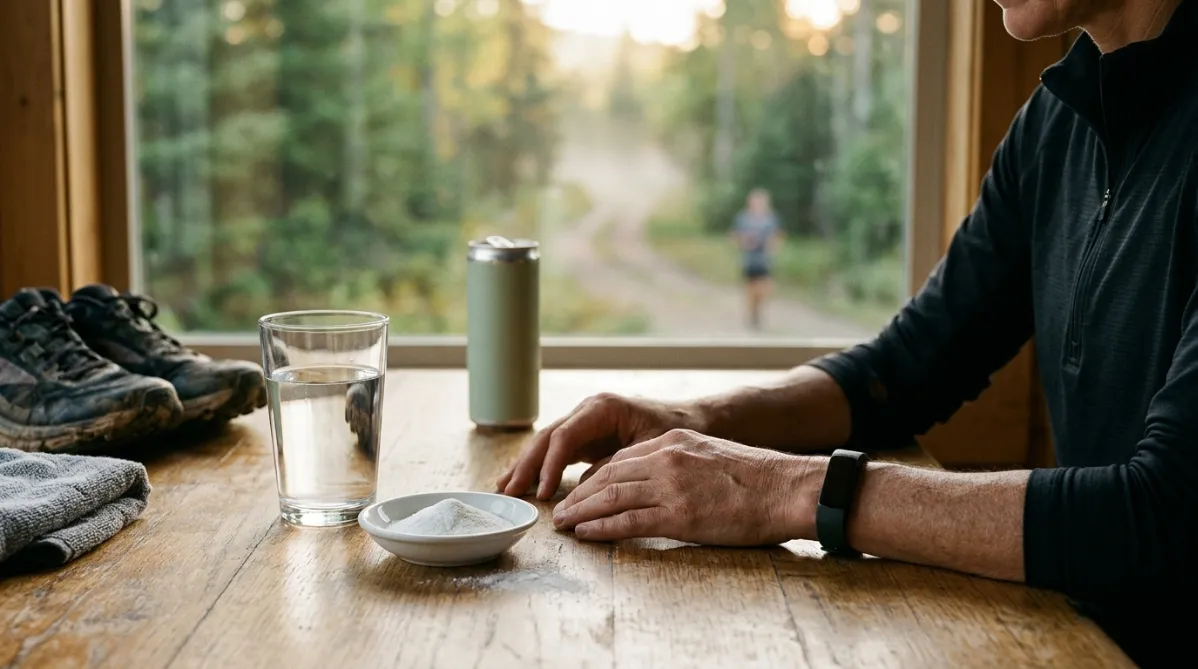
A landscape editorial photograph of a lone runner's hands resting on a weathered wooden table beside a small white ceramic dish of fine white powder and a clear glass of water, shot in soft morning light. A slim matte aluminum energy drink can, unbranded with a minimalist pale sage-green label, stands slightly out of focus in the background, with a single scoop of powder dusted lightly on the tabletop. A pair of worn running shoes and a folded gray towel sit at the edge of the frame. Through a large window behind them, a blurred misty trail winds through green trees at sunrise, with warm golden light spilling across the scene.

The color palette is calm and modern: creamy off-white, sage green, warm honey gold, and soft charcoal. The composition follows the rule of thirds, with the dish and glass in the lower left third and generous negative space on the right for a title overlay. The depth of field is shallow, with a crisp focus on the powder's delicate texture and tiny glints of light on the glass rim. The mood is clean, thoughtful, and quietly energetic, like a contemporary health and science magazine feature. Natural grain, subtle film-like softness, and gentle shadows give it an authentic lifestyle-editorial look. There are no text, logos, or futuristic elements, only tactile, real-world materials like wood, ceramic, glass, cotton, and metal.
nutrition

The Energy Drink Ingredient That Boosts Endurance on Its Own

BY DR. GYMBRO ·

Everyone talks about caffeine, but the other ingredient on the energy drink can may be quietly doing its own work. A 2018 meta-analysis of 10 studies found that isolated taurine improved endurance performance (Hedges' g = 0.40), and a single dose appeared to be enough. Neither dose (1–6 g) nor supplementation length changed the effect in a meaningful way. The catch is a small evidence base and wide confidence intervals, so this is a promising signal, not a guarantee. Here's what the study found and how to try taurine sensibly.
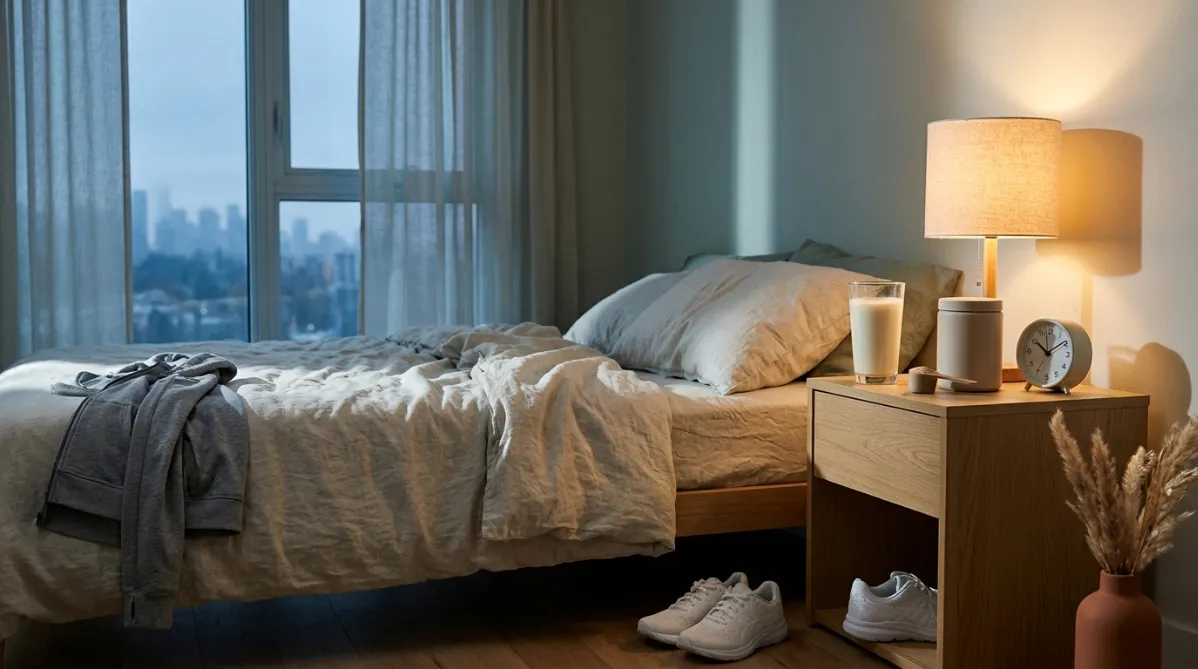
A wide, softly lit bedroom scene at dusk, styled like a modern editorial photograph. In the foreground, a rumpled bed with textured oatmeal linen sheets and a single dented pillow sits beside a light oak nightstand. On the nightstand is a tall glass of creamy, milky white protein shake, a small wooden scoop and a matte ceramic tub with no readable label, beside a minimalist analog alarm clock. The clock's hands show a late hour, and it casts a faint shadow on the wall. A pair of clean white running shoes rests on the floor by the bed. A folded gray athletic hoodie lies at the foot of the bed, suggesting an athlete's lifestyle.

Warm amber light from a bedside lamp mixes with cool blue-gray twilight from a tall window with sheer curtains. The glow lands on the glass and gives the milky surface a soft sheen. Through the window, a muted city skyline fades into evening haze.

The palette is calm and sophisticated: warm cream, soft sage green, dusty blue, and a touch of terracotta from a small ceramic vase holding dried pampas grass. The composition follows the rule of thirds, with the glass and clock in the right third and open negative space on the left for headline text. Shallow depth of field keeps the glass and clock crisp while the background blurs gently.

The mood is quiet, slightly restless, and thoughtful, hinting at a night that does not go as planned. A subtle detail, a half-drawn curtain letting in a thin stripe of light across the rumpled sheets, suggests interrupted sleep. The look is clean, contemporary, and magazine-quality, with fine film grain, natural tones, and soft shadows, like a lifestyle wellness journal cover. No people, no text, no futuristic elements.
recovery

The 'Sleep Protein' That Left Bad Sleepers Waking More Often

BY DR. GYMBRO ·

Alpha-lactalbumin is marketed as the "sleep protein," and earlier acute studies hinted it could help athletes sleep and perform. A new randomized crossover trial put it to the test in 24 athletes who actually sleep badly. After a week of 40 g taken 2 hours before bed, there was no sleep benefit, awakenings rose slightly (11.01 vs 10.25), and jump height dipped (27.68 vs 28.58 cm). The one upside was reduced negative mood in the evening. Here's what was tested, what the numbers show, and who should skip it.
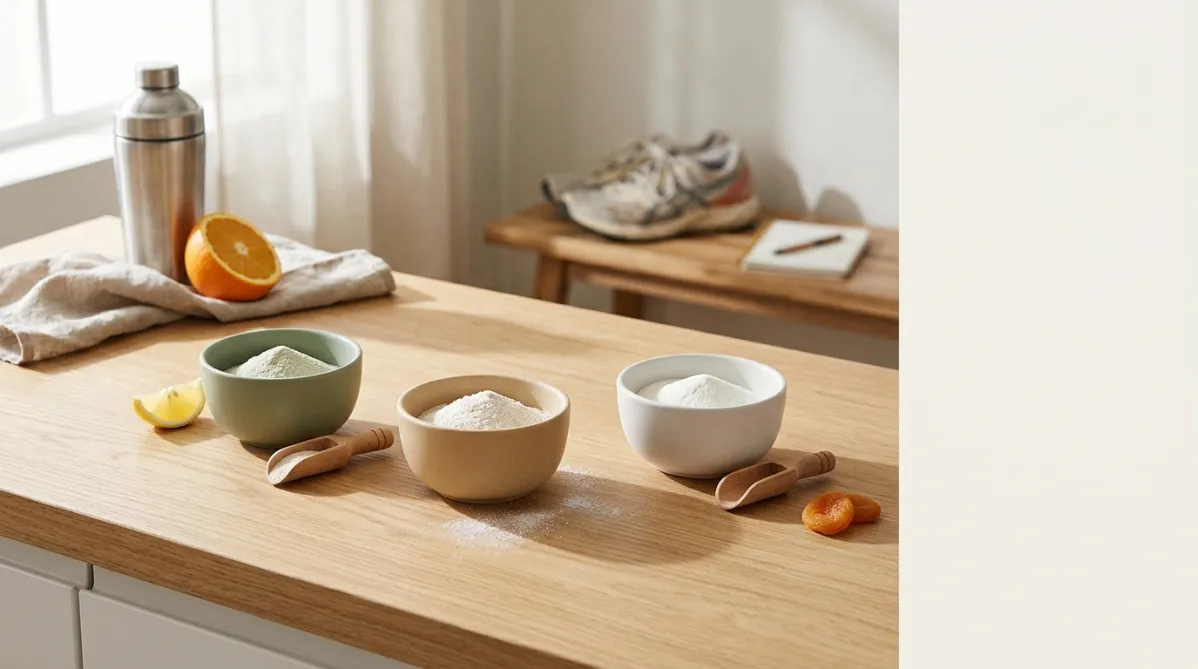
A landscape editorial photograph of a clean, sunlit kitchen-counter or light oak table, shot from slightly above at a gentle angle. Three small matte ceramic bowls in muted sage green, warm sand, and soft white sit in a loose row. Each holds a different fine white powder, and each has a small wooden scoop resting beside it. The middle bowl is slightly closer to the camera and sharper in focus, with a faint dusting of powder spilling onto the surface. In the soft-focus background, a stainless steel shaker bottle and a half-peeled orange sit beside a folded linen napkin, suggesting citrus without being literal. A single lemon wedge sits near the left bowl, and a small dried apricot sits near the right, a subtle visual nod to citrate and pyruvate.

In the background, a blurred athletic scene: a running shoe resting on a wooden bench and a small notebook with a pen, suggesting a training log. Soft diffused morning light enters from the left through a window and casts long, gentle shadows. The palette is warm neutrals, creamy whites, soft greens, and a hint of terracotta orange. The look is a modern wellness magazine with a shallow depth of field, a fine-grain film feel, and generous negative space on the right third of the frame for title text. The mood is calm, trustworthy, and scientific yet approachable, with no text, labels, or logos.
nutrition

Creatine Pyruvate vs Citrate: One Form Kept Force Up Longer

BY DR. GYMBRO ·

Two fancy creatine forms beat placebo in a 28-day trial, but one kept muscle force elevated through all ten all-out intervals while the other faded. Creatine pyruvate raised force in every interval (p < 0.001), whereas creatine citrate's benefit disappeared by the sixth interval. Only pyruvate also improved relaxation velocity and resting oxygen consumption. Before you ditch your tub, there's a major catch: the study had no creatine monohydrate group. Here's what the numbers show, what they can't, and how to choose.
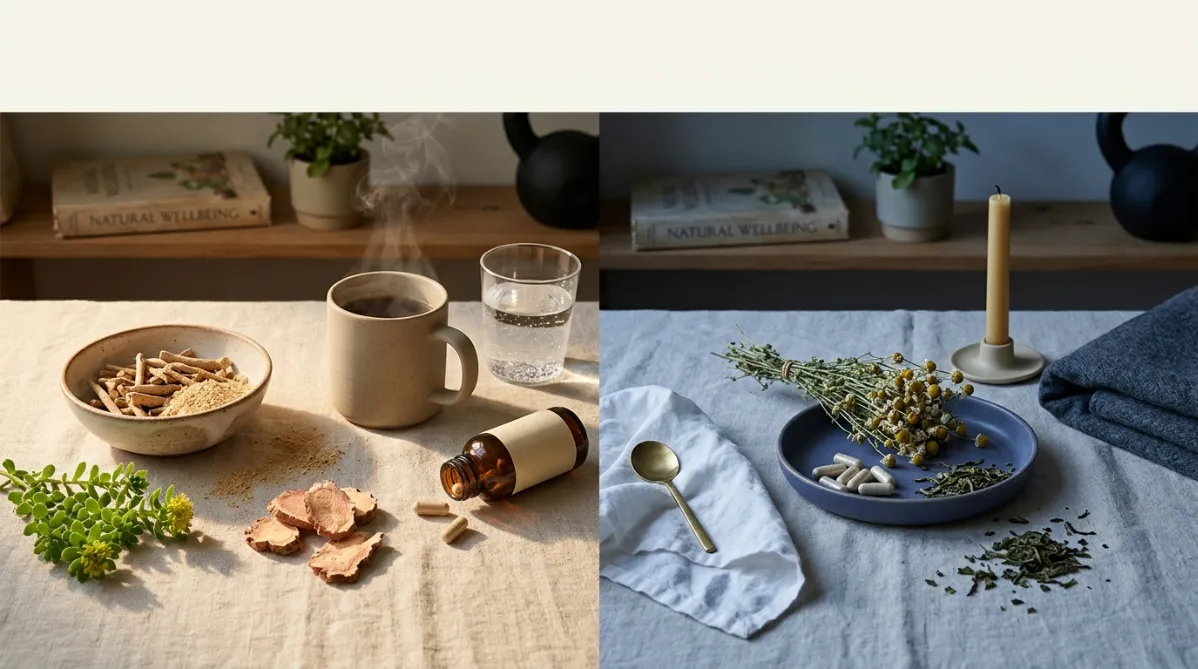
A landscape editorial still life shot from slightly above on a pale oat-colored linen surface, lit by soft morning window light with gentle long shadows. On the left, in warm golden sunlight, sits a small ceramic bowl of dried ashwagandha root pieces and a scatter of fine tan powder. Beside it are a few rough, rosy-gold slices of Rhodiola rosea root and a sprig of tiny succulent-like green leaves with yellow blossoms. A matte sand-colored stoneware mug of steaming tea and a simple glass of water stand nearby. A small amber glass bottle with a minimal unbranded label tips out two capsules.

The right side of the frame is cooler and bluer, as if dusk is arriving. It holds a muted indigo ceramic dish with a few pale capsules, a small bundle of dried chamomile flowers (the source of apigenin), and a few green tea leaves. A slim, unlit beeswax candle and a folded charcoal wool blanket suggest evening. The warm and cool halves meet softly in the center, where a rumpled white cotton napkin sits beneath a small brass spoon.

In the background, out of focus, a wooden shelf holds a worn paperback, a small potted plant, and the edge of a kettlebell in matte black, hinting at an active lifestyle. Subtle film grain, shallow depth of field, and a muted palette of cream, terracotta, sage green, and deep indigo give it a clean, modern wellness-magazine feel. Leave generous negative space in the upper third for a headline overlay. No text, no logos, no people.
recovery

Ashwagandha + Rhodiola Worked. The Evening Sleep Stack Didn't.

BY DR. GYMBRO ·

A new four-arm trial throws a curveball at the supplement-stacking crowd. In 103 healthy, active adults, a morning combo of 600 mg ashwagandha and 300 mg Rhodiola rosea was linked to lower perceived stress, better sleep quality and improved mood. The popular evening stack of magnesium L-threonate, L-theanine and apigenin added nothing, and taking both looked worse on positive affect. Here's what the study found, why it needs caution (only two weeks, small groups), and how lifters might use it.
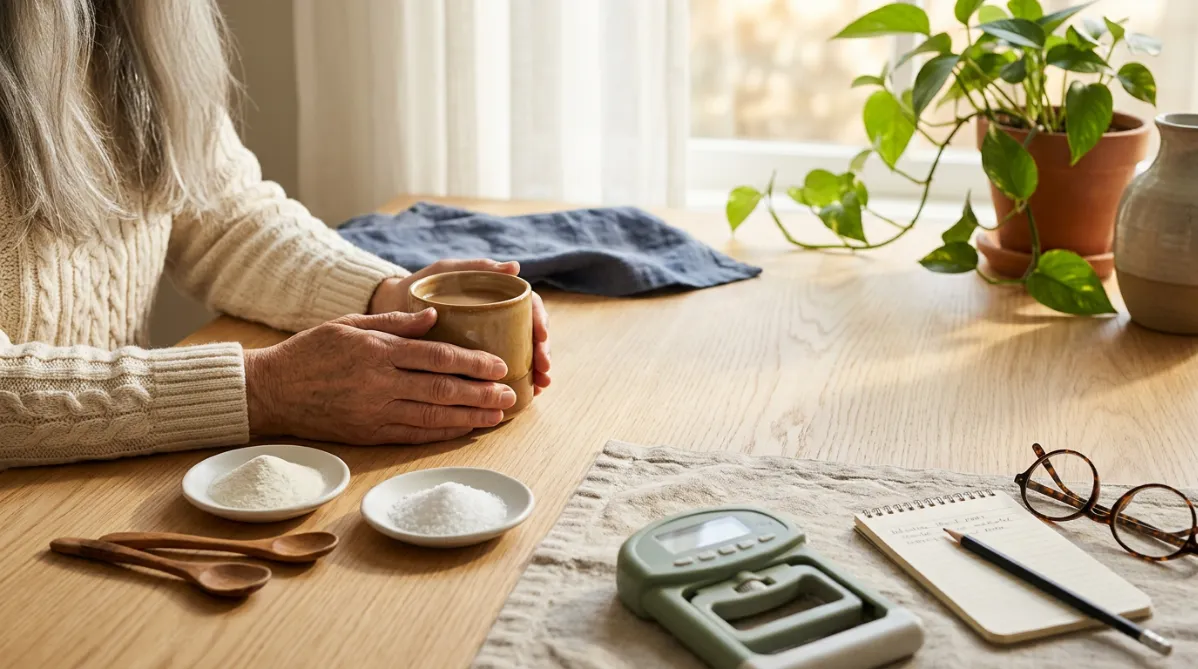
A landscape editorial photograph of a sunlit kitchen table in soft morning light. An older adult's hands, with silver hair and a cream knit sleeve just visible, rest around a ceramic mug. Beside the mug are two small matte white ceramic dishes. One holds a mound of fine white powder, and the other holds a slightly different crystalline white powder. Two wooden spoons lie next to them. A handheld hand-grip dynamometer in muted sage green sits on a linen placemat in the foreground, slightly out of focus. A small open notebook with a pencil and a pair of round tortoiseshell reading glasses sit nearby, with no legible text.

The tabletop is pale oak with a visible grain. Behind it, a window with sheer curtains lets in warm golden light, and the blurred shapes of a trailing green pothos plant and a pale terracotta vase show in the background. The color palette is warm cream, sage green, soft terracotta, and pale wood, with a touch of muted navy from a folded napkin. The mood is calm, thoughtful, and quietly scientific without any laboratory feel.

The composition follows the rule of thirds. The hands and dishes sit in the left-center, and generous negative space on the right is suitable for a title overlay. Shallow depth of field, 50mm lens look, gentle film grain, and soft shadows. Modern lifestyle-magazine and health-journal aesthetic, natural and unstaged, high-end editorial photography.
nutrition

Creatine's Precursor Beat Creatine for Grip Strength in Over-65s

BY DR. GYMBRO ·

A small trial in adults over 65 found that guanidinoacetic acid (GAA), the direct precursor of creatine, improved grip strength more than creatine monohydrate. The catch is that it was an 8-week pilot with just 21 completers, no exercise program, and a confidence interval that barely cleared zero. GAA also showed greater myostatin suppression and BIA-measured gains in muscle-related indices, though those readings may partly reflect hydration. Homocysteine is the safety question to watch, since GAA consumes methyl groups and has raised it in other studies. Here is what the study found, what it can't tell us, and why creatine monohydrate is still the proven default.
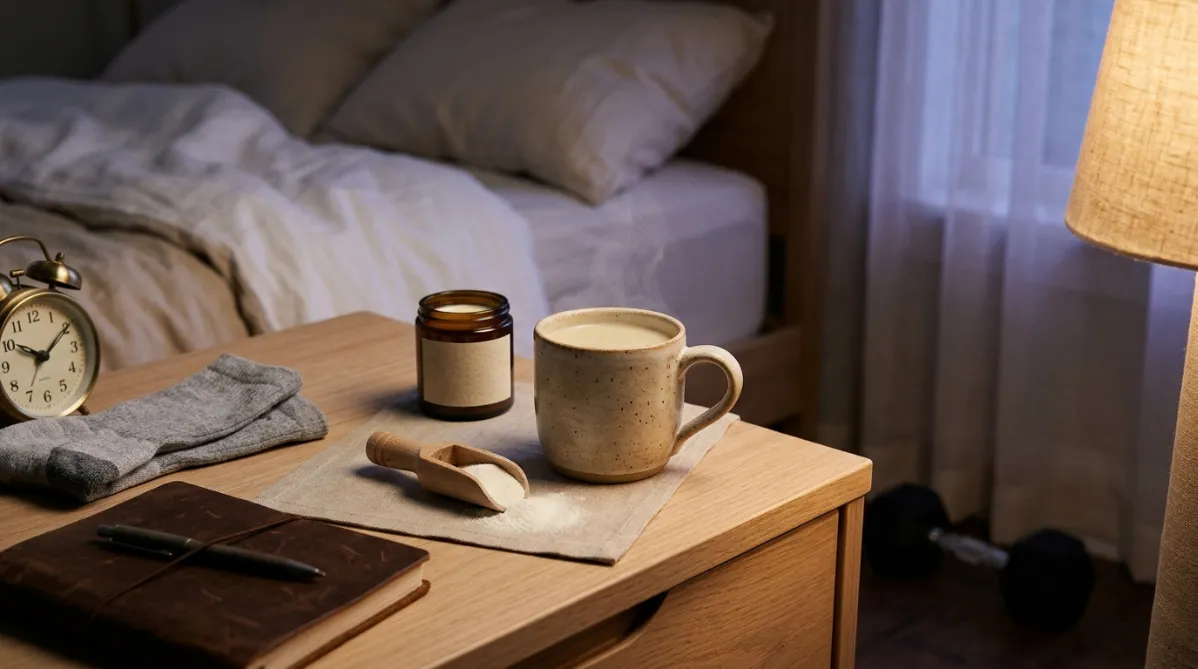
A softly lit bedroom nightstand scene in landscape format, photographed in a modern editorial lifestyle style. In the center of the frame sits a handmade ceramic mug in warm oatmeal tones, filled with a pale creamy drink. A thin wisp of steam rises from it. Beside the mug, a small wooden scoop rests on a matte linen-textured surface with a fine dusting of white collagen powder. A minimal amber glass jar with a cream label stands just behind, with no readable text. The nightstand is pale oak with subtle grain.

To the left, a neatly folded pair of gray cotton athletic socks and a worn leather-bound training journal with a pen on top hint at a lifter's routine. A small brass alarm clock reads about 9:30 and is slightly out of focus. On the right side, a sheer curtain filters the last blue-violet twilight from a window, while a warm bedside lamp with a linen shade casts a honey-colored glow across the scene. The glow contrasts gently with the cool dusk tones.

Behind the nightstand, the edge of a rumpled bed with soft white and sand-colored bedding is visible, with a dumbbell resting quietly on the floor in the soft-focus background to suggest recovery after training. The depth of field is shallow, with the mug and scoop in crisp focus and the background dissolving into creamy bokeh.

The palette is calm and earthy: warm beige, soft cream, muted terracotta, and dusk blue accents. The lighting is cinematic and low-key, with gentle highlights on the ceramic rim and a subtle rim light on the steam. The composition follows the rule of thirds, with the mug placed on the left third and generous negative space on the right for title overlay. The mood is serene, restorative, and quietly scientific without any clinical elements. The finish is clean, high-end, and magazine-worthy, with fine film grain and natural color grading, like a wellness feature in a contemporary online journal.
recovery

The 15 g Bedtime Collagen Trick That Cut Night Wake-Ups by 27%

BY DR. GYMBRO ·

Waking up repeatedly through the night can quietly sabotage your recovery, even when training and nutrition are dialed in. A small trial found that 15 g of collagen peptides taken an hour before bed cut polysomnography-recorded awakenings from 29.3 to 21.3, roughly 27% fewer. Participants also scored better on a morning Stroop test. But total sleep time, sleep latency and sleep efficiency didn't budge, and the study involved just 13 men over 7 nights with an industry-supplied product. Here's what the data really shows and how lifters might test it safely.
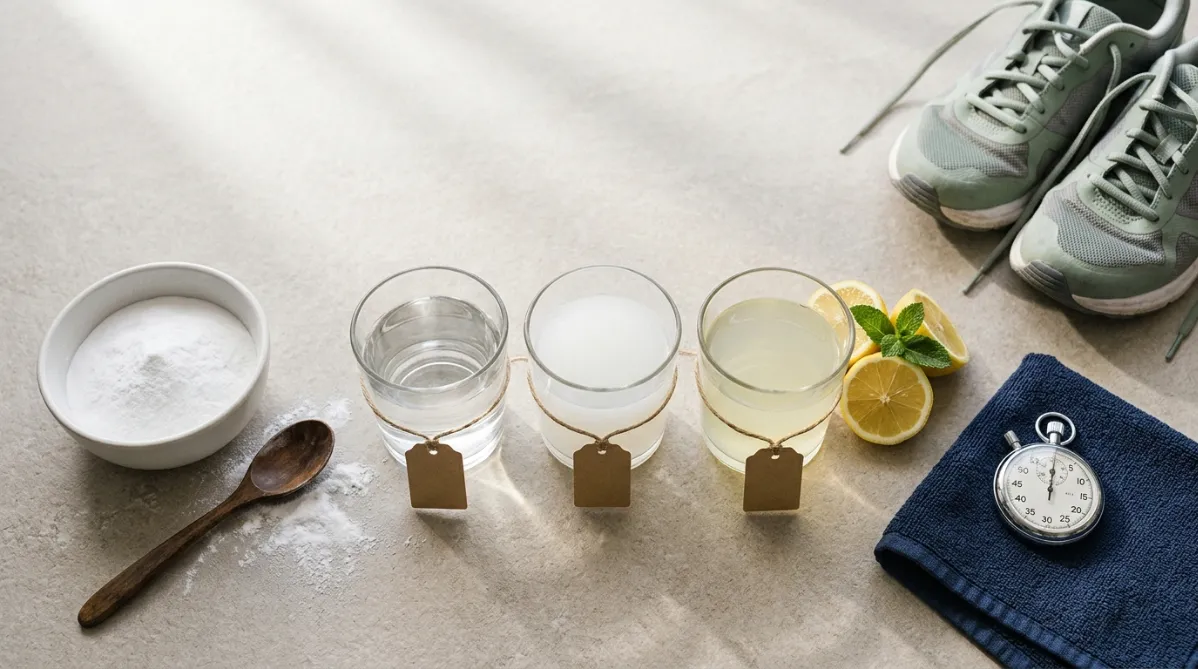
A wide, editorial-style flat lay photographed from above on a pale warm-gray stone countertop in soft morning window light. On the left, a simple white ceramic bowl holds fine white baking soda powder, with a vintage wooden spoon resting beside it and a light dusting of powder spilling across the surface. In the center, three identical clear glass tumblers sit in a neat row, each filled with a slightly different cloudy liquid: one almost clear, one milky white, one faintly yellow-tinged. Small kraft paper labels tied to the glasses with twine remain blank. To the right, a minimalist silver stopwatch lies on a folded navy athletic towel, its hands frozen mid-count. A few fresh lemon halves and a single sprig of mint add a bright, natural accent near the citrate glass. A pair of worn but clean women's running shoes sits partly in frame at the upper right corner, laces loose, hinting at an athlete without showing a person. Subtle long shadows fall diagonally across the scene, giving depth and a calm, modern feel. The color palette is muted and cohesive: chalky whites, soft sage green, warm sand, deep navy, and small pops of lemon yellow. Shallow depth of field gently blurs the edges, with crisp focus on the center glasses and stopwatch. Plenty of clean negative space across the top third leaves room for a headline overlay. The overall look is a trendy health and performance journal: clean, tactile, slightly grainy film-like texture, natural and understated, with no text, no logos, and no futuristic elements.
nutrition

Baking Soda Beat Sodium Citrate and the Combo by 17 Seconds

BY DR. GYMBRO ·

Everyone assumes that stacking buffers beats taking just one. In a crossover trial of ten highly trained female CrossFit athletes, sodium bicarbonate cut 6-km time trial time by 21.5 seconds versus placebo, while sodium citrate and the combo weren't clearly better than placebo. Bicarbonate also beat citrate by 11.6 seconds and the combination by 17.2 seconds. The catch was more pre-exercise stomach discomfort. Here is what the study found, why the stack flopped, and how to trial it safely.
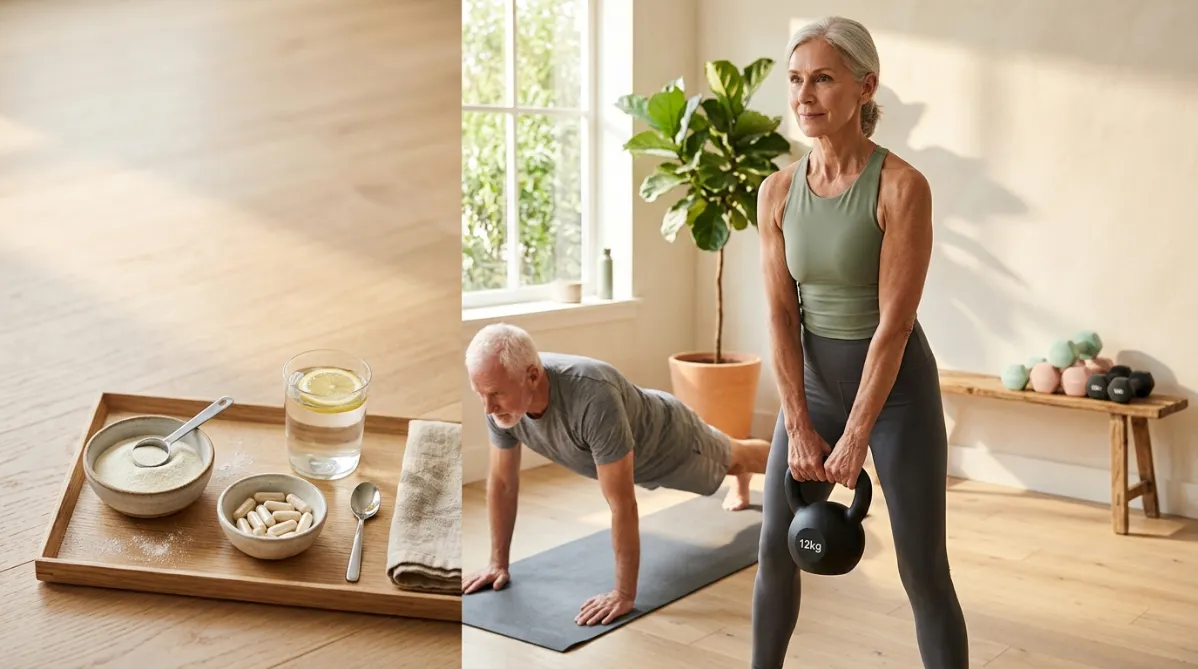
A warm, softly lit modern home gym or sunlit studio, photographed in a clean editorial style. In the center-right of the frame, a silver-haired woman in her mid-60s with a calm, confident expression grips a matte black kettlebell at hip height. She wears a fitted sage-green athletic top and charcoal leggings. Her forearms and shoulders show lean, defined strength rather than bulk. Beside her, slightly out of focus, a man in his late 60s with short white hair and a trim beard performs a controlled bodyweight plank on a pale oak floor.

In the foreground on the left, a minimalist wooden tray holds two small ceramic bowls. One contains fine white powder and the other holds a few cream-colored capsules. Next to them sit a glass of water with a lemon slice and a folded linen towel. A subtle scatter of powder dusts the tray. The foreground is shot with shallow depth of field and a creamy bokeh falloff.

Behind them, tall windows pour in golden morning light, with long soft shadows across the floor. A potted fiddle-leaf fig and a stacked set of pastel-toned dumbbells on a low wooden shelf add texture. The wall is warm off-white plaster with a hint of terracotta in the corner.

The palette is muted and modern: sage green, warm cream, soft terracotta, natural oak, and charcoal, with gentle highlights. The mood is quietly optimistic, focused, and grounded, suggesting strength, vitality, and measured scientific curiosity. The composition leaves clean negative space in the upper-left for a headline overlay. The look is a high-end wellness magazine cover with natural film-like grain, soft contrast, and crisp detail on the hands and kettlebell. There is no text, no logos, and no futuristic elements, only authentic, aspirational realism.
nutrition

Creatine + HMB Made Over-60s Stronger in 6 Weeks, Not Bigger

BY DR. GYMBRO ·

Over-60s on a creatine + HMB stack got stronger in just six weeks, yet the muscle-mass numbers barely moved. This double-blind crossover trial of 30 active older adults found gains in leg, back and arm strength plus upper-body and core endurance. Regression analyses suggested the improvements were largely independent of muscle size, pointing toward a neuromuscular effect. Before you rush to buy, there are real caveats: a short six-week window, a small sample, and body composition measured by BIA. Here's what the study found, what it didn't, and how to read it.
A wide, landscape editorial photograph with soft natural morning light. In the foreground, a rustic matte ceramic bowl rests on a pale oak wooden table, filled with vivid deep-green spirulina powder heaped in a gentle mound. A small wooden spoon dusted with the powder lies beside it, and a few scattered green flecks dust the surface. Next to the bowl sits a clear glass of water with a swirl of emerald green just blending in, catching sunlight and casting soft green-tinted shadows.

In the middle ground, slightly out of focus, a pair of worn running shoes in muted sage and cream tones sits on the edge of the table, laces loosely undone. A simple analog stopwatch with a clean white face lies beside them, its hands frozen at a moment suggesting a close finish. A folded linen towel in warm oatmeal tone drapes casually nearby.

The background is a softly blurred outdoor setting seen through a large window: a quiet tree-lined running path at dawn, with golden-hazy light, dewy greenery, and a faint mist. The color palette is calm and modern: deep emerald, sage, cream, warm wood, and touches of soft gold. The composition leaves generous negative space on the right side for headline text, with a shallow depth of field, crisp detail on the powder texture, and a clean, minimalist, lifestyle-magazine aesthetic. Subtle film-like grain, natural shadows, and a fresh, healthy, energetic mood. No people, no text, no logos.
nutrition

Spirulina Helped Runners Last 32% Longer—Here's the Catch

BY DR. GYMBRO ·

Runners who took spirulina for four weeks lasted about 32% longer in an all-out effort after a brutal two-hour run. The same study found a 10.9% jump in fat oxidation and higher levels of the antioxidant glutathione. But before you stock up, there's a catch: only nine men took part, and the real-world gain was roughly 39 seconds. Here's what the research shows, why it might work, and how to try it safely.
A softly lit editorial flat-lay on a pale oat-colored linen surface, shot from slightly above in a wide landscape composition. On the left, a small cluster of fresh Coleus forskohlii plant sprigs with velvety, scalloped green leaves and a few delicate lavender-blue flowers lies beside a rustic ceramic bowl of fine, golden-brown powdered root extract. A wooden scoop rests in the powder. In the center, a minimalist amber glass dropper bottle and a few cream-colored capsules are spilled neatly onto the linen, with no readable labels or logos. On the right, a slim analog kitchen scale in matte white shows a small, subtle weight, and beside it a soft sage-green measuring tape is loosely coiled in a gentle curve, hinting at waist measurement. A small open notebook with blank cream pages and a thin brass pen suggests careful tracking, with a few abstract pencil tick marks and no legible text. Accents include a halved lemon, a glass of water with condensation, and a sprig of eucalyptus for a calm wellness feel. Natural morning window light enters from the upper left, casting long, soft, diffused shadows and warm highlights across the textures of linen, ceramic, glass, and leaves. The palette is muted and modern: sage green, warm cream, soft terracotta, honey amber, and touches of dusty lavender. Shallow depth of field gently blurs the far edges, with the focus on the center objects. The mood is calm, trustworthy, and quietly skeptical, like a high-end health and science magazine cover. It is clean and uncluttered, with generous negative space at the top for headline overlay. Photographic, high-resolution, with subtle film grain and true-to-life color.
nutrition

Forskolin Fat Burner: 2 kg in 12 Weeks—Modest but Real?

BY DR. GYMBRO ·

Forskolin has been hyped as a fat-burning miracle for years, but does a new 2026 trial finally give it some real backing? In 60 overweight adults over 12 weeks, a Coleus forskohlii extract beat placebo by about 1.93 kg in body weight and 1.83 cm in waist size, with better triglycerides and HDL. Safety markers looked clean too. But the study was quasi-randomized, small, and run by the product's manufacturer, and the effect is a rounding error next to GLP-1 drugs. Here's what the data really say and how to approach forskolin with realistic expectations.
A wide, softly lit editorial still life on a pale oatmeal-colored linen surface, shot from a slightly elevated three-quarter angle. In the center-left, a small matte ceramic dish holds a tiny pile of fine white powder, with a single minuscule measuring spoon resting beside it. To the right, a much larger wooden scoop is heaped high with the same pale powder, spilling gently onto the linen, creating a striking visual contrast of tiny versus large quantity. Behind them, a cream-colored supplement tub with a blank, minimalist label sits slightly out of focus, along with a few amber glass capsules scattered casually.

In the soft-focus background, a runner's well-worn sneaker and a chalk-dusted, wrapped knee sleeve rest on a light ash-wood bench, hinting at gym and road without showing a person. A thin brushed-steel stopwatch lies in the foreground, its hands paused, subtly suggesting timing and endurance. A sprig of dried eucalyptus and a folded sheet of paper with out-of-focus handwritten notes add a quiet, editorial research feel.

Natural morning light streams in from the left through a sheer curtain, casting long, gentle shadows and a warm, creamy glow. The palette is restrained and modern: warm ivory, sand, soft sage green, muted terracotta, and touches of brushed silver. Shallow depth of field with crisp detail on the powders and stopwatch, creamy bokeh in the background. The composition leaves open negative space on the right third for headline text. The overall mood is calm, trustworthy, and contemporary, like a premium health and wellness journal cover, with fine film-like grain and clean, minimalist styling.
recovery

A 40 mg Collagen Dose Doubled Time to Knee Pain. Here's the Catch

BY DR. GYMBRO ·

Achy knees under the bar or on the road? One randomized trial found that just 40 mg a day of undenatured type II collagen (UC-II) was linked to knee pain starting later, from 1.4 to 2.8 minutes, and to better knee extension. That is about 250 times less than a typical 10 g scoop of hydrolyzed collagen, and it is a different kind of product. But the study was small, industry-linked, and done in healthy people rather than arthritis patients. Here's what the data show, where the headline needs context, and how to read a label.
A wide, editorial-style still life photographed from slightly above on a pale oat-colored linen surface, lit by soft natural window light from the left. At the center sits a rustic ceramic bowl of finely ground golden-tan ginger powder, with a small wooden spoon resting in it and a light dusting of spice across the cloth. Beside it lie several whole ginger rhizomes, knobby and honey-brown. One is sliced open to show its pale yellow, fibrous interior, and a few paper-thin slices fan out in the foreground. On the right, a folded heather-gray gym towel, a matte sage-green resistance band coiled loosely, and a single brushed-steel dumbbell sit just inside the frame, softly out of focus. A glass of warm amber ginger tea steams faintly near the upper right, with a thin curl of lemon peel inside. A few fresh green leaves and a small linen pouch of dried ginger add texture. The palette is warm and muted: cream, soft gold, sage, terracotta, and charcoal accents. The shallow depth of field keeps the ginger bowl and sliced root crisp while the gym elements melt into a gentle blur. Shadows are long and soft, and the negative space on the upper left leaves room for a headline. The mood is calm, clean, and modern, like a contemporary wellness or science journal cover. It is a natural, tactile, high-resolution photograph with subtle film grain and no text, no people, and no futuristic elements.
recovery

2 Grams of Ginger Cut Next-Day Muscle Pain by ~25% in Two Trials

BY DR. GYMBRO ·

A common kitchen spice just went head-to-head with one of the gym's most universal complaints: next-day muscle soreness. In two double-blind trials, people who took 2 grams of ginger daily for 11 days reported roughly 25% less pain 24 hours after punishing eccentric exercise. But ginger didn't clearly improve strength or swelling, and nobody tested it against ibuprofen. Here is what the research shows, why it might work, where the evidence falls short, and who should consider trying it.
A wide, landscape editorial photograph with a modern wellness-journal feel. In the foreground, a clear glass vial of pale amber liquid sits on a matte white stone surface, with a small dropper beside it and a few droplets catching soft light. A slim brushed-steel measuring spoon and a minimalist notebook with handwritten dose calculations in pencil rest nearby. The numbers are blurred and unreadable.

In the softly blurred background, a bright, airy modern gym with large windows and morning light. A fit man in his thirties, in a charcoal athletic shirt, is mid-stride on a treadmill in profile, with a gentle sheen of sweat and a focused expression. Behind him, a wooden plyo box, a kettlebell, and a rope are arranged neatly, suggesting functional training.

The palette is calm and refined: warm cream, soft sage green, muted terracotta, and touches of deep navy. Natural golden side-light makes long, gentle shadows. Shallow depth of field with a crisp foreground and creamy bokeh. Clean composition with negative space on the left third for a title overlay. Premium magazine photography, subtle film grain, realistic textures, no text or logos, and no futuristic or digital elements.
nutrition

HMB Boosted Cardio Fitness, Not Strength, in New 2026 Trial

BY DR. GYMBRO ·

HMB is usually sold as a way to hold onto muscle and build strength, but a new triple-blind trial found something different. In 90 men, a high personalized dose of liquid HMB free acid (90 mg per kg of fat-free mass daily) plus high-intensity functional training raised VO2max and threshold markers more than placebo. The effect was clearest in trained men, and isometric leg strength did not budge. Here is the dose math, how it compares with the standard 3 g, and who might actually benefit.
A wide, editorial-style photograph of a rugged Himalayan cliff face at golden hour, with dark, glossy resin seeping from the cracks in the layered stone. Thick, tar-like droplets catch the warm light and shine like polished obsidian. In the foreground, a weathered hand holds a small, rustic ceramic dish with a spoonful of purified Shilajit. The resin is deep brown-black, glossy, and stretches in a slow, viscous ribbon from the spoon. Beside the dish sits a simple, minimalist amber glass dropper bottle with a plain cream label, a folded linen cloth, and a few scattered dried herbs, suggesting a modern wellness ritual. The mid-ground shows soft layers of misty mountain ridges fading into a pale peach and dusty blue sky. The background is gently blurred, with shallow depth of field and creamy bokeh. The color palette is earthy and muted: warm ochre, charcoal, sage green, and soft cream, with a subtle film-grain texture. Natural side lighting creates long, gentle shadows and highlights the textures of the stone, resin, and ceramic. The composition follows the rule of thirds, with the dish and bottle in the lower left and open negative space on the right for headline overlay. The mood is calm, grounded, and credible, like a high-end health and science magazine feature, with a refined, contemporary, slightly documentary look. There is no text, no people's faces, and no futuristic elements.
science research

Shilajit Tested: Can 'Mountain Tar' Really Raise Testosterone?

BY DR. GYMBRO ·

Shilajit, the Himalayan "mountain tar" sold as a natural testosterone booster, was put through a randomized, double-blind, placebo-controlled trial. In men aged 45 to 55, 250 mg of purified Shilajit twice daily for 90 days significantly raised total testosterone, free testosterone and DHEAS versus placebo, while LH and FSH stayed stable. The study is promising but modest, limited to middle-aged men, and reports hormone levels rather than gym performance. Here's what the research shows, what it doesn't, and why purity and heavy-metal testing matter when buying.
A landscape editorial photograph in soft natural morning light. In the foreground on a rustic light oak table, a small cluster of fresh Rhodiola rosea plants with thick succulent blue-green leaves and tiny golden-yellow flower clusters rests beside a few dried, knobby amber-brown rhizome pieces. A matte ceramic cup of pale golden herbal tea sits beside them, with a thin curl of steam and a small linen cloth. The plants and roots are sharp, with fine texture and dewy highlights.

In the softly blurred background, a lean cyclist in a fitted charcoal jersey stands beside a road bike on a quiet country lane at sunrise. Rolling green hills fade into pale mist behind them, and warm light rims the rider's shoulders. The cyclist tightens a glove, calm and focused, in a pre-ride moment of preparation. A water bottle is mounted on the bike frame, and a simple analog stopwatch with a brushed metal casing lies on the table near the herbs, hinting at timed effort.

The palette is muted and modern: sage green, warm cream, soft gold, and slate gray, with gentle peach tones from the sunrise. Shallow depth of field, a clean, airy composition with generous negative space on the right third for headline text, and subtle film grain. The mood is calm, health-conscious, and quietly athletic, like a premium wellness and sports science magazine cover. No text, no logos, no futuristic elements.
science research

Rhodiola Rosea: A Stimulant-Free Pre-Workout for Hard Cardio?

BY DR. GYMBRO ·

A 2013 crossover trial found that a single 3 mg/kg dose of Rhodiola rosea an hour before a 6-mile bike time trial shaved the finish time from 25.8 to 25.4 minutes. Warm-up heart rate dropped from 140 to 136 bpm, and perceived exertion fell from 6.6 to 6.0. The gain is small, around 1.5%, and comes from only 18 people, so it's no miracle. Still, the effort-perception angle makes it an intriguing stimulant-free option for endurance athletes. Here's what the data show and how to try it sensibly.
A bright, modern editorial flat-lay photographed from above on a soft off-white stone surface. At the center sits a matte ceramic scoop heaped with fine white creatine powder, with a loose dusting of powder fanning out across the surface. Beside it is a minimalist frosted-glass jar with a plain label and a brushed-steel shaker bottle lying on its side. To the left, a wooden comb and a small folded strip of graph paper with a single hand-drawn upward curve in muted terracotta ink, suggesting a data spike without any text. A few loose strands of dark brown hair curve elegantly across the stone near the comb. To the right, a clean glass beaker filled with water and a sprig of green rosemary, and an open notebook with blank pages and a sleek pen. The palette is warm neutrals: cream, sand, soft sage green, and a single accent of terracotta orange. Natural window light falls from the upper left, casting long, gentle shadows and a subtle diffused glow. The composition leaves generous negative space on the right third for title overlay. Shallow depth of field with crisp focus on the powder scoop, a premium health-and-science magazine look, minimalist, calm, and trendy, with fine grain and soft contrast. Landscape 16:9 framing.
science research

Creatine and Hair Loss: The 56% DHT Spike Explained

BY DR. GYMBRO ·

A 2009 study found that a 7-day creatine load of 25 g/day raised DHT by 56%, with levels still about 40% higher on 5 g/day maintenance, while testosterone stayed flat. Since DHT is linked to male-pattern baldness, the finding fuelled the creatine hair-loss debate. But the trial had just 20 rugby players, lasted three weeks, and never measured hair at all. Later studies haven't consistently reproduced the DHT increase. Here is what the research really shows, who might care, and how to adjust your approach if you're worried.
A sun-lit editorial still life on a pale oak gym bench: a loaded barbell rests on a rack just above it, chalk dust drifting in the air. In the foreground sits a small ceramic bowl of roasted beets, some sliced to show their deep magenta rings, with a few whole beets still wearing their leafy burgundy stems. Next to the bowl is a matte white supplement tub with a minimal label, a wooden scoop of fine white powder, and a clear glass of water catching soft highlights. A slim notebook lies open beside them with a simple hand-drawn bar graph and a pen, suggesting data and analysis without any readable text. Behind the bench, a softly blurred minimalist training space: raw concrete wall, tall window with warm morning light, a rack of black dumbbells fading into bokeh. The palette is earthy and modern: beet magenta, warm cream, charcoal, brushed steel, and touches of sage green from the beet leaves. Soft directional light from the left creates long gentle shadows and a slight film-grain texture. Shallow depth of field keeps the beets and powder tack sharp. The composition is wide and balanced, with negative space on the right for headline overlay. The overall feel is a clean, contemporary health and fitness journal photograph, warm and tactile, with an understated scientific tone.
nutrition

Betaine Raised Bench Throw Power ~16% in 14 Days

BY DR. GYMBRO ·

Two weeks of betaine, a compound found in beets and sold as TMG, was linked to roughly 16% higher bench throw power on day one of a hard testing block in resistance-trained men. A randomized, double-blind crossover trial also found higher isometric bench press force, with smaller improvements in vertical jump power and isometric squat force. But reps and jump squat power did not budge, and the study included just 12 men. Here's what the data show, the dose used, and what lifters should and shouldn't take from it.
A clean, editorial still life shot from a slightly elevated angle on a pale oatmeal-colored stone countertop, lit by soft natural window light from the left that casts long, gentle shadows. In the center sits an open, unlabeled amber glass supplement bottle on its side, with a small scatter of cream and white capsules spilling toward the viewer. Beside it, a matte ceramic dish holds a few capsules and a pinch of coarse sea salt. To the right, a neatly arranged group of whole foods that are natural zinc and magnesium sources: halved oysters on a small slate board, a small bowl of pumpkin seeds, a handful of raw cashews, and a few dark green spinach leaves. In the left foreground, a worn leather gym notebook lies open with minimal handwritten tally marks and a simple hand-drawn flat line graph in dark ink, with a brass pen resting across it. A single chrome dumbbell handle edges into the frame at the far left, softly out of focus, and a folded charcoal gym towel sits at the top right corner. The palette is warm and muted: sand, cream, sage green, amber, and charcoal, with a subtle terracotta accent in the ceramic dish. The depth of field is shallow, with the capsules and bottle in crisp focus and the background gently blurred into a soft beige haze. The mood is calm, thoughtful, and skeptical, like a modern health and science magazine feature. The composition leaves generous negative space on the upper right for headline text. The texture is tactile and fine-grained, with a subtle film-like softness and natural contrast. Wide landscape 16:9 framing.
science research

ZMA for Testosterone? 8 Weeks in Lifters Found Nothing

BY DR. GYMBRO ·

ZMA built its reputation on bold testosterone claims, a link to the BALCO scandal, and an early football study that seemed to show big gains. Then researchers put it to a tighter test: 42 resistance-trained men, double-blind, eight weeks of standardized training. Serum zinc rose 11-17%, but not significantly, and hormones, strength, body composition, endurance and anaerobic power were no different from placebo. Here's what the study did and didn't show, why deficiency is a separate question, and what lifters should do instead.
A wide, landscape editorial photograph of a clean, sunlit kitchen counter or pale stone tabletop, styled like a modern wellness magazine spread. Two scoops sit side by side on a matte ceramic surface. The left one is a plain, humble wooden scoop heaped with fine white creatine powder. The right is a glossy, ornate brushed-gold scoop holding the same white powder, which hints at "premium" branding. Behind each scoop stands a tub. The left tub is minimal, matte, and cream-colored with simple sans-serif lettering and no readable words. The right tub is sleek black with metallic gold accents and an overly polished look. A few fine grains of powder are scattered across the surface, catching the light.

The composition uses a shallow depth of field. The foreground scoops are crisp, and the background softly blurs into a warm neutral palette of oatmeal, soft sage green, and muted terracotta. Soft morning window light comes in from the left, casting long, gentle shadows and a subtle highlight along the scoops' edges. A small price tag shape, blank and unmarked, sits near the gold scoop, with a slightly crumpled paper texture to suggest the "pricey" angle without any text. A glass of water with condensation and a folded linen napkin sit at the edge of the frame. A single green sprig or eucalyptus stem adds a natural accent.

The overall mood is calm, intelligent, and quietly skeptical, with the plain option feeling confident and the flashy one a bit overdressed. The color grading is soft and slightly desaturated with creamy highlights, and there is fine film grain. The layout leaves generous negative space on the right third for a headline overlay. It looks like a high-end lifestyle and science journal cover, with a minimalist, tactile, trendy feel and no futuristic or sci-fi elements.
science research

Creatine Ethyl Ester vs Monohydrate: The Pricey Form Lost

BY DR. GYMBRO ·

Supplement makers love to sell "advanced" creatine as better absorbed than the old standby. A 2009 double-blind trial tested creatine ethyl ester against monohydrate and placebo in 30 untrained men over seven weeks of heavy training. CEE produced lower serum creatine and sharply higher serum creatinine, a pattern consistent with it breaking down into waste. Muscle creatine rose in both creatine groups, but strength, power, and body composition did not differ between any groups. The takeaway: skip the premium form and keep it simple.
A wide, editorial-style flat lay photographed from above on a pale warm-gray stone countertop in soft morning window light. On the left, a small matte white ceramic bowl holds fine white arginine powder, with a wooden scoop resting beside it. At the center, two halved oranges and one whole lemon in saturated citrus tones, with a few glossy droplets of water on the cut surfaces, to suggest vitamin C. On the right, three slim amber glass capsule bottles with minimal cream labels and no legible text stand in a loose row, with a few white capsules spilling out. A single chrome dumbbell handle enters the frame from the upper right corner, partly cropped, its cool metallic sheen contrasting with the warm fruit. A sprig of green rosemary and a folded linen napkin in oatmeal beige add texture. Long soft shadows fall to the left. The palette is warm cream, sunny orange, soft yellow, and muted sage, with a few crisp accents of steel gray. The composition is airy and uncluttered, with generous negative space in the upper left for a title overlay. It has a shallow depth of field, a crisp foreground, and a faintly blurred background. The look is clean, contemporary, and wellness-magazine, like a premium health and fitness journal cover, with natural grain, high-end product photography quality, and a calm, fresh, trustworthy mood.
science research

3 g Arginine + 500 mg Vitamin C: Testosterone Up 26% in Lifters

BY DR. GYMBRO ·

Arginine has long been written off as an overhyped nitric oxide booster, but a new randomized trial adds a twist: pair it with vitamin C. In 50 male bodybuilders, 3 g of arginine (split into three doses) plus 500 mg of vitamin C for 45 days significantly raised testosterone and VO2max versus placebo, and body fat dropped. Growth hormone, cortisol and nitrogen balance did not significantly differ between groups. It's a cheap stack worth watching, but it comes from one small trial, and higher testosterone doesn't guarantee more muscle.
A wide, softly lit editorial photograph of a rustic light-oak table by a sunny window. On it, a handful of dried brown kelp and wakame seaweed fronds spill from a handmade matte ceramic bowl in warm sand tones, their glossy, ruffled edges catching the light. Beside the bowl sits a small wooden scoop holding fine golden-beige powder, with a little of it dusted across the table. In the middle ground, an older adult's weathered but strong hand grips a smooth, rounded river stone, with the knuckles and tendons subtly emphasized to suggest strength and vitality. Only the hand and part of a forearm in a soft oatmeal linen sleeve are visible.

In the background, slightly out of focus, a pair of worn leather walking shoes rests on a windowsill next to a trailing green plant. Beyond the window, a blurred coastal path winds through dune grass toward a pale blue sea, hinting at walking and an active daily life. A simple analog wristwatch lies on the table's edge, a quiet nod to the twelve-week timeline.

The palette is muted and natural: sage green, warm sand, soft ocean teal, and creamy off-white, with deep olive-brown accents from the seaweed. Morning light streams in from the left, casting long, gentle shadows and a faint golden glow. The depth of field is shallow, with crisp focus on the hand and seaweed and a creamy bokeh background. The composition follows the rule of thirds, with the hand and bowl on the left and generous negative space on the right for headline text. The mood is calm and hopeful, with a clean, contemporary wellness-magazine feel. The image is shot as if on a 50mm lens with subtle film grain and a natural, uncluttered, tactile look.
science research

Seaweed Fucoidan Boosted Grip Strength in Over-60s in 12 Weeks

BY DR. GYMBRO ·

Losing strength with age is one of the most common and least discussed parts of getting older, and resistance training isn't an option for everyone. A new 12-week randomized trial found that a low-molecular-weight seaweed fucoidan, taken at 1,650 mg per day, significantly improved grip strength and six-minute walk performance in adults over 60. Surprisingly, muscle mass didn't change, and adding BCAAs and vitamin D offered no extra benefit. The trial was small and tested a single branded product, so it's a promising lead rather than a verdict. Here's what the study found and what it means in practice.
A clean, editorial flat-lay photograph shot from above on a pale warm-grey stone countertop, bathed in soft diffused morning light from the left. At the center sits a matte white supplement tub with a minimal sage-green label, its lid resting beside it. A small wooden scoop spills fine cream-colored whey powder in a gentle arc across the surface, creating delicate natural texture and soft shadows. Next to the powder, a small ceramic dish holds a handful of pale tan capsules and a few tiny golden-brown ginseng root slices and fragments of dried Panax notoginseng root, hinting at the botanical origin of the ingredient. A sprig of fresh green leaves with serrated edges adds a touch of organic color on the upper right.

In the foreground, a tall glass of milky shake with a subtle frothy surface, condensation beads on its sides, sits beside a folded linen napkin in oatmeal tone. A slim brushed-steel spoon and a minimal glass of water complete the arrangement. A pair of simple, elegant reading glasses and a closed notebook with a thin pencil rest at the upper left, suggesting a researcher's desk and a thoughtful review of data, with no legible text visible.

The palette is soft and modern: warm cream, sage green, muted terracotta, pale wood, and gentle off-white, with one small accent of deep amber from the ginseng slices. Composition follows the rule of thirds with generous negative space on the right side for title overlay. Shallow depth of field, crisp focus on the powder and capsules, with the edges gently softened. The mood is calm, trustworthy, and wellness-focused, evoking a contemporary health and science magazine aesthetic. High-resolution, natural color grading, subtle film grain, minimal and airy, 16:9 landscape.
nutrition

AstraGin: The Hidden Label Ingredient That Boosted Whey Absorption

BY DR. GYMBRO ·

There's a tiny ingredient on your pre-workout label you've probably ignored: AstraGin. A new human pilot trial found it boosted absorption of valine by 14%, leucine by 8%, and total essential amino acids by nearly 13% in adults aged 60-80. Blood zonulin, a gut-permeability marker, also dropped 13%. But strength and muscle mass differences weren't statistically significant, and the study had just 30 participants. Here's what the data really says about whether AstraGin works.

This page is available in