
Dr. Gymbro
←

#creatine

37 articles
A wide, softly lit editorial still life photographed on a pale oak desk at the blue hour just before dawn. In the center-left foreground, a clear glass of water sits beside a small ceramic dish holding a mound of fine white powder, with a matte wooden scoop resting beside it, a light dusting of powder scattered across the wood grain. Behind them, a minimalist analog alarm clock in muted sage green reads close to 4:00. Next to it is an open linen-bound notebook with a pencil and a few abstract handwritten lines, plus a ceramic mug of black coffee with a thin trail of steam. To the right, a slim laptop is open to a blurred, softly glowing screen with no legible text. A window in the background shows a deep indigo sky turning peach at the horizon, with soft city silhouettes out of focus. Warm light from a small brass desk lamp creates a gentle pool of amber on the desk, contrasting with the cool blue ambient light from the window. The palette is muted and modern: dusty blue, warm cream, soft sage, and a touch of apricot. Shallow depth of field, fine film grain, and generous negative space on the right third for title overlay. The mood is calm, focused, and slightly weary but hopeful, like a contemporary health and science magazine cover. Clean composition, natural textures, subtle shadows, and a high-end lifestyle photography aesthetic.
nutrition

Creatine Before an All-Nighter? A Lower Dose Still Cut the Brain Crash

BY DR. GYMBRO ·

What if one big scoop of creatine could soften the brain fog of an all-nighter? A new study in Nutrients found that a single 0.2 g/kg dose, roughly 14-16 g for most adults, reduced the decline in logic, numerical, language-speed and vigilance tasks during 21 hours awake, with improvements of up to 12%. Women appeared to benefit more. But only 29 people took part, the dose is several times the normal daily amount, and the effect was smaller than with the same group's earlier 0.35 g/kg trial. Here's what the data show, and what they don't.
A wide, editorial-style still life shot from a slightly elevated angle on a pale oak laboratory-meets-kitchen countertop, bathed in soft, diffused morning window light. In the center, two small matte ceramic bowls sit side by side: one holds fine white creatine powder, the other holds slightly coarser off-white L-arginine crystals. A brushed steel scoop rests beside each. Between and slightly behind them stands a clear glass shaker bottle filled with a cloudy, pale liquid, catching a gentle highlight. In the foreground, a minimalist analog stopwatch lies on the wood surface, its face crisp and legible, next to a folded sheet of off-white paper with a hand-drawn simple bar chart in charcoal pencil, with one tall bar and a few shorter ones, no text or numbers. In the soft-focus background, a blurred gym-style window view shows a pale running track and a muted sage-green hedge, suggesting sprinting and athletic testing without any people. Eighteen small smooth stones or white pills are arranged in a neat loose arc across the lower edge of the frame, a subtle nod to the small sample size, with one stone set slightly apart. The color palette is calm and modern: warm cream, bone white, soft sage, muted terracotta accents from a small clay dish, and thin touches of brushed metal. Shadows are long and gentle, the depth of field shallow, with a fine film-like grain. The composition leaves generous negative space on the left third for a title overlay. The mood is clean, thoughtful, and trustworthy, like a contemporary health and science journal cover, with no futuristic elements, no glowing effects, and no text.
nutrition

Creatine Plus L-Arginine Added ~99 W Peak Power. Here's the Catch

BY DR. GYMBRO ·

A new crossover trial found that taking creatine and L-arginine together an hour before testing raised peak sprint power by about 99 W over placebo. The stack also beat each supplement alone on peak power and countermovement jump height. But the researchers couldn't prove the two work synergistically, and the study had only 18 men. Here's what the numbers show, how the doses worked, and who should be cautious.
A bright, modern editorial still life shot from a slightly elevated angle on a pale warm-gray stone countertop, bathed in soft natural window light with gentle diffused shadows. In the center, a small glass bowl holds a scatter of translucent golden-amber fish oil softgel capsules, a few spilled casually onto the surface and catching the light like tiny glowing beads. Beside the bowl sits a single chrome dumbbell with a matte finish, slightly out of focus, and a neatly folded charcoal gym towel. To the left, a clean arrangement of alternative "better spent" items: a ceramic dish of raw eggs, a wedge of salmon fillet on a wooden board with a sprig of dill, and a small bowl of Greek yogurt with a spoon, all styled with restraint. A minimalist notebook with a thin pen lies at the right edge, with faint, abstract pencil-drawn bar charts and a flat horizontal line suggesting "no effect," legible only as soft shapes with no readable text. The color palette is muted and sophisticated: warm cream, soft sage green, sandy beige, and pops of golden amber from the capsules, with a single accent of coral from the salmon. Shallow depth of field keeps the capsules crisp while the background melts into a creamy blur of a sunlit kitchen with a hint of green plant leaves. The composition leaves generous negative space on the right third for title overlay, in a 16:9 landscape format. The mood is calm, thoughtful, and quietly skeptical, in the style of a contemporary health and science magazine, with a crisp editorial photography look, fine grain, and natural color grading. No people, no futuristic elements, and no text.
science research

Fish Oil for Gains? 8 Trials Say Don't Count on It

BY DR. GYMBRO ·

Fish oil has long been sold as a recovery and muscle-building booster, but a new meta-analysis in Nutrition says the evidence isn't there. Pooling four trials for fat-free mass and eight trials (22 effects) for strength in healthy non-obese adults, researchers found no clear benefit for either. The strength result was essentially zero, while the fat-free mass estimate was too imprecise to say anything. Certainty of evidence was very low, so this isn't proof of no effect, but it's no reason to buy fish oil for gains. Here's what the numbers mean and where your money is better spent.
A wide, editorial-style photograph of a clean, minimalist kitchen counter in soft morning light, shot from a slightly elevated angle. In the foreground, a matte white ceramic bowl holds a small mound of fine white creatine powder, with a wooden scoop resting beside it and a few loose grains scattered across a pale oak surface. Next to it sits a tall glass of water, catching bright highlights, with a single sprig of mint resting on the rim. Behind them, slightly out of focus, a pair of worn-in running shoes in muted sage and cream sits on a linen towel, hinting at an athletic routine. On the right side of the frame, a small analog stopwatch with a brushed steel finish lies on the counter, its hands frozen mid-sprint. A closed notebook with a thin pencil and a simple pastel-toned puzzle-like grid card suggests cognitive testing without being literal. The color palette is warm neutral: oatmeal, soft sand, sage green, and a pop of coral from a small accent object, such as a ceramic cup. Natural window light streams in from the left, creating long, gentle shadows and a calm, airy atmosphere. Shallow depth of field, crisp textures on the powder and wood grain, and generous negative space in the upper right for headline overlay. The overall mood is clean, contemporary, and wellness-focused, like a modern health and science journal feature.
science research

One Week of Creatine Boosted Sprint Power. The Brain Boost? Missing

BY DR. GYMBRO ·

A new trial of 40 young, active adults found that one week of creatine loading lifted Wingate sprint power by roughly 8%. Mean power rose from 526 W to 570 W and peak power from 738 W to 797 W, with no sex differences. The much-hyped cognitive boost never showed up on the Stroop or Trail tests, even around a hard sprint. The authors say a learning effect on the tests may have masked any real brain benefit. Here is what the 20 g/day for 7 days protocol did, and what it didn't.
A wide, editorial still-life photographed from slightly above on a pale warm-gray stone surface, lit by soft natural window light with gentle long shadows. On the left, a matte white ceramic scoop rests in a small mound of fine white creatine powder. Beside it sits a minimalist frosted glass jar with its lid off. In the center, a clear glass beaker with a few ounces of water catches the light, with soft caustic reflections across the stone. On the right, a neat row of fifteen small, identical pale sage-green ceramic tokens sits in a precise grid of three rows of five. Twelve are sage green and three are a muted terracotta, hinting at sample size and the "catch" without any text. Scattered at the edge of the frame are a few loose powder grains, a sprig of dried eucalyptus, and a slim brushed-brass pen lying across a blank cream notecard with faint, abstract pencil-drawn bar graph lines, unreadable and softly out of focus.

The palette is calm and modern: bone white, warm stone, sage, dusty terracotta, and subtle brass accents. The background fades into a creamy, softly blurred neutral tone with shallow depth of field, so the foreground tokens and powder are crisp. The composition follows the rule of thirds, with generous negative space on the upper right for a headline overlay. The mood is clean, thoughtful, and scientific without being clinical, like a contemporary health and science journal feature. The image is high-resolution and has subtle film-like grain, with no people, no text, no lab equipment clichés, and no futuristic elements.
science research

Creatine and Sperm Count: First Human Trial Has 15 Men and a Catch

BY DR. GYMBRO ·

Creatine may be heading beyond the gym, with the first-ever human trial looking at its effects on semen. In an 8-week pilot, 60% of men taking creatine saw higher sperm concentration versus 20% of controls, and sperm creatine content rose 35.8% in the creatine-plus-ubiquinol group. But the trial had only 15 men, and the average rise in sperm concentration (7.4 million/mL) was not statistically significant. The senior author also discloses financial ties to the creatine industry. Here is what the data show, what they don't, and what to do with them.
A wide editorial photograph of a lone runner captured mid-stride in the final stretch of a sunlit outdoor track, shot from a low angle with a shallow depth of field. The runner wears a fitted charcoal singlet and sage-green shorts. Their face is tense with effort, and their stride is long and powerful as they lean toward the finish line. Soft golden-hour light rakes across the scene and creates long shadows on the terracotta-red track. A faint haze of warm dust hangs in the air behind them.

In the lower left foreground, slightly out of focus, a minimalist still life sits on the edge of the track. A matte white scoop rests beside a small pile of fine white powder on a pale linen cloth. Next to it are a small amber glass jar and a ceramic cup of water. The objects are arranged with restraint, like a modern wellness magazine layout. They hint at supplements without any branding or text.

The background is a gentle blur of white lane lines, distant green trees, and a pale peach and cream sky. The color palette is warm and muted: terracotta, sand, sage, soft cream, and touches of deep charcoal. The mood is calm and focused, with a sense of restrained power and a decisive moment. The composition follows the rule of thirds. The runner sits on the right third, the still life anchors the lower left, and generous negative space in the upper left leaves room for a headline overlay.

The style is contemporary, clean, and slightly cinematic, like a high-end sports and science journal. It has fine film grain, natural color grading, crisp detail on the athlete, and creamy bokeh elsewhere. There is no text, no logos, no futuristic elements, and no digital interfaces. The scene is purely natural and tactile.
supplements

Creatine and Beta-Alanine Won't Raise VO2max, But May Win the Sprint

BY DR. GYMBRO ·

A 2026 review in Translational Sports Medicine takes a hard look at creatine and beta-alanine for endurance athletes. The verdict is that neither is a reliable way to raise VO2max, lactate threshold or time-to-exhaustion. Both may help in the moments that decide races, such as surges, climbs and finishing sprints. Weight gain from creatine could be a real drawback for runners. Here is what the evidence supports, where it falls short, and how athletes typically dose these supplements.
A calm, modern editorial still life shot from a slightly elevated angle on a pale oak tabletop, bathed in soft natural window light from the left. At center sits a clear glass of water beside a small matte ceramic bowl holding a mound of fine white creatine powder, with a wooden scoop resting next to it and a few loose grains dusted across the surface. To the right, a neatly arranged printed lab report on cream paper, with blurred rows of numbers and a single line highlighted in soft coral pink marker, partially overlapped by a minimalist silver pen. A folded pair of thin-framed glasses sits at the edge of the paper. In the foreground, a small glass vial with a pale amber liquid sample and a second empty vial stand upright, suggesting blood and urine testing, with gentle refraction and soft caustic light on the wood. Behind them, a sprig of eucalyptus in a small stone vase adds a touch of green. The background is a softly blurred, warm off-white wall with a gentle gradient shadow and a hint of a window frame. The palette is muted and refined: warm creams, sage green, soft coral, pale amber, and light oak, with crisp whites in the powder. Shallow depth of field, with the powder bowl and highlighted lab line in sharp focus and the edges falling away into creamy blur. Generous negative space on the right third of the composition for text overlay. The overall feel is clean, trendy health-journal photography, tactile and editorial, with subtle film-like grain, natural shadows, and a quiet, reassuring mood. No people, no text legible, no futuristic elements.
supplements

Creatine Raised Kidney Markers in 26 Trials. Probably Not Damage

BY DR. GYMBRO ·

You start creatine, get bloodwork, and your creatinine is up while your eGFR looks worse. A 2026 meta-analysis of 26 randomized trials (1,036 participants) found exactly that: creatinine rose 0.14 mg/dL and creatinine-based GFR fell about 10.75 mL/min. But when kidney filtration was measured with Cr-EDTA, the drop didn't appear, and urea, albuminuria and proteinuria were unchanged. Here's why the lab number misleads, what to tell your doctor, and who should check with a nephrologist first.
A landscape editorial still life on a pale oatmeal-colored linen surface, photographed in soft morning window light with long, gentle shadows. On the left, a small matte ceramic bowl holds fine white creatine powder, with a wooden measuring spoon resting beside it, a few grains scattered across the fabric. Next to it sits a minimalist amber glass supplement jar with a plain cream label and no readable text, its lid set beside it. In the center, a rumpled white cotton pillow and a loosely folded sage-green blanket suggest a night without sleep. On top rests a vintage brass alarm clock with its hands at a pre-dawn hour. To the right, a thin glass of water and a ceramic mug of black coffee send up a faint curl of steam, backed by a half-drawn sheer curtain that lets in pale blue-gray dawn light with a warm peach glow at the horizon.

Along the back edge, a few delicate botanical stems of dried eucalyptus and a small sprig of green leaves add organic texture. Nearby lies an open notebook with abstract hand-drawn graph lines, a simple line chart with two diverging curves, and a pencil. The notebook symbolizes the study's mixed findings, one line rising and the other flat, without any legible words or numbers.

The palette is muted and modern: warm cream, soft sage, dusty terracotta, muted amber, and cool dawn blue. The composition follows the rule of thirds, with generous negative space on the upper right for headline overlay. The shallow depth of field blurs the background into a creamy bokeh. The mood is quiet, contemplative, and slightly tired but hopeful, like a trendy wellness and science journal cover with a refined, tactile, natural feel. High-resolution photography with subtle film grain, no people, no text, and no futuristic elements.
science research

Creatine + GAA After a Sleepless Night: Brain Boost or Mirage?

BY DR. GYMBRO ·

A small randomized trial found that a creatine-GAA supplement raised frontal and temporal brain oxygen saturation after 24 hours of sleep deprivation. The catch: attention, reaction time, and accuracy did not measurably improve. With just 22 participants across four arms, the large effect sizes need cautious reading. This breakdown covers what GAA is, what the study did and didn't show, and why shift workers, students, and athletes should treat it as an early research lead, not a proven fix.
A wide, landscape editorial photograph of a clean, sunlit kitchen countertop in soft morning light. Two matching matte ceramic bowls sit side by side on a pale oak wood surface. One holds fine, bright white creatine powder, the other holds an almost identical powder, with a small stainless steel scoop resting in each. Between them sits a simple glass of water with gentle ripples and a thin wooden stirring spoon. In the soft-focus background, a minimalist amber glass supplement jar with a plain cream label and a sleek matte-white tub with a pastel sage-green lid stand slightly out of focus, suggesting a budget option and a premium option without any readable branding. A small, neatly folded linen napkin in warm oatmeal tones and a sprig of eucalyptus in a tiny stoneware vase add a calm, modern touch.

A few grains of powder are scattered naturally across the wood, catching the light. The color palette is warm neutrals with soft sage green, cream, and muted terracotta accents. The composition uses a shallow depth of field, a slightly elevated three-quarter angle, and generous negative space on the right side for title overlay. The lighting is natural window light from the left, creating long, gentle shadows and a subtle glow on the powder. The overall mood is calm, trustworthy, and thoughtful, like a contemporary health and wellness magazine or a minimalist lifestyle journal. High-resolution, crisp textures, film-like color grading, subtle grain, and a balanced, symmetrical sense of comparison between the two bowls.
nutrition

This 'Better-Absorbed' Creatine Just Matched Plain Monohydrate

BY DR. GYMBRO ·

The premium creatine market is built on promises of better absorption and a gentler stomach, but plain monohydrate has the research record and the low price. A new randomized, double-blind crossover trial tested a newer product, OptiCreatine, against monohydrate in 17 healthy young adults. After a single 5 g dose, blood creatine curves, peak levels, timing and GI symptoms were statistically similar. Here is what that means in plain words, what the study can't tell you, and how to shop smartly.
A wide, editorial-style photograph of a soccer pitch at golden hour, shot from a low angle at the edge of the touchline. In the foreground, a pair of worn leather cleats sits beside a small, matte white scoop and a minimalist ceramic jar of fine white powder resting on the dewy grass. A few loose grains of powder dust the blades of grass and catch the warm light. The jar is unbranded, with a clean, modern look.

In the midground, slightly out of focus, a lone player in a plain charcoal training kit stands mid-stride on the pitch, caught in a sprint. The motion blur in the legs suggests speed, and long shadows stretch across the freshly mowed stripes of the turf. A soccer ball rests a few meters ahead of the player.

Behind them, the stadium stands curve softly into the distance, rendered in a hazy, muted gradient of peach, soft amber, and pale blue sky. The mowing pattern on the grass forms clean diagonal lines that lead the eye toward the horizon. A thin white chalk line cuts across the frame, adding a subtle graphic element.

The palette is warm and restrained: sage and deep green grass, cream white, soft apricot light, and touches of charcoal. The mood is calm, thoughtful, and slightly skeptical rather than hyped, like a magazine feature on sports science. Shallow depth of field with a creamy bokeh background, fine film grain, and gentle natural contrast. The composition follows the rule of thirds, with the jar and cleats in the lower left and open negative space in the upper right, which leaves room for a headline overlay. The look is contemporary and clean, like a premium health and performance journal.
nutrition

Creatine for Soccer: 41 Studies, One Awkward Truth About Sprints

BY DR. GYMBRO ·

Creatine is everywhere, and soccer's sprint-heavy demands make it look like a perfect match. A new systematic review of 41 unique studies tested that idea and delivered a verdict that's more cautious than the marketing. Some trials showed benefits for repeated sprints, anaerobic power and strength, but the evidence was inconsistent and rated very low certainty. Recovery claims got little support, and body mass often rose without clear lean-mass gains. Here's what to take from it, who might benefit, and who should think twice.

A wide, editorial-style still life photographed on a pale warm-gray concrete surface in soft, diffused morning window light. On the left side, a tall clear glass filled with deep magenta-crimson beetroot juice sits beside two halved raw beetroots, their concentric rings of vivid fuchsia and purple clearly visible, with a few small green-and-red-veined leaves draped casually nearby. On the right side, a matching clear glass of cloudy white creatine solution rests next to a small matte ceramic bowl heaped with fine white powder and a minimal wooden scoop, a light dusting of powder scattered across the surface. In the center, between the two sides, a simple matte black barbell grip and a single chalk-dusted weight plate edge rise into the frame at a low angle, hinting at lifting without showing a person. The composition is split in a balanced, symmetrical way, with a subtle vertical shadow line dividing the saturated magenta tones on the left from cool, neutral whites and creams on the right. The background is softly blurred with a muted sage-green and oatmeal-toned wall, with plenty of negative space at the top for a headline overlay. Shallow depth of field, crisp focus on the glasses' condensation droplets and the textured beetroot flesh. The color palette is limited and refined: magenta, cream, charcoal, and soft sage. The mood is clean, modern, and health-journal chic, like a contemporary wellness magazine cover, with natural shadows, a tactile matte finish, and subtle film-like grain. No text, no logos, no futuristic elements.
nutrition

Beetroot Juice vs Creatine: Who Wins for Lifting in 72 Hours?

BY DR. GYMBRO ·

A new randomized crossover trial pitted beetroot juice against creatine over about 72 hours of supplementation in novice lifters. Creatine was the one credited with more bench press reps at 80% 1RM, while beetroot juice led on bar velocity, muscle oxygenation, peak heart rate and HRV recovery. The abstract doesn't report doses or timing, so we flag what's missing. Here's the full scorecard and who might choose which supplement.
A wide, editorial-style photograph of a female athlete captured mid-jump in a bright, minimalist indoor training space with pale concrete floors and tall frosted windows that let in soft diffused morning light. She is frozen at the peak of a countermovement jump, knees tucked slightly, arms swinging upward, wearing a fitted sage-green training top and charcoal shorts. Her shadow stretches long on the floor below her, which emphasizes the height of the leap.

In the foreground at the lower left, a clean arrangement of supplement items sits on a light oak wooden plyo box: several matte, unlabeled ceramic jars and small amber glass bottles in cream, terracotta, and muted olive tones. Loose white powder is spilled in a soft arc beside a wooden scoop. A few capsules and a small pile of pale yellow beet-colored crystals add texture. Beside them are a folded linen towel and a stainless steel shaker bottle. The items are slightly out of focus, which creates shallow depth of field and leads the eye toward the athlete in the mid-ground.

The color palette is warm and modern: creamy off-white, soft sand, sage green, and subtle terracotta accents, with gentle natural shadows. The background is a clean, slightly blurred wall with a thin horizontal line of light, which suggests a measuring-stick rhythm without literal numbers. Fine particles of chalk dust hang in the air around her feet, lit by a shaft of sunlight.

The composition follows the rule of thirds, with the athlete on the right third and open negative space on the upper left, suitable for headline overlay. The style is contemporary lifestyle and sports-science journal photography, with a crisp, high-resolution, soft-contrast, matte finish and a subtle film-like grain. The mood is calm, premium, and trustworthy, in the spirit of a modern health and performance publication.
science research

Best Supplements for Jump Height and Power: HMB, Betaine Surprise

BY DR. GYMBRO ·

A massive new network meta-analysis of 119 trials ranked supplements for jump height and power, and the winners aren't who you'd expect. HMB led peak power with a 64.7 W gain, while betaine topped countermovement jump at 3.7 cm. Creatine, beta-alanine, vitamin D, and caffeine also showed benefits. But the certainty of evidence was very low for most comparisons, and the eye-catching iron result came from just one study. Here's the ranking by outcome and what to actually do with it.
A softly lit, airy home gym corner in warm morning light, photographed in a modern editorial style. In the foreground on a pale oak wooden bench sits a small matte ceramic bowl of fine white creatine powder, with a stainless steel measuring scoop resting beside it, leveled and slightly dusted. Next to it is a tall glass of water with a lemon slice, condensation beading on the surface. In the middle ground, a woman in her late 50s with silver-streaked hair tied loosely back, wearing a sage green athletic top and charcoal leggings, is mid-motion lifting a brushed steel dumbbell in a controlled shoulder press. She looks calm and focused, with a faint smile. Her posture is strong and natural. Behind her, a tidy rack holds dumbbells in muted tones, and a rolled terracotta yoga mat leans against a cream plaster wall. A large window on the left pours diffused golden sunlight across the floor, casting long soft shadows. A leafy fiddle-leaf fig and a trailing pothos add organic green accents. A small linen notebook and a pen sit on the bench, hinting at tracking progress. The palette is warm neutrals with sage, terracotta, soft cream, and touches of brushed metal. Shallow depth of field keeps the powder and scoop crisp, with the woman slightly softened behind. Composition follows the rule of thirds, with the powder bowl in the lower left and the woman on the right, leaving breathing room at the top for a headline overlay. The mood is empowering, grounded, and quietly scientific, like a contemporary wellness magazine cover with natural film-like grain and gentle contrast.
science research

Creatine After Menopause: The Dose Catch Behind the Gains

BY DR. GYMBRO ·

A 2026 meta-analysis of seven randomized trials and 608 postmenopausal women finds creatine can help, but only under the right conditions. Taking 5 g per day or more alongside resistance training raised lean mass by 0.37 kg and leg-press 1RM by 7.5 kg. Doses of 3 g per day or less without training showed no measurable effect. Bone density did not change, and side effects looked like placebo. Here is what the dose catch means for women past menopause.
A calm, sunlit bedroom scene in soft editorial photography style, shot in landscape format. In the foreground, a rumpled bed with crisp oatmeal-colored linen sheets and a cream waffle-knit blanket, morning light spilling across it through sheer curtains. On a light oak nightstand sits a clear glass of water beside a small ceramic bowl holding a loose scoop of fine white powder, a wooden spoon resting next to it. A minimalist fabric wristband in muted sage green lies casually on the nightstand, suggesting sleep tracking without any screens or glowing displays. A slim open notebook with a pencil rests beside it, hinting at research and reflection. A potted olive branch in a terracotta vase adds an organic touch. The wall behind is warm off-white plaster with soft, gently shifting shadows of leaves. Color palette: warm sand, muted sage, soft blush, creamy white, and touches of terracotta. The mood is quiet, restorative, and thoughtful, like a modern wellness journal feature. Shallow depth of field, a soft film-like grain, natural diffused light, and generous negative space on the right side of the frame for title overlay. The composition is balanced and uncluttered, with a gentle golden-hour glow. The style is contemporary lifestyle editorial, tactile and understated, with no text, no people's faces, and no futuristic elements.
science research

Creatine Didn't Speed Up Perimenopausal Brains. Sleep Is Another Story

BY DR. GYMBRO ·

Creatine was supposed to sharpen perimenopausal brains, but the main thinking-speed test showed no creatine advantage. Instead, a small exploratory trial of 51 women found higher prefrontal oxygenation, a 7.4-point sleep consistency edge at week 6 and fewer temperature-sensitivity days. Everyone, including placebo, got faster on the Stroop task. The study design, dosing, limits and the authors' creatine and WHOOP ties are all laid out here, so you can judge how much weight the findings deserve.
A wide editorial still life on a pale warm-gray stone countertop, lit by soft natural window light from the left. In the center, two small matte ceramic bowls sit side by side. One holds fine white creatine powder, and the other holds a slightly coarser, creamy off-white crystalline powder. Between them, a delicate brass measuring spoon rests at a slight angle, dusted with a few grains. Behind the bowls, a shallow glass dish holds a handful of whole food ingredients that suggest gut health: fermented sauerkraut, a few sprigs of fresh thyme, sliced radishes, and a small cluster of green olives. Their colors are soft and natural. To the right, a minimalist wooden mouse running wheel stands out of focus as a quiet visual nod to the exercise study. Beside it, a small, slim dumbbell in muted sage green rests on the counter. A folded linen napkin in oatmeal tone and a single glass beaker with clear water add a subtle lab-meets-kitchen feel without looking clinical. The palette is calm and modern: sage green, terracotta, cream, soft sand, and touches of warm brass. Shadows are gentle and elongated, with a shallow depth of field that keeps the powders crisp and the background creamy. The composition leaves generous negative space on the right third for title text. The overall mood is clean, thoughtful, and trendy, like a contemporary wellness and science magazine, with fine film-like grain, natural textures, and a refined editorial look.
science research

Gut-Microbe Compound PAS Beat Creatine in Mice—But There's a Catch

BY DR. GYMBRO ·

A new mouse study says a pair of gut-microbe-derived molecules, pipecolic acid and succinate (PAS), outperformed creatine monohydrate on grip strength and muscle force after seven weeks of weighted wheel running. The surprise is that neither compound increased muscle mass or fiber size, so the edge was in function, not size. Both supplements did improve running performance versus control. But this is mice-only, exploratory research with no human dose or safety data. Here is what the study found and what you should (and shouldn't) take from it.
A wide, softly lit editorial photograph of a modern minimalist gym corner, shot at golden hour with warm light streaming through large frosted windows. In the foreground, a matte white scoop of fine creatine powder rests on a pale oak bench beside a clear glass shaker bottle half-filled with water. A small pile of loose white powder dusts the wood surface. Just behind them, a matte black barbell loaded with charcoal bumper plates rests on a squat rack, slightly out of focus, with chalk dust floating in the sunbeams.

On the bench, a simple analog wall-style clock or a sleek minimalist wristwatch lies face up, hinting at timing without being the main focus. Next to it sits a slim open notebook with a pencil and a few hand-drawn tally marks and neat columns, suggesting tracked training data. A folded sage-green towel sits at the edge of the frame.

The color palette is calm and sophisticated: cream, warm oak, soft sage green, charcoal, and a touch of terracotta. The shallow depth of field gives creamy bokeh in the background, where the soft silhouette of a lifter in neutral athletic wear chalks their hands near the rack, rendered anonymously and without a visible face.

The composition follows a rule-of-thirds layout, with the powder and shaker in the lower left third and open negative space on the right, suitable for headline overlay. The mood is clean, focused, and quietly motivated, like a premium health and science journal feature. The lighting is natural and diffused, with gentle shadows, subtle film grain, and true-to-life textures. Shot on a 50mm lens at f/2, with crisp detail on the powder and a high-end lifestyle magazine finish.
nutrition

Creatine Before Training Won This Timing Test—But There's a Catch

BY DR. GYMBRO ·

Does it matter when you take your creatine? A new randomized crossover pilot trial in Nutrients says the pre-workout window may have an edge: 0.1 g/kg of creatine monohydrate before training was linked to more total load lifted in the bench press and back squat than placebo or no supplement. Taking it during or after training didn't show the same advantage, and no differences appeared in jumping, mood, cognition, or soreness. But the study had only 11 men and tested a single dose, and the authors call it exploratory. Here's the exact dose, what the data show, and who should be cautious.
A softly lit, minimalist strength-training studio photographed in a modern editorial style. In the foreground, a matte black barbell loaded with weight plates rests on a light oak platform, with fine chalk dust floating in warm morning light. Beside it on a pale concrete bench sits a simple ceramic scoop of white creatine powder, with a small spill of fine crystals catching the light, next to a minimal frosted glass jar with no label. A matte sage-green shaker bottle and a folded cream towel sit nearby. In the soft-focus background, tall windows let in diffused golden sunlight, casting long, gentle shadows across the floor. A rack of neatly arranged dumbbells is blurred in muted charcoal tones.

The color palette is calm and sophisticated: warm off-white, sand, sage green, soft charcoal, and touches of terracotta. A small open notebook with a pencil lies on the bench, suggesting research and data tracking, with abstract hand-drawn bar graph lines faintly visible on the page but not legible. The composition follows the rule of thirds, with the barbell and powder on the left and generous negative space on the right for headline text. Shallow depth of field, crisp textures on the metal knurling and powder grains, subtle film grain, and a contemporary wellness-magazine look. Clean, airy, and editorial, with a grounded, scientific yet approachable mood. Landscape 16:9 composition.
science research

Creatine Plus Lifting: Bigger Strength Gains, No Dosing Winner

BY DR. GYMBRO ·

A meta-analysis of 63 studies and 1,489 participants asked how much creatine adds on top of lifting. The strength boost was moderate and consistent in both upper and lower body, while the lean mass gain was smaller and fat mass didn't significantly change. The surprise is that dosing strategy, daily dose and protocol did not significantly influence the results. Age emerged as the one exploratory clue, with larger strength effects in younger participants. Here is what the paper actually found, and what it can't tell you.
A wide, softly lit editorial still life on a warm, pale oat-colored surface. At the left, a lower leg and foot rest on a folded cream linen towel, wrapped in a matte white fiberglass cast with a subtle texture and a few faint pen scribbles near the ankle. The skin tone is natural and the lighting is gentle. At the center-right, a small ceramic bowl holds fine white creatine powder, with a matte wooden scoop resting beside it and a dusting of powder on the surface. Next to the bowl is a clear glass of water with light refracting through it, casting soft caustic ripples on the table. This hints at the water-retention idea without being literal.

In the background on the right, slightly out of focus, a pair of light grey resistance bands and a small sage-green dumbbell sit on a wooden stool, suggesting rehab. A tall, leafy plant in a terracotta pot adds organic greenery at the edge of the frame. Morning sunlight streams from a window on the left and creates long, soft shadows and a warm golden-peach glow. The palette is cream, sage green, terracotta, soft sky-blue shadows, and touches of natural wood. The composition has generous negative space in the upper left for a title overlay. Shallow depth of field, shot as if with an 85mm lens, with fine film grain. The look is clean, calm, modern wellness-magazine photography with a minimalist, tactile, trendy feel.
recovery

Creatine in a Cast Won't Clearly Save Muscle, But Rehab Is Different

BY DR. GYMBRO ·

Everyone wants to know if creatine can save your muscle when an injury puts you in a cast. A new systematic review of six randomised trials (118 young people, 1-2 weeks of immobilisation) says the evidence during disuse is mixed, and some apparent lean-mass benefits may just be water. The more intriguing signal came during rehab, where two studies found larger gains in quad size, power and strength with creatine. Here are the real numbers, the limitations, and who might want to try it.
A wide, softly lit editorial still life on a pale oatmeal-colored linen surface. In the center sits a small matte ceramic bowl of fine white creatine powder, with a wooden scoop resting beside it and a few loose pale crystals scattered across the linen. Around the bowl, a fresh plant-based spread is arranged in an organic, uncluttered way: a halved avocado, a handful of chickpeas, bright green edamame pods, a cluster of dark leafy kale, a few red lentils spilled from a small wooden spoon, and a split pomegranate with glossy ruby seeds. A tall glass of water with condensation stands on the right, catching a sliver of window light.

In the soft-focus background, a young athlete in a muted sage-green tank top is mid-jump in a bright, minimalist studio with whitewashed brick walls and pale hardwood floors. The figure is slightly blurred and only partly in frame, which gives a sense of motion and vertical lift without pulling attention from the foreground. A pair of clean white sneakers and a folded gray towel sit on a low wooden bench nearby.

The light is warm natural morning daylight from the left. It casts gentle long shadows and subtle highlights on the powder and the glass. The palette is earthy and calm: cream, sage green, terracotta, warm wood tones, and small pops of avocado green and pomegranate red. The depth of field is shallow, with crisp focus on the bowl and scoop. The composition leaves generous negative space on the upper left for a title overlay, in the clean, contemporary style of a modern health and science magazine. Photographic, high-resolution, refined, and minimal.
science research

Vegans Took Creatine for 4 Weeks: Jumps Rose, Sprints Didn't

BY DR. GYMBRO ·

Vegans eat almost no dietary creatine, so does supplementing hit harder? A new randomized, triple-blind human trial gave 20 active vegans 0.1 g/kg/day of creatine monohydrate for four weeks. Jump performance improved, and so did some body composition measures, but sprint, handgrip and mid-thigh pull results didn't budge. Body water climbed 1.4 kg, and the study couldn't compare vegans with meat-eaters. Here's what the numbers show, what they don't, and who might want to try it.
A wide, editorial-style still life photographed from slightly above on a pale oat-colored linen surface, lit by soft morning window light from the left. In the center sits a small matte ceramic bowl holding a mound of fine white powder, with a minimalist wooden scoop resting beside it. Next to the bowl is an open amber glass supplement jar with a plain cream label, and a few white capsules spill across the linen in a loose arc.

To the right, a neatly arranged cluster of analog "study" objects suggests careful measurement: a vintage stopwatch with a clean white face, a slim notebook with a sage-green cover open to a hand-drawn bar chart (blurred, no legible text), and a mechanical pencil lying across the page. A small row of six identical ceramic dishes, each holding a pinch of powder, is lined up along the top edge of the frame to hint at the six-week trial. One dish is slightly out of alignment, a subtle visual cue for ambiguity.

A shallow glass of water and a single sprig of green eucalyptus add a calm, organic note in the foreground. Soft, long shadows fall across the textured linen, and the palette stays restrained: warm cream, soft sage, muted terracotta, pale gray, and touches of amber from the glass jar. A few translucent paper cutouts in two tones (sage and blush) overlap in the upper right corner as a modern graphic accent, evoking overlapping data points without showing any numbers.

Depth of field is shallow, with the bowl and stopwatch in crisp focus and the edges gently softened. The composition leaves generous negative space on the left third for title text overlay. The overall mood is thoughtful, balanced, and quietly skeptical, in the style of a contemporary wellness and science magazine: clean, tactile, minimal, with a subtle film-like grain and natural color grading. No people, no futuristic or sci-fi elements, no readable text or logos.
nutrition

GAA Brain Booster? The 6-Week Trial Result Is Complicated

BY DR. GYMBRO ·

GAA, the creatine precursor sold as a brain booster, just got its first serious human test. In a six-week, double-blind trial of 58 healthy adults, it produced some faster reaction times and a scattering of mood and stress signals. Most cognitive tests, however, showed nothing, and many of the headline results were only trends. Safety markers looked fine, but the study was small, exploratory, and had no creatine-only comparison group. Here is what it really shows, who it might suit, and why the verdict is mixed.
A wide, editorial-style flat lay photographed from above on a pale warm-gray concrete surface, lit by soft natural window light with gentle shadows. On the left, three small matte ceramic bowls in sage green, soft terracotta, and cream, each holding a different white crystalline powder. The textures vary subtly: fine and powdery, slightly granular, and glittery with tiny crystalline flecks. Beside them rest three minimalist wooden scoops, a few scattered grains catching the light. In the center-right, a worn classic black-and-white soccer ball sits slightly off-frame, partially cropped by the edge, with a pair of muted navy cleats resting nearby, laces loosely draped. A small stopwatch with a brushed-steel finish and a folded sheet of graph paper with a hand-drawn bar chart in soft coral and teal pencil add a subtle sense of data and measurement. A few blades of fresh-cut grass and a sprig of eucalyptus add organic accents. The palette is calm and modern: warm neutrals, sage, terracotta, and muted navy, with one pop of coral. The composition leaves generous negative space in the upper right for headline text. The mood is clean, curious, and trustworthy, like a contemporary health and science journal. Shallow depth of field, crisp focus on the powders, with the soccer elements slightly softer. High-end editorial photography, 16:9 landscape.
science research

Creatine HCl Beat Monohydrate in Soccer Players—Don't Toss Yours Yet

BY DR. GYMBRO ·

A new randomized trial in 40 soccer players found that creatine HCl and ethyl ester out-gained plain monohydrate on jump, sprint, agility and peak power after just four weeks. Every creatine form beat placebo, but the "fancy" versions pulled further ahead on the explosive measures. Before you swap tubs, though, the study has just 10 athletes per group, no reported doses in the abstract, and a result that clashes with earlier research. Here is what it showed, what it did not, and how to think about it.
A bright, minimalist flat-lay photograph of two supplement scoops on a pale warm-gray stone surface, shot from directly above in soft natural window light. On the left, a matte ceramic scoop holds fine white creatine monohydrate powder, heaped in a clean mound. On the right, a second scoop of the same shape holds slightly coarser off-white beta-alanine powder, with a small, deliberate gap between the two. Each scoop sits in its own soft shadow, which suggests separation rather than combination. Between them, a thin brushed-brass ruler or a single slim line of fine powder runs across the surface and subtly divides the composition.

Around the scoops, a few restrained props in a muted editorial palette of sage green, cream, terracotta, and soft charcoal: a small glass jar with a minimalist label that has no readable text, a folded linen napkin, a single sprig of eucalyptus, and a stainless-steel shaker bottle softly out of focus in the upper corner. A few loose powder grains are scattered naturally across the stone. A small stack of blank cream index cards with a pencil rests in the lower right, hinting at research and note-taking without any legible writing.

The composition follows a clean rule-of-thirds layout, with generous negative space on the right third for headline overlay. The lighting is gentle and diffused, with long, soft shadows falling to the lower left. The color grading is calm and slightly desaturated, with creamy highlights and a subtle film-like grain. The overall look is a modern wellness and science journal cover, with an airy, trustworthy, contemporary editorial feel, shallow depth of field, and crisp detail on the powders.
nutrition

Creatine + Beta-Alanine: The Stack Bonus Researchers Couldn't Find

BY DR. GYMBRO ·

The creatine plus beta-alanine stack is marketed as a performance power couple, but a new network meta-analysis of 52 randomized trials found no synergy between them. Creatine alone significantly improved sprint, jump, repeated-sprint and upper-body endurance outcomes versus placebo. Beta-alanine's effects were non-significant or context-specific, and the combo added nothing beyond creatine. Here's what the study did, where it falls short, and what it means for your supplement budget.
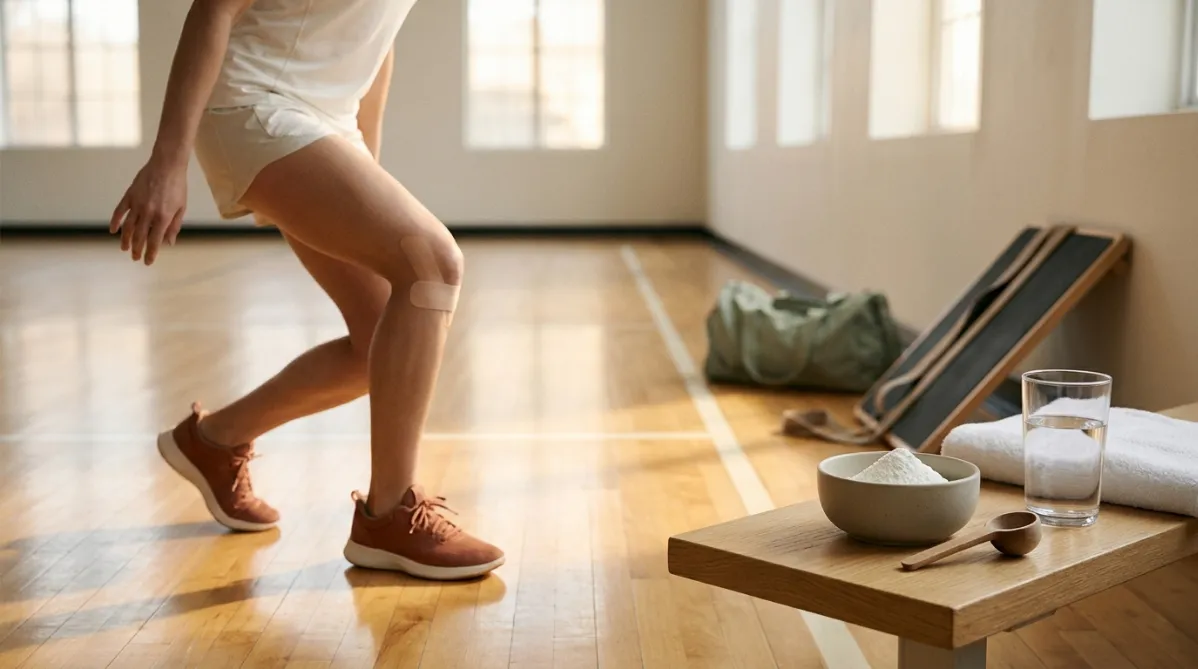
A wide, editorial-style photograph of a volleyball player mid-landing from a jump on a sunlit indoor court, captured from a low side angle. The athlete's knee is slightly bent and the patellar tendon area is in sharp focus, with soft natural muscle definition and a light strip of kinesiology tape just below the kneecap. The polished honey-toned hardwood floor reflects warm window light, and the background falls away into a creamy blur of pale court lines and tall windows.

In the lower right foreground, slightly out of focus, a matte ceramic bowl holds a small mound of fine white creatine powder. A wooden scoop rests beside it, next to a clear glass of water and a folded white towel. This sits on a light oak bench at the edge of the court. A resistance band and a slanted decline board, used for eccentric rehab, lean softly against the wall behind the bench.

The palette is warm and natural: cream, soft white, honey oak, muted sage green accents from a gym bag, and a touch of terracotta from the athlete's sneakers. Light is golden-hour and diffused, with gentle shadows and a subtle film-grain finish. The composition follows the rule of thirds, with the athlete on the left and the supplement still life on the right. Negative space in the upper portion leaves room for a headline overlay.

The overall mood is calm, modern, and health-focused, like a contemporary wellness or sports-science journal cover. Shallow depth of field, a clean minimalist aesthetic, and true-to-life color. No text, no logos, no futuristic or digital elements.
recovery

Creatine for Jumper's Knee? Pain Relief Showed Up by Week 4

BY DR. GYMBRO ·

Jumper's knee can sideline athletes for months, and a new trial asks whether creatine can speed things up. In 20 athletes doing eccentric rehab, only the creatine group had a significant pain and function (VISA-P) improvement at 4 weeks, along with gains in jump height. By week 8, however, both groups had improved similarly, and the between-group interaction only trended (p = 0.099). Here is what the study did, how creatine was taken, who might benefit, and why the small sample demands caution.
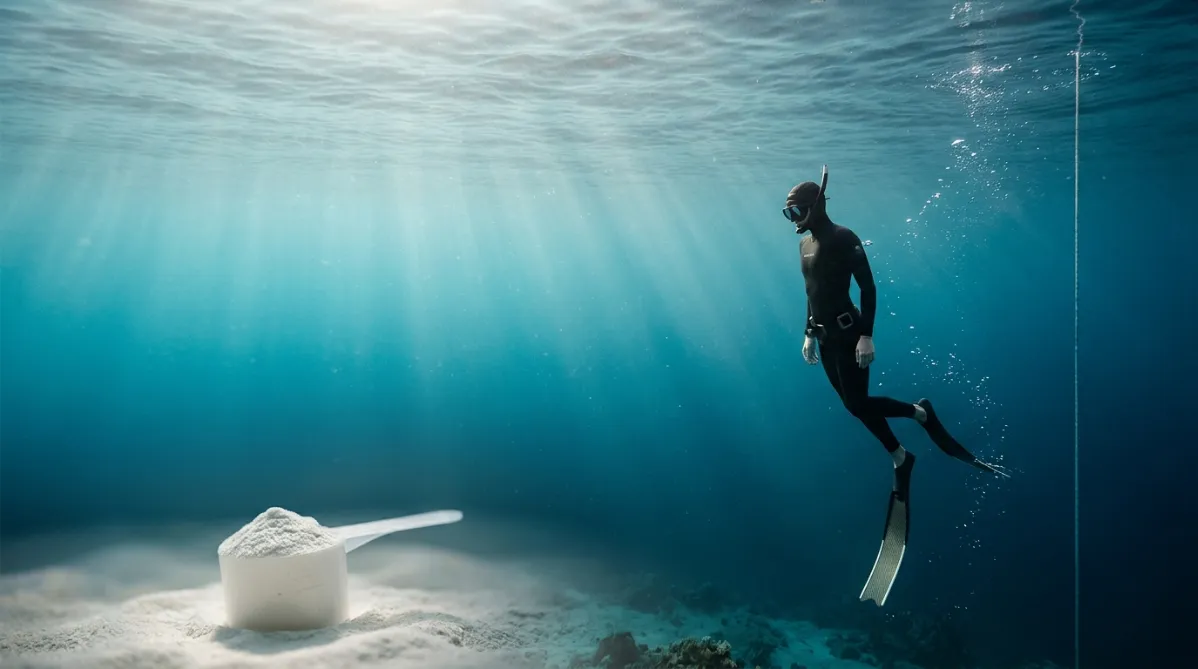
A wide, cinematic landscape photograph of a freediver suspended mid-water in a calm, sunlit turquoise sea, shot from slightly below so the surface glimmers above like rippling silver glass. The diver wears a sleek matte black wetsuit and a long, elegant pair of carbon fins. Their body is streamlined, arms relaxed at their sides, head tilted slightly down in a state of serene focus. Shafts of soft golden sunlight pierce the water diagonally and illuminate fine floating particles and a trail of tiny bubbles rising from the diver's fins. A single thin dive line descends vertically into deeper blue at the right of the frame, adding a graphic compositional element.

In the lower left foreground, slightly out of focus, a minimalist still-life element rests on a pale sandy seabed: a small, clean white scoop with a mound of fine white powder, casually echoing creatine without any text or labels. The scoop is softly lit and has a shallow depth of field blur, creating a gentle visual link between supplement and sport.

The color palette is refined and modern: deep teal, aquamarine, soft cerulean, warm cream highlights, and touches of sunlit gold. The water gradients smoothly from bright, luminous turquoise near the top to a rich inky navy at the bottom, giving depth and a sense of quiet intensity. Leave generous negative space on the left third of the image for headline placement, with the diver positioned on the right third following the rule of thirds.

The mood is calm, athletic, and contemplative, like an editorial image from a premium health and science magazine. Style: high-end editorial photography, natural light, subtle film grain, soft contrast, crisp detail on the diver and gentle bokeh in the background. No text, no logos, no futuristic or sci-fi elements, no graphics overlays.
nutrition

Creatine Works Even When You Can't Breathe: Freediver Trial Shows

BY DR. GYMBRO ·

Creatine is famous for helping you lift heavier and sprint harder, but can it help when you are not breathing at all? A new double-blind trial in trained freedivers found that a 7-day loading phase of 20 g/day boosted total work and time to exhaustion on a breath-hold cycling test. Strangely, blood lactate ended up lower in the creatine group than in placebo despite the better performance. Here is what the study did, who might benefit, and why a sample of just 20 divers means you should keep your expectations in check.
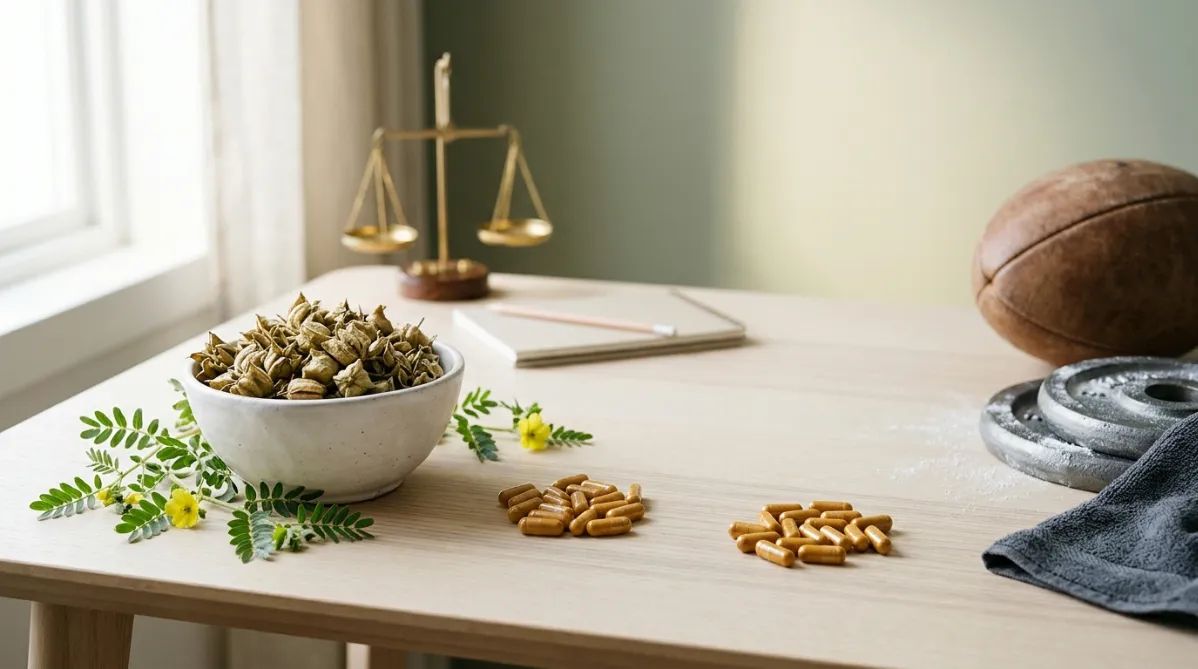
A wide, landscape editorial photograph shot from slightly above, showing a rustic matte-white ceramic bowl of dried tribulus terrestris, spiky star-shaped seed pods in warm tan and khaki tones, with a few fresh green trailing vines and tiny yellow flowers draped beside it. The bowl sits at the left third of the frame on a pale ash-wood table. Scattered nearby are two identical sets of plain, unlabeled amber supplement capsules, one pile slightly apart from the other, hinting at a placebo comparison. To the right, slightly out of focus, a worn leather rugby ball rests next to a chalk-dusted steel barbell plate and a folded charcoal-gray athletic towel.

Soft diffused natural light streams in from a window on the left, creating gentle long shadows and a calm, clean atmosphere. The background is a muted sage-green and cream gradient with a shallow depth of field, leaving generous negative space on the right side for title overlay. A small, minimal notebook with a pencil and a simple balance scale made of brushed brass sits subtly in the midground, suggesting scientific scrutiny without any laboratory clutter.

The color palette is earthy and refined: sage green, sand, warm amber, charcoal, and off-white. The style is modern lifestyle-magazine photography, crisp textures, subtle film grain, and a high-end wellness journal feel. The composition is balanced, uncluttered, and minimalist, with a quiet, thoughtful mood that conveys skepticism and evidence-based inquiry. No text, no logos, no people, no futuristic or sci-fi elements.
science research

Tribulus Terrestris Flopped in Elite Rugby Players: 5-Week Trial

BY DR. GYMBRO ·

Tribulus terrestris is marketed as a natural testosterone booster that builds muscle in under a month. So researchers tested it on elite rugby league players in a double-blind trial. Everyone got stronger and gained fat-free mass, but the placebo group did just as well. The supplement also didn't change the urinary T/E ratio. Here's what the study found, its limits, and where your money is better spent.
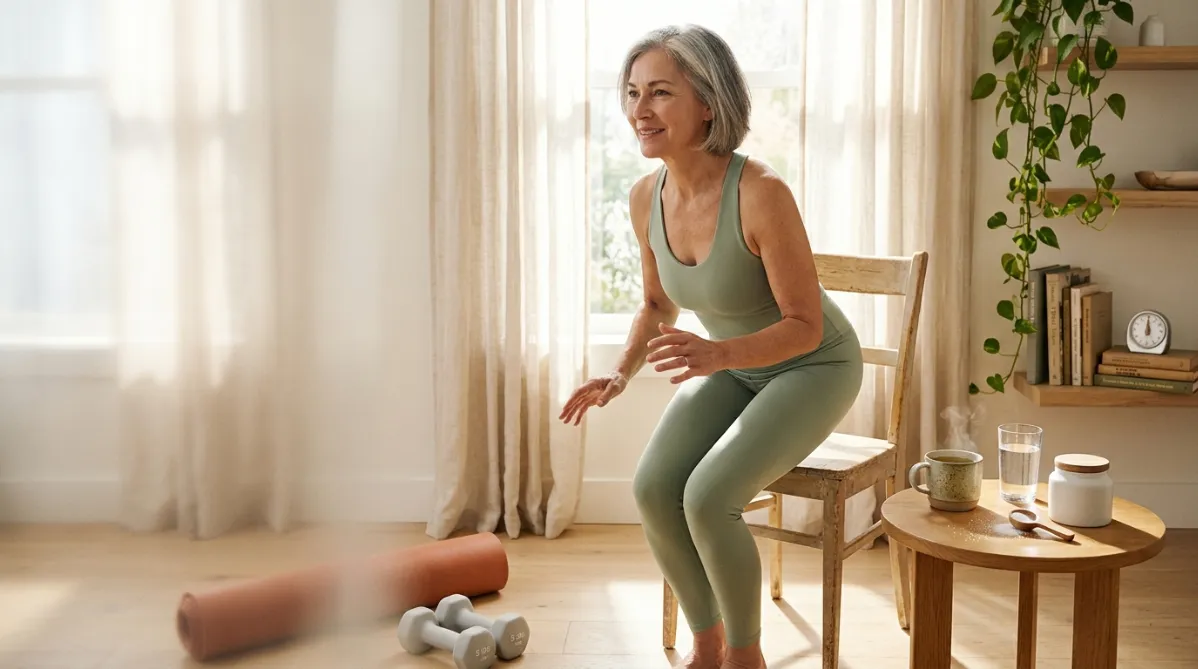
A wide landscape editorial photograph of a bright, airy sunlit living room with pale oak floors and a large window with sheer linen curtains. In the center, a woman in her late 50s with silver-streaked hair, wearing soft sage-green athletic wear, rises from a simple wooden chair, caught mid-motion with a calm, determined expression. Her hands are lightly extended forward for balance. Beside her on a small round oak side table sits a ceramic mug of tea, a glass of water, and a small matte white jar with a wooden scoop resting beside it, a few fine white crystalline grains scattered on the tabletop. In the soft-focus foreground, a pair of light-gray dumbbells and a rolled terracotta-colored yoga mat rest on the floor. A trailing green pothos plant spills from a shelf in the background, with a stack of books and a small analog kitchen timer nearby.

The color palette is warm and muted: cream, sage green, soft terracotta, natural wood, and gentle morning-gold light. Light streams diagonally across the scene, creating long soft shadows and a subtle glow on the woman's shoulders. Shallow depth of field blurs the background gently, while the woman and the table remain crisp. The composition follows the rule of thirds, with the woman on the right and generous negative space on the left, suited for headline overlay. The mood is hopeful, grounded, and modern, like a high-end wellness magazine or a trendy health journal. Natural film-like grain, soft contrast, and a slight matte finish give it a contemporary lifestyle photography feel. There are no futuristic elements, no digital overlays, and no text.
science research

Creatine Helped Women With Bad Knees Stand Up Better. Not Why You Think

BY DR. GYMBRO ·

Creatine is usually pitched at young lifters, but a randomized, double-blind trial tested it in postmenopausal women with knee osteoarthritis. After 12 weeks of leg training, the creatine group's timed-stands score rose from 15.7 to 18.1, while placebo barely moved (15.0 to 15.2). Creatine also improved stiffness, lean mass and quality of life. But pain relief and leg-press max strength were no better than placebo. Here's what the numbers show and who this might actually help.
A wide, editorial-style still life photographed in soft natural window light, set on a pale oak gym bench or light wooden table. In the foreground, a matte ceramic scoop rests in a small mound of fine white creatine powder, with a few loose grains scattered across the surface. Next to it sits a minimalist frosted glass jar with a plain unbranded label. Beside the jar is a clear glass of water with delicate condensation. A pair of worn chalk-dusted hands is out of focus in the background, wrapping a lifting strap around a barbell. The barbell is a brushed steel bar with a few muted sage-green and warm gray bumper plates.

On the right side of the frame, a small stack of three different supplement capsules and tablets in neutral cream, terracotta, and soft blue sits next to a single clean white scoop of powder. This subtly contrasts the "stack" with the "plain" option. A folded linen towel in oatmeal beige drapes over the end of the bench. A small leather-bound notebook lies open, with a simple hand-drawn line graph showing two lines, one rising steadily and one flat, in pencil.

The background is softly blurred and shows a bright, airy, modern home gym with large windows, pale plaster walls, and a few green plants. Warm morning sunlight casts long, gentle shadows diagonally across the scene. The color palette is muted and sophisticated: cream, warm white, sage green, soft terracotta, and charcoal accents. Shallow depth of field with a crisp focus on the powder and scoop. Generous negative space on the left third for headline overlay. The mood is calm, thoughtful, and trustworthy, like a high-end health and science magazine cover, with subtle film grain and natural textures. No text, no logos, no futuristic elements.
nutrition

Creatine Stack Built Muscle in Beginners—But Not Strength. Why?

BY DR. GYMBRO ·

A new randomized trial gave novice lifters a creatine-based supplement blend for four weeks and found more muscle mass, a better testosterone/cortisol pattern, and improved recovery. Yet leg press 1RM improved no more than with placebo. The reasons may include beginner neural gains, a short study window, and early water retention, though the paper can't prove which. Kidney markers stayed normal, but the study was small, men-only, industry-funded, and didn't detail the full formula. For new lifters, the safest evidence-based move is still plain creatine monohydrate.
A modern editorial still life photographed from a slightly elevated angle on a pale, matte stone surface in soft natural window light. On the left, a heaping mound of fine white creatine monohydrate powder spills from a matte ceramic scoop, with a few crisp grains scattered across the surface. In the center, a small, minimalist amber glass capsule bottle sits tipped on its side, with a handful of off-white capsules spilling out. The label is blank and clean. On the right, a neat row of three clear glass lab-style vials rests on a slim oak tray. The vials hold different amounts of white powder: the first nearly empty, the second slightly fuller, the third filled almost to the brim. This quietly suggests the difference in dose and result. Beside the tray lies a simple stainless steel measuring spoon and a folded sheet of cream paper with soft, abstract bar-chart lines in muted sage green and terracotta. The lines are hand-drawn and unlabeled.

Behind the objects, slightly out of focus, a lean athletic forearm in a gray linen sleeve rests on the edge of the surface, one hand loosely holding a matte shaker bottle. This hints at a training context without showing a face. A single sprig of eucalyptus in the corner adds a soft organic touch.

The palette is warm neutral: bone white, oatmeal, soft sage, muted terracotta, and touches of amber. Shadows are gentle and long, with a shallow depth of field that gives creamy bokeh in the background. The mood is calm, clean, and trustworthy, like a premium health and science journal's feature spread, with generous negative space at the top and right for headline overlay. The composition is wide, balanced, and uncluttered, with subtle film-like grain and a natural, true-to-life color grade. No text, no logos, no futuristic elements.
nutrition

Kre-Alkalyn's Label Dose Didn't Lift Muscle Creatine, Biopsies Show

BY DR. GYMBRO ·

Buffered creatine like Kre-Alkalyn promises better absorption, lower doses and less bloating. A double-blind Texas A&M trial put that to the test with actual muscle biopsies in 36 trained lifters over 28 days. At the label dose of 1.5 g/day, muscle creatine barely moved, while monohydrate raised it clearly more. Strength, body composition and side effects showed no advantage for the buffered product. Here is what the numbers show and how to dose creatine instead.
A landscape editorial photograph of a clean, sunlit kitchen-counter or light oak table, shot from slightly above at a gentle angle. Three small matte ceramic bowls in muted sage green, warm sand, and soft white sit in a loose row. Each holds a different fine white powder, and each has a small wooden scoop resting beside it. The middle bowl is slightly closer to the camera and sharper in focus, with a faint dusting of powder spilling onto the surface. In the soft-focus background, a stainless steel shaker bottle and a half-peeled orange sit beside a folded linen napkin, suggesting citrus without being literal. A single lemon wedge sits near the left bowl, and a small dried apricot sits near the right, a subtle visual nod to citrate and pyruvate.

In the background, a blurred athletic scene: a running shoe resting on a wooden bench and a small notebook with a pen, suggesting a training log. Soft diffused morning light enters from the left through a window and casts long, gentle shadows. The palette is warm neutrals, creamy whites, soft greens, and a hint of terracotta orange. The look is a modern wellness magazine with a shallow depth of field, a fine-grain film feel, and generous negative space on the right third of the frame for title text. The mood is calm, trustworthy, and scientific yet approachable, with no text, labels, or logos.
nutrition

Creatine Pyruvate vs Citrate: One Form Kept Force Up Longer

BY DR. GYMBRO ·

Two fancy creatine forms beat placebo in a 28-day trial, but one kept muscle force elevated through all ten all-out intervals while the other faded. Creatine pyruvate raised force in every interval (p < 0.001), whereas creatine citrate's benefit disappeared by the sixth interval. Only pyruvate also improved relaxation velocity and resting oxygen consumption. Before you ditch your tub, there's a major catch: the study had no creatine monohydrate group. Here's what the numbers show, what they can't, and how to choose.
A landscape editorial photograph of a sunlit kitchen table in soft morning light. An older adult's hands, with silver hair and a cream knit sleeve just visible, rest around a ceramic mug. Beside the mug are two small matte white ceramic dishes. One holds a mound of fine white powder, and the other holds a slightly different crystalline white powder. Two wooden spoons lie next to them. A handheld hand-grip dynamometer in muted sage green sits on a linen placemat in the foreground, slightly out of focus. A small open notebook with a pencil and a pair of round tortoiseshell reading glasses sit nearby, with no legible text.

The tabletop is pale oak with a visible grain. Behind it, a window with sheer curtains lets in warm golden light, and the blurred shapes of a trailing green pothos plant and a pale terracotta vase show in the background. The color palette is warm cream, sage green, soft terracotta, and pale wood, with a touch of muted navy from a folded napkin. The mood is calm, thoughtful, and quietly scientific without any laboratory feel.

The composition follows the rule of thirds. The hands and dishes sit in the left-center, and generous negative space on the right is suitable for a title overlay. Shallow depth of field, 50mm lens look, gentle film grain, and soft shadows. Modern lifestyle-magazine and health-journal aesthetic, natural and unstaged, high-end editorial photography.
nutrition

Creatine's Precursor Beat Creatine for Grip Strength in Over-65s

BY DR. GYMBRO ·

A small trial in adults over 65 found that guanidinoacetic acid (GAA), the direct precursor of creatine, improved grip strength more than creatine monohydrate. The catch is that it was an 8-week pilot with just 21 completers, no exercise program, and a confidence interval that barely cleared zero. GAA also showed greater myostatin suppression and BIA-measured gains in muscle-related indices, though those readings may partly reflect hydration. Homocysteine is the safety question to watch, since GAA consumes methyl groups and has raised it in other studies. Here is what the study found, what it can't tell us, and why creatine monohydrate is still the proven default.
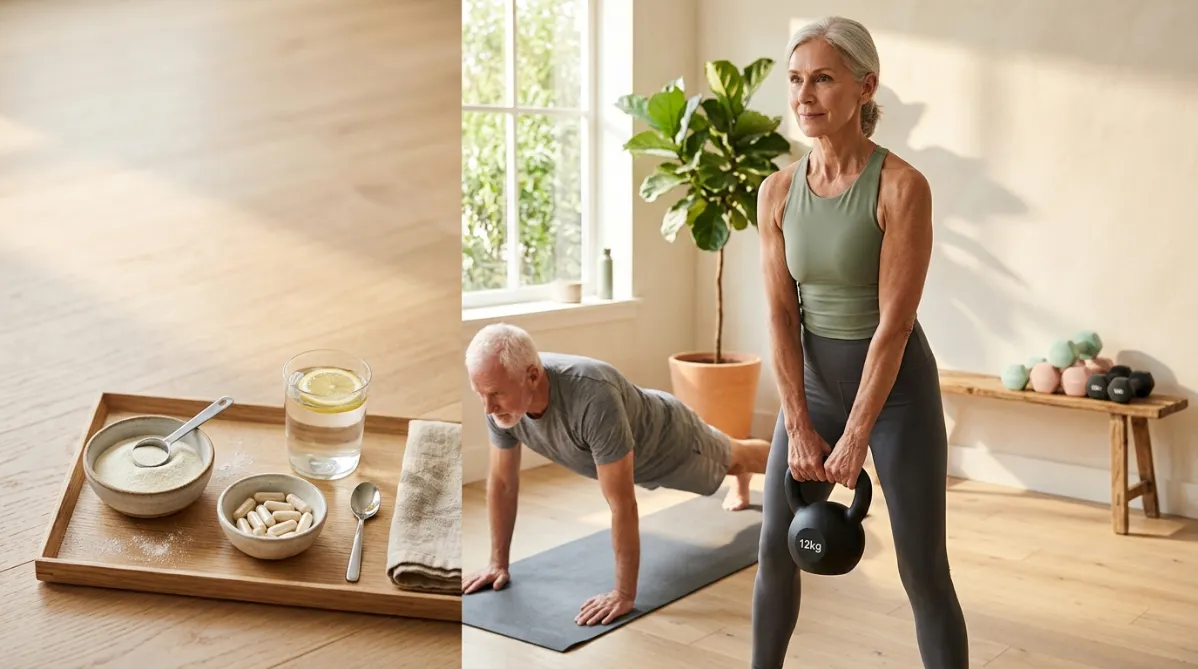
A warm, softly lit modern home gym or sunlit studio, photographed in a clean editorial style. In the center-right of the frame, a silver-haired woman in her mid-60s with a calm, confident expression grips a matte black kettlebell at hip height. She wears a fitted sage-green athletic top and charcoal leggings. Her forearms and shoulders show lean, defined strength rather than bulk. Beside her, slightly out of focus, a man in his late 60s with short white hair and a trim beard performs a controlled bodyweight plank on a pale oak floor.

In the foreground on the left, a minimalist wooden tray holds two small ceramic bowls. One contains fine white powder and the other holds a few cream-colored capsules. Next to them sit a glass of water with a lemon slice and a folded linen towel. A subtle scatter of powder dusts the tray. The foreground is shot with shallow depth of field and a creamy bokeh falloff.

Behind them, tall windows pour in golden morning light, with long soft shadows across the floor. A potted fiddle-leaf fig and a stacked set of pastel-toned dumbbells on a low wooden shelf add texture. The wall is warm off-white plaster with a hint of terracotta in the corner.

The palette is muted and modern: sage green, warm cream, soft terracotta, natural oak, and charcoal, with gentle highlights. The mood is quietly optimistic, focused, and grounded, suggesting strength, vitality, and measured scientific curiosity. The composition leaves clean negative space in the upper-left for a headline overlay. The look is a high-end wellness magazine cover with natural film-like grain, soft contrast, and crisp detail on the hands and kettlebell. There is no text, no logos, and no futuristic elements, only authentic, aspirational realism.
nutrition

Creatine + HMB Made Over-60s Stronger in 6 Weeks, Not Bigger

BY DR. GYMBRO ·

Over-60s on a creatine + HMB stack got stronger in just six weeks, yet the muscle-mass numbers barely moved. This double-blind crossover trial of 30 active older adults found gains in leg, back and arm strength plus upper-body and core endurance. Regression analyses suggested the improvements were largely independent of muscle size, pointing toward a neuromuscular effect. Before you rush to buy, there are real caveats: a short six-week window, a small sample, and body composition measured by BIA. Here's what the study found, what it didn't, and how to read it.
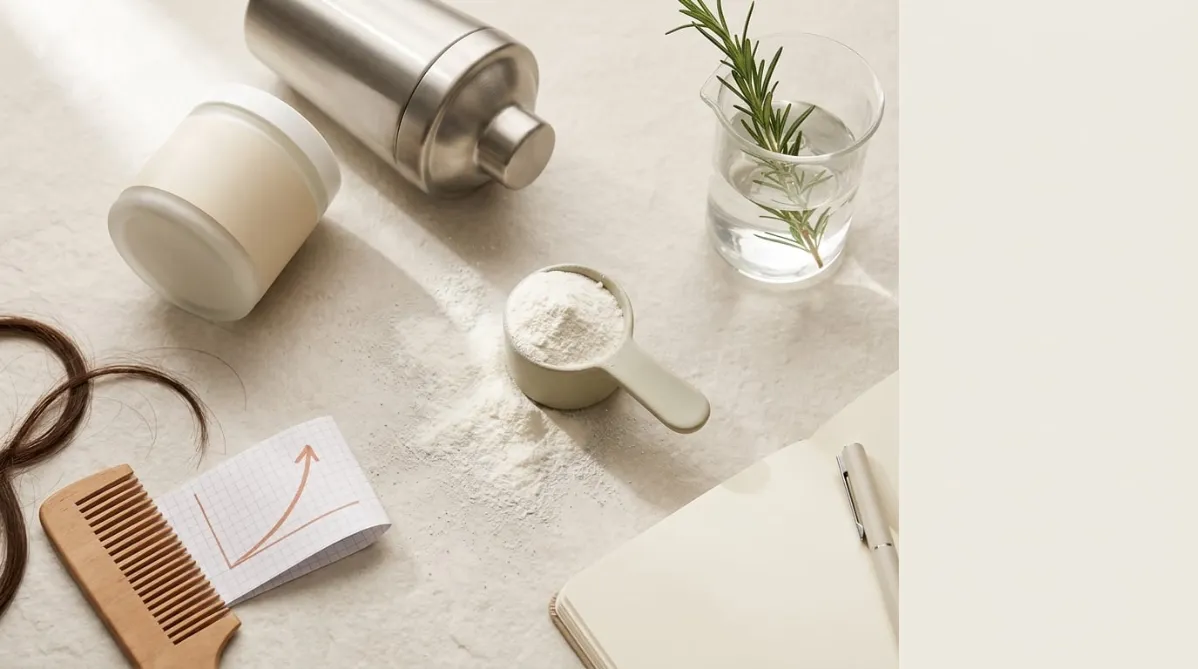
A bright, modern editorial flat-lay photographed from above on a soft off-white stone surface. At the center sits a matte ceramic scoop heaped with fine white creatine powder, with a loose dusting of powder fanning out across the surface. Beside it is a minimalist frosted-glass jar with a plain label and a brushed-steel shaker bottle lying on its side. To the left, a wooden comb and a small folded strip of graph paper with a single hand-drawn upward curve in muted terracotta ink, suggesting a data spike without any text. A few loose strands of dark brown hair curve elegantly across the stone near the comb. To the right, a clean glass beaker filled with water and a sprig of green rosemary, and an open notebook with blank pages and a sleek pen. The palette is warm neutrals: cream, sand, soft sage green, and a single accent of terracotta orange. Natural window light falls from the upper left, casting long, gentle shadows and a subtle diffused glow. The composition leaves generous negative space on the right third for title overlay. Shallow depth of field with crisp focus on the powder scoop, a premium health-and-science magazine look, minimalist, calm, and trendy, with fine grain and soft contrast. Landscape 16:9 framing.
science research

Creatine and Hair Loss: The 56% DHT Spike Explained

BY DR. GYMBRO ·

A 2009 study found that a 7-day creatine load of 25 g/day raised DHT by 56%, with levels still about 40% higher on 5 g/day maintenance, while testosterone stayed flat. Since DHT is linked to male-pattern baldness, the finding fuelled the creatine hair-loss debate. But the trial had just 20 rugby players, lasted three weeks, and never measured hair at all. Later studies haven't consistently reproduced the DHT increase. Here is what the research really shows, who might care, and how to adjust your approach if you're worried.
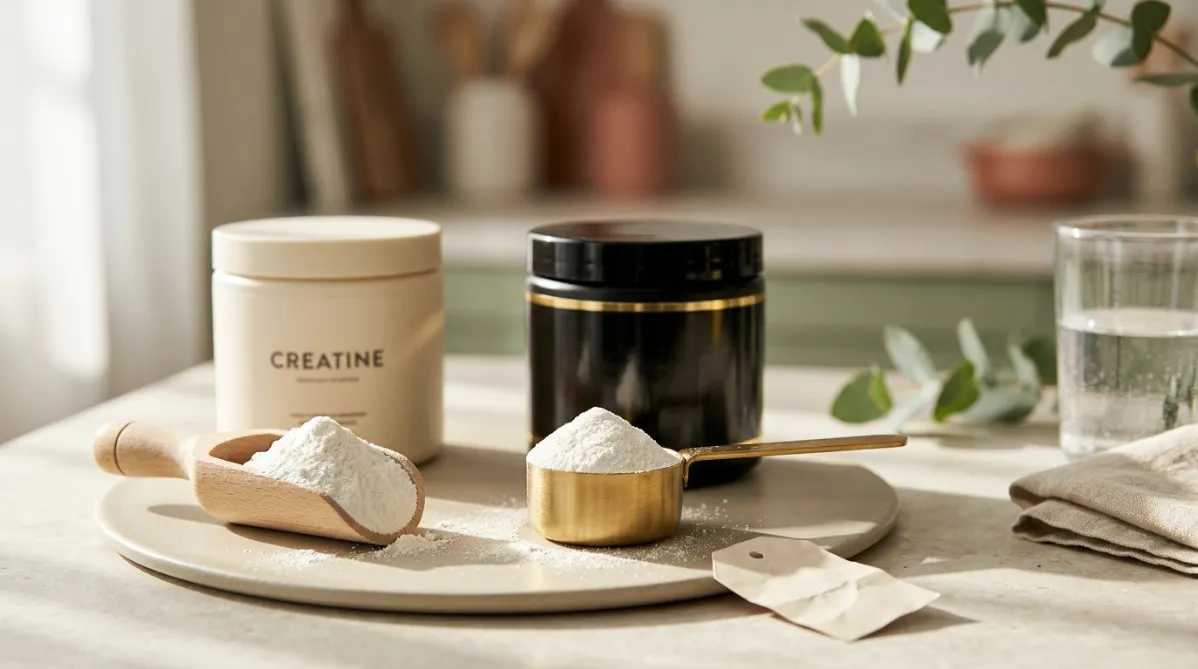
A wide, landscape editorial photograph of a clean, sunlit kitchen counter or pale stone tabletop, styled like a modern wellness magazine spread. Two scoops sit side by side on a matte ceramic surface. The left one is a plain, humble wooden scoop heaped with fine white creatine powder. The right is a glossy, ornate brushed-gold scoop holding the same white powder, which hints at "premium" branding. Behind each scoop stands a tub. The left tub is minimal, matte, and cream-colored with simple sans-serif lettering and no readable words. The right tub is sleek black with metallic gold accents and an overly polished look. A few fine grains of powder are scattered across the surface, catching the light.

The composition uses a shallow depth of field. The foreground scoops are crisp, and the background softly blurs into a warm neutral palette of oatmeal, soft sage green, and muted terracotta. Soft morning window light comes in from the left, casting long, gentle shadows and a subtle highlight along the scoops' edges. A small price tag shape, blank and unmarked, sits near the gold scoop, with a slightly crumpled paper texture to suggest the "pricey" angle without any text. A glass of water with condensation and a folded linen napkin sit at the edge of the frame. A single green sprig or eucalyptus stem adds a natural accent.

The overall mood is calm, intelligent, and quietly skeptical, with the plain option feeling confident and the flashy one a bit overdressed. The color grading is soft and slightly desaturated with creamy highlights, and there is fine film grain. The layout leaves generous negative space on the right third for a headline overlay. It looks like a high-end lifestyle and science journal cover, with a minimalist, tactile, trendy feel and no futuristic or sci-fi elements.
science research

Creatine Ethyl Ester vs Monohydrate: The Pricey Form Lost

BY DR. GYMBRO ·

Supplement makers love to sell "advanced" creatine as better absorbed than the old standby. A 2009 double-blind trial tested creatine ethyl ester against monohydrate and placebo in 30 untrained men over seven weeks of heavy training. CEE produced lower serum creatine and sharply higher serum creatinine, a pattern consistent with it breaking down into waste. Muscle creatine rose in both creatine groups, but strength, power, and body composition did not differ between any groups. The takeaway: skip the premium form and keep it simple.

A wide, editorial-style still life photographed from slightly above on a pale oak surface in soft morning window light. At the center, a small matte white supplement tub with a plain, unlabeled front sits tipped on its side, spilling a modest pile of fine white powder across the wood. Beside it, a wooden scoop rests in the powder, and a few white capsules are scattered in a loose arc. To the left, a clean glass of water catches the light and throws a delicate caustic shadow. To the right, a neatly arranged group of whole foods sits in contrast: two brown eggs, a small wedge of salmon fillet on parchment, a handful of raw almonds, and a sprig of rosemary. A matte black steel dumbbell handle is partly visible at the top edge of the frame, grounding the fitness theme. In the lower foreground, a slim, open linen-bound notebook holds a hand-drawn line graph with a single line trending gently downward, a thin ink pen lying across the page. The palette is muted and warm: cream, soft sage green, pale oak, charcoal accents, and a touch of terracotta from a ceramic dish holding the almonds. Shallow depth of field blurs the background, a softly lit minimalist kitchen counter with a hint of a plant leaf. The mood is calm, thoughtful, and scientific without being clinical, like a cover image for a contemporary health and nutrition journal. Natural shadows, subtle film grain, and generous negative space on the upper left leave room for a headline overlay. Crisp focus on the powder and scoop, with refined, understated composition and no text or logos visible.
nutrition

D-Aspartic Acid Lowered Testosterone at 6 g/Day in Trained Lifters

BY DR. GYMBRO ·

D-aspartic acid is marketed as a natural testosterone booster, but in a controlled trial of 24 resistance-trained men, 6 g/day actually lowered both total and free testosterone. The 3 g dose found on many labels did nothing measurable. A later 3-month trial found no strength or muscle advantage either. Here is what the study found, why trained men may respond differently from sedentary ones, and where your supplement money is better spent.
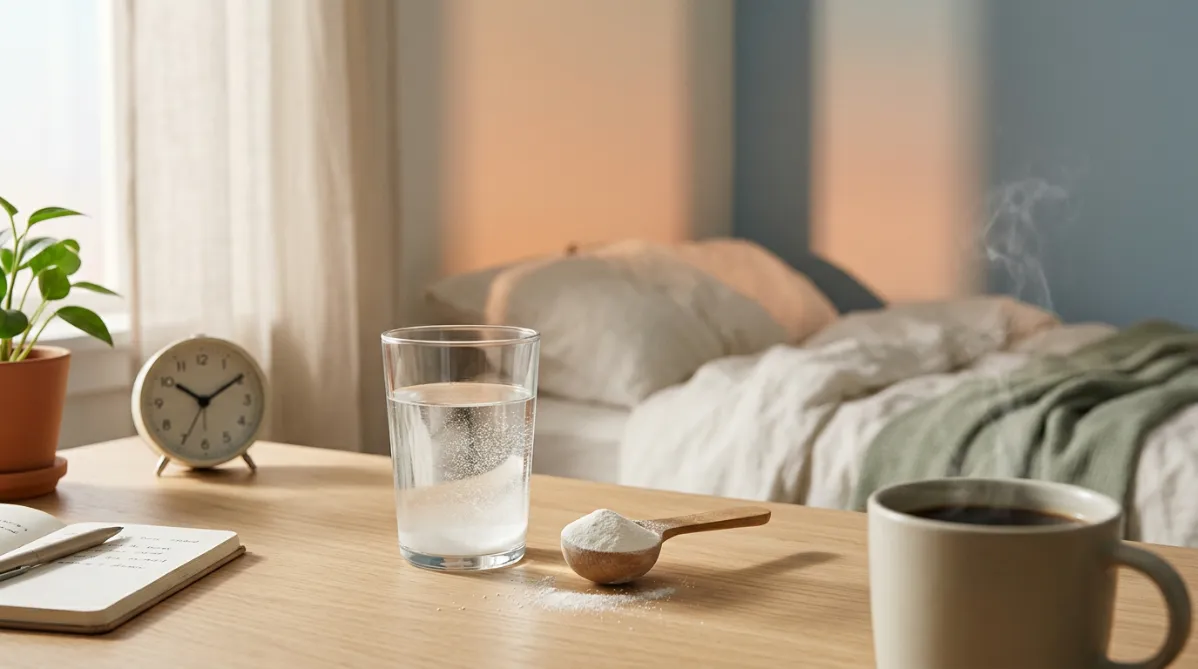
A wide, softly lit morning scene on a pale oak desk beside a window, shot from a slightly elevated three-quarter angle. In the foreground, a clear glass of water is half-filled with dissolved white creatine powder, tiny suspended particles catching the light. A wooden scoop heaped with fine white powder rests beside it, with a few grains scattered across the wood. A matte ceramic mug of black coffee sits slightly out of focus to the right, with a thin curl of steam. Behind them, a rumpled linen-white bed with a muted sage-green throw blanket suggests a sleepless night. Early dawn light spills through sheer curtains and creates long, gentle shadows and a warm peach-and-pale-blue gradient on the wall. On the desk, a minimalist analog alarm clock reads close to 6 a.m., and a small open notebook with a pen lies beside it, its handwriting blurred. A single green plant in a terracotta pot adds a fresh organic touch at the left edge. The color palette is calm and editorial: cream, soft sage, warm oak, dusty peach and muted slate blue. The depth of field is shallow, with crisp focus on the glass and scoop and a creamy bokeh background. The mood is quiet, restorative and contemplative, like a modern wellness magazine or a trendy health journal cover. The composition leaves open negative space in the upper left for title overlay. The image has a natural film-like texture, soft contrast and a clean, minimalist, lifestyle-photography look, with no text, logos or futuristic elements.
nutrition

One 0.35 g/kg Creatine Dose Fought Sleep-Loss Brain Fog in Hours

BY DR. GYMBRO ·

Creatine is the most trusted supplement in the gym, but a 2024 study suggests it may also fight sleep-deprivation brain fog within hours. In the study, a single 0.35 g/kg dose, roughly 25-28 g for most adults, changed brain energy markers, prevented a drop in brain pH and improved cognitive performance and processing speed during 21 hours without sleep. That's about five times a normal 3-5 g daily dose, and the study was small and lab-based. GI upset is a real possibility, and nobody tested repeated mega-dosing. Here's what the research really shows, and why you shouldn't change your daily routine yet.
Creatine Before or After Your Workout? A Small Study Gives Post-Workout the Edge
nutrition

Creatine Before or After Your Workout? A Small Study Gives Post-Workout the Edge

BY DR. GYMBRO ·

Should you take creatine before or after you lift? A 2013 study of 19 male bodybuilders found that post-workout dosing edged out pre-workout on lean mass, fat mass and bench press. But the formal statistical test showed no significant difference between the groups, and the authors relied on a cautious "possibly more beneficial" inference. Here is what the data actually say, why the sample size matters, and how to apply the findings with a simple 5 g daily routine.
A landscape, editorial-style flat lay photographed from above on a pale oak gym bench or a matte light-gray concrete surface. On the left side, a clear glass of water sits next to a small matte white ceramic bowl of fine white creatine powder, with a wooden scoop resting beside it and a few loose grains scattered naturally on the surface. In the center, a modern analog wall-style clock face is replaced by a simple minimalist stopwatch in brushed steel, its hands paused, subtly suggesting timing without any text or numbers emphasized. On the right, a neatly folded charcoal gym towel and a single chalk-dusted dumbbell handle enter the frame at the edge, with a faint dusting of white chalk on the wood. A small linen notebook with a pencil rests slightly off-center, its pages blank, hinting at data and study without any readable writing.

The color palette is soft and restrained: warm cream, oatmeal, sage green, and muted slate, with one accent of terracotta orange in the pencil or a small ceramic dish. Light comes from a large window at the upper left, casting long, gentle diagonal shadows and a soft highlight across the glass of water, creating delicate caustic reflections on the surface. The depth of field is shallow, with the creatine bowl and scoop in crisp focus and the edges softly blurred. The composition leaves generous negative space on the upper right for a headline overlay. The overall feel is calm, clean, and contemporary, like a wellness and science journal's cover image, with natural textures, subtle film grain, and a refined, premium magazine look. No people, no logos, no text, and no futuristic elements.
nutrition

Creatine Before or After Your Workout? A Small Study Gives Post-Workout the Edge

BY DR. GYMBRO ·

Should you take creatine before or after you lift? A 2013 study of 19 male bodybuilders found that post-workout dosing edged out pre-workout on lean mass, fat mass and bench press. But the formal statistical test showed no significant difference between the groups, and the authors relied on a cautious "possibly more beneficial" inference. Here is what the data actually say, why the sample size matters, and how to apply the findings with a simple 5 g daily routine.

This page is available in