Dr. Gymbro
←

#creatine

37 articles
A wide, softly lit editorial still life photographed on a pale oak desk at the blue hour just before dawn. In the center-left foreground, a clear glass of water sits beside a small ceramic dish holding a mound of fine white powder, with a matte wooden scoop resting beside it, a light dusting of powder scattered across the wood grain. Behind them, a minimalist analog alarm clock in muted sage green reads close to 4:00. Next to it is an open linen-bound notebook with a pencil and a few abstract handwritten lines, plus a ceramic mug of black coffee with a thin trail of steam. To the right, a slim laptop is open to a blurred, softly glowing screen with no legible text. A window in the background shows a deep indigo sky turning peach at the horizon, with soft city silhouettes out of focus. Warm light from a small brass desk lamp creates a gentle pool of amber on the desk, contrasting with the cool blue ambient light from the window. The palette is muted and modern: dusty blue, warm cream, soft sage, and a touch of apricot. Shallow depth of field, fine film grain, and generous negative space on the right third for title overlay. The mood is calm, focused, and slightly weary but hopeful, like a contemporary health and science magazine cover. Clean composition, natural textures, subtle shadows, and a high-end lifestyle photography aesthetic.
nutrition

¿Creatina antes de una noche sin dormir? Incluso una dosis menor atenúa el deterioro cognitivo

BY DR. GYMBRO ·

¿Y si una sola cucharada grande de creatina pudiera disminuir la niebla mental que produce una noche sin dormir? Un estudio reciente publicado en *Nutrients* demostró que una dosis única de 0,2 g/kg –aproximadamente 14‑16 g para la mayoría de los adultos– redujo el deterioro en tareas de lógica, números, velocidad del lenguaje y vigilancia durante 21 horas de vigilia, con mejoras de hasta un 12 %. Las mujeres parecieron beneficiarse más. Sin embargo, solo participaron 29 personas, la dosis es varias veces la cantidad diaria habitual y el efecto fue menor que en el ensayo anterior con 0,35 g/kg. Aquí se resume lo que los datos demuestran y lo que no.
A wide, editorial-style still life shot from a slightly elevated angle on a pale oak laboratory-meets-kitchen countertop, bathed in soft, diffused morning window light. In the center, two small matte ceramic bowls sit side by side: one holds fine white creatine powder, the other holds slightly coarser off-white L-arginine crystals. A brushed steel scoop rests beside each. Between and slightly behind them stands a clear glass shaker bottle filled with a cloudy, pale liquid, catching a gentle highlight. In the foreground, a minimalist analog stopwatch lies on the wood surface, its face crisp and legible, next to a folded sheet of off-white paper with a hand-drawn simple bar chart in charcoal pencil, with one tall bar and a few shorter ones, no text or numbers. In the soft-focus background, a blurred gym-style window view shows a pale running track and a muted sage-green hedge, suggesting sprinting and athletic testing without any people. Eighteen small smooth stones or white pills are arranged in a neat loose arc across the lower edge of the frame, a subtle nod to the small sample size, with one stone set slightly apart. The color palette is calm and modern: warm cream, bone white, soft sage, muted terracotta accents from a small clay dish, and thin touches of brushed metal. Shadows are long and gentle, the depth of field shallow, with a fine film-like grain. The composition leaves generous negative space on the left third for a title overlay. The mood is clean, thoughtful, and trustworthy, like a contemporary health and science journal cover, with no futuristic elements, no glowing effects, and no text.
nutrition

Creatina + L‑arginina aumenta ~99 W de potencia máxima: el truco

BY DR. GYMBRO ·

Un ensayo cruzado reciente mostró que, al tomar creatina y L‑arginina juntas una hora antes de la prueba, la potencia máxima del sprint aumentó en unos 99 W respecto al placebo. La combinación también superó a cada suplemento por separado tanto en potencia máxima como en altura del salto con contramovimiento. Sin embargo, los autores no hallaron sinergia real y el estudio incluyó solo a 18 hombres. Aquí analizamos los datos, las dosis empleadas y quién debería ser cauteloso.
A bright, modern editorial still life shot from a slightly elevated angle on a pale warm-gray stone countertop, bathed in soft natural window light with gentle diffused shadows. In the center, a small glass bowl holds a scatter of translucent golden-amber fish oil softgel capsules, a few spilled casually onto the surface and catching the light like tiny glowing beads. Beside the bowl sits a single chrome dumbbell with a matte finish, slightly out of focus, and a neatly folded charcoal gym towel. To the left, a clean arrangement of alternative "better spent" items: a ceramic dish of raw eggs, a wedge of salmon fillet on a wooden board with a sprig of dill, and a small bowl of Greek yogurt with a spoon, all styled with restraint. A minimalist notebook with a thin pen lies at the right edge, with faint, abstract pencil-drawn bar charts and a flat horizontal line suggesting "no effect," legible only as soft shapes with no readable text. The color palette is muted and sophisticated: warm cream, soft sage green, sandy beige, and pops of golden amber from the capsules, with a single accent of coral from the salmon. Shallow depth of field keeps the capsules crisp while the background melts into a creamy blur of a sunlit kitchen with a hint of green plant leaves. The composition leaves generous negative space on the right third for title overlay, in a 16:9 landscape format. The mood is calm, thoughtful, and quietly skeptical, in the style of a contemporary health and science magazine, with a crisp editorial photography look, fine grain, and natural color grading. No people, no futuristic elements, and no text.
science research

¿Aceite de pescado para ganar músculo? 8 estudios dicen que no cuentes con él

BY DR. GYMBRO ·

El aceite de pescado se ha promocionado como un potenciador de la recuperación y el desarrollo muscular, pero un meta‑análisis publicado en *Nutrition* muestra que la evidencia es escasa. Al combinar cuatro ensayos sobre masa libre de grasa y ocho ensayos (22 efectos) sobre fuerza en adultos sanos no obesos, los investigadores no encontraron beneficios claros. La estimación del efecto sobre la fuerza fue prácticamente nula y la de la masa libre de grasa demasiado imprecisa para sacarle conclusiones. La certeza de la evidencia es muy baja, lo que no prueba que el suplemento no tenga efecto, pero tampoco justifica comprar aceite de pescado para ganar músculo. Aquí explicamos qué significan los números y dónde es mejor invertir tu dinero.
A wide, editorial-style photograph of a clean, minimalist kitchen counter in soft morning light, shot from a slightly elevated angle. In the foreground, a matte white ceramic bowl holds a small mound of fine white creatine powder, with a wooden scoop resting beside it and a few loose grains scattered across a pale oak surface. Next to it sits a tall glass of water, catching bright highlights, with a single sprig of mint resting on the rim. Behind them, slightly out of focus, a pair of worn-in running shoes in muted sage and cream sits on a linen towel, hinting at an athletic routine. On the right side of the frame, a small analog stopwatch with a brushed steel finish lies on the counter, its hands frozen mid-sprint. A closed notebook with a thin pencil and a simple pastel-toned puzzle-like grid card suggests cognitive testing without being literal. The color palette is warm neutral: oatmeal, soft sand, sage green, and a pop of coral from a small accent object, such as a ceramic cup. Natural window light streams in from the left, creating long, gentle shadows and a calm, airy atmosphere. Shallow depth of field, crisp textures on the powder and wood grain, and generous negative space in the upper right for headline overlay. The overall mood is clean, contemporary, and wellness-focused, like a modern health and science journal feature.
science research

Una semana de creatina aumentó la potencia del sprint. ¿Y el impulso cerebral? Falta

BY DR. GYMBRO ·

Un ensayo con 40 adultos jóvenes y activos mostró que una semana de carga con creatina elevó la potencia del sprint Wingate en torno al 8 %. La potencia media subió de 526 W a 570 W y la potencia pico de 738 W a 797 W, sin diferencias entre sexos. El tan promocionado beneficio cognitivo no se reflejó en las pruebas Stroop ni Trail, ni siquiera después de un sprint intenso. Los autores sugieren que un efecto de aprendizaje pudo haber ocultado cualquier mejora real en el cerebro. A continuación, el protocolo de 20 g/día durante 7 días y lo que no logró.
A wide, editorial still-life photographed from slightly above on a pale warm-gray stone surface, lit by soft natural window light with gentle long shadows. On the left, a matte white ceramic scoop rests in a small mound of fine white creatine powder. Beside it sits a minimalist frosted glass jar with its lid off. In the center, a clear glass beaker with a few ounces of water catches the light, with soft caustic reflections across the stone. On the right, a neat row of fifteen small, identical pale sage-green ceramic tokens sits in a precise grid of three rows of five. Twelve are sage green and three are a muted terracotta, hinting at sample size and the "catch" without any text. Scattered at the edge of the frame are a few loose powder grains, a sprig of dried eucalyptus, and a slim brushed-brass pen lying across a blank cream notecard with faint, abstract pencil-drawn bar graph lines, unreadable and softly out of focus.

The palette is calm and modern: bone white, warm stone, sage, dusty terracotta, and subtle brass accents. The background fades into a creamy, softly blurred neutral tone with shallow depth of field, so the foreground tokens and powder are crisp. The composition follows the rule of thirds, with generous negative space on the upper right for a headline overlay. The mood is clean, thoughtful, and scientific without being clinical, like a contemporary health and science journal feature. The image is high-resolution and has subtle film-like grain, with no people, no text, no lab equipment clichés, and no futuristic elements.
science research

Creatina y recuento de espermatozoides: el primer ensayo humano con 15 hombres y sus limitaciones

BY DR. GYMBRO ·

La creatina está empezando a salir del gimnasio y se ha puesto bajo la lupa de la fertilidad masculina. Un estudio piloto de ocho semanas mostró que el 60 % de los hombres que recibieron creatina aumentaron su concentración de espermatozoides, frente al 20 % de los que recibieron placebo, y que el contenido de creatina en el semen creció un 35,8 % en el grupo que combinó creatina con ubiquinol. No obstante, la muestra fue de solo 15 participantes y el incremento medio (7,4 millones /ml) no alcanzó significación estadística. Además, el autor principal declara intereses financieros con la industria de la creatina. A continuación se analizan los datos, sus limitaciones y qué conclusiones pueden extraerse.
A wide editorial photograph of a lone runner captured mid-stride in the final stretch of a sunlit outdoor track, shot from a low angle with a shallow depth of field. The runner wears a fitted charcoal singlet and sage-green shorts. Their face is tense with effort, and their stride is long and powerful as they lean toward the finish line. Soft golden-hour light rakes across the scene and creates long shadows on the terracotta-red track. A faint haze of warm dust hangs in the air behind them.

In the lower left foreground, slightly out of focus, a minimalist still life sits on the edge of the track. A matte white scoop rests beside a small pile of fine white powder on a pale linen cloth. Next to it are a small amber glass jar and a ceramic cup of water. The objects are arranged with restraint, like a modern wellness magazine layout. They hint at supplements without any branding or text.

The background is a gentle blur of white lane lines, distant green trees, and a pale peach and cream sky. The color palette is warm and muted: terracotta, sand, sage, soft cream, and touches of deep charcoal. The mood is calm and focused, with a sense of restrained power and a decisive moment. The composition follows the rule of thirds. The runner sits on the right third, the still life anchors the lower left, and generous negative space in the upper left leaves room for a headline overlay.

The style is contemporary, clean, and slightly cinematic, like a high-end sports and science journal. It has fine film grain, natural color grading, crisp detail on the athlete, and creamy bokeh elsewhere. There is no text, no logos, no futuristic elements, and no digital interfaces. The scene is purely natural and tactile.
supplements

La creatina y la beta‑alanina no aumentarán el VO2max, pero pueden mejorar los sprints

BY DR. GYMBRO ·

Una revisión de 2026 en Translational Sports Medicine analiza a fondo la creatina y la beta‑alanina en atletas de resistencia. Concluye que ninguno es una forma fiable de elevar el VO2max, el umbral de lactato ni el tiempo hasta el agotamiento. Ambos pueden ser útiles en los momentos decisivos de una carrera, como acelerones, subidas y sprints finales. El aumento de peso que produce la creatina puede ser una desventaja importante para los corredores. A continuación, se muestra la evidencia, sus limitaciones y las dosis habituales que utilizan los atletas.
A calm, modern editorial still life shot from a slightly elevated angle on a pale oak tabletop, bathed in soft natural window light from the left. At center sits a clear glass of water beside a small matte ceramic bowl holding a mound of fine white creatine powder, with a wooden scoop resting next to it and a few loose grains dusted across the surface. To the right, a neatly arranged printed lab report on cream paper, with blurred rows of numbers and a single line highlighted in soft coral pink marker, partially overlapped by a minimalist silver pen. A folded pair of thin-framed glasses sits at the edge of the paper. In the foreground, a small glass vial with a pale amber liquid sample and a second empty vial stand upright, suggesting blood and urine testing, with gentle refraction and soft caustic light on the wood. Behind them, a sprig of eucalyptus in a small stone vase adds a touch of green. The background is a softly blurred, warm off-white wall with a gentle gradient shadow and a hint of a window frame. The palette is muted and refined: warm creams, sage green, soft coral, pale amber, and light oak, with crisp whites in the powder. Shallow depth of field, with the powder bowl and highlighted lab line in sharp focus and the edges falling away into creamy blur. Generous negative space on the right third of the composition for text overlay. The overall feel is clean, trendy health-journal photography, tactile and editorial, with subtle film-like grain, natural shadows, and a quiet, reassuring mood. No people, no text legible, no futuristic elements.
supplements

La creatina elevó los marcadores renales en 26 ensayos. Probablemente no hay daño

BY DR. GYMBRO ·

Empiezas a tomar creatina, te haces los análisis de sangre y la creatinina está elevada mientras tu eGFR parece peor. Un meta‑análisis de 2026 que incluyó 26 ensayos aleatorizados (1 036 participantes) encontró exactamente eso: la creatinina subió 0,14 mg/dL y la tasa de filtración glomerular estimada basada en creatinina cayó alrededor de 10,75 mL/min. Sin embargo, cuando la filtración renal se midió con Cr‑EDTA, esa disminución no se observó y la urea, la albuminuria y la proteinuria permanecieron sin cambios. Aquí explicamos por qué ese número de laboratorio puede inducir a error, qué decirle a tu médico y quién debería consultar primero a un nefrólogo.
A landscape editorial still life on a pale oatmeal-colored linen surface, photographed in soft morning window light with long, gentle shadows. On the left, a small matte ceramic bowl holds fine white creatine powder, with a wooden measuring spoon resting beside it, a few grains scattered across the fabric. Next to it sits a minimalist amber glass supplement jar with a plain cream label and no readable text, its lid set beside it. In the center, a rumpled white cotton pillow and a loosely folded sage-green blanket suggest a night without sleep. On top rests a vintage brass alarm clock with its hands at a pre-dawn hour. To the right, a thin glass of water and a ceramic mug of black coffee send up a faint curl of steam, backed by a half-drawn sheer curtain that lets in pale blue-gray dawn light with a warm peach glow at the horizon.

Along the back edge, a few delicate botanical stems of dried eucalyptus and a small sprig of green leaves add organic texture. Nearby lies an open notebook with abstract hand-drawn graph lines, a simple line chart with two diverging curves, and a pencil. The notebook symbolizes the study's mixed findings, one line rising and the other flat, without any legible words or numbers.

The palette is muted and modern: warm cream, soft sage, dusty terracotta, muted amber, and cool dawn blue. The composition follows the rule of thirds, with generous negative space on the upper right for headline overlay. The shallow depth of field blurs the background into a creamy bokeh. The mood is quiet, contemplative, and slightly tired but hopeful, like a trendy wellness and science journal cover with a refined, tactile, natural feel. High-resolution photography with subtle film grain, no people, no text, and no futuristic elements.
science research

Creatina + GAA después de una noche sin dormir: ¿Impulso cerebral o espejismo?

BY DR. GYMBRO ·

Un pequeño ensayo aleatorio descubrió que un suplemento de creatina‑GAA incrementó la saturación de oxígeno en la corteza frontal y temporal después de 24 horas de privación de sueño. El detalle: la atención, el tiempo de reacción y la precisión no mejoraron de forma medible. Con solo 22 participantes distribuidos en cuatro grupos, los tamaños de efecto tan elevados deben leerse con cautela. Este análisis explica qué es la GAA, qué demostró y qué no mostró el estudio, y por qué los trabajadores por turnos, estudiantes y atletas deben considerarlo una pista temprana de investigación, no una solución probada.
A wide, landscape editorial photograph of a clean, sunlit kitchen countertop in soft morning light. Two matching matte ceramic bowls sit side by side on a pale oak wood surface. One holds fine, bright white creatine powder, the other holds an almost identical powder, with a small stainless steel scoop resting in each. Between them sits a simple glass of water with gentle ripples and a thin wooden stirring spoon. In the soft-focus background, a minimalist amber glass supplement jar with a plain cream label and a sleek matte-white tub with a pastel sage-green lid stand slightly out of focus, suggesting a budget option and a premium option without any readable branding. A small, neatly folded linen napkin in warm oatmeal tones and a sprig of eucalyptus in a tiny stoneware vase add a calm, modern touch.

A few grains of powder are scattered naturally across the wood, catching the light. The color palette is warm neutrals with soft sage green, cream, and muted terracotta accents. The composition uses a shallow depth of field, a slightly elevated three-quarter angle, and generous negative space on the right side for title overlay. The lighting is natural window light from the left, creating long, gentle shadows and a subtle glow on the powder. The overall mood is calm, trustworthy, and thoughtful, like a contemporary health and wellness magazine or a minimalist lifestyle journal. High-resolution, crisp textures, film-like color grading, subtle grain, and a balanced, symmetrical sense of comparison between the two bowls.
nutrition

Esta creatina 'de mejor absorción' queda a la par del monohidrato tradicional

BY DR. GYMBRO ·

El mercado premium de creatina se sustenta en promesas de mayor absorción y menor irritación estomacal, pero el monohidrato simple cuenta con un historial de investigación amplio y un precio bajo. Un nuevo ensayo aleatorizado, doble ciego y cruzado evaluó el producto más reciente, OptiCreatine, frente al monohidrato en 17 jóvenes adultos sanos. Tras una única dosis de 5 g, las curvas de creatina en sangre, los niveles pico, el tiempo y los síntomas gastrointestinales fueron estadísticamente similares. Aquí explicamos en términos simples lo que eso significa, lo que el estudio no puede decirte y cómo comprar con cabeza.
A wide, editorial-style photograph of a soccer pitch at golden hour, shot from a low angle at the edge of the touchline. In the foreground, a pair of worn leather cleats sits beside a small, matte white scoop and a minimalist ceramic jar of fine white powder resting on the dewy grass. A few loose grains of powder dust the blades of grass and catch the warm light. The jar is unbranded, with a clean, modern look.

In the midground, slightly out of focus, a lone player in a plain charcoal training kit stands mid-stride on the pitch, caught in a sprint. The motion blur in the legs suggests speed, and long shadows stretch across the freshly mowed stripes of the turf. A soccer ball rests a few meters ahead of the player.

Behind them, the stadium stands curve softly into the distance, rendered in a hazy, muted gradient of peach, soft amber, and pale blue sky. The mowing pattern on the grass forms clean diagonal lines that lead the eye toward the horizon. A thin white chalk line cuts across the frame, adding a subtle graphic element.

The palette is warm and restrained: sage and deep green grass, cream white, soft apricot light, and touches of charcoal. The mood is calm, thoughtful, and slightly skeptical rather than hyped, like a magazine feature on sports science. Shallow depth of field with a creamy bokeh background, fine film grain, and gentle natural contrast. The composition follows the rule of thirds, with the jar and cleats in the lower left and open negative space in the upper right, which leaves room for a headline overlay. The look is contemporary and clean, like a premium health and performance journal.
nutrition

Creatina para el fútbol: 41 estudios, una verdad incómoda sobre los sprints

BY DR. GYMBRO ·

La creatina está en todas partes, y las exigencias de sprint del fútbol la hacen parecer el complemento perfecto. Una nueva revisión sistemática de 41 estudios únicos puso a prueba esa idea y dio un veredicto más cauteloso que el marketing. Algunos ensayos mostraron beneficios en sprints repetidos, potencia anaeróbica y fuerza, pero la evidencia es inconsistente y de muy baja certeza. Las afirmaciones de recuperación recibieron poco apoyo, y la masa corporal a menudo aumentó sin ganancias claras de masa magra. Aquí tienes lo esencial, quién podría beneficiarse y quién debería pensarlo dos veces.

A wide, editorial-style still life photographed on a pale warm-gray concrete surface in soft, diffused morning window light. On the left side, a tall clear glass filled with deep magenta-crimson beetroot juice sits beside two halved raw beetroots, their concentric rings of vivid fuchsia and purple clearly visible, with a few small green-and-red-veined leaves draped casually nearby. On the right side, a matching clear glass of cloudy white creatine solution rests next to a small matte ceramic bowl heaped with fine white powder and a minimal wooden scoop, a light dusting of powder scattered across the surface. In the center, between the two sides, a simple matte black barbell grip and a single chalk-dusted weight plate edge rise into the frame at a low angle, hinting at lifting without showing a person. The composition is split in a balanced, symmetrical way, with a subtle vertical shadow line dividing the saturated magenta tones on the left from cool, neutral whites and creams on the right. The background is softly blurred with a muted sage-green and oatmeal-toned wall, with plenty of negative space at the top for a headline overlay. Shallow depth of field, crisp focus on the glasses' condensation droplets and the textured beetroot flesh. The color palette is limited and refined: magenta, cream, charcoal, and soft sage. The mood is clean, modern, and health-journal chic, like a contemporary wellness magazine cover, with natural shadows, a tactile matte finish, and subtle film-like grain. No text, no logos, no futuristic elements.
nutrition

Jugo de remolacha vs creatina: ¿Quién gana en el levantamiento en 72 horas?

BY DR. GYMBRO ·

Un nuevo ensayo aleatorizado cruzado comparó jugo de remolacha con creatina durante unas 72 horas en levantadores novatos. La creatina mejoró el número de repeticiones en press de banca al 80 % de 1RM, mientras que el jugo de remolacha sobresalió en velocidad de barra, oxigenación muscular, frecuencia cardíaca máxima y recuperación medida por HRV. El resumen no indica dosis ni horarios de ingesta, por lo que señalamos lo que falta. Aquí tienes la tabla de resultados y quién podría elegir cada suplemento.
A wide, editorial-style photograph of a female athlete captured mid-jump in a bright, minimalist indoor training space with pale concrete floors and tall frosted windows that let in soft diffused morning light. She is frozen at the peak of a countermovement jump, knees tucked slightly, arms swinging upward, wearing a fitted sage-green training top and charcoal shorts. Her shadow stretches long on the floor below her, which emphasizes the height of the leap.

In the foreground at the lower left, a clean arrangement of supplement items sits on a light oak wooden plyo box: several matte, unlabeled ceramic jars and small amber glass bottles in cream, terracotta, and muted olive tones. Loose white powder is spilled in a soft arc beside a wooden scoop. A few capsules and a small pile of pale yellow beet-colored crystals add texture. Beside them are a folded linen towel and a stainless steel shaker bottle. The items are slightly out of focus, which creates shallow depth of field and leads the eye toward the athlete in the mid-ground.

The color palette is warm and modern: creamy off-white, soft sand, sage green, and subtle terracotta accents, with gentle natural shadows. The background is a clean, slightly blurred wall with a thin horizontal line of light, which suggests a measuring-stick rhythm without literal numbers. Fine particles of chalk dust hang in the air around her feet, lit by a shaft of sunlight.

The composition follows the rule of thirds, with the athlete on the right third and open negative space on the upper left, suitable for headline overlay. The style is contemporary lifestyle and sports-science journal photography, with a crisp, high-resolution, soft-contrast, matte finish and a subtle film-like grain. The mood is calm, premium, and trustworthy, in the spirit of a modern health and performance publication.
science research

Los mejores suplementos para la altura del salto y la potencia: la sorpresa del HMB y la betaína

BY DR. GYMBRO ·

Un meta‑análisis de red bayesiano que reunió 119 ensayos encontró que el HMB lidera la potencia máxima y la betaína la altura del salto con contramovimiento, mientras que la creatina sigue siendo una opción sólida. Los resultados son intrigantes, pero la evidencia es, en su mayoría, de baja certeza. El mayor aumento reportado, +6,81 cm con hierro, proviene de un solo estudio. En resumen, HMB y betaína merecen atención, aunque la creatina no pierde protagonismo.
A softly lit, airy home gym corner in warm morning light, photographed in a modern editorial style. In the foreground on a pale oak wooden bench sits a small matte ceramic bowl of fine white creatine powder, with a stainless steel measuring scoop resting beside it, leveled and slightly dusted. Next to it is a tall glass of water with a lemon slice, condensation beading on the surface. In the middle ground, a woman in her late 50s with silver-streaked hair tied loosely back, wearing a sage green athletic top and charcoal leggings, is mid-motion lifting a brushed steel dumbbell in a controlled shoulder press. She looks calm and focused, with a faint smile. Her posture is strong and natural. Behind her, a tidy rack holds dumbbells in muted tones, and a rolled terracotta yoga mat leans against a cream plaster wall. A large window on the left pours diffused golden sunlight across the floor, casting long soft shadows. A leafy fiddle-leaf fig and a trailing pothos add organic green accents. A small linen notebook and a pen sit on the bench, hinting at tracking progress. The palette is warm neutrals with sage, terracotta, soft cream, and touches of brushed metal. Shallow depth of field keeps the powder and scoop crisp, with the woman slightly softened behind. Composition follows the rule of thirds, with the powder bowl in the lower left and the woman on the right, leaving breathing room at the top for a headline overlay. The mood is empowering, grounded, and quietly scientific, like a contemporary wellness magazine cover with natural film-like grain and gentle contrast.
science research

Creatina después de la menopausia: la trampa de la dosis detrás de los beneficios

BY DR. GYMBRO ·

Un meta‑análisis de 2026 que incluye siete ensayos aleatorizados y 608 mujeres posmenopáusicas muestra que la creatina puede ser útil, pero solo bajo las condiciones adecuadas. Tomar 5 g al día o más junto con entrenamiento de fuerza aumentó la masa magra en 0,37 kg y el 1RM de prensa de piernas en 7,5 kg. Dosis de 3 g al día o menos sin entrenamiento no produjeron efecto medible. La densidad ósea no cambió y los efectos secundarios fueron comparables al placebo. Aquí explicamos qué significa esta trampa de la dosis para mujeres después de la menopausia.
A calm, sunlit bedroom scene in soft editorial photography style, shot in landscape format. In the foreground, a rumpled bed with crisp oatmeal-colored linen sheets and a cream waffle-knit blanket, morning light spilling across it through sheer curtains. On a light oak nightstand sits a clear glass of water beside a small ceramic bowl holding a loose scoop of fine white powder, a wooden spoon resting next to it. A minimalist fabric wristband in muted sage green lies casually on the nightstand, suggesting sleep tracking without any screens or glowing displays. A slim open notebook with a pencil rests beside it, hinting at research and reflection. A potted olive branch in a terracotta vase adds an organic touch. The wall behind is warm off-white plaster with soft, gently shifting shadows of leaves. Color palette: warm sand, muted sage, soft blush, creamy white, and touches of terracotta. The mood is quiet, restorative, and thoughtful, like a modern wellness journal feature. Shallow depth of field, a soft film-like grain, natural diffused light, and generous negative space on the right side of the frame for title overlay. The composition is balanced and uncluttered, with a gentle golden-hour glow. The style is contemporary lifestyle editorial, tactile and understated, with no text, no people's faces, and no futuristic elements.
science research

La creatina no aceleró los cerebros perimenopáusicos; el sueño, otra historia

BY DR. GYMBRO ·

Se esperaba que la creatina agudizara la función cognitiva en mujeres perimenopáusicas, pero la prueba principal de velocidad de pensamiento no mostró ninguna ventaja. En cambio, un pequeño estudio exploratorio con 51 participantes detectó una mayor oxigenación prefrontal, una mejora de 7,4 puntos en la consistencia del sueño en la semana 6 y menos días con sensibilidad a la temperatura. Todos, incluido el grupo placebo, mejoraron su velocidad en la tarea Stroop. A continuación se describen el diseño del estudio, la dosificación, sus limitaciones y los vínculos de los autores con la creatina y WHOOP, para que puedas valorar el peso de los hallazgos.
A wide editorial still life on a pale warm-gray stone countertop, lit by soft natural window light from the left. In the center, two small matte ceramic bowls sit side by side. One holds fine white creatine powder, and the other holds a slightly coarser, creamy off-white crystalline powder. Between them, a delicate brass measuring spoon rests at a slight angle, dusted with a few grains. Behind the bowls, a shallow glass dish holds a handful of whole food ingredients that suggest gut health: fermented sauerkraut, a few sprigs of fresh thyme, sliced radishes, and a small cluster of green olives. Their colors are soft and natural. To the right, a minimalist wooden mouse running wheel stands out of focus as a quiet visual nod to the exercise study. Beside it, a small, slim dumbbell in muted sage green rests on the counter. A folded linen napkin in oatmeal tone and a single glass beaker with clear water add a subtle lab-meets-kitchen feel without looking clinical. The palette is calm and modern: sage green, terracotta, cream, soft sand, and touches of warm brass. Shadows are gentle and elongated, with a shallow depth of field that keeps the powders crisp and the background creamy. The composition leaves generous negative space on the right third for title text. The overall mood is clean, thoughtful, and trendy, like a contemporary wellness and science magazine, with fine film-like grain, natural textures, and a refined editorial look.
science research

Compuesto de microbios intestinales PAS supera a la creatina en ratones — pero hay una trampa

BY DR. GYMBRO ·

Un nuevo estudio en ratones indica que dos moléculas derivadas de la microbiota intestinal, el ácido pipecólico y el succinato (PAS), superaron a la creatina monohidrato en fuerza de agarre y potencia muscular tras siete semanas de carrera con rueda con peso. La sorpresa es que ninguno de los compuestos aumentó la masa muscular ni el tamaño de las fibras, de modo que la ventaja se dio en la función, no en el tamaño. Ambos suplementos mejoraron el rendimiento de carrera frente al control. Sin embargo, se trata de investigación exploratoria solo en ratones, sin datos de dosis o seguridad en humanos.
A wide, softly lit editorial photograph of a modern minimalist gym corner, shot at golden hour with warm light streaming through large frosted windows. In the foreground, a matte white scoop of fine creatine powder rests on a pale oak bench beside a clear glass shaker bottle half-filled with water. A small pile of loose white powder dusts the wood surface. Just behind them, a matte black barbell loaded with charcoal bumper plates rests on a squat rack, slightly out of focus, with chalk dust floating in the sunbeams.

On the bench, a simple analog wall-style clock or a sleek minimalist wristwatch lies face up, hinting at timing without being the main focus. Next to it sits a slim open notebook with a pencil and a few hand-drawn tally marks and neat columns, suggesting tracked training data. A folded sage-green towel sits at the edge of the frame.

The color palette is calm and sophisticated: cream, warm oak, soft sage green, charcoal, and a touch of terracotta. The shallow depth of field gives creamy bokeh in the background, where the soft silhouette of a lifter in neutral athletic wear chalks their hands near the rack, rendered anonymously and without a visible face.

The composition follows a rule-of-thirds layout, with the powder and shaker in the lower left third and open negative space on the right, suitable for headline overlay. The mood is clean, focused, and quietly motivated, like a premium health and science journal feature. The lighting is natural and diffused, with gentle shadows, subtle film grain, and true-to-life textures. Shot on a 50mm lens at f/2, with crisp detail on the powder and a high-end lifestyle magazine finish.
nutrition

La Creatina Tomada Antes del Entrenamiento Superó la Prueba de Temporización—Pero Hay una Trampa

BY DR. GYMBRO ·

¿Importa el momento en que tomas creatina? Un pequeño estudio piloto aleatorizado publicado en *Nutrients* sugiere que ingerirla justo antes de entrenar podría mejorar la carga total levantada en press de banca y sentadilla trasera. No se observó ninguna diferencia en salto, estado de ánimo, cognición o dolor muscular. Sin embargo, el ensayo contó con solo 11 hombres y una única dosis, por lo que los autores lo describen como exploratorio. Aquí tienes la dosis exacta, los datos y quién debería ser cauteloso.
A softly lit, minimalist strength-training studio photographed in a modern editorial style. In the foreground, a matte black barbell loaded with weight plates rests on a light oak platform, with fine chalk dust floating in warm morning light. Beside it on a pale concrete bench sits a simple ceramic scoop of white creatine powder, with a small spill of fine crystals catching the light, next to a minimal frosted glass jar with no label. A matte sage-green shaker bottle and a folded cream towel sit nearby. In the soft-focus background, tall windows let in diffused golden sunlight, casting long, gentle shadows across the floor. A rack of neatly arranged dumbbells is blurred in muted charcoal tones.

The color palette is calm and sophisticated: warm off-white, sand, sage green, soft charcoal, and touches of terracotta. A small open notebook with a pencil lies on the bench, suggesting research and data tracking, with abstract hand-drawn bar graph lines faintly visible on the page but not legible. The composition follows the rule of thirds, with the barbell and powder on the left and generous negative space on the right for headline text. Shallow depth of field, crisp textures on the metal knurling and powder grains, subtle film grain, and a contemporary wellness-magazine look. Clean, airy, and editorial, with a grounded, scientific yet approachable mood. Landscape 16:9 composition.
science research

Creatina y entrenamiento de fuerza: mayores ganancias sin que la dosificación importe

BY DR. GYMBRO ·

Un meta‑análisis de 63 estudios con 1.489 participantes evaluó el efecto de la creatina en el entrenamiento con pesas. El aumento de fuerza fue moderado y consistente tanto en la parte superior como inferior del cuerpo, mientras que la ganancia de masa magra fue menor y la grasa corporal no cambió de forma significativa. Sorprendentemente, la estrategia de dosificación, la cantidad diaria y el protocolo no influyeron significativamente en los resultados. La edad surgió como la única pista exploratoria, mostrando efectos mayores en participantes más jóvenes.
A wide, softly lit editorial still life on a warm, pale oat-colored surface. At the left, a lower leg and foot rest on a folded cream linen towel, wrapped in a matte white fiberglass cast with a subtle texture and a few faint pen scribbles near the ankle. The skin tone is natural and the lighting is gentle. At the center-right, a small ceramic bowl holds fine white creatine powder, with a matte wooden scoop resting beside it and a dusting of powder on the surface. Next to the bowl is a clear glass of water with light refracting through it, casting soft caustic ripples on the table. This hints at the water-retention idea without being literal.

In the background on the right, slightly out of focus, a pair of light grey resistance bands and a small sage-green dumbbell sit on a wooden stool, suggesting rehab. A tall, leafy plant in a terracotta pot adds organic greenery at the edge of the frame. Morning sunlight streams from a window on the left and creates long, soft shadows and a warm golden-peach glow. The palette is cream, sage green, terracotta, soft sky-blue shadows, and touches of natural wood. The composition has generous negative space in the upper left for a title overlay. Shallow depth of field, shot as if with an 85mm lens, with fine film grain. The look is clean, calm, modern wellness-magazine photography with a minimalist, tactile, trendy feel.
recovery

La creatina en un yeso no protege el músculo de forma clara, pero sí en la fase de rehabilitación

BY DR. GYMBRO ·

Muchos se preguntan si la creatina puede proteger el músculo cuando una lesión obliga a inmovilizarse en un yeso. Una revisión sistemática reciente, que incluye seis ensayos controlados aleatorios con 118 jóvenes y entre una y dos semanas de inmovilización, indica que la evidencia durante la fase de inmovilización es mixta y que los aparentes beneficios en masa magra podrían deberse simplemente a una mayor retención de agua. La señal más interesante surge en la fase de rehabilitación, donde dos estudios observaron mayores incrementos en el tamaño del cuádriceps, la potencia y la fuerza en los sujetos que recibieron creatina. A continuación, los datos concretos, sus limitaciones y a quiénes podría interesar probarla.
A wide, softly lit editorial still life on a pale oatmeal-colored linen surface. In the center sits a small matte ceramic bowl of fine white creatine powder, with a wooden scoop resting beside it and a few loose pale crystals scattered across the linen. Around the bowl, a fresh plant-based spread is arranged in an organic, uncluttered way: a halved avocado, a handful of chickpeas, bright green edamame pods, a cluster of dark leafy kale, a few red lentils spilled from a small wooden spoon, and a split pomegranate with glossy ruby seeds. A tall glass of water with condensation stands on the right, catching a sliver of window light.

In the soft-focus background, a young athlete in a muted sage-green tank top is mid-jump in a bright, minimalist studio with whitewashed brick walls and pale hardwood floors. The figure is slightly blurred and only partly in frame, which gives a sense of motion and vertical lift without pulling attention from the foreground. A pair of clean white sneakers and a folded gray towel sit on a low wooden bench nearby.

The light is warm natural morning daylight from the left. It casts gentle long shadows and subtle highlights on the powder and the glass. The palette is earthy and calm: cream, sage green, terracotta, warm wood tones, and small pops of avocado green and pomegranate red. The depth of field is shallow, with crisp focus on the bowl and scoop. The composition leaves generous negative space on the upper left for a title overlay, in the clean, contemporary style of a modern health and science magazine. Photographic, high-resolution, refined, and minimal.
science research

Los veganos tomaron creatina durante 4 semanas: el salto mejoró, los sprints no

BY DR. GYMBRO ·

Los veganos consumen prácticamente nada de creatina a través de la alimentación; ¿entonces la suplementación produce un efecto mayor? Un ensayo aleatorizado, triple ciego, con 20 veganos activos administró 0,1 g/kg/día de creatina monohidrato durante cuatro semanas. El rendimiento en salto mejoró, al igual que algunas variables de composición corporal, pero los resultados de sprint, agarre manual y tirón isométrico de muslo no cambiaron. El agua corporal aumentó 1,4 kg y el estudio no contó con un grupo de control omnívoro. A continuación mostramos qué revelan los datos, qué no pueden afirmar y quién podría estar interesado en probarlo.
A wide, editorial-style still life photographed from slightly above on a pale oat-colored linen surface, lit by soft morning window light from the left. In the center sits a small matte ceramic bowl holding a mound of fine white powder, with a minimalist wooden scoop resting beside it. Next to the bowl is an open amber glass supplement jar with a plain cream label, and a few white capsules spill across the linen in a loose arc.

To the right, a neatly arranged cluster of analog "study" objects suggests careful measurement: a vintage stopwatch with a clean white face, a slim notebook with a sage-green cover open to a hand-drawn bar chart (blurred, no legible text), and a mechanical pencil lying across the page. A small row of six identical ceramic dishes, each holding a pinch of powder, is lined up along the top edge of the frame to hint at the six-week trial. One dish is slightly out of alignment, a subtle visual cue for ambiguity.

A shallow glass of water and a single sprig of green eucalyptus add a calm, organic note in the foreground. Soft, long shadows fall across the textured linen, and the palette stays restrained: warm cream, soft sage, muted terracotta, pale gray, and touches of amber from the glass jar. A few translucent paper cutouts in two tones (sage and blush) overlap in the upper right corner as a modern graphic accent, evoking overlapping data points without showing any numbers.

Depth of field is shallow, with the bowl and stopwatch in crisp focus and the edges gently softened. The composition leaves generous negative space on the left third for title text overlay. The overall mood is thoughtful, balanced, and quietly skeptical, in the style of a contemporary wellness and science magazine: clean, tactile, minimal, with a subtle film-like grain and natural color grading. No people, no futuristic or sci-fi elements, no readable text or logos.
nutrition

¿Es el GAA un potenciador cerebral? El resultado del ensayo de 6 semanas es complicado

BY DR. GYMBRO ·

El GAA, precursor de la creatina que se vende como potenciador cerebral, acaba de recibir su primera prueba seria en humanos. En un ensayo doble ciego de seis semanas con 58 adultos sanos, se observaron algunas mejoras en la velocidad de reacción y leves indicios de cambios en el ánimo y el estrés. Sin embargo, la mayoría de las pruebas cognitivas no mostraron efectos y muchos resultados primarios fueron solo tendencias. Los marcadores de seguridad fueron normales, pero el estudio fue pequeño, exploratorio y no incluyó un grupo de comparación con solo creatina. Aquí se explica qué evidencia existe realmente, a quién podría interesar y por qué el veredicto es mixto.
A wide, editorial-style flat lay photographed from above on a pale warm-gray concrete surface, lit by soft natural window light with gentle shadows. On the left, three small matte ceramic bowls in sage green, soft terracotta, and cream, each holding a different white crystalline powder. The textures vary subtly: fine and powdery, slightly granular, and glittery with tiny crystalline flecks. Beside them rest three minimalist wooden scoops, a few scattered grains catching the light. In the center-right, a worn classic black-and-white soccer ball sits slightly off-frame, partially cropped by the edge, with a pair of muted navy cleats resting nearby, laces loosely draped. A small stopwatch with a brushed-steel finish and a folded sheet of graph paper with a hand-drawn bar chart in soft coral and teal pencil add a subtle sense of data and measurement. A few blades of fresh-cut grass and a sprig of eucalyptus add organic accents. The palette is calm and modern: warm neutrals, sage, terracotta, and muted navy, with one pop of coral. The composition leaves generous negative space in the upper right for headline text. The mood is clean, curious, and trustworthy, like a contemporary health and science journal. Shallow depth of field, crisp focus on the powders, with the soccer elements slightly softer. High-end editorial photography, 16:9 landscape.
science research

La creatina HCl supera al monohidrato en futbolistas: no la deseches todavía

BY DR. GYMBRO ·

Un ensayo aleatorizado con 40 futbolistas demostró que la creatina HCl y el éster etílico generaron mejoras superiores al monohidrato en salto, sprint, agilidad y potencia pico tras apenas cuatro semanas. Todas las formas de creatina superaron al placebo, pero las versiones “de moda” sobresalieron en las pruebas explosivas. Sin embargo, el estudio contó con solo 10 atletas por grupo, no indica la dosis en el resumen y sus resultados chocan con investigaciones previas. Aquí explicamos qué mostró, qué omitió y cómo interpretarlo.
A bright, minimalist flat-lay photograph of two supplement scoops on a pale warm-gray stone surface, shot from directly above in soft natural window light. On the left, a matte ceramic scoop holds fine white creatine monohydrate powder, heaped in a clean mound. On the right, a second scoop of the same shape holds slightly coarser off-white beta-alanine powder, with a small, deliberate gap between the two. Each scoop sits in its own soft shadow, which suggests separation rather than combination. Between them, a thin brushed-brass ruler or a single slim line of fine powder runs across the surface and subtly divides the composition.

Around the scoops, a few restrained props in a muted editorial palette of sage green, cream, terracotta, and soft charcoal: a small glass jar with a minimalist label that has no readable text, a folded linen napkin, a single sprig of eucalyptus, and a stainless-steel shaker bottle softly out of focus in the upper corner. A few loose powder grains are scattered naturally across the stone. A small stack of blank cream index cards with a pencil rests in the lower right, hinting at research and note-taking without any legible writing.

The composition follows a clean rule-of-thirds layout, with generous negative space on the right third for headline overlay. The lighting is gentle and diffused, with long, soft shadows falling to the lower left. The color grading is calm and slightly desaturated, with creamy highlights and a subtle film-like grain. The overall look is a modern wellness and science journal cover, with an airy, trustworthy, contemporary editorial feel, shallow depth of field, and crisp detail on the powders.
nutrition

Creatina + beta‑alanina: el supuesto beneficio del stack que los investigadores no hallaron

BY DR. GYMBRO ·

El combo de creatina y beta‑alanina se promociona como la pareja perfecta para el rendimiento, pero un meta‑análisis de redes con 52 ensayos aleatorizados no encontró sinergia entre ambos. La creatina sola mejoró de forma significativa los resultados de sprint, salto, sprint repetido y resistencia muscular de la parte superior frente al placebo. Los efectos de la beta‑alanina fueron no significativos o dependientes del contexto, y la combinación no aportó nada adicional a la creatina. A continuación, analizamos qué hizo el estudio, sus limitaciones y qué implica para tu presupuesto de suplementos.
A wide, editorial-style photograph of a volleyball player mid-landing from a jump on a sunlit indoor court, captured from a low side angle. The athlete's knee is slightly bent and the patellar tendon area is in sharp focus, with soft natural muscle definition and a light strip of kinesiology tape just below the kneecap. The polished honey-toned hardwood floor reflects warm window light, and the background falls away into a creamy blur of pale court lines and tall windows.

In the lower right foreground, slightly out of focus, a matte ceramic bowl holds a small mound of fine white creatine powder. A wooden scoop rests beside it, next to a clear glass of water and a folded white towel. This sits on a light oak bench at the edge of the court. A resistance band and a slanted decline board, used for eccentric rehab, lean softly against the wall behind the bench.

The palette is warm and natural: cream, soft white, honey oak, muted sage green accents from a gym bag, and a touch of terracotta from the athlete's sneakers. Light is golden-hour and diffused, with gentle shadows and a subtle film-grain finish. The composition follows the rule of thirds, with the athlete on the left and the supplement still life on the right. Negative space in the upper portion leaves room for a headline overlay.

The overall mood is calm, modern, and health-focused, like a contemporary wellness or sports-science journal cover. Shallow depth of field, a clean minimalist aesthetic, and true-to-life color. No text, no logos, no futuristic or digital elements.
recovery

¿Creatina para la rodilla de saltador? El alivio del dolor apareció a las 4 semanas

BY DR. GYMBRO ·

La rodilla de saltador puede dejar fuera a los atletas durante meses, y un nuevo ensayo investiga si la creatina puede acelerar la recuperación. En 20 deportistas que siguieron un programa de rehabilitación excéntrica, solo el grupo que tomó creatina mostró una mejora significativa en dolor y función (VISA‑P) a las 4 semanas, junto con aumentos en la altura del salto. A las 8 semanas, ambos grupos alcanzaron resultados similares y la interacción entre grupos apenas tendió a ser significativa (p = 0,099). A continuación, describimos el diseño del estudio, la forma de administración de la creatina, quién podría beneficiarse y por qué el pequeño tamaño de la muestra obliga a ser cautelosos.
A wide, cinematic landscape photograph of a freediver suspended mid-water in a calm, sunlit turquoise sea, shot from slightly below so the surface glimmers above like rippling silver glass. The diver wears a sleek matte black wetsuit and a long, elegant pair of carbon fins. Their body is streamlined, arms relaxed at their sides, head tilted slightly down in a state of serene focus. Shafts of soft golden sunlight pierce the water diagonally and illuminate fine floating particles and a trail of tiny bubbles rising from the diver's fins. A single thin dive line descends vertically into deeper blue at the right of the frame, adding a graphic compositional element.

In the lower left foreground, slightly out of focus, a minimalist still-life element rests on a pale sandy seabed: a small, clean white scoop with a mound of fine white powder, casually echoing creatine without any text or labels. The scoop is softly lit and has a shallow depth of field blur, creating a gentle visual link between supplement and sport.

The color palette is refined and modern: deep teal, aquamarine, soft cerulean, warm cream highlights, and touches of sunlit gold. The water gradients smoothly from bright, luminous turquoise near the top to a rich inky navy at the bottom, giving depth and a sense of quiet intensity. Leave generous negative space on the left third of the image for headline placement, with the diver positioned on the right third following the rule of thirds.

The mood is calm, athletic, and contemplative, like an editorial image from a premium health and science magazine. Style: high-end editorial photography, natural light, subtle film grain, soft contrast, crisp detail on the diver and gentle bokeh in the background. No text, no logos, no futuristic or sci-fi elements, no graphics overlays.
nutrition

La creatina funciona incluso sin respirar: lo que revela un estudio en apneístas

BY DR. GYMBRO ·

La creatina es conocida por ayudarte a levantar más peso y a sprintar más rápido, pero, ¿puede ser útil cuando no respiras en absoluto? Un ensayo doble ciego con apneístas entrenados demostró que una fase de carga de 7 días con 20 g/día aumentó el trabajo total y el tiempo hasta el agotamiento en una prueba de ciclismo con apnea. Curiosamente, los niveles de lactato sanguíneo fueron menores en el grupo que tomó creatina que en el placebo, a pesar del mejor desempeño. Aquí explicamos qué hizo el estudio, quién podría beneficiarse y por qué una muestra de solo 20 buceadores obliga a mantener las expectativas bajo control.
A wide, landscape editorial photograph shot from slightly above, showing a rustic matte-white ceramic bowl of dried tribulus terrestris, spiky star-shaped seed pods in warm tan and khaki tones, with a few fresh green trailing vines and tiny yellow flowers draped beside it. The bowl sits at the left third of the frame on a pale ash-wood table. Scattered nearby are two identical sets of plain, unlabeled amber supplement capsules, one pile slightly apart from the other, hinting at a placebo comparison. To the right, slightly out of focus, a worn leather rugby ball rests next to a chalk-dusted steel barbell plate and a folded charcoal-gray athletic towel.

Soft diffused natural light streams in from a window on the left, creating gentle long shadows and a calm, clean atmosphere. The background is a muted sage-green and cream gradient with a shallow depth of field, leaving generous negative space on the right side for title overlay. A small, minimal notebook with a pencil and a simple balance scale made of brushed brass sits subtly in the midground, suggesting scientific scrutiny without any laboratory clutter.

The color palette is earthy and refined: sage green, sand, warm amber, charcoal, and off-white. The style is modern lifestyle-magazine photography, crisp textures, subtle film grain, and a high-end wellness journal feel. The composition is balanced, uncluttered, and minimalist, with a quiet, thoughtful mood that conveys skepticism and evidence-based inquiry. No text, no logos, no people, no futuristic or sci-fi elements.
science research

Tribulus Terrestris fracasa en jugadores élite de rugby: ensayo de 5 semanas

BY DR. GYMBRO ·

Tribulus terrestris se comercializa como un potenciador natural de testosterona capaz de aumentar la masa muscular en menos de un mes. Un estudio doble ciego lo probó en jugadores élite de rugby league; tanto el grupo que lo tomó como el placebo mejoraron su fuerza y masa libre de grasa por igual, y la relación urinaria T/E no se modificó. A continuación, se presentan los hallazgos, sus limitaciones y recomendaciones de gasto.
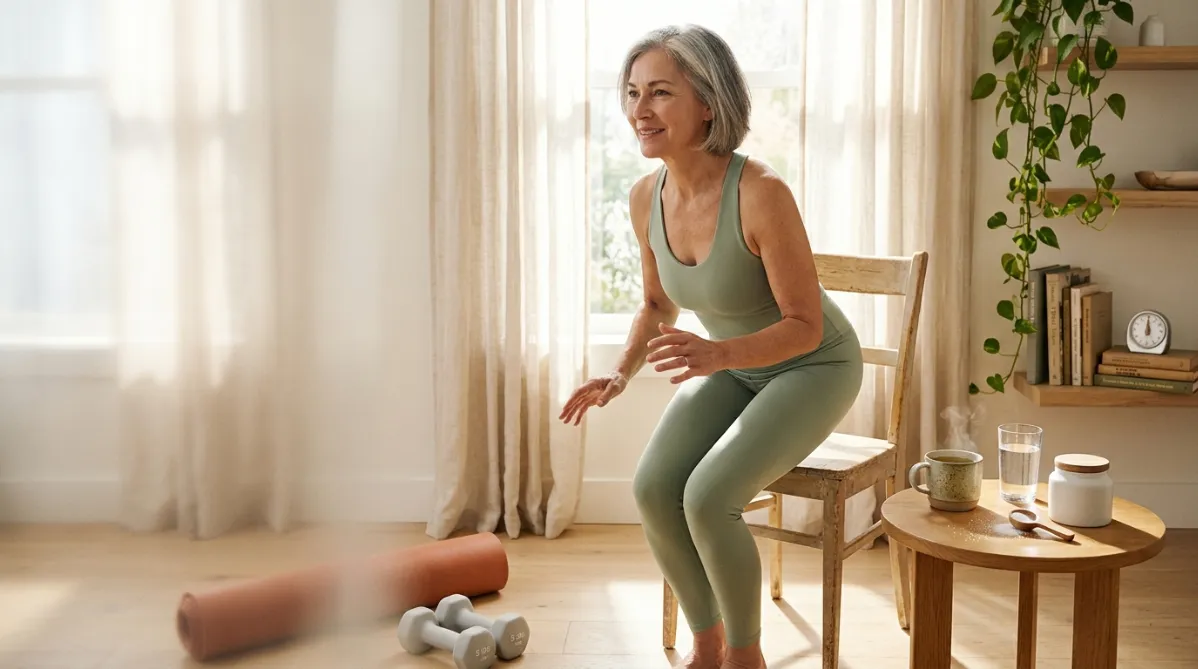
A wide landscape editorial photograph of a bright, airy sunlit living room with pale oak floors and a large window with sheer linen curtains. In the center, a woman in her late 50s with silver-streaked hair, wearing soft sage-green athletic wear, rises from a simple wooden chair, caught mid-motion with a calm, determined expression. Her hands are lightly extended forward for balance. Beside her on a small round oak side table sits a ceramic mug of tea, a glass of water, and a small matte white jar with a wooden scoop resting beside it, a few fine white crystalline grains scattered on the tabletop. In the soft-focus foreground, a pair of light-gray dumbbells and a rolled terracotta-colored yoga mat rest on the floor. A trailing green pothos plant spills from a shelf in the background, with a stack of books and a small analog kitchen timer nearby.

The color palette is warm and muted: cream, sage green, soft terracotta, natural wood, and gentle morning-gold light. Light streams diagonally across the scene, creating long soft shadows and a subtle glow on the woman's shoulders. Shallow depth of field blurs the background gently, while the woman and the table remain crisp. The composition follows the rule of thirds, with the woman on the right and generous negative space on the left, suited for headline overlay. The mood is hopeful, grounded, and modern, like a high-end wellness magazine or a trendy health journal. Natural film-like grain, soft contrast, and a slight matte finish give it a contemporary lifestyle photography feel. There are no futuristic elements, no digital overlays, and no text.
science research

La creatina ayuda a mujeres con rodillas dañadas a levantarse mejor, pero no por lo que piensas

BY DR. GYMBRO ·

La creatina suele promocionarse entre los jóvenes que levantan pesas, pero un ensayo aleatorizado y doble ciego la probó en mujeres posmenopáusicas con osteoartritis de rodilla. Tras 12 semanas de entrenamiento de piernas, el grupo que tomó creatina mejoró su puntuación en la prueba de levantarse de una silla de 15,7 a 18,1, mientras que el placebo apenas cambió (de 15,0 a 15,2). La creatina también redujo la rigidez, aumentó la masa magra y mejoró la calidad de vida. Sin embargo, el alivio del dolor y la fuerza máxima en la prensa de piernas no fueron superiores al placebo. Aquí se muestra lo que revelan los números y a quién podría ayudar realmente.
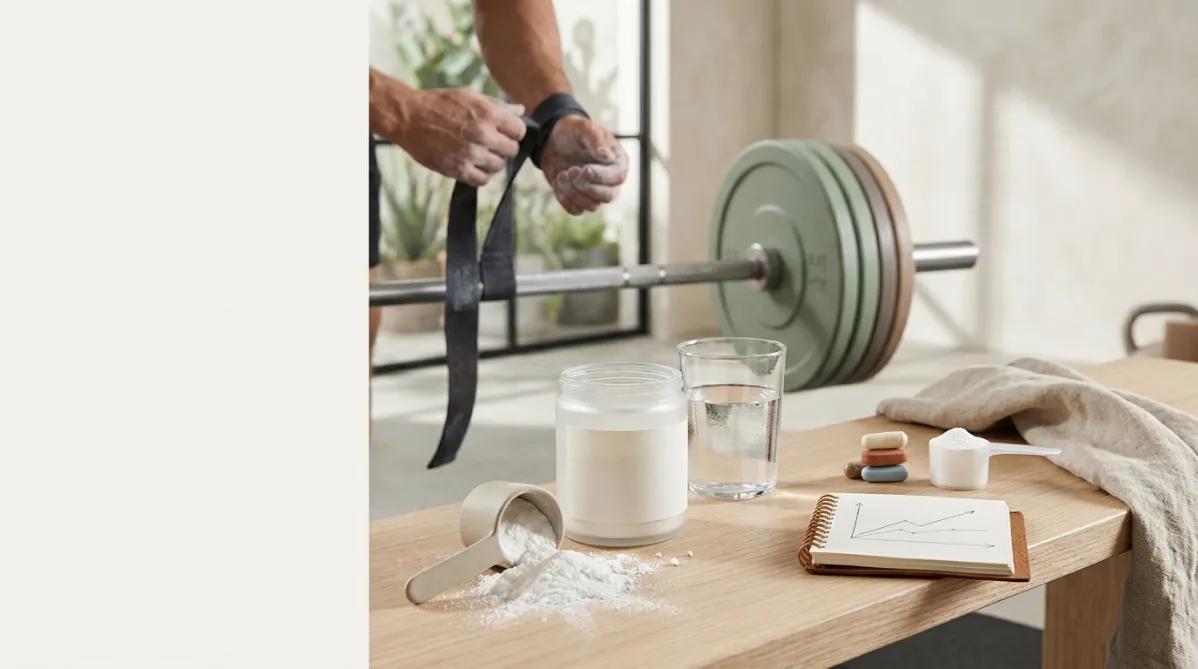
A wide, editorial-style still life photographed in soft natural window light, set on a pale oak gym bench or light wooden table. In the foreground, a matte ceramic scoop rests in a small mound of fine white creatine powder, with a few loose grains scattered across the surface. Next to it sits a minimalist frosted glass jar with a plain unbranded label. Beside the jar is a clear glass of water with delicate condensation. A pair of worn chalk-dusted hands is out of focus in the background, wrapping a lifting strap around a barbell. The barbell is a brushed steel bar with a few muted sage-green and warm gray bumper plates.

On the right side of the frame, a small stack of three different supplement capsules and tablets in neutral cream, terracotta, and soft blue sits next to a single clean white scoop of powder. This subtly contrasts the "stack" with the "plain" option. A folded linen towel in oatmeal beige drapes over the end of the bench. A small leather-bound notebook lies open, with a simple hand-drawn line graph showing two lines, one rising steadily and one flat, in pencil.

The background is softly blurred and shows a bright, airy, modern home gym with large windows, pale plaster walls, and a few green plants. Warm morning sunlight casts long, gentle shadows diagonally across the scene. The color palette is muted and sophisticated: cream, warm white, sage green, soft terracotta, and charcoal accents. Shallow depth of field with a crisp focus on the powder and scoop. Generous negative space on the left third for headline overlay. The mood is calm, thoughtful, and trustworthy, like a high-end health and science magazine cover, with subtle film grain and natural textures. No text, no logos, no futuristic elements.
nutrition

Una pila de creatina aumentó la masa muscular en principiantes, pero no la fuerza. ¿Por qué?

BY DR. GYMBRO ·

Un nuevo ensayo aleatorizado administró a levantadores novatos una mezcla de suplementos basada en creatina durante cuatro semanas y observó mayor masa muscular, un patrón testosterona/cortisol más favorable y mejor recuperación. Sin embargo, la fuerza máxima en prensa de piernas no superó al placebo. Las posibles causas incluyen ganancias neurales típicas de principiantes, la corta duración del estudio y la retención temprana de agua, aunque el artículo no puede determinar cuál es la responsable. Los marcadores renales se mantuvieron normales, pero el estudio fue pequeño, solo con hombres, financiado por la industria y no describió la fórmula completa. Para los recién iniciados, la opción más segura basada en evidencia sigue siendo la creatina monohidratada pura.
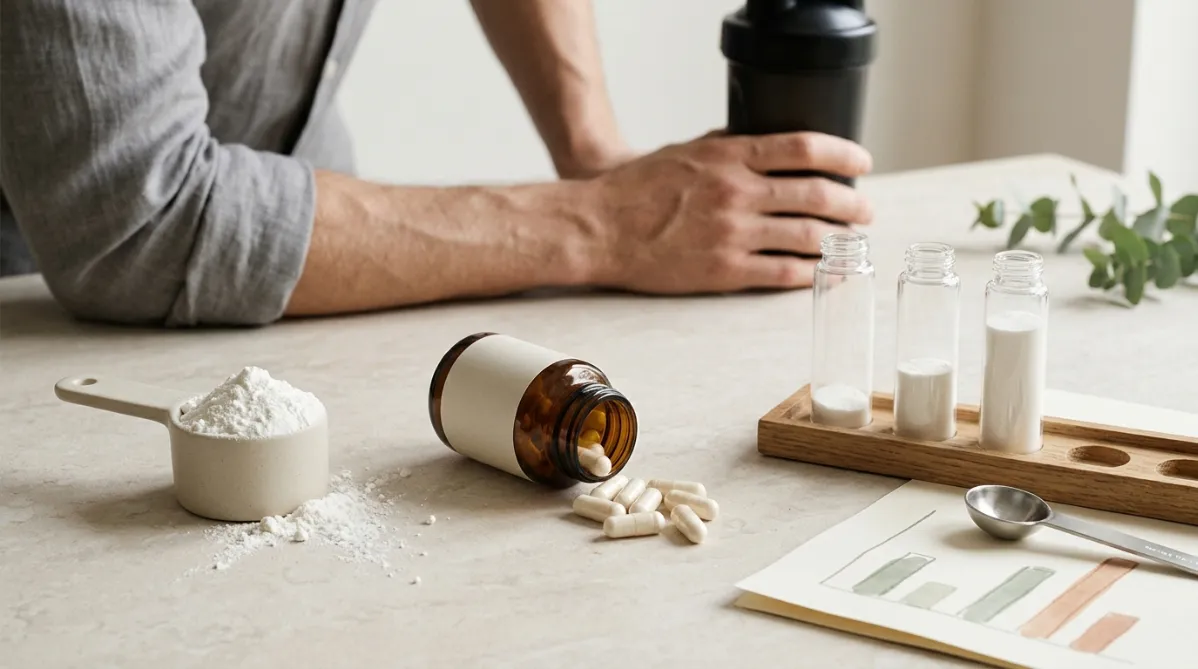
A modern editorial still life photographed from a slightly elevated angle on a pale, matte stone surface in soft natural window light. On the left, a heaping mound of fine white creatine monohydrate powder spills from a matte ceramic scoop, with a few crisp grains scattered across the surface. In the center, a small, minimalist amber glass capsule bottle sits tipped on its side, with a handful of off-white capsules spilling out. The label is blank and clean. On the right, a neat row of three clear glass lab-style vials rests on a slim oak tray. The vials hold different amounts of white powder: the first nearly empty, the second slightly fuller, the third filled almost to the brim. This quietly suggests the difference in dose and result. Beside the tray lies a simple stainless steel measuring spoon and a folded sheet of cream paper with soft, abstract bar-chart lines in muted sage green and terracotta. The lines are hand-drawn and unlabeled.

Behind the objects, slightly out of focus, a lean athletic forearm in a gray linen sleeve rests on the edge of the surface, one hand loosely holding a matte shaker bottle. This hints at a training context without showing a face. A single sprig of eucalyptus in the corner adds a soft organic touch.

The palette is warm neutral: bone white, oatmeal, soft sage, muted terracotta, and touches of amber. Shadows are gentle and long, with a shallow depth of field that gives creamy bokeh in the background. The mood is calm, clean, and trustworthy, like a premium health and science journal's feature spread, with generous negative space at the top and right for headline overlay. The composition is wide, balanced, and uncluttered, with subtle film-like grain and a natural, true-to-life color grade. No text, no logos, no futuristic elements.
nutrition

La dosis recomendada de Kre‑Alkalyn no aumentó la creatina muscular, según biopsias

BY DR. GYMBRO ·

La creatina tamponada (Kre‑Alkalyn) se vende como más absorbible, con dosis menores y menos distensión abdominal. Un ensayo doble ciego de Texas A&M, que analizó biopsias musculares de 36 levantadores durante 28 días, demostró que, con la dosis de etiqueta de 1,5 g/día, la creatina muscular apenas cambió, mientras que la creatina monohidrato produjo un aumento mucho mayor.
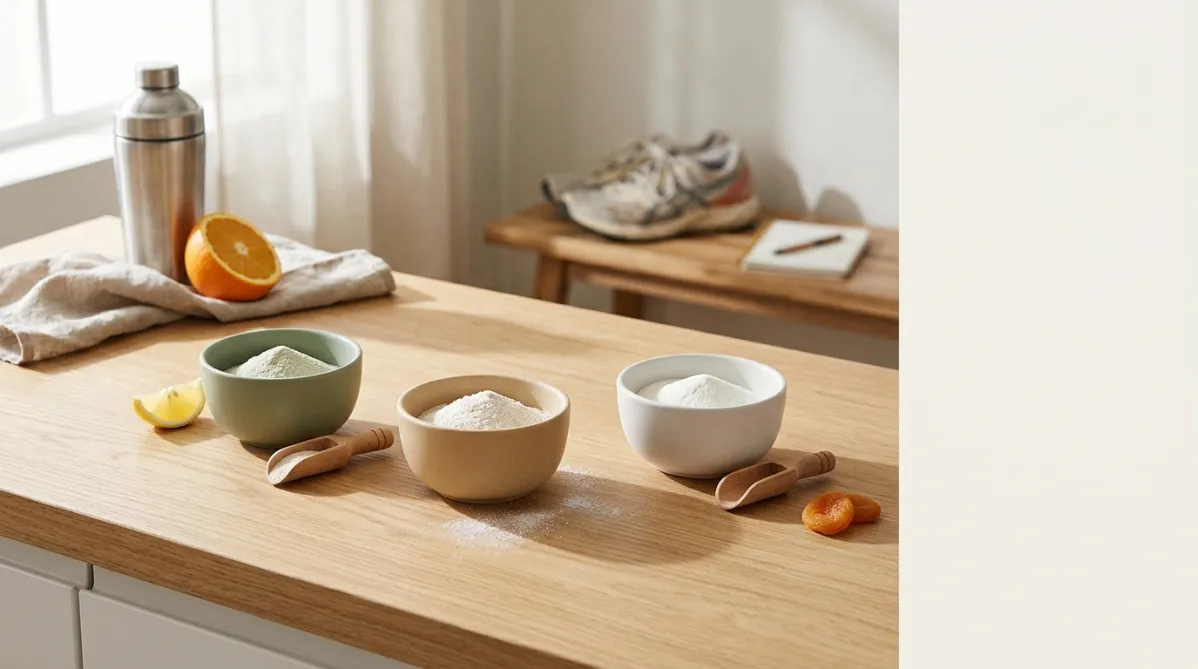
A landscape editorial photograph of a clean, sunlit kitchen-counter or light oak table, shot from slightly above at a gentle angle. Three small matte ceramic bowls in muted sage green, warm sand, and soft white sit in a loose row. Each holds a different fine white powder, and each has a small wooden scoop resting beside it. The middle bowl is slightly closer to the camera and sharper in focus, with a faint dusting of powder spilling onto the surface. In the soft-focus background, a stainless steel shaker bottle and a half-peeled orange sit beside a folded linen napkin, suggesting citrus without being literal. A single lemon wedge sits near the left bowl, and a small dried apricot sits near the right, a subtle visual nod to citrate and pyruvate.

In the background, a blurred athletic scene: a running shoe resting on a wooden bench and a small notebook with a pen, suggesting a training log. Soft diffused morning light enters from the left through a window and casts long, gentle shadows. The palette is warm neutrals, creamy whites, soft greens, and a hint of terracotta orange. The look is a modern wellness magazine with a shallow depth of field, a fine-grain film feel, and generous negative space on the right third of the frame for title text. The mood is calm, trustworthy, and scientific yet approachable, with no text, labels, or logos.
nutrition

Piruvato de creatina vs citrato: una forma mantuvo la fuerza elevada por más tiempo

BY DR. GYMBRO ·

Dos formas de creatina superaron al placebo en un ensayo de 28 días, pero solo una mantuvo la fuerza muscular alta durante los diez intervalos máximos, mientras que la otra perdió el efecto. El piruvato de creatina aumentó la fuerza en todos los intervalos (p < 0,001), mientras que el beneficio del citrato desapareció a partir del sexto intervalo. Además, el piruvato mejoró la velocidad de relajación y el consumo de oxígeno en reposo. Antes de desechar tu creatina habitual, hay un detalle importante: el estudio no incluyó un grupo de monohidrato de creatina.
A landscape editorial photograph of a sunlit kitchen table in soft morning light. An older adult's hands, with silver hair and a cream knit sleeve just visible, rest around a ceramic mug. Beside the mug are two small matte white ceramic dishes. One holds a mound of fine white powder, and the other holds a slightly different crystalline white powder. Two wooden spoons lie next to them. A handheld hand-grip dynamometer in muted sage green sits on a linen placemat in the foreground, slightly out of focus. A small open notebook with a pencil and a pair of round tortoiseshell reading glasses sit nearby, with no legible text.

The tabletop is pale oak with a visible grain. Behind it, a window with sheer curtains lets in warm golden light, and the blurred shapes of a trailing green pothos plant and a pale terracotta vase show in the background. The color palette is warm cream, sage green, soft terracotta, and pale wood, with a touch of muted navy from a folded napkin. The mood is calm, thoughtful, and quietly scientific without any laboratory feel.

The composition follows the rule of thirds. The hands and dishes sit in the left-center, and generous negative space on the right is suitable for a title overlay. Shallow depth of field, 50mm lens look, gentle film grain, and soft shadows. Modern lifestyle-magazine and health-journal aesthetic, natural and unstaged, high-end editorial photography.
nutrition

El precursor de la creatina supera a la creatina en la fuerza de agarre de mayores de 65 años

BY DR. GYMBRO ·

Un pequeño ensayo en adultos mayores de 65 años encontró que el ácido guanidinoacético (GAA), el precursor directo de la creatina, mejoró la fuerza de agarre más que la creatina monohidrato. Se trató de un estudio piloto de 8 semanas con solo 21 participantes que completaron el protocolo, sin programa de ejercicio y con un intervalo de confianza que apenas superó el cero. GAA también supresión de miostatina y aumentó índices musculares medidos por BIA, aunque esas lecturas pueden reflejar cambios en la hidratación. La homocisteína es el principal punto de seguridad a vigilar, pues la síntesis de GAA consume grupos metilo y ha elevado este metabolito en otros estudios. A continuación, se resume lo que encontró el estudio, lo que no podemos concluir y por qué la creatina monohidrato sigue siendo la opción probada.
A warm, softly lit modern home gym or sunlit studio, photographed in a clean editorial style. In the center-right of the frame, a silver-haired woman in her mid-60s with a calm, confident expression grips a matte black kettlebell at hip height. She wears a fitted sage-green athletic top and charcoal leggings. Her forearms and shoulders show lean, defined strength rather than bulk. Beside her, slightly out of focus, a man in his late 60s with short white hair and a trim beard performs a controlled bodyweight plank on a pale oak floor.

In the foreground on the left, a minimalist wooden tray holds two small ceramic bowls. One contains fine white powder and the other holds a few cream-colored capsules. Next to them sit a glass of water with a lemon slice and a folded linen towel. A subtle scatter of powder dusts the tray. The foreground is shot with shallow depth of field and a creamy bokeh falloff.

Behind them, tall windows pour in golden morning light, with long soft shadows across the floor. A potted fiddle-leaf fig and a stacked set of pastel-toned dumbbells on a low wooden shelf add texture. The wall is warm off-white plaster with a hint of terracotta in the corner.

The palette is muted and modern: sage green, warm cream, soft terracotta, natural oak, and charcoal, with gentle highlights. The mood is quietly optimistic, focused, and grounded, suggesting strength, vitality, and measured scientific curiosity. The composition leaves clean negative space in the upper-left for a headline overlay. The look is a high-end wellness magazine cover with natural film-like grain, soft contrast, and crisp detail on the hands and kettlebell. There is no text, no logos, and no futuristic elements, only authentic, aspirational realism.
nutrition

Creatina + HMB hacen que los mayores de 60 años ganen fuerza en 6 semanas, sin aumentar de tamaño

BY DR. GYMBRO ·

Los mayores de 60 años que tomaron una combinación de creatina + HMB aumentaron su fuerza en solo seis semanas, aunque la masa muscular apenas se modificó. Este estudio doble ciego con cruce, realizado con 30 adultos mayores activos, mostró mejoras en fuerza de piernas, espalda y brazos, así como en resistencia del tronco y la zona media. Los análisis de regresión indicaron que los beneficios fueron mayormente independientes del aumento muscular, apuntando a un efecto neuromuscular. Antes de decidirte a comprar, ten en cuenta las limitaciones reales: una ventana de tiempo corta, una muestra reducida y una medición de composición corporal mediante BIA. A continuación, lo que halló el estudio, lo que no, y cómo interpretarlo.
A bright, modern editorial flat-lay photographed from above on a soft off-white stone surface. At the center sits a matte ceramic scoop heaped with fine white creatine powder, with a loose dusting of powder fanning out across the surface. Beside it is a minimalist frosted-glass jar with a plain label and a brushed-steel shaker bottle lying on its side. To the left, a wooden comb and a small folded strip of graph paper with a single hand-drawn upward curve in muted terracotta ink, suggesting a data spike without any text. A few loose strands of dark brown hair curve elegantly across the stone near the comb. To the right, a clean glass beaker filled with water and a sprig of green rosemary, and an open notebook with blank pages and a sleek pen. The palette is warm neutrals: cream, sand, soft sage green, and a single accent of terracotta orange. Natural window light falls from the upper left, casting long, gentle shadows and a subtle diffused glow. The composition leaves generous negative space on the right third for title overlay. Shallow depth of field with crisp focus on the powder scoop, a premium health-and-science magazine look, minimalist, calm, and trendy, with fine grain and soft contrast. Landscape 16:9 framing.
science research

Creatina y caída del cabello: el aumento del 56 % de DHT explicado

BY DR. GYMBRO ·

Un estudio de 2009 mostró que una fase de carga de creatina de 7 días (25 g/día) elevó el DHT en un 56 %, y que con una dosis de mantenimiento de 5 g/día los niveles permanecieron alrededor de un 40 % por encima de la línea de base, mientras que la testosterona no cambió. Como el DHT está relacionado con la calvicie de patrón masculino, este hallazgo avivó el debate sobre la creatina y la pérdida de pelo. Sin embargo, el ensayo contó con solo 20 jugadores de rugby, duró tres semanas y nunca midió el cabello. Estudios posteriores no han reproducido consistentemente el aumento de DHT. Aquí se resume lo que realmente muestra la investigación, a quién le puede interesar y cómo actuar si te preocupa.
A wide, landscape editorial photograph of a clean, sunlit kitchen counter or pale stone tabletop, styled like a modern wellness magazine spread. Two scoops sit side by side on a matte ceramic surface. The left one is a plain, humble wooden scoop heaped with fine white creatine powder. The right is a glossy, ornate brushed-gold scoop holding the same white powder, which hints at "premium" branding. Behind each scoop stands a tub. The left tub is minimal, matte, and cream-colored with simple sans-serif lettering and no readable words. The right tub is sleek black with metallic gold accents and an overly polished look. A few fine grains of powder are scattered across the surface, catching the light.

The composition uses a shallow depth of field. The foreground scoops are crisp, and the background softly blurs into a warm neutral palette of oatmeal, soft sage green, and muted terracotta. Soft morning window light comes in from the left, casting long, gentle shadows and a subtle highlight along the scoops' edges. A small price tag shape, blank and unmarked, sits near the gold scoop, with a slightly crumpled paper texture to suggest the "pricey" angle without any text. A glass of water with condensation and a folded linen napkin sit at the edge of the frame. A single green sprig or eucalyptus stem adds a natural accent.

The overall mood is calm, intelligent, and quietly skeptical, with the plain option feeling confident and the flashy one a bit overdressed. The color grading is soft and slightly desaturated with creamy highlights, and there is fine film grain. The layout leaves generous negative space on the right third for a headline overlay. It looks like a high-end lifestyle and science journal cover, with a minimalist, tactile, trendy feel and no futuristic or sci-fi elements.
science research

Éster Etílico de Creatina vs Monohidrato: La Opción Costosa que No Vale la Pena

BY DR. GYMBRO ·

Los fabricantes de suplementos adoran promocionar la creatina “avanzada” como más absorbible que la versión tradicional. Un ensayo doble ciego de 2009 comparó el éster etílico de creatina (CEE) con el monohidrato y con placebo en 30 hombres sin experiencia previa, durante siete semanas de entrenamiento intenso. El CEE mostró menores concentraciones de creatina plasmática y un notable aumento de creatinina sérica, lo que indica que se descompone en desechos. La creatina muscular aumentó en ambos grupos de creatina, pero la fuerza, la potencia y la composición corporal no presentaron diferencias entre los grupos. Conclusión: evita la forma premium y mantén la simplicidad.
A wide, editorial-style still life photographed from slightly above on a pale oak surface in soft morning window light. At the center, a small matte white supplement tub with a plain, unlabeled front sits tipped on its side, spilling a modest pile of fine white powder across the wood. Beside it, a wooden scoop rests in the powder, and a few white capsules are scattered in a loose arc. To the left, a clean glass of water catches the light and throws a delicate caustic shadow. To the right, a neatly arranged group of whole foods sits in contrast: two brown eggs, a small wedge of salmon fillet on parchment, a handful of raw almonds, and a sprig of rosemary. A matte black steel dumbbell handle is partly visible at the top edge of the frame, grounding the fitness theme. In the lower foreground, a slim, open linen-bound notebook holds a hand-drawn line graph with a single line trending gently downward, a thin ink pen lying across the page. The palette is muted and warm: cream, soft sage green, pale oak, charcoal accents, and a touch of terracotta from a ceramic dish holding the almonds. Shallow depth of field blurs the background, a softly lit minimalist kitchen counter with a hint of a plant leaf. The mood is calm, thoughtful, and scientific without being clinical, like a cover image for a contemporary health and nutrition journal. Natural shadows, subtle film grain, and generous negative space on the upper left leave room for a headline overlay. Crisp focus on the powder and scoop, with refined, understated composition and no text or logos visible.
nutrition

El ácido D‑aspártico redujo la testosterona a 6 g/día en levantadores entrenados

BY DR. GYMBRO ·

El ácido D‑aspártico se promociona como un potenciador natural de la testosterona, pero en un ensayo controlado con 24 hombres entrenados en resistencia, 6 g/día disminuyeron tanto la testosterona total como la libre. La dosis de 3 g que aparece en muchas etiquetas no produjo ningún efecto medible. Un estudio posterior de tres meses tampoco encontró ventajas en fuerza ni en masa muscular. A continuación, lo que reveló la investigación, por qué los hombres entrenados pueden responder de forma distinta a los sedentarios y en qué es mejor invertir tu dinero en suplementos.
A wide, softly lit morning scene on a pale oak desk beside a window, shot from a slightly elevated three-quarter angle. In the foreground, a clear glass of water is half-filled with dissolved white creatine powder, tiny suspended particles catching the light. A wooden scoop heaped with fine white powder rests beside it, with a few grains scattered across the wood. A matte ceramic mug of black coffee sits slightly out of focus to the right, with a thin curl of steam. Behind them, a rumpled linen-white bed with a muted sage-green throw blanket suggests a sleepless night. Early dawn light spills through sheer curtains and creates long, gentle shadows and a warm peach-and-pale-blue gradient on the wall. On the desk, a minimalist analog alarm clock reads close to 6 a.m., and a small open notebook with a pen lies beside it, its handwriting blurred. A single green plant in a terracotta pot adds a fresh organic touch at the left edge. The color palette is calm and editorial: cream, soft sage, warm oak, dusty peach and muted slate blue. The depth of field is shallow, with crisp focus on the glass and scoop and a creamy bokeh background. The mood is quiet, restorative and contemplative, like a modern wellness magazine or a trendy health journal cover. The composition leaves open negative space in the upper left for title overlay. The image has a natural film-like texture, soft contrast and a clean, minimalist, lifestyle-photography look, with no text, logos or futuristic elements.
nutrition

Una dosis de creatina de 0,35 g/kg combate la niebla cerebral por falta de sueño en cuestión de horas

BY DR. GYMBRO ·

La creatina es el suplemento más respaldado del mundo del fitness, y un estudio publicado en 2024 sugiere que también puede atenuar la niebla cerebral provocada por la falta de sueño en cuestión de horas. Los investigadores administraron una sola dosis de 0,35 g/kg –aproximadamente 25‑28 g para la mayoría de los adultos– y observaron mejoras en los marcadores de energía cerebral, una prevención de la caída del pH y un aumento del rendimiento cognitivo y de la velocidad de procesamiento durante 21 horas sin dormir. Esa cantidad es unas cinco veces la dosis diaria habitual de 3‑5 g; el estudio fue pequeño y bajo condiciones de laboratorio, y los efectos gastrointestinales son una posibilidad real. Por ello, aún no se recomienda incorporar esta práctica a la rutina diaria.
¿Creatina antes o después del entrenamiento? Un pequeño estudio da ventaja al post‑entreno
nutrition

¿Creatina antes o después del entrenamiento? Un pequeño estudio da ventaja al post‑entreno

BY DR. GYMBRO ·

¿Debes tomar creatina antes o después de entrenar? Un estudio de 2013 con 19 culturistas masculinos mostró que la ingesta post‑entrenamiento produjo ligeras mejoras en masa magra, masa grasa y press de banca, aunque la prueba estadística formal no reveló diferencias significativas entre los grupos. Los autores sólo infirieron que podría ser “posiblemente más beneficiosa”. Aquí analizamos los datos, la importancia del tamaño de muestra y cómo aplicar los hallazgos con una rutina sencilla de 5 g al día.
A landscape, editorial-style flat lay photographed from above on a pale oak gym bench or a matte light-gray concrete surface. On the left side, a clear glass of water sits next to a small matte white ceramic bowl of fine white creatine powder, with a wooden scoop resting beside it and a few loose grains scattered naturally on the surface. In the center, a modern analog wall-style clock face is replaced by a simple minimalist stopwatch in brushed steel, its hands paused, subtly suggesting timing without any text or numbers emphasized. On the right, a neatly folded charcoal gym towel and a single chalk-dusted dumbbell handle enter the frame at the edge, with a faint dusting of white chalk on the wood. A small linen notebook with a pencil rests slightly off-center, its pages blank, hinting at data and study without any readable writing.

The color palette is soft and restrained: warm cream, oatmeal, sage green, and muted slate, with one accent of terracotta orange in the pencil or a small ceramic dish. Light comes from a large window at the upper left, casting long, gentle diagonal shadows and a soft highlight across the glass of water, creating delicate caustic reflections on the surface. The depth of field is shallow, with the creatine bowl and scoop in crisp focus and the edges softly blurred. The composition leaves generous negative space on the upper right for a headline overlay. The overall feel is calm, clean, and contemporary, like a wellness and science journal's cover image, with natural textures, subtle film grain, and a refined, premium magazine look. No people, no logos, no text, and no futuristic elements.
nutrition

¿Creatina antes o después de entrenar? Un pequeño estudio favorece el consumo post‑entrenamiento

BY DR. GYMBRO ·

¿Deberías tomar creatina antes o después de entrenar con pesas? Un estudio de 2013 con 19 culturistas masculinos halló que la suplementación post‑entrenamiento mostraba ligeras ventajas en masa magra, grasa y press de banca. No obstante, el análisis estadístico formal no reveló diferencias significativas entre los grupos, y los autores se limitaron a una cautelosa inferencia de “posiblemente más beneficioso”. A continuación explicamos qué dicen realmente los datos, por qué el tamaño de la muestra es crucial y cómo aplicar los resultados con una rutina diaria sencilla de 5 g.

This page is available in