Dr. Gymbro
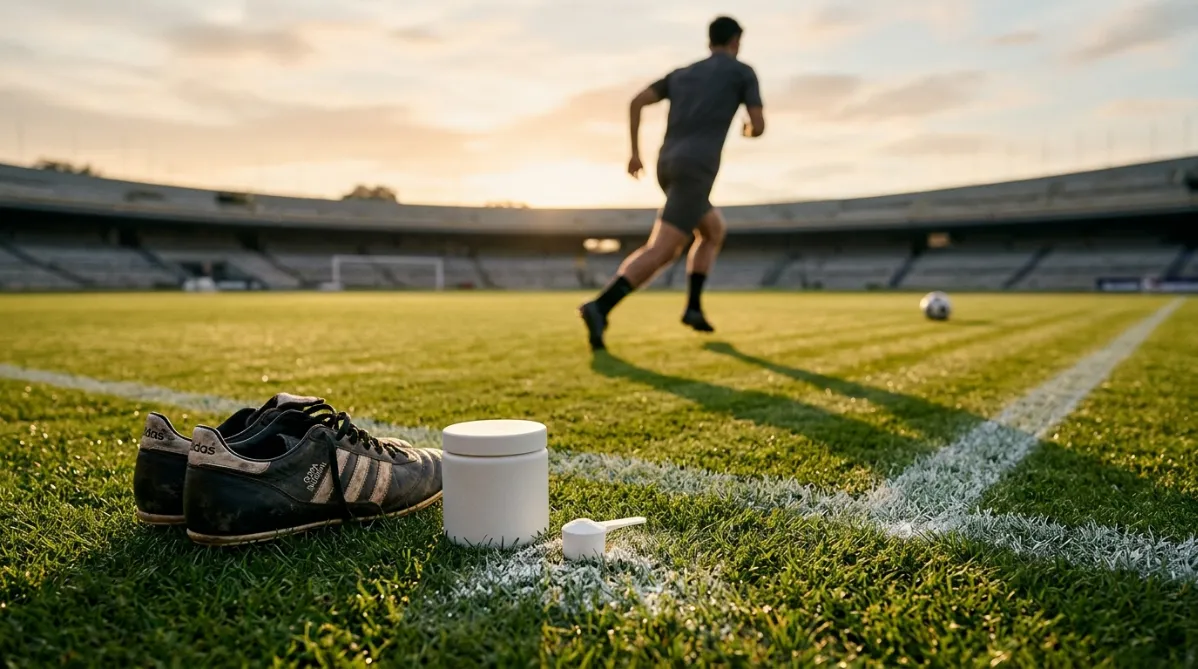
A wide, editorial-style photograph of a soccer pitch at golden hour, shot from a low angle at the edge of the touchline. In the foreground, a pair of worn leather cleats sits beside a small, matte white scoop and a minimalist ceramic jar of fine white powder resting on the dewy grass. A few loose grains of powder dust the blades of grass and catch the warm light. The jar is unbranded, with a clean, modern look.

In the midground, slightly out of focus, a lone player in a plain charcoal training kit stands mid-stride on the pitch, caught in a sprint. The motion blur in the legs suggests speed, and long shadows stretch across the freshly mowed stripes of the turf. A soccer ball rests a few meters ahead of the player.

Behind them, the stadium stands curve softly into the distance, rendered in a hazy, muted gradient of peach, soft amber, and pale blue sky. The mowing pattern on the grass forms clean diagonal lines that lead the eye toward the horizon. A thin white chalk line cuts across the frame, adding a subtle graphic element.

The palette is warm and restrained: sage and deep green grass, cream white, soft apricot light, and touches of charcoal. The mood is calm, thoughtful, and slightly skeptical rather than hyped, like a magazine feature on sports science. Shallow depth of field with a creamy bokeh background, fine film grain, and gentle natural contrast. The composition follows the rule of thirds, with the jar and cleats in the lower left and open negative space in the upper right, which leaves room for a headline overlay. The look is contemporary and clean, like a premium health and performance journal.
Nutrition

Creatina para el fútbol: 41 estudios, una verdad incómoda sobre los sprints

Dr. Gymbro · · 5 min read

La creatina es el suplemento más popular en el gimnasio. El fútbol, un deporte basado en sprints, saltos y ráfagas repetidas de esfuerzo, parece el candidato ideal. ¿Entonces la creatina hace a los futbolistas más rápidos, más fuertes y se recuperan más rápido? Una nueva revisión sistemática publicada en el Journal of the International Society of Sports Nutrition intentó resolverlo. La respuesta es menos emocionante de lo que la industria de los suplementos quisiera, y más útil de lo que podrías esperar.

Versión corta: prometedora, no probada

La revisión, dirigida por Damoon Ashtary‑Larky junto a Darren Candow, José Antonio y colaboradores, reunió todos los ensayos controlados con creatina en futbolistas que pudieron encontrar. Los autores describieron la evidencia como "sugerente más que concluyente" y la calificaron de muy baja en certeza.

Algunos ensayos mostraron beneficios en rendimiento de sprints repetidos, potencia anaeróbica y fuerza muscular. Pero las comparaciones entre los grupos de creatina y placebo fueron inconsistentes, y a menudo las diferencias no fueron estadísticamente significativas. Los autores concluyeron que no es posible extraer conclusiones firmes sobre la eficacia.

¿Qué tan grande fue esta revisión?

Los investigadores buscaron en PubMed, Scopus y Web of Science desde sus inicios hasta el 15 de mayo de 2025, siguiendo las directrices PRISMA 2020. Después de depurar los resultados, quedaron con 45 informes que cubrían 41 estudios únicos:

  • 28 ensayos aleatorizados de grupos paralelos
  • 2 ensayos aleatorizados cruzados o de condición repetida
  • 11 estudios controlados no aleatorizados o con asignación no verificable

Los estudios incluyeron futbolistas masculinos y femeninos de cualquier edad o nivel competitivo. Las investigaciones difirieron tanto en diseño, protocolos de dosificación, poblaciones y variables de resultado que los autores no realizaron un metaanálisis. Sintetizaron los hallazgos de forma cualitativa, por lo que no hay un tamaño de efecto agrupado que citar. Quien afirme que la revisión encontró que la creatina aumenta el rendimiento de sprint en fútbol en un porcentaje fijo está inventando.

Lo que la creatina parecía hacer

La lógica deportiva tiene sentido. El fútbol depende de una rápida resíntesis de ATP para acciones cortas y explosivas, y la creatina respalda ese sistema energético. Los resultados por categoría fueron:

  • Sprints repetidos, potencia anaeróbica, fuerza: algunos hallazgos favorables, pero inconsistentes.
  • Salto vertical y habilidades técnicas: resultados mixtos.
  • Cambio de dirección y resistencia: sin beneficio consistente.
  • Recuperación y fatiga: mayormente nulos o inconsistentes.
  • Masa corporal: a menudo aumentó, sobre todo después de protocolos de carga.
  • Masa magra: evidencia limitada e inconsistente de ganancias.

El hallazgo sobre la recuperación es relevante porque la creatina se promociona a menudo como una forma de recuperarse más rápido entre partidos. Esta revisión no encontró apoyo fiable para eso en futbolistas.

El peso extra

La masa corporal subió con frecuencia, particularmente después de fases de carga. Ese es un efecto conocido de la creatina, que atrae agua a las células musculares. Sin embargo, la revisión halló poca evidencia de que ese peso extra fuera tejido magro. Para un deporte que depende de la aceleración y de sprints repetidos, unos kilos de agua y masa no son automáticamente una ventaja; podrían incluso ser un compromiso. Controla tu peso y cómo te sientes en la cancha.

Dosis y momento: lo que el artículo dice y lo que no dice

El resumen no indica una dosis recomendada, y la revisión no identificó un protocolo óptimo. Los estudios usaron estrategias de suplementación variadas, lo que explica en parte la dificultad para comparar resultados.

Para dar contexto (no es un hallazgo de esta revisión), el enfoque práctico más común en nutrición deportiva es creatina monohidrato a aproximadamente 3‑5 g al día, consumida de forma constante. Algunas personas empiezan con una fase corta de carga, y el aumento de peso observado sugiere que la carga es la vía más probable para cambios rápidos de masa. La creatina funciona por saturación a lo largo del tiempo, no por una dosis aguda antes del partido, por lo que la constancia diaria importa más que el momento exacto. Consulta cualquier plan con un dietista deportivo o médico.

Quién podría probarla

  • Jugadores que realizan trabajo de fuerza intenso junto a su entrenamiento de fútbol y quieren apoyar ganancias de potencia y fuerza.
  • Atletas cuya posición exige muchos esfuerzos de alta intensidad repetidos, como extremos, laterales y mediocampistas de caja, siempre que estén dispuestos a probarla bajo monitorización.
  • Jugadores en un programa estructurado que puedan comparar pruebas de sprint, números de fuerza y peso corporal antes y después.

Quién probablemente debería evitarla o ser cauteloso

  • Atletas sensibles al peso que no pueden permitirse masa corporal extra.
  • Jugadores que esperan una recuperación más rápida o mejor resistencia. La evidencia no respalda esas promesas.
  • Cualquier persona con enfermedad renal u otras condiciones médicas, o que tome medicaciones que afecten la función renal. Consulta a un médico primero.
  • Atletas jóvenes. La revisión incluyó jugadores de cualquier edad, pero no ofrece base para una recomendación pediátrica. Involucra a un profesional cualificado.
  • Jugadores en competición regulada. La creatina está generalmente permitida, pero siempre verifica la calidad del producto y la certificación de terceros.

Limitaciones que debes conocer

Esta revisión tiene varios matices. La base de evidencia era heterogénea, 11 de 41 estudios no fueron aleatorizados o no se pudo verificar la asignación, y la certeza era muy baja. Las herramientas de riesgo de sesgo se usaron para resumir la calidad metodológica a nivel de estudio, no para evaluaciones formales de resultados específicos. Muchos efectos entre grupos fueron poco claros o no significativos. El resumen tampoco informa el número total de participantes, por lo que no podemos indicar un tamaño de muestra agrupado.

Un punto más sobre la transparencia: varios autores declararon vínculos con la industria de la creatina y suplementos, incluyendo roles de asesoría, productos donados y trabajo de consultoría. Aseguran que ningún interés comercial influyó en el diseño, análisis o interpretación. Resulta notable que un grupo con esos lazos haya entregado un veredicto cauteloso.

Conclusión

La creatina no es un suplemento mágico para el fútbol, y esta revisión no afirma lo contrario. Puede ayudar a algunos jugadores con la repetibilidad de sprints, potencia anaeróbica y fuerza, pero la evidencia es escasa e inconsistente. Si decides probarla, trátala como un experimento: sigue un protocolo estándar de monohidrato, registra tu peso y rendimiento, y juzga con tus propios datos, no con el hype.
Original study

Read the original research on pubmed.ncbi.nlm.nih.gov →

This article summarizes published research for general information. It is not medical advice.

DG

Written by

Dr. Gymbro

Dr. Gymbro writes for Dr. Gymbro: science-backed fitness, nutrition & performance.

Related Articles

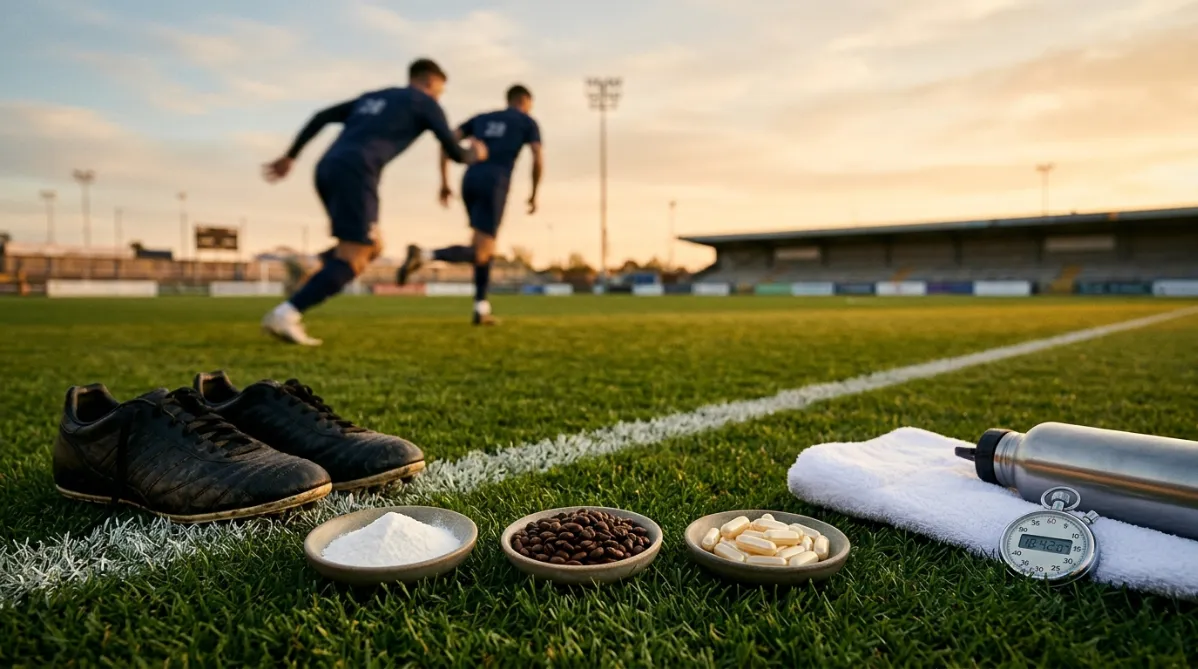
A wide, editorial-style photograph of a professional soccer pitch at golden hour, shot from a low angle at the edge of the grass. In the foreground, slightly off-center to the left, a pair of worn leather cleats sits beside a scatter of three small matte ceramic dishes. One holds fine white taurine powder, one holds dark roasted coffee beans, and one holds pale cream-colored softgel capsules. Soft warm light catches the textures: the grain of the beans, the powder's fine crystalline sheen, the glossy curve of the capsules. A clean white sports towel and a brushed-steel water bottle rest nearby, with a small stopwatch lying on the turf, its face softly glowing.

Behind them, the field stretches into a gentle blur. A lone player in a muted navy training kit mid-sprint leaves a faint streak of motion across the frame, with painterly bokeh from stadium floodlights and distant stands. The grass is a rich, deep green with crisp white line markings curving across the midground and leading the eye toward the athlete. Long amber shadows stretch across the pitch, and a hazy peach and pale blue sky fills the upper right, leaving open negative space for a title overlay.

The palette is restrained and modern: deep green, warm cream, soft amber, charcoal, and a touch of muted coral. The depth of field is shallow, with sharp detail on the supplements and cleats. The mood is calm, premium, and scientific without feeling clinical, like a contemporary sports-science magazine or wellness journal cover. The lighting is natural and cinematic, with gentle film grain and a subtle vignette. The composition follows the rule of thirds, with clean lines and no text, logos, or clutter.
nutrition

Taurina, cafeína y PS: ¿una ventaja para los futbolistas profesionales? ¿Cuál es el truco?

BY DR. GYMBRO ·

Los futbolistas profesionales que tomaron taurina, cafeína y fosfatidilserina durante 14 días obtuvieron mejores resultados en los sprints de 30 m, en los tiempos de reacción y en la fatiga mental percibida que el grupo placebo. Sin embargo, duplicar la dosis de PS de 300 a 600 mg solo produjo una diferencia modesta y poco consistente. Los autores advierten que los datos no prueban una mayor resistencia a la fatiga y que la PS nunca se probó por sí sola. Aquí explicamos qué contenía la combinación, qué efectos mostró y qué no puede demostrar.

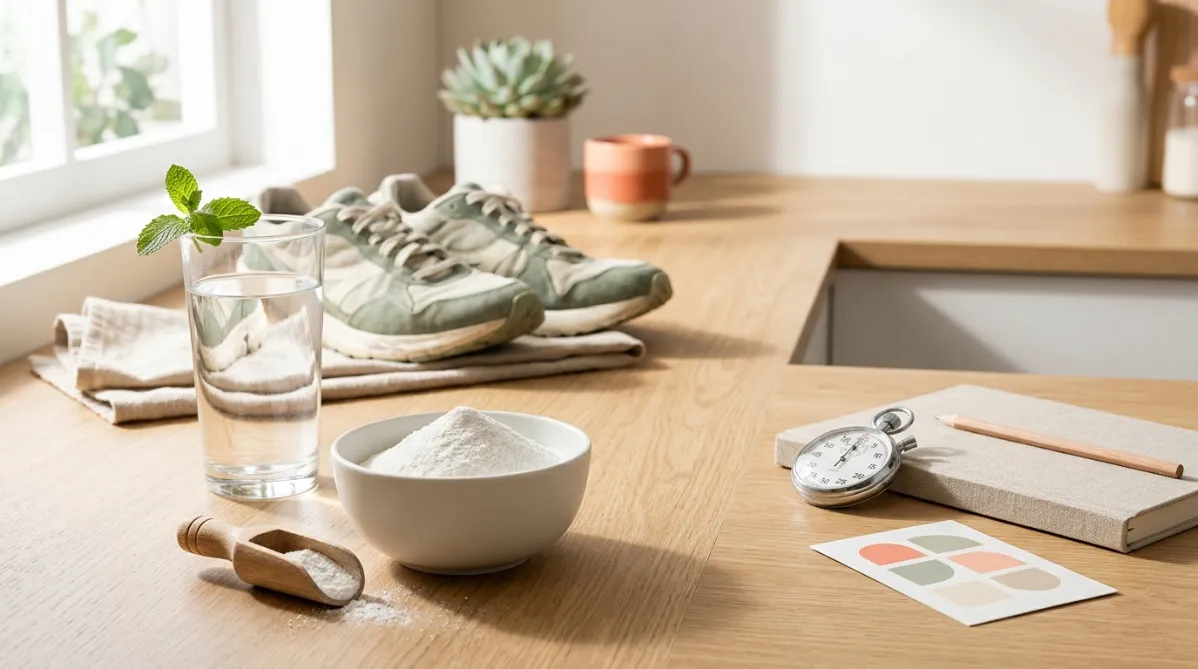
A wide, editorial-style photograph of a clean, minimalist kitchen counter in soft morning light, shot from a slightly elevated angle. In the foreground, a matte white ceramic bowl holds a small mound of fine white creatine powder, with a wooden scoop resting beside it and a few loose grains scattered across a pale oak surface. Next to it sits a tall glass of water, catching bright highlights, with a single sprig of mint resting on the rim. Behind them, slightly out of focus, a pair of worn-in running shoes in muted sage and cream sits on a linen towel, hinting at an athletic routine. On the right side of the frame, a small analog stopwatch with a brushed steel finish lies on the counter, its hands frozen mid-sprint. A closed notebook with a thin pencil and a simple pastel-toned puzzle-like grid card suggests cognitive testing without being literal. The color palette is warm neutral: oatmeal, soft sand, sage green, and a pop of coral from a small accent object, such as a ceramic cup. Natural window light streams in from the left, creating long, gentle shadows and a calm, airy atmosphere. Shallow depth of field, crisp textures on the powder and wood grain, and generous negative space in the upper right for headline overlay. The overall mood is clean, contemporary, and wellness-focused, like a modern health and science journal feature.
science research

Una semana de creatina aumentó la potencia del sprint. ¿Y el impulso cerebral? Falta

BY DR. GYMBRO ·

Un ensayo con 40 adultos jóvenes y activos mostró que una semana de carga con creatina elevó la potencia del sprint Wingate en torno al 8 %. La potencia media subió de 526 W a 570 W y la potencia pico de 738 W a 797 W, sin diferencias entre sexos. El tan promocionado beneficio cognitivo no se reflejó en las pruebas Stroop ni Trail, ni siquiera después de un sprint intenso. Los autores sugieren que un efecto de aprendizaje pudo haber ocultado cualquier mejora real en el cerebro. A continuación, el protocolo de 20 g/día durante 7 días y lo que no logró.

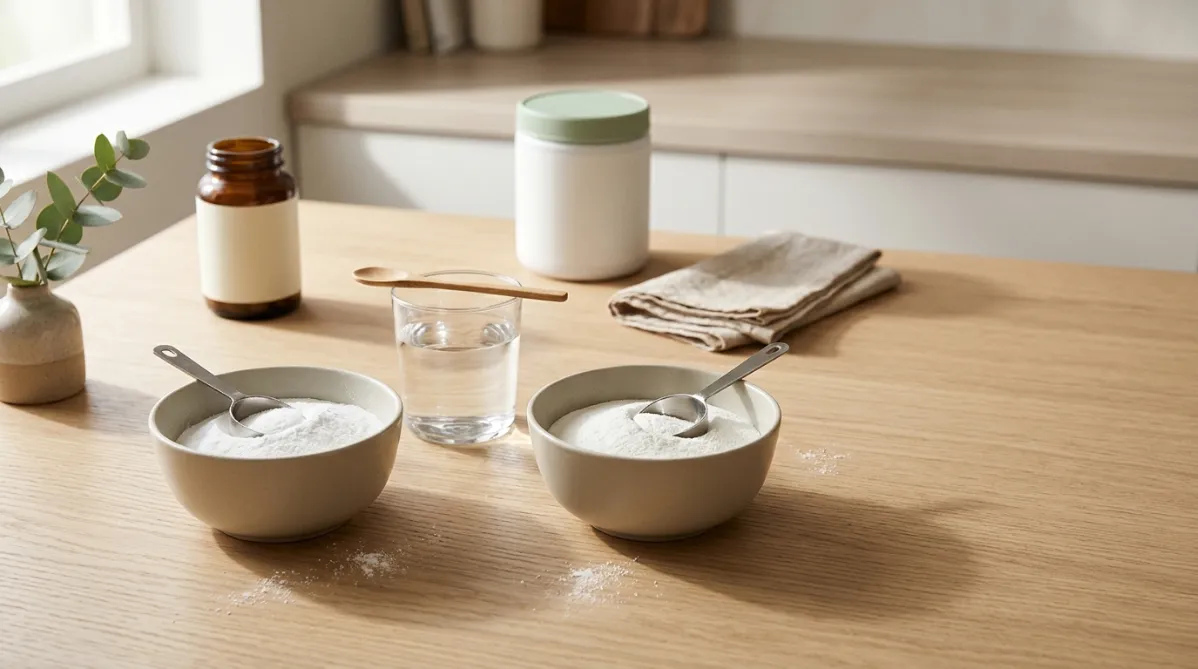
A wide, landscape editorial photograph of a clean, sunlit kitchen countertop in soft morning light. Two matching matte ceramic bowls sit side by side on a pale oak wood surface. One holds fine, bright white creatine powder, the other holds an almost identical powder, with a small stainless steel scoop resting in each. Between them sits a simple glass of water with gentle ripples and a thin wooden stirring spoon. In the soft-focus background, a minimalist amber glass supplement jar with a plain cream label and a sleek matte-white tub with a pastel sage-green lid stand slightly out of focus, suggesting a budget option and a premium option without any readable branding. A small, neatly folded linen napkin in warm oatmeal tones and a sprig of eucalyptus in a tiny stoneware vase add a calm, modern touch.

A few grains of powder are scattered naturally across the wood, catching the light. The color palette is warm neutrals with soft sage green, cream, and muted terracotta accents. The composition uses a shallow depth of field, a slightly elevated three-quarter angle, and generous negative space on the right side for title overlay. The lighting is natural window light from the left, creating long, gentle shadows and a subtle glow on the powder. The overall mood is calm, trustworthy, and thoughtful, like a contemporary health and wellness magazine or a minimalist lifestyle journal. High-resolution, crisp textures, film-like color grading, subtle grain, and a balanced, symmetrical sense of comparison between the two bowls.
nutrition

Esta creatina 'de mejor absorción' queda a la par del monohidrato tradicional

BY DR. GYMBRO ·

El mercado premium de creatina se sustenta en promesas de mayor absorción y menor irritación estomacal, pero el monohidrato simple cuenta con un historial de investigación amplio y un precio bajo. Un nuevo ensayo aleatorizado, doble ciego y cruzado evaluó el producto más reciente, OptiCreatine, frente al monohidrato en 17 jóvenes adultos sanos. Tras una única dosis de 5 g, las curvas de creatina en sangre, los niveles pico, el tiempo y los síntomas gastrointestinales fueron estadísticamente similares. Aquí explicamos en términos simples lo que eso significa, lo que el estudio no puede decirte y cómo comprar con cabeza.

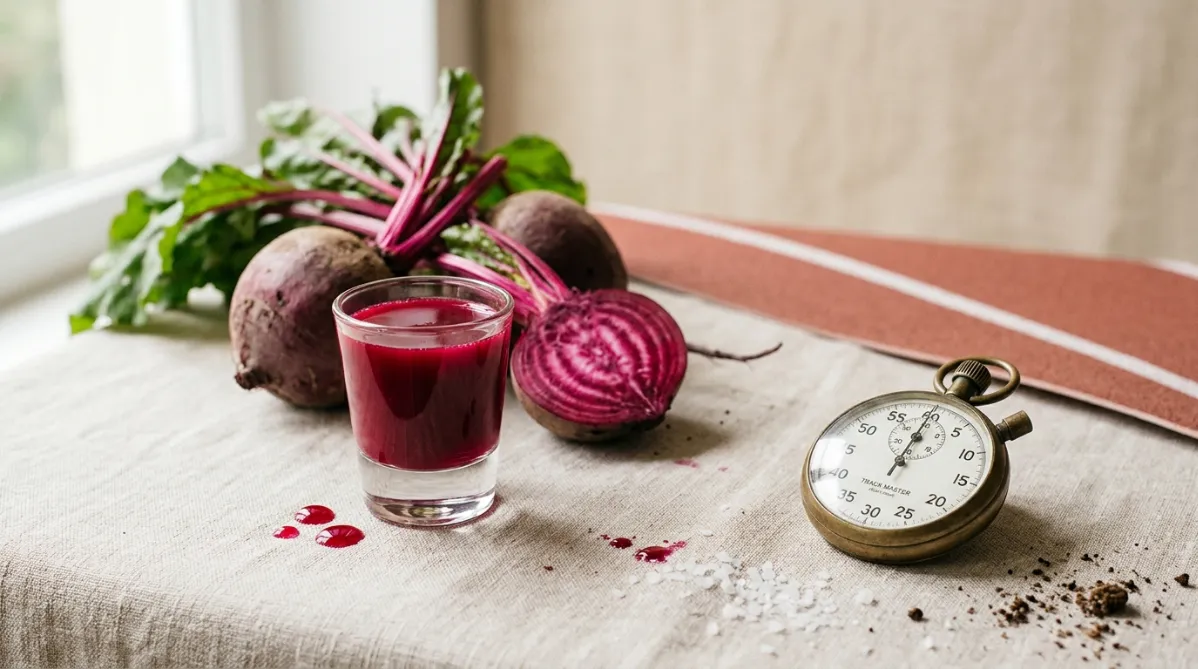
A wide editorial still life on a clean, pale oatmeal-colored linen surface, lit by soft natural window light from the left. In the center-left, a small clear glass shot glass filled with deep magenta-crimson beetroot juice catches a glowing highlight, with a few droplets beaded on the surface beside it. Behind it sit two whole beetroots with their leafy stems, the skins a dusty burgundy and the stems a vivid pink-red, and one beetroot sliced in half to reveal concentric rings of magenta and soft pink. To the right, a vintage-style brass stopwatch rests at an angle on the linen, its white face crisp and its hands frozen, slightly out of focus in the foreground edge. A faint curve of a sprinting track lane, in muted terracotta with thin white lines, sweeps diagonally across the blurred background, hinting at a running track without showing any people. Scattered across the surface are a few small, delicate beet-colored splashes and a light dusting of coarse sea salt. The palette is restrained and modern: warm cream, terracotta, dusty rose, deep magenta, and touches of sage green from the leaves. Shallow depth of field and a gentle film-like grain give it a contemporary lifestyle-magazine feel. The composition leaves generous negative space on the upper right for title overlay. Minimalist, tactile, calm, and sophisticated, in the style of a high-end health and science journal's editorial photography, 16:9 landscape.
nutrition

El jugo de remolacha elevó el nitrito 35 veces, pero los velocistas no fueron más rápidos

BY DR. GYMBRO ·

Un estudio con 12 velocistas entrenados mostró que 70 mL de jugo de remolacha aumentaron el nitrito salival unas 35 veces, pero no mejoraron ni el sprint de 60 m ni el de 100 m, ni la altura del salto ni la mayoría de los parámetros musculares. Aquí analizamos qué se hizo, qué no se pudo demostrar y a quién conviene (o no) invertir en este suplemento.

This page is available in