Dr. Gymbro
←

Recovery

12 articles
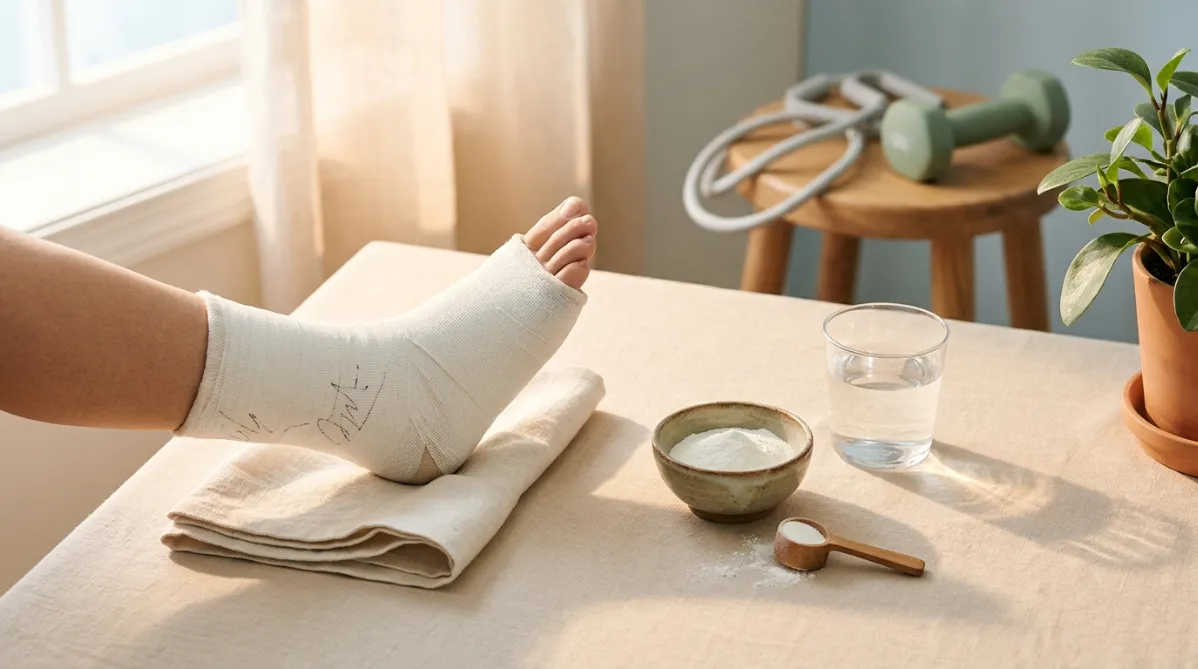
A wide, softly lit editorial still life on a warm, pale oat-colored surface. At the left, a lower leg and foot rest on a folded cream linen towel, wrapped in a matte white fiberglass cast with a subtle texture and a few faint pen scribbles near the ankle. The skin tone is natural and the lighting is gentle. At the center-right, a small ceramic bowl holds fine white creatine powder, with a matte wooden scoop resting beside it and a dusting of powder on the surface. Next to the bowl is a clear glass of water with light refracting through it, casting soft caustic ripples on the table. This hints at the water-retention idea without being literal.

In the background on the right, slightly out of focus, a pair of light grey resistance bands and a small sage-green dumbbell sit on a wooden stool, suggesting rehab. A tall, leafy plant in a terracotta pot adds organic greenery at the edge of the frame. Morning sunlight streams from a window on the left and creates long, soft shadows and a warm golden-peach glow. The palette is cream, sage green, terracotta, soft sky-blue shadows, and touches of natural wood. The composition has generous negative space in the upper left for a title overlay. Shallow depth of field, shot as if with an 85mm lens, with fine film grain. The look is clean, calm, modern wellness-magazine photography with a minimalist, tactile, trendy feel.
recovery

La creatina en un yeso no protege el músculo de forma clara, pero sí en la fase de rehabilitación

BY DR. GYMBRO ·

Muchos se preguntan si la creatina puede proteger el músculo cuando una lesión obliga a inmovilizarse en un yeso. Una revisión sistemática reciente, que incluye seis ensayos controlados aleatorios con 118 jóvenes y entre una y dos semanas de inmovilización, indica que la evidencia durante la fase de inmovilización es mixta y que los aparentes beneficios en masa magra podrían deberse simplemente a una mayor retención de agua. La señal más interesante surge en la fase de rehabilitación, donde dos estudios observaron mayores incrementos en el tamaño del cuádriceps, la potencia y la fuerza en los sujetos que recibieron creatina. A continuación, los datos concretos, sus limitaciones y a quiénes podría interesar probarla.
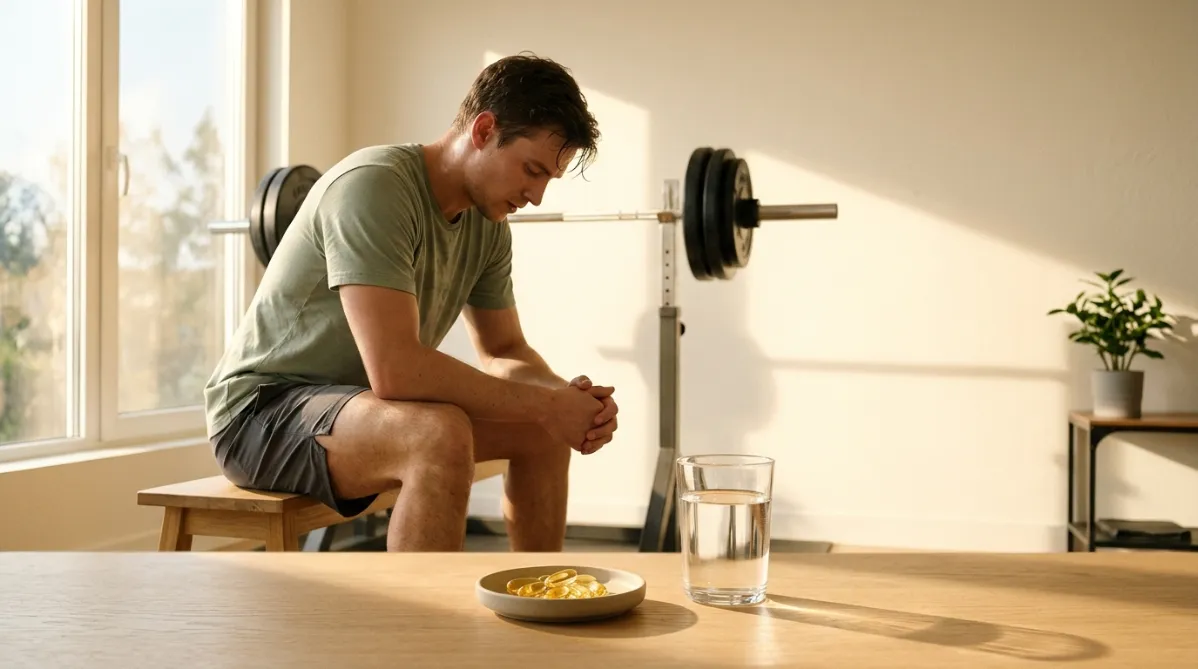
A sunlit, minimalist home gym corner photographed in soft golden morning light, with a young athletic man seated on a wooden bench, leaning forward with his elbows resting on his knees, catching his breath after a hard leg session. He wears a muted sage-green t-shirt and charcoal shorts, his face turned slightly away from the camera, calm and focused. A matte ceramic dish in the foreground holds a few small, translucent golden softgel capsules, with a glass of water beside it catching the light and casting a soft caustic shadow across a pale oak floor. Behind him, a loaded barbell rests on a squat rack, slightly out of focus, and a tall window pours warm sunlight diagonally across the scene, creating long gentle shadows and a hazy glow. A small potted green plant sits on a shelf at the edge of the frame. The color palette is warm and editorial: cream, soft gold, sage green, pale wood, and charcoal accents. Shallow depth of field, with crisp focus on the capsules and glass in the lower third and a creamy bokeh background. The composition leaves generous negative space on the right side for a headline overlay. The mood is clean, modern, and aspirational, like a high-end wellness magazine or a trendy health journal feature. Shot on a 50mm lens, natural light, fine film grain, subtle matte finish, landscape 16:9 framing.
recovery

Vitamina D acelera la recuperación de la fuerza en hombres con niveles suficientes

BY DR. GYMBRO ·

Hombres con niveles de vitamina D perfectamente normales recuperaron la fuerza más rápido tras una sesión intensa de piernas al tomar 4 000 UI diarias. En este ensayo aleatorizado, controlado con placebo, con 28 hombres activos, la fuerza isométrica máxima se recuperó aproximadamente un 8 % más a las 24 horas. Los marcadores de daño muscular ALT y AST también aumentaron menos. La sorpresa es que la sensación de dolor muscular no mejoró en absoluto. A continuación se detallan los hallazgos del estudio, sus limitaciones y a quién podría interesar.
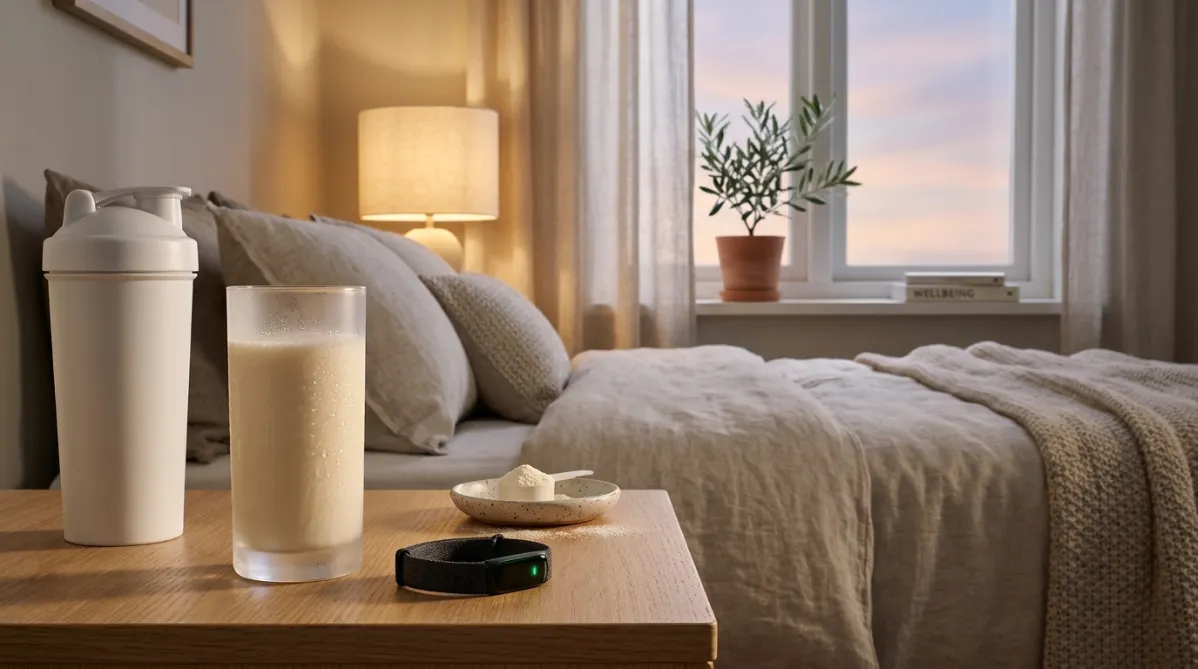
A softly lit bedside table in a calm, modern bedroom at dusk, photographed in wide landscape format with shallow depth of field. In the foreground, a matte white shaker bottle sits beside a tall frosted glass of creamy, pale vanilla-colored protein shake, with a few condensation droplets catching warm light. Next to the glass rests a slim fitness band on a dark charcoal fabric strap, its small LED glowing a gentle green, lying casually on a light oak wooden surface. A small scoop of fine white protein powder rests on a ceramic dish nearby, with a light dusting of powder on the wood.

In the soft-focus background, a neatly made bed with oatmeal-colored linen bedding and a textured knit throw blanket. A sheer curtain filters the last peach and lavender light of evening from a large window. A small potted olive branch in a terracotta vase and a closed paperback book add a quiet editorial touch. A bedside lamp with a warm, cream-colored shade casts a golden glow across the scene and creates gentle highlights on the glass.

The palette is muted and harmonious: warm cream, soft sand, oatmeal beige, faint sage green accents, and touches of dusty lavender in the window light. The mood is peaceful, reassuring, and clean, like a contemporary wellness magazine or a trendy health journal feature. Lighting is natural and cinematic, with soft shadows and a subtle film-like grain. The composition follows the rule of thirds, with the shake and band on the left third and open negative space on the right for headline overlay. Minimalist, Scandinavian-inspired styling, high-end lifestyle photography, crisp details, and a tranquil, premium editorial feel.
recovery

La caseína antes de acostarse no estropeará tu sueño, según datos de WHOOP

BY DR. GYMBRO ·

¿Un batido de 40 g de caseína antes de dormir sabotea tu sueño? Un estudio aleatorizado, doble ciego y cruzado con 21 atletas universitarias de la División I, que midió el sueño con pulseras WHOOP 4.0, no halló efectos adversos en la duración, la eficiencia, la frecuencia cardíaca en reposo ni la variabilidad de la frecuencia cardíaca. La alfa‑lactalbumina y el carbohidrato produjeron resultados idénticos. Ningún suplemento mejoró el sueño, de modo que, aunque no lo perjudican, tampoco son la solución milagrosa para dormir mejor.
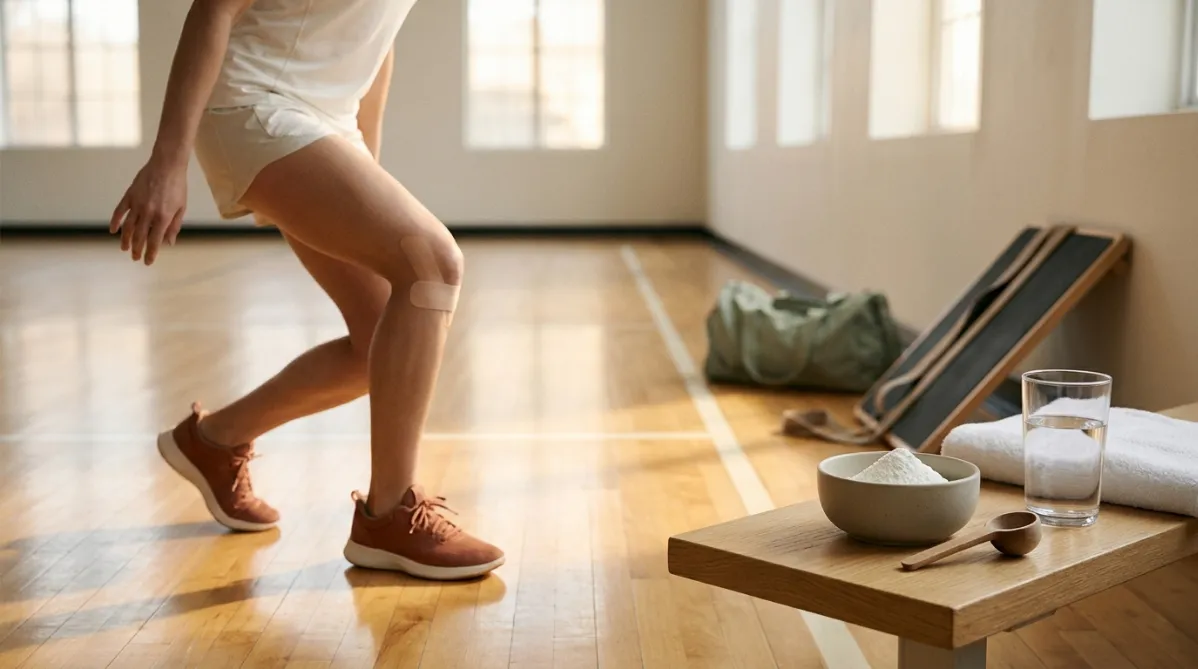
A wide, editorial-style photograph of a volleyball player mid-landing from a jump on a sunlit indoor court, captured from a low side angle. The athlete's knee is slightly bent and the patellar tendon area is in sharp focus, with soft natural muscle definition and a light strip of kinesiology tape just below the kneecap. The polished honey-toned hardwood floor reflects warm window light, and the background falls away into a creamy blur of pale court lines and tall windows.

In the lower right foreground, slightly out of focus, a matte ceramic bowl holds a small mound of fine white creatine powder. A wooden scoop rests beside it, next to a clear glass of water and a folded white towel. This sits on a light oak bench at the edge of the court. A resistance band and a slanted decline board, used for eccentric rehab, lean softly against the wall behind the bench.

The palette is warm and natural: cream, soft white, honey oak, muted sage green accents from a gym bag, and a touch of terracotta from the athlete's sneakers. Light is golden-hour and diffused, with gentle shadows and a subtle film-grain finish. The composition follows the rule of thirds, with the athlete on the left and the supplement still life on the right. Negative space in the upper portion leaves room for a headline overlay.

The overall mood is calm, modern, and health-focused, like a contemporary wellness or sports-science journal cover. Shallow depth of field, a clean minimalist aesthetic, and true-to-life color. No text, no logos, no futuristic or digital elements.
recovery

¿Creatina para la rodilla de saltador? El alivio del dolor apareció a las 4 semanas

BY DR. GYMBRO ·

La rodilla de saltador puede dejar fuera a los atletas durante meses, y un nuevo ensayo investiga si la creatina puede acelerar la recuperación. En 20 deportistas que siguieron un programa de rehabilitación excéntrica, solo el grupo que tomó creatina mostró una mejora significativa en dolor y función (VISA‑P) a las 4 semanas, junto con aumentos en la altura del salto. A las 8 semanas, ambos grupos alcanzaron resultados similares y la interacción entre grupos apenas tendió a ser significativa (p = 0,099). A continuación, describimos el diseño del estudio, la forma de administración de la creatina, quién podría beneficiarse y por qué el pequeño tamaño de la muestra obliga a ser cautelosos.
A wide, softly lit bedroom scene at dusk, styled like a modern editorial photograph. In the foreground, a rumpled bed with textured oatmeal linen sheets and a single dented pillow sits beside a light oak nightstand. On the nightstand is a tall glass of creamy, milky white protein shake, a small wooden scoop and a matte ceramic tub with no readable label, beside a minimalist analog alarm clock. The clock's hands show a late hour, and it casts a faint shadow on the wall. A pair of clean white running shoes rests on the floor by the bed. A folded gray athletic hoodie lies at the foot of the bed, suggesting an athlete's lifestyle.

Warm amber light from a bedside lamp mixes with cool blue-gray twilight from a tall window with sheer curtains. The glow lands on the glass and gives the milky surface a soft sheen. Through the window, a muted city skyline fades into evening haze.

The palette is calm and sophisticated: warm cream, soft sage green, dusty blue, and a touch of terracotta from a small ceramic vase holding dried pampas grass. The composition follows the rule of thirds, with the glass and clock in the right third and open negative space on the left for headline text. Shallow depth of field keeps the glass and clock crisp while the background blurs gently.

The mood is quiet, slightly restless, and thoughtful, hinting at a night that does not go as planned. A subtle detail, a half-drawn curtain letting in a thin stripe of light across the rumpled sheets, suggests interrupted sleep. The look is clean, contemporary, and magazine-quality, with fine film grain, natural tones, and soft shadows, like a lifestyle wellness journal cover. No people, no text, no futuristic elements.
recovery

La “proteína del sueño” que hizo que los que duermen mal se despertaran con mayor frecuencia

BY DR. GYMBRO ·

Alpha‑lactalbumina se comercializa como la “proteína del sueño” y estudios agudos anteriores sugerían que podría ayudar a los deportistas a dormir y rendir mejor. Un nuevo ensayo aleatorizado cruzado la puso a prueba en 24 atletas con verdaderos problemas de sueño. Tras una semana de 40 g tomados 2 horas antes de acostarse, no hubo mejora del sueño; los despertares aumentaron ligeramente (11,01 vs 10,25) y la altura del salto disminuyó (27,68 vs 28,58 cm). El único aspecto positivo fue la reducción del estado de ánimo negativo por la noche. Aquí se explica qué se evaluó, qué muestran los datos y a quién conviene evitarlo.
A landscape editorial still life shot from slightly above on a pale oat-colored linen surface, lit by soft morning window light with gentle long shadows. On the left, in warm golden sunlight, sits a small ceramic bowl of dried ashwagandha root pieces and a scatter of fine tan powder. Beside it are a few rough, rosy-gold slices of Rhodiola rosea root and a sprig of tiny succulent-like green leaves with yellow blossoms. A matte sand-colored stoneware mug of steaming tea and a simple glass of water stand nearby. A small amber glass bottle with a minimal unbranded label tips out two capsules.

The right side of the frame is cooler and bluer, as if dusk is arriving. It holds a muted indigo ceramic dish with a few pale capsules, a small bundle of dried chamomile flowers (the source of apigenin), and a few green tea leaves. A slim, unlit beeswax candle and a folded charcoal wool blanket suggest evening. The warm and cool halves meet softly in the center, where a rumpled white cotton napkin sits beneath a small brass spoon.

In the background, out of focus, a wooden shelf holds a worn paperback, a small potted plant, and the edge of a kettlebell in matte black, hinting at an active lifestyle. Subtle film grain, shallow depth of field, and a muted palette of cream, terracotta, sage green, and deep indigo give it a clean, modern wellness-magazine feel. Leave generous negative space in the upper third for a headline overlay. No text, no logos, no people.
recovery

Ashwagandha + Rhodiola funcionó. El stack nocturno para dormir no lo hizo.

BY DR. GYMBRO ·

Un nuevo ensayo de cuatro brazos sorprende a la comunidad de suplementos. En 103 adultos sanos y activos, una combinación matutina de 600 mg de ashwagandha y 300 mg de *Rhodiola rosea* se asoció con menor estrés percibido, mejor calidad del sueño y mejor estado de ánimo. El popular stack nocturno de magnesio L‑treonato, L‑teanina y apigenina no aportó nada, y combinar ambos pareció empeorar el afecto positivo. Aquí presentamos los hallazgos, sus limitaciones (solo dos semanas, grupos pequeños) y cómo los atletas podrían aplicarlos.
A softly lit bedroom nightstand scene in landscape format, photographed in a modern editorial lifestyle style. In the center of the frame sits a handmade ceramic mug in warm oatmeal tones, filled with a pale creamy drink. A thin wisp of steam rises from it. Beside the mug, a small wooden scoop rests on a matte linen-textured surface with a fine dusting of white collagen powder. A minimal amber glass jar with a cream label stands just behind, with no readable text. The nightstand is pale oak with subtle grain.

To the left, a neatly folded pair of gray cotton athletic socks and a worn leather-bound training journal with a pen on top hint at a lifter's routine. A small brass alarm clock reads about 9:30 and is slightly out of focus. On the right side, a sheer curtain filters the last blue-violet twilight from a window, while a warm bedside lamp with a linen shade casts a honey-colored glow across the scene. The glow contrasts gently with the cool dusk tones.

Behind the nightstand, the edge of a rumpled bed with soft white and sand-colored bedding is visible, with a dumbbell resting quietly on the floor in the soft-focus background to suggest recovery after training. The depth of field is shallow, with the mug and scoop in crisp focus and the background dissolving into creamy bokeh.

The palette is calm and earthy: warm beige, soft cream, muted terracotta, and dusk blue accents. The lighting is cinematic and low-key, with gentle highlights on the ceramic rim and a subtle rim light on the steam. The composition follows the rule of thirds, with the mug placed on the left third and generous negative space on the right for title overlay. The mood is serene, restorative, and quietly scientific without any clinical elements. The finish is clean, high-end, and magazine-worthy, with fine film grain and natural color grading, like a wellness feature in a contemporary online journal.
recovery

El truco del colágeno de 15 g antes de dormir que redujo los despertares nocturnos en un 27 %

BY DR. GYMBRO ·

Despertarse una y otra vez durante la noche puede sabotear silenciosamente tu recuperación, incluso cuando el entrenamiento y la nutrición están afinados. Un pequeño ensayo encontró que 15 g de péptidos de colágeno tomados una hora antes de acostarse redujeron los despertares registrados por polisomnografía de 29,3 a 21,3, aproximadamente un 27 % menos. Los participantes también obtuvieron mejores puntuaciones en una prueba Stroop matutina. Sin embargo, el tiempo total de sueño, la latencia y métricas como la eficiencia no cambiaron, y el estudio solo involucró a 13 hombres durante 7 noches con un producto provisto por la industria.
A wide, softly lit editorial still life on a pale oatmeal-colored linen surface, shot from a slightly elevated three-quarter angle. In the center-left, a small matte ceramic dish holds a tiny pile of fine white powder, with a single minuscule measuring spoon resting beside it. To the right, a much larger wooden scoop is heaped high with the same pale powder, spilling gently onto the linen, creating a striking visual contrast of tiny versus large quantity. Behind them, a cream-colored supplement tub with a blank, minimalist label sits slightly out of focus, along with a few amber glass capsules scattered casually.

In the soft-focus background, a runner's well-worn sneaker and a chalk-dusted, wrapped knee sleeve rest on a light ash-wood bench, hinting at gym and road without showing a person. A thin brushed-steel stopwatch lies in the foreground, its hands paused, subtly suggesting timing and endurance. A sprig of dried eucalyptus and a folded sheet of paper with out-of-focus handwritten notes add a quiet, editorial research feel.

Natural morning light streams in from the left through a sheer curtain, casting long, gentle shadows and a warm, creamy glow. The palette is restrained and modern: warm ivory, sand, soft sage green, muted terracotta, and touches of brushed silver. Shallow depth of field with crisp detail on the powders and stopwatch, creamy bokeh in the background. The composition leaves open negative space on the right third for headline text. The overall mood is calm, trustworthy, and contemporary, like a premium health and wellness journal cover, with fine film-like grain and clean, minimalist styling.
recovery

Una dosis de 40 mg de colágeno duplicó el tiempo antes del dolor de rodilla: el truco

BY DR. GYMBRO ·

¿Rodillas doloridas bajo la barra o en la carretera? Un ensayo aleatorizado halló que una dosis de solo 40 mg al día de colágeno tipo II sin desnaturalizar (UC‑II) estaba asociada a un retraso en la aparición del dolor de rodilla, de 1,4 a 2,8 minutos, y a una mayor extensión articular. Esa cantidad es unas 250 veces menor que la porción típica de 10 g de colágeno hidrolizado y corresponde a un producto distinto. No obstante, el estudio fue pequeño, contó con patrocinio industrial y se realizó en personas sanas, no en pacientes con artritis. A continuación analizamos los datos, explicamos por qué el titular necesita contexto y mostramos cómo leer una etiqueta.
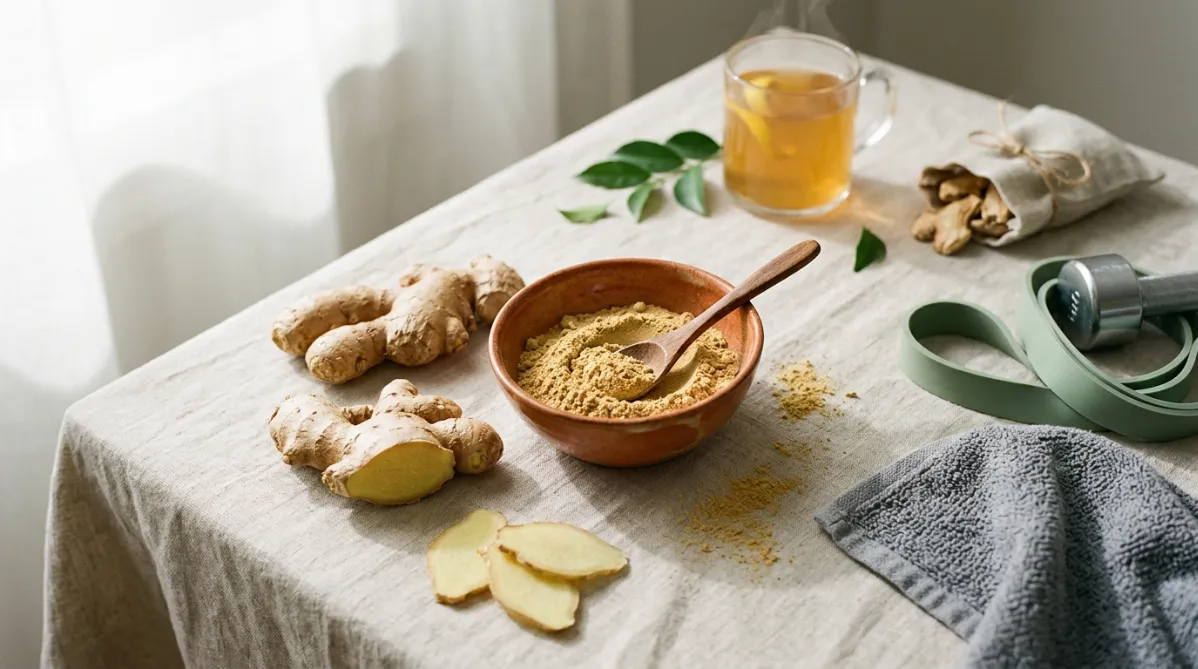
A wide, editorial-style still life photographed from slightly above on a pale oat-colored linen surface, lit by soft natural window light from the left. At the center sits a rustic ceramic bowl of finely ground golden-tan ginger powder, with a small wooden spoon resting in it and a light dusting of spice across the cloth. Beside it lie several whole ginger rhizomes, knobby and honey-brown. One is sliced open to show its pale yellow, fibrous interior, and a few paper-thin slices fan out in the foreground. On the right, a folded heather-gray gym towel, a matte sage-green resistance band coiled loosely, and a single brushed-steel dumbbell sit just inside the frame, softly out of focus. A glass of warm amber ginger tea steams faintly near the upper right, with a thin curl of lemon peel inside. A few fresh green leaves and a small linen pouch of dried ginger add texture. The palette is warm and muted: cream, soft gold, sage, terracotta, and charcoal accents. The shallow depth of field keeps the ginger bowl and sliced root crisp while the gym elements melt into a gentle blur. Shadows are long and soft, and the negative space on the upper left leaves room for a headline. The mood is calm, clean, and modern, like a contemporary wellness or science journal cover. It is a natural, tactile, high-resolution photograph with subtle film grain and no text, no people, and no futuristic elements.
recovery

2 g de jengibre reducen el dolor muscular de aparición tardía en un ~25 % en dos ensayos

BY DR. GYMBRO ·

Una especia muy usada en la cocina se comparó con una de las quejas más universales del gimnasio: el dolor muscular de aparición tardía. En dos ensayos doble ciego, quienes tomaron 2 g de jengibre al día durante 11 días reportaron aproximadamente un 25 % menos de dolor 24 horas después de un entrenamiento excéntrico intenso. Sin embargo, el jengibre no mejoró de forma clara ni la fuerza ni la inflamación, y ningún estudio lo comparó con ibuprofeno. Aquí se resume la investigación, los posibles mecanismos, sus limitaciones y a quién podría interesar probarlo.
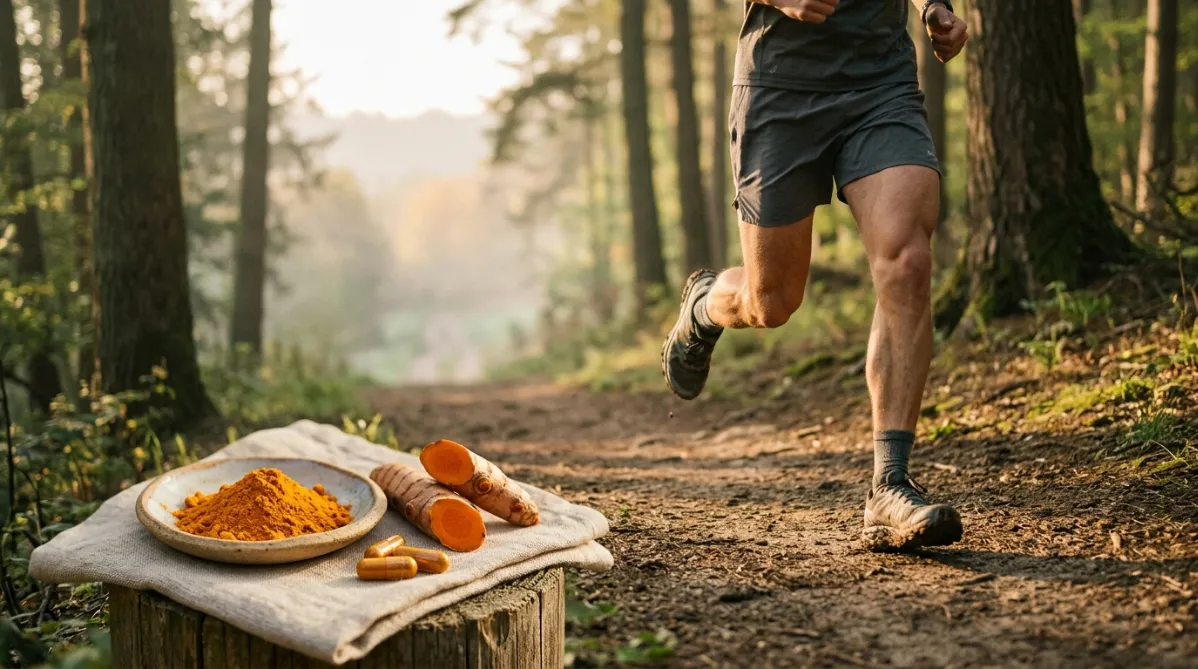
A wide, editorial-style photograph of a male runner mid-stride on a gently sloping forest trail at early morning, shot from a low three-quarter angle. Soft golden light filters through tall trees and casts long dappled shadows across the packed dirt path. The runner is captured from the waist down and slightly from the side, wearing charcoal running shorts and worn trail shoes, with the quadriceps and thigh muscles defined and naturally lit. A fine mist hangs in the background, and the slope descends toward a blurred, softly glowing horizon.

In the foreground, slightly out of focus on a weathered wooden post or flat mossy stone at the trail's edge, rests a small ceramic dish holding a pile of vivid golden-orange turmeric powder. Beside it sit two fresh turmeric roots, one cut open to show a deep saffron interior, and a few amber capsules. A thin linen cloth is draped beneath them. The saturated yellow-orange of the turmeric contrasts with the cool green and muted brown tones of the forest, creating a strong color anchor on the left third of the frame.

The composition follows the rule of thirds, with the turmeric in the lower left foreground and the runner in the right two-thirds, leaving open negative space in the upper left for headline text. Shallow depth of field, creamy bokeh, and natural film-like grain give it a refined, modern health-and-science magazine feel. The palette is warm and earthy: golden amber, moss green, soft cream, and deep umber. The lighting is natural and gentle, with subtle rim light on the runner's calves and hamstrings. No text, no logos, no graphics, and no futuristic elements. The result should feel clean, calm, and aspirational, like a cover image for a premium wellness and sports-nutrition journal.
recovery

Meriva (curcumina) reduce el daño muscular visible en RMN tras correr cuesta abajo

BY DR. GYMBRO ·

Un pequeño ensayo aleatorizado de 2014 descubrió que la curcumina Meriva, una formulación basada en lecitina de Indena, se asoció con menos lesiones musculares visibles en RMN después de una carrera cuesta abajo. Veinte hombres tomaron 1 g dos veces al día, empezando 48 horas antes de la prueba y continuando 24 horas después. El hallazgo de imagen fue sobresaliente, pero la reducción del dolor fue significativa solo en la parte frontal de los muslos. Los marcadores de estrés oxidativo y la histología muscular no mostraron diferencias.
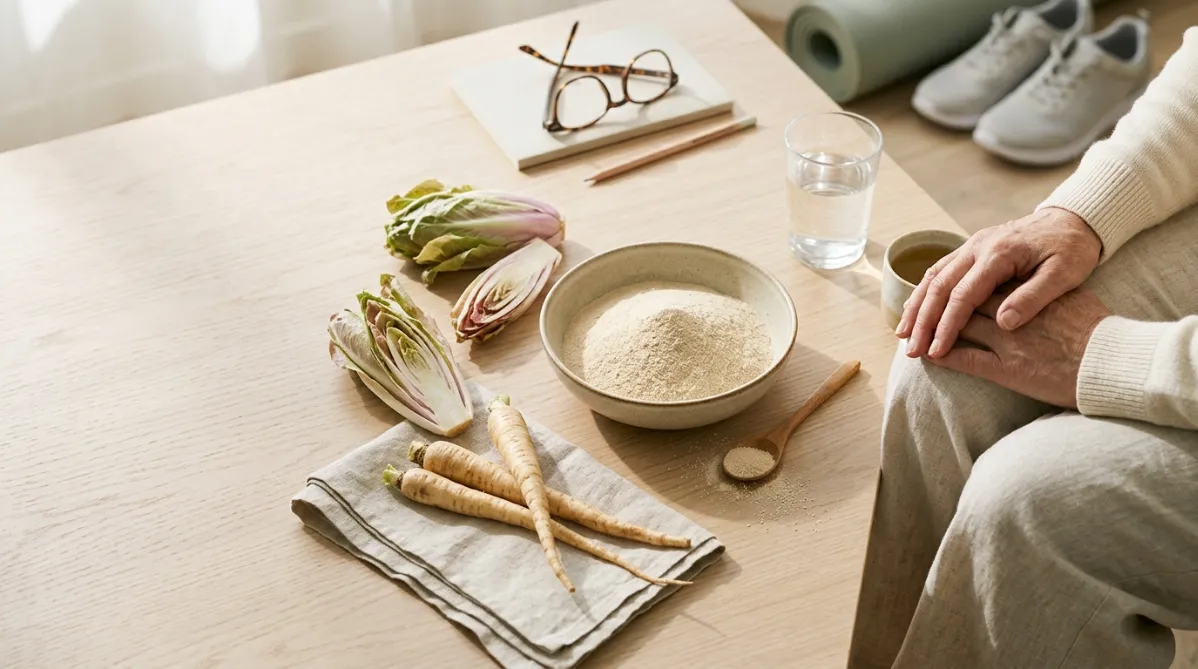
A bright, airy editorial still life photographed from slightly above on a pale oak table in soft morning window light. At the center sits a shallow ceramic bowl in matte oatmeal glaze filled with fine, creamy-beige inulin powder. A wooden spoon rests beside it, with a few fine grains scattered across the wood. Around the bowl, several fresh chicory roots with pale tan skin and delicate taper lie on a folded linen napkin. Next to them are a few crisp, leafy chicory heads in muted green and soft magenta tones, and a halved root that shows its pale, fibrous interior.

On the right side of the frame, a pair of older adult hands in a soft cream knit sleeve rest gently on a knee covered by relaxed linen trousers. A glass of water stands nearby, along with a small ceramic cup of herbal tea. A folded pair of simple tortoiseshell reading glasses and a minimalist notebook with a thin pencil sit in the background, hinting at a considered, research-minded atmosphere. A slim yoga mat edge and a pair of light-gray walking shoes appear softly out of focus in the far corner, suggesting gentle exercise and mobility without overwhelming the scene.

The color palette is calm and modern: warm creams, sage green, soft terracotta, and touches of dusty rose from the chicory leaves. Shadows are gentle and long, with natural light raking across the table and highlighting the textures of powder, linen, wood, and root. The depth of field is shallow, with the bowl and roots in crisp focus and the background melting into a creamy blur. The composition leaves generous negative space on the left third of the frame, suitable for headline overlay, and the overall feel is clean, wholesome, and contemporary, like a lifestyle-meets-science feature in a trendy online health journal. Fine film-like grain, true-to-life color, and a quiet, optimistic mood.
recovery

Fibra barata del intestino supera al placebo en el dolor de rodilla: reducción de 1,11 puntos

BY DR. GYMBRO ·

Una fibra barata obtenida de la raíz de achicoria acaba de superar al placebo en el alivio del dolor de rodilla en un ensayo aleatorizado. Veinte gramos al día de inulina redujeron el dolor en 1,11 puntos, superando el umbral de 1 punto considerado clínicamente relevante, y además mejoraron la fuerza de agarre. Sólo los grupos que recibieron inulina mostraron aumentos de butirato y GLP‑1, lo que sugiere una conexión intestino‑músculo. Sin embargo, los participantes eran adultos mayores con artrosis de rodilla (media 67,5 años) y el ejercicio fisioterapéutico redujo el dolor aún más (1,55 puntos). Aquí se resumen los hallazgos, sus limitaciones y cómo utilizarlos con sensatez.
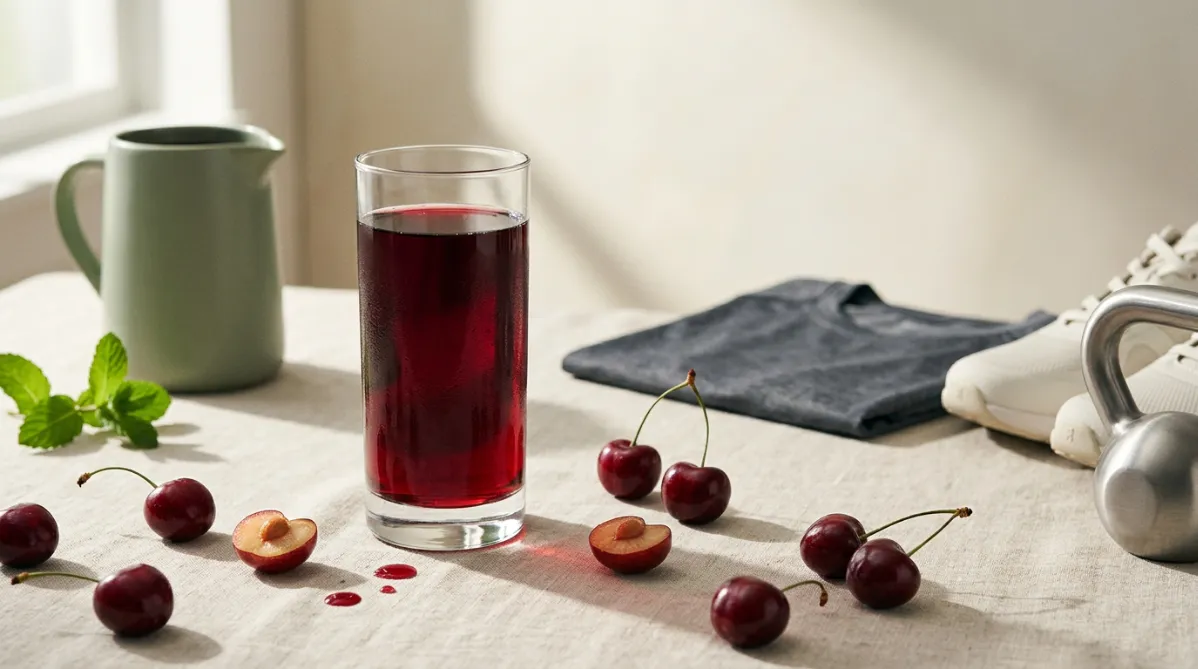
A wide, softly lit editorial still life on a pale oatmeal linen surface. In the center sits a tall, clear glass filled with deep garnet-red tart cherry juice, with condensation beading on the outside and a faint ruby glow where light passes through it. Around it are a scattering of fresh Montmorency cherries, some with stems and some halved to show pale amber flesh and a single pit. A few drops of juice have splashed onto the linen, leaving small crimson stains. To the right, slightly out of focus, lies a folded charcoal-gray running shirt, a pair of minimalist off-white running shoes, and a small brushed-steel kettlebell, suggesting both endurance and strength training without a gym in view. On the left, a ceramic pitcher in matte sage green holds more juice, and a sprig of fresh mint adds a small contrast.

Window light comes from the upper left, casting long, gentle shadows and creating a warm morning feel. The palette is restrained and modern: deep burgundy, cream, sage, and soft slate, with plenty of negative space in the upper right for headline text. The camera angle is a shallow three-quarter view from slightly above, with a shallow depth of field. The foreground cherries are razor sharp and the background melts into a creamy blur. Subtle film grain, natural color grading, and a clean, minimalist composition give it the polished feel of a contemporary health and science magazine. No text, no logos, no people, and no futuristic elements. The overall mood is calm, fresh, and restorative, hinting at recovery and balance.
recovery

Truco del jugo de cereza ácida: recuperación de fuerza más rápida y niveles de IL‑6 más bajos

BY DR. GYMBRO ·

Maratonistas y levantadores juran por el jugo de cereza ácida para recuperarse, y un estudio controlado con placebo lo puso a prueba. En 20 corredores, la fuerza isométrica se recuperó significativamente más rápido (P = 0.024), mientras que los niveles de IL‑6, CRP y ácido úrico descendieron y el estado antioxidante aumentó alrededor de un 10 %. Sin embargo, la creatina quinasa, LDH y el dolor muscular no cambiaron de forma significativa, lo que matiza las promesas publicitarias. Aquí explicamos qué hicieron, qué descubrieron y quién podría beneficiarse realmente.

This page is available in