Dr. Gymbro
←

#endurance

13 articles
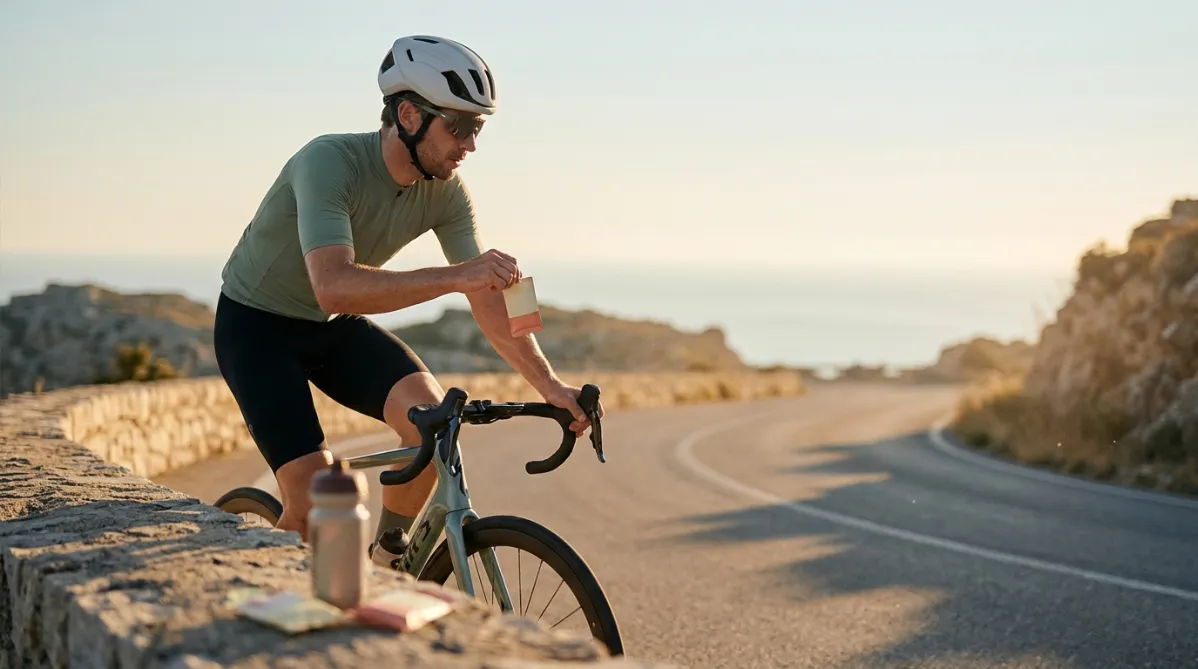
A cyclist in profile, riding a sleek road bike along a quiet coastal road in warm golden-hour light, shot from a low side angle with a shallow depth of field. The rider wears a muted sage-green jersey, black bib shorts, a matte white helmet, and sunglasses. Their face shows calm, focused fatigue, with a faint sheen of sweat on the forearms. One hand is lifted slightly from the handlebars, holding a small, unbranded matte gel packet in soft cream and coral tones, just before opening it. The road curves gently behind them toward a hazy, softly blurred horizon of pale sea and distant hills, with long amber shadows stretching across the asphalt.

In the foreground, slightly out of focus, a few gel sachets and a bike bottle rest on a weathered stone wall at the left edge of the frame, adding editorial depth. Fine dust and sunlight glow in the air. The palette is warm and restrained: butter yellow, soft peach, sage, and slate blue, with gentle film-like grain. The composition leaves open negative space in the upper right, a pale gradient sky, for headline overlay. The overall look is a modern, minimalist sports-science magazine photograph: natural, premium, and clean, with realistic textures, cinematic but understated color grading, and no text, logos, or graphics.
nutrition

Geles de bicarbonato a mitad del recorrido suman 12 W al final de una prueba de ciclismo de 3 horas

BY DR. GYMBRO ·

¿Y si el mejor momento para tomar bicarbonato no es antes de la carrera, sino durante ella? Un nuevo estudio cruzado aleatorio con 11 ciclistas entrenados probó geles de bicarbonato con carbohidratos durante 3 horas de pedaleo. En estado de fatiga, la potencia en una prueba de 12 minutos fue 12 W mayor que con solo carbohidratos, y los síntomas gastrointestinales no fueron diferentes. Sin embargo, los sprints y los esfuerzos de 2 minutos no mostraron ganancias significativas; la muestra fue muy pequeña y los productos provenían de MNSTRY. Esto es lo que revelan los números.
A sunlit outdoor running track in late afternoon, shot from a low angle with shallow depth of field. In the foreground, a matte black bottle with a minimal off-white label sits on the edge of a warm terracotta-colored track lane, beside a folded white towel and a small glass of amber liquid catching golden light. Condensation beads on the bottle. A faint heat shimmer rises from the track surface and softens the background.

In the midground, slightly out of focus, a lean athlete in a sage-green tank top and charcoal shorts runs on a treadmill-like stretch of track, a thin sheen of sweat on their shoulders, their expression focused and calm. Their motion is gently blurred, suggesting endurance and rhythm. Long soft shadows stretch across the lane lines.

The background fades into hazy peach, apricot, and pale yellow tones, with the suggestion of tall trees and a distant stadium wall. Warm sun flare enters from the upper right, creating a subtle glow and a few soft light streaks across the frame.

Subtle editorial touches: a small notebook with a pencil and a stopwatch rest beside the bottle, hinting at data and timing without any text legible. The color palette is warm and muted, with terracotta, cream, sage, and charcoal accents, and a fine film-like grain. The composition leaves open negative space on the left third for a headline overlay. The overall mood is clean, modern, and health-journal inspired, natural and aspirational, with a calm scientific curiosity rather than hype.
nutrition

Bebidas de cetona en el calor: ¿Más resistencia y mejor memoria?

BY DR. GYMBRO ·

Se dice que las bebidas de cetona son para los biohackers que buscan quemar grasa, pero un nuevo ensayo bajo estrés térmico sugiere que también pueden ayudar a terminar más fuerte. En 17 hombres entrenados, el monoéster de cetona más cafeína extendió el tiempo hasta el agotamiento a 8,9 minutos frente a 7,0 con carbohidratos más cafeína, después de 90 minutos de ejercicio en cinta a 34 °C. La precisión de la memoria de trabajo en la tarea de 1‑back también mejoró, mientras que la frecuencia cardíaca y la temperatura central no mostraron diferencias relevantes. Sin embargo, en la tarea de 2‑back, el tiempo de reacción y la prueba de golpear‑evitar no hubo beneficio, y el estudio es pequeño, solo con hombres y de una sola sesión.
A wide, editorial-style flat lay photographed from above on a pale warm-gray linen surface in soft natural window light. At the center, a small open amber glass jar tips gently onto its side, spilling a few cream-colored capsules across the fabric. Next to the jar sits a loose arrangement of fresh mushrooms: a cluster of golden-tan reishi with glossy, lacquered caps, a few slender white enoki stems, a halved shiitake showing its pale gills, and a curl of turkey tail with concentric bands of rust, cream, and charcoal. A small wooden scoop holds a pile of fine beige mushroom powder.

On the left third of the frame, a matte black sports watch with a minimal face lies beside a folded sage-green running shirt and a pair of lightweight off-white running shoes, hinting at athletic training without showing a person. A slim white notebook with a single pencil rests nearby, open to a blank page with a faint hand-drawn line graph trending upward, in thin graphite strokes.

On the right side, a pair of clear glass beakers and a single small petri dish with a soft amber-tinted liquid add a subtle laboratory note, kept calm and organic. A single sprig of dried herbs and a few scattered oat-colored grains add texture.

The palette is earthy and refined: oatmeal, soft sage, terracotta, warm amber, and charcoal accents against the muted neutral background. Shadows are soft and diffused, with a gentle highlight on the glass and the glossy reishi cap. The composition leaves generous negative space in the upper right for a headline overlay. Shallow depth of field blurs the edges slightly, while the central mushrooms and capsules stay crisp. The overall feel is modern, clean, and trendy, like a wellness and science magazine cover, with tactile natural textures, minimal styling, and a quiet sense of curiosity and skepticism.
science research

Una cápsula de setas aumentó el VO2max un 14,8 % — pero hay un gran problema

BY DR. GYMBRO ·

Una cápsula de setas, 40 días y un aumento del 14,8 % en VO2max suena casi demasiado bueno para ser verdad. En este nuevo artículo de *Antioxidants* 50 jóvenes deportistas masculinos que tomaron 320 mg/día de un extracto multisetas rico en beta‑glucanos pasaron de 46,26 a 53,12 mL/kg/min. El gran problema es que el estudio careció de grupo placebo, no hubo aleatorización ni cegamiento, y los atletas siguieron entrenando durante el ensayo. Los experimentos celulares en cardiomiocitos de rata añaden una pista relacionada con la hipoxia, pero se probaron compuestos individuales, no la cápsula completa. Aquí analizamos lo que el estudio encontró, lo que no puede demostrar y a quién conviene ser escéptico.
A wide, editorial-style still life shot from a slightly elevated angle on a pale oatmeal-colored linen surface in soft, diffused morning light. At the center, a shallow matte ceramic bowl in warm terracotta holds a small mound of fine, golden-tan ashwagandha root powder. Beside it lie a few gnarled, dried ashwagandha roots and a sprig of green leaves with tiny orange-red berries in their papery husks. To the left, a minimalist amber glass supplement bottle sits with a few capsules spilled beside it, label blank and clean. A wooden scoop rests on the surface, dusted with powder.

On the right side of the frame, a pair of sleek, muted sage-green running shoes sits slightly off-center. A folded cream towel and a stainless steel water bottle sit just behind them, with a single brushed-steel kettlebell partly out of focus in the background to hint at strength training without dominating the scene. The running shoes and the botanical elements share equal visual weight, suggesting the endurance theme.

A thin, curved line of scattered powder sweeps across the linen from the bowl toward the shoes, like a gentle path or track. Soft shadows fall to the left, and a warm sunbeam crosses the surface and picks out the texture of the powder and the roots.

The palette is restrained and modern: warm terracotta, sage green, cream, soft gold, and touches of charcoal. The background is a blurred pale plaster wall with a hint of a window shadow. Shallow depth of field, crisp focus on the bowl and roots, and generous negative space in the upper left for a headline. Contemporary wellness magazine aesthetic, calm, natural, tactile, high-end lifestyle photography, no text, no people, no futuristic elements.
science research

La sorpresa de la ashwagandha: favorece la resistencia más que la fuerza

BY DR. GYMBRO ·

La ashwagandha suele promocionarse como potenciadora de fuerza y músculo, pero un metaanálisis reciente muestra que su mayor beneficio está en la resistencia aeróbica. Analizando 13 ensayos aleatorizados con 599 participantes, los autores hallaron un efecto medio de g = 0.54 para la resistencia, mientras que los incrementos de fuerza fueron positivos pero inciertos. La dosis que parece más eficaz se sitúa entre 500‑600 mg al día, aunque con importantes advertencias. Aquí se resume la evidencia, quién podría beneficiarse y quién debería pensarlo dos veces.
Wide landscape editorial photograph of a mountain biker mid-ride on a dusty red-orange singletrack trail in the South African Western Cape, golden hour light raking across the scene. The rider is in sharp focus on the right third of the frame, wearing a weathered cycling kit with a race number plate on the handlebars, dust kicking up from the rear tire. Behind them, rolling hills covered in fynbos shrubland and silhouetted protea plants fade into soft, hazy blue mountains. Warm amber sunlight creates long shadows and a soft rim light around the rider and bike.

In the lower left foreground, slightly out of focus, a small minimalist glass vial and a clear water bottle sit on a flat sun-bleached rock, with a few drops of liquid catching the light. Next to them, a simple matte paper notecard and a pencil suggest data collection, with no legible text. The vial and bottle are clean, understated, and modern, with no branding.

The color palette is earthy and refined: terracotta, ochre, sage green, dusty teal sky, and cream highlights. The composition uses shallow depth of field, a generous negative space in the upper left sky for headline overlay, and subtle film grain. The mood is contemplative, skeptical, and quietly sophisticated, like a feature photograph from a high-end outdoor sports and science magazine. Natural, candid, cinematic, shot on a 50mm lens with soft contrast and muted saturation. No futuristic elements, no glowing effects, no molecular graphics, no text.
science research

Ketone IQ elevó los cuerpos cetónicos en el Cape Epic, pero no hizo nada más

BY DR. GYMBRO ·

Los ciclistas que compitieron en los ocho días del Cape Epic tomaron Ketone IQ dos veces al día y alcanzaron alrededor de 1 mM de cetonas en sangre, pero su fatiga, frecuencia cardíaca, tiempo de reacción y recuperación fueron idénticos a los del grupo placebo. El ensayo doble ciego evaluó R‑1,3‑butanodiol en condiciones reales de carrera, no en laboratorio. Los autores señalan que la leve cetosis no fue eficaz y advierten que el butanodiol no debe confundirse con los ésteres de cetona. Con solo 18 participantes, el estudio tiene limitaciones, pero constituye un dato sobrio para quien piense en invertir en una costosa bebida cetogénica para recuperarse.
A cyclist in mid-ride, photographed from a low three-quarter side angle on a quiet country road at golden hour, wearing a matte navy jersey and a white helmet, with soft warm light catching the sweat on his forearms. His expression is calm and focused. The road bends gently through rolling green fields, and the background is softly blurred with creamy bokeh.

In the foreground on the left, a styled flat-lay-inspired still life sits on a weathered wooden surface and blends into the scene. It includes two clear water bottles with pale citrus-tinted liquid, a few torn energy gel packets in muted coral and sage, and a small pile of dried apricots and sliced banana. A handful of glossy orange slices adds a bright accent. The shallow depth of field keeps the cyclist sharp in the middle distance while the foreground items are gently softened.

The color palette is warm and editorial: soft peach, muted terracotta, sage green, cream, and deep navy. The light is natural and golden, with long, gentle shadows and a slight film-grain texture, like a high-end lifestyle or sports-science magazine spread. The composition follows the rule of thirds, with the cyclist on the right third and open negative space in the upper left, suitable for headline overlay.

The mood is energetic yet thoughtful, clean and modern, and the photograph feels authentic rather than staged. There are no logos, no readable text, and no futuristic or sci-fi elements. The overall look is crisp, airy, and refined, in the style of a contemporary health and performance journal cover.
nutrition

100 g de carbohidratos por hora mantuvieron más rápidos a los ciclistas — y no fue por el glucógeno

BY COACH RYAN ·

A las cuatro horas de una salida exigente, los ciclistas que ingirieron 100 g de carbohidratos por hora perdieron menos potencia que los que consumieron 60 g. La sorpresa: su glucógeno muscular quedó prácticamente sin cambios. Este estudio aleatorizado, doble ciego y cruzado con 15 hombres entrenados sugiere que hay algo más allá del ahorro de glucógeno. Desglosamos los números, el protocolo 1:0,8 de glucosa‑fructosa y cómo aplicarlo.
A landscape editorial photograph of a lone runner's hands resting on a weathered wooden table beside a small white ceramic dish of fine white powder and a clear glass of water, shot in soft morning light. A slim matte aluminum energy drink can, unbranded with a minimalist pale sage-green label, stands slightly out of focus in the background, with a single scoop of powder dusted lightly on the tabletop. A pair of worn running shoes and a folded gray towel sit at the edge of the frame. Through a large window behind them, a blurred misty trail winds through green trees at sunrise, with warm golden light spilling across the scene.

The color palette is calm and modern: creamy off-white, sage green, warm honey gold, and soft charcoal. The composition follows the rule of thirds, with the dish and glass in the lower left third and generous negative space on the right for a title overlay. The depth of field is shallow, with a crisp focus on the powder's delicate texture and tiny glints of light on the glass rim. The mood is clean, thoughtful, and quietly energetic, like a contemporary health and science magazine feature. Natural grain, subtle film-like softness, and gentle shadows give it an authentic lifestyle-editorial look. There are no text, logos, or futuristic elements, only tactile, real-world materials like wood, ceramic, glass, cotton, and metal.
nutrition

El ingrediente de la bebida energética que mejora la resistencia por sí solo

BY DR. GYMBRO ·

Todos hablan de la cafeína, pero otro componente de la lata de bebida energética podría estar haciendo su trabajo en silencio. Un meta‑análisis de 2018 que incluyó 10 estudios halló que la taurina aislada mejoró el rendimiento de resistencia (g de Hedges = 0,40) con una sola dosis. Ni la cantidad (1‑6 g) ni la duración de la suplementación modificaron de forma relevante el efecto. El problema es que la evidencia es escasa y los intervalos de confianza son amplios, por lo que se trata de una señal prometedora, no de una garantía. Aquí explicamos qué mostró el estudio y cómo probar la taurina de forma sensata.
A wide, landscape editorial photograph with soft natural morning light. In the foreground, a rustic matte ceramic bowl rests on a pale oak wooden table, filled with vivid deep-green spirulina powder heaped in a gentle mound. A small wooden spoon dusted with the powder lies beside it, and a few scattered green flecks dust the surface. Next to the bowl sits a clear glass of water with a swirl of emerald green just blending in, catching sunlight and casting soft green-tinted shadows.

In the middle ground, slightly out of focus, a pair of worn running shoes in muted sage and cream tones sits on the edge of the table, laces loosely undone. A simple analog stopwatch with a clean white face lies beside them, its hands frozen at a moment suggesting a close finish. A folded linen towel in warm oatmeal tone drapes casually nearby.

The background is a softly blurred outdoor setting seen through a large window: a quiet tree-lined running path at dawn, with golden-hazy light, dewy greenery, and a faint mist. The color palette is calm and modern: deep emerald, sage, cream, warm wood, and touches of soft gold. The composition leaves generous negative space on the right side for headline text, with a shallow depth of field, crisp detail on the powder texture, and a clean, minimalist, lifestyle-magazine aesthetic. Subtle film-like grain, natural shadows, and a fresh, healthy, energetic mood. No people, no text, no logos.
nutrition

La espirulina ayudó a los corredores a durar un 32 % más, pero hay una trampa

BY DR. GYMBRO ·

Los corredores que tomaron espirulina durante cuatro semanas fueron capaces de mantener un esfuerzo máximo aproximadamente un 32 % más tiempo tras una agotadora carrera de dos horas. El mismo estudio detectó un aumento del 10,9 % en la oxidación de grasas y niveles más altos del antioxidante glutatión. Pero, antes de comprarla, hay una trampa: sólo nueve hombres participaron y la ganancia real fue de unos 39 segundos. A continuación, te contamos qué muestra la investigación, por qué podría funcionar y cómo probarla de forma segura.
A landscape editorial photograph in soft natural morning light. In the foreground on a rustic light oak table, a small cluster of fresh Rhodiola rosea plants with thick succulent blue-green leaves and tiny golden-yellow flower clusters rests beside a few dried, knobby amber-brown rhizome pieces. A matte ceramic cup of pale golden herbal tea sits beside them, with a thin curl of steam and a small linen cloth. The plants and roots are sharp, with fine texture and dewy highlights.

In the softly blurred background, a lean cyclist in a fitted charcoal jersey stands beside a road bike on a quiet country lane at sunrise. Rolling green hills fade into pale mist behind them, and warm light rims the rider's shoulders. The cyclist tightens a glove, calm and focused, in a pre-ride moment of preparation. A water bottle is mounted on the bike frame, and a simple analog stopwatch with a brushed metal casing lies on the table near the herbs, hinting at timed effort.

The palette is muted and modern: sage green, warm cream, soft gold, and slate gray, with gentle peach tones from the sunrise. Shallow depth of field, a clean, airy composition with generous negative space on the right third for headline text, and subtle film grain. The mood is calm, health-conscious, and quietly athletic, like a premium wellness and sports science magazine cover. No text, no logos, no futuristic elements.
science research

Rhodiola Rosea: ¿Un pre‑entrenamiento sin estimulantes para el cardio intenso?

BY DR. GYMBRO ·

Un ensayo cruzado de 2013 encontró que una dosis única de 3 mg/kg de Rhodiola rosea, tomada una hora antes de una prueba de ciclismo de 6 millas, redujo el tiempo final de 25,8 a 25,4 minutos. La frecuencia cardíaca del calentamiento bajó de 140 a 136 lpm y la percepción del esfuerzo pasó de 6,6 a 6,0. La ventaja es pequeña, alrededor del 1,5 %, y proviene de sólo 18 personas, por lo que no es un milagro. Sin embargo, el hecho de que se perciba menos esfuerzo la convierte en una opción intrigante sin estimulantes para atletas de resistencia. A continuación se muestra lo que revelan los datos y cómo probarlo de forma sensata.
A wide, editorial-style flat lay photographed from above on a pale, warm-gray stone surface lit by soft natural window light. On the left, a matte white supplement sachet and a small frosted glass jar of off-white probiotic powder sit beside a wooden scoop dusted with fine granules. In the center, a modern minimalist stopwatch with a brushed silver case and crisp white face rests on a folded slate-blue running towel, its hands frozen just past the half-minute mark. On the right, a pair of sleek running shoes in cream and sage green are angled diagonally, with a few strands of laces trailing across the surface. Scattered around the arrangement are fresh, natural gut-health cues: a halved kefir-colored ceramic bowl of creamy yogurt with a drizzle of honey, a few sprigs of fresh mint, sliced green apple, and a handful of raw oats. A small glass of water with delicate condensation catches a soft highlight in the background. The color palette is calm and refined: sage green, cream, soft slate blue, and touches of warm honey gold against the neutral stone. Shadows are long and gentle, creating depth and a quiet, premium wellness-journal mood. The shallow depth of field softly blurs the edges, leaving the stopwatch and probiotic jar in crisp focus. Negative space on the upper right of the composition leaves room for a headline overlay. The overall feel is clean, modern, and trendy, like a contemporary health and sports science magazine cover, with realistic textures, natural tones, and no futuristic or digital elements.
nutrition

Probiótico SLAB51: una semana aporta 33 segundos a atletas de élite

BY DR. GYMBRO ·

Una semana de consumo del probiótico multiestrógeno SLAB51 permitió a atletas de élite durar aproximadamente 33 segundos más en una prueba de cinta de correr, mientras que una sola dosis no mostró efecto y el VO₂máx no cambió. El ensayo aleatorizado, doble ciego y cruzado también detectó niveles más altos de la enzima antioxidante SOD antes del ejercicio. ¿Qué es SLAB51 y por qué la microbiota intestinal podría influir en la resistencia? Este artículo desglosa el diseño del estudio, los resultados y la utilidad real para los deportistas, además de analizar sus limitaciones: una muestra pequeña de hombres de élite y una intervención muy breve.
A wide, editorial-style flat lay on a warm, matte cream stone surface, shot from slightly above in soft natural morning light. On the left, a ceramic espresso cup in muted terracotta holds dark coffee, with a few roasted coffee beans scattered beside it. In the center, a small wooden board holds three bright red chili peppers, one sliced open to show pale seeds, next to a small pile of coarse red pepper flakes. On the right, a pair of minimalist off-white running shoes with sage green accents rests at an angle, and a slim stopwatch with a clean white face lies in front of them. Three small matte white capsules sit in a neat row at the center of the composition, a quiet nod to the placebo and the active doses. Soft shadows fall to the lower right. A sprig of dried eucalyptus and a folded linen cloth in oatmeal tones add texture at the edges. The palette is warm and restrained: terracotta, chili red, cream, sage, and charcoal brown, with a gentle pop of red as the focal accent. The depth of field is shallow, so the foreground beans are slightly soft and the chilies and capsules stay crisp. The mood is clean, modern, and magazine-like, in the style of a contemporary health and science journal. There is no text, no people, and no logos, and plenty of negative space on the upper left and right edges leaves room for a headline overlay.
nutrition

Cafeína + capsicina superó al placebo en una carrera de 10 km; la capsicina sola no lo hizo

BY COACH RYAN ·

Un compuesto de chile combinado con cafeína fue la única mezcla que superó al placebo en una carrera de 10 km, mientras que la capsicina sola no produjo efecto. La diferencia se debió a la cafeína (6 mg/kg, unos 450 mg para un corredor de 75 kg) y se acompañó de insomnio, ansiedad, dolor de cabeza y taquicardia. Aquí tienes los hallazgos del estudio con 20 corredores y quién debería evitarlo.
A cyclist's legs mid-pedal on a stationary road bike, shot in a bright, airy, minimalist studio with a soft warm-grey backdrop. In the foreground on a pale oak table sits a small ceramic dish holding four deep coral-red softgel capsules, with a few translucent droplets of red-orange oil glistening beside them. Beside the dish is a sprig of dried red microalgae-toned seaweed and a halved wild salmon fillet, its coral flesh echoing the capsule color. Behind the table, slightly out of focus, a cyclist in a fitted charcoal jersey and matte black shorts rides a bike on an indoor trainer. Only the torso and legs are visible, with no face. A white towel hangs over the handlebars and a clear water bottle catches the light.

Soft diffused morning light streams from a large window on the left, creating long gentle shadows and a subtle golden-hour glow on the skin and the glossy capsules. The palette is restrained and editorial: warm cream, sand, soft grey and charcoal, with vivid coral-red as the single accent color. A minimalist analog stopwatch with a clean white face sits on the table, its hands near the 85-minute mark. A thin, elegant line-graph shape is subtly suggested by a curved strip of red ribbon lying on the table, rising from left to right to hint at the performance gain without any text.

The composition follows the rule of thirds, with the capsules and stopwatch in the lower left and the cyclist's motion-blurred legs sweeping across the right. Shallow depth of field, crisp macro detail on the capsules, and a fine film-like grain. The overall feel is a modern health and science magazine cover: clean, calm, sophisticated, and natural, with negative space in the upper area for a headline. There are no futuristic elements, no glowing effects, no laboratory equipment, and no text or logos. Landscape 16:9 format.
nutrition

La astaxantina, tras 4 días, incrementó el tiempo hasta el agotamiento en ciclismo de 72 a 85 minutos en un pequeño ensayo

BY DR. GYMBRO ·

Cuatro días de astaxantina (28 mg/día) prolongaron el tiempo hasta el agotamiento en ciclismo de unos 72 a 85 minutos, lo que representa un aumento de alrededor del 18 %. El mismo protocolo atenuó la elevación de los marcadores de daño muscular (CK y LDH) y de peroxidación lipídica (MDA) tras un esfuerzo intenso al 75 % del VO2 máx. Los indicadores inflamatorios y el consumo de combustible no variaron, de modo que el mecanismo sigue sin quedar claro. La dosis supera con creces la que contienen la mayoría de las cápsulas blandas, y el estudio contó solo con diez hombres jóvenes. A continuación se presentan los números y los límites de la evidencia.
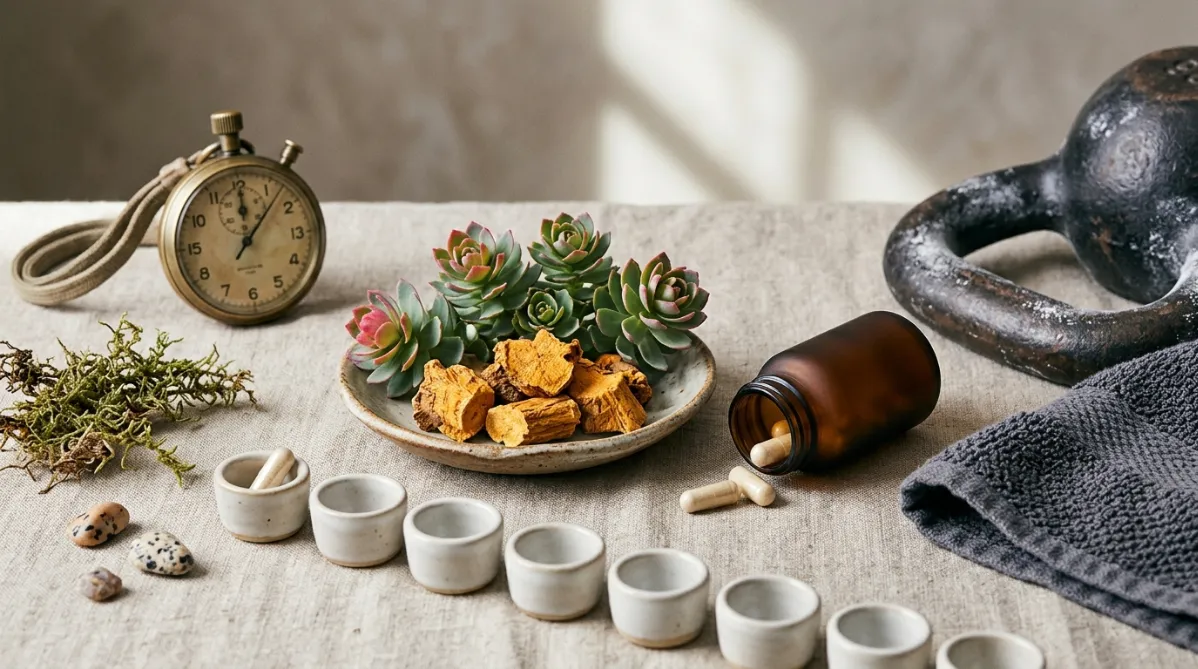
A wide, editorial still life photographed in soft natural window light on a pale oatmeal-colored linen surface. At the center sits a small, rustic ceramic dish holding a handful of dried golden-orange Rhodiola rosea root pieces and a few fresh, fleshy green-gray succulent rosettes with rosy-pink tips. Beside it, a single matte amber glass capsule bottle lies on its side, with two cream-colored capsules spilling out. On the left, a minimalist analog stopwatch with a brushed brass case rests slightly out of focus, its hands suggesting a duration just past the quarter-hour mark. On the right, a worn, chalk-dusted steel kettlebell handle and a folded charcoal gym towel fill the negative space, hinting at lifting without showing a full gym scene.

In the foreground, a neat row of seven tiny ceramic pill cups arranged in a gentle diagonal line, the first cup holding one capsule and the rest sitting empty, as a quiet visual metaphor for a single dose versus daily dosing. A sprig of dried alpine moss and a few small speckled pebbles add organic texture. The background is a softly blurred warm-gray plaster wall with a gentle gradient shadow cast by a window frame, creating diagonal light stripes across the scene.

The palette is muted and earthy: sage green, terracotta, warm cream, brushed brass, and soft charcoal, with one subtle pop of coral from the Rhodiola tips. Shallow depth of field, crisp focus on the root and capsules, and fine film-like grain. The composition leaves generous clean negative space in the upper left for a headline overlay. The overall feel is a modern wellness and science journal: calm, tactile, minimal, and sophisticated, with a slightly moody, high-end magazine look. There is no text, no people, and no futuristic elements.
nutrition

200 mg de Rhodiola aumentan 24 segundos; cuatro semanas de consumo diario no aportan nada

BY DR. GYMBRO ·

Una sola dosis de 200 mg de Rhodiola rosea tomada una hora antes del ejercicio incrementó el tiempo a la extenuación de 16,8 a 17,2 minutos y elevó el VO₂‑máx en un ensayo cruzado doble ciego. La sorpresa es que cuatro semanas de consumo diario no reforzaron ese efecto ni modificaron ninguna variable medida. La ganancia fue pequeña, apenas 24 segundos, y la fuerza, el tiempo de reacción y la atención permanecieron sin cambios. Aquí tienes lo que realmente encontró el estudio, quién podría probar una dosis aguda y por qué no deberías contar con “cargar” la rhodiola.

This page is available in