Dr. Gymbro
←

#endurance

13 articles
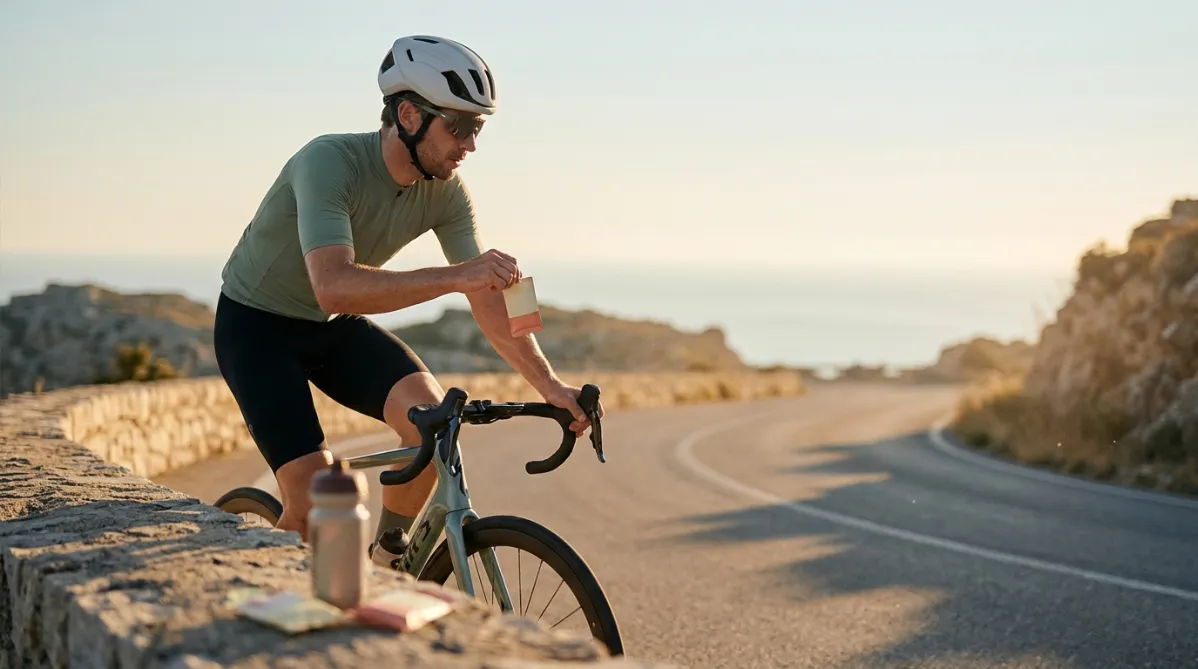
A cyclist in profile, riding a sleek road bike along a quiet coastal road in warm golden-hour light, shot from a low side angle with a shallow depth of field. The rider wears a muted sage-green jersey, black bib shorts, a matte white helmet, and sunglasses. Their face shows calm, focused fatigue, with a faint sheen of sweat on the forearms. One hand is lifted slightly from the handlebars, holding a small, unbranded matte gel packet in soft cream and coral tones, just before opening it. The road curves gently behind them toward a hazy, softly blurred horizon of pale sea and distant hills, with long amber shadows stretching across the asphalt.

In the foreground, slightly out of focus, a few gel sachets and a bike bottle rest on a weathered stone wall at the left edge of the frame, adding editorial depth. Fine dust and sunlight glow in the air. The palette is warm and restrained: butter yellow, soft peach, sage, and slate blue, with gentle film-like grain. The composition leaves open negative space in the upper right, a pale gradient sky, for headline overlay. The overall look is a modern, minimalist sports-science magazine photograph: natural, premium, and clean, with realistic textures, cinematic but understated color grading, and no text, logos, or graphics.
nutrition

Des gels contenant du bicarbonate pris en cours d'effort augmentent de 12 W la puissance lors d’un test cycliste de 3 heures

BY DR. GYMBRO ·

Et si le meilleur moment pour consommer du bicarbonate n’était pas avant la course, mais pendant ? Un essai randomisé croisé auprès de 11 cyclistes entraînés a comparé des gels au bicarbonate et aux glucides pendant trois heures de vélo. Après l’effort, la puissance moyenne sur un test de 12 minutes était supérieure de 12 W par rapport aux seuls glucides, sans différence de troubles gastriques. Aucun avantage n’a été observé sur les sprints ni sur les efforts de deux minutes, et l’échantillon reste très restreint.
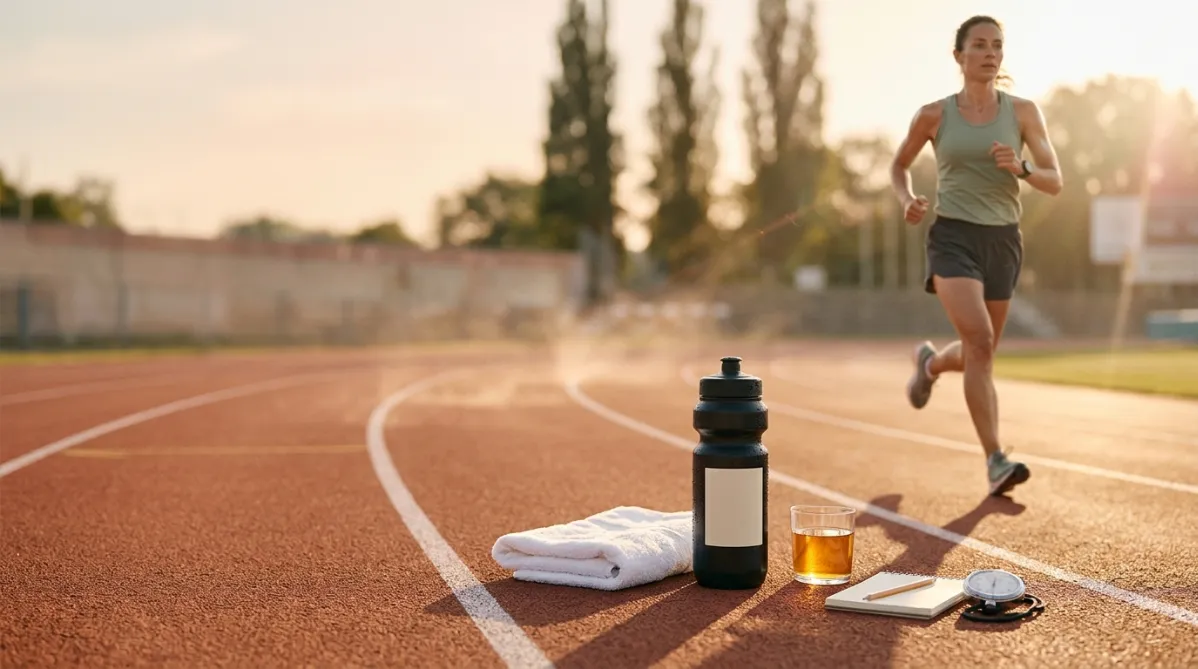
A sunlit outdoor running track in late afternoon, shot from a low angle with shallow depth of field. In the foreground, a matte black bottle with a minimal off-white label sits on the edge of a warm terracotta-colored track lane, beside a folded white towel and a small glass of amber liquid catching golden light. Condensation beads on the bottle. A faint heat shimmer rises from the track surface and softens the background.

In the midground, slightly out of focus, a lean athlete in a sage-green tank top and charcoal shorts runs on a treadmill-like stretch of track, a thin sheen of sweat on their shoulders, their expression focused and calm. Their motion is gently blurred, suggesting endurance and rhythm. Long soft shadows stretch across the lane lines.

The background fades into hazy peach, apricot, and pale yellow tones, with the suggestion of tall trees and a distant stadium wall. Warm sun flare enters from the upper right, creating a subtle glow and a few soft light streaks across the frame.

Subtle editorial touches: a small notebook with a pencil and a stopwatch rest beside the bottle, hinting at data and timing without any text legible. The color palette is warm and muted, with terracotta, cream, sage, and charcoal accents, and a fine film-like grain. The composition leaves open negative space on the left third for a headline overlay. The overall mood is clean, modern, and health-journal inspired, natural and aspirational, with a calm scientific curiosity rather than hype.
nutrition

Boissons cétoniques sous la chaleur : plus d'endurance et une mémoire plus vive ?

BY DR. GYMBRO ·

Les boissons cétoniques sont souvent présentées comme le carburant des biohackers qui souhaitent brûler les graisses. Une nouvelle étude, menée sous stress thermique, suggère qu’elles pourraient également vous aider à tenir plus longtemps. Chez 17 hommes entraînés, le monoester cétonique associé à de la caféine a prolongé le temps d’épuisement à 8,9 minutes contre 7,0 minutes avec des glucides et de la caféine, après 90 minutes d’effort sur tapis à 34 °C. La précision de la mémoire de travail sur la tâche 1‑back s’est également améliorée, tandis que la fréquence cardiaque et la température centrale n’ont pas présenté de différences significatives. En revanche, les tâches 2‑back, le temps de réaction et le test « hit‑and‑avoid » n’ont montré aucun bénéfice, et l’étude était petite, masculine et limitée à une seule session. Voici ce que les données prouvent, et ce qu’elles ne prouvent pas.
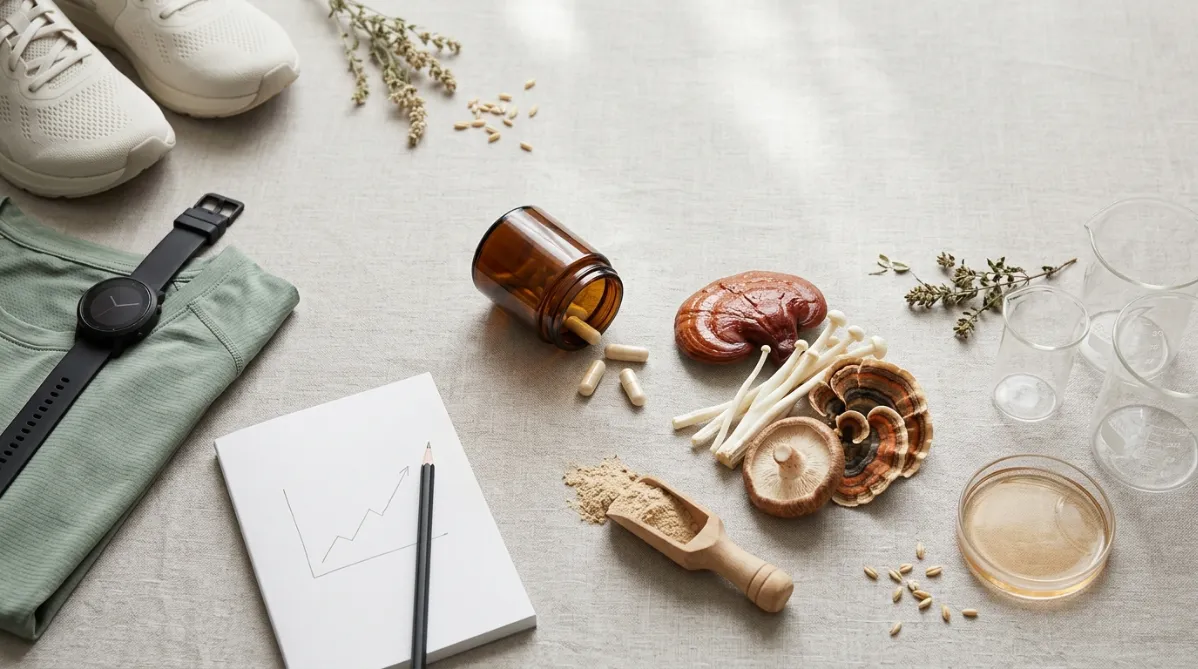
A wide, editorial-style flat lay photographed from above on a pale warm-gray linen surface in soft natural window light. At the center, a small open amber glass jar tips gently onto its side, spilling a few cream-colored capsules across the fabric. Next to the jar sits a loose arrangement of fresh mushrooms: a cluster of golden-tan reishi with glossy, lacquered caps, a few slender white enoki stems, a halved shiitake showing its pale gills, and a curl of turkey tail with concentric bands of rust, cream, and charcoal. A small wooden scoop holds a pile of fine beige mushroom powder.

On the left third of the frame, a matte black sports watch with a minimal face lies beside a folded sage-green running shirt and a pair of lightweight off-white running shoes, hinting at athletic training without showing a person. A slim white notebook with a single pencil rests nearby, open to a blank page with a faint hand-drawn line graph trending upward, in thin graphite strokes.

On the right side, a pair of clear glass beakers and a single small petri dish with a soft amber-tinted liquid add a subtle laboratory note, kept calm and organic. A single sprig of dried herbs and a few scattered oat-colored grains add texture.

The palette is earthy and refined: oatmeal, soft sage, terracotta, warm amber, and charcoal accents against the muted neutral background. Shadows are soft and diffused, with a gentle highlight on the glass and the glossy reishi cap. The composition leaves generous negative space in the upper right for a headline overlay. Shallow depth of field blurs the edges slightly, while the central mushrooms and capsules stay crisp. The overall feel is modern, clean, and trendy, like a wellness and science magazine cover, with tactile natural textures, minimal styling, and a quiet sense of curiosity and skepticism.
science research

Une capsule de champignon a augmenté le VO₂max de 14,8 % — mais il y a un gros piège

BY DR. GYMBRO ·

Une capsule de champignon, 40 jours d’utilisation et une hausse de 14,8 % du VO₂max semblent presque trop beaux pour être vrais. Dans ce nouvel article de *Antioxidants*, 50 jeunes athlètes masculins ayant pris 320 mg/jour d’un extrait multi‑champignon riche en bêta‑glucanes sont passés de 46,26 à 53,12 mL·kg⁻¹·min⁻¹. Le gros piège, c’est qu’il n’y avait ni groupe placebo, ni randomisation, ni double‑aveugle, et que les athlètes ont continué à s’entraîner pendant toute la période. Des expériences cellulaires sur des cardiomyoblastes de rat offrent un indice lié à l’hypoxie, mais elles n’ont testé que des composés isolés, pas la capsule. Voici ce que l’étude montre, ce qu’elle ne peut pas prouver, et ce que les sceptiques devraient remarquer.
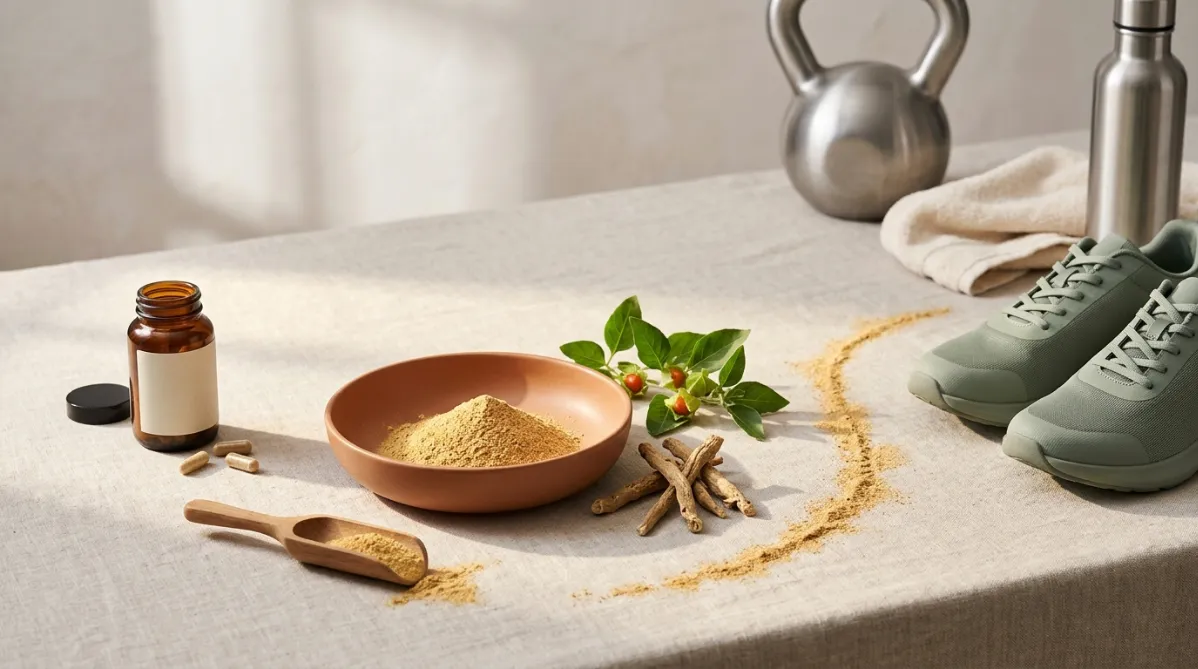
A wide, editorial-style still life shot from a slightly elevated angle on a pale oatmeal-colored linen surface in soft, diffused morning light. At the center, a shallow matte ceramic bowl in warm terracotta holds a small mound of fine, golden-tan ashwagandha root powder. Beside it lie a few gnarled, dried ashwagandha roots and a sprig of green leaves with tiny orange-red berries in their papery husks. To the left, a minimalist amber glass supplement bottle sits with a few capsules spilled beside it, label blank and clean. A wooden scoop rests on the surface, dusted with powder.

On the right side of the frame, a pair of sleek, muted sage-green running shoes sits slightly off-center. A folded cream towel and a stainless steel water bottle sit just behind them, with a single brushed-steel kettlebell partly out of focus in the background to hint at strength training without dominating the scene. The running shoes and the botanical elements share equal visual weight, suggesting the endurance theme.

A thin, curved line of scattered powder sweeps across the linen from the bowl toward the shoes, like a gentle path or track. Soft shadows fall to the left, and a warm sunbeam crosses the surface and picks out the texture of the powder and the roots.

The palette is restrained and modern: warm terracotta, sage green, cream, soft gold, and touches of charcoal. The background is a blurred pale plaster wall with a hint of a window shadow. Shallow depth of field, crisp focus on the bowl and roots, and generous negative space in the upper left for a headline. Contemporary wellness magazine aesthetic, calm, natural, tactile, high-end lifestyle photography, no text, no people, no futuristic elements.
science research

La surprise de l'Ashwagandha : elle favorise l'endurance plus que la force

BY DR. GYMBRO ·

L'Ashwagandha est souvent vendue comme un booster de force et de masse musculaire, mais une nouvelle méta‑analyse montre que son principal atout se situe ailleurs : l'endurance aérobie. En regroupant 13 essais randomisés et 599 participants, les chercheurs ont observé un effet moyen de g = 0,54 sur l'endurance, tandis que les gains de force restent incertains. La dose « idéale » semble se situer entre 500 et 600 mg d'extrait par jour, même si cette recommandation comporte d’importantes réserves. Voici ce que disent réellement les données, qui peut en profiter et qui devrait rester prudent.
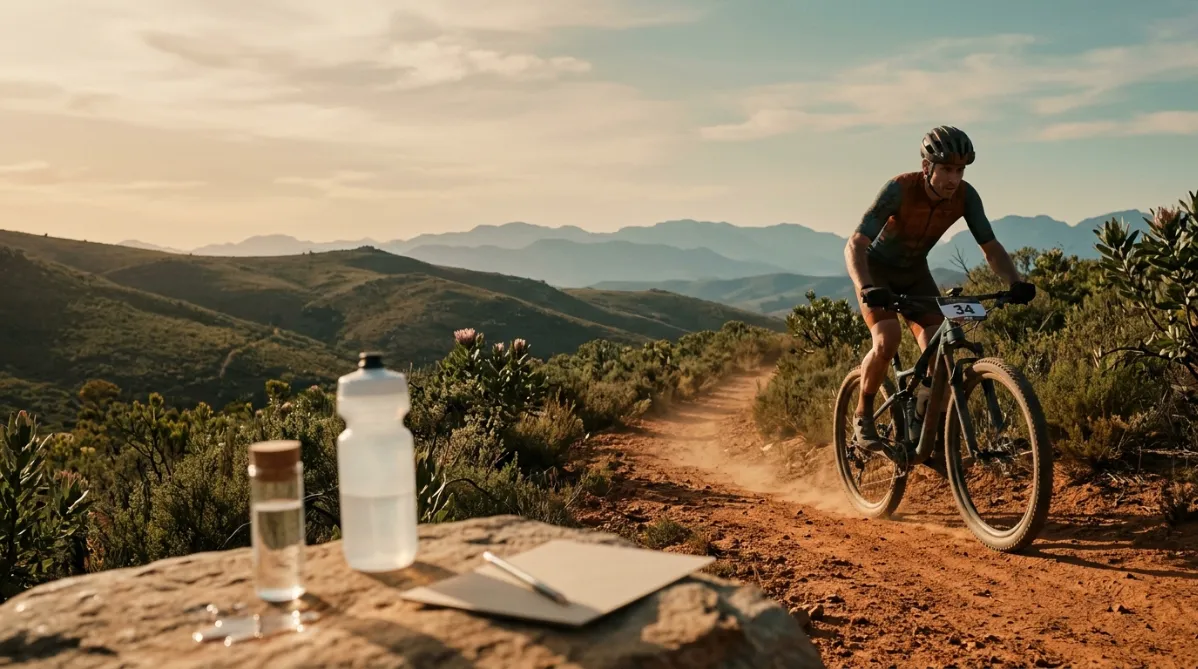
Wide landscape editorial photograph of a mountain biker mid-ride on a dusty red-orange singletrack trail in the South African Western Cape, golden hour light raking across the scene. The rider is in sharp focus on the right third of the frame, wearing a weathered cycling kit with a race number plate on the handlebars, dust kicking up from the rear tire. Behind them, rolling hills covered in fynbos shrubland and silhouetted protea plants fade into soft, hazy blue mountains. Warm amber sunlight creates long shadows and a soft rim light around the rider and bike.

In the lower left foreground, slightly out of focus, a small minimalist glass vial and a clear water bottle sit on a flat sun-bleached rock, with a few drops of liquid catching the light. Next to them, a simple matte paper notecard and a pencil suggest data collection, with no legible text. The vial and bottle are clean, understated, and modern, with no branding.

The color palette is earthy and refined: terracotta, ochre, sage green, dusty teal sky, and cream highlights. The composition uses shallow depth of field, a generous negative space in the upper left sky for headline overlay, and subtle film grain. The mood is contemplative, skeptical, and quietly sophisticated, like a feature photograph from a high-end outdoor sports and science magazine. Natural, candid, cinematic, shot on a 50mm lens with soft contrast and muted saturation. No futuristic elements, no glowing effects, no molecular graphics, no text.
science research

Ketone IQ a augmenté les corps cétoniques au Cape Epic, mais n’a servi à rien

BY DR. GYMBRO ·

Lors du Cape Epic, course de huit jours, les coureurs ont consommé du Ketone IQ deux fois par jour, atteignant environ 1 mM de corps cétoniques dans le sang. Pourtant, leur fatigue, leur fréquence cardiaque, leurs temps de réaction et leur récupération n’ont pas différé de ceux du groupe placebo. Cette étude en double aveugle a testé le R‑1,3‑butanediol en conditions de course réelles, et non en laboratoire. Les auteurs concluent que la cétose modeste n’était pas efficace et précisent que le butanediol ne doit pas être confondu avec les esters cétoniques. Avec seulement 18 participants, l’étude reste limitée, mais elle constitue une donnée précieuse pour quiconque envisage un supplément cétonique coûteux pour la récupération.
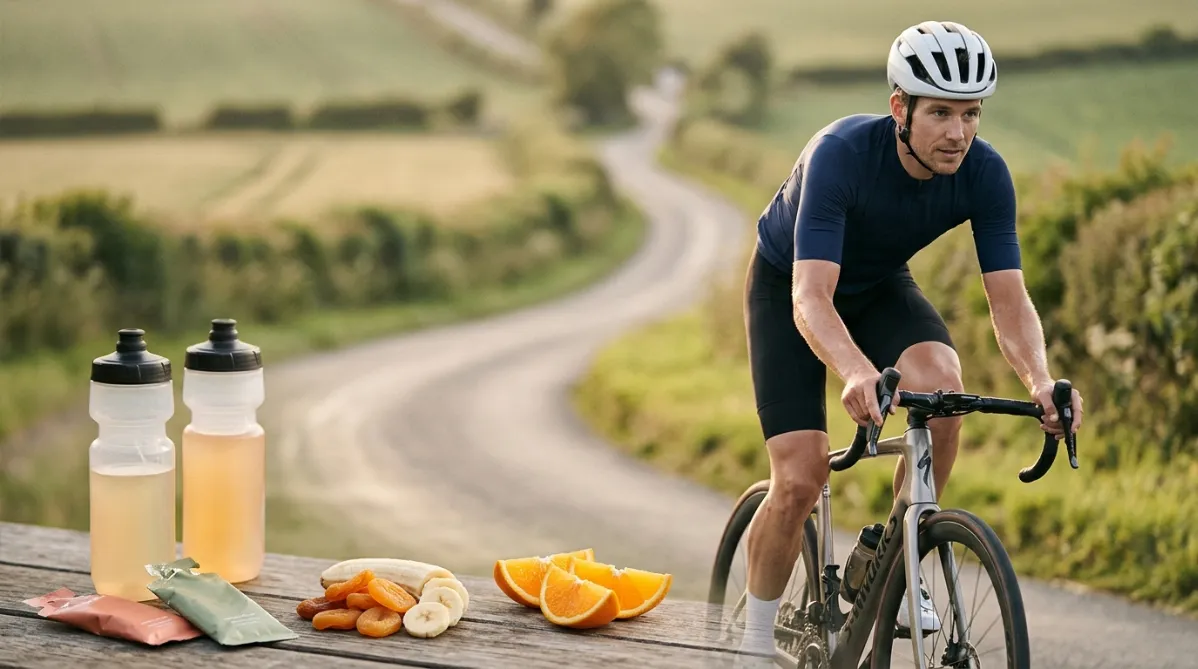
A cyclist in mid-ride, photographed from a low three-quarter side angle on a quiet country road at golden hour, wearing a matte navy jersey and a white helmet, with soft warm light catching the sweat on his forearms. His expression is calm and focused. The road bends gently through rolling green fields, and the background is softly blurred with creamy bokeh.

In the foreground on the left, a styled flat-lay-inspired still life sits on a weathered wooden surface and blends into the scene. It includes two clear water bottles with pale citrus-tinted liquid, a few torn energy gel packets in muted coral and sage, and a small pile of dried apricots and sliced banana. A handful of glossy orange slices adds a bright accent. The shallow depth of field keeps the cyclist sharp in the middle distance while the foreground items are gently softened.

The color palette is warm and editorial: soft peach, muted terracotta, sage green, cream, and deep navy. The light is natural and golden, with long, gentle shadows and a slight film-grain texture, like a high-end lifestyle or sports-science magazine spread. The composition follows the rule of thirds, with the cyclist on the right third and open negative space in the upper left, suitable for headline overlay.

The mood is energetic yet thoughtful, clean and modern, and the photograph feels authentic rather than staged. There are no logos, no readable text, and no futuristic or sci-fi elements. The overall look is crisp, airy, and refined, in the style of a contemporary health and performance journal cover.
nutrition

100 g de glucides par heure ont maintenu les cyclistes plus rapides — et le glycogène n’est pas la cause

BY COACH RYAN ·

Quatre heures après le départ d’une sortie exigeante, les cyclistes ayant ingéré 100 g de glucides par heure ont perdu moins de puissance que ceux qui n’en prenaient que 60 g. Étonnamment, le glycogène musculaire était à peu près identique dans les deux groupes. Cette étude randomisée, en double‑aveugle et en croisé, menée auprès de 15 hommes entraînés, montre qu’un autre mécanisme que l’épargne du glycogène est à l’œuvre. Nous décortiquons les chiffres, le protocole glucose / fructose 1 : 0,8 et les applications concrètes, tout en soulignant les limites liées à la petite taille de l’échantillon et à son caractère exclusivement masculin.
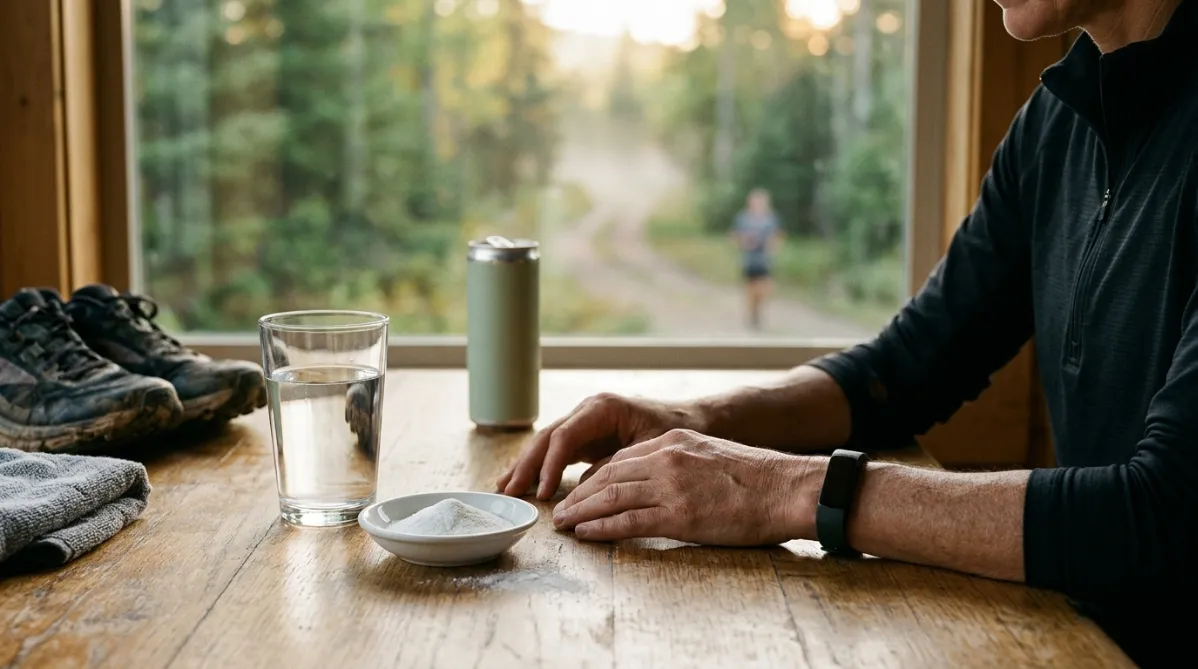
A landscape editorial photograph of a lone runner's hands resting on a weathered wooden table beside a small white ceramic dish of fine white powder and a clear glass of water, shot in soft morning light. A slim matte aluminum energy drink can, unbranded with a minimalist pale sage-green label, stands slightly out of focus in the background, with a single scoop of powder dusted lightly on the tabletop. A pair of worn running shoes and a folded gray towel sit at the edge of the frame. Through a large window behind them, a blurred misty trail winds through green trees at sunrise, with warm golden light spilling across the scene.

The color palette is calm and modern: creamy off-white, sage green, warm honey gold, and soft charcoal. The composition follows the rule of thirds, with the dish and glass in the lower left third and generous negative space on the right for a title overlay. The depth of field is shallow, with a crisp focus on the powder's delicate texture and tiny glints of light on the glass rim. The mood is clean, thoughtful, and quietly energetic, like a contemporary health and science magazine feature. Natural grain, subtle film-like softness, and gentle shadows give it an authentic lifestyle-editorial look. There are no text, logos, or futuristic elements, only tactile, real-world materials like wood, ceramic, glass, cotton, and metal.
nutrition

L’ingrédient de boisson énergisante qui augmente l’endurance à lui seul

BY DR. GYMBRO ·

Tout le monde parle de la caféine, mais l’autre ingrédient présent dans les canettes d’énergie pourrait agir discrètement à part. Une méta‑analyse de 2018, basée sur 10 études, a montré que la taurine prise seule améliore la performance d’endurance (g d’Hedges = 0,40), avec une seule dose suffisante. Ni le dosage (1‑6 g) ni la durée de la supplémentation n’influaient de façon marquée sur l’effet. Le hic : la base de preuves reste limitée et les intervalles de confiance sont larges ; il s’agit donc d’un indice prometteur, pas d’une garantie. Voici ce que la recherche a dévoilé et comment consommer la taurine de façon raisonnée.
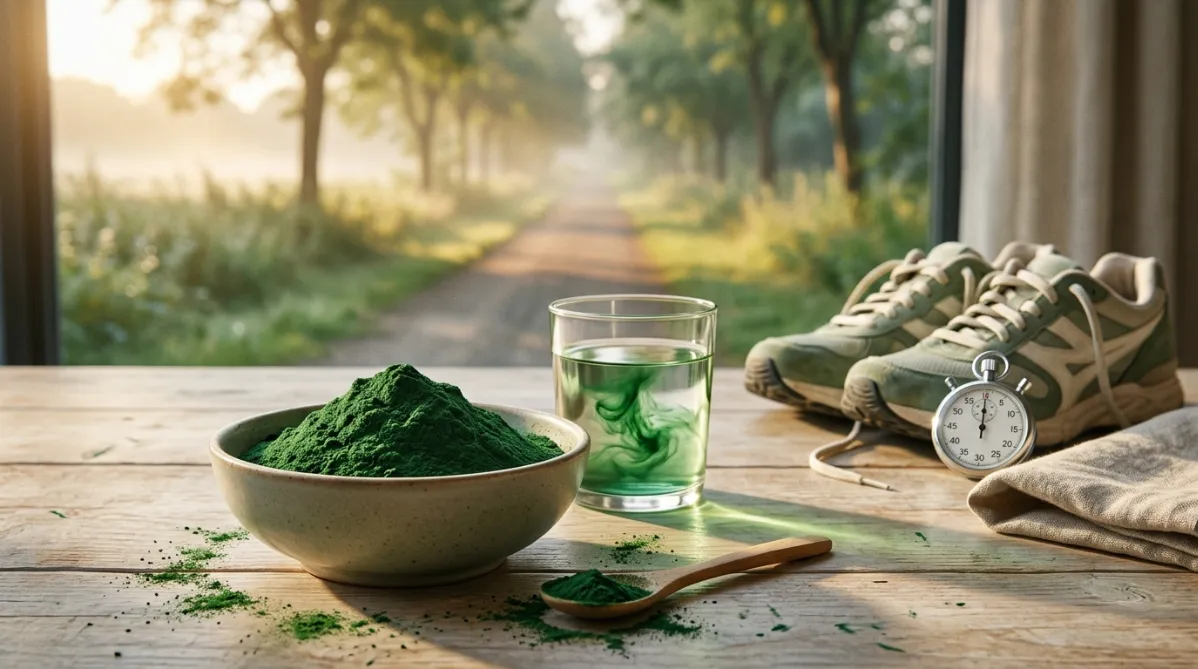
A wide, landscape editorial photograph with soft natural morning light. In the foreground, a rustic matte ceramic bowl rests on a pale oak wooden table, filled with vivid deep-green spirulina powder heaped in a gentle mound. A small wooden spoon dusted with the powder lies beside it, and a few scattered green flecks dust the surface. Next to the bowl sits a clear glass of water with a swirl of emerald green just blending in, catching sunlight and casting soft green-tinted shadows.

In the middle ground, slightly out of focus, a pair of worn running shoes in muted sage and cream tones sits on the edge of the table, laces loosely undone. A simple analog stopwatch with a clean white face lies beside them, its hands frozen at a moment suggesting a close finish. A folded linen towel in warm oatmeal tone drapes casually nearby.

The background is a softly blurred outdoor setting seen through a large window: a quiet tree-lined running path at dawn, with golden-hazy light, dewy greenery, and a faint mist. The color palette is calm and modern: deep emerald, sage, cream, warm wood, and touches of soft gold. The composition leaves generous negative space on the right side for headline text, with a shallow depth of field, crisp detail on the powder texture, and a clean, minimalist, lifestyle-magazine aesthetic. Subtle film-like grain, natural shadows, and a fresh, healthy, energetic mood. No people, no text, no logos.
nutrition

La spiruline a aidé les coureurs à tenir 32 % plus longtemps — mais il y a un hic

BY DR. GYMBRO ·

Des coureurs ayant pris de la spiruline pendant quatre semaines ont tenu environ 32 % plus longtemps lors d’un effort maximal après une séance épuisante de deux heures. L’étude a également montré une hausse de 10,9 % de l’oxydation des graisses et des niveaux accrus de l’antioxydant glutathion. Mais avant de vous précipiter, sachez que seul un échantillon de neuf hommes a été testé et que le gain réel en conditions normales n’était que d’environ 39 secondes. Voici ce que révèle la recherche, pourquoi cela pourrait fonctionner et comment l’essayer en toute sécurité.
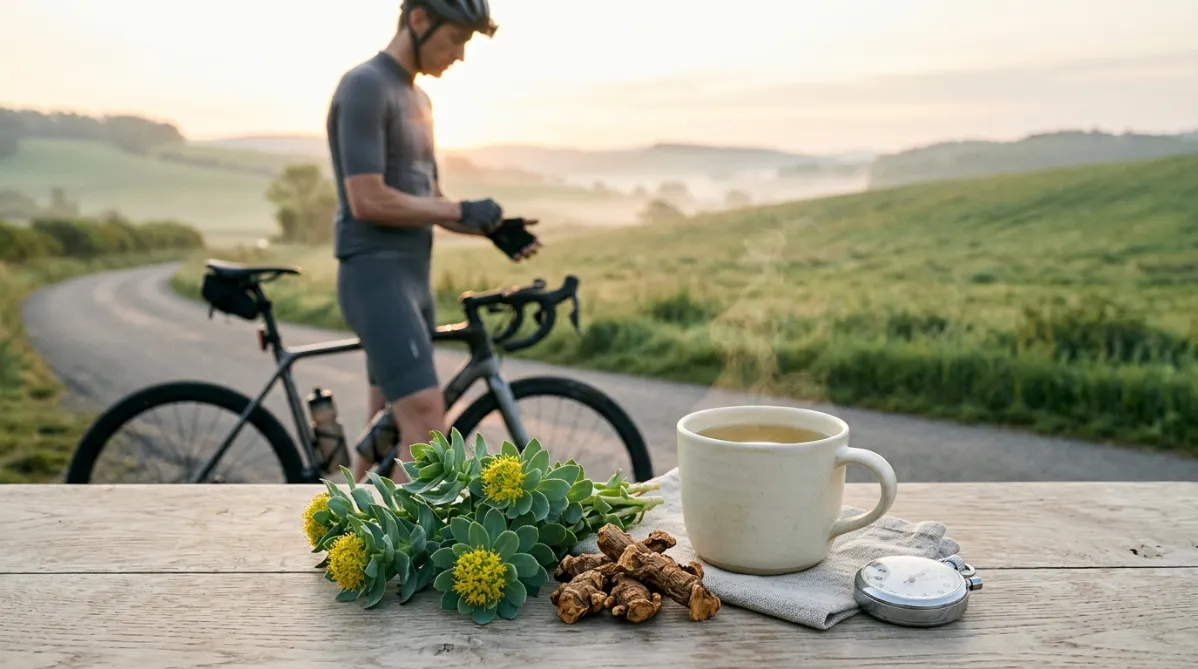
A landscape editorial photograph in soft natural morning light. In the foreground on a rustic light oak table, a small cluster of fresh Rhodiola rosea plants with thick succulent blue-green leaves and tiny golden-yellow flower clusters rests beside a few dried, knobby amber-brown rhizome pieces. A matte ceramic cup of pale golden herbal tea sits beside them, with a thin curl of steam and a small linen cloth. The plants and roots are sharp, with fine texture and dewy highlights.

In the softly blurred background, a lean cyclist in a fitted charcoal jersey stands beside a road bike on a quiet country lane at sunrise. Rolling green hills fade into pale mist behind them, and warm light rims the rider's shoulders. The cyclist tightens a glove, calm and focused, in a pre-ride moment of preparation. A water bottle is mounted on the bike frame, and a simple analog stopwatch with a brushed metal casing lies on the table near the herbs, hinting at timed effort.

The palette is muted and modern: sage green, warm cream, soft gold, and slate gray, with gentle peach tones from the sunrise. Shallow depth of field, a clean, airy composition with generous negative space on the right third for headline text, and subtle film grain. The mood is calm, health-conscious, and quietly athletic, like a premium wellness and sports science magazine cover. No text, no logos, no futuristic elements.
science research

Rhodiola Rosea : un pré‑entraînement sans stimulant pour le cardio intense ?

BY DR. GYMBRO ·

Un essai croisé de 2013 a montré qu’une dose unique de 3 mg/kg de Rhodiola rosea prise une heure avant un test de 6 miles à vélo a réduit le temps de parcours de 25,8 à 25,4 minutes. La fréquence cardiaque à l’échauffement est passée de 140 à 136 bpm et l’effort perçu de 6,6 à 6,0. Le gain, d’environ 1,5 %, reste limité et provient d’un échantillon de 18 participants ; ce n’est donc pas un miracle. En revanche, la sensation d’effort moindre fait de la Rhodiola une option intéressante, dépourvue de caféine, pour les athlètes d’endurance.
A wide, editorial-style flat lay photographed from above on a pale, warm-gray stone surface lit by soft natural window light. On the left, a matte white supplement sachet and a small frosted glass jar of off-white probiotic powder sit beside a wooden scoop dusted with fine granules. In the center, a modern minimalist stopwatch with a brushed silver case and crisp white face rests on a folded slate-blue running towel, its hands frozen just past the half-minute mark. On the right, a pair of sleek running shoes in cream and sage green are angled diagonally, with a few strands of laces trailing across the surface. Scattered around the arrangement are fresh, natural gut-health cues: a halved kefir-colored ceramic bowl of creamy yogurt with a drizzle of honey, a few sprigs of fresh mint, sliced green apple, and a handful of raw oats. A small glass of water with delicate condensation catches a soft highlight in the background. The color palette is calm and refined: sage green, cream, soft slate blue, and touches of warm honey gold against the neutral stone. Shadows are long and gentle, creating depth and a quiet, premium wellness-journal mood. The shallow depth of field softly blurs the edges, leaving the stopwatch and probiotic jar in crisp focus. Negative space on the upper right of the composition leaves room for a headline overlay. The overall feel is clean, modern, and trendy, like a contemporary health and sports science magazine cover, with realistic textures, natural tones, and no futuristic or digital elements.
nutrition

Probiotique SLAB51 : une semaine d’administration ajoute 33 secondes chez les athlètes d’élite

BY DR. GYMBRO ·

Une semaine de probiotiques multisouches SLAB51 a permis à des athlètes d’élite de tenir environ 33 secondes de plus à un test sur tapis roulant, alors qu’une prise unique n’a rien changé et que le VO₂max est resté stable. L’étude, en double‑aveugle, randomisée et croisée, a également montré une hausse de l’enzyme antioxydante SOD avant l’effort. Mais les résultats proviennent d’un petit échantillon d’hommes d’élite et d’une intervention très courte. Que signifie réellement cet apport d’endurance ? Voici le détail de la conception de l’étude, des chiffres et ce que les sportifs peuvent en retenir concrètement.
A wide, editorial-style flat lay on a warm, matte cream stone surface, shot from slightly above in soft natural morning light. On the left, a ceramic espresso cup in muted terracotta holds dark coffee, with a few roasted coffee beans scattered beside it. In the center, a small wooden board holds three bright red chili peppers, one sliced open to show pale seeds, next to a small pile of coarse red pepper flakes. On the right, a pair of minimalist off-white running shoes with sage green accents rests at an angle, and a slim stopwatch with a clean white face lies in front of them. Three small matte white capsules sit in a neat row at the center of the composition, a quiet nod to the placebo and the active doses. Soft shadows fall to the lower right. A sprig of dried eucalyptus and a folded linen cloth in oatmeal tones add texture at the edges. The palette is warm and restrained: terracotta, chili red, cream, sage, and charcoal brown, with a gentle pop of red as the focal accent. The depth of field is shallow, so the foreground beans are slightly soft and the chilies and capsules stay crisp. The mood is clean, modern, and magazine-like, in the style of a contemporary health and science journal. There is no text, no people, and no logos, and plenty of negative space on the upper left and right edges leaves room for a headline overlay.
nutrition

Caféine + capsaïcine surpasse le placebo sur 10 km : la capsaïcine seule n’a rien fait

BY COACH RYAN ·

Un extrait de piment combiné à la caféine était le seul traitement à battre le placebo sur 10 km dans un nouvel essai croisé, alors que la capsaïcine seule n’a eu aucun effet. C’est la caféine qui a généré l’effet statistiquement significatif, aucune synergie n’a été détectée. La dose de 6 mg/kg correspond à environ 450 mg pour un coureur de 75 kg, ce qui est assez élevé. Insomnie, anxiété, céphalées et palpitations sont survenus plus souvent avec la caféine. Voici le résumé de l’étude menée sur 20 coureurs et les précautions à prendre.
A cyclist's legs mid-pedal on a stationary road bike, shot in a bright, airy, minimalist studio with a soft warm-grey backdrop. In the foreground on a pale oak table sits a small ceramic dish holding four deep coral-red softgel capsules, with a few translucent droplets of red-orange oil glistening beside them. Beside the dish is a sprig of dried red microalgae-toned seaweed and a halved wild salmon fillet, its coral flesh echoing the capsule color. Behind the table, slightly out of focus, a cyclist in a fitted charcoal jersey and matte black shorts rides a bike on an indoor trainer. Only the torso and legs are visible, with no face. A white towel hangs over the handlebars and a clear water bottle catches the light.

Soft diffused morning light streams from a large window on the left, creating long gentle shadows and a subtle golden-hour glow on the skin and the glossy capsules. The palette is restrained and editorial: warm cream, sand, soft grey and charcoal, with vivid coral-red as the single accent color. A minimalist analog stopwatch with a clean white face sits on the table, its hands near the 85-minute mark. A thin, elegant line-graph shape is subtly suggested by a curved strip of red ribbon lying on the table, rising from left to right to hint at the performance gain without any text.

The composition follows the rule of thirds, with the capsules and stopwatch in the lower left and the cyclist's motion-blurred legs sweeping across the right. Shallow depth of field, crisp macro detail on the capsules, and a fine film-like grain. The overall feel is a modern health and science magazine cover: clean, calm, sophisticated, and natural, with negative space in the upper area for a headline. There are no futuristic elements, no glowing effects, no laboratory equipment, and no text or logos. Landscape 16:9 format.
nutrition

L’astaxanthine pendant 4 jours prolonge le temps d’épuisement à vélo de 72 à 85 minutes dans une petite étude

BY DR. GYMBRO ·

Quatre jours d'astaxanthine à raison de 28 mg par jour ont prolongé le temps d’épuisement à vélo, le portant d'environ 72 à 85 minutes dans un petit essai randomisé, soit un gain de près de 18 %. Le même protocole a limité l’augmentation des marqueurs de dommages musculaires (CK et LDH) et de la peroxydation lipidique (MDA) après une séance intensive à 75 % du VO2max. Les marqueurs inflammatoires et la dépense énergétique sont restés inchangés, rendant le mécanisme encore incertain. La dose employée dépasse largement celle proposée par la plupart des gélules du commerce, et l’étude ne comptait que dix jeunes hommes. Voici ce que les chiffres montrent et où s’arrête la preuve.
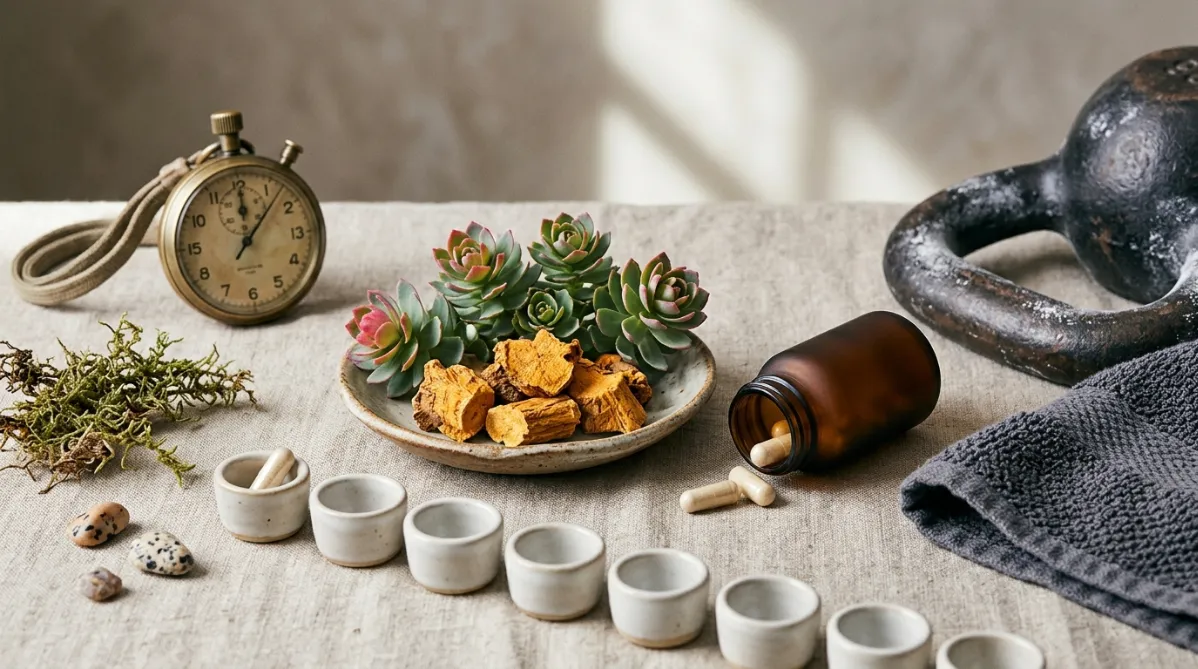
A wide, editorial still life photographed in soft natural window light on a pale oatmeal-colored linen surface. At the center sits a small, rustic ceramic dish holding a handful of dried golden-orange Rhodiola rosea root pieces and a few fresh, fleshy green-gray succulent rosettes with rosy-pink tips. Beside it, a single matte amber glass capsule bottle lies on its side, with two cream-colored capsules spilling out. On the left, a minimalist analog stopwatch with a brushed brass case rests slightly out of focus, its hands suggesting a duration just past the quarter-hour mark. On the right, a worn, chalk-dusted steel kettlebell handle and a folded charcoal gym towel fill the negative space, hinting at lifting without showing a full gym scene.

In the foreground, a neat row of seven tiny ceramic pill cups arranged in a gentle diagonal line, the first cup holding one capsule and the rest sitting empty, as a quiet visual metaphor for a single dose versus daily dosing. A sprig of dried alpine moss and a few small speckled pebbles add organic texture. The background is a softly blurred warm-gray plaster wall with a gentle gradient shadow cast by a window frame, creating diagonal light stripes across the scene.

The palette is muted and earthy: sage green, terracotta, warm cream, brushed brass, and soft charcoal, with one subtle pop of coral from the Rhodiola tips. Shallow depth of field, crisp focus on the root and capsules, and fine film-like grain. The composition leaves generous clean negative space in the upper left for a headline overlay. The overall feel is a modern wellness and science journal: calm, tactile, minimal, and sophisticated, with a slightly moody, high-end magazine look. There is no text, no people, and no futuristic elements.
nutrition

200 mg de rhodiola offrent aux athlètes d’endurance 24 secondes supplémentaires ; quatre semaines de prise quotidienne n’ajoutent rien

BY DR. GYMBRO ·

Une dose unique de 200 mg de Rhodiola rosea prise une heure avant l’effort a fait passer le temps d’épuisement de 16,8 à 17,2 minutes, soit un gain d’environ 24 secondes, et a augmenté le VO₂max dans une étude croisée en double‑aveugle. En revanche, quatre semaines de prise quotidienne n’ont pas renforcé cet effet, ni modifié aucune autre variable mesurée. Le gain est très modeste, la force, le temps de réaction et l’attention restent inchangés. Voici ce que l’étude a réellement montré, qui pourrait justifier une utilisation aiguë, et pourquoi il ne faut pas compter sur un « chargement » de rhodiola.

This page is available in