Dr. Gymbro
←

Science & Research

24 articles
A wide, softly lit editorial still life on a pale oatmeal-colored linen surface. In the center sits a small matte ceramic bowl of fine white creatine powder, with a wooden scoop resting beside it and a few loose pale crystals scattered across the linen. Around the bowl, a fresh plant-based spread is arranged in an organic, uncluttered way: a halved avocado, a handful of chickpeas, bright green edamame pods, a cluster of dark leafy kale, a few red lentils spilled from a small wooden spoon, and a split pomegranate with glossy ruby seeds. A tall glass of water with condensation stands on the right, catching a sliver of window light.

In the soft-focus background, a young athlete in a muted sage-green tank top is mid-jump in a bright, minimalist studio with whitewashed brick walls and pale hardwood floors. The figure is slightly blurred and only partly in frame, which gives a sense of motion and vertical lift without pulling attention from the foreground. A pair of clean white sneakers and a folded gray towel sit on a low wooden bench nearby.

The light is warm natural morning daylight from the left. It casts gentle long shadows and subtle highlights on the powder and the glass. The palette is earthy and calm: cream, sage green, terracotta, warm wood tones, and small pops of avocado green and pomegranate red. The depth of field is shallow, with crisp focus on the bowl and scoop. The composition leaves generous negative space on the upper left for a title overlay, in the clean, contemporary style of a modern health and science magazine. Photographic, high-resolution, refined, and minimal.
science research

Les végétaliens ont pris de la créatine pendant 4 semaines : les sauts ont augmenté, les sprints sont restés inchangés

BY DR. GYMBRO ·

Les végétaliens consomment pratiquement aucune créatine dans leur alimentation ; la supplémentation aurait‑elle donc un effet plus prononcé ? Une nouvelle étude randomisée, triple‑aveugle, a administré 0,1 g/kg/jour de créatine monohydrate à 20 végétaliens actifs pendant quatre semaines. Les performances en saut se sont nettement améliorées ainsi que certaines mesures de composition corporelle, mais les tests de sprint, de préhension et de traction à mi‑cuisse n’ont pas bougé. La masse d’eau corporelle a augmenté de 1,4 kg, et l’étude n’a pas pu comparer les végétaliens aux mangeurs de viande.
A wide, editorial-style flat lay photographed from above on a pale oat-colored linen surface in soft morning window light. On the left, a small matte white ceramic cup of black coffee with a delicate swirl of steam, beside a few scattered roasted coffee beans. On the right, a second matte sage-green ceramic cup holding a pale, creamy golden tea-like drink, mirroring the first. Between them, two small glass vials with cork stoppers sit side by side: one holding fine white powder, the other holding slightly warmer cream-colored powder, with a tiny brass measuring spoon resting nearby. In the lower foreground, a slim wooden rowing oar lies diagonally across the frame, its blade edge softly entering from the right, painted a muted navy with a thin terracotta stripe. A minimalist analog stopwatch with a brushed-steel case rests near the oar, and a folded cream notebook with a thin pencil suggests data-taking. In the upper corner, a crescent-shaped dried eucalyptus sprig and a small folded gray wool throw hint at sleep and calm without being literal. The palette is warm and restrained: oat, cream, sage, soft navy, terracotta, and espresso brown. Shadows are long and gentle, with shallow depth of field and subtle film grain, giving a refined, modern wellness-magazine feel. Generous negative space on the left third of the composition leaves room for a headline overlay. Clean, calm, tactile, and contemporary, with no text, logos, or futuristic elements.
science research

Paraxanthine vs Caféine : le combo gagnant et le sauveur du sommeil

BY DR. GYMBRO ·

La paraxanthine, principal métabolite de la caféine, a récemment été testée côte à côte avec la caféine dans une étude menée auprès de 14 rameurs. Le mélange de 200 mg de chaque substance a surpassé le placebo sur 2000 m, mais l’effet était faible (d = 0,30). Aucun des deux composés pris séparément n’a clairement amélioré la performance, tandis que la paraxanthine prise seule semblait plus favorable du point de vue du sommeil subjectif. Voici les chiffres, leurs limites, et qui pourrait réellement en bénéficier.
A wide, editorial-style flat lay photographed from above on a pale warm-gray linen surface in soft natural window light. At the center, a small open amber glass jar tips gently onto its side, spilling a few cream-colored capsules across the fabric. Next to the jar sits a loose arrangement of fresh mushrooms: a cluster of golden-tan reishi with glossy, lacquered caps, a few slender white enoki stems, a halved shiitake showing its pale gills, and a curl of turkey tail with concentric bands of rust, cream, and charcoal. A small wooden scoop holds a pile of fine beige mushroom powder.

On the left third of the frame, a matte black sports watch with a minimal face lies beside a folded sage-green running shirt and a pair of lightweight off-white running shoes, hinting at athletic training without showing a person. A slim white notebook with a single pencil rests nearby, open to a blank page with a faint hand-drawn line graph trending upward, in thin graphite strokes.

On the right side, a pair of clear glass beakers and a single small petri dish with a soft amber-tinted liquid add a subtle laboratory note, kept calm and organic. A single sprig of dried herbs and a few scattered oat-colored grains add texture.

The palette is earthy and refined: oatmeal, soft sage, terracotta, warm amber, and charcoal accents against the muted neutral background. Shadows are soft and diffused, with a gentle highlight on the glass and the glossy reishi cap. The composition leaves generous negative space in the upper right for a headline overlay. Shallow depth of field blurs the edges slightly, while the central mushrooms and capsules stay crisp. The overall feel is modern, clean, and trendy, like a wellness and science magazine cover, with tactile natural textures, minimal styling, and a quiet sense of curiosity and skepticism.
science research

Une capsule de champignon a augmenté le VO₂max de 14,8 % — mais il y a un gros piège

BY DR. GYMBRO ·

Une capsule de champignon, 40 jours d’utilisation et une hausse de 14,8 % du VO₂max semblent presque trop beaux pour être vrais. Dans ce nouvel article de *Antioxidants*, 50 jeunes athlètes masculins ayant pris 320 mg/jour d’un extrait multi‑champignon riche en bêta‑glucanes sont passés de 46,26 à 53,12 mL·kg⁻¹·min⁻¹. Le gros piège, c’est qu’il n’y avait ni groupe placebo, ni randomisation, ni double‑aveugle, et que les athlètes ont continué à s’entraîner pendant toute la période. Des expériences cellulaires sur des cardiomyoblastes de rat offrent un indice lié à l’hypoxie, mais elles n’ont testé que des composés isolés, pas la capsule. Voici ce que l’étude montre, ce qu’elle ne peut pas prouver, et ce que les sceptiques devraient remarquer.
A wide, editorial-style flat lay photographed from above on a pale warm-gray concrete surface, lit by soft natural window light with gentle shadows. On the left, three small matte ceramic bowls in sage green, soft terracotta, and cream, each holding a different white crystalline powder. The textures vary subtly: fine and powdery, slightly granular, and glittery with tiny crystalline flecks. Beside them rest three minimalist wooden scoops, a few scattered grains catching the light. In the center-right, a worn classic black-and-white soccer ball sits slightly off-frame, partially cropped by the edge, with a pair of muted navy cleats resting nearby, laces loosely draped. A small stopwatch with a brushed-steel finish and a folded sheet of graph paper with a hand-drawn bar chart in soft coral and teal pencil add a subtle sense of data and measurement. A few blades of fresh-cut grass and a sprig of eucalyptus add organic accents. The palette is calm and modern: warm neutrals, sage, terracotta, and muted navy, with one pop of coral. The composition leaves generous negative space in the upper right for headline text. The mood is clean, curious, and trustworthy, like a contemporary health and science journal. Shallow depth of field, crisp focus on the powders, with the soccer elements slightly softer. High-end editorial photography, 16:9 landscape.
science research

Créatine HCl surpasse le monohydrate chez les footballeurs — ne jetez pas le vôtre tout de suite

BY DR. GYMBRO ·

Un essai randomisé portant sur 40 footballeurs a montré que la créatine HCl et l’éthyle‑ester étaient supérieures au monohydrate classique en saut, sprint, agilité et puissance maximale après seulement quatre semaines. Toutes les formes de créatine ont surpassé le placebo, mais les versions « premium » ont encore davantage progressé sur les mesures explosives. Avant de changer de pot, il faut savoir que l’étude ne comporte que 10 athlètes par groupe, ne précise aucune dose dans le résumé et contredit des travaux antérieurs. Voici ce qu’elle a démontré, ce qu’elle n’a pas démontré et comment l’interpréter.
A wide, editorial-style still life shot from a slightly elevated angle on a pale oatmeal-colored linen surface in soft, diffused morning light. At the center, a shallow matte ceramic bowl in warm terracotta holds a small mound of fine, golden-tan ashwagandha root powder. Beside it lie a few gnarled, dried ashwagandha roots and a sprig of green leaves with tiny orange-red berries in their papery husks. To the left, a minimalist amber glass supplement bottle sits with a few capsules spilled beside it, label blank and clean. A wooden scoop rests on the surface, dusted with powder.

On the right side of the frame, a pair of sleek, muted sage-green running shoes sits slightly off-center. A folded cream towel and a stainless steel water bottle sit just behind them, with a single brushed-steel kettlebell partly out of focus in the background to hint at strength training without dominating the scene. The running shoes and the botanical elements share equal visual weight, suggesting the endurance theme.

A thin, curved line of scattered powder sweeps across the linen from the bowl toward the shoes, like a gentle path or track. Soft shadows fall to the left, and a warm sunbeam crosses the surface and picks out the texture of the powder and the roots.

The palette is restrained and modern: warm terracotta, sage green, cream, soft gold, and touches of charcoal. The background is a blurred pale plaster wall with a hint of a window shadow. Shallow depth of field, crisp focus on the bowl and roots, and generous negative space in the upper left for a headline. Contemporary wellness magazine aesthetic, calm, natural, tactile, high-end lifestyle photography, no text, no people, no futuristic elements.
science research

La surprise de l'Ashwagandha : elle favorise l'endurance plus que la force

BY DR. GYMBRO ·

L'Ashwagandha est souvent vendue comme un booster de force et de masse musculaire, mais une nouvelle méta‑analyse montre que son principal atout se situe ailleurs : l'endurance aérobie. En regroupant 13 essais randomisés et 599 participants, les chercheurs ont observé un effet moyen de g = 0,54 sur l'endurance, tandis que les gains de force restent incertains. La dose « idéale » semble se situer entre 500 et 600 mg d'extrait par jour, même si cette recommandation comporte d’importantes réserves. Voici ce que disent réellement les données, qui peut en profiter et qui devrait rester prudent.
Wide landscape editorial photograph of a mountain biker mid-ride on a dusty red-orange singletrack trail in the South African Western Cape, golden hour light raking across the scene. The rider is in sharp focus on the right third of the frame, wearing a weathered cycling kit with a race number plate on the handlebars, dust kicking up from the rear tire. Behind them, rolling hills covered in fynbos shrubland and silhouetted protea plants fade into soft, hazy blue mountains. Warm amber sunlight creates long shadows and a soft rim light around the rider and bike.

In the lower left foreground, slightly out of focus, a small minimalist glass vial and a clear water bottle sit on a flat sun-bleached rock, with a few drops of liquid catching the light. Next to them, a simple matte paper notecard and a pencil suggest data collection, with no legible text. The vial and bottle are clean, understated, and modern, with no branding.

The color palette is earthy and refined: terracotta, ochre, sage green, dusty teal sky, and cream highlights. The composition uses shallow depth of field, a generous negative space in the upper left sky for headline overlay, and subtle film grain. The mood is contemplative, skeptical, and quietly sophisticated, like a feature photograph from a high-end outdoor sports and science magazine. Natural, candid, cinematic, shot on a 50mm lens with soft contrast and muted saturation. No futuristic elements, no glowing effects, no molecular graphics, no text.
science research

Ketone IQ a augmenté les corps cétoniques au Cape Epic, mais n’a servi à rien

BY DR. GYMBRO ·

Lors du Cape Epic, course de huit jours, les coureurs ont consommé du Ketone IQ deux fois par jour, atteignant environ 1 mM de corps cétoniques dans le sang. Pourtant, leur fatigue, leur fréquence cardiaque, leurs temps de réaction et leur récupération n’ont pas différé de ceux du groupe placebo. Cette étude en double aveugle a testé le R‑1,3‑butanediol en conditions de course réelles, et non en laboratoire. Les auteurs concluent que la cétose modeste n’était pas efficace et précisent que le butanediol ne doit pas être confondu avec les esters cétoniques. Avec seulement 18 participants, l’étude reste limitée, mais elle constitue une donnée précieuse pour quiconque envisage un supplément cétonique coûteux pour la récupération.
A wide editorial still life shot from a slightly elevated angle on a pale ash-wood bench in a bright, airy training hall. In the center sits a small matte ceramic dish holding a few translucent coral-red softgel capsules, their glossy surfaces catching soft window light. Beside the dish rests a folded white taekwondo dobok with a black belt loosely coiled on top. A sprig of fresh red microalgae-toned seaweed and a halved blood orange add natural color accents. A clean glass of water with subtle condensation stands to one side.

In the softly blurred background, the silhouette of a martial artist in a white uniform stretches near tall windows, with diffused morning light streaming across a sprung wooden floor. A pair of red and blue sparring gloves hangs on a minimal wall hook. Thin, elegant shadows stretch across the bench.

The palette is restrained and modern: warm off-white, soft sand, muted charcoal, with a vivid coral-red accent pulled from the capsules. Shallow depth of field, crisp focus on the capsules and dish, creamy bokeh behind. Natural, gentle lighting with a subtle film-like grain, reminiscent of a contemporary wellness and science magazine cover. Generous negative space on the left third of the frame for headline text. Calm, precise, and quietly athletic in mood, with no text, logos, or futuristic elements.
science research

12 mg d'astaxanthine pendant 28 jours : dommages musculaires et épuisement chez les combattants

BY DR. GYMBRO ·

Un essai randomisé a évalué l’effet de 12 mg d'astaxanthine par jour pendant 28 jours chez de jeunes athlètes masculins pratiquant le taekwondo. Le groupe supplémenté a présenté une évolution de la créatine kinase différente de celle du placebo, des niveaux de SOD plus élevés et des signaux exploratoires d’une diminution du MDA ainsi que d’une fatigue émotionnelle et physique réduite. Les résultats concernant le burnout restent préliminaires, sans interaction groupe × temps sur les sous‑échelles. L’étude était petite, se limitait à des biomarqueurs et ne mesurait pas la performance. Voici ce que les données prouvent, ce qu’elles ne prouvent pas, et qui devrait s’en préoccuper.
A sunlit, minimalist kitchen counter in a modern home, photographed from a slightly elevated three-quarter angle with soft natural morning light spilling in from a window on the left. In the center sits a matte white ceramic mug of black coffee with a thin curl of steam, beside a small glass jar of deep magenta beetroot powder with a wooden scoop resting on the lid. A scattering of fine crimson powder dusts the pale oak surface in an artful, casual swirl. Nearby, a halved raw beetroot reveals vivid concentric rings of purple and pink, next to a few roasted coffee beans and a neatly folded charcoal gym towel. In the soft-focus background, a pair of clean white running shoes and a stainless steel water bottle sit on a floating shelf, hinting at a pre-workout routine. A single sprig of green beet leaves adds a fresh accent.

The color palette is warm and editorial: creamy neutrals, espresso browns, and rich beet magenta, with gentle highlights and long soft shadows. The composition has generous negative space on the right side for headline text, shallow depth of field, and a crisp, tactile texture on the ceramic, powder, and wood grain. The mood is calm, health-conscious, and contemporary, like a lifestyle feature in a premium wellness magazine or a trendy nutrition journal. Clean, balanced, natural, with subtle film-like grain and a slightly muted, high-end finish.
science research

La caféine pré‑entraînement rigidifie les artères ; la poudre de betterave neutralise l’effet

BY DR. GYMBRO ·

Un essai croisé randomisé a montré qu’une dose de caféine équivalente à un pré‑workout (6 mg/kg) augmente les marqueurs de rigidité artérielle en 2,5 h. L’ajout d’une poudre de betterave contenant 400 mg de nitrate ramène ces marqueurs au niveau du placebo. La pression artérielle et la fonction endothéliale restent inchangées, ce qui indique un effet subtil plutôt qu’un signal d’alerte. L’étude, menée sur 24 jeunes adultes sains avec une seule prise, laisse de nombreuses questions ouvertes quant à l’usage à long terme et aux populations plus âgées ou hypertendues.
A softly lit editorial still life on a pale oat-colored linen surface, shot from a slightly elevated three-quarter angle in a wide landscape composition. At center-left, a small matte amber glass jar sits open, with a scattering of fine cream-colored powder dusted across the linen and a few off-white capsules spilling out in a loose, natural arc. A minimalist wooden scoop rests beside the jar. To the right, a clean sheet of cream paper holds a hand-drawn line graph in thin charcoal ink. Two lines run nearly parallel and drift slightly apart, with a faint dotted horizontal threshold line they never cross. A sharpened pencil lies across the corner of the paper. In the soft-focus background, a ceramic cup of black coffee, a folded sage-green cotton napkin, and a sprig of dried eucalyptus add quiet texture. Morning window light enters from the left, casting long, gentle shadows and a warm highlight along the glass jar's rim. The palette is restrained and modern: warm beige, muted sage, soft terracotta, charcoal, and touches of amber. Shallow depth of field keeps the jar and graph crisp while the edges melt into creamy blur. Generous negative space on the upper right leaves room for headline overlay. The mood is calm, thoughtful, and skeptical, with the clean, tactile look of a contemporary wellness and science journal. No people, no text, no logos, no futuristic elements.
science research

Turkestérone enfin testée sur l’IGF‑1 chez les hommes : les résultats ne correspondent pas aux promesses des influenceurs

BY COACH RYAN ·

Une petite équipe dirigée par l’Université Baylor a administré de la turkestérone à onze jeunes hommes et n’a trouvé aucun effet statistiquement significatif sur l’IGF‑1, le métabolisme de repos ou le métabolisme des graisses et des glucides. Les chiffres s’orientaient légèrement dans la direction souhaitée par les marketeurs, mais ils n’ont pas franchi le seuil de signification. La turkestérone, présentée sur les réseaux comme un « stéroïde naturel », ne montre donc pas encore de bénéfice réel. Les auteurs soulignent le manque de puissance de l’étude et appellent à des recherches plus étendues.
A wide, landscape editorial photograph shot from slightly above, showing a rustic matte-white ceramic bowl of dried tribulus terrestris, spiky star-shaped seed pods in warm tan and khaki tones, with a few fresh green trailing vines and tiny yellow flowers draped beside it. The bowl sits at the left third of the frame on a pale ash-wood table. Scattered nearby are two identical sets of plain, unlabeled amber supplement capsules, one pile slightly apart from the other, hinting at a placebo comparison. To the right, slightly out of focus, a worn leather rugby ball rests next to a chalk-dusted steel barbell plate and a folded charcoal-gray athletic towel.

Soft diffused natural light streams in from a window on the left, creating gentle long shadows and a calm, clean atmosphere. The background is a muted sage-green and cream gradient with a shallow depth of field, leaving generous negative space on the right side for title overlay. A small, minimal notebook with a pencil and a simple balance scale made of brushed brass sits subtly in the midground, suggesting scientific scrutiny without any laboratory clutter.

The color palette is earthy and refined: sage green, sand, warm amber, charcoal, and off-white. The style is modern lifestyle-magazine photography, crisp textures, subtle film grain, and a high-end wellness journal feel. The composition is balanced, uncluttered, and minimalist, with a quiet, thoughtful mood that conveys skepticism and evidence-based inquiry. No text, no logos, no people, no futuristic or sci-fi elements.
science research

Tribulus terrestris échoue chez les joueurs d’élite de rugby à XIII : essai de 5 semaines

BY DR. GYMBRO ·

Le Tribulus terrestris est vendu comme un booster naturel de testostérone promettant de prendre du muscle en moins d’un mois. Des chercheurs l’ont testé chez des joueurs d’élite de rugby à XIII lors d’un essai en double aveugle. Tous les participants sont devenus plus forts et ont gagné de la masse maigre, mais le groupe placebo a obtenu les mêmes résultats. Le supplément n’a d’ailleurs pas modifié le taux urinaire T/E. Voici ce que l’étude a révélé, ses limites et où il vaut mieux placer votre argent.
A wide landscape editorial photograph of a bright, airy sunlit living room with pale oak floors and a large window with sheer linen curtains. In the center, a woman in her late 50s with silver-streaked hair, wearing soft sage-green athletic wear, rises from a simple wooden chair, caught mid-motion with a calm, determined expression. Her hands are lightly extended forward for balance. Beside her on a small round oak side table sits a ceramic mug of tea, a glass of water, and a small matte white jar with a wooden scoop resting beside it, a few fine white crystalline grains scattered on the tabletop. In the soft-focus foreground, a pair of light-gray dumbbells and a rolled terracotta-colored yoga mat rest on the floor. A trailing green pothos plant spills from a shelf in the background, with a stack of books and a small analog kitchen timer nearby.

The color palette is warm and muted: cream, sage green, soft terracotta, natural wood, and gentle morning-gold light. Light streams diagonally across the scene, creating long soft shadows and a subtle glow on the woman's shoulders. Shallow depth of field blurs the background gently, while the woman and the table remain crisp. The composition follows the rule of thirds, with the woman on the right and generous negative space on the left, suited for headline overlay. The mood is hopeful, grounded, and modern, like a high-end wellness magazine or a trendy health journal. Natural film-like grain, soft contrast, and a slight matte finish give it a contemporary lifestyle photography feel. There are no futuristic elements, no digital overlays, and no text.
science research

La créatine aide les femmes souffrant de douleurs au genou à se lever plus facilement – mais pas pour les raisons que vous imaginez

BY DR. GYMBRO ·

La créatine est habituellement associée aux jeunes haltérophiles, mais une étude randomisée en double‑aveugle l’a testée chez des femmes ménopausées atteintes d’arthrose du genou. Après 12 semaines d’entraînement des jambes, le score au test timed‑stands du groupe créatine est passé de 15,7 à 18,1, tandis que celui du groupe placebo est resté quasi inchangé (15,0 à 15,2). La créatine a également amélioré la raideur, la masse maigre des membres inférieurs et la qualité de vie. En revanche, le soulagement de la douleur et la force maximale au leg‑press n’étaient pas supérieurs à ceux du placebo. Voici ce que montrent les chiffres et à qui cela pourrait réellement profiter.
A wide, editorial-style still life shot from a slightly elevated angle on a pale oak gym bench, bathed in soft morning window light. In the center sits a matte ceramic cup of black coffee with delicate steam curling upward, flanked by a small white scoop of coffee beans and two identical glass vials, one filled with a few grains of fine powder and one empty, hinting at dose comparison. Next to the cup rests a pair of worn white boxing hand wraps, loosely coiled, and a slim black stopwatch with its face softly visible. In the foreground, a minimalist notebook lies open with blurred handwritten numbers and a simple pen sketch of a bar graph with bars of equal height, subtle and unreadable, suggesting a null result without any legible text. A small brass kitchen scale sits to the side with a few coffee beans on its tray.

In the soft-focus background, a boxing gym interior is visible: a hanging heavy bag in muted charcoal, exposed brick wall painted off-white, and tall windows casting long diagonal light across the floor. The color palette is warm and restrained: cream, sand, espresso brown, soft charcoal, with a single accent of muted terracotta orange in the hand wraps and a faint sage green in the notebook cover. Shallow depth of field with creamy bokeh, fine film grain, and gentle shadows give it a contemporary lifestyle-magazine and wellness-journal feel. The composition leaves generous negative space on the left third for headline overlay. Clean, calm, trendy, and tactile, with natural textures like wood grain, ceramic glaze, and cotton fabric. No people, no text, no futuristic elements.
science research

Le café à faible dose de caféine n’améliore pas les sprints chez les combattants d’élite

BY DR. GYMBRO ·

Vous pensez que votre café pré‑entraînement booste vos sprints ? Une étude randomisée, en double‑aveugle et croisée, menée chez 15 athlètes de combat de niveau national n’a trouvé aucun bénéfice de performance avec des doses de caféine de 1,5 et 3 mg/kg (environ 100 et 200 mg pour un athlète de 68 kg). La puissance maximale, la puissance moyenne, l’indice de fatigue et les contributions estimées des systèmes énergétiques ne diffèrent pas du décaféiné. Il s’agit toutefois d’un petit résultat nul, pas d’une preuve que la caféine échoue, et la plupart des études positives utilisent des gélules à 3–6 mg/kg. Voici le calcul des doses, les limites et ce qu’il faut réellement faire avant votre prochaine séance intense.
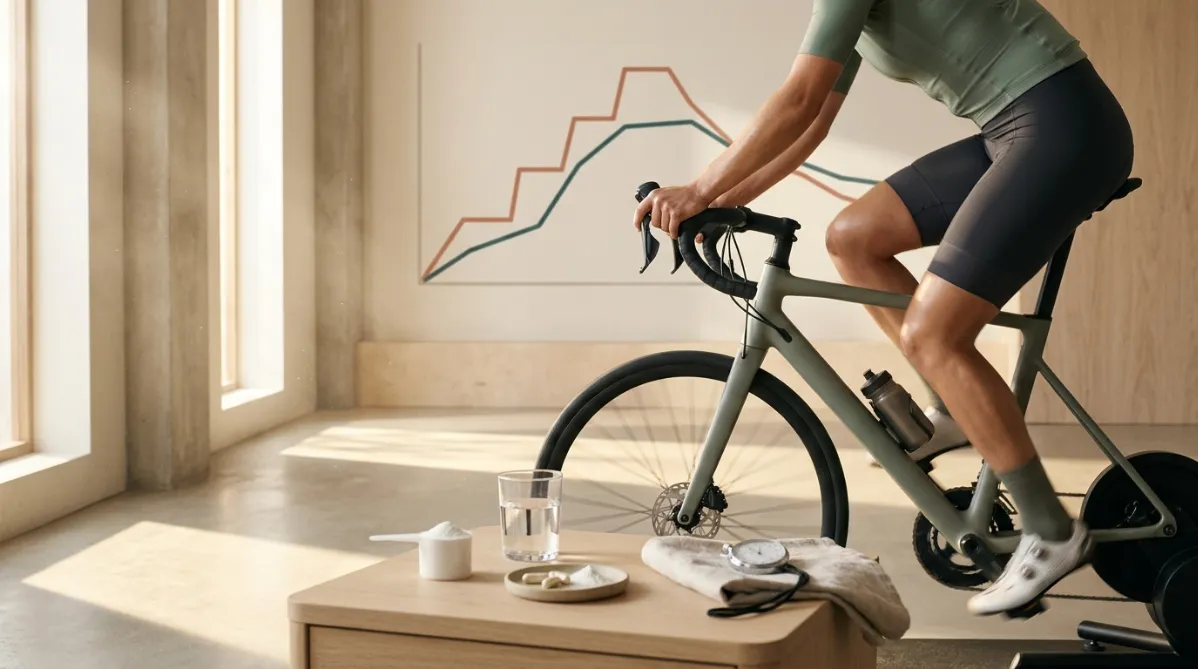
A wide, editorial-style photograph of a lone cyclist's legs and torso mid-sprint on a stationary indoor bike in a bright, minimalist performance studio. The scene is shot from a low three-quarter angle with shallow depth of field. The cyclist wears matte charcoal shorts and a fitted sage-green top, with a subtle sheen of sweat catching soft window light. Their hands grip the handlebars and the pedals are caught in a slight motion blur, which conveys explosive effort.

In the foreground, slightly out of focus on a pale oak side table, sit a small matte white scoop and a clear glass of water. Next to them is a little ceramic dish holding a few off-white capsules and a pinch of fine white powder. A folded linen towel and a slim stopwatch rest nearby. The stopwatch face is softly legible, hinting at timed sprint intervals.

The background is warm cream concrete and pale wood, with tall windows casting long diagonal shafts of golden morning light across the floor. Faint dust motes drift in the light. On the wall behind, a clean, abstract line graph is painted in muted terracotta and deep teal. It shows one line rising in steps like five sprint bouts and another line gently falling, a subtle visual nod to power up and lactate down. The graph is minimal and stylized, with no readable numbers or text.

The color palette is earthy and modern: sage green, terracotta, warm cream, soft charcoal, and touches of natural wood. The lighting is soft and directional with gentle highlights and natural shadows. The overall look is calm, refined, and contemporary, like a premium wellness and sports science magazine cover. The composition follows the rule of thirds, with the cyclist on the right and open negative space on the left for a headline. The image is crisp, grainy in a subtle film-like way, and free of any futuristic or sci-fi elements.
science research

Cette forme de carnitine a augmenté la puissance des sprints jusqu’à 15 % et a réduit le lactate

BY DR. GYMBRO ·

Une étude croisée de 2009 a montré qu’une dose unique de 4,5 g de glycine propionyl‑L‑carnitine (GPLC) pouvait augmenter la puissance maximale et moyenne des sprints de 2,6 % à 15 % sur cinq efforts en tout‑ou‑rien. Le taux de lactate sanguin était aussi 16,2 % plus bas 14 minutes après l’exercice. Mais le « 15 % » correspond au maximum de la fourchette, pas à une moyenne, et l’échantillon ne comptait que 24 hommes dans un seul laboratoire. Cet article décortique les différences entre le GPLC, la L‑carnitine classique et l’ALCAR, le rôle éventuel de l’oxyde nitrique, ainsi que les doses, le timing et les limites des preuves.
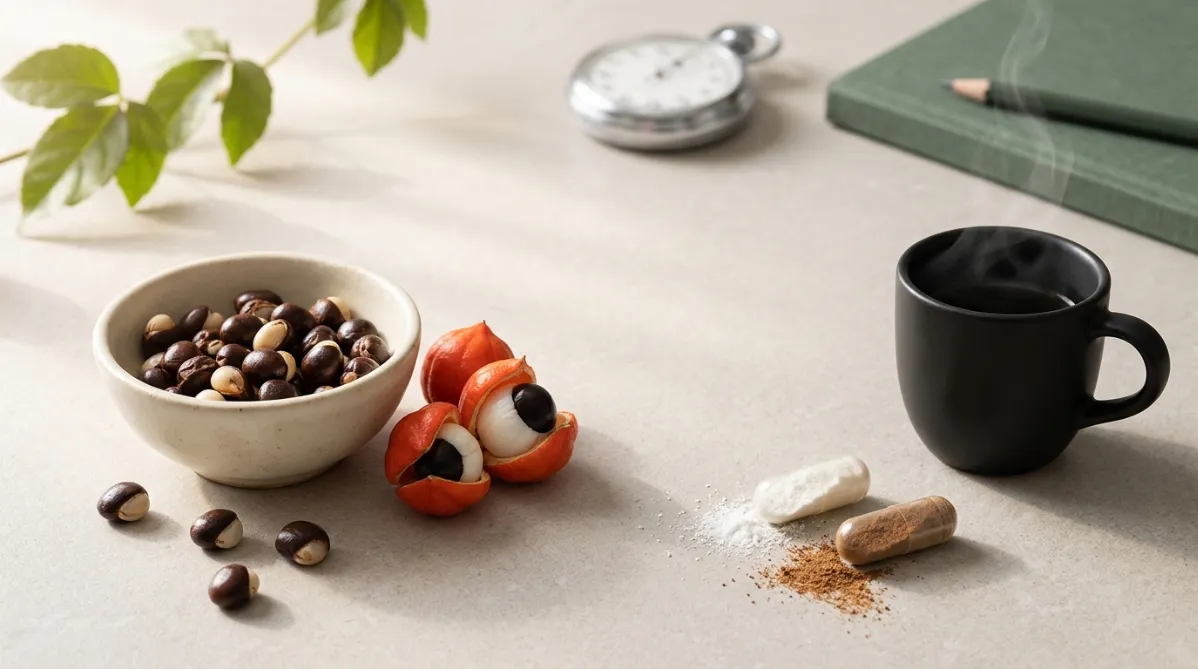
A wide, softly lit editorial flat-lay on a pale warm-gray stone countertop, shot from slightly above. On the left, a small rustic ceramic bowl in matte cream holds a handful of dried guarana seeds, dark glossy brown with pale cream arils, a few spilling onto the surface. Beside it sits a halved fresh guarana fruit in vivid red-orange, split open to show the white flesh and black seed inside, looking like a tiny eye. On the right, two open clear capsules rest side by side. One is filled with fine white caffeine powder, the other with a fine earthy brown guarana powder, and a little of each dusts the stone in delicate, deliberate lines. Between them, a minimalist matte-black espresso cup with a thin ribbon of steam rises on the right edge of the frame. A brushed-steel stopwatch and a slim dark-green linen notebook with a pencil sit in the upper background, slightly out of focus, to hint at performance testing without clutter. A few green leaves of a guarana vine curve in from the top-left corner, catching soft light.

The lighting is natural window light from the left, with gentle long shadows and a subtle warm highlight on the seeds. The palette is muted and modern: warm creams, terracotta red, deep espresso brown, sage green, and charcoal accents. The background is clean with generous negative space on the upper right for headline text. Shallow depth of field, crisp focus on the seeds and capsules, fine grain, and a calm premium magazine look like a contemporary wellness and sports-science journal. No people, no text, no logos, no futuristic elements.
science research

Guarana vs caféine : à même dose, seul le guarana augmente la puissance maximale

BY DR. GYMBRO ·

Même dose de caféine, capsule différente, et seul le guarana a entraîné une hausse statistiquement significative de la puissance maximale. Dans un essai croisé randomisé chez 18 hommes actifs, le guarana a fait grimper la puissance de pointe de 4 % par rapport au placebo, alors que la caféine anhydre n’a pas atteint la significativité. Mais le guarana n’a pas surpassé la caféine en comparaison directe, les écarts restant descriptifs. Voici les chiffres, les limites de l’étude, et comment doser le guarana en fonction de sa teneur en caféine si vous souhaitez l’essayer.
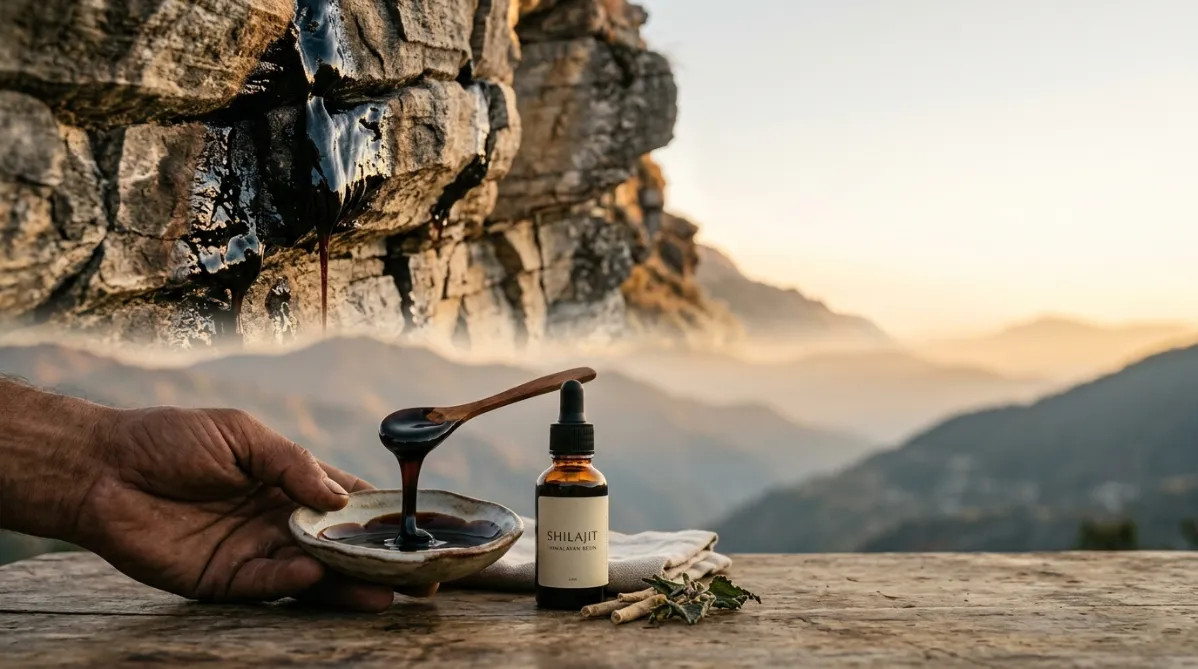
A wide, editorial-style photograph of a rugged Himalayan cliff face at golden hour, with dark, glossy resin seeping from the cracks in the layered stone. Thick, tar-like droplets catch the warm light and shine like polished obsidian. In the foreground, a weathered hand holds a small, rustic ceramic dish with a spoonful of purified Shilajit. The resin is deep brown-black, glossy, and stretches in a slow, viscous ribbon from the spoon. Beside the dish sits a simple, minimalist amber glass dropper bottle with a plain cream label, a folded linen cloth, and a few scattered dried herbs, suggesting a modern wellness ritual. The mid-ground shows soft layers of misty mountain ridges fading into a pale peach and dusty blue sky. The background is gently blurred, with shallow depth of field and creamy bokeh. The color palette is earthy and muted: warm ochre, charcoal, sage green, and soft cream, with a subtle film-grain texture. Natural side lighting creates long, gentle shadows and highlights the textures of the stone, resin, and ceramic. The composition follows the rule of thirds, with the dish and bottle in the lower left and open negative space on the right for headline overlay. The mood is calm, grounded, and credible, like a high-end health and science magazine feature, with a refined, contemporary, slightly documentary look. There is no text, no people's faces, and no futuristic elements.
science research

Shilajit testé : le « goudron de montagne » peut‑il vraiment augmenter la testostérone ?

BY DR. GYMBRO ·

Le shilajit, ce « goudron de montagne » himalayen vendu comme booster naturel de testostérone, a fait l’objet d’un essai randomisé, en double‑aveugle et contrôlé par placebo. Chez des hommes de 45 à 55 ans, 250 mg de shilajit purifié pris deux fois par jour pendant 90 jours ont fait augmenter de façon significative la testostérone totale, la testostérone libre et le DHEAS par rapport au placebo, tandis que les hormones LH et FSH sont restées stables. L’étude est prometteuse mais modeste, limitée aux hommes d’âge moyen, et ne mesure que les niveaux hormonaux, pas les performances à la salle. Voici ce que montre la recherche, ce qu’elle ne montre pas, et pourquoi la pureté ainsi que le contrôle des métaux lourds sont essentiels lors de l’achat.
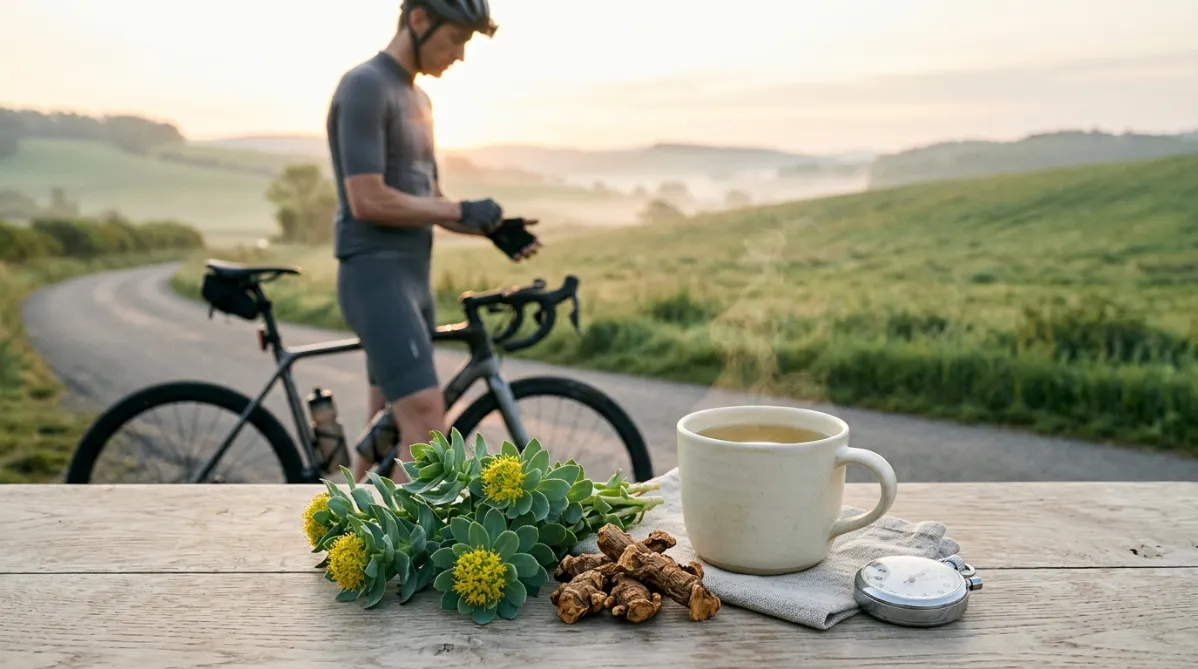
A landscape editorial photograph in soft natural morning light. In the foreground on a rustic light oak table, a small cluster of fresh Rhodiola rosea plants with thick succulent blue-green leaves and tiny golden-yellow flower clusters rests beside a few dried, knobby amber-brown rhizome pieces. A matte ceramic cup of pale golden herbal tea sits beside them, with a thin curl of steam and a small linen cloth. The plants and roots are sharp, with fine texture and dewy highlights.

In the softly blurred background, a lean cyclist in a fitted charcoal jersey stands beside a road bike on a quiet country lane at sunrise. Rolling green hills fade into pale mist behind them, and warm light rims the rider's shoulders. The cyclist tightens a glove, calm and focused, in a pre-ride moment of preparation. A water bottle is mounted on the bike frame, and a simple analog stopwatch with a brushed metal casing lies on the table near the herbs, hinting at timed effort.

The palette is muted and modern: sage green, warm cream, soft gold, and slate gray, with gentle peach tones from the sunrise. Shallow depth of field, a clean, airy composition with generous negative space on the right third for headline text, and subtle film grain. The mood is calm, health-conscious, and quietly athletic, like a premium wellness and sports science magazine cover. No text, no logos, no futuristic elements.
science research

Rhodiola Rosea : un pré‑entraînement sans stimulant pour le cardio intense ?

BY DR. GYMBRO ·

Un essai croisé de 2013 a montré qu’une dose unique de 3 mg/kg de Rhodiola rosea prise une heure avant un test de 6 miles à vélo a réduit le temps de parcours de 25,8 à 25,4 minutes. La fréquence cardiaque à l’échauffement est passée de 140 à 136 bpm et l’effort perçu de 6,6 à 6,0. Le gain, d’environ 1,5 %, reste limité et provient d’un échantillon de 18 participants ; ce n’est donc pas un miracle. En revanche, la sensation d’effort moindre fait de la Rhodiola une option intéressante, dépourvue de caféine, pour les athlètes d’endurance.
A bright, modern editorial flat-lay photographed from above on a soft off-white stone surface. At the center sits a matte ceramic scoop heaped with fine white creatine powder, with a loose dusting of powder fanning out across the surface. Beside it is a minimalist frosted-glass jar with a plain label and a brushed-steel shaker bottle lying on its side. To the left, a wooden comb and a small folded strip of graph paper with a single hand-drawn upward curve in muted terracotta ink, suggesting a data spike without any text. A few loose strands of dark brown hair curve elegantly across the stone near the comb. To the right, a clean glass beaker filled with water and a sprig of green rosemary, and an open notebook with blank pages and a sleek pen. The palette is warm neutrals: cream, sand, soft sage green, and a single accent of terracotta orange. Natural window light falls from the upper left, casting long, gentle shadows and a subtle diffused glow. The composition leaves generous negative space on the right third for title overlay. Shallow depth of field with crisp focus on the powder scoop, a premium health-and-science magazine look, minimalist, calm, and trendy, with fine grain and soft contrast. Landscape 16:9 framing.
science research

Créatine et perte de cheveux : l’augmentation de 56 % du DHT expliquée

BY DR. GYMBRO ·

Une étude de 2009 a montré qu’une phase de charge de créatine de 7 jours à 25 g/jour augmentait le DHT de 56 %, les niveaux restant environ 40 % au‑dessus du point de départ avec une dose d’entretien de 5 g/jour, tandis que la testostérone restait stable. Comme le DHT est associé à la calvitie masculine, ces résultats ont alimenté le débat sur la créatine et la perte de cheveux. Mais l’essai ne comptait que 20 joueurs de rugby, ne durait que trois semaines et n’a jamais mesuré la chevelure. Des études ultérieures n’ont pas reproduit de façon systématique cette hausse du DHT. Voici ce que révèlent réellement les recherches, qui pourraient être concernés et comment ajuster votre approche si vous êtes inquiet.
A clean, editorial still life shot from a slightly elevated angle on a pale oatmeal-colored stone countertop, lit by soft natural window light from the left that casts long, gentle shadows. In the center sits an open, unlabeled amber glass supplement bottle on its side, with a small scatter of cream and white capsules spilling toward the viewer. Beside it, a matte ceramic dish holds a few capsules and a pinch of coarse sea salt. To the right, a neatly arranged group of whole foods that are natural zinc and magnesium sources: halved oysters on a small slate board, a small bowl of pumpkin seeds, a handful of raw cashews, and a few dark green spinach leaves. In the left foreground, a worn leather gym notebook lies open with minimal handwritten tally marks and a simple hand-drawn flat line graph in dark ink, with a brass pen resting across it. A single chrome dumbbell handle edges into the frame at the far left, softly out of focus, and a folded charcoal gym towel sits at the top right corner. The palette is warm and muted: sand, cream, sage green, amber, and charcoal, with a subtle terracotta accent in the ceramic dish. The depth of field is shallow, with the capsules and bottle in crisp focus and the background gently blurred into a soft beige haze. The mood is calm, thoughtful, and skeptical, like a modern health and science magazine feature. The composition leaves generous negative space on the upper right for headline text. The texture is tactile and fine-grained, with a subtle film-like softness and natural contrast. Wide landscape 16:9 framing.
science research

ZMA et testostérone ? 8 semaines chez des haltérophiles n’ont rien donné

BY DR. GYMBRO ·

Le ZMA a bâti sa réputation sur des affirmations audacieuses concernant la testostérone, un lien avec le scandale BALCO et une première étude de football qui semblait prometteuse. Des chercheurs ont ensuite testé le produit de façon plus stricte : 42 hommes entraînés, en double‑aveugle, pendant huit semaines d’entraînement standardisé. Le taux sérique de zinc a légèrement augmenté, mais sans différence significative, et aucun changement n’a été observé sur les hormones, la force, la composition corporelle, l’endurance ou la puissance anaérobie. Voici ce que l’étude a réellement montré, pourquoi la carence reste une question à part, et ce que les pratiquants devraient plutôt faire.
A wide, landscape editorial photograph of a clean, sunlit kitchen counter or pale stone tabletop, styled like a modern wellness magazine spread. Two scoops sit side by side on a matte ceramic surface. The left one is a plain, humble wooden scoop heaped with fine white creatine powder. The right is a glossy, ornate brushed-gold scoop holding the same white powder, which hints at "premium" branding. Behind each scoop stands a tub. The left tub is minimal, matte, and cream-colored with simple sans-serif lettering and no readable words. The right tub is sleek black with metallic gold accents and an overly polished look. A few fine grains of powder are scattered across the surface, catching the light.

The composition uses a shallow depth of field. The foreground scoops are crisp, and the background softly blurs into a warm neutral palette of oatmeal, soft sage green, and muted terracotta. Soft morning window light comes in from the left, casting long, gentle shadows and a subtle highlight along the scoops' edges. A small price tag shape, blank and unmarked, sits near the gold scoop, with a slightly crumpled paper texture to suggest the "pricey" angle without any text. A glass of water with condensation and a folded linen napkin sit at the edge of the frame. A single green sprig or eucalyptus stem adds a natural accent.

The overall mood is calm, intelligent, and quietly skeptical, with the plain option feeling confident and the flashy one a bit overdressed. The color grading is soft and slightly desaturated with creamy highlights, and there is fine film grain. The layout leaves generous negative space on the right third for a headline overlay. It looks like a high-end lifestyle and science journal cover, with a minimalist, tactile, trendy feel and no futuristic or sci-fi elements.
science research

Créatine éthyl‑ester vs monohydrate : la forme onéreuse qui ne tient pas la route

BY DR. GYMBRO ·

Les industriels de compléments aiment vanter les mérites d’une « créatine avancée » supposée mieux absorbée que la forme classique. Un essai randomisé en double‑aveugle de 2009 a comparé la créatine éthyl‑ester, la créatine monohydrate et un placebo chez 30 hommes non entraînés pendant sept semaines d’entraînement intensif. Le CEE a entraîné une diminution de la créatine sérique et une hausse marquée de la créatinine sérique, signe d’une dégradation accrue. La créatine musculaire a augmenté de façon similaire dans les deux groupes créatine, mais la force, la puissance et la composition corporelle n’ont différé d’aucun groupe. Conclusion : évitez la forme « premium » et restez simple.
A wide, editorial-style flat lay photographed from above on a pale warm-gray stone countertop in soft morning window light. On the left, a small matte white ceramic bowl holds fine white arginine powder, with a wooden scoop resting beside it. At the center, two halved oranges and one whole lemon in saturated citrus tones, with a few glossy droplets of water on the cut surfaces, to suggest vitamin C. On the right, three slim amber glass capsule bottles with minimal cream labels and no legible text stand in a loose row, with a few white capsules spilling out. A single chrome dumbbell handle enters the frame from the upper right corner, partly cropped, its cool metallic sheen contrasting with the warm fruit. A sprig of green rosemary and a folded linen napkin in oatmeal beige add texture. Long soft shadows fall to the left. The palette is warm cream, sunny orange, soft yellow, and muted sage, with a few crisp accents of steel gray. The composition is airy and uncluttered, with generous negative space in the upper left for a title overlay. It has a shallow depth of field, a crisp foreground, and a faintly blurred background. The look is clean, contemporary, and wellness-magazine, like a premium health and fitness journal cover, with natural grain, high-end product photography quality, and a calm, fresh, trustworthy mood.
science research

3 g d'arginine + 500 mg de vitamine C : une hausse de 26 % de la testostérone chez les bodybuilders

BY DR. GYMBRO ·

L'arginine a longtemps mauvaise réputation comme stimulant d'oxyde nitrique, mais une nouvelle étude randomisée montre qu'associée à de la vitamine C, elle augmente significativement la testostérone et le VO₂max chez 50 bodybuilders masculins après 45 jours de supplémentation (3 g d'arginine répartis en trois prises + 500 mg de vitamine C), tout en réduisant la masse grasse. L'hormone de croissance, le cortisol et l'équilibre azoté restent inchangés. Ce « stack » économique mérite d'être suivi, même s'il repose sur une étude unique et qu'une hausse de testostérone ne garantit pas forcément une prise de muscle.
A wide, softly lit editorial photograph of a rustic light-oak table by a sunny window. On it, a handful of dried brown kelp and wakame seaweed fronds spill from a handmade matte ceramic bowl in warm sand tones, their glossy, ruffled edges catching the light. Beside the bowl sits a small wooden scoop holding fine golden-beige powder, with a little of it dusted across the table. In the middle ground, an older adult's weathered but strong hand grips a smooth, rounded river stone, with the knuckles and tendons subtly emphasized to suggest strength and vitality. Only the hand and part of a forearm in a soft oatmeal linen sleeve are visible.

In the background, slightly out of focus, a pair of worn leather walking shoes rests on a windowsill next to a trailing green plant. Beyond the window, a blurred coastal path winds through dune grass toward a pale blue sea, hinting at walking and an active daily life. A simple analog wristwatch lies on the table's edge, a quiet nod to the twelve-week timeline.

The palette is muted and natural: sage green, warm sand, soft ocean teal, and creamy off-white, with deep olive-brown accents from the seaweed. Morning light streams in from the left, casting long, gentle shadows and a faint golden glow. The depth of field is shallow, with crisp focus on the hand and seaweed and a creamy bokeh background. The composition follows the rule of thirds, with the hand and bowl on the left and generous negative space on the right for headline text. The mood is calm and hopeful, with a clean, contemporary wellness-magazine feel. The image is shot as if on a 50mm lens with subtle film grain and a natural, uncluttered, tactile look.
science research

Le fucoïdale d'algue marine augmente la force de préhension chez les plus de 60 ans en 12 semaines

BY DR. GYMBRO ·

Perdre de la force en vieillissant est l’un des aspects les plus courants et les moins abordés du vieillissement ; l’entraînement en résistance n’est pas accessible à tout le monde. Un essai randomisé sur 12 semaines a montré qu’un fucoïdale à faible poids moléculaire, dosé à 1 650 mg par jour, améliore nettement la force de préhension et la performance au test de marche de six minutes chez les plus de 60 ans. Étonnamment, la masse musculaire n’a pas changé et l’ajout de BCAA et de vitamine D n’a apporté aucun bénéfice supplémentaire. L’étude, petite et centrée sur un produit de marque unique, constitue donc une piste prometteuse plutôt qu’un verdict définitif.
A wide, softly lit editorial still life on a warm off-white linen surface. At the center-left, a matte ceramic bowl holds a small mound of fine golden-yellow quercetin powder, with a few scattered capsules beside it. Next to the bowl sit fresh red onions (one halved to show its translucent purple layers), a few capers, and a small cluster of ripe apples with the skin on, all natural quercetin sources. On the right side of the frame, a sleek matte-black dumbbell rests at an angle beside a folded slate-gray gym towel. A minimalist glass beaker of water with a thin lemon slice sits just behind it.

Soft diffused morning window light enters from the upper left, casting gentle long shadows and subtle highlights on the powder and glossy onion skin. The color palette is muted and sophisticated: butter yellow, deep plum, warm cream, charcoal, with small touches of sage green from a single eucalyptus sprig. A subtle, out-of-focus background of pale plaster wall and a wooden shelf adds depth.

Shallow depth of field, shot from a slightly elevated three-quarter angle with a 50mm lens feel. Generous negative space in the upper right for a title overlay. The mood is clean, calm, and modern, like a premium wellness and science journal feature: tactile textures, natural materials, restrained composition, high-end editorial photography, and no text or logos.
science research

1 g/j de quercétine avant les curls excentriques : le twist IGF

BY DR. GYMBRO ·

Que se passe‑t‑il lorsqu’on consomme 1 g/j de quercétine pendant 14 jours avant d’entamer des curls excentriques ? Dans une petite étude croisée contre placebo, les marqueurs de dommages musculaires (CK, LDH, myoglobine) et l’IL‑6 ont diminué, tandis que la réponse IGF‑I s’est amplifiée et le pic d’IGF‑II est survenu plusieurs jours plus tôt. Avec seulement douze participants et aucune donnée d’hypertrophie, il s’agit d’un signal prometteur de récupération, mais pas d’une garantie de prise de muscle. Voici ce que l’étude a révélé et comment l’utiliser de façon judicieuse.
A bright, minimalist editorial still life shot from a slightly elevated three-quarter angle on a pale oat-colored stone countertop, bathed in soft natural window light with gentle long shadows. In the center sit two matching matte white supplement scoops, side by side. One is heaped with fine white crystalline powder, the other holds an almost identical pile, so the viewer is invited to compare them. Beside them are two simple frosted glass tumblers of cloudy water, each with a small whisper of powder swirling at the bottom. A third glass of clear water sits slightly apart, as a quiet nod to the placebo.

Scattered around the scene are fresh, sliced watermelon wedges with vivid coral-pink flesh and pale green rinds, and a few sliced green apples with crisp white interiors, hinting at the natural sources of citrulline and malic acid. A small brushed-brass measuring spoon and a minimalist matte sage-green shaker bottle rest at the edge of the frame. Off to one side, a clean ceramic dish holds a few loose grains of powder, and a slim linen notebook with a pencil lies open to a blank page, suggesting data and study notes without any legible text.

The color palette is soft and modern: warm cream, blush coral, sage green, and touches of brass, with a faintly blurred background of a sunlit kitchen or studio with a pale plaster wall. Shallow depth of field keeps the scoops tack sharp while the background melts into a creamy bokeh. The composition leaves generous negative space on the left third of the frame for a title overlay. The overall mood is calm, trustworthy, and trendy, like a contemporary wellness and science journal cover, with crisp detail, subtle film-like grain, and a clean, airy, balanced feel.
science research

Citrulline Malate vs L‑Citrulline : le malate est‑il vraiment important ?

BY DR. GYMBRO ·

Citrulline malate ou L‑citrulline pure ? Un protocole randomisé, double‑aveugle, contrôlé par placebo et en cross‑over, mené chez 43 adultes entraînés, a comparé les deux formes à un placebo, et la réponse pourrait vous faire économiser. Aucun des deux n’a amélioré la force, la puissance, la performance au saut, le nombre de répétitions ni la perception de l’effort, et le malate n’a rien apporté de supplémentaire par rapport à la même dose de citrulline. Voici ce que l’étude a mesuré, les doses employées et les réserves qui empêchent de tirer une conclusion définitive. Si vous hésitez encore sur le produit à mettre dans votre shaker, commencez par lire ceci.
A wide landscape editorial photograph of a sunlit minimalist gym corner with warm, natural morning light streaming through tall windows. In the foreground on a light oak wooden bench sits a small matte ceramic dish holding a few translucent amber softgel capsules, next to a brushed steel shaker bottle and a folded charcoal gray towel. The capsules catch the light with a soft golden glow, shallow depth of field blurring them slightly against the background.

In the softly blurred midground, a barbell loaded with black plates rests on a squat rack, with chalk dust lightly floating in the sunbeams. The walls are textured off-white plaster, and the floor is pale polished concrete. A potted green plant adds a touch of organic color near the window.

Laid casually beside the dish is an open notebook with a clean, hand-drawn bar chart in black ink: two bars of slightly different heights, one marked with a small question mark, suggesting uncertainty and interpretation. A slim pencil rests across the page. No readable text beyond simple marks.

The color palette is muted and modern: cream, warm beige, soft amber, charcoal, and sage green accents. The composition follows the rule of thirds, with the capsules and notebook in the lower left third and open negative space toward the upper right, ideal for headline overlay. Soft shadows, subtle film grain, and a calm, contemplative mood reminiscent of a contemporary health and science magazine. Shot as if with a 50mm lens at f/2.0, high-end lifestyle editorial aesthetic, clean and trendy, with no futuristic or sci-fi elements.
science research

750 mg de PA ont fait gagner 2,6 % de masse maigre en 8 semaines – mais il y a un hic

BY DR. GYMBRO ·

Une petite étude a montré que des hommes entraînés prenant 750 mg d’acide phosphatidique chaque jour augmentaient de 2,6 % leur masse maigre en huit semaines, alors que le groupe placebo n’a gagné que 0,1 %. La force au squat a également progressé davantage avec le PA, 12,7 % contre 9,3 %. Cependant, l’analyse statistique conventionnelle n’a pas mis en évidence de différences significatives. Les auteurs se sont donc appuyés sur une méthode plus indulgente appliquée à seulement 16 participants. Voici la dose, les résultats, et pourquoi cette étude pilote représente un signal prometteur plutôt qu’une preuve concluante.

This page is available in