Dr. Gymbro
←

Science & Research

24 articles
A wide, softly lit editorial still life on a pale oatmeal-colored linen surface. In the center sits a small matte ceramic bowl of fine white creatine powder, with a wooden scoop resting beside it and a few loose pale crystals scattered across the linen. Around the bowl, a fresh plant-based spread is arranged in an organic, uncluttered way: a halved avocado, a handful of chickpeas, bright green edamame pods, a cluster of dark leafy kale, a few red lentils spilled from a small wooden spoon, and a split pomegranate with glossy ruby seeds. A tall glass of water with condensation stands on the right, catching a sliver of window light.

In the soft-focus background, a young athlete in a muted sage-green tank top is mid-jump in a bright, minimalist studio with whitewashed brick walls and pale hardwood floors. The figure is slightly blurred and only partly in frame, which gives a sense of motion and vertical lift without pulling attention from the foreground. A pair of clean white sneakers and a folded gray towel sit on a low wooden bench nearby.

The light is warm natural morning daylight from the left. It casts gentle long shadows and subtle highlights on the powder and the glass. The palette is earthy and calm: cream, sage green, terracotta, warm wood tones, and small pops of avocado green and pomegranate red. The depth of field is shallow, with crisp focus on the bowl and scoop. The composition leaves generous negative space on the upper left for a title overlay, in the clean, contemporary style of a modern health and science magazine. Photographic, high-resolution, refined, and minimal.
science research

Los veganos tomaron creatina durante 4 semanas: el salto mejoró, los sprints no

BY DR. GYMBRO ·

Los veganos consumen prácticamente nada de creatina a través de la alimentación; ¿entonces la suplementación produce un efecto mayor? Un ensayo aleatorizado, triple ciego, con 20 veganos activos administró 0,1 g/kg/día de creatina monohidrato durante cuatro semanas. El rendimiento en salto mejoró, al igual que algunas variables de composición corporal, pero los resultados de sprint, agarre manual y tirón isométrico de muslo no cambiaron. El agua corporal aumentó 1,4 kg y el estudio no contó con un grupo de control omnívoro. A continuación mostramos qué revelan los datos, qué no pueden afirmar y quién podría estar interesado en probarlo.
A wide, editorial-style flat lay photographed from above on a pale oat-colored linen surface in soft morning window light. On the left, a small matte white ceramic cup of black coffee with a delicate swirl of steam, beside a few scattered roasted coffee beans. On the right, a second matte sage-green ceramic cup holding a pale, creamy golden tea-like drink, mirroring the first. Between them, two small glass vials with cork stoppers sit side by side: one holding fine white powder, the other holding slightly warmer cream-colored powder, with a tiny brass measuring spoon resting nearby. In the lower foreground, a slim wooden rowing oar lies diagonally across the frame, its blade edge softly entering from the right, painted a muted navy with a thin terracotta stripe. A minimalist analog stopwatch with a brushed-steel case rests near the oar, and a folded cream notebook with a thin pencil suggests data-taking. In the upper corner, a crescent-shaped dried eucalyptus sprig and a small folded gray wool throw hint at sleep and calm without being literal. The palette is warm and restrained: oat, cream, sage, soft navy, terracotta, and espresso brown. Shadows are long and gentle, with shallow depth of field and subtle film grain, giving a refined, modern wellness-magazine feel. Generous negative space on the left third of the composition leaves room for a headline overlay. Clean, calm, tactile, and contemporary, with no text, logos, or futuristic elements.
science research

Paraxanthine vs cafeína: la combinación ganadora y el aliado del sueño

BY DR. GYMBRO ·

Paraxanthine, el principal metabolito de la cafeína, se enfrentó cara a cara con ésta en un ensayo con 14 remeros. La combinación de 200 mg de cada una superó al placebo en una carrera de 2000 m, aunque con un efecto pequeño (d = 0,30). Ninguno de los compuestos por sí solo mostró una mejora clara del rendimiento. Sin embargo, la paraxanthine sola pareció ser más amable con el sueño subjetivo. Aquí tienes los números, sus limitaciones y quién podría beneficiarse realmente.
A wide, editorial-style flat lay photographed from above on a pale warm-gray linen surface in soft natural window light. At the center, a small open amber glass jar tips gently onto its side, spilling a few cream-colored capsules across the fabric. Next to the jar sits a loose arrangement of fresh mushrooms: a cluster of golden-tan reishi with glossy, lacquered caps, a few slender white enoki stems, a halved shiitake showing its pale gills, and a curl of turkey tail with concentric bands of rust, cream, and charcoal. A small wooden scoop holds a pile of fine beige mushroom powder.

On the left third of the frame, a matte black sports watch with a minimal face lies beside a folded sage-green running shirt and a pair of lightweight off-white running shoes, hinting at athletic training without showing a person. A slim white notebook with a single pencil rests nearby, open to a blank page with a faint hand-drawn line graph trending upward, in thin graphite strokes.

On the right side, a pair of clear glass beakers and a single small petri dish with a soft amber-tinted liquid add a subtle laboratory note, kept calm and organic. A single sprig of dried herbs and a few scattered oat-colored grains add texture.

The palette is earthy and refined: oatmeal, soft sage, terracotta, warm amber, and charcoal accents against the muted neutral background. Shadows are soft and diffused, with a gentle highlight on the glass and the glossy reishi cap. The composition leaves generous negative space in the upper right for a headline overlay. Shallow depth of field blurs the edges slightly, while the central mushrooms and capsules stay crisp. The overall feel is modern, clean, and trendy, like a wellness and science magazine cover, with tactile natural textures, minimal styling, and a quiet sense of curiosity and skepticism.
science research

Una cápsula de setas aumentó el VO2max un 14,8 % — pero hay un gran problema

BY DR. GYMBRO ·

Una cápsula de setas, 40 días y un aumento del 14,8 % en VO2max suena casi demasiado bueno para ser verdad. En este nuevo artículo de *Antioxidants* 50 jóvenes deportistas masculinos que tomaron 320 mg/día de un extracto multisetas rico en beta‑glucanos pasaron de 46,26 a 53,12 mL/kg/min. El gran problema es que el estudio careció de grupo placebo, no hubo aleatorización ni cegamiento, y los atletas siguieron entrenando durante el ensayo. Los experimentos celulares en cardiomiocitos de rata añaden una pista relacionada con la hipoxia, pero se probaron compuestos individuales, no la cápsula completa. Aquí analizamos lo que el estudio encontró, lo que no puede demostrar y a quién conviene ser escéptico.
A wide, editorial-style flat lay photographed from above on a pale warm-gray concrete surface, lit by soft natural window light with gentle shadows. On the left, three small matte ceramic bowls in sage green, soft terracotta, and cream, each holding a different white crystalline powder. The textures vary subtly: fine and powdery, slightly granular, and glittery with tiny crystalline flecks. Beside them rest three minimalist wooden scoops, a few scattered grains catching the light. In the center-right, a worn classic black-and-white soccer ball sits slightly off-frame, partially cropped by the edge, with a pair of muted navy cleats resting nearby, laces loosely draped. A small stopwatch with a brushed-steel finish and a folded sheet of graph paper with a hand-drawn bar chart in soft coral and teal pencil add a subtle sense of data and measurement. A few blades of fresh-cut grass and a sprig of eucalyptus add organic accents. The palette is calm and modern: warm neutrals, sage, terracotta, and muted navy, with one pop of coral. The composition leaves generous negative space in the upper right for headline text. The mood is clean, curious, and trustworthy, like a contemporary health and science journal. Shallow depth of field, crisp focus on the powders, with the soccer elements slightly softer. High-end editorial photography, 16:9 landscape.
science research

La creatina HCl supera al monohidrato en futbolistas: no la deseches todavía

BY DR. GYMBRO ·

Un ensayo aleatorizado con 40 futbolistas demostró que la creatina HCl y el éster etílico generaron mejoras superiores al monohidrato en salto, sprint, agilidad y potencia pico tras apenas cuatro semanas. Todas las formas de creatina superaron al placebo, pero las versiones “de moda” sobresalieron en las pruebas explosivas. Sin embargo, el estudio contó con solo 10 atletas por grupo, no indica la dosis en el resumen y sus resultados chocan con investigaciones previas. Aquí explicamos qué mostró, qué omitió y cómo interpretarlo.
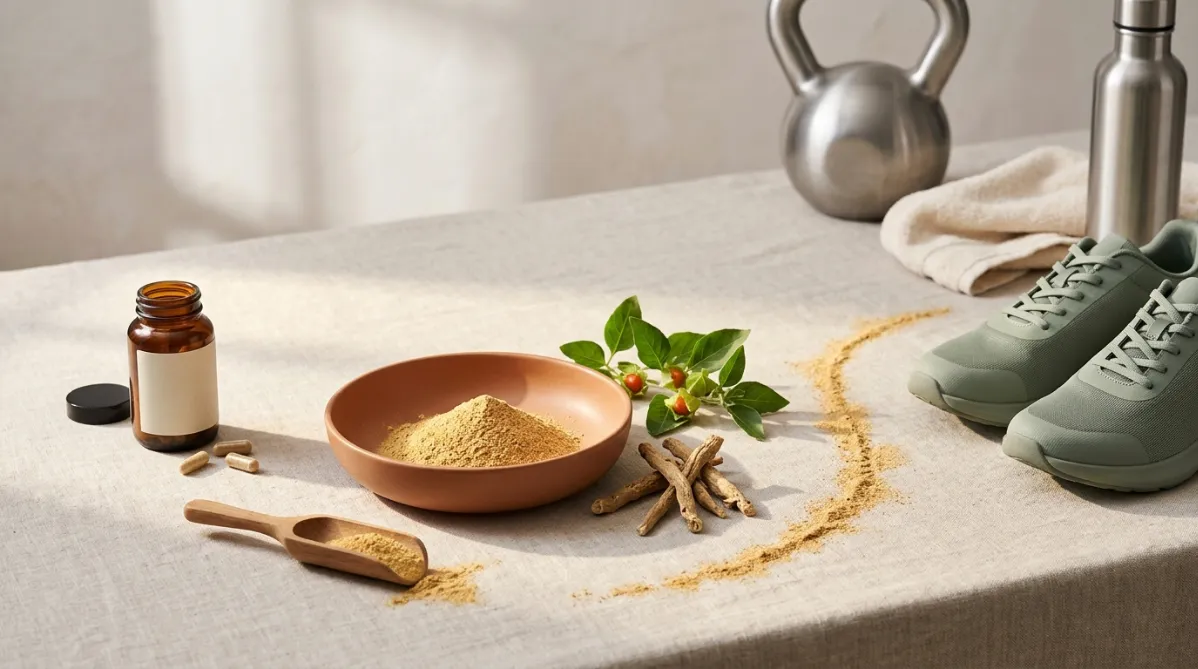
A wide, editorial-style still life shot from a slightly elevated angle on a pale oatmeal-colored linen surface in soft, diffused morning light. At the center, a shallow matte ceramic bowl in warm terracotta holds a small mound of fine, golden-tan ashwagandha root powder. Beside it lie a few gnarled, dried ashwagandha roots and a sprig of green leaves with tiny orange-red berries in their papery husks. To the left, a minimalist amber glass supplement bottle sits with a few capsules spilled beside it, label blank and clean. A wooden scoop rests on the surface, dusted with powder.

On the right side of the frame, a pair of sleek, muted sage-green running shoes sits slightly off-center. A folded cream towel and a stainless steel water bottle sit just behind them, with a single brushed-steel kettlebell partly out of focus in the background to hint at strength training without dominating the scene. The running shoes and the botanical elements share equal visual weight, suggesting the endurance theme.

A thin, curved line of scattered powder sweeps across the linen from the bowl toward the shoes, like a gentle path or track. Soft shadows fall to the left, and a warm sunbeam crosses the surface and picks out the texture of the powder and the roots.

The palette is restrained and modern: warm terracotta, sage green, cream, soft gold, and touches of charcoal. The background is a blurred pale plaster wall with a hint of a window shadow. Shallow depth of field, crisp focus on the bowl and roots, and generous negative space in the upper left for a headline. Contemporary wellness magazine aesthetic, calm, natural, tactile, high-end lifestyle photography, no text, no people, no futuristic elements.
science research

La sorpresa de la ashwagandha: favorece la resistencia más que la fuerza

BY DR. GYMBRO ·

La ashwagandha suele promocionarse como potenciadora de fuerza y músculo, pero un metaanálisis reciente muestra que su mayor beneficio está en la resistencia aeróbica. Analizando 13 ensayos aleatorizados con 599 participantes, los autores hallaron un efecto medio de g = 0.54 para la resistencia, mientras que los incrementos de fuerza fueron positivos pero inciertos. La dosis que parece más eficaz se sitúa entre 500‑600 mg al día, aunque con importantes advertencias. Aquí se resume la evidencia, quién podría beneficiarse y quién debería pensarlo dos veces.
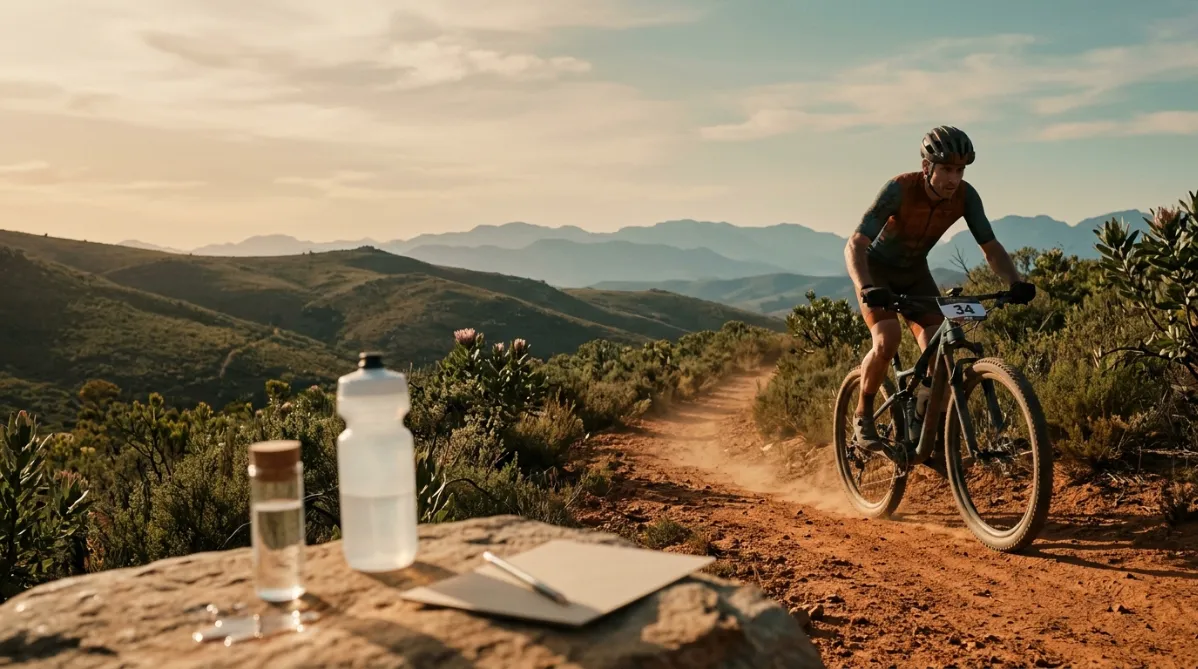
Wide landscape editorial photograph of a mountain biker mid-ride on a dusty red-orange singletrack trail in the South African Western Cape, golden hour light raking across the scene. The rider is in sharp focus on the right third of the frame, wearing a weathered cycling kit with a race number plate on the handlebars, dust kicking up from the rear tire. Behind them, rolling hills covered in fynbos shrubland and silhouetted protea plants fade into soft, hazy blue mountains. Warm amber sunlight creates long shadows and a soft rim light around the rider and bike.

In the lower left foreground, slightly out of focus, a small minimalist glass vial and a clear water bottle sit on a flat sun-bleached rock, with a few drops of liquid catching the light. Next to them, a simple matte paper notecard and a pencil suggest data collection, with no legible text. The vial and bottle are clean, understated, and modern, with no branding.

The color palette is earthy and refined: terracotta, ochre, sage green, dusty teal sky, and cream highlights. The composition uses shallow depth of field, a generous negative space in the upper left sky for headline overlay, and subtle film grain. The mood is contemplative, skeptical, and quietly sophisticated, like a feature photograph from a high-end outdoor sports and science magazine. Natural, candid, cinematic, shot on a 50mm lens with soft contrast and muted saturation. No futuristic elements, no glowing effects, no molecular graphics, no text.
science research

Ketone IQ elevó los cuerpos cetónicos en el Cape Epic, pero no hizo nada más

BY DR. GYMBRO ·

Los ciclistas que compitieron en los ocho días del Cape Epic tomaron Ketone IQ dos veces al día y alcanzaron alrededor de 1 mM de cetonas en sangre, pero su fatiga, frecuencia cardíaca, tiempo de reacción y recuperación fueron idénticos a los del grupo placebo. El ensayo doble ciego evaluó R‑1,3‑butanodiol en condiciones reales de carrera, no en laboratorio. Los autores señalan que la leve cetosis no fue eficaz y advierten que el butanodiol no debe confundirse con los ésteres de cetona. Con solo 18 participantes, el estudio tiene limitaciones, pero constituye un dato sobrio para quien piense en invertir en una costosa bebida cetogénica para recuperarse.
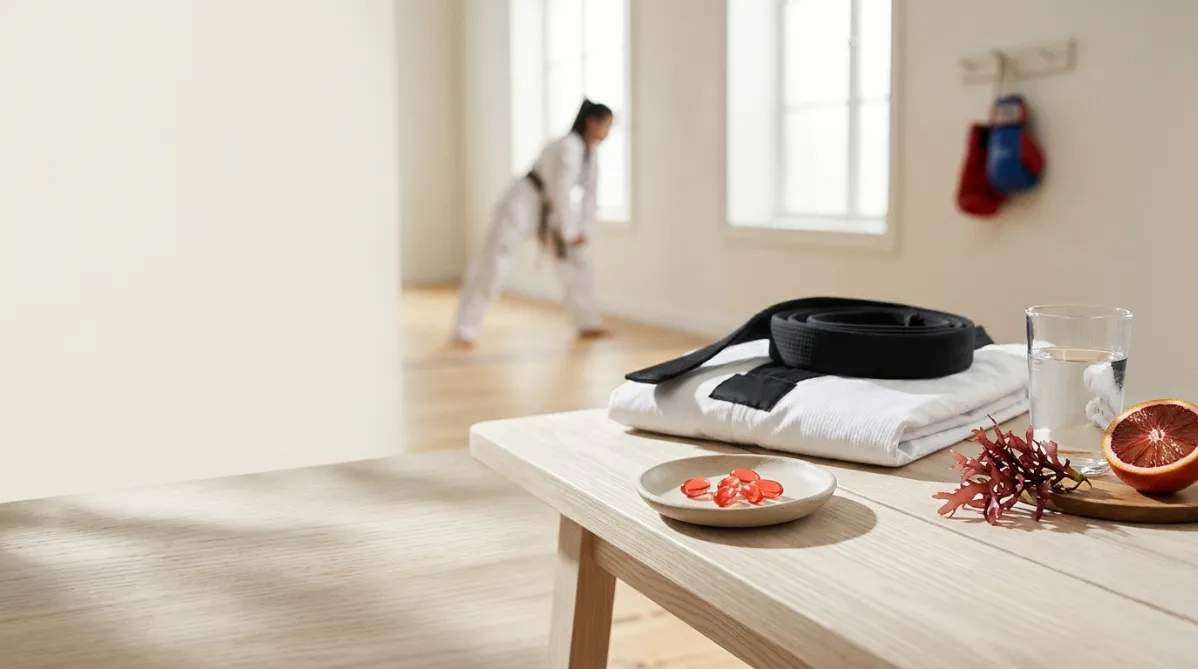
A wide editorial still life shot from a slightly elevated angle on a pale ash-wood bench in a bright, airy training hall. In the center sits a small matte ceramic dish holding a few translucent coral-red softgel capsules, their glossy surfaces catching soft window light. Beside the dish rests a folded white taekwondo dobok with a black belt loosely coiled on top. A sprig of fresh red microalgae-toned seaweed and a halved blood orange add natural color accents. A clean glass of water with subtle condensation stands to one side.

In the softly blurred background, the silhouette of a martial artist in a white uniform stretches near tall windows, with diffused morning light streaming across a sprung wooden floor. A pair of red and blue sparring gloves hangs on a minimal wall hook. Thin, elegant shadows stretch across the bench.

The palette is restrained and modern: warm off-white, soft sand, muted charcoal, with a vivid coral-red accent pulled from the capsules. Shallow depth of field, crisp focus on the capsules and dish, creamy bokeh behind. Natural, gentle lighting with a subtle film-like grain, reminiscent of a contemporary wellness and science magazine cover. Generous negative space on the left third of the frame for headline text. Calm, precise, and quietly athletic in mood, with no text, logos, or futuristic elements.
science research

12 mg de astaxantina durante 28 días: daño muscular y agotamiento en atletas de combate

BY DR. GYMBRO ·

Un ensayo aleatorizado evaluó 12 mg diarios de astaxantina en jóvenes atletas masculinos de taekwondo. Tras 28 días, el grupo que recibió el suplemento presentó una evolución de la creatina quinasa muy distinta a la del placebo, así como mayor actividad de SOD y tendencias a menores niveles de MDA y a menor agotamiento emocional y físico. No obstante, los hallazgos sobre burnout fueron solo exploratorios y no mostraron interacción grupo × tiempo en ninguna subescala. El estudio, pequeño y centrado en biomarcadores, no evaluó el rendimiento. Aquí se explica qué demuestran los datos, qué no, y a quién le puede interesar.
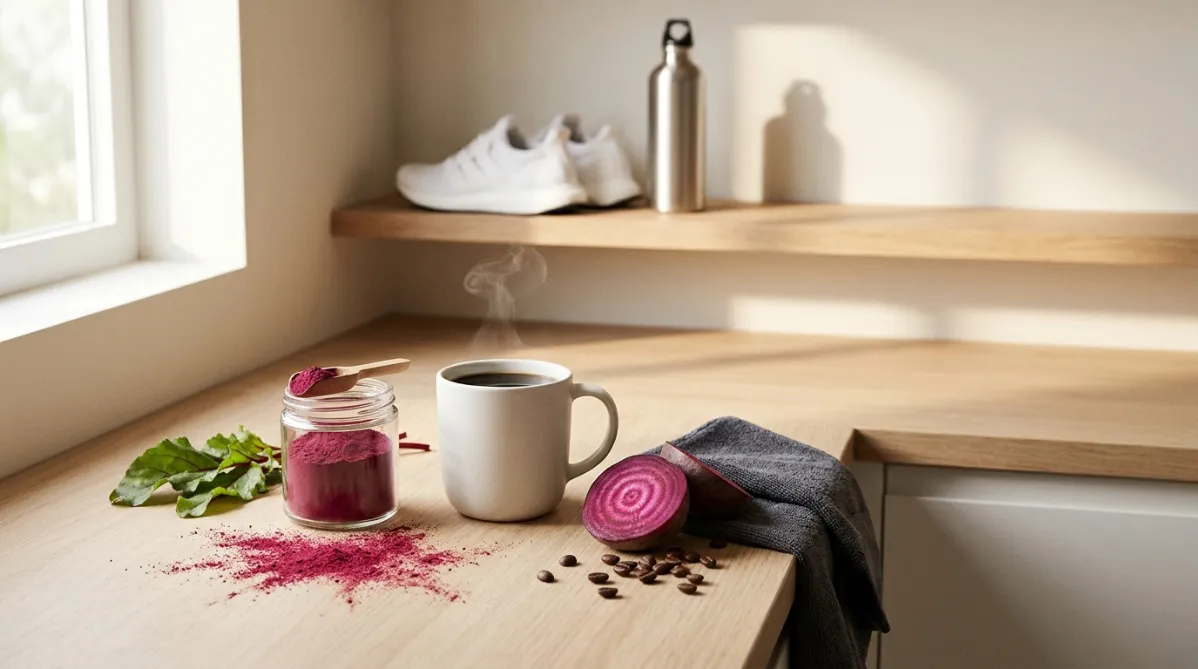
A sunlit, minimalist kitchen counter in a modern home, photographed from a slightly elevated three-quarter angle with soft natural morning light spilling in from a window on the left. In the center sits a matte white ceramic mug of black coffee with a thin curl of steam, beside a small glass jar of deep magenta beetroot powder with a wooden scoop resting on the lid. A scattering of fine crimson powder dusts the pale oak surface in an artful, casual swirl. Nearby, a halved raw beetroot reveals vivid concentric rings of purple and pink, next to a few roasted coffee beans and a neatly folded charcoal gym towel. In the soft-focus background, a pair of clean white running shoes and a stainless steel water bottle sit on a floating shelf, hinting at a pre-workout routine. A single sprig of green beet leaves adds a fresh accent.

The color palette is warm and editorial: creamy neutrals, espresso browns, and rich beet magenta, with gentle highlights and long soft shadows. The composition has generous negative space on the right side for headline text, shallow depth of field, and a crisp, tactile texture on the ceramic, powder, and wood grain. The mood is calm, health-conscious, and contemporary, like a lifestyle feature in a premium wellness magazine or a trendy nutrition journal. Clean, balanced, natural, with subtle film-like grain and a slightly muted, high-end finish.
science research

La cafeína en el pre‑entrenamiento endurece las arterias; el polvo de remolacha lo contrarresta

BY DR. GYMBRO ·

Un nuevo ensayo cruzado aleatorizado encontró que una dosis de cafeína equivalente a la de un pre‑entrenamiento (6 mg/kg) incrementó los marcadores de rigidez arterial a las 2,5 h. Añadir polvo de remolacha con 400 mg de nitrato devolvió esos marcadores a niveles similares al placebo. La presión arterial y la función endotelial no variaron, por lo que se trata de un efecto sutil, no de una alarma. El estudio incluyó sólo a 24 adultos jóvenes sanos y una única dosis, dejando abiertas muchas preguntas sobre el uso crónico y en poblaciones mayores o hipertensas.
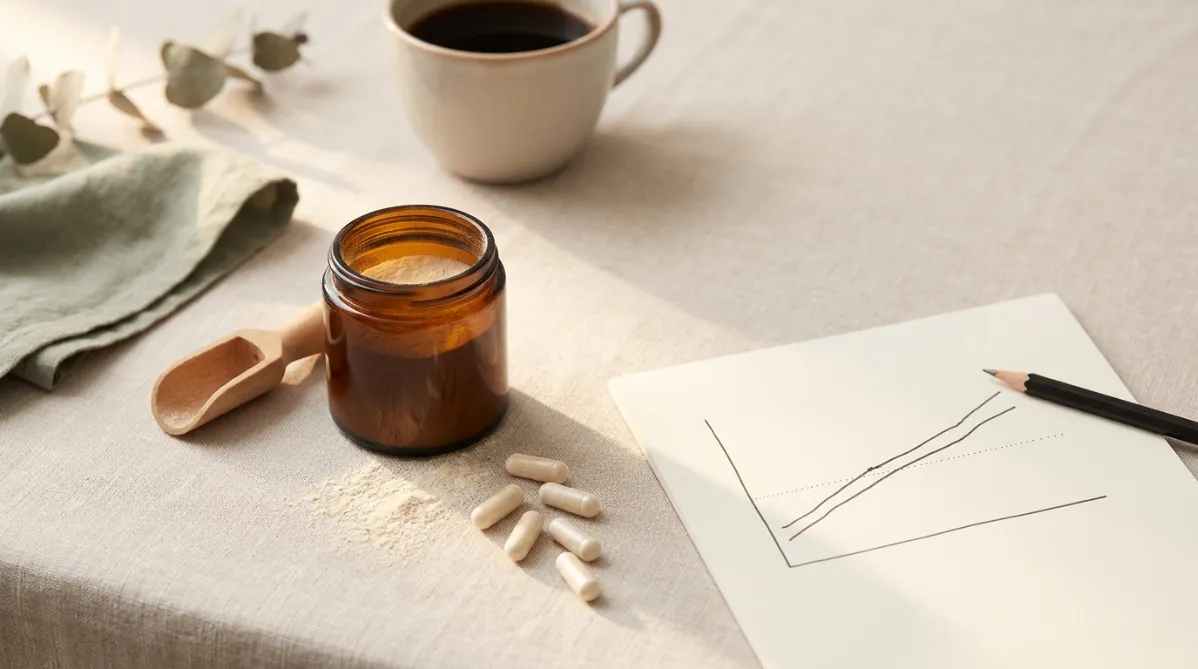
A softly lit editorial still life on a pale oat-colored linen surface, shot from a slightly elevated three-quarter angle in a wide landscape composition. At center-left, a small matte amber glass jar sits open, with a scattering of fine cream-colored powder dusted across the linen and a few off-white capsules spilling out in a loose, natural arc. A minimalist wooden scoop rests beside the jar. To the right, a clean sheet of cream paper holds a hand-drawn line graph in thin charcoal ink. Two lines run nearly parallel and drift slightly apart, with a faint dotted horizontal threshold line they never cross. A sharpened pencil lies across the corner of the paper. In the soft-focus background, a ceramic cup of black coffee, a folded sage-green cotton napkin, and a sprig of dried eucalyptus add quiet texture. Morning window light enters from the left, casting long, gentle shadows and a warm highlight along the glass jar's rim. The palette is restrained and modern: warm beige, muted sage, soft terracotta, charcoal, and touches of amber. Shallow depth of field keeps the jar and graph crisp while the edges melt into creamy blur. Generous negative space on the upper right leaves room for headline overlay. The mood is calm, thoughtful, and skeptical, with the clean, tactile look of a contemporary wellness and science journal. No people, no text, no logos, no futuristic elements.
science research

Turkesterona finalmente probada en IGF‑1 en hombres: los resultados no fueron lo que prometían los influencers

BY COACH RYAN ·

Un equipo de la Universidad de Baylor administró turkesterona a once hombres jóvenes y no encontró efectos estadísticamente significativos en IGF‑1, la tasa metabólica en reposo ni en el metabolismo de grasas y carbohidratos. Los cambios observados fueron leves y podrían deberse al azar, por lo que la evidencia humana sigue siendo insuficiente.
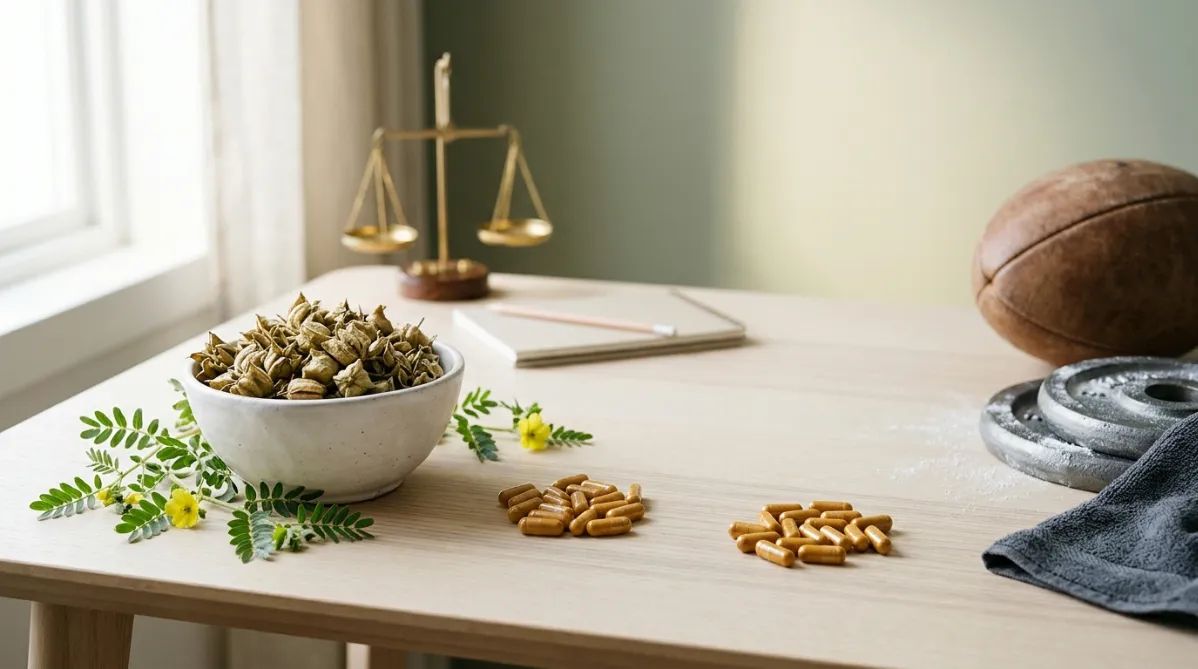
A wide, landscape editorial photograph shot from slightly above, showing a rustic matte-white ceramic bowl of dried tribulus terrestris, spiky star-shaped seed pods in warm tan and khaki tones, with a few fresh green trailing vines and tiny yellow flowers draped beside it. The bowl sits at the left third of the frame on a pale ash-wood table. Scattered nearby are two identical sets of plain, unlabeled amber supplement capsules, one pile slightly apart from the other, hinting at a placebo comparison. To the right, slightly out of focus, a worn leather rugby ball rests next to a chalk-dusted steel barbell plate and a folded charcoal-gray athletic towel.

Soft diffused natural light streams in from a window on the left, creating gentle long shadows and a calm, clean atmosphere. The background is a muted sage-green and cream gradient with a shallow depth of field, leaving generous negative space on the right side for title overlay. A small, minimal notebook with a pencil and a simple balance scale made of brushed brass sits subtly in the midground, suggesting scientific scrutiny without any laboratory clutter.

The color palette is earthy and refined: sage green, sand, warm amber, charcoal, and off-white. The style is modern lifestyle-magazine photography, crisp textures, subtle film grain, and a high-end wellness journal feel. The composition is balanced, uncluttered, and minimalist, with a quiet, thoughtful mood that conveys skepticism and evidence-based inquiry. No text, no logos, no people, no futuristic or sci-fi elements.
science research

Tribulus Terrestris fracasa en jugadores élite de rugby: ensayo de 5 semanas

BY DR. GYMBRO ·

Tribulus terrestris se comercializa como un potenciador natural de testosterona capaz de aumentar la masa muscular en menos de un mes. Un estudio doble ciego lo probó en jugadores élite de rugby league; tanto el grupo que lo tomó como el placebo mejoraron su fuerza y masa libre de grasa por igual, y la relación urinaria T/E no se modificó. A continuación, se presentan los hallazgos, sus limitaciones y recomendaciones de gasto.
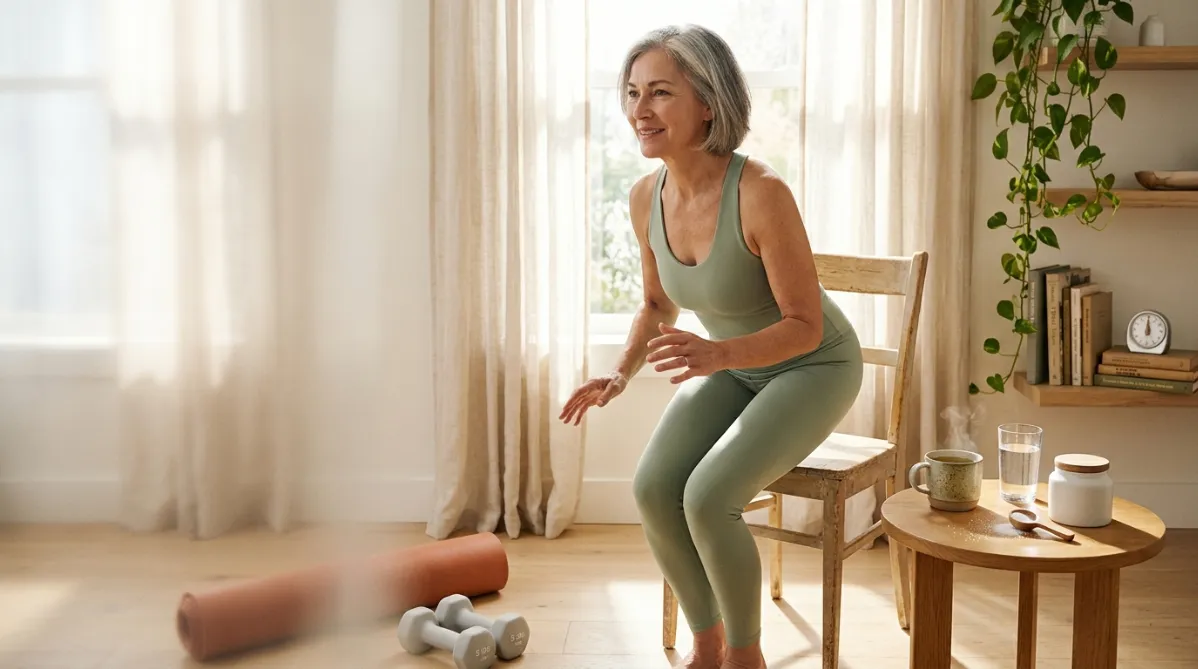
A wide landscape editorial photograph of a bright, airy sunlit living room with pale oak floors and a large window with sheer linen curtains. In the center, a woman in her late 50s with silver-streaked hair, wearing soft sage-green athletic wear, rises from a simple wooden chair, caught mid-motion with a calm, determined expression. Her hands are lightly extended forward for balance. Beside her on a small round oak side table sits a ceramic mug of tea, a glass of water, and a small matte white jar with a wooden scoop resting beside it, a few fine white crystalline grains scattered on the tabletop. In the soft-focus foreground, a pair of light-gray dumbbells and a rolled terracotta-colored yoga mat rest on the floor. A trailing green pothos plant spills from a shelf in the background, with a stack of books and a small analog kitchen timer nearby.

The color palette is warm and muted: cream, sage green, soft terracotta, natural wood, and gentle morning-gold light. Light streams diagonally across the scene, creating long soft shadows and a subtle glow on the woman's shoulders. Shallow depth of field blurs the background gently, while the woman and the table remain crisp. The composition follows the rule of thirds, with the woman on the right and generous negative space on the left, suited for headline overlay. The mood is hopeful, grounded, and modern, like a high-end wellness magazine or a trendy health journal. Natural film-like grain, soft contrast, and a slight matte finish give it a contemporary lifestyle photography feel. There are no futuristic elements, no digital overlays, and no text.
science research

La creatina ayuda a mujeres con rodillas dañadas a levantarse mejor, pero no por lo que piensas

BY DR. GYMBRO ·

La creatina suele promocionarse entre los jóvenes que levantan pesas, pero un ensayo aleatorizado y doble ciego la probó en mujeres posmenopáusicas con osteoartritis de rodilla. Tras 12 semanas de entrenamiento de piernas, el grupo que tomó creatina mejoró su puntuación en la prueba de levantarse de una silla de 15,7 a 18,1, mientras que el placebo apenas cambió (de 15,0 a 15,2). La creatina también redujo la rigidez, aumentó la masa magra y mejoró la calidad de vida. Sin embargo, el alivio del dolor y la fuerza máxima en la prensa de piernas no fueron superiores al placebo. Aquí se muestra lo que revelan los números y a quién podría ayudar realmente.
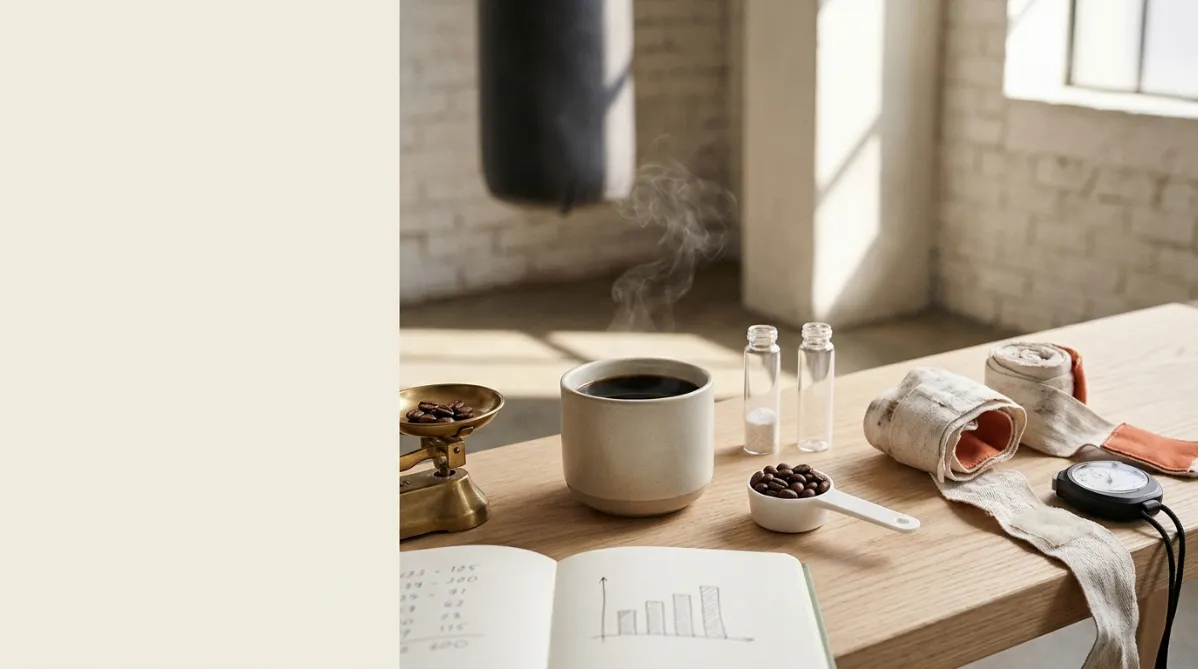
A wide, editorial-style still life shot from a slightly elevated angle on a pale oak gym bench, bathed in soft morning window light. In the center sits a matte ceramic cup of black coffee with delicate steam curling upward, flanked by a small white scoop of coffee beans and two identical glass vials, one filled with a few grains of fine powder and one empty, hinting at dose comparison. Next to the cup rests a pair of worn white boxing hand wraps, loosely coiled, and a slim black stopwatch with its face softly visible. In the foreground, a minimalist notebook lies open with blurred handwritten numbers and a simple pen sketch of a bar graph with bars of equal height, subtle and unreadable, suggesting a null result without any legible text. A small brass kitchen scale sits to the side with a few coffee beans on its tray.

In the soft-focus background, a boxing gym interior is visible: a hanging heavy bag in muted charcoal, exposed brick wall painted off-white, and tall windows casting long diagonal light across the floor. The color palette is warm and restrained: cream, sand, espresso brown, soft charcoal, with a single accent of muted terracotta orange in the hand wraps and a faint sage green in the notebook cover. Shallow depth of field with creamy bokeh, fine film grain, and gentle shadows give it a contemporary lifestyle-magazine and wellness-journal feel. The composition leaves generous negative space on the left third for headline overlay. Clean, calm, trendy, and tactile, with natural textures like wood grain, ceramic glaze, and cotton fabric. No people, no text, no futuristic elements.
science research

Café con baja dosis de cafeína no mejora el sprint en luchadores de élite

BY DR. GYMBRO ·

¿Crees que tu café pre‑entrenamiento está potenciando tus sprints? Un ensayo aleatorizado, doble ciego y cruzado con 15 atletas de combate de nivel nacional no encontró mejora alguna con dosis de cafeína de 1,5 y 3 mg/kg, equivalentes a unos 100 y 200 mg para un deportista de 68 kg. La potencia máxima, la potencia media, el índice de fatiga e incluso las estimaciones de la contribución de los sistemas energéticos no fueron diferentes al café descafeinado. Sin embargo, se trata de un resultado nulo de un estudio pequeño, no de una prueba definitiva de que la cafeína no funcione, y la mayoría de los estudios positivos usan cápsulas de 3–6 mg/kg.
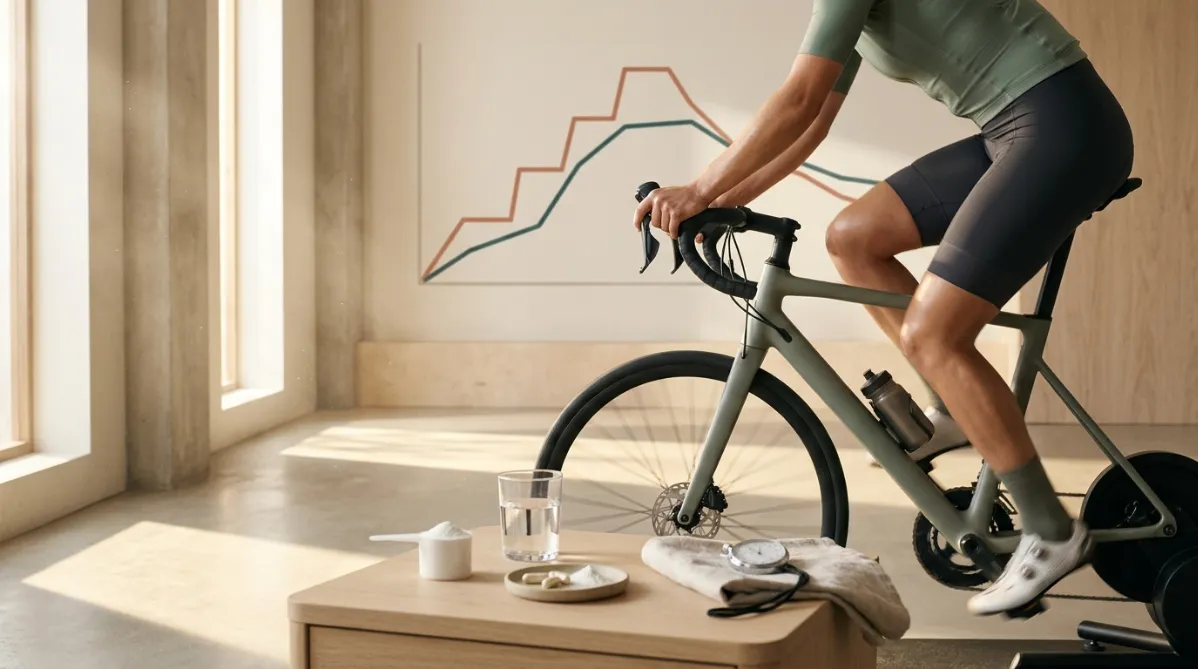
A wide, editorial-style photograph of a lone cyclist's legs and torso mid-sprint on a stationary indoor bike in a bright, minimalist performance studio. The scene is shot from a low three-quarter angle with shallow depth of field. The cyclist wears matte charcoal shorts and a fitted sage-green top, with a subtle sheen of sweat catching soft window light. Their hands grip the handlebars and the pedals are caught in a slight motion blur, which conveys explosive effort.

In the foreground, slightly out of focus on a pale oak side table, sit a small matte white scoop and a clear glass of water. Next to them is a little ceramic dish holding a few off-white capsules and a pinch of fine white powder. A folded linen towel and a slim stopwatch rest nearby. The stopwatch face is softly legible, hinting at timed sprint intervals.

The background is warm cream concrete and pale wood, with tall windows casting long diagonal shafts of golden morning light across the floor. Faint dust motes drift in the light. On the wall behind, a clean, abstract line graph is painted in muted terracotta and deep teal. It shows one line rising in steps like five sprint bouts and another line gently falling, a subtle visual nod to power up and lactate down. The graph is minimal and stylized, with no readable numbers or text.

The color palette is earthy and modern: sage green, terracotta, warm cream, soft charcoal, and touches of natural wood. The lighting is soft and directional with gentle highlights and natural shadows. The overall look is calm, refined, and contemporary, like a premium wellness and sports science magazine cover. The composition follows the rule of thirds, with the cyclist on the right and open negative space on the left for a headline. The image is crisp, grainy in a subtle film-like way, and free of any futuristic or sci-fi elements.
science research

Esta forma de carnitina aumentó la potencia de sprint hasta un 15 % y redujo el lactato

BY DR. GYMBRO ·

Un estudio cruzado de 2009 encontró que una dosis única de 4,5 g de glicina propionil‑L‑carnitina (GPLC) incrementó la potencia máxima y media en sprints entre un 2,6 % y un 15 % durante cinco series de ciclismo al máximo esfuerzo. Además, el lactato en sangre fue un 16,2 % más bajo 14 minutos después del ejercicio. Sin embargo, el “15 %” corresponde al extremo superior del rango, no a un promedio, y el estudio solo incluyó a 24 hombres en un único laboratorio. Este artículo explica cómo el GPLC difiere de la L‑carnitina tradicional y del ALCAR, dónde encaja la teoría del óxido nítrico y quién podría beneficiarse realmente. También se analizan la dosis, el momento de la ingesta y las limitaciones de la evidencia.
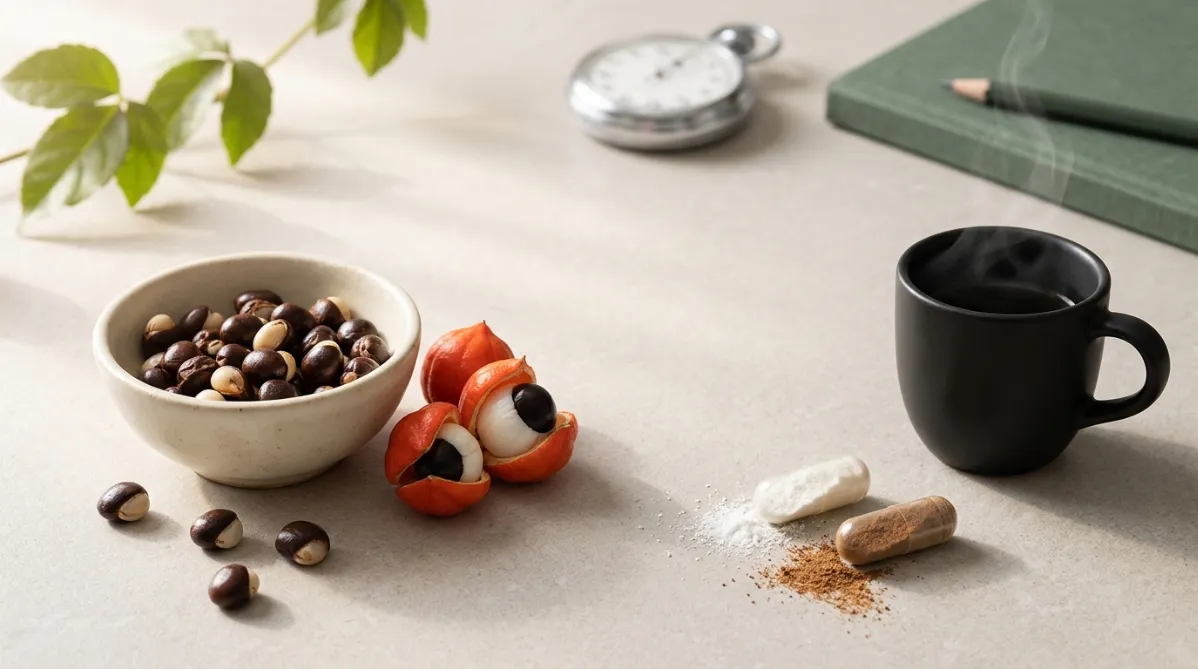
A wide, softly lit editorial flat-lay on a pale warm-gray stone countertop, shot from slightly above. On the left, a small rustic ceramic bowl in matte cream holds a handful of dried guarana seeds, dark glossy brown with pale cream arils, a few spilling onto the surface. Beside it sits a halved fresh guarana fruit in vivid red-orange, split open to show the white flesh and black seed inside, looking like a tiny eye. On the right, two open clear capsules rest side by side. One is filled with fine white caffeine powder, the other with a fine earthy brown guarana powder, and a little of each dusts the stone in delicate, deliberate lines. Between them, a minimalist matte-black espresso cup with a thin ribbon of steam rises on the right edge of the frame. A brushed-steel stopwatch and a slim dark-green linen notebook with a pencil sit in the upper background, slightly out of focus, to hint at performance testing without clutter. A few green leaves of a guarana vine curve in from the top-left corner, catching soft light.

The lighting is natural window light from the left, with gentle long shadows and a subtle warm highlight on the seeds. The palette is muted and modern: warm creams, terracotta red, deep espresso brown, sage green, and charcoal accents. The background is clean with generous negative space on the upper right for headline text. Shallow depth of field, crisp focus on the seeds and capsules, fine grain, and a calm premium magazine look like a contemporary wellness and sports-science journal. No people, no text, no logos, no futuristic elements.
science research

Guaraná vs cafeína: misma dosis, solo el guaraná aumentó la potencia máxima

BY DR. GYMBRO ·

Misma dosis de cafeína, distinta cápsula, y solo el guaraná produjo un aumento estadísticamente significativo de la potencia máxima. En un ensayo cruzado aleatorizado con 18 hombres activos, el guaraná elevó la potencia pico en un 4,0 % frente al placebo, mientras que la cafeína anhidra no alcanzó significación. Sin embargo, el guaraná no superó a la cafeína en la comparación directa y las diferencias entre ambos fueron meramente descriptivas. Aquí se resumen los datos, las limitaciones del estudio y cómo dosificar guaraná según su contenido de cafeína si decides probarlo.
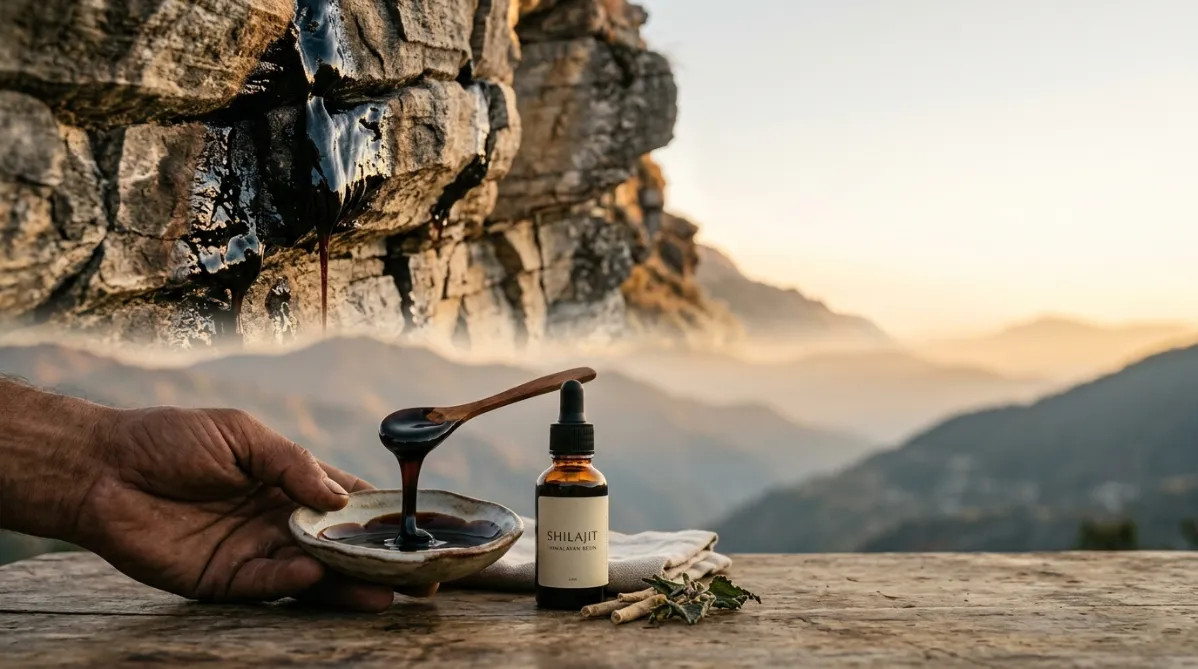
A wide, editorial-style photograph of a rugged Himalayan cliff face at golden hour, with dark, glossy resin seeping from the cracks in the layered stone. Thick, tar-like droplets catch the warm light and shine like polished obsidian. In the foreground, a weathered hand holds a small, rustic ceramic dish with a spoonful of purified Shilajit. The resin is deep brown-black, glossy, and stretches in a slow, viscous ribbon from the spoon. Beside the dish sits a simple, minimalist amber glass dropper bottle with a plain cream label, a folded linen cloth, and a few scattered dried herbs, suggesting a modern wellness ritual. The mid-ground shows soft layers of misty mountain ridges fading into a pale peach and dusty blue sky. The background is gently blurred, with shallow depth of field and creamy bokeh. The color palette is earthy and muted: warm ochre, charcoal, sage green, and soft cream, with a subtle film-grain texture. Natural side lighting creates long, gentle shadows and highlights the textures of the stone, resin, and ceramic. The composition follows the rule of thirds, with the dish and bottle in the lower left and open negative space on the right for headline overlay. The mood is calm, grounded, and credible, like a high-end health and science magazine feature, with a refined, contemporary, slightly documentary look. There is no text, no people's faces, and no futuristic elements.
science research

Shilajit puesto a prueba: ¿Puede la “brea de montaña” elevar realmente la testosterona?

BY DR. GYMBRO ·

Shilajit, la "brea de montaña" del Himalaya que se vende como potenciador natural de la testosterona, se sometió a un ensayo aleatorizado, doble ciego y controlado con placebo. En hombres de 45 a 55 años, 250 mg de shilajit purificado dos veces al día durante 90 días elevaron de forma significativa la testosterona total, la testosterona libre y el DHEAS en comparación con el placebo, mientras que la LH y la FSH se mantuvieron estables. El estudio es prometedor, aunque limitado a una población de mediana edad y solo informa niveles hormonales, sin datos de rendimiento físico. A continuación se analizan los hallazgos, lo que no se demostró y por qué la pureza y los análisis de metales pesados son cruciales a la hora de comprar.
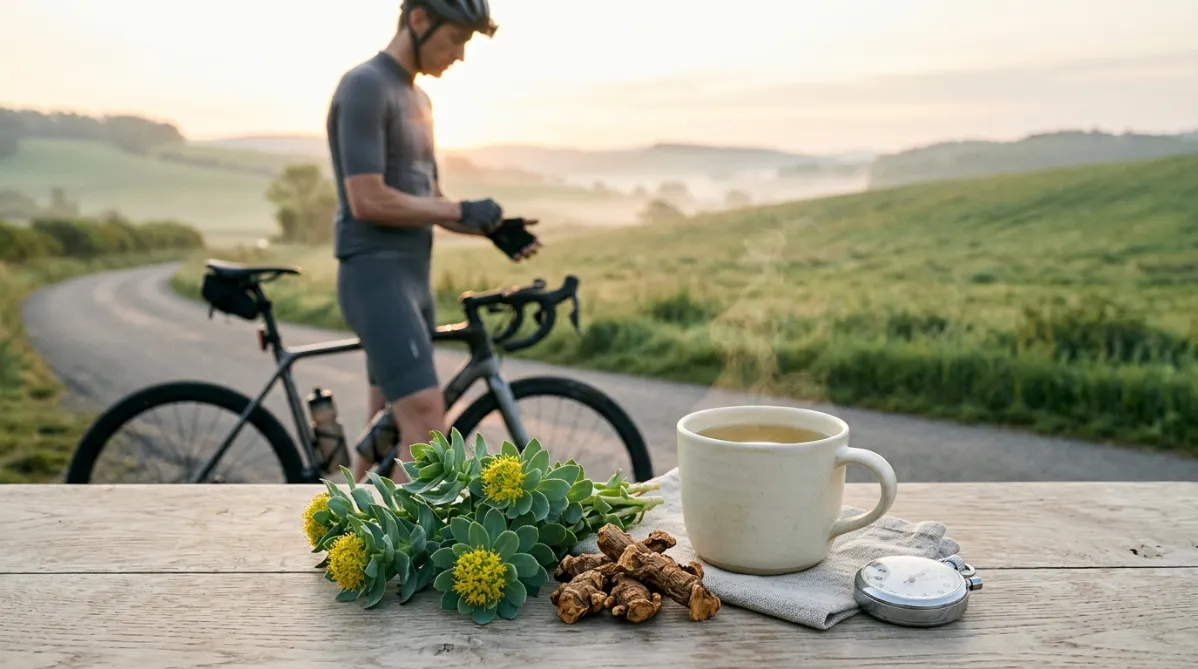
A landscape editorial photograph in soft natural morning light. In the foreground on a rustic light oak table, a small cluster of fresh Rhodiola rosea plants with thick succulent blue-green leaves and tiny golden-yellow flower clusters rests beside a few dried, knobby amber-brown rhizome pieces. A matte ceramic cup of pale golden herbal tea sits beside them, with a thin curl of steam and a small linen cloth. The plants and roots are sharp, with fine texture and dewy highlights.

In the softly blurred background, a lean cyclist in a fitted charcoal jersey stands beside a road bike on a quiet country lane at sunrise. Rolling green hills fade into pale mist behind them, and warm light rims the rider's shoulders. The cyclist tightens a glove, calm and focused, in a pre-ride moment of preparation. A water bottle is mounted on the bike frame, and a simple analog stopwatch with a brushed metal casing lies on the table near the herbs, hinting at timed effort.

The palette is muted and modern: sage green, warm cream, soft gold, and slate gray, with gentle peach tones from the sunrise. Shallow depth of field, a clean, airy composition with generous negative space on the right third for headline text, and subtle film grain. The mood is calm, health-conscious, and quietly athletic, like a premium wellness and sports science magazine cover. No text, no logos, no futuristic elements.
science research

Rhodiola Rosea: ¿Un pre‑entrenamiento sin estimulantes para el cardio intenso?

BY DR. GYMBRO ·

Un ensayo cruzado de 2013 encontró que una dosis única de 3 mg/kg de Rhodiola rosea, tomada una hora antes de una prueba de ciclismo de 6 millas, redujo el tiempo final de 25,8 a 25,4 minutos. La frecuencia cardíaca del calentamiento bajó de 140 a 136 lpm y la percepción del esfuerzo pasó de 6,6 a 6,0. La ventaja es pequeña, alrededor del 1,5 %, y proviene de sólo 18 personas, por lo que no es un milagro. Sin embargo, el hecho de que se perciba menos esfuerzo la convierte en una opción intrigante sin estimulantes para atletas de resistencia. A continuación se muestra lo que revelan los datos y cómo probarlo de forma sensata.
A bright, modern editorial flat-lay photographed from above on a soft off-white stone surface. At the center sits a matte ceramic scoop heaped with fine white creatine powder, with a loose dusting of powder fanning out across the surface. Beside it is a minimalist frosted-glass jar with a plain label and a brushed-steel shaker bottle lying on its side. To the left, a wooden comb and a small folded strip of graph paper with a single hand-drawn upward curve in muted terracotta ink, suggesting a data spike without any text. A few loose strands of dark brown hair curve elegantly across the stone near the comb. To the right, a clean glass beaker filled with water and a sprig of green rosemary, and an open notebook with blank pages and a sleek pen. The palette is warm neutrals: cream, sand, soft sage green, and a single accent of terracotta orange. Natural window light falls from the upper left, casting long, gentle shadows and a subtle diffused glow. The composition leaves generous negative space on the right third for title overlay. Shallow depth of field with crisp focus on the powder scoop, a premium health-and-science magazine look, minimalist, calm, and trendy, with fine grain and soft contrast. Landscape 16:9 framing.
science research

Creatina y caída del cabello: el aumento del 56 % de DHT explicado

BY DR. GYMBRO ·

Un estudio de 2009 mostró que una fase de carga de creatina de 7 días (25 g/día) elevó el DHT en un 56 %, y que con una dosis de mantenimiento de 5 g/día los niveles permanecieron alrededor de un 40 % por encima de la línea de base, mientras que la testosterona no cambió. Como el DHT está relacionado con la calvicie de patrón masculino, este hallazgo avivó el debate sobre la creatina y la pérdida de pelo. Sin embargo, el ensayo contó con solo 20 jugadores de rugby, duró tres semanas y nunca midió el cabello. Estudios posteriores no han reproducido consistentemente el aumento de DHT. Aquí se resume lo que realmente muestra la investigación, a quién le puede interesar y cómo actuar si te preocupa.
A clean, editorial still life shot from a slightly elevated angle on a pale oatmeal-colored stone countertop, lit by soft natural window light from the left that casts long, gentle shadows. In the center sits an open, unlabeled amber glass supplement bottle on its side, with a small scatter of cream and white capsules spilling toward the viewer. Beside it, a matte ceramic dish holds a few capsules and a pinch of coarse sea salt. To the right, a neatly arranged group of whole foods that are natural zinc and magnesium sources: halved oysters on a small slate board, a small bowl of pumpkin seeds, a handful of raw cashews, and a few dark green spinach leaves. In the left foreground, a worn leather gym notebook lies open with minimal handwritten tally marks and a simple hand-drawn flat line graph in dark ink, with a brass pen resting across it. A single chrome dumbbell handle edges into the frame at the far left, softly out of focus, and a folded charcoal gym towel sits at the top right corner. The palette is warm and muted: sand, cream, sage green, amber, and charcoal, with a subtle terracotta accent in the ceramic dish. The depth of field is shallow, with the capsules and bottle in crisp focus and the background gently blurred into a soft beige haze. The mood is calm, thoughtful, and skeptical, like a modern health and science magazine feature. The composition leaves generous negative space on the upper right for headline text. The texture is tactile and fine-grained, with a subtle film-like softness and natural contrast. Wide landscape 16:9 framing.
science research

¿ZMA y testosterona? 8 semanas en levantadores sin resultados

BY DR. GYMBRO ·

El ZMA se ganó la fama con atrevidas promesas de elevar la testosterona, un vínculo con el escándalo de BALCO y un estudio preliminar en fútbol americano que parecía mostrar enormes ganancias. Luego los investigadores lo pusieron a prueba de forma más rigurosa: 42 hombres entrenados, doble ciego y ocho semanas de entrenamiento estandarizado. El zinc sérico subió entre un 11 % y un 17 %, pero sin significación estadística, y ni las hormonas, ni la fuerza, ni la composición corporal, ni la resistencia y potencia anaeróbica se diferenciaron del placebo. Aquí se explica qué demostró el estudio, qué no, por qué la deficiencia es un tema aparte y qué deberían hacer los levantadores en su lugar.
A wide, landscape editorial photograph of a clean, sunlit kitchen counter or pale stone tabletop, styled like a modern wellness magazine spread. Two scoops sit side by side on a matte ceramic surface. The left one is a plain, humble wooden scoop heaped with fine white creatine powder. The right is a glossy, ornate brushed-gold scoop holding the same white powder, which hints at "premium" branding. Behind each scoop stands a tub. The left tub is minimal, matte, and cream-colored with simple sans-serif lettering and no readable words. The right tub is sleek black with metallic gold accents and an overly polished look. A few fine grains of powder are scattered across the surface, catching the light.

The composition uses a shallow depth of field. The foreground scoops are crisp, and the background softly blurs into a warm neutral palette of oatmeal, soft sage green, and muted terracotta. Soft morning window light comes in from the left, casting long, gentle shadows and a subtle highlight along the scoops' edges. A small price tag shape, blank and unmarked, sits near the gold scoop, with a slightly crumpled paper texture to suggest the "pricey" angle without any text. A glass of water with condensation and a folded linen napkin sit at the edge of the frame. A single green sprig or eucalyptus stem adds a natural accent.

The overall mood is calm, intelligent, and quietly skeptical, with the plain option feeling confident and the flashy one a bit overdressed. The color grading is soft and slightly desaturated with creamy highlights, and there is fine film grain. The layout leaves generous negative space on the right third for a headline overlay. It looks like a high-end lifestyle and science journal cover, with a minimalist, tactile, trendy feel and no futuristic or sci-fi elements.
science research

Éster Etílico de Creatina vs Monohidrato: La Opción Costosa que No Vale la Pena

BY DR. GYMBRO ·

Los fabricantes de suplementos adoran promocionar la creatina “avanzada” como más absorbible que la versión tradicional. Un ensayo doble ciego de 2009 comparó el éster etílico de creatina (CEE) con el monohidrato y con placebo en 30 hombres sin experiencia previa, durante siete semanas de entrenamiento intenso. El CEE mostró menores concentraciones de creatina plasmática y un notable aumento de creatinina sérica, lo que indica que se descompone en desechos. La creatina muscular aumentó en ambos grupos de creatina, pero la fuerza, la potencia y la composición corporal no presentaron diferencias entre los grupos. Conclusión: evita la forma premium y mantén la simplicidad.
A wide, editorial-style flat lay photographed from above on a pale warm-gray stone countertop in soft morning window light. On the left, a small matte white ceramic bowl holds fine white arginine powder, with a wooden scoop resting beside it. At the center, two halved oranges and one whole lemon in saturated citrus tones, with a few glossy droplets of water on the cut surfaces, to suggest vitamin C. On the right, three slim amber glass capsule bottles with minimal cream labels and no legible text stand in a loose row, with a few white capsules spilling out. A single chrome dumbbell handle enters the frame from the upper right corner, partly cropped, its cool metallic sheen contrasting with the warm fruit. A sprig of green rosemary and a folded linen napkin in oatmeal beige add texture. Long soft shadows fall to the left. The palette is warm cream, sunny orange, soft yellow, and muted sage, with a few crisp accents of steel gray. The composition is airy and uncluttered, with generous negative space in the upper left for a title overlay. It has a shallow depth of field, a crisp foreground, and a faintly blurred background. The look is clean, contemporary, and wellness-magazine, like a premium health and fitness journal cover, with natural grain, high-end product photography quality, and a calm, fresh, trustworthy mood.
science research

3 g de arginina + 500 mg de vitamina C: la testosterona sube un 26 % en los levantadores

BY DR. GYMBRO ·

Durante años la arginina ha sido tachada como un potenciador de óxido nítrico sobrevalorado, pero un nuevo ensayo aleatorizado le da la vuelta al combinarla con vitamina C. En 50 culturistas masculinos, 3 g de arginina (divididos en tres tomas) y 500 mg de vitamina C durante 45 días elevaron significativamente la testosterona y el VO₂máx frente al placebo, mientras la grasa corporal disminuyó. La hormona de crecimiento, el cortisol y el balance de nitrógeno no mostraron diferencias notables. Es una combinación económica que merece atención, aunque proviene de un único estudio pequeño y un mayor nivel de testosterona no garantiza más masa muscular.
A wide, softly lit editorial photograph of a rustic light-oak table by a sunny window. On it, a handful of dried brown kelp and wakame seaweed fronds spill from a handmade matte ceramic bowl in warm sand tones, their glossy, ruffled edges catching the light. Beside the bowl sits a small wooden scoop holding fine golden-beige powder, with a little of it dusted across the table. In the middle ground, an older adult's weathered but strong hand grips a smooth, rounded river stone, with the knuckles and tendons subtly emphasized to suggest strength and vitality. Only the hand and part of a forearm in a soft oatmeal linen sleeve are visible.

In the background, slightly out of focus, a pair of worn leather walking shoes rests on a windowsill next to a trailing green plant. Beyond the window, a blurred coastal path winds through dune grass toward a pale blue sea, hinting at walking and an active daily life. A simple analog wristwatch lies on the table's edge, a quiet nod to the twelve-week timeline.

The palette is muted and natural: sage green, warm sand, soft ocean teal, and creamy off-white, with deep olive-brown accents from the seaweed. Morning light streams in from the left, casting long, gentle shadows and a faint golden glow. The depth of field is shallow, with crisp focus on the hand and seaweed and a creamy bokeh background. The composition follows the rule of thirds, with the hand and bowl on the left and generous negative space on the right for headline text. The mood is calm and hopeful, with a clean, contemporary wellness-magazine feel. The image is shot as if on a 50mm lens with subtle film grain and a natural, uncluttered, tactile look.
science research

El fucoidano de alga marina aumentó la fuerza de agarre en mayores de 60 años en 12 semanas

BY DR. GYMBRO ·

La pérdida de fuerza con la edad es una de las consecuencias más comunes y menos comentadas del envejecimiento, y el entrenamiento de resistencia no es una opción para todos. Un ensayo aleatorizado de 12 semanas descubrió que un fucoidano de alga marina de bajo peso molecular, administrado a 1.650 mg al día, mejoró significativamente la fuerza de agarre y el desempeño en la prueba de caminata de seis minutos en adultos mayores de 60 años. Sorprendentemente, la masa muscular no cambió y la combinación con BCAA y vitamina D no aportó beneficios adicionales. El estudio, pequeño y centrado en un único producto de marca, ofrece una pista prometedora más que una conclusión definitiva. A continuación, se resume lo que encontró el estudio y qué implica en la práctica.
A wide, softly lit editorial still life on a warm off-white linen surface. At the center-left, a matte ceramic bowl holds a small mound of fine golden-yellow quercetin powder, with a few scattered capsules beside it. Next to the bowl sit fresh red onions (one halved to show its translucent purple layers), a few capers, and a small cluster of ripe apples with the skin on, all natural quercetin sources. On the right side of the frame, a sleek matte-black dumbbell rests at an angle beside a folded slate-gray gym towel. A minimalist glass beaker of water with a thin lemon slice sits just behind it.

Soft diffused morning window light enters from the upper left, casting gentle long shadows and subtle highlights on the powder and glossy onion skin. The color palette is muted and sophisticated: butter yellow, deep plum, warm cream, charcoal, with small touches of sage green from a single eucalyptus sprig. A subtle, out-of-focus background of pale plaster wall and a wooden shelf adds depth.

Shallow depth of field, shot from a slightly elevated three-quarter angle with a 50mm lens feel. Generous negative space in the upper right for a title overlay. The mood is clean, calm, and modern, like a premium wellness and science journal feature: tactile textures, natural materials, restrained composition, high-end editorial photography, and no text or logos.
science research

1 g/día de quercetina antes de curls excéntricos: el giro del IGF

BY DR. GYMBRO ·

¿Qué ocurre cuando tomas 1 g/día de quercetina durante 14 días antes de someter a tus bíceps a un trabajo excéntrico? En un pequeño estudio cruzado controlado con placebo, los marcadores de daño (CK, LDH y mioglobina) y la inflamación (IL‑6) bajaron, mientras que la respuesta de IGF‑I se amplificó y el pico de IGF‑II apareció varios días antes de lo habitual. Con sólo 12 participantes y sin datos de hipertrofia, se trata de una señal prometedora de recuperación, pero no de una garantía de crecimiento muscular.
A bright, minimalist editorial still life shot from a slightly elevated three-quarter angle on a pale oat-colored stone countertop, bathed in soft natural window light with gentle long shadows. In the center sit two matching matte white supplement scoops, side by side. One is heaped with fine white crystalline powder, the other holds an almost identical pile, so the viewer is invited to compare them. Beside them are two simple frosted glass tumblers of cloudy water, each with a small whisper of powder swirling at the bottom. A third glass of clear water sits slightly apart, as a quiet nod to the placebo.

Scattered around the scene are fresh, sliced watermelon wedges with vivid coral-pink flesh and pale green rinds, and a few sliced green apples with crisp white interiors, hinting at the natural sources of citrulline and malic acid. A small brushed-brass measuring spoon and a minimalist matte sage-green shaker bottle rest at the edge of the frame. Off to one side, a clean ceramic dish holds a few loose grains of powder, and a slim linen notebook with a pencil lies open to a blank page, suggesting data and study notes without any legible text.

The color palette is soft and modern: warm cream, blush coral, sage green, and touches of brass, with a faintly blurred background of a sunlit kitchen or studio with a pale plaster wall. Shallow depth of field keeps the scoops tack sharp while the background melts into a creamy bokeh. The composition leaves generous negative space on the left third of the frame for a title overlay. The overall mood is calm, trustworthy, and trendy, like a contemporary wellness and science journal cover, with crisp detail, subtle film-like grain, and a clean, airy, balanced feel.
science research

Citrulina malato vs L‑citrulina: ¿realmente importa el malato?

BY DR. GYMBRO ·

¿Citrulina malato o L‑citrulina pura? Un ensayo aleatorizado, doble ciego y cruzado en 43 adultos entrenados comparó ambas formas contra placebo, y la respuesta podría ahorrarte dinero. Ninguna de las dos mejoró la fuerza, la potencia, el salto, el número de repeticiones ni la percepción de esfuerzo, y el malato no aportó nada extra a la citrulina. Aquí describimos qué se midió, qué dosis se usaron y los matices que impiden considerarlo la palabra final. Si estás decidiendo qué poner en tu shaker, empieza por aquí.
A wide landscape editorial photograph of a sunlit minimalist gym corner with warm, natural morning light streaming through tall windows. In the foreground on a light oak wooden bench sits a small matte ceramic dish holding a few translucent amber softgel capsules, next to a brushed steel shaker bottle and a folded charcoal gray towel. The capsules catch the light with a soft golden glow, shallow depth of field blurring them slightly against the background.

In the softly blurred midground, a barbell loaded with black plates rests on a squat rack, with chalk dust lightly floating in the sunbeams. The walls are textured off-white plaster, and the floor is pale polished concrete. A potted green plant adds a touch of organic color near the window.

Laid casually beside the dish is an open notebook with a clean, hand-drawn bar chart in black ink: two bars of slightly different heights, one marked with a small question mark, suggesting uncertainty and interpretation. A slim pencil rests across the page. No readable text beyond simple marks.

The color palette is muted and modern: cream, warm beige, soft amber, charcoal, and sage green accents. The composition follows the rule of thirds, with the capsules and notebook in the lower left third and open negative space toward the upper right, ideal for headline overlay. Soft shadows, subtle film grain, and a calm, contemplative mood reminiscent of a contemporary health and science magazine. Shot as if with a 50mm lens at f/2.0, high-end lifestyle editorial aesthetic, clean and trendy, with no futuristic or sci-fi elements.
science research

750 mg de PA aumentan un 2,6 % de masa magra en 8 semanas, pero hay un truco

BY DR. GYMBRO ·

Un pequeño estudio encontró que hombres entrenados que tomaron 750 mg de ácido fosfatídico al día ganaron un 2,6 % de masa magra en ocho semanas, mientras que el grupo placebo solo obtuvo un 0,1 %. La fuerza en sentadilla también subió más con PA, 12,7 % frente a 9,3 %. Sin embargo, el propio análisis convencional de los autores no halló diferencias significativas. Sus conclusiones se basan en un método estadístico más indulgente aplicado a solo 16 hombres. Aquí tienes la dosis, los resultados y por qué este estudio piloto es una señal prometedora, no una prueba.

This page is available in