Dr. Gymbro
←

#pre-workout

36 articles
supplements

The Sugar-Free Energy Drink That Added 1.2 mph to Hitters' Exit Velo

BY COACH RYAN ·

A zero-sugar energy drink just added roughly 1.2 mph to average exit velocity in experienced baseball and softball players, with peak velocity up about 1.6 mph. The double-blind Auburn study also found jump height held steady while it dipped on placebo. But bar speed, reaction time, and perceived energy didn't budge, and the swings were off a tee, not live pitching. One co-author also works for the drink's distributor. Here's what hitters should and shouldn't take from it.

science research

Caffeine's Sprint Boost Lasted 3.5 Hours—and Sprints Hurt Less

BY DR. GYMBRO ·

One big dose of caffeine may not fade after your first set. In a new study from the University of Tsukuba, 5.5 mg/kg taken about an hour before exercise kept repeated-sprint power elevated for up to 3.5 hours. Sprints also felt less painful and less taxing. The gains were modest (0.5-3.7%) and came from just 12 people. They also came with a higher heart rate and lower brain blood flow velocity, so here's what the dose looks like and who it might help.
A bright, modern gym scene in soft natural morning light, shot in landscape with shallow depth of field. In the foreground, a matte white scoop sits on the rim of a minimalist matte-black tub of white powder, with a few fine grains scattered across a light oak wooden bench. Beside it is a clear glass shaker bottle filled with a pale, cloudy liquid, with condensation beads on the surface. In the soft-focus midground, a hack squat machine stands with a loaded barbell sled and stacked plates in brushed steel and black rubber. A lifter in a fitted charcoal t-shirt and shorts, face turned away, is mid-set with strong, defined quads and calves, and a light sheen of sweat catches the sunlight. Tall industrial windows in the background cast long golden light beams across a polished concrete floor, with a hint of green from a potted plant in the corner. The palette is warm and editorial: cream, sage green, charcoal, and a touch of terracotta orange. A small, neat notebook with a pen lies open on the bench, with tally marks hinting at counted reps. The composition follows the rule of thirds, with the supplement and shaker on the lower left, the lifter and machine on the right, and open negative space at the top for headline overlay. The style is clean, contemporary lifestyle photography, like a premium wellness magazine, with subtle film grain, natural color grading, and crisp detail on the foreground objects.
nutrition

8 g Citrulline Malate Added ~11 Hack Squat Reps—And Less Soreness

BY DR. GYMBRO ·

One 8 g scoop of citrulline malate an hour before leg day added about 11 extra hack squat reps in a new double-blind crossover trial. The same lifters also reported less soreness at 24 and 48 hours than on placebo. Strangely, blood lactate and perceived exertion didn't budge, so the session didn't feel easier. Here's who might benefit, how the study dosed it, and why the small sample and single-session design mean you shouldn't oversell the result.
A wide, editorial-style still life photographed on a pale warm-gray concrete surface in soft morning window light. In the center sits an open, matte white supplement tub with a scoop resting beside it, a small mound of fine white powder spilling onto the surface. Next to it is a clear glass of water with a faint cloudy swirl of dissolved powder. A few loose capsules in muted coral and cream tones are scattered casually in the foreground. Behind them, slightly out of focus, is a clean running track lane in terracotta red with crisp white lines curving across the background. A pair of minimalist off-white sprint spikes rests on the edge of the track, laces loosely undone. A stopwatch with a brushed metal casing lies partially in frame at the right, its face reading a blurred, indistinct time.

The composition uses generous negative space on the left third, leaving a calm area of soft gray and cream for headline text. Shadows are long, gentle, and slightly cool, contrasting with the warm terracotta of the track. The palette is restrained: terracotta, bone white, soft sage green accents from a small leaf sprig tucked near the tub, and charcoal gray details. Shallow depth of field with a crisp focus on the scoop and powder, creamy bokeh behind. The mood is thoughtful, skeptical, and calm, like a modern wellness or science journal cover. Subtle film grain, natural color grading, and a tactile, tangible feel, with no text, no logos, and no futuristic elements.
nutrition

Beta-Alanine Is in Every Pre-Workout. Sprint Data Says It May Not Work

BY DR. GYMBRO ·

Beta-alanine is in almost every pre-workout, and the tingles make it feel like it's working. A 2026 multilevel meta-analysis of 17 randomized controlled trials found no benefit for repeated sprint ability, whether measured by mean performance, peak performance or fatigue decrement. Dose, duration and training status didn't change the picture. The authors suggest repeated sprints are limited by phosphocreatine recovery rather than acidosis, which is what beta-alanine targets. Here's who may still benefit, who can skip it, and what the study can't tell us.
A wide, editorial-style still life shot from a slightly elevated angle on a pale oak laboratory-meets-kitchen countertop, bathed in soft, diffused morning window light. In the center, two small matte ceramic bowls sit side by side: one holds fine white creatine powder, the other holds slightly coarser off-white L-arginine crystals. A brushed steel scoop rests beside each. Between and slightly behind them stands a clear glass shaker bottle filled with a cloudy, pale liquid, catching a gentle highlight. In the foreground, a minimalist analog stopwatch lies on the wood surface, its face crisp and legible, next to a folded sheet of off-white paper with a hand-drawn simple bar chart in charcoal pencil, with one tall bar and a few shorter ones, no text or numbers. In the soft-focus background, a blurred gym-style window view shows a pale running track and a muted sage-green hedge, suggesting sprinting and athletic testing without any people. Eighteen small smooth stones or white pills are arranged in a neat loose arc across the lower edge of the frame, a subtle nod to the small sample size, with one stone set slightly apart. The color palette is calm and modern: warm cream, bone white, soft sage, muted terracotta accents from a small clay dish, and thin touches of brushed metal. Shadows are long and gentle, the depth of field shallow, with a fine film-like grain. The composition leaves generous negative space on the left third for a title overlay. The mood is clean, thoughtful, and trustworthy, like a contemporary health and science journal cover, with no futuristic elements, no glowing effects, and no text.
nutrition

Creatine Plus L-Arginine Added ~99 W Peak Power. Here's the Catch

BY DR. GYMBRO ·

A new crossover trial found that taking creatine and L-arginine together an hour before testing raised peak sprint power by about 99 W over placebo. The stack also beat each supplement alone on peak power and countermovement jump height. But the researchers couldn't prove the two work synergistically, and the study had only 18 men. Here's what the numbers show, how the doses worked, and who should be cautious.
A bright, modern gym scene shot in soft natural daylight from large windows, with a wide landscape composition. In the foreground, slightly off-center to the left, sits a clean white ceramic scoop resting on a matte surface beside a small pile of fine white powder. Next to it are two clear glass tumblers on a pale oak bench. One is filled a third of the way with cloudy water and the other two-thirds of the way, a quiet visual nod to different doses. A minimalist matte shaker bottle in sage green stands behind them, slightly out of focus.

The middle ground shows a polished leg press machine with a black padded seat and brushed steel frame. Several weight plates are loaded on its pegs, and the machine catches warm highlights. Beyond it, a bent-over barbell rests on a rubber floor, deliberately softer in focus to suggest contrast between the two exercises.

The background is an airy, uncluttered studio-style gym with pale concrete walls, a few green potted plants, and long soft shadows across the floor. The color palette is muted and editorial: warm off-white, sand, sage green, charcoal, and a subtle accent of terracotta orange. A shallow depth of field gives it a magazine-like, premium wellness-journal look.

Add a subtle graphic touch: three thin horizontal lines of different lengths in terracotta, painted or projected on the wall, hinting at a bar chart comparing three results without any text or numbers. The overall mood is calm, focused, and scientific yet approachable, like a contemporary health and fitness publication cover. Clean lines, generous negative space on the right side for title overlay, and crisp, high-resolution photographic quality.
nutrition

Is 8 g Citrulline Malate Too Low? Only 12 g Boosted Leg Press Reps

BY DR. GYMBRO ·

Most citrulline malate pre-workouts lean on a moderate dose, but a new double-blind pilot trial suggests that may not be enough to move the needle. In 12 resistance-trained adults, only a 12 g dose significantly increased total reps, while 8 g did not reach significance. The boost showed up on leg press, with estimated reps of 17 on placebo, 19 on 8 g and 20 on 12 g, but not on bent-over rows. Taken one hour before training, the higher dose looks promising, yet the tiny sample means this is a hypothesis, not a verdict.
A wide, editorial-style photograph of a clear glass of water on a weathered concrete ledge at the edge of an outdoor running track, shot in soft golden-hour light. Tiny, fine bubbles cling to the inside of the glass and drift upward, catching warm backlight so the water looks luminous and crisp. The glass is about three-quarters full, with delicate condensation beading on its surface. In the softly blurred background, the curved lanes of a terracotta-red track sweep diagonally across the frame, with faint white lane lines leading toward the horizon. A lone sprinter in a charcoal athletic top crouches in a starting position, out of focus, rendered as a muted silhouette. Long shadows stretch across the track, and a hazy line of trees glows amber in the distance.

Foreground details are sharp: a matte black sports watch rests beside the glass, its screen dark, and a folded white towel sits at the edge of the frame. The palette is warm and restrained, with terracotta, sand, soft peach sky, charcoal, and the cool, clean glint of water as the focal accent. Shallow depth of field, 85mm lens look, fine film grain, gentle natural lens flare from the low sun. The composition follows the rule of thirds, with the glass placed on the left third and generous negative space on the right for headline text. The mood is calm, athletic, and modern, like a contemporary health and performance magazine cover, with no text, logos, or futuristic elements.
science research

Hydrogen Water Before Sprints: Power Held Up and Recovery Sped Up

BY DR. GYMBRO ·

A single 280 mL glass of hydrogen-rich water, drunk about a minute before all-out sprints, kept power output higher in a new crossover study. Athletes also showed faster heart rate variability recovery afterward, and blood lactate was about 1 mmol/L lower at 3 minutes post-exercise. But the study had just 13 men, was only single-blind, and tested one acute dose. Here's what the researchers found, how they dosed it, who it might suit, and why you should stay skeptical.
A wide, editorial-style photograph of a basketball player mid-air at the top of a vertical jump inside a sunlit indoor court, shot from a low angle so the athlete's silhouette rises against tall frosted windows glowing with soft morning light. The player wears a plain charcoal tank and white sneakers, with chalk dust drifting off their hands and catching the light. The polished honey-toned hardwood floor reflects the figure faintly, with crisp painted court lines leading the eye across the frame.

In the foreground at the lower left, slightly out of focus, a small wooden plyometric box sits on the floor beside a matte ceramic cup of black coffee and a plain white paper cup, placed neatly on a folded gray towel. Thin steam curls from the ceramic cup. They stand for the question of caffeine versus warm-up without any text or labels.

The color palette is calm and modern: warm amber wood, soft cream, muted slate blue shadows, and a touch of burnt orange from a basketball resting near the box. Light is natural and diffused, with gentle rim lighting on the athlete's shoulders and a shallow depth of field that blurs the background bleachers into creamy shapes. The composition has generous negative space on the right third, suited to a headline overlay, in a clean, contemporary magazine style with fine film grain, subtle contrast, and a quiet, focused mood. No text, no logos, no futuristic elements.
science research

Caffeine Before Jumps Did Nothing Extra. The Warm-Up Did the Work

BY DR. GYMBRO ·

Caffeine plus a drop-jump warm-up sounds like a recipe for higher jumps, but a new trial in elite basketball players found the coffee added nothing extra. The individualized drop-jump routine produced a clear, short-lived jump boost on its own. Caffeine at 3 mg/kg didn't change peak height, timing, or total PAPE compared with placebo. Individual responses varied widely, so some athletes may still react differently. Here is what the study shows, what it doesn't, and how to set up your own jump primer.
A wide, editorial-style photograph of a bright, modern gym corner softened by morning window light. In the foreground, a rustic matte-white ceramic table holds a tall clear glass of deep magenta beetroot juice, beads of condensation on the glass, a few fresh whole beetroots with leafy crimson-veined stems beside it, and one beetroot sliced in half to reveal its vivid concentric purple-pink rings. Next to the glass sits a small, neat notebook with a pencil, suggesting a research note, with no legible text. Behind the table, slightly out of focus, a young woman lifter with a tidy ponytail and a fitted charcoal training set stands at a barbell resting on a squat rack, chalk-dusted hands gripping the bar, calm and focused expression. A loaded bench with a bar is visible further back, with matte black plates and a light wooden floor. The palette is restrained and trendy: warm off-white, soft concrete gray, muted sage green accents from the beet leaves, and a bold beetroot magenta as the focal color. Shallow depth of field with a creamy bokeh background, natural side lighting casting long gentle shadows, subtle film grain. Composition follows the rule of thirds, with the juice and beets on the left third and the lifter on the right, leaving clean negative space in the upper area for a headline overlay. Mood is thoughtful, clean, and slightly skeptical, like a contemporary health and science journal cover. Realistic photography style, high-end magazine look, no text, no logos, no futuristic elements.
nutrition

Beetroot Juice Failed Women Lifters—and Even Slowed the Bench

BY DR. GYMBRO ·

Beetroot juice has a reputation as a natural performance booster, but a new crossover trial in 18 resistance-trained women found no squat benefit at all. Even stranger, bench press power and velocity dipped slightly at one load (60% 1RM) after a ~6.7 mmol nitrate dose taken 2.5 hours before training. The drop was only about 5 W and 0.02 m/s, with borderline P values, so it's far from a verdict. Here's what the study tested, what it can't tell us, and who might still want to experiment with nitrate.

A landscape editorial photograph in a bright, modern gym studio with soft natural light pouring through tall windows. In the foreground, a matte ceramic cup and a small glass jar of plain white powder sit on a light oak bench, with a wooden scoop resting beside them and a few loose grains dusted across the wood. The jar has no label, which hints at mystery without being heavy-handed. Slightly out of focus behind them, a female athlete in a sage green athletic set stands at a barbell, chalked hands gripping the bar, her expression calm and focused. A male cyclist on a stationary bike is blurred in the far background. The palette is warm neutrals: cream, soft sand, pale oak, muted sage, and a touch of terracotta, with gentle golden-hour highlights and soft shadows. The composition follows the rule of thirds, with the cup and jar in the lower left, the athlete on the right, and open negative space in the upper area for headline text. The depth of field is shallow, with a creamy bokeh background. The mood is contemplative, curious, and trendy, like a contemporary health and science magazine cover. Fine film grain, subtle matte finish, clean minimalist styling, and no text or logos.
science research

Fake Caffeine Still Made Athletes Stronger and Faster

BY DR. GYMBRO ·

What if part of your pre-workout kick is coming from your head and not the scoop? A 2026 meta-analysis of 17 studies found that a placebo athletes believed was caffeine still improved sport performance (d = 0.49), across bench press, cycling time-trials and repeated sprints. Effects were larger when researchers were blinded and in studies with more females, though the evidence is low certainty with high risk of bias. This is no reason to skip real caffeine at 3-6 mg/kg, but it is a reminder that expectation is a performance variable. Here's what the data say, and who should be cautious.
A wide, editorial-style photograph of a single slim silver and blue energy drink can standing upright at center on a polished light-oak gym bench, shot in soft natural window light. The can is unbranded, with a clean, minimal design and a few beads of condensation. Behind it, the softly blurred interior of a bright modern indoor volleyball court stretches into the background, with a pale hardwood floor, a net, and a few volleyballs resting in a mesh cart. Warm morning sunlight enters through tall windows on the left and casts long, gentle shadows across the bench. Beside the can sit a small white towel folded neatly, a simple stopwatch, and a pair of white wireless earbuds. On the right, a small paper cup of white powder and a wooden scoop hint at measured dosing. They are placed deliberately, like a styled still life.

At the very edge of the frame, a pair of delicate white paper wings, origami-like and slightly crumpled, lie flat and unused on the bench, a subtle visual joke about the "wings" slogan. The wings are understated and tactile, not magical or glowing.

The color palette is muted and fresh: warm honey wood, soft cream, pale sky blue, and touches of silver, with a single accent of coral red from a volleyball panel in the background. The depth of field is shallow, with crisp focus on the can and the paper wings and a creamy bokeh background. The composition follows the rule of thirds, with the can slightly left of center and generous negative space on the right for a headline overlay. The mood is calm, clean, and contemporary, like a lifestyle and science magazine cover, with fine film grain and natural contrast. The camera angle is slightly low, at bench level, with a 50mm lens look.
nutrition

Does Red Bull Give You Wings? 13 Gym Tests Found Nothing

BY DR. GYMBRO ·

Red Bull's slogan promises wings, but a new crossover trial in female volleyball players found none. One standard can failed to improve any of 13 measures across Wingate, jump, and handgrip tests compared with a placebo. Eight of the 15 athletes also reported mild nausea. The likely reason is that the can delivered only about 1.1 mg/kg of caffeine, well below the 3 to 6 mg/kg commonly cited as effective. Here's what the study shows, where its limits lie, and how to dose caffeine properly.
A landscape editorial still life in soft natural window light, set on a pale oak tabletop with a matte warm-white wall behind it. In the center-left, a few glossy strands of dark olive-brown kelp (Ecklonia cava) drape in an elegant curve over a shallow ceramic bowl in muted sage green. Next to the bowl, a small pile of fine, dry brown seaweed powder sits beside a minimalist wooden scoop. On the right, an unbranded matte-white supplement tub and a few loose cream-colored capsules are spilled neatly across the surface. A brushed steel cycling water bottle stands slightly out of focus in the background, with a folded gray cycling cap beside it. In the foreground, a clean white notebook with a thin pencil rests next to a simple analog stopwatch, hinting at a performance trial without any text or numbers visible.

The palette is earthy and calm: sage, olive, warm sand, cream and soft charcoal, with one subtle terracotta accent from a small ceramic dish. Long soft shadows fall diagonally across the table, and a gentle highlight catches the wet sheen of the seaweed. Shallow depth of field, with a creamy blurred background and crisp detail on the seaweed texture and capsules. The composition leaves generous negative space on the upper right for a headline overlay. Shot as if with a 50mm lens at f/2.8, top-down angle tilted about 30 degrees, in a modern wellness-magazine style that is minimalist, tactile and refined, with a subtle film-like grain and natural color grading.
nutrition

Does Brown Seaweed in Your Pre-Workout Actually Do Anything?

BY DR. GYMBRO ·

Brown seaweed extract *Ecklonia cava* shows up in pre-workouts and fat burners, but does it actually help you perform? A randomised, double-blind crossover trial gave 12 trained cyclists 263 mg or a placebo before an hour of riding and a set of maximal sprints. Blood glucose rose slightly, but lactate, oxygen uptake, fat-versus-carb use and sprint power did not change. The sample is small, so the study can't rule out tiny effects, but it offers no support for an acute performance boost. Here's what was tested, what it means and where your money may be better spent.
A wide, editorial-style photograph of an indoor basketball court at early morning, shot from a low angle near the baseline. In the foreground, a male collegiate basketball player in a charcoal athletic tee and black shorts is captured mid-crouch, just before a plyometric jump, with chalk dust lifting off his hands and fingers. His expression is focused and calm. Beside him on the polished maple floor sits a matte ceramic cup of black coffee with a thin curl of steam, next to a small white water bottle and a folded gray towel, placed slightly out of focus as a quiet visual hint at the caffeine theme.

Soft golden sunlight pours through tall high windows on the left, casting long, warm diagonal beams across the hardwood and creating subtle reflections on the glossy surface. The painted court lines in deep navy and cream curve gracefully through the frame, leading the eye toward the background, where a few teammates blur softly, stretching and doing box jumps over low plyometric boxes. A basketball hoop with a clean white net is visible in the upper right, gently out of focus.

The color palette is warm and refined: honey-toned wood, espresso brown, cream, muted navy, and touches of terracotta orange. Use shallow depth of field with a creamy bokeh, fine film-like grain, and gentle contrast, giving the image the feel of a modern lifestyle and science journal cover, like a contemporary wellness or sports magazine. Composition follows the rule of thirds, with the athlete on the left third and generous negative space on the right, filled with soft light and blurred court, which is ideal for overlaid headline text. No text, logos, or graphics appear in the image. The mood is energized, intentional, and quietly scientific, evoking preparation, rhythm, and peak performance, with natural realism and no futuristic elements.
science research

Caffeine + This Warm-Up Trick Boosted Wingate Power in Hoopers

BY DR. GYMBRO ·

What if your warm-up and your caffeine were secretly working better together? A randomized crossover trial of 24 male collegiate basketball players found that a plyometric PAPE warm-up beat a standard warm-up, and adding 5 mg/kg caffeine boosted peak power, average power, and total work even further. Perceived exertion dropped too, but fatigue index did not clearly change. Here is the dose, the protocol, who should try it, and the limitations you need to know first.
A softly lit editorial flat-lay on a pale oat-colored linen surface, shot from slightly above in a wide landscape frame. On the left, a small matte white ceramic dish holds a modest heap of golden-orange Cordyceps militaris, slender clustered fruiting bodies with a delicate, fibrous texture, a few strands scattered across the linen. Next to the dish sits a tiny clear glass vial with a pinch of fine amber powder, and a minimalist wooden spoon rests beside it. In the center of the frame, a sleek stainless steel stopwatch lies beside a simple analog reaction-timing ruler in light birch wood, its thin black measurement ticks sharply in focus. On the right, partially cropped, the handlebar and gloved hand of a road bicycle are visible. A matte black bottle and a folded gray cotton towel add a subtle athletic note. A sprig of dried grass and a single smooth river stone provide organic balance. Soft diffused morning window light enters from the upper left and casts long, gentle shadows. The palette is warm and restrained: cream, burnt orange, soft sage green, charcoal, and touches of brushed steel. The depth of field is shallow, with the mushrooms and stopwatch crisp and the background gently blurred into creamy neutral tones. The mood is calm, clean, and contemporary, like a high-end wellness and science journal cover, with generous negative space in the upper right for headline text. No people, no text, no logos, and no futuristic elements.
supplements

Cordyceps Before Max Cycling Sped Up Reaction Time in a Small Trial

BY DR. GYMBRO ·

A single 1 g dose of Cordyceps militaris, taken 30 minutes before a max cycling test, was linked to faster post-exercise reaction times in young men. Resting oxygen uptake also rose, yet peak VO₂ did not budge. The catch is that the key interaction effect was not significant, and only 12 recreationally active males were tested. Here is what actually improved, what did not, and how to read this small trial without overhyping it.
A wide landscape editorial photograph shot from slightly above, showing a clean matte stone countertop in soft morning light. On the left, a single frosted glass tumbler of pale pink-orange watermelon-colored drink sits with condensation beads on its surface, a thin slice of watermelon resting beside it. In the center, a minimalist matte white scoop rests on a small pile of fine white powder, with a few grains scattered naturally across the surface. Behind it, a blurred matte sage-green supplement tub with no legible text stands slightly out of focus. On the right, a neat arrangement of gym elements: a rolled linen towel, a slim stainless steel water bottle, and a pair of worn white running shoes with soft shadows. A small brass balance scale sits at the far right edge, one pan slightly higher than the other, hinting at weighing evidence versus hype. Scattered across the counter are a few cut watermelon rind wedges in vivid green and coral pink, adding natural color accents.

The color palette is warm and restrained: cream, soft blush pink, sage green, and warm gray, with a single pop of coral. Light enters from a window on the left, casting long, gentle diagonal shadows and a subtle highlight on the glass. Shallow depth of field with creamy bokeh in the background. Composition leaves generous negative space across the upper third and right side for headline text overlay. Style resembles a modern wellness magazine or trendy health journal cover: calm, tactile, minimal, slightly muted film-like grain, natural textures such as linen, stone, and glass. No people, no text, no logos, and no futuristic elements.
supplements

Citrulline Malate: Hype or Help? 30 Trials Say Barely

BY DR. GYMBRO ·

Citrulline malate is a staple of pre-workout tubs, but how much does it really do? A new three-level meta-analysis of 30 randomized trials and 644 people found only a small overall performance boost (Hedges' g = 0.16). Prediction intervals were wide, GRADE certainty was low to very low, and perceived exertion didn't budge. Acute dosing looked steadier than chronic, and aerobic and short anaerobic signals appeared, but they weren't robust. Here's what that means for dose, timing, and whether you should bother.
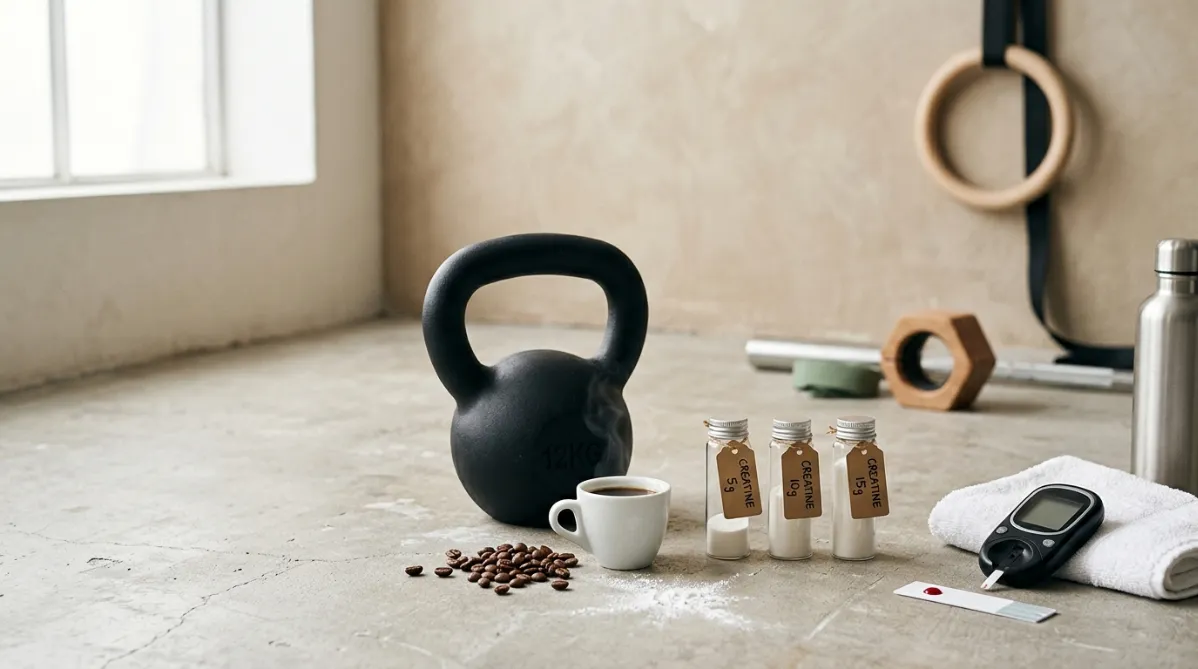
A wide, editorial-style still life photographed in soft natural window light, set on a pale concrete gym floor with a warm oatmeal-toned wall behind it. In the center foreground, a matte black kettlebell sits beside a white ceramic espresso cup filled with dark coffee, a thin wisp of steam rising. Next to the cup, three small glass vials of increasing fill levels stand in a neat row, containing fine white powder, each tied with a small kraft paper tag. Scattered nearby are a few roasted coffee beans and a pinch of chalk dust that catches the light.

On the right side, a minimalist glucose meter with a small blank screen rests next to a folded white towel and a stainless steel water bottle. A single drop of bright crimson blood on a clean test strip adds a subtle focal accent. A wooden barbell collar and a loop of gymnastic rings hang softly out of focus in the background, suggesting a CrossFit box without showing any people.

The palette is warm and restrained: cream, charcoal, terracotta, and muted sage green, with one pop of coral red from the droplet. The composition uses generous negative space on the left third for headline overlay, a shallow depth of field, and gentle long shadows falling across the floor. The mood is calm, clean, and modern, like a premium health and science magazine cover: crisp textures, subtle film grain, natural color grading, and a slightly elevated three-quarter camera angle in landscape 16:9 format.
nutrition

6 or 9 mg/kg Caffeine Before CrossFit? Your Blood Sugar Notices

BY DR. GYMBRO ·

Everyone assumes mega-dosing caffeine before a brutal CrossFit session must shake up your body. This randomized, double-blind trial tested 3, 6 and 9 mg/kg in 26 CrossFit athletes and found one clear signal: blood glucose. Post-exercise glucose rose more at 6 and 9 mg/kg than on placebo, while blood cell indices showed no caffeine-specific changes. Calcium, magnesium and phosphates mostly followed exercise, not caffeine. Here is what that means for your dose, your timing, and who should think twice.
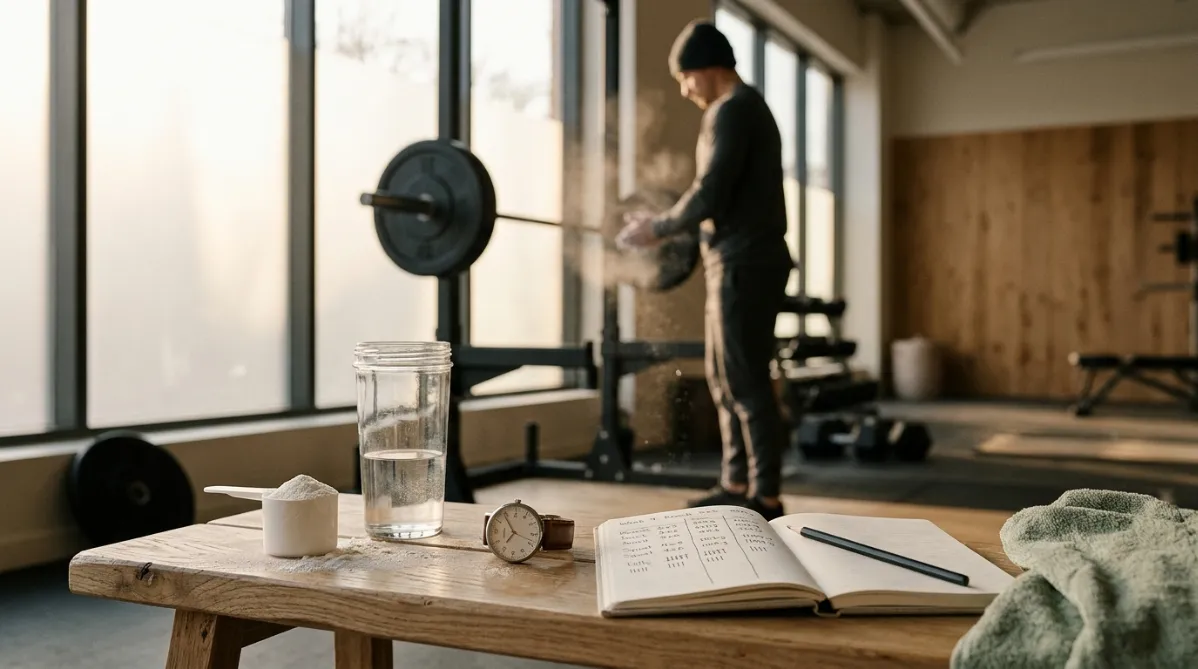
A wide, softly lit editorial photograph of a modern minimalist gym corner, shot at golden hour with warm light streaming through large frosted windows. In the foreground, a matte white scoop of fine creatine powder rests on a pale oak bench beside a clear glass shaker bottle half-filled with water. A small pile of loose white powder dusts the wood surface. Just behind them, a matte black barbell loaded with charcoal bumper plates rests on a squat rack, slightly out of focus, with chalk dust floating in the sunbeams.

On the bench, a simple analog wall-style clock or a sleek minimalist wristwatch lies face up, hinting at timing without being the main focus. Next to it sits a slim open notebook with a pencil and a few hand-drawn tally marks and neat columns, suggesting tracked training data. A folded sage-green towel sits at the edge of the frame.

The color palette is calm and sophisticated: cream, warm oak, soft sage green, charcoal, and a touch of terracotta. The shallow depth of field gives creamy bokeh in the background, where the soft silhouette of a lifter in neutral athletic wear chalks their hands near the rack, rendered anonymously and without a visible face.

The composition follows a rule-of-thirds layout, with the powder and shaker in the lower left third and open negative space on the right, suitable for headline overlay. The mood is clean, focused, and quietly motivated, like a premium health and science journal feature. The lighting is natural and diffused, with gentle shadows, subtle film grain, and true-to-life textures. Shot on a 50mm lens at f/2, with crisp detail on the powder and a high-end lifestyle magazine finish.
nutrition

Creatine Before Training Won This Timing Test—But There's a Catch

BY DR. GYMBRO ·

Does it matter when you take your creatine? A new randomized crossover pilot trial in Nutrients says the pre-workout window may have an edge: 0.1 g/kg of creatine monohydrate before training was linked to more total load lifted in the bench press and back squat than placebo or no supplement. Taking it during or after training didn't show the same advantage, and no differences appeared in jumping, mood, cognition, or soreness. But the study had only 11 men and tested a single dose, and the authors call it exploratory. Here's the exact dose, what the data show, and who should be cautious.
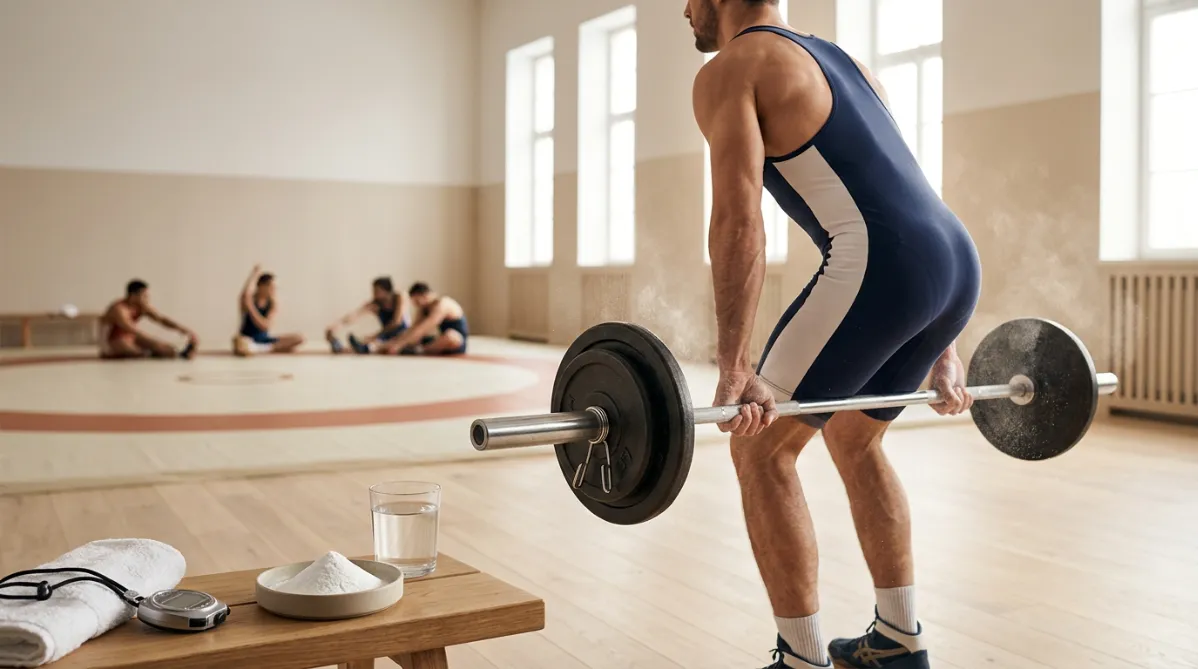
A wide, editorial-style photograph of a wrestler in mid-preparation inside a bright, minimalist training hall with pale wooden floors and soft natural light from tall windows. The athlete, seen from the side and slightly from behind, grips a loaded barbell at hip height in a deadlift-style setup. Chalk dust hangs in the air, and the muscles of the back and forearms are tensed. A navy and white wrestling singlet contrasts with the warm, neutral tones of the room. In the foreground, slightly out of focus, sits a small matte ceramic dish holding a pile of fine white taurine powder beside a clear glass of water. Next to it are a sleek stopwatch and a folded white towel on a low wooden bench. The stopwatch hints at the 60-minute timing without showing legible numbers. In the soft background, a wrestling mat in muted terracotta and cream is visible, along with a few blurred teammates stretching. The palette is calm and modern: warm beige, off-white, deep navy, and a single accent of coral orange in the mat edge and a small detail on the stopwatch. The lighting is golden-hour side light with gentle shadows, giving the chalk particles a subtle glow. The composition follows the rule of thirds, with the wrestler on the right and the powder and glass on the lower left, leaving clean negative space in the upper left for a headline overlay. The depth of field is shallow, with crisp focus on the athlete's hands and the bar and a creamy bokeh background. The overall look is a contemporary health-and-science magazine cover: refined, realistic, grounded, and athletic, with no futuristic elements and no text or logos.
nutrition

Taurine Plus a PAPE Warm-Up Boosted Wrestlers' Peak Power by 16.8%

BY DR. GYMBRO ·

Taurine is already in your energy drink, but a new double-blind crossover study suggests it may do more when paired with a heavy PAPE warm-up. In 20 elite wrestlers, taurine plus PAPE raised peak power by 16.76% and relative power by 22.24% versus placebo and control. Blood lactate was lower and jump performance held up better afterward. The supplement was taken 60 minutes before the protocol, though the abstract doesn't list the dose. Here is what the trial found, who might benefit, and the caveats that keep the hype in check.
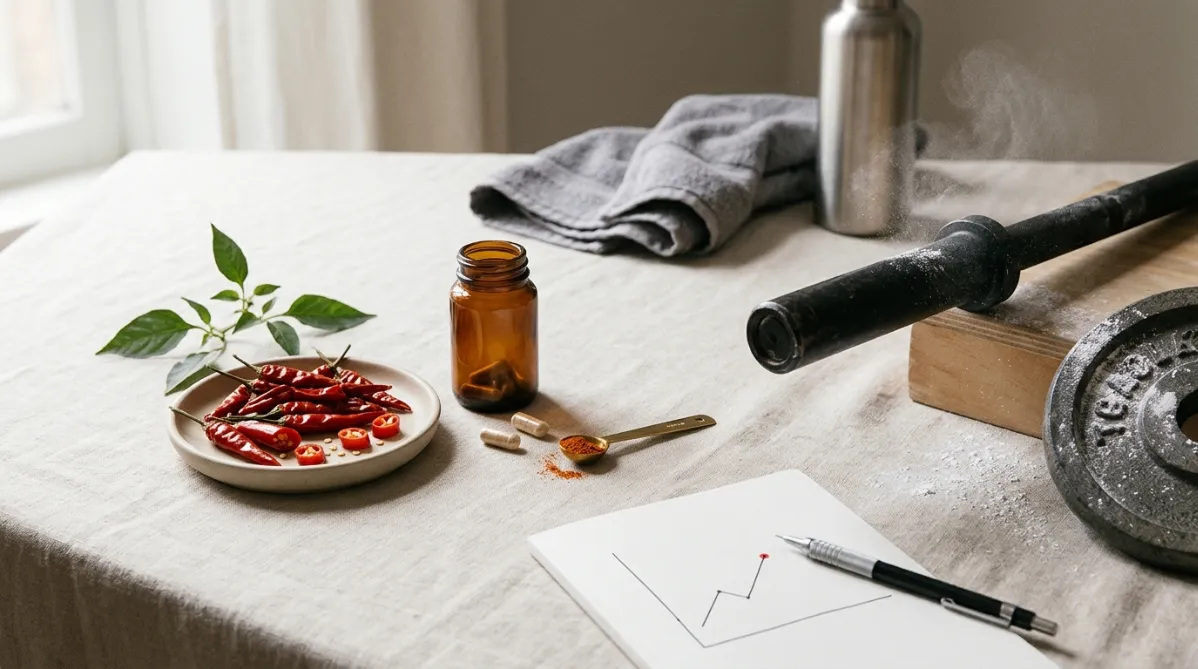
A wide, editorial-style still life photographed in soft natural window light on a pale oatmeal-colored linen surface. In the center-left, a small matte ceramic dish holds a modest pile of vivid red dried chili peppers and a few sliced fresh chilies, their glossy seeds catching the light. Beside it sits a minimalist amber glass capsule bottle without a label, with two translucent capsules spilled onto the linen, along with a tiny brass measuring spoon holding a pinch of fine orange-red powder.

On the right side of the frame, slightly out of focus, a worn black barbell rests across a wooden gym box, with a chalk-dusted steel plate leaning nearby. A small cloud of white chalk dust hangs delicately in the air, backlit by the light. A folded gray cotton gym towel and a simple stainless steel water bottle sit in the soft background.

In the foreground, a minimalist white notebook lies open with a clean hand-drawn line graph in thin black ink, with a small red dot marking one point. A mechanical pencil rests across the page.

The palette is warm and restrained: terracotta red, burnt orange, cream, charcoal, and muted sage green accents from a single leafy chili plant stem. Shallow depth of field, subtle film grain, gentle shadows, generous negative space at the top of the frame for a title overlay. Modern health and science journal aesthetic, calm, clean, tactile, and slightly moody, like a magazine feature on sports nutrition. No people, no text, no logos.
nutrition

Phenylcapsaicin Pre-Workout Boosted CrossFit Squats and Cut Soreness

BY DR. GYMBRO ·

A chili-derived compound called phenylcapsaicin just went through a triple-blind crossover trial with 50 CrossFit athletes. A single 2.5 mg dose taken 45 minutes before training improved post-session squat load and reps, reduced jump-height loss, and lowered soreness at 24 and 48 hours. But it did nothing for the WOD itself, and lactate, RPE, and heart rate didn't budge. Two authors also advise a supplement brand, and the study only covers a single acute dose. Here is what the data show, what they don't, and who might actually want to try it.
A wide, editorial-style flat lay photographed from above on a pale oat-colored linen surface in soft morning window light. On the left, a small matte white ceramic cup of black coffee with a delicate swirl of steam, beside a few scattered roasted coffee beans. On the right, a second matte sage-green ceramic cup holding a pale, creamy golden tea-like drink, mirroring the first. Between them, two small glass vials with cork stoppers sit side by side: one holding fine white powder, the other holding slightly warmer cream-colored powder, with a tiny brass measuring spoon resting nearby. In the lower foreground, a slim wooden rowing oar lies diagonally across the frame, its blade edge softly entering from the right, painted a muted navy with a thin terracotta stripe. A minimalist analog stopwatch with a brushed-steel case rests near the oar, and a folded cream notebook with a thin pencil suggests data-taking. In the upper corner, a crescent-shaped dried eucalyptus sprig and a small folded gray wool throw hint at sleep and calm without being literal. The palette is warm and restrained: oat, cream, sage, soft navy, terracotta, and espresso brown. Shadows are long and gentle, with shallow depth of field and subtle film grain, giving a refined, modern wellness-magazine feel. Generous negative space on the left third of the composition leaves room for a headline overlay. Clean, calm, tactile, and contemporary, with no text, logos, or futuristic elements.
science research

Paraxanthine vs Caffeine: The Combo That Won, and the Sleep-Saver

BY DR. GYMBRO ·

Paraxanthine, caffeine's main metabolite, just went head-to-head with caffeine in a trial of 14 rowers. The combo of 200 mg each beat placebo on a 2000-m row, but only with a small effect (d = 0.30). Neither compound alone clearly improved performance. Paraxanthine alone, however, looked friendlier to subjective sleep. Here are the numbers, the limits, and who might actually benefit.
A wide editorial still life on a pale, warm-toned concrete surface in soft morning window light. In the center-left, a shallow matte ceramic bowl holds a small pile of bright red coffee cherries with glossy skins, a few sliced open to reveal pale mucilage and paired green-tan beans. Beside it, a small glass dish of fine, golden-brown powdered extract with a tiny wooden scoop resting on its edge. A sprig of coffee plant leaves, deep green and waxy, arcs across the foreground.

On the right side, slightly out of focus, a sleek road cyclist's handlebar and a matte black water bottle lean against a light plaster wall, suggesting athletic training without showing a person. A minimalist analog stopwatch with a clean white face and thin black hands sits in the mid-ground, angled toward the camera, its hands paused near the fifteen-minute mark. A folded linen cloth in oatmeal beige and a single small espresso cup with a thin crema ring add quiet texture.

The color palette is restrained and modern: cherry red, sage green, cream, soft terracotta, and charcoal accents. Light comes from the left, casting long, gentle shadows with a subtle warm glow and a hint of dust in the air. Shallow depth of field with crisp focus on the cherries and stopwatch, creamy bokeh in the background. Composition leaves open negative space in the upper right for a headline overlay. The overall feel is a clean, trendy health-and-science magazine cover: tactile, natural, minimal, and calm, shot in a 16:9 landscape frame with fine film-like grain and true-to-life tones.
nutrition

Coffee Cherry Extract: 200 mg Caffeine Lifted Cycling Output 4.6%

BY DR. GYMBRO ·

A low 200 mg caffeine dose from whole coffee cherry extract helped trained cyclists produce 4.6% more work in a 15-minute time trial. But the popular idea that it speeds up glycogen refuelling didn't hold up. This randomized, double-blind crossover trial involved just 12 cyclists and was industry-funded, with no plain-caffeine comparison group. Here's what the data show, what they don't, and who might want to try it.
A sleek aluminum energy drink can and a matte scoop of white pre-workout powder sit side by side on a pale concrete gym bench, lit by soft morning window light. The can is slim and minimalist, with a muted sage green label and no legible text. Beside it is a clear glass shaker half full of cloudy, lightly frothy liquid with condensation beading on its surface. A few fine grains of powder are scattered across the bench, catching the light. Behind them, slightly out of focus, a stainless steel barbell rests on a rack, and a folded charcoal gym towel sits at the edge of the frame.

The color palette is warm neutral: oatmeal, soft gray, and sage, with a single accent of pale citrus yellow from a halved lemon wedge placed near the glass. A thin, elegant shadow from the window blinds falls diagonally across the scene, giving it an editorial, magazine-style rhythm. The composition leaves generous negative space on the right third of the frame, a smooth blurred wall in warm off-white, suitable for headline text overlay.

The shot is a low-angle, shallow depth-of-field product-style photograph, as if taken with an 85mm lens at f/2. The foreground objects are tack sharp and the background melts into creamy blur. The mood is calm, clean, and modern, like a wellness or science journal feature. Subtle film grain and gentle contrast add a tactile, contemporary lifestyle feel. There are no people, no logos, and no futuristic or sci-fi elements, just a quiet, considered still life that suggests the choice between a canned drink and a scooped supplement.
nutrition

Your Energy Drink May Work Like a Pre-Workout—With One Catch

BY DR. GYMBRO ·

Caffeine and taurine sit side by side in energy drinks and pre-workouts, but does the pair actually boost performance? A new meta-analysis of 11 randomized trials (234 participants) found moderate improvements in peak power and time to exhaustion, plus lower perceived effort. Heart rate didn't budge, and the reaction-time result was too inconsistent to trust. The catch is that the studies were small and can't show whether taurine adds anything beyond caffeine. Here's what the data say, and who should think twice.
A landscape editorial still life on a soft, warm oat-colored linen surface, lit by diffused natural window light from the left. In the center sits a shallow matte ceramic bowl in muted sage green holding a small mound of fine white arginine powder. Beside it rests a wooden scoop dusted with powder. To the left, a loose arrangement of dried Astragalus root slices, pale golden and delicate, fans out in a graceful curve. To the right, a few whole Panax notoginseng roots, knobbly and earthy brown, sit next to a small pile of finely ground tan powder on a folded cream paper. A single sprig of fresh green leaf adds a gentle accent in the background.

In the foreground, a minimalist glass beaker with clear water and a thin linen-wrapped glass dropper sit slightly out of focus. Behind the objects, a softly blurred backdrop in pale blush and sand tones carries a faint, abstract pattern of soft circular shapes, like ripples or molecular dots drawn in subtle terracotta ink. A thin hand-drawn line graph in dusty coral rises gently across the upper right of the background, as if sketched on textured paper, with no readable text.

The composition uses generous negative space on the upper left, which leaves room for a headline overlay. The palette is earthy and calm: sage, cream, terracotta, honey gold, and soft blush. The shallow depth of field gives creamy bokeh. Gentle shadows fall to the right. The overall feel is clean and contemporary, like a wellness and science journal cover, with subtle film grain, high-end editorial photography, and tactile natural textures.
nutrition

The Add-On That Boosted Arginine Absorption 17% in a Small Trial

BY DR. GYMBRO ·

A 2023 crossover trial found that pairing 5 g of arginine with Astragalus and Panax notoginseng saponins raised arginine absorption by 17.3% and lifted the arginine-to-ADMA ratio by 167.1%. Urinary nitrate and cGMP, two nitric oxide markers, also rose. But only 24 people were analysed after six were excluded for large individual differences, and nobody measured workout performance. Here's what the data show, what they don't, and who should think twice.
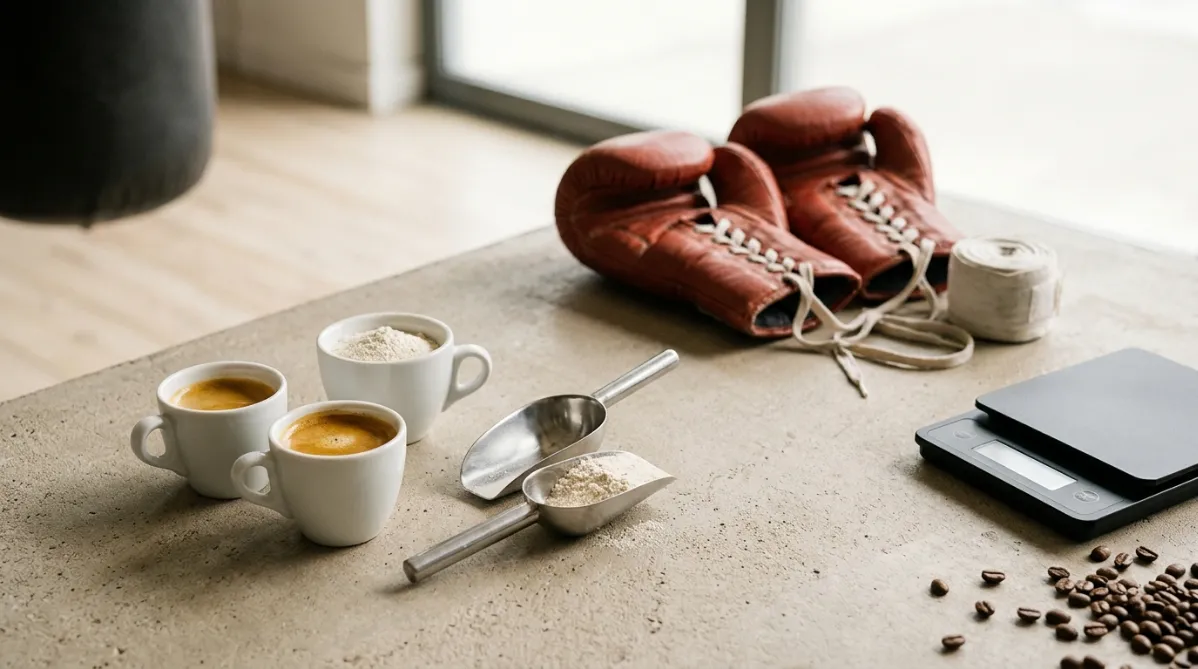
A landscape editorial photograph with a modern, clean magazine feel, shot on a pale warm-gray concrete surface in soft natural window light from the left. In the foreground, two matte white ceramic espresso cups sit side by side. The left cup holds a small amount of dark espresso with golden crema. The right cup is filled twice as high. Beside them, two small stainless steel scoops hold fine coffee-colored powder, one half full and one heaped, suggesting a dose comparison without any text or labels. A pair of worn red leather boxing gloves rests slightly out of focus behind the cups, laces loosely draped, with a white hand wrap rolled neatly beside them. A minimalist digital kitchen scale in matte black sits at the edge of the frame, with a few roasted coffee beans scattered across the surface. In the soft-focus background, a boxing gym corner appears: a hanging heavy bag in muted charcoal, pale wood plank flooring, and a tall window with diffused morning light. The palette is warm cream, espresso brown, brick red, and soft slate gray, with gentle shadows and a shallow depth of field. The composition follows the rule of thirds, with the cups and scoops in the lower left third and open negative space on the right for headline overlay. The look is tactile and refined, like a high-end health and performance journal. It has natural grain, subtle contrast, and a calm, confident mood. There are no people, no text, no logos, and no futuristic elements.
nutrition

Doubling Your Caffeine Barely Helped Boxers—Here's What Did

BY DR. GYMBRO ·

Think a double scoop of pre-workout means double the performance? A new crossover trial in 15 competitive boxers compared 3 mg/kg and 6 mg/kg of caffeine, and the bigger dose was not consistently better. Both doses raised jump height and power at 60 minutes, while 6 mg/kg only pulled ahead on a few outcomes like ballistic push-up power and knee torque. Here is the mg-per-kg conversion for common body weights, the timing the data supports, and the honest caveats, including that punching itself was never tested.
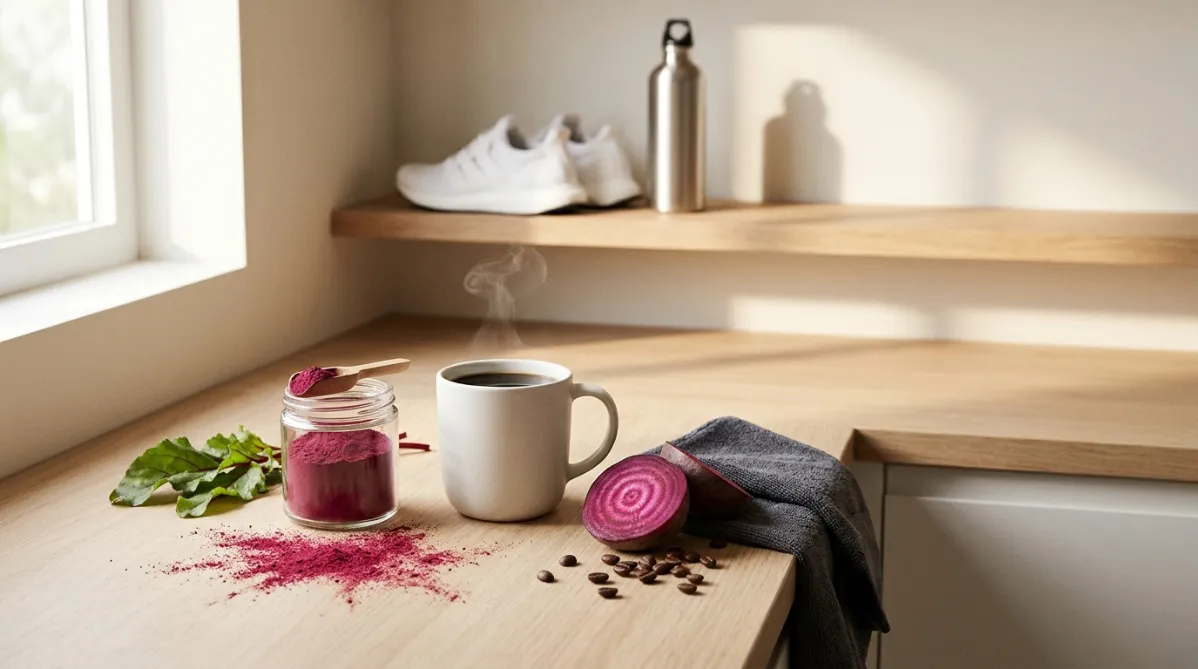
A sunlit, minimalist kitchen counter in a modern home, photographed from a slightly elevated three-quarter angle with soft natural morning light spilling in from a window on the left. In the center sits a matte white ceramic mug of black coffee with a thin curl of steam, beside a small glass jar of deep magenta beetroot powder with a wooden scoop resting on the lid. A scattering of fine crimson powder dusts the pale oak surface in an artful, casual swirl. Nearby, a halved raw beetroot reveals vivid concentric rings of purple and pink, next to a few roasted coffee beans and a neatly folded charcoal gym towel. In the soft-focus background, a pair of clean white running shoes and a stainless steel water bottle sit on a floating shelf, hinting at a pre-workout routine. A single sprig of green beet leaves adds a fresh accent.

The color palette is warm and editorial: creamy neutrals, espresso browns, and rich beet magenta, with gentle highlights and long soft shadows. The composition has generous negative space on the right side for headline text, shallow depth of field, and a crisp, tactile texture on the ceramic, powder, and wood grain. The mood is calm, health-conscious, and contemporary, like a lifestyle feature in a premium wellness magazine or a trendy nutrition journal. Clean, balanced, natural, with subtle film-like grain and a slightly muted, high-end finish.
science research

Pre-Workout Caffeine Stiffens Arteries. Beetroot Powder Offset It

BY DR. GYMBRO ·

A new randomized crossover trial found that a pre-workout-sized dose of caffeine (6 mg/kg) raised markers of arterial stiffness within 2.5 hours. Adding a beetroot powder with 400 mg of nitrate brought those markers back to placebo levels. Blood pressure and endothelial function did not change, so this is a subtle effect rather than a red flag. The study involved just 24 healthy young adults and a single dose, leaving big questions about long-term use and older or hypertensive people. Here is what the data show, what they do not, and how to think about it if you rely on caffeine before training.
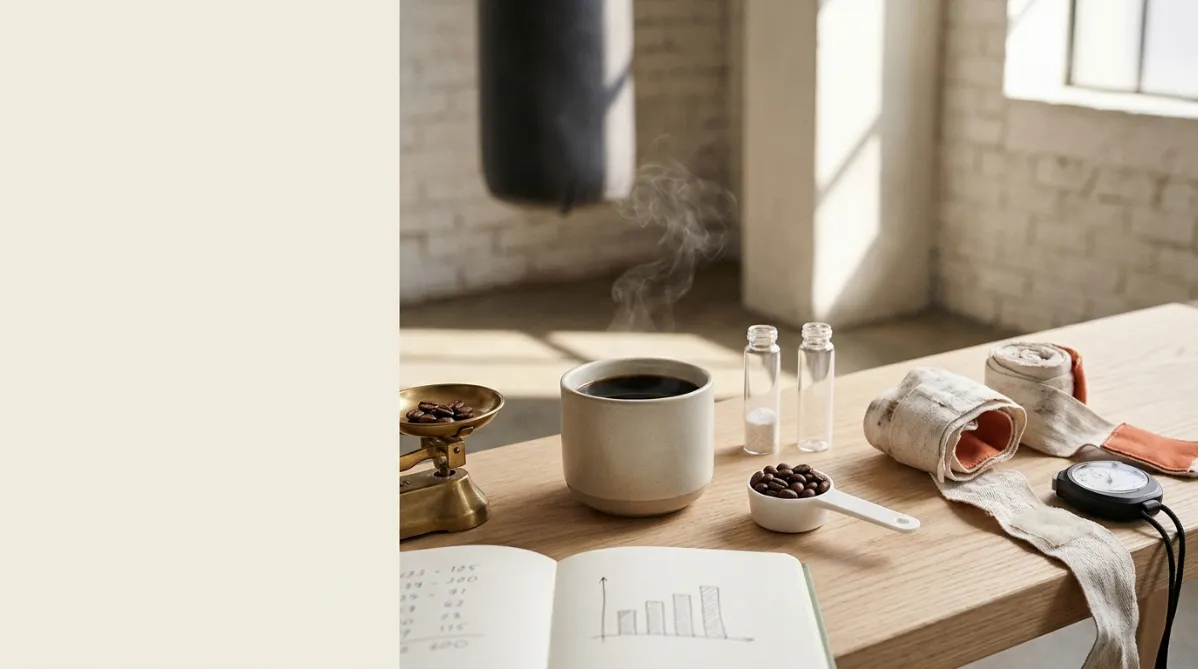
A wide, editorial-style still life shot from a slightly elevated angle on a pale oak gym bench, bathed in soft morning window light. In the center sits a matte ceramic cup of black coffee with delicate steam curling upward, flanked by a small white scoop of coffee beans and two identical glass vials, one filled with a few grains of fine powder and one empty, hinting at dose comparison. Next to the cup rests a pair of worn white boxing hand wraps, loosely coiled, and a slim black stopwatch with its face softly visible. In the foreground, a minimalist notebook lies open with blurred handwritten numbers and a simple pen sketch of a bar graph with bars of equal height, subtle and unreadable, suggesting a null result without any legible text. A small brass kitchen scale sits to the side with a few coffee beans on its tray.

In the soft-focus background, a boxing gym interior is visible: a hanging heavy bag in muted charcoal, exposed brick wall painted off-white, and tall windows casting long diagonal light across the floor. The color palette is warm and restrained: cream, sand, espresso brown, soft charcoal, with a single accent of muted terracotta orange in the hand wraps and a faint sage green in the notebook cover. Shallow depth of field with creamy bokeh, fine film grain, and gentle shadows give it a contemporary lifestyle-magazine and wellness-journal feel. The composition leaves generous negative space on the left third for headline overlay. Clean, calm, trendy, and tactile, with natural textures like wood grain, ceramic glaze, and cotton fabric. No people, no text, no futuristic elements.
science research

Low-Dose Caffeine Coffee Gave Elite Fighters Zero Sprint Boost

BY DR. GYMBRO ·

Think your pre-workout coffee is supercharging your sprints? A new randomized, double-blind crossover trial in 15 national-level combat athletes found no performance benefit from caffeine doses of 1.5 and 3 mg/kg, about 100 and 200 mg for a 68 kg athlete. Peak power, mean power, fatigue index and even estimated energy system contributions did not differ from decaf. But this is a small null result, not proof that caffeine fails, and most positive studies use capsules at 3–6 mg/kg. Here is the dose math, the caveats and what to actually do before your next hard session.
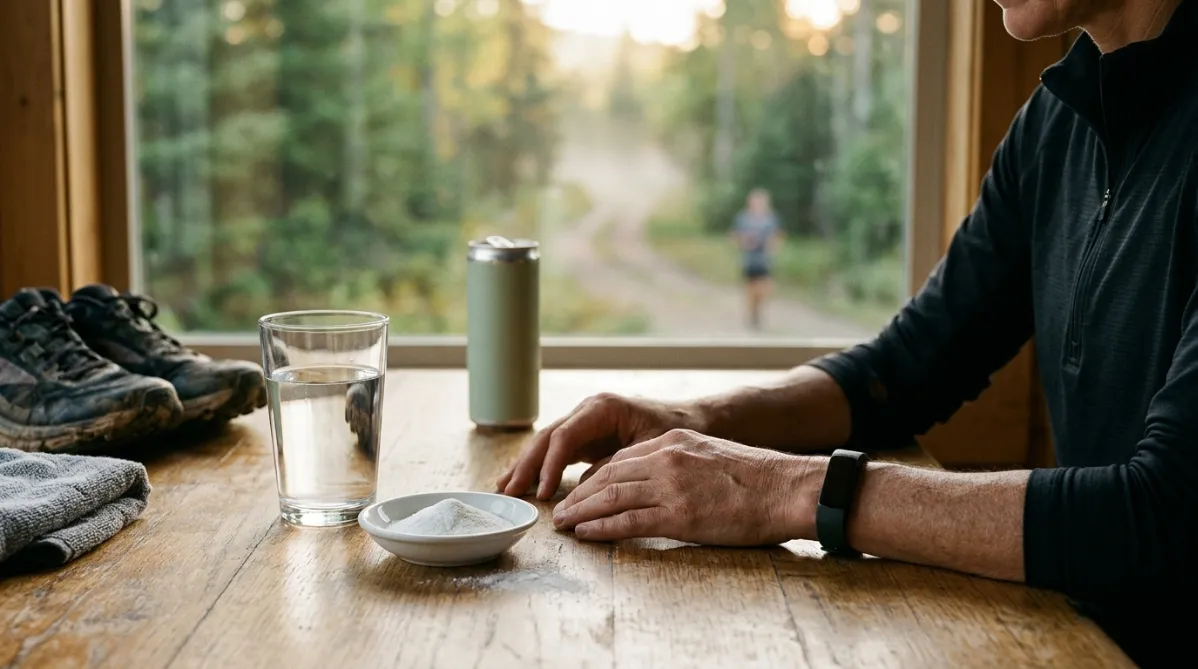
A landscape editorial photograph of a lone runner's hands resting on a weathered wooden table beside a small white ceramic dish of fine white powder and a clear glass of water, shot in soft morning light. A slim matte aluminum energy drink can, unbranded with a minimalist pale sage-green label, stands slightly out of focus in the background, with a single scoop of powder dusted lightly on the tabletop. A pair of worn running shoes and a folded gray towel sit at the edge of the frame. Through a large window behind them, a blurred misty trail winds through green trees at sunrise, with warm golden light spilling across the scene.

The color palette is calm and modern: creamy off-white, sage green, warm honey gold, and soft charcoal. The composition follows the rule of thirds, with the dish and glass in the lower left third and generous negative space on the right for a title overlay. The depth of field is shallow, with a crisp focus on the powder's delicate texture and tiny glints of light on the glass rim. The mood is clean, thoughtful, and quietly energetic, like a contemporary health and science magazine feature. Natural grain, subtle film-like softness, and gentle shadows give it an authentic lifestyle-editorial look. There are no text, logos, or futuristic elements, only tactile, real-world materials like wood, ceramic, glass, cotton, and metal.
nutrition

The Energy Drink Ingredient That Boosts Endurance on Its Own

BY DR. GYMBRO ·

Everyone talks about caffeine, but the other ingredient on the energy drink can may be quietly doing its own work. A 2018 meta-analysis of 10 studies found that isolated taurine improved endurance performance (Hedges' g = 0.40), and a single dose appeared to be enough. Neither dose (1–6 g) nor supplementation length changed the effect in a meaningful way. The catch is a small evidence base and wide confidence intervals, so this is a promising signal, not a guarantee. Here's what the study found and how to try taurine sensibly.
A wide, softly lit editorial flat-lay on a pale warm-gray stone countertop, shot from slightly above. On the left, a small rustic ceramic bowl in matte cream holds a handful of dried guarana seeds, dark glossy brown with pale cream arils, a few spilling onto the surface. Beside it sits a halved fresh guarana fruit in vivid red-orange, split open to show the white flesh and black seed inside, looking like a tiny eye. On the right, two open clear capsules rest side by side. One is filled with fine white caffeine powder, the other with a fine earthy brown guarana powder, and a little of each dusts the stone in delicate, deliberate lines. Between them, a minimalist matte-black espresso cup with a thin ribbon of steam rises on the right edge of the frame. A brushed-steel stopwatch and a slim dark-green linen notebook with a pencil sit in the upper background, slightly out of focus, to hint at performance testing without clutter. A few green leaves of a guarana vine curve in from the top-left corner, catching soft light.

The lighting is natural window light from the left, with gentle long shadows and a subtle warm highlight on the seeds. The palette is muted and modern: warm creams, terracotta red, deep espresso brown, sage green, and charcoal accents. The background is clean with generous negative space on the upper right for headline text. Shallow depth of field, crisp focus on the seeds and capsules, fine grain, and a calm premium magazine look like a contemporary wellness and sports-science journal. No people, no text, no logos, no futuristic elements.
science research

Guarana vs Caffeine: Same Dose, Only Guarana Lifted Peak Power

BY DR. GYMBRO ·

Same caffeine dose, different capsule, and only guarana produced a statistically significant boost in peak power. In a randomized crossover trial of 18 active men, guarana raised peak power output by 4.0% over placebo while anhydrous caffeine did not reach significance. But here's the catch: guarana didn't significantly beat caffeine head-to-head, and the differences between them were only descriptive. Here's what the numbers show, where the study falls short, and how to dose guarana by caffeine content if you want to try it.
A landscape editorial photograph in soft natural morning light. In the foreground on a rustic light oak table, a small cluster of fresh Rhodiola rosea plants with thick succulent blue-green leaves and tiny golden-yellow flower clusters rests beside a few dried, knobby amber-brown rhizome pieces. A matte ceramic cup of pale golden herbal tea sits beside them, with a thin curl of steam and a small linen cloth. The plants and roots are sharp, with fine texture and dewy highlights.

In the softly blurred background, a lean cyclist in a fitted charcoal jersey stands beside a road bike on a quiet country lane at sunrise. Rolling green hills fade into pale mist behind them, and warm light rims the rider's shoulders. The cyclist tightens a glove, calm and focused, in a pre-ride moment of preparation. A water bottle is mounted on the bike frame, and a simple analog stopwatch with a brushed metal casing lies on the table near the herbs, hinting at timed effort.

The palette is muted and modern: sage green, warm cream, soft gold, and slate gray, with gentle peach tones from the sunrise. Shallow depth of field, a clean, airy composition with generous negative space on the right third for headline text, and subtle film grain. The mood is calm, health-conscious, and quietly athletic, like a premium wellness and sports science magazine cover. No text, no logos, no futuristic elements.
science research

Rhodiola Rosea: A Stimulant-Free Pre-Workout for Hard Cardio?

BY DR. GYMBRO ·

A 2013 crossover trial found that a single 3 mg/kg dose of Rhodiola rosea an hour before a 6-mile bike time trial shaved the finish time from 25.8 to 25.4 minutes. Warm-up heart rate dropped from 140 to 136 bpm, and perceived exertion fell from 6.6 to 6.0. The gain is small, around 1.5%, and comes from only 18 people, so it's no miracle. Still, the effort-perception angle makes it an intriguing stimulant-free option for endurance athletes. Here's what the data show and how to try it sensibly.
A clean, editorial flat-lay photograph shot from above on a pale warm-grey stone countertop, bathed in soft diffused morning light from the left. At the center sits a matte white supplement tub with a minimal sage-green label, its lid resting beside it. A small wooden scoop spills fine cream-colored whey powder in a gentle arc across the surface, creating delicate natural texture and soft shadows. Next to the powder, a small ceramic dish holds a handful of pale tan capsules and a few tiny golden-brown ginseng root slices and fragments of dried Panax notoginseng root, hinting at the botanical origin of the ingredient. A sprig of fresh green leaves with serrated edges adds a touch of organic color on the upper right.

In the foreground, a tall glass of milky shake with a subtle frothy surface, condensation beads on its sides, sits beside a folded linen napkin in oatmeal tone. A slim brushed-steel spoon and a minimal glass of water complete the arrangement. A pair of simple, elegant reading glasses and a closed notebook with a thin pencil rest at the upper left, suggesting a researcher's desk and a thoughtful review of data, with no legible text visible.

The palette is soft and modern: warm cream, sage green, muted terracotta, pale wood, and gentle off-white, with one small accent of deep amber from the ginseng slices. Composition follows the rule of thirds with generous negative space on the right side for title overlay. Shallow depth of field, crisp focus on the powder and capsules, with the edges gently softened. The mood is calm, trustworthy, and wellness-focused, evoking a contemporary health and science magazine aesthetic. High-resolution, natural color grading, subtle film grain, minimal and airy, 16:9 landscape.
nutrition

AstraGin: The Hidden Label Ingredient That Boosted Whey Absorption

BY DR. GYMBRO ·

There's a tiny ingredient on your pre-workout label you've probably ignored: AstraGin. A new human pilot trial found it boosted absorption of valine by 14%, leucine by 8%, and total essential amino acids by nearly 13% in adults aged 60-80. Blood zonulin, a gut-permeability marker, also dropped 13%. But strength and muscle mass differences weren't statistically significant, and the study had just 30 participants. Here's what the data really says about whether AstraGin works.
A wide, editorial-style flat lay on a warm, matte cream stone surface, shot from slightly above in soft natural morning light. On the left, a ceramic espresso cup in muted terracotta holds dark coffee, with a few roasted coffee beans scattered beside it. In the center, a small wooden board holds three bright red chili peppers, one sliced open to show pale seeds, next to a small pile of coarse red pepper flakes. On the right, a pair of minimalist off-white running shoes with sage green accents rests at an angle, and a slim stopwatch with a clean white face lies in front of them. Three small matte white capsules sit in a neat row at the center of the composition, a quiet nod to the placebo and the active doses. Soft shadows fall to the lower right. A sprig of dried eucalyptus and a folded linen cloth in oatmeal tones add texture at the edges. The palette is warm and restrained: terracotta, chili red, cream, sage, and charcoal brown, with a gentle pop of red as the focal accent. The depth of field is shallow, so the foreground beans are slightly soft and the chilies and capsules stay crisp. The mood is clean, modern, and magazine-like, in the style of a contemporary health and science journal. There is no text, no people, and no logos, and plenty of negative space on the upper left and right edges leaves room for a headline overlay.
nutrition

Caffeine + Capsaicin Beat Placebo in a 10K. Capsaicin Alone Didn't

BY COACH RYAN ·

A chili-pepper compound plus caffeine was the only combo that beat placebo over 10 km in a new crossover trial, yet capsaicin alone did nothing. Caffeine drove the statistical effect, and there's no proof of synergy. The dose, 6 mg/kg, works out to roughly 450 mg for a 75 kg runner, which is a lot. Insomnia, anxiety, headaches, and racing heart showed up more often with caffeine. Here's what the 20-runner study found and who should skip it.
A bright, minimalist editorial still life shot from a slightly elevated three-quarter angle on a pale oat-colored stone countertop, bathed in soft natural window light with gentle long shadows. In the center sit two matching matte white supplement scoops, side by side. One is heaped with fine white crystalline powder, the other holds an almost identical pile, so the viewer is invited to compare them. Beside them are two simple frosted glass tumblers of cloudy water, each with a small whisper of powder swirling at the bottom. A third glass of clear water sits slightly apart, as a quiet nod to the placebo.

Scattered around the scene are fresh, sliced watermelon wedges with vivid coral-pink flesh and pale green rinds, and a few sliced green apples with crisp white interiors, hinting at the natural sources of citrulline and malic acid. A small brushed-brass measuring spoon and a minimalist matte sage-green shaker bottle rest at the edge of the frame. Off to one side, a clean ceramic dish holds a few loose grains of powder, and a slim linen notebook with a pencil lies open to a blank page, suggesting data and study notes without any legible text.

The color palette is soft and modern: warm cream, blush coral, sage green, and touches of brass, with a faintly blurred background of a sunlit kitchen or studio with a pale plaster wall. Shallow depth of field keeps the scoops tack sharp while the background melts into a creamy bokeh. The composition leaves generous negative space on the left third of the frame for a title overlay. The overall mood is calm, trustworthy, and trendy, like a contemporary wellness and science journal cover, with crisp detail, subtle film-like grain, and a clean, airy, balanced feel.
science research

Citrulline Malate vs L-Citrulline: Does Malate Actually Matter?

BY DR. GYMBRO ·

Citrulline malate or plain L-citrulline? A new randomized, double-blind, placebo-controlled crossover trial in 43 trained adults tested both against placebo, and the answer might save you money. Neither form improved strength, power, jump performance, rep output, or perceived exertion, and malate added nothing on top of matched citrulline. Here is what the study measured, what the doses were, and the caveats that keep this from being the final word. If you are deciding what to put in your shaker, start here.
A wide, editorial-style flat lay photographed from above on a pale warm-gray concrete surface, lit by soft natural window light with gentle long shadows. On the left, two matte ceramic bowls in muted sage green and cream sit side by side. One holds fine white crystalline powder, the other holds slightly coarser off-white powder. Between them, a small brass measuring scoop rests on the surface, dusted with powder. Behind the bowls, two simple amber glass jars with minimal cream labels and no legible text stand slightly out of focus.

On the right side, a pair of chalk-dusted black hex dumbbells and a worn leather lifting strap curve across the frame. A folded charcoal gym towel sits beneath them. A rumpled matte-black shaker bottle lies on its side near the top edge. A slice of watermelon, the natural source of citrulline, sits on a small white ceramic plate in the lower center. Its vivid coral-pink flesh and dark seeds add a saturated pop of color against the neutral palette. A few loose watermelon seeds and a scattering of white powder dust trail across the surface toward the dumbbells, tying the composition together.

In the lower left corner, an open notebook with blank cream pages holds a slim silver pen and a minimalist analog stopwatch. A thin line of hand-drawn tally marks suggests counted reps, with no readable words or numbers.

The palette is restrained and contemporary: warm grays, sage, cream, charcoal, and amber, with the watermelon's coral-pink as the single bright accent. The mood is calm, clean, and precise, like a modern wellness or science-journal feature. Shallow depth of field keeps the powder bowls and watermelon crisp while the background items soften slightly. Generous negative space across the upper center leaves room for a headline overlay. The photograph looks high-end and tactile, with a subtle film-grain finish.
nutrition

L-Citrulline vs Citrulline Malate: The Upper-Body Endurance Twist

BY DR. GYMBRO ·

Everyone argues over whether plain L-citrulline or citrulline malate is the better buy, but a new six-week trial found something more interesting. Both forms beat placebo for upper-body reps to failure, and both raised nitric oxide metabolite responses. The catch: neither form improved 1RM strength, and the leg results were only a trend. With just 33 trained men in the study, this is a promising signal rather than a verdict. Here's what the doses, timing questions, and fine print mean for your training.
A wide, editorial-style flat lay photographed from slightly above on a pale oak gym bench with a soft matte finish. On the left, a small white ceramic cup of black coffee sits on a matching saucer, with a thin curl of steam rising and catching warm window light. Beside it is a second, slightly larger handleless stoneware mug in muted sage green, also filled with coffee, so the pair suggests one to two cups. In the center-right foreground rests a sleek matte-black steel barbell plate, partly overlapping a brushed-steel dumbbell with fine knurling. A folded charcoal gym towel and a clean white chalk-dusted wrist strap lie casually to one side. A small scatter of whole roasted coffee beans spills across the bench in front of the cups, glossy and deep brown. Near the bottom edge, a minimalist analog kitchen scale in soft cream with a thin black needle hints at precise dosing, without any readable numbers or text.

Soft morning sunlight streams in from the upper left, creating long, gentle shadows and a warm golden glow against cool neutral tones. The background is a softly blurred, airy home gym or boutique training studio with out-of-focus squat rack uprights, pale concrete walls, and a leafy green plant in a terracotta pot adding a touch of organic color. The palette is restrained and modern: warm cream, espresso brown, charcoal, sage green, and hints of brushed silver. Shallow depth of field keeps the cups and beans tack sharp while the background melts into creamy bokeh. The composition leaves generous negative space on the right third for a title overlay, with a balanced, calm, premium magazine feel, like a contemporary wellness and sports science journal. High-resolution, natural color grading, subtle film grain, realistic textures on ceramic, steel, and coffee crema.
nutrition

How Much Caffeine Before Lifting? A Meta-Analysis Says 1–2 mg/kg Still Works

BY DR. GYMBRO ·

The standard advice for caffeine before lifting is 3–6 mg/kg, which can mean several cups of coffee or a heavy scoop of pre-workout. A 2022 meta-analysis of 12 trials found that doses of just 0.9–2 mg/kg still improved muscular strength (d ≈ 0.17), muscular endurance (d ≈ 0.21), and mean bar velocity (d ≈ 0.56). For many lifters, that's about one to two cups of coffee. The effects are modest and the evidence comes from acute, single-session studies, but the findings suggest you may be able to get a similar benefit with less caffeine.
A wide, editorial still life photographed in soft natural window light on a pale oatmeal-colored linen surface. At the center sits a small, rustic ceramic dish holding a handful of dried golden-orange Rhodiola rosea root pieces and a few fresh, fleshy green-gray succulent rosettes with rosy-pink tips. Beside it, a single matte amber glass capsule bottle lies on its side, with two cream-colored capsules spilling out. On the left, a minimalist analog stopwatch with a brushed brass case rests slightly out of focus, its hands suggesting a duration just past the quarter-hour mark. On the right, a worn, chalk-dusted steel kettlebell handle and a folded charcoal gym towel fill the negative space, hinting at lifting without showing a full gym scene.

In the foreground, a neat row of seven tiny ceramic pill cups arranged in a gentle diagonal line, the first cup holding one capsule and the rest sitting empty, as a quiet visual metaphor for a single dose versus daily dosing. A sprig of dried alpine moss and a few small speckled pebbles add organic texture. The background is a softly blurred warm-gray plaster wall with a gentle gradient shadow cast by a window frame, creating diagonal light stripes across the scene.

The palette is muted and earthy: sage green, terracotta, warm cream, brushed brass, and soft charcoal, with one subtle pop of coral from the Rhodiola tips. Shallow depth of field, crisp focus on the root and capsules, and fine film-like grain. The composition leaves generous clean negative space in the upper left for a headline overlay. The overall feel is a modern wellness and science journal: calm, tactile, minimal, and sophisticated, with a slightly moody, high-end magazine look. There is no text, no people, and no futuristic elements.
nutrition

200 mg of Rhodiola Bought Lifters 24 Extra Seconds. Then Four Weeks of Daily Dosing Added Nothing

BY DR. GYMBRO ·

A single 200 mg dose of Rhodiola rosea taken an hour before exercise nudged time to exhaustion from 16.8 to 17.2 minutes and raised VO2peak in a double-blind crossover trial. The twist is that four weeks of daily dosing didn't build on that effect or change any measured variable. The gain was small, about 24 seconds, and strength, reaction time and attention didn't budge. Here is what the study actually found, who might try an acute dose, and why you shouldn't count on "loading" rhodiola.
A wide, editorial-style still life photographed on a pale limestone countertop in soft morning window light. At the center sits a matte white scoop of fine white powder resting beside a frosted glass tumbler of cloudy, pale pink-orange water, with a few watermelon slices and a halved wedge showing glossy coral flesh and thin green rind, a nod to citrulline's natural source. To the left, a neatly folded charcoal gym towel and a brushed steel dumbbell rest at the edge of the frame, slightly out of focus. To the right, a minimalist open notebook with a few hand-drawn tally marks and a simple line graph sketched in black ink rises toward the right edge, next to a slim mechanical pencil and a small analog stopwatch with a clean white face. A few loose grains of powder are scattered across the stone, catching the light. Soft diagonal shadows fall across the surface from a nearby window, and a gentle sage-green wall in the background adds calm contrast. The palette is warm cream, watermelon coral, sage green, and soft graphite gray, with plenty of negative space on the upper left for headline overlay. Shallow depth of field, crisp focus on the powder scoop and watermelon, subtle film grain, natural tones, and a clean, modern wellness-journal aesthetic. Shot at eye level with a slight downward angle, like a contemporary health and science magazine cover. No text, no logos, no people.
nutrition

8 g Citrulline Malate = 53% More Reps and 40% Less Soreness? What the Study Shows

BY DR. GYMBRO ·

A 2010 crossover trial found that 8 g of citrulline malate was linked to about 53% more bench press reps in the final evaluated set and roughly 40% less soreness at 24 and 48 hours. The catch is that the biggest rep gain showed up late in the session, once fatigue had built up. Here is what the study actually tested, how to apply the dose and timing sensibly, who stands to benefit, and why the 14.63% rate of stomach discomfort and the study's limits deserve attention.

This page is available in