Dr. Gymbro
←

#women lifters

1 article
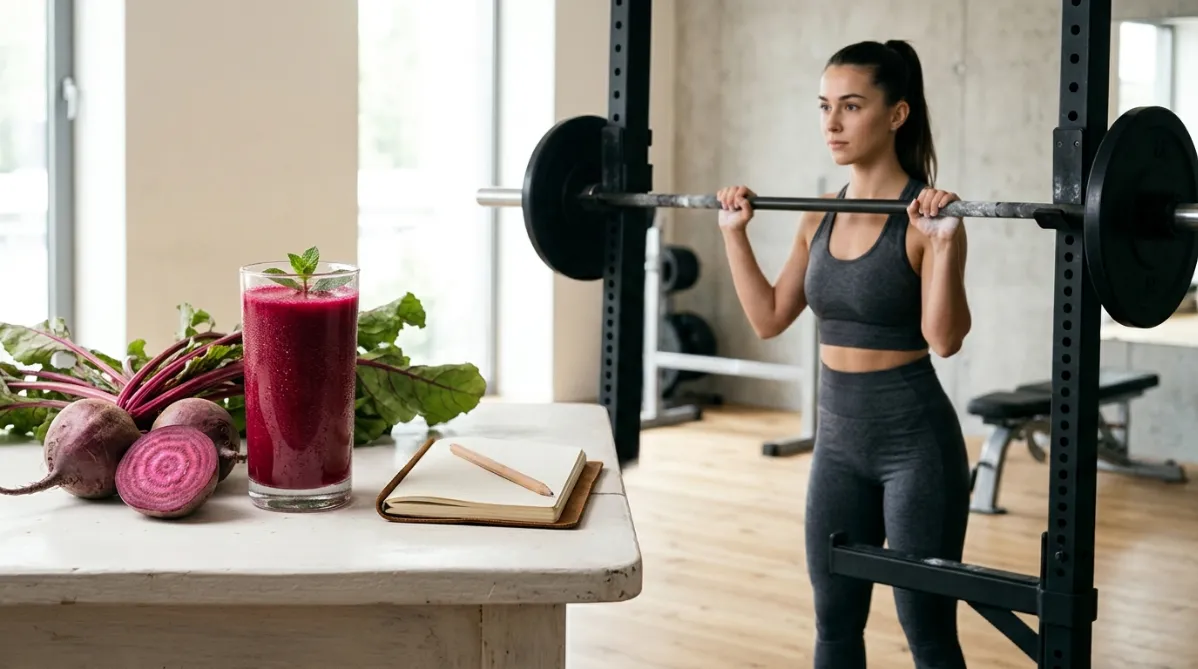
A wide, editorial-style photograph of a bright, modern gym corner softened by morning window light. In the foreground, a rustic matte-white ceramic table holds a tall clear glass of deep magenta beetroot juice, beads of condensation on the glass, a few fresh whole beetroots with leafy crimson-veined stems beside it, and one beetroot sliced in half to reveal its vivid concentric purple-pink rings. Next to the glass sits a small, neat notebook with a pencil, suggesting a research note, with no legible text. Behind the table, slightly out of focus, a young woman lifter with a tidy ponytail and a fitted charcoal training set stands at a barbell resting on a squat rack, chalk-dusted hands gripping the bar, calm and focused expression. A loaded bench with a bar is visible further back, with matte black plates and a light wooden floor. The palette is restrained and trendy: warm off-white, soft concrete gray, muted sage green accents from the beet leaves, and a bold beetroot magenta as the focal color. Shallow depth of field with a creamy bokeh background, natural side lighting casting long gentle shadows, subtle film grain. Composition follows the rule of thirds, with the juice and beets on the left third and the lifter on the right, leaving clean negative space in the upper area for a headline overlay. Mood is thoughtful, clean, and slightly skeptical, like a contemporary health and science journal cover. Realistic photography style, high-end magazine look, no text, no logos, no futuristic elements.
nutrition

Sucul de sfeclă roșie nu aduce beneficii femeilor ridicătoare — și chiar încetinește performanța

BY DR. GYMBRO ·

Sucul de sfeclă roșie este adesea lăudat ca un potențial potențiator natural al performanței, dar un studiu crossover pe 18 femei antrenate la rezistență nu a arătat niciun beneficiu la genuflexiuni. Mai ciudat, puterea și viteza la împinsul din culcat au scăzut ușor la o singură sarcină (60 % din 1RM) după o doză de ~6,7 mmol de nitrat, luată cu 2,5 h înainte de antrenament. Scăderea a fost de doar 5 W și 0,02 m/s, cu valori p marginale, deci nu reprezintă un verdict clar. În articol explicăm ce a testat studiul, ce nu poate spune și cine ar putea încă să experimenteze cu nitratul.

This page is available in