Dr. Gymbro
←

#women lifters

1 article
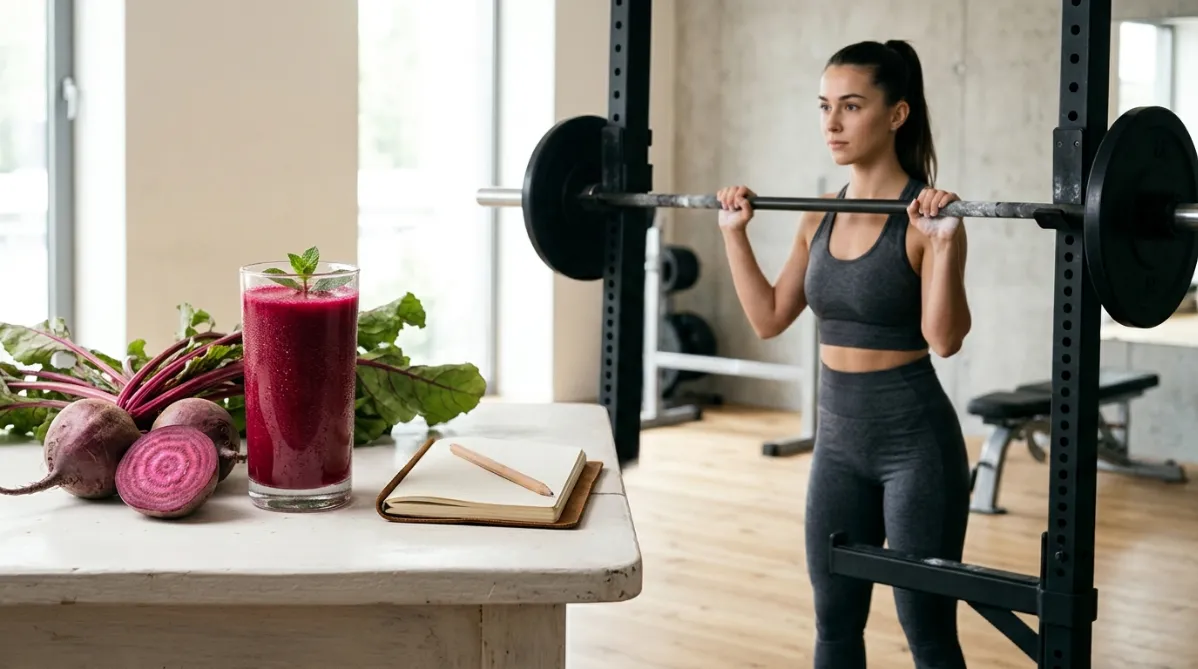
A wide, editorial-style photograph of a bright, modern gym corner softened by morning window light. In the foreground, a rustic matte-white ceramic table holds a tall clear glass of deep magenta beetroot juice, beads of condensation on the glass, a few fresh whole beetroots with leafy crimson-veined stems beside it, and one beetroot sliced in half to reveal its vivid concentric purple-pink rings. Next to the glass sits a small, neat notebook with a pencil, suggesting a research note, with no legible text. Behind the table, slightly out of focus, a young woman lifter with a tidy ponytail and a fitted charcoal training set stands at a barbell resting on a squat rack, chalk-dusted hands gripping the bar, calm and focused expression. A loaded bench with a bar is visible further back, with matte black plates and a light wooden floor. The palette is restrained and trendy: warm off-white, soft concrete gray, muted sage green accents from the beet leaves, and a bold beetroot magenta as the focal color. Shallow depth of field with a creamy bokeh background, natural side lighting casting long gentle shadows, subtle film grain. Composition follows the rule of thirds, with the juice and beets on the left third and the lifter on the right, leaving clean negative space in the upper area for a headline overlay. Mood is thoughtful, clean, and slightly skeptical, like a contemporary health and science journal cover. Realistic photography style, high-end magazine look, no text, no logos, no futuristic elements.
nutrition

El jugo de remolacha decepcionó a las levantadoras, e incluso ralentizó el press de banca

BY DR. GYMBRO ·

El jugo de remolacha es famoso por ser un potenciador natural del rendimiento, pero un ensayo cruzado con 18 mujeres entrenadas en resistencia no encontró mejoras en la sentadilla. Curiosamente, la potencia y la velocidad del press de banca disminuyeron ligeramente en una carga (60 % de 1RM) tras ingerir ~6,7 mmol de nitrato 2,5 h antes del entrenamiento. La caída fue de apenas 5 W y 0,02 m/s, con valores p marginales, por lo que lejos de constituir una conclusión definitiva. A continuación se explica qué probó el estudio, qué no puede decirnos y quién podría seguir experimentando con nitrato.

This page is available in