Dr. Gymbro
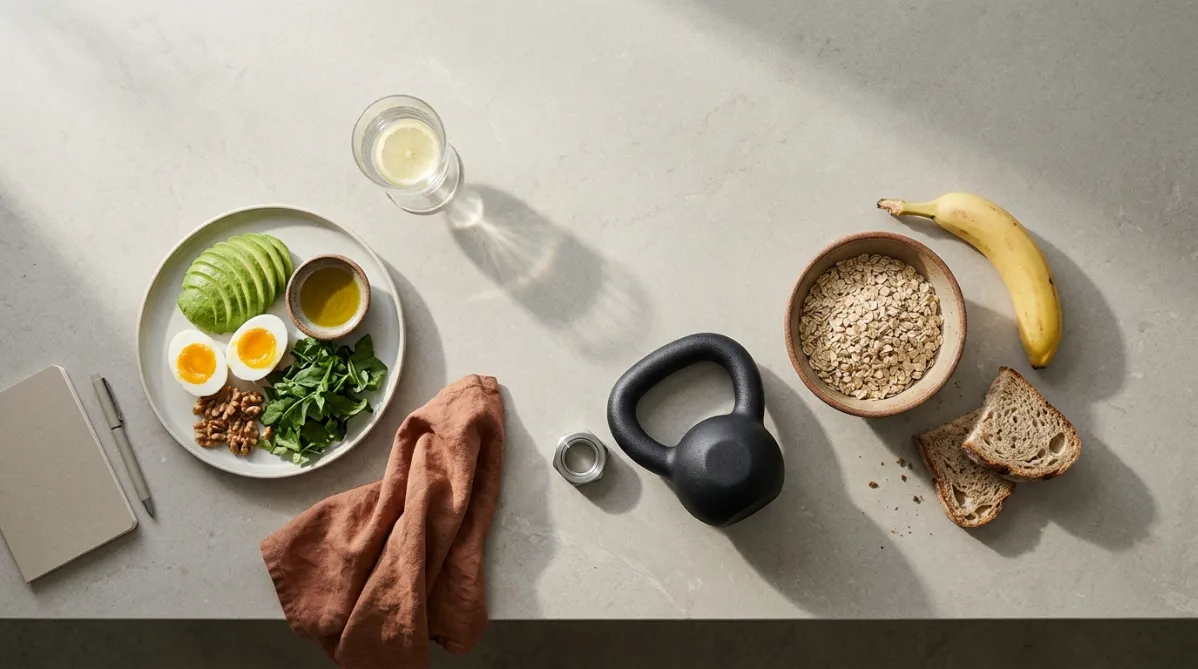
A wide, editorial flat-lay photograph shot from directly above on a pale warm-gray stone countertop, lit by soft natural morning window light with gentle diagonal shadows. On the left, a neatly arranged cluster of whole-food protein sources: two seared chicken breast slices with a golden crust, a small ceramic bowl of creamy Greek yogurt topped with blueberries, three halved soft-boiled eggs with jammy orange yolks, a handful of raw almonds, and a small pile of dried lentils scattered on a linen napkin. At the center, a matte white shaker bottle and a wooden scoop resting in a pile of fine vanilla-colored protein powder, a few grains dusted artfully across the surface. On the right, a minimalist kitchen scale in matte black displaying a portion of food, next to an open notebook with a hand-drawn curve that rises steeply and then flattens into a plateau, drawn in a deep terracotta ink pen, with a small dot marking the bend. A brass pen lies beside the notebook. A single dumbbell with a brushed steel finish sits partially in frame at the upper right corner, grounding the fitness theme without feeling gym-like. Color palette: warm cream, sage green, terracotta, soft charcoal, and butter yellow accents, with generous negative space along the top edge for title overlay. Shallow depth of field, crisp textures, subtle film grain, modern lifestyle magazine aesthetic, clean and calm composition, 16:9 landscape.
Nutrition

Koliko proteina zaista maksimizira mišiće? Objašnjen plato od 1,6 g/kg

Dr. Gymbro · · 3 min read

Kratak odgovor: oko 1,6 g/kg dnevno

Ako trenirate s ciljem rasta mišića, velika meta‑analiza pokazuje da je optimalan dnevni unos proteina niži nego što tvrde teretanski mitovi. Pregled, objavljen u British Journal of Sports Medicine, obuhvatio je 49 randomizovanih kontrolisanih studija i 1 863 zdrave odrasle osobe. Analiza prelomne tačke postavila je plato na otprilike 1,62 g proteina po kilogramu telesne mase dnevno. Iznad te vrednosti dodatni protein nije dalje povećavao dobitak u slobodnoj telesnoj masi (FFM) pri indukovanom otpornoj treningu.

Gornja granica 95‑procentnog intervala poverenja iznosi otprilike 2,2 g/kg/dan. To vam daje praktičan raspon: 1,6 g/kg je tačka na kojoj se koristi najveće većine, a 2,2 g/kg predstavlja razumnu gornju granicu ako želite dodatni rezervni prostor.

Kako to izgleda na tanjiru

Matematika je jednostavna:

  • 70 kg (154 lb): oko 112 g proteina/dan pri 1,6 g/kg, do oko 154 g pri 2,2 g/kg
  • 80 kg (176 lb): oko 128 g/dan, do oko 176 g
  • 90 kg (198 lb): oko 144 g/dan, do oko 198 g

Ove vrednosti predstavljaju ukupni dnevni unos proteina, uključujući i hranu i suplemente. To nije dodatna količina koju treba „dodati“ na ono što već jedete – mnogi pravilno ishranjeni sportisti već su prilično blizu ove granice.

Šta su studije pokazale

U analizu su uključene jedino randomizovane kontrolisane studije duže od šest nedelja otpornih treninga uz suplementaciju proteinom. U poređenju sa treningom bez dodatka proteina, suplementacija je donela prosečne dobitke:

  • Snaga (1RM): +2,49 kg
  • Slobodna telesna masa (FFM): +0,30 kg
  • Prečnik mišićnih vlakana: +310 µm²
  • Prečnik sredine femura: +7,2 mm²

Sve su razlike statistički značajne. Dobitci su stvarni, ali skromni. Suplementacija proteinom je pojačivač, a ne zamena za progresivno opterećenje, adekvatan unos kalorija i dosledan trening.

Ko najviše profitira?

Analiza je istakla dva ključna faktora.

Iskusni lifteri. Suplementacija proteinom bila je efikasnija kod onih koji već redovno vežbaju otpor, donoseći dodatna 0,75 kg FFM u odnosu na manje trenirane. To može biti posledica manjeg „novičarskog“ prostora za dobitke, pa detalji u ishrani postaju važniji. Međutim, ovo je tumačenje, a ne čvrst zaključak.

Mlađi odrasli, a ne stariji. Efekat suplementacije na FFM opadao je s godinama, otprilike 0,01 kg po godini starosti. Stariji sportisti nisu izuzeti, ali njihov relativni dobitak je manji. Studija ne sugeriše da stariji treba da jedu manje proteina, već da je njihov doprinos manji u okviru posmatranih studija. I dalje je važno da ciljaju adekvatan ukupni unos i da ne tretiraju plato kao nepromenljiv plafon.

Whey, šejkovi i prava hrana

Većina studija o suplementaciji koristila je praktične, bogate proteinom proizvode poput whey praha i gotovih šejkova. Šejk je zgodan način da popunite eventualni deficit: jedna tipična merica daje oko 20–25 g proteina uz minimalan napor. Rezultati pregleda odnose se na ukupan unos proteina, a ne na „magijski“ proizvod. Ako svoj unos od 1,6 g/kg dobijete iz piletine, jaja, mlečnih proizvoda, mahunarki i tofua, logika platea i dalje važi.

Jednostavan pristup:

  1. Izračunajte cilj (težina u kg × 1,6).
  2. Rasporedite ga kroz tri do pet obroka ili užina.
  3. Šejk koristite samo da popunite prazninu između onoga što jedete i cilja.
  4. Prestanite da jurite dodatne grame kada se nađete u rasponu od 1,6 do 2,2 g/kg.

Napomene koje vredi znati

Vrednost od 1,6 g/kg predstavlja prosečnu prelomnu tačku, a ne nepromenljivu biološku granicu. Interval poverenja obuhvata širok spektar, pa se individualne potrebe mogu razlikovati. Takođe, analiziran je FFM, što je aproksimacija mišićne mase i uključuje vodu, organe i druge komponente.

Autori su naveli mogući sukob interesa: glavni autor Stuart Phillips primio je finansiranje i honorare od US National Dairy Council, koji je podržavao neke od ispitivanih studija. To ne poništava rezultate, ali pruža dodatni kontekst čitaocima.

Pregled je obuhvatio isključivo zdrave odrasle osobe. Ne odnosi se na osobe sa bubrežnim bolestima ili drugim medicinskim problemima, koje bi trebale da se konsultuju sa lekarom o svojim proteinskim potrebama.

Zaključak

Za većinu ljudi koji treniraju s ciljem mišićnog rasta, oko 1,6 g/kg/dan je tačka smanjene profitabilnosti, dok je 2,2 g/kg razumna gornja granica. Prekomerno konzumiranje iznad te vrednosti malo će uticati na brži rast mišića. Fokusirajte se na kvalitet treninga, san, ukupni unos kalorija i doslednost, a protein‑šejkove koristite tamo gde olakšavaju postizanje ciljanog broja.

Original study

Read the original research on pubmed.ncbi.nlm.nih.gov →

This article summarizes published research for general information. It is not medical advice.

DG

Written by

Dr. Gymbro

Dr. Gymbro writes for Dr. Gymbro: science-backed fitness, nutrition & performance.

Related Articles

A wide, editorial-style flat lay photographed from slightly above on a pale oak gym bench with a soft matte finish. On the left, a small white ceramic cup of black coffee sits on a matching saucer, with a thin curl of steam rising and catching warm window light. Beside it is a second, slightly larger handleless stoneware mug in muted sage green, also filled with coffee, so the pair suggests one to two cups. In the center-right foreground rests a sleek matte-black steel barbell plate, partly overlapping a brushed-steel dumbbell with fine knurling. A folded charcoal gym towel and a clean white chalk-dusted wrist strap lie casually to one side. A small scatter of whole roasted coffee beans spills across the bench in front of the cups, glossy and deep brown. Near the bottom edge, a minimalist analog kitchen scale in soft cream with a thin black needle hints at precise dosing, without any readable numbers or text.

Soft morning sunlight streams in from the upper left, creating long, gentle shadows and a warm golden glow against cool neutral tones. The background is a softly blurred, airy home gym or boutique training studio with out-of-focus squat rack uprights, pale concrete walls, and a leafy green plant in a terracotta pot adding a touch of organic color. The palette is restrained and modern: warm cream, espresso brown, charcoal, sage green, and hints of brushed silver. Shallow depth of field keeps the cups and beans tack sharp while the background melts into creamy bokeh. The composition leaves generous negative space on the right third for a title overlay, with a balanced, calm, premium magazine feel, like a contemporary wellness and sports science journal. High-resolution, natural color grading, subtle film grain, realistic textures on ceramic, steel, and coffee crema.
nutrition

Koliko kafe pre dizanja? Meta‑analiza pokazuje da 1–2 mg/kg još uvek deluje

BY DR. GYMBRO ·

Standardni savet za unos kofeina pre dizanja je 3–6 mg/kg, što može da znači nekoliko šoljica kafe ili veću dozu pre‑workout suplementa. Meta‑analiza iz 2022. godine, koja je obuhvatila 12 studija, pokazala je da doze od samo 0,9–2 mg/kg i dalje poboljšavaju snagu mišića (d ≈ 0,17), mišićnu izdržljivost (d ≈ 0,21) i prosečnu brzinu šipke (d ≈ 0,56). Za većinu dizača to je otprilike jedna do dve šolje kafe. Efekti su skromni, podaci dolaze iz akutnih, jednosesijskih studija, ali rezultati sugeriše da sličnu korist možete postići uz manju količinu kofeina.

A wide, editorial-style still life photographed in soft natural window light on a pale oak gym bench. In the foreground, a small rustic ceramic bowl in warm sand tones holds a mound of fine golden-beige ashwagandha root powder, with a few dried gnarled ashwagandha roots and a sprig of green leaves with tiny orange-red berries resting beside it. A wooden scoop dusted with powder lies at an angle. Just behind, a matte black barbell with a single chalk-dusted steel plate sits slightly out of focus, a light haze of white chalk hanging in the air and catching the sunlight.

On the left side, a neat stack of printed research papers with a sharp black pen and a few muted sage-green sticky tabs. One page shows a simple, abstract forest-plot-style line graph with small squares and horizontal lines, subtly out of focus, hinting at statistics without legible text. A pair of minimal round reading glasses rests on the pages. A small linen gym towel is folded near the edge of the bench.

The palette is restrained and modern: warm cream, soft sage green, muted terracotta, charcoal black, and brushed steel highlights. The background is a softly blurred minimalist studio space with a pale plaster wall and a long soft shadow cast by a window frame, giving a calm, contemplative mood. Shallow depth of field, crisp detail on the powder and roots, gentle film-like grain, and generous negative space on the right third of the frame for a headline overlay. The overall look is a clean, trendy health-and-science journal cover, thoughtful and skeptical rather than promotional, balancing the natural herbal element against the discipline of strength training.
nutrition

Ashwagandha za dizače: pojačanje snage ili statistička iluzija?

BY DR. GYMBRO ·

Ashwagandha se prodaje dizačima kao suplement koji pojačava snagu i veličinu mišića, a nova meta‑analiza otkriva poboljšanja u bench‑pressu i čučnju koja izgledaju impresivno na papiru. Međutim, u analizu su ušle samo tri studije sa ukupno 161 učesnika. Kada se podaci testiraju rigoroznijim metodama, značajnost nestaje, a svaki rezultat zavisi od jednog dominantnog istraživanja. GRADE ocena je niska do vrlo niska, a efekat na telesnu mast nije pouzdan. Ovo je ono što pregled zaista pokazuje i ko bi ga eventualno još uvek mogao isprobati.

A wide, editorial-style flat lay photographed from above on a pale warm-gray stone countertop, bathed in soft natural window light with gentle long shadows. On the left half, a minimalist keto plate: sliced avocado fanned out in creamy green, two soft-boiled eggs halved to reveal golden yolks, a small pile of dark leafy greens, a few walnuts, and a glossy drizzle of olive oil in a small ceramic dish. On the right half, a contrasting arrangement of carbohydrates: a rustic bowl of oats, a ripe banana, and a few slices of sourdough, arranged with equal visual weight. Between the two sides, a matte black kettlebell sits at the center, and a slim brushed-steel barbell collar rests nearby, suggesting resistance training without a gym setting. A simple, elegant glass of water with a lemon slice catches the light and casts a delicate refracted glow, hinting at water weight and glycogen. A linen napkin and a small, neutral-toned notebook with a pen add a journal-like touch. The palette is muted and modern: sage green, cream, terracotta, charcoal, and soft butter yellow. The composition is clean and balanced with generous negative space across the top and bottom edges, suitable for headline overlay. The mood is calm, thoughtful, and science-informed, like a contemporary health and wellness magazine cover. Shallow depth of field, crisp textures on the food, subtle film-like grain, and high-end, trendy food photography styling.
nutrition

Keto za dizače: mast pada, ali mišićna masa zaostaje za 1,4 kg

BY DR. GYMBRO ·

Pregled koji je obuhvatio 50 studija pokazuje da ketogena ishrana smanjuje mast i uglavnom ne utiče na snagu. Međutim, kod odraslih koji treniraju otpor, mišićna masa je bila oko 1,37 kg niža nego kod onih na ne‑keto dijetama. Autori ocenjuju ovaj nalaz kao slabog nivoa sigurnosti i naglašavaju da ne dokazuje gubitak mišića, jer na razliku mogu uticati glikogen i voda. Performanse pri visokom intenzitetu su takođe češće ostajale nepromenjene ili su se pogoršale. Evo ko bi mogao da isproba keto za fazu rezanja, ko treba da izbegne i kako da zaštitiš mišićnu masu.

A bright, minimalist editorial still life on a pale oat-colored linen surface, shot from a slightly elevated three-quarter angle in soft natural window light. On the left, a matte ceramic bowl of fine white collagen powder with a wooden scoop resting beside it, a light dusting of powder spilling across the linen. On the right, a matching bowl of creamy off-white whey powder with a brushed-steel scoop. Between them sits a small, neatly balanced stack of simple geometric wooden blocks and a single smooth gray stone, hinting at a scale or comparison without showing a literal scale. Behind them, a lightly blurred row of three clean amber glass supplement jars with plain cream labels, unbranded. A single rolled yoga towel and a pair of small chrome dumbbells sit softly out of focus in the background on a pale plaster shelf. Accents of muted sage green and warm terracotta appear in a ceramic cup and a folded napkin, giving the palette a calm, contemporary wellness-magazine feel. A thin, elegant sprig of dried eucalyptus lies at the edge of the frame. Shadows are long, gentle, and slightly cool, with a creamy shallow depth of field and fine grain. The composition leaves generous negative space across the upper third for title overlay, with a subtle gradient from warm ivory to pale gray-blue in the background wall. The styling is clean and modern like a trendy health journal website, with a refined, tactile, editorial photography look, balanced symmetry, and no text, no people, no futuristic or laboratory elements.
nutrition

Kolagen nadmašuje whey u izgradnji mišića: analiza 78 studija

BY DR. GYMBRO ·

Mrežna meta‑analiza iz 2026. godine, koja je obuhvatila 78 randomizovanih studija i 4 755 učesnika, postavila je kolagen na prvo mesto po dobitku snage i bežmasne mase pri otpornoj vežbi, ispred whey‑proteina. Još čudnije, nijedan drugi proteinski dodatak nije nadmašio placebo. Međutim, kolagen je nekompletan protein sa malo levcina, a intervali pouzdanosti su široki. Evo šta brojevi zaista pokazuju, zašto je rezultat potrebno potvrditi direktnim poređenjem i šta možete raditi sa svojim suplementnim režimom u međuvremenu.

This page is available in